
President’s Conference: SOMME 110
The WFA’s President’s Conference takes place at the Army & Navy Club on Pall Mall – one of London’s most distinguished private members’ clubs – for a day of expert talks marking the 110th anniversary of the Battle of the Somme.
Four leading historians examine the campaign from fresh perspectives.
- Professor Stephen Badsey – What they knew then, what we know now
- Dr Adam Prime – From the Indian Plains to High Wood
- Dr Linda Parker – Padres on the Somme
- Professor Peter Doyle – Breaking the German Fortress? Mines and the Somme, 1 July 1916
The day concludes with a panel discussion chaired by Dr Spencer Jones.
Saturday 4 July 2026
Timings
Doors open 9.30am. Conference 10.15am to 5pm.
Venue
Army & Navy Club, 36–39 Pall Mall, London SW1Y 5JN.
The conference fee includes refreshments throughout the day and a finger food lunch served in the club’s elegant surroundings.
Booking
Tickets cost £70 per person, including all refreshments and lunch.
Book online or contact The WFA office.
Please advise any dietary requirements when booking.
Dress code: smart casual.
Professor Stephen Badsey
What they knew then, what we know now
Everyone who fought in the Battle of the Somme, from privates to generals, and also civilians at home, had their own unique experience and understanding of the battle. Over a century later, along the way we have lost any such personal experience. But our understanding of why and how the battle was fought, and its place in the history of the war, is much greater. The first confused impressions of the battle while it was fought, and how it has been interpreted since, form a fundamental part of our continuing historical understanding.
Professor Stephen Badsey
Stephen Badsey is Professor of Conflict Studies at the University of Wolverhampton, where he co-directs the First World War Research Group. A Fellow of the Royal Historical Society and member of The Western Front Association, his research focuses on media and war, military doctrine, and the British Army. He began his career at the Imperial War Museum cataloguing First World War films, sparking a lasting interest in wartime propaganda — including the 1916 documentary Battle of the Somme. A former senior lecturer at the Royal Military Academy Sandhurst, he has authored more than 25 books and contributed to the Cambridge History of the First World War. He appears regularly on television and radio as a commentator on military history.
Dr Adam Prime
From the Indian Plains to High Wood
From the heat and dust of India’s plains to the shattered woods and mud of northern France, this talk explores the remarkable story of the Indian Army’s cavalry on the Western Front between 1914 and 1916. Sent to Europe in a war expected to reward mobility, Indian cavalry regiments instead found themselves trapped in trench warfare, often serving dismounted as infantry under punishing conditions. The presentation examines the rare moments when cavalry action was still possible, culminating in the fighting around High Wood, while also uncovering daily life in France and Flanders and the soldiers’ encounters with an unfamiliar land and people.
Dr Adam Prime
Dr Adam Prime is an independent historian and gained a PhD from the University of Leicester in 2018, his thesis being a study of the Indian Army officer corps between 1861 and 1921. Adam taught at Leicester whilst studying for his PhD and then went on to lecture in military and international history at the University of Salford. He currently sits on the Western Front Association's National Executive Committee and acts as University Trustee, administering the Masters and PhD research grants.
Dr Linda Parker
Padres on the Somme
The Battle of the Somme took place as the chaplains were arriving at a real sense of their role on the Western Front, with the encouragement of General Douglas Haig who believed chaplains were good for morale. This paper will show how this confidence expanded their utility and examine their role in all parts of the battle.
Dr Linda Parker
Dr Linda Parker is a former History teacher who is now an author and independent researcher. She has written 5 books on army chaplaincy and is currently writing a history of Royal Naval Chaplaincy She has been a member of the WFA for 25 years. She enjoys giving talks and travelling to attend conferences.
Professor Peter Doyle
Breaking the German Fortress? Mines and the Somme, 1 July 1916
The Battle of the Somme of 1916 sought to break through the German lines on a 13-mile front from Gommecourt to Maricourt, north of the Somme River. Here, the Germans had deployed their engineering approach, Stellungsbau, to create a linear fortress that used every piece of terrain to their defensive advantage, designed to break up any advance.
Originally occupied by the French, the British 4th Army arrived in May 1916 in preparation for this offensive, preparing artillery positions and taking over subterranean workings of the French engineers. As part of the preparations for the coming attack, the British prepared nine large deep mines, at around 65-80 feet deep, with galleries driven at speed – using stealth methods to avoid noise. These mines were laid beneath German strongpoints that were designed to maximize use of both the natural features of the landscape and destroyed elements of the built environment. With artillery preparation being the most significant part of the battle, the mines were subsidiary to it, intended to remove the strongpoints, bury trench positions in debris, and provide crater positions that were intended to be held as forward positions by their attackers.
The reality was a mixed success; of the nine major mines exploded on 1 July 1916, two major craters are visible in the landscape, Hawthorn Ridge and Lochnagar, and traces of others are still present in a crater-field (Tambour, and the Glory Hole), and the remainder are lost.
This talk examines the mines, their purpose, limitations and existing craters, and considers their cultural, historic and scientific significance to the Somme battlescape.
Professor Peter Doyle
Peter Doyle is emeritus professor of history at London South Bank University and lectures on First World War trench warfare at Goldsmiths, University of London. His research focuses on military terrain, the British experience of war, and the material culture of conflict. He is a Fellow of the Royal Historical Society, a member of the British Commission of Military History, and secretary of the Parliamentary All Party War Heritage Group. A prolific author and regular conference speaker, he has led numerous battlefield tours and worked as a consultant on archaeological excavations in Britain and abroad.

Meal plan
Tea, coffee, pastries on arrival.
Club finger food lunch:
- Selection of Club Sandwiches with Crisps
- Mature Cheddar, Red Onion and Herb Quichettes (V)
- Cajun Breaded Chicken Goujons with Guacamole Dip
- Salmon and Dill Rillette with Saffron Aioli in Baby Gem
- Vine Tomato and Basil Crostini Parmesan Tuile (V)
- Seasonal Fruit Bowl
- Served with Freshly Brewed Coffee, Tea and Herbal Teas and Orange Juice
Tea, coffee, biscuits in the afternoon.
Jugs of iced tap water available.
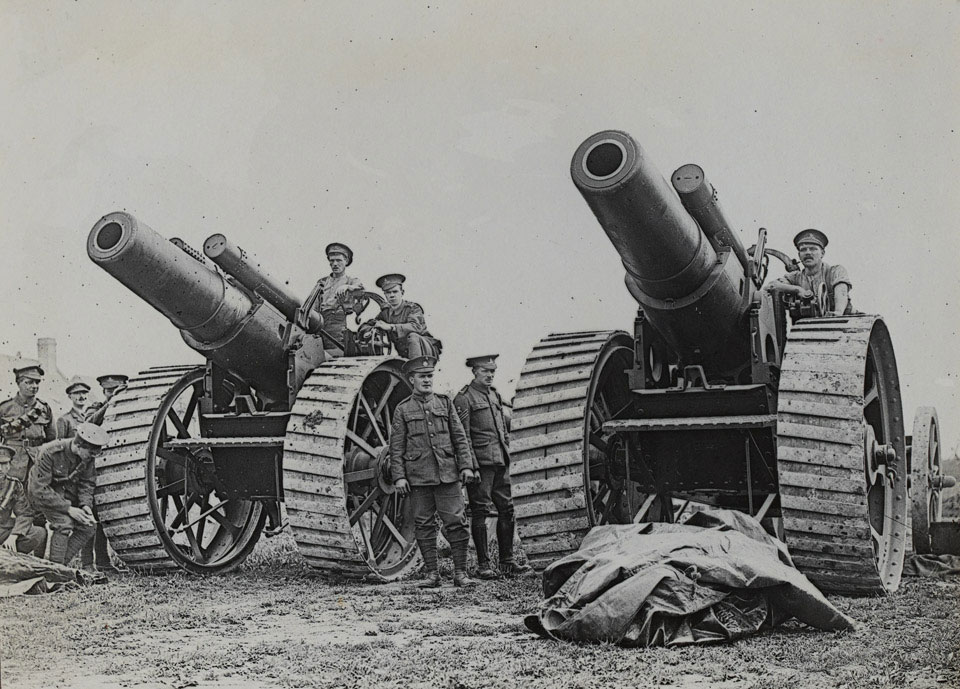
Image credit: 8-inch howitzers of 135th Siege Battery at La Houssoye on the Somme, 25 August 1916. (National Army Museum 1995-03-86-12)


