
Arthur Henry Seton Hart-Synnot
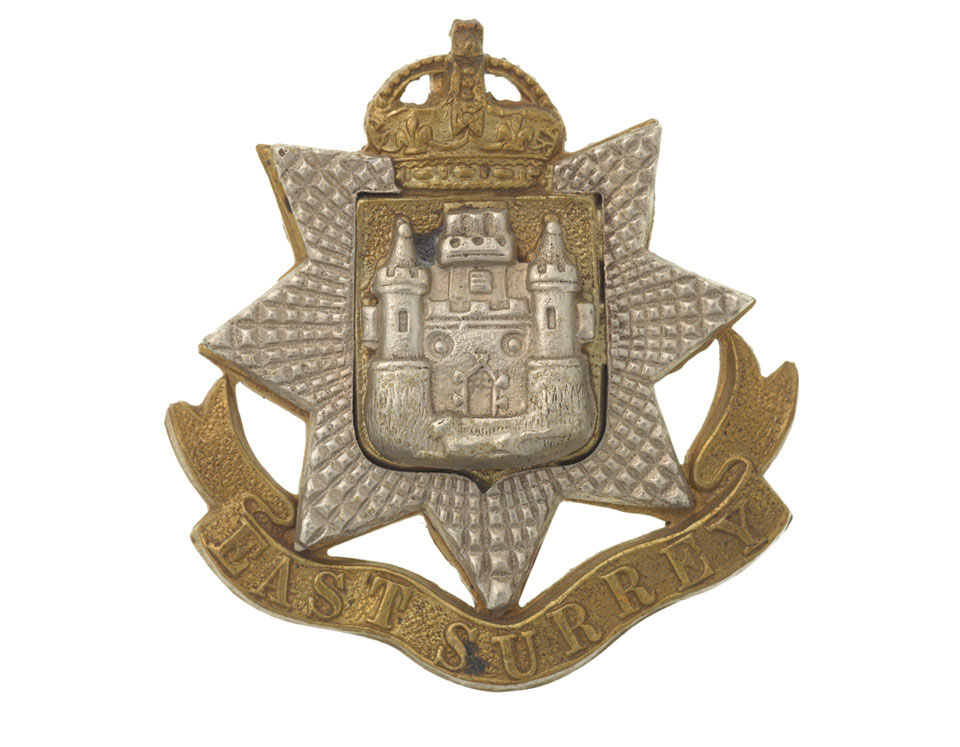
Arthur Henry Seton Hart-Synnot was the son of Major-General (Arthur) FitzRoy Hart-Synnot CB CMG JP (1844–1910), of Ballymoyer, Co. Armagh. His was a military family. His grandfather, General Henry Hart, was the editor of Hart’s Army List, and his uncle was Sir Reginald Hart, who won the VC in Afghanistan.[1] Arthur Hart-Synnot was commissioned in the family regiment, the East Surreys, on 8 October 1890. He saw active service during the Relief of Chitral (1895) and in the Tirah Expedition (1897–8), during which he was ADC to the GOC 1st Brigade. He served in South Africa (1899–1902) with the Mounted Infantry, as Brigade-Major with the Irish Brigade and, finally as DAAG. He was twice wounded and won the DSO.
Hart-Synnot had passed Staff College in 1899 and after the South African War his career took the staff path, though not – perhaps – the usual one. Hart-Synnot was a cultivated man. He was a keen and knowledgeable botanist. He read and – later – wrote poetry. And he was a talented linguist, with fluent French and decent German. When the call came, in the aftermath of the Anglo-Japanese Alliance of 1902, for officers to learn Japanese, Hart-Synnot took up the challenge. He arrived in Japan in 1904. The experience was to change his life. He was attached to the Japanese Army in Manchuria (1904–5) and GSO2 South China, based at Hong Kong (1907–11). After an unpleasant tour in Burma with his regiment (1911–13), he was appointed GSO2 at GHQ India on 27 October 1913, remaining there until October 1916, when he returned to Britain.
He deployed to France on New Year’s Day 1917, serving as a staff officer with the 17th and 40th Divisions. At the end of June he was given command of 1/4th Battalion East Lancashire Regiment. Although he felt fulfilled by the challenges of front line command he neither liked nor respected his brigade commander, A.W. Tufnell, whom he described as an ‘awful man’. On 19 September he transferred to the 1st Battalion Lancashire Fusiliers, in 86Brigade, 29th Division, an elite formation in which a man might get noticed (belatedly in Hart-Synnot’s case). He became GOC 6 Brigade, 2nd Division, on 28 April 1918, at the age of 47, after a short period in temporary command of 25 Brigade, 8th Division (23 February-10 March 1918). Two weeks after taking up his post, on 11 May, Brigadier-General Hart-Synnot was severely wounded by a German shell near Boyelles. The explosion blew off both his legs and killed his Brigade Major, Captain E.L. Wright MC.
During his time in Japan Hart-Synnot fell deeply in love with a clever and beautiful working-class Japanese woman, Masa Suzuki (‘Dolly’), the daughter of a barber. Masa was never a convenient ‘temporary wife’. Hart-Synnot described her as ‘the supreme woman in the world’. Although they spent only a few months together over a period of ten years, they had two sons, one of whom died in infancy.
Hart-Synnot tried very hard to get Masa to marry him and come to Britain before he left Hong Kong in 1911, but she listened instead to the concerns of her family. They maintained their love affair by letter. Hart-Synnot’s decision to marry Violet Drower, the VAD who nursed him during his post-war convalescence in Cannes, caused Masa great anguish. Violet knew about the relationship and Hart-Synnot continued to support Masa and his son financially. Hart-Synnot met Kiyoshi at Juan-les-Pins in 1939 and they were reconciled. Kiyoshi, who studied philosophy, French and German, served in the Japanese Imperial Army in the Second World War, was captured by the Soviets and died in a Siberian POW camp on Christmas Eve 1945. His mother died in 1965. Hart-Synnot’s letters to her were published in 2006.[2]
The First World War cost Arthur Hart-Synnot his legs, his career and the woman he loved; its aftermath claimed his family’s estate in war torn Ireland; the Second World War claimed his home in the south of France and the life of his son. Such was the twentieth century.
References:
[1] The name Hart-Synnot was adopted by A.H.S. Hart-Synnot’s father when he inherited the Ballymoyer estate through is wife, Mary Synnot.
[2] Peter Pagnamenta & Momoko Williams, Falling Blossom (London: Century, 2006)