
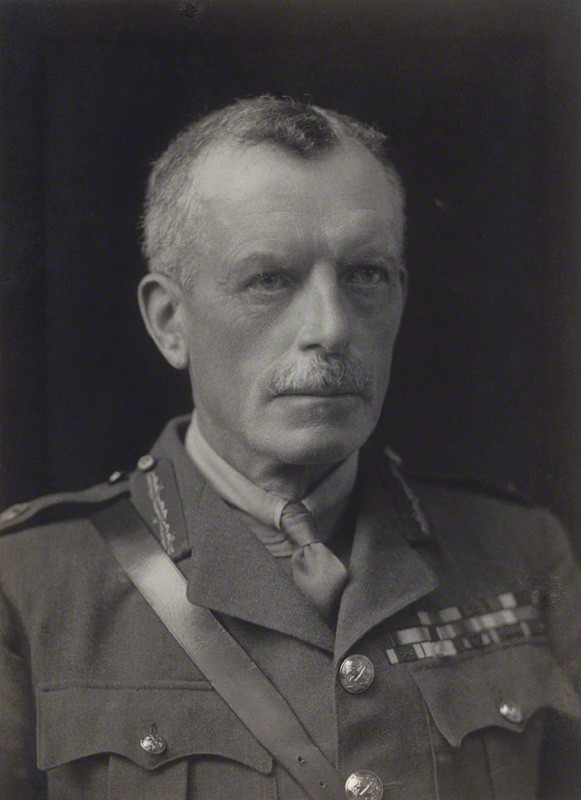
Charles James Briggs
Charles James Briggs was the son of Colonel C J Briggs JP DL, of Hylton Castle, Durham. His education took place largely abroad, including periods in France and Germany. He was commissioned in the 1st Dragoon Guards on 30 January 1886, but his career soon took the staff path. He was ADC to the GOC Egypt (1892–3), Adjutant 1st Dragoon Guards (November 1894–April 1897) and Brigade Adjutant 4th Cavalry Brigade (1897–9). These appointments were the mark of a coming man. During the South African War he was Brigade Major 3rd Cavalry Brigade (1899–1900) and was wounded at Magersfontein. He commanded 1st Imperial Light Horse (1901–2) and the Transvaal Volunteers (May 1905–May 1908), during which time he took part in the Natal Native Rebellion (1906). In July 1904 he had transferred to the 6th Dragoons, usually the sign of someone being fast-tracked for promotion. This did not, however, result in his command of a British cavalry regiment. After two years on half-pay (May 1908–November 1910), he took command of the South-East Mounted Brigade (November 1910–May 1913). It was while commanding this formation that Briggs took part in the 1912 army manoeuvres as part of Grierson’s force. It was Briggs who persuaded a somewhat reluctant Grierson to employ aircraft for reconnaissance, allowing Grierson to worst his rival, Douglas Haig. This may not have been a wise career move.
On the outbreak of war Briggs took 1st Cavalry Brigade to France (August 1914–May 1915) before being given command of 3rd Cavalry Division (May–October 1915). Despite the incredulity of some, Briggs’s career had seemingly to take second place to that of ‘Cis’ Bingham. It was Bingham who got 1st Cavalry Division and then, in October 1915, the Cavalry Corps. Brigadier-General ‘Sally’ Home thought that there was ‘no comparison’ between the two men, adding that it ‘looks like a case of influence’.[1] In the event, this was a mixed blessing. The cavalry was increasingly becoming a career dead end. But when Briggs made his escape it was only to the malarial backwater of Salonika, where he commanded 28th Division (October 1915–May 1916) and then XVI Corps (May 1916–February 1919). Sir Charles Briggs retired from the Army in February 1923 in the rank of lieutenant-general.
Refernces:
[1] Brigadier-General Sir Archibald Home, Diary of a World War One Cavalry Officer (Tunbridge Wells: Costello, 1985), pp. 60-61.