
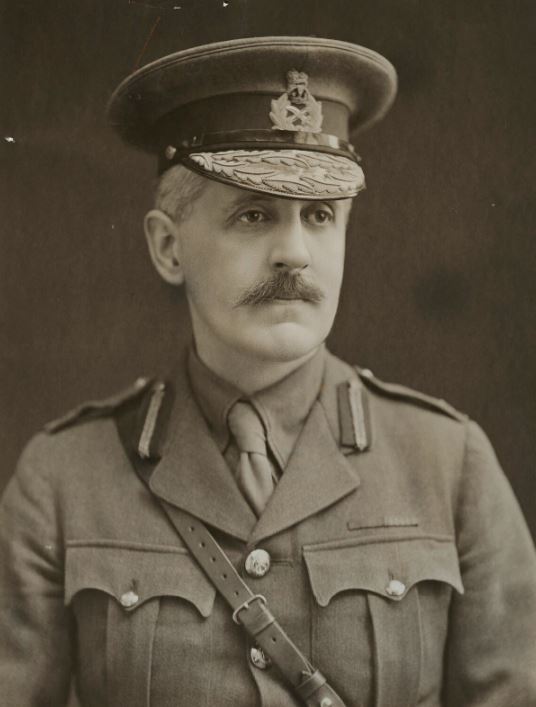
Fabian Arthur Goulstone Ware
Fabian Arthur Goulstone Ware’s pre-war career offered few clues to the influence he would have on the Great War’s remembrance. He was the son of Charles Ware of Bristol. After graduating BSc from the University of Paris in 1894, Ware embarked upon a teaching career, spending ten years as an assistant master in secondary schools (1889–1899). In 1901, however, his career took the first of its major turns, when he was appointed Assistant Director of Education in the Transvaal, then still at war. He was later Acting Director of Education for the Transvaal and Orange River Colony (January–June 1903) and a Member of the Transvaal Legislative Council (1903–5).
He was Director of Education for the Transvaal from 1903 to 1905, when he secured the rather astonishing appointment as Editor of the Morning Post, a position he retained until 1911. Between 1911 and 1914 he was advisor to the Rio Tinto mining company. His age (47) prevented him from securing a commission when the war broke out. Instead, he took command of a Mobile Unit of the British Red Cross Society, with the French Army (1914–15).
His discovery that there was no official organisation responsible for the marking and recording of graves led to his being invited to do the job himself. The importance of his work was soon recognised, however, and in 1915 the War Office established the Graves Registration Commission, under Ware’s command. This not only recorded graves, but also dealt with enquiries from the bereaved. It was part of Ware’s genius, however, to look to the future commemoration of the dead and to plan for it. The Imperial War Conference of May 1917 established an Imperial (later Commonwealth) War Graves Commission (IWGC). Ware was appointed its Vice-Chairman, a post he held until his retirement in 1948.
He established the IWGC as the sole executive body concerned with the British Empire’s war dead. He took charge of negotiations with foreign governments, which included not only Britain’s wartime allies but also her enemies, notably Turkey, which was essential to the Commission’s work. He recruited the finest gardeners and architects, including Sir Edwin Lutyens and Reginald Blomfield, to design the cemeteries and commissioned Rudyard Kipling to choose or compose the wording of their memorials. Ware is thus chiefly responsible for ensuring remembrance of Britain’s war dead and for the haunting cemeteries in which many are buried. He was knighted in 1920. Sir Fabian Ware published The Immortal Heritage, an account of the work of the Imperial War Graves Commission in 1937.