
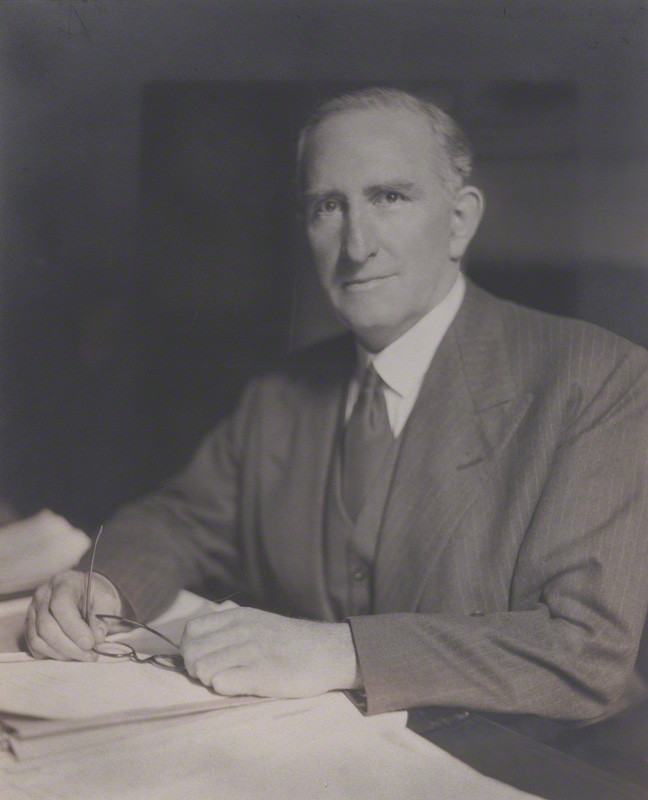
George Henry Gater
George Henry Gater was the son of W H Gater, a solicitor. He had a quite remarkable war. In 1911 he abandoned teaching for a career in educational administration and the following year was appointed Assistant Director of Education for Nottinghamshire. He was still in this post when the war broke out. Like hundreds of thousands of other young men he rallied to Kitchener’s call to arms and was commissioned in the 9th Battalion Sherwood Foresters. He served with this unit at Gallipoli. He later commanded 9th Sherwoods and 6th Battalion Lincolnshire Regiment (both battalions being in 33rd Brigade, 11th (Northern) Division).
After Gallipoli, he saw action on the Somme and at Third Ypres, twice being wounded. The citation to his second DSO, on 17 September 1917, spoke of his ‘conspicuous gallantry and devotion to duty. He led his battalion with brilliant skill and resolution during an attack, minimising their casualties during three days of intense shelling, by his able dispositions and good eye for ground. He directed the consolidation and remained in command for three days although severely wounded in the face early in the action’.
His reward was not only another DSO, but also promotion to GOC 62nd Brigade on 1 November 1917, following the death in action of Brigadier-General C G Rawling. This completed an astonishing rise from civilian to brigadier-general in just over three years. He was not yet 31.
62nd Brigade was in Major-General D G M Campbell’s 21st Division. Campbell was an outstanding soldier, but he was very much a pukka Regular who never went out of his way to court popularity, especially among New Army officers. Gater nevertheless not only survived under Campbell’s command for the rest of the war but also flourished.
On two occasions, during the worst of the fighting in the spring of 1918, Gater was chosen to command ad hoc units to help stem the German tide. The first, known as Gater’s Force, consisted of composite battalions from 62nd, 64th and 110th Brigades, together with sixty-six Lewis guns of 4th Tank Brigade. This was sent to reinforce 3rd Australian Division on 29–30 March 1918. The second, known as Gater’s Independent Brigade, and again composed of composite battalions from 62nd, 64th and 110th Brigades, plus support units, was sent to block any German advance beyond the Marne on 2 June 1918, where it came under the command of the French Fifth Army.
After the war Gater returned to his career and became a distinguished educational administrator and senior civil servant. He was knighted in 1941. Gater was the only British general of the Great War with an entry in Who’s Who that did not refer to his military rank. He is also possibly the only fighting general in British military history with a Dip. Ed.