
Spencer William Scrase Dickins
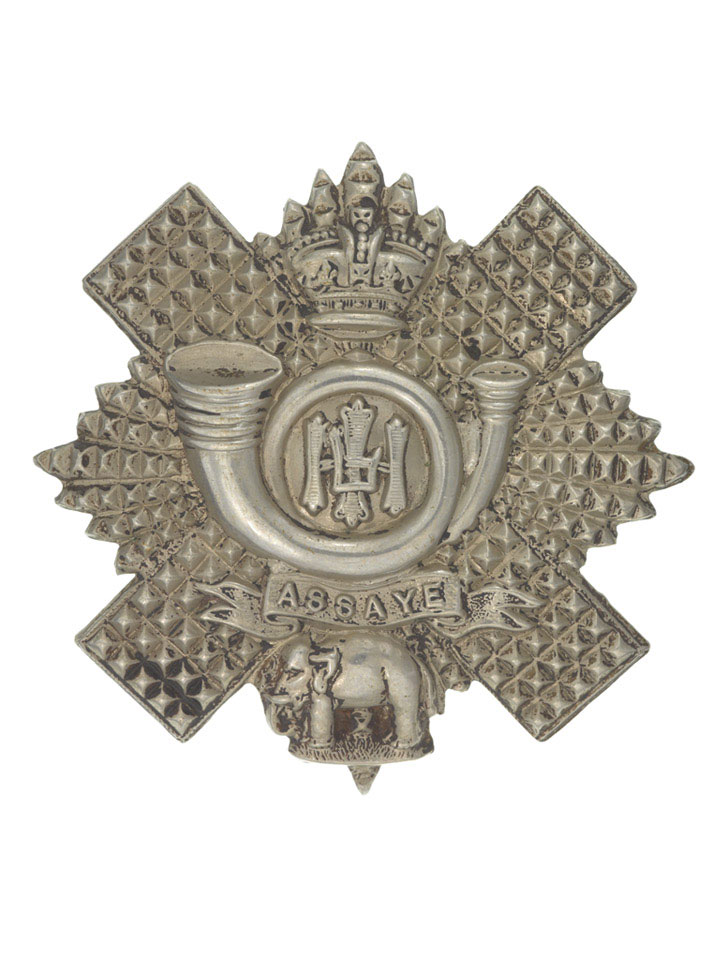
Spencer William Scrase Dickins was the second son of C. Spencer Scrase Dickins, of Coolhurst, Sussex. He was commissioned in the Highland Light Infantry on 10 May 1882 and soon saw active service in Egypt. He was Adjutant of 2nd Battalion HLI from February 1890 until April 1893. He took part in the fighting on the North-West Frontier of India in 1897–8 and later commanded 1st Battalion HLI (1904–8). Battalion command was the highest level of aspiration of most pre-war Regular officers. There were fewer interesting opportunities for officers of average abilities at the rank of colonel and above. In August 1914 Colonel Scrase-Dickins found himself OC (and i/c Records) No 12 District Irish Command, a post he had held since 29 July 1912. His career seemed to be drifting towards a dull, administrative conclusion.
As with so many officers, however, the outbreak of war brought renewed possibilities. Within a month Scrase Dickins found himself GOC 28th Brigade in the newly forming 9th (Scottish) Division, senior division of Kitchener’s New Army. He was 51. Napoleon famously asked potential generals if they were ‘lucky’. Scrase Dickins would not have passed the test. 28th Brigade’s baptism of fire was at Loos, a battle in which few commanders won laurels. Scrase Dickins’s attack was badly disrupted at the last minute by 2nd Division’s taking over part of his line, leaving 28th Brigade with only one communication trench for both ‘up’ and ‘down’ traffic, and by a German artillery bombardment that fell on his assault troops ten minutes before the infantry attack went in. Confusion was great and losses were severe.
Scrase Dickins clearly felt them personally.
‘When we were relieved and going down the communication trench carrying our two remaining Vickers Guns we passed Brigade HQ dug-out and standing outside was … Brigadier Scrase Dickins … with tears rolling down his cheeks. The only time I ever saw a General in tears,’ Major J.H. Henderson later recalled.[1]
28th Brigade was broken up in May 1916 to accommodate the arrival in 9th Division of the South African Brigade. Scrase Dickins was transferred to command of 27th Brigade, which he led on the Somme. At Longueval, on 14 July, in an attack famous for the first authentic use of a ‘creeping barrage’, brainchild of 9th Division’s innovative CRA. Brigadier-General ‘Owen’ Tudor, 27th Brigade’s assault began well, but stalled after taking its first objective. Subsequent fighting was typically bitter, piecemeal and without adequate artillery support. Losses were severe, 81 officers and 2,033 men, including 569 killed or missing.
Scrase Dickins was promoted GOC 37th Division on 22 October 1916, with 9th Division still engaged in heavy fighting. His career as a divisional commander, however, was short lived. Eighteen days after his appointment, he was taken ill and sent home. He never returned to active service and died on 23 October 1919 at the age of 57.
There was no doubting Scrase Dickins’s personal courage, which was exemplary, or his devotion to duty. He was a regular visitor to the front line and his spartan routine included an open air bath in the square at Montauban, even under shell fire. He had the misfortune to command a brigade in an army that had been de-skilled at every level by its rapid expansion and to lead it in offensive operations against a skilful, resolute enemy, entrenched on the high ground. Whether he had the tactical imagination or the powers of leadership to succeed at the level of command to which the outbreak of the Great War unexpectedly raised him is difficult to tell.
References:
[1] Quoted in P. Warner, Loos (London: William Kimber, 1976), p. 147.