
- Our Journal: Stand To!
- Bulletin - The member's magazine of The Western Front Association
- Gun Fire magazine
- Firestep magazine
- Royal Naval Division magazine
- History of the First World War magazine (Purnell)
- I Was There! magazine
- World War 1914-1918: A Pictured History magazine
- Twenty Years After magazine
- Military Fact Sheets
Royal Naval Division magazine
Between June 1997 and March 2003 Len Sellers produced and edited a three-monthly magazine on the history of the Royal Naval Division, which from July 1916 was known as the 63rd (RN) Division. This excellent magazine eventually extended to 24 issues with a separate index for each eight magazines. The complete set contained 2,443 pages with 581 photographs, 75 maps and 71 poems.
We are delighted to be able to provide access to the Royal Naval Division magazine to all WFA members. It is a work of some 2,443 pages, with 581 photographs, 75 maps and 71 poems. Contributions have been included by so many who have a deep interest in this unique division.
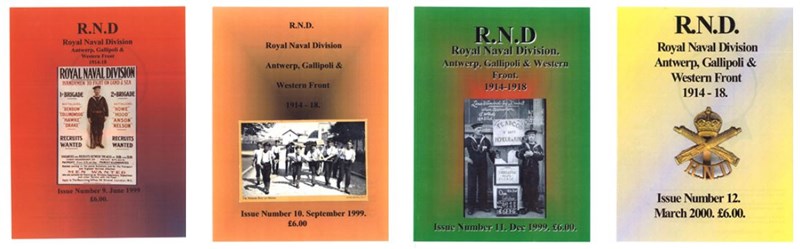
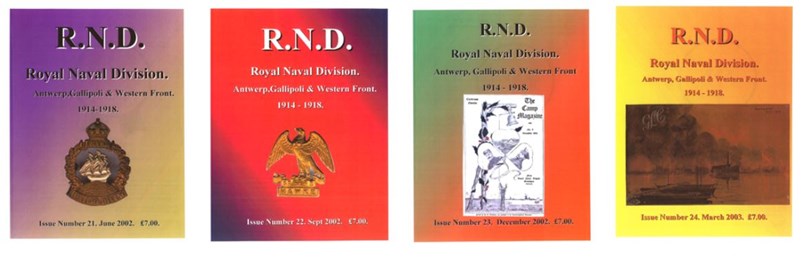
If you are a current member of the WFA and wish to access issues Royal Naval Division magazine login to your membership here:
About the Royal Naval Division
The Royal Naval Division, or as it became known ‘Winston Churchill’s Little Army', had its foundations at the beginning of the First World War. The army only had six regular divisions bound for France. So, naval reservists which were not required for the fleet could be a useful addition when formed into three Brigades. One of marines, battalions named Chatham, Portsmouth, Plymouth and Deal. Two naval brigades, Drake, Hawke, Benbow, Collingwood, Nelson, Howe, Hood and Anson.
With little training, in October 1914 they were first blooded, in the defence of Antwerp. Many men had never fired a rifle and the equipment was third rate. As an example, when marching on the road to Dover many school satchels were collected to hold bullets. The division saw little fighting and when in retreat many were taken prisoner or interned in Holland for the duration of the war. However, they did delay the advancing Germans, which helped in defending the channel ports.
Retrained and reformed the horrors of Gallipoli next awaited the R.N.D. They would take a major part in the campaign, not only at Helles, but some battalions saw action at Anzac and/or Suvla Bay. During the evacuation, the division being part of the last to leave, became known as “The last Ditchers!”
In May 1916 the Division arrived in France to be retrained in army ways but still retaining its naval traditions. As Winston Churchill writes:- “Its officers and men use consistently the Naval parlance on every possible occasion. To leave their camps, in which the White Ensign flew and bells recorded the passage of time, men requested “leave to go ashore;” when they returned they “came aboard,” and when they did not they were reported as “adrift.” Men were “rated” and “disrated,” and for Sergeants and Lance-Corporals they had Petty Officers and Leading Seaman.
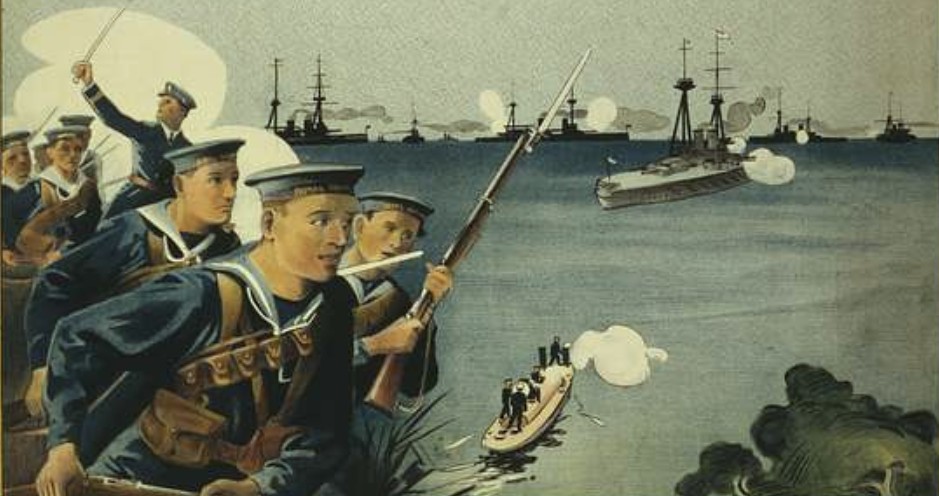
Anchors were stencilled on their limbers and emblazoned on their Company flags, and their regimental badges were in the form of the crests of Admirals whose names their Battalions bore. When ill or wounded they attended “Sick Bay”, field kitchens were the “galley”, the King’s health was drunk sitting in the "ward-room”. Many of the men and some of the Officers requested “leave to grow,” and paraded creditable beards in the faces of a clean-chinned Army.
Three example articles
We have made three articles available as examples of what is available:
To access issues of the 'Royal Naval Division magazine', become a member of The Western Front Association and join our vibrant community. Find out more about all our Member Benefits