
Walter John Laverne Jordan died of wounds on this day in 1915
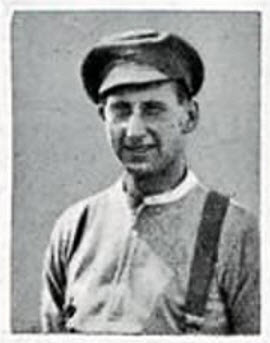
Walter John Laverne Jordan was born on 3 June 1891 in Bounds Green, north London He was the only son of Alfred John Jordan and his wife, Laverna (née Yateman).
in 1901, Walter, aged 10, was living at 18 Clermont Terrace, Preston Park, Brighton. The house belonged to his grandfather, Frederick Yateman.
Also living there were his mother, Laverna Jordan, and his 2 older sisters, Annie Jordan and Charlotte Jordan. His mother's brother, William Yateman, and sister, Annie Yateman, were living there too.
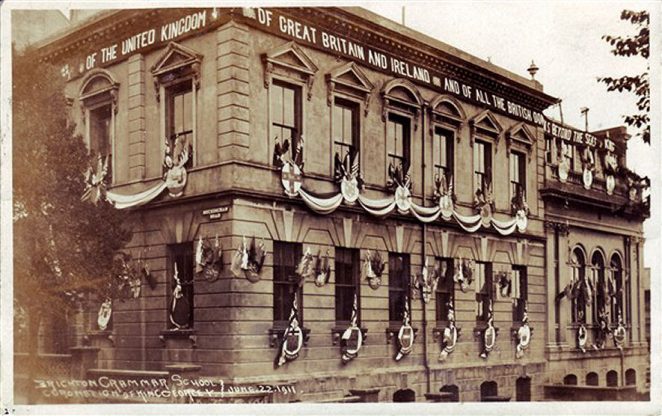
Walter attended Brighton Grammar School.
In 1911, age 19, he was living at 36 Tivoli Crescent, Preston Park in Brighton. The head of the household was now Annie Yateman and her brother, William, was still there. Laverna was there with Annie and Walter. Charlotte had left home but there was a newcomer to the family group, 14 year old Marjorie Dorothy Jordan.
Walter was described as a Horse Keeper at a Motor Garage and it is known that he later became a Motor Engineer.
On 14 October 1913, he married Edith Sarah 'Widgie' Osborne in Brighton.
He was the half-mile champion of Sussex, and a member of the Brighton and County Harriers.
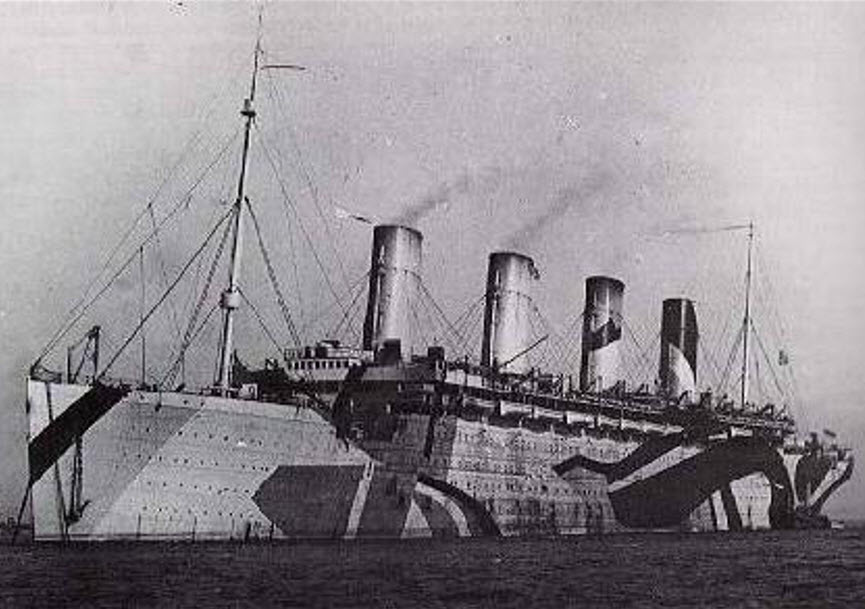
On 16 October 1914, he joined 1/1st Sussex Yeomanry. On 26 September 1915, his Battalion left for the Dardanelles and sailed on the RMS Olympic from Liverpool to Gallipoli, landing on 8 October 1915 and coming under orders of the 42nd (East Lancashire) Division.
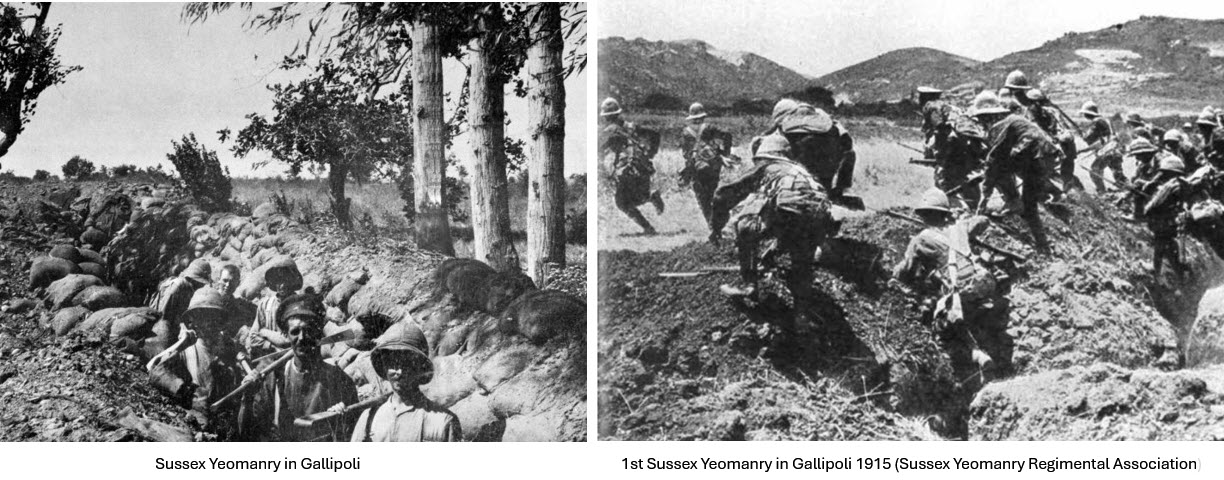
On 20 December 1915, Walter died aboard HMHS Assayé from wounds received in action on Gallipoli.
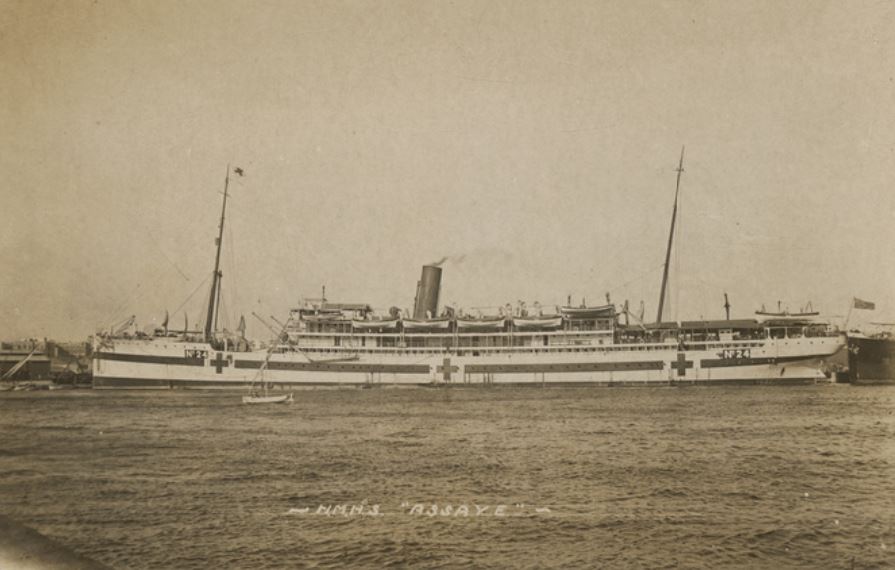
He was buried at sea, one mile off Cape Helles.
A fellow Trooper, L.J. Cooke, wrote to Walter's sisters:
"The regiment was ordered to move off to support troops in the trenches. This move was carried out whilst a heavy bombardment from both sides was in progress. Whilst the Sussex Yeomanry were marching up the Gully, high explosive shells were falling in the Gully: these shells were endeavouring to silence a British battery which was situated on the left of the Gully on the high cliff. One of these shells fell near to the Squadron your brother belonged to, and six of them were wounded. I was coming up in the rear of the regiment with the Doctor and we had a message that some of the 'boys' had been hit. When we arrived on the spot we found three badly wounded and three slightly wounded. Your brother had received a severe wound situated at the base of the left lung, the wound was large enough to put a person's forefinger and thumb in, being a triangular shaped wound, the sides of which were about 2 1/2 inches. While the party were dressing the wounded three, more shells exploded about 8 yards from us, the second of which was nearer to us than the other two, and this shell knocked us all over and blew the dressing off your brother's back which we had just got clean and in position, and covering him with dirt. When the dust had cleared I expected to find everybody blow to pieces, and marvelled at my own lucky escape of only being down away about 6 feet ... I should like to mention that your brother was absolutely one of the best liked fellows in the regiment, and had all sorts of nicknames. He was always so jovial, and he is greatly missed by all the old boys."
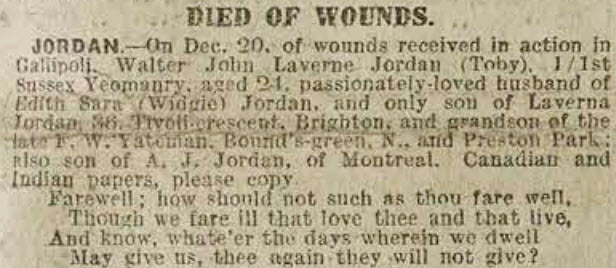
His death was reported in the Daily Telegraph on 3 January 1916 with the poem:
Farewell; how should not such as thou fare well,
Though we fare ill that love thee and that live,
And know, whate'er the days wherein we dwell
May give us, thee again they will not give?
He is commemorated at the Helles Memorial.
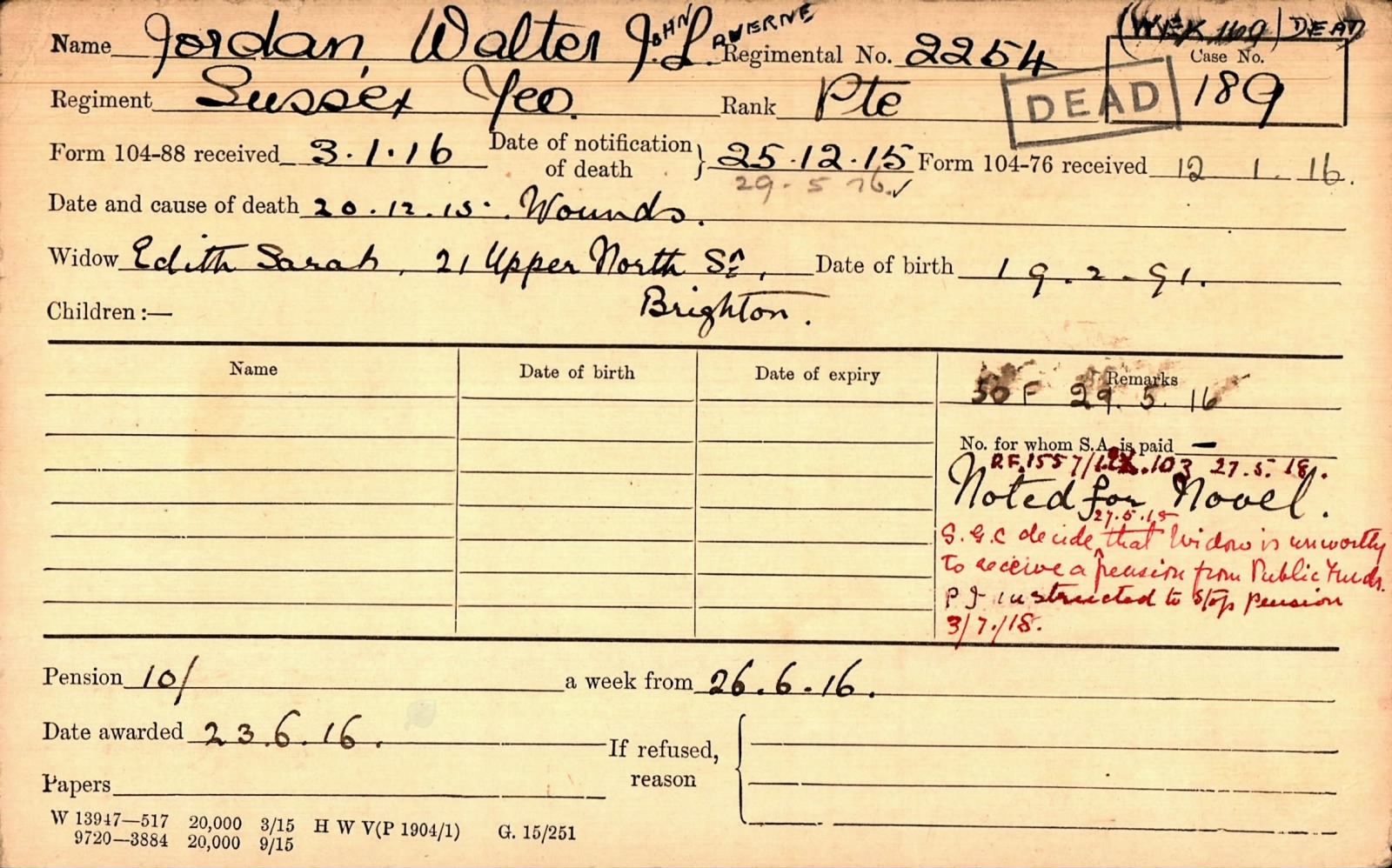
No more is known of his wife, Edith, except that, on his Pension Record Card, there is a later note "S.G.C. decide that widow is unworthy to receive a pension from Public Funds. PJ instructed to stop pension 3/7/18". It should be noted that ‘Unworthy’ covered a variety of issues and sometimes was unfairly used eg. on the basis of gossip, judgemental views, etc. However, according to the List of Soldier's Effects, she was still receiving a war pension in August 1919.
2254 Trooper Walter John Laverne Jordan, 1/1st Sussex Yeomanry (T.F.)