
The Top German Aces Of The Great War
Of the 71 airmen who are often listed as the leading air aces of the Great War (30 and above victories), 34 (48%) were German, i.e. excluding the Austrians and Hungarians. However, as the criteria for the designation of exactly what defined an ace differed from belligerent nation to belligerent nation, it is nigh impossible to have a truly comparative and authoritative overall list.
The French, who in 1915 were the first to establish a cadre of 'flying aces' - 'Les Aces Volants'- used five 'victories' (or the less appropriate expression 'kills') as their threshold. (The use of the word 'kill' in this context is hardly appropriate since one cannot kill an aeroplane - only the crew. Happily, this was not always the case and many shot down crew lived to fight another day).
The Germans quickly followed in adopting the ace principle (using the word Kanone [big gun], in lieu of ace) but their threshold was at first four victories and then eight. Finally, it rose to 16 from 1916 onwards.
In addition, in principle, the top German award for military gallantry - Orden Pour le Merité, or Blue Max - was initially given to aces achieving 8 victories; the tariff was raised to 16 in 1916, and 30 by the end of the Great War. However, inexplicably, some German aces who obtained scores exceeding these criteria never received the decoration; also the PLM was not awarded posthumously. A few nominees were just unlucky as the War ended before the necessary administrative steps could be completed; although, amazingly, as shown below, the award system functioned fairly efficiently up to almost to the day of the Armistice.
Although the British are often said to never had an official cadre of air aces, and a rather ad hoc system of confirmation/certification, 550 Commonwealth airmen are usually described in the literature as being Great War air aces.
What can be readily shown is the comparative number of victories claimed by each ace, or claimed for him after his death.
In all there were nearly 2,000 airmen of various nationalities who could be classed as aces if the lower score of five victories, or more, is taken as the universal threshold of 'acedom'. Of this exalted group no less than nearly 400 (20%) were Germans. But, as indicated earlier, even here an element of caution is required in any attempt at making comparisons as the methods of awarding victories differed. Some single victories were calculated by adding up the 'shares' of victories jointly claimed by two or more pilots. The French and Americans were said to be rather lenient in regard to 'shared victories' and allowed fractions of a kill to reach dubious levels such as one-quarter or even one-eighth.
In addition to these rather dubious scoring methods, conduct on both sides was not always at the level of 'the chivalrous knights of the air' as the general public was lead to believe:
Many victory claims were accepted although they had not been confirmed by the required witnesses, particularly where these concerned famous pilots. An outstanding Allied example being the Canadian Billy Bishop (72 victories): he made claims of victories achieved whilst on solo missions behind enemy lines. Bishop was even awarded his VC on the basis of an unwitnessed incident, an unheard of precedence, and one not repeated in any award of the VC since.
Rumours also circulated that the 'Red Baron' Richthofen had victims set up for him by his 'Flying Circus'; his participation being limited to the administration of the coup de grace. If this allegation is correct, it is perhaps significant that when he was shot down he was, almost unprecedentedly, flying alone unprotected by his 'Circus'. Certainly, many of the more successful aces of all nations were exceedingly cautious to avoid any precipitate action or risky situations. They also ensured that they had exclusive use of the more reliable and up-to-date aircraft. Rumours also persisted that some aces selectively searched out the inexperienced neophyte pilot, and thus readily augmented their list of victims at little risk to themselves.
Consequently, in those periods when the opposing side held the supremacy of the airspace, the 'combat life' of a combat-naïve pilot was often measured in days, and even hours,
Post-war re-evaluations often disputed the number of victories claimed by the individual aces; a case in point being the British highest scorer, Major Edward Corringham Mannock, who was officially accredited with 73 victories in 1919 (when he was awarded the VC posthumously). This total was later downgraded to 61 confirmed victories by the consensus of an unofficial committee of self-appointed air combat auditors, and this reduced number is now often quoted in the literature.
It should also be mentioned that although the German pilots had the benefit of parachutes in 1918, and that, as we shall see, saved the lives of several German aces - Oberleutnant Udet, amongst them - the commanders of the British and French airforces forbade their use. The rationale? The Allied commanders feared that their provision might encourage cowardice in the face of the enemy. The fiery death in a blazing aircraft, or the alternative suicidal jump, cruelly filled the troubled dreams of many Allied pilots - the aforementioned Major Mannock VC being one of them. Reputedly, he never flew without carrying on his person a loaded pistol to curtail such a fiery end; although, apparently, in the event Mannock didn't, or couldn't, use it.
Glossary
GAAS = German Army Air Service. (a.k.a German Imperial Army Air Service) = Luftstreitkrafte.
Leutnant = Second Lieutenant.
Oberleutnant = First Lieutenant.
Hauptmann = Captain (Army).
Rittmeister = Captain (Cavalry).
Major = Major.
Oberst = Colonel.
(The rank listed in this article is highest awarded to the individual ace during the Great War).
FEA = Fleiger Erzatz Abteilung = Pilot Training Unit. = FEA 4.
FA = Fleiger Abteilung = Flying Section. = FA 23.
Jasta = Jagdstaffeln = Squadron = Flight of six fighter aircraft. = Jasta 12.
JG = Jagdgeschwader = Group of four Jastas e.g. JG 1. =
Richthofen Jagdgeschwader = Jastas 4, 6, 10 and 11.
KG = Kampfgeschwader = Bomber squadron = KG 1.
MFA = Marine Fleiger Abteilung = Naval Flying Section = MFA 2.
MF Jasta = Marine Feld Jasta = Naval squadron. = MFJasta 2.
ALLMENROEDER, Karl. (1896-1917)
Leutnant.
Victories = 30.
Highest award = Pour le Merité/Blue Max (July 1916).
Nickname = Karlchen.
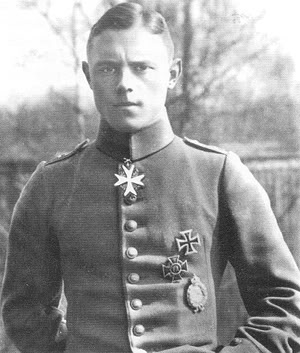
Enlisted in the 62nd Field Infantry Regiment in August 1914 and served in Russia, Poland and Galicia on the Eastern Front.
Commissioned as Leutnant in March 1915.
Transferred to the GAAS in March 1916 and joined FA 227 and then Richthofen's Jasta 11 as a fighter pilot in November 1916.
Scored his first confirmed victory - a RAF BE 2c - on 16th February 1917.
His last victory was Nieuport Scout - shot down on 26th June 1917.
Allmenroeder was killed in action on 27th June 1917 whilst in aerial combat above Zillebeke, near Ypres, Belgium with Jasta 11: an effective career as fighter pilot of only just over four months and a shoot-down rate of a victory every 3.1 days.
ARIGI, Julius. (1895-1981)
Stabsfeldwebel (Staff Sergeant)
Victories = 32
Highest award = Medal for Bravery (1 gold award, 4 silver)
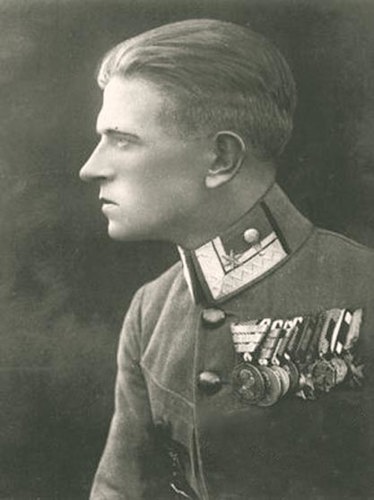
As Austrian, Arigi volunteered in October 1913 for Fortress Artillery Regiment No. 1 of the Austro-Hungarian Army.
In October 1915, Arigi became a POW when he was forced down as a result of engine failure whilst on a reconnaissance flight behind enemy lines in Montenegro. No tcontent to sit the war out, Julius escaped on his sixth attempt in January 1916, by stealing an enemy staff car belonging to Prince Nicholas of Montenegro, thereby re-joining his unit.
His fighting career extended in excess of four years; his last victory was scored on 23 August 1918. He had declined a promotion to a commissioned rank (to as safe posting) to remain non-commissioned at the front.
He never saw combat on the western front.
BAUMER, Paul Wilhelm. (1896-1927)
Leutnant.
Victories = 43.
Highest award = Pour le Merité/Blue Max (November 1918. One of only five recipients of the Pour le Merité and the Golden Military Merit Cross).
Nickname = The Iron Eagle.
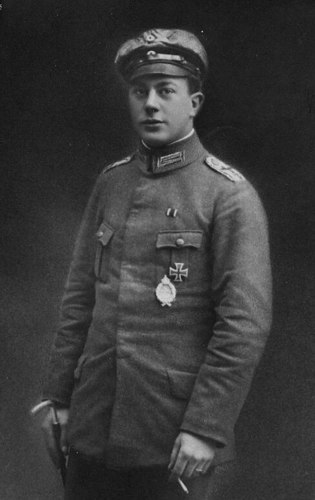
Already a licensed pilot in 1914, he served in the infantry - 70th Infantry Regiment - in France and in Russia, where he was severely wounded, until transferring to the GAAS in 1917.
After serving in 'General Duties' for several months he was accepted for pilot training.
Graduating and completing training in fighters, Bauemer served with FA 7 and then Jastas 5 and 2 in France and Belgium.
His first confirmed victory was an observation balloon on 12th July 1917.
Commissioned as Leutnant in April 1918.
Wounded in a crash landing in May 1918, he was also forced to parachute (successfully) from his aircraft in September 1918.
His final success was a Bristol F 2B shot down on 9th October 1918.
Baumer survived the Great War and like many of his colleagues died in a flying accident.
BERTHOLD, Rudolf. (1891-1920)
Hauptmann.
Victories = 44.
Highest award = Pour le Merité/Blue Max (October 1917).
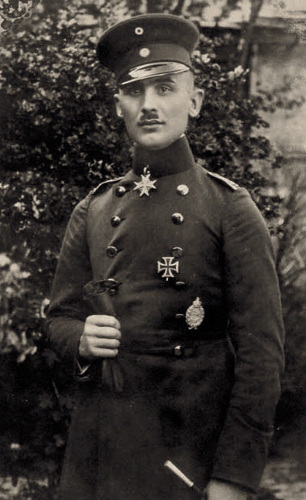
A long serving (since 1910) infantryman with the 3rd Brandenburg Infantry Regiment, he learned to fly in 1913 gaining his flying certificate.
He joined the GAAS in August 1914 and completed training as an observer with FA 23 and completed many operational missions.
In December 1915 Berthold learned to fly fighters but was seriously injured in a crash landing in April 1916.
Commissioned to Leutnant in April 1916.
Shot down his first aircraft - Voisin (model unknown) - on 2nd February 1916.
Returning prematurely to flying duties, in August 1916 he founded Jasta 4.
In October 1916, he took over the command of Jasta 14.
In May 1917, Berthold was again badly wounded when he was shot down.
After a long hospitalisation he again returned prematurely to duty and was given command of Jasta 18 and promotion to Oberleutnant.
Was again wounded on 10th October 1917 whilst commanding Jasta 18, and again made an early return to duty taking command of JG 2.
Was promoted to Hauptmann in October 1917.
On 10th August 1918, as commander of JG 2 he was seriously wounded for the fourth time in a double collision with an enemy aircraft and a brick building.
This double collision with an Airco DH 4 was his last victory.
Berthold was out of action for the rest of the Great War.
Survived the Great War only to be murdered in March 1920 (strangled with his own PLM ribbon) during civil disturbances in Germany.
BILLIK, Paul. (1891-1926)
Leutnant.
Victories = 31.
Highest award = Iron Cross, 1st Class.
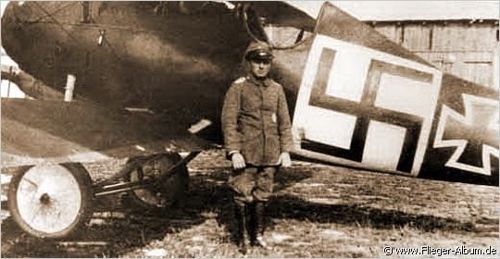
Little is known of Billik's military service prior to 1917 when he was 26 years of age and, presumably, long enlisted. But he served in Jastas 7, 12 and 52.
He scored his first confirmed victory - a Sopwith Pup - on 30th April 1917.
In October 1917, and again in June 1918, he was injured in aerial combat.
His final victory was a RAF SE 5a shot down on the 9th August 1918.
Was shot down in August 1918 and captured. Regrettably, this deprived him of his hard-earned Pour le Merité - only one of two pilots with 30 victories to be so denied
Billik survived the Great War and, like many of his contemporaries, died in a flying accident after the war.
BOELCKE, Oswald. (1891-1916)
Hauptmann.
Victories = 40.
Highest award = Pour le Merité/Blue Max. (July 1916; one of the first two recipients of the award to pilots in the Great War, the other was to Immelmann ).
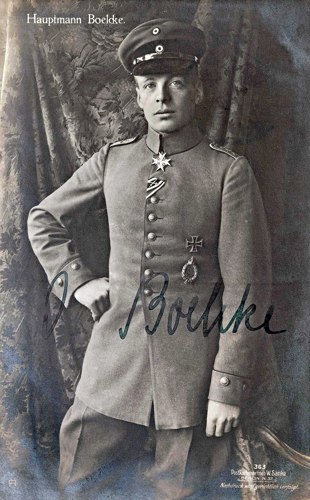
Began his army service in 1911 as a cadet telegraphist.
After officer training transferred to the GAAS at the outbreak of the Great War and undertook pilot training.
His first confirmed victory was a Morane-Saulnier P which he shot down on 4th June 1915.
His first operational post was with FA 13 flying on reconnaissance patrols in France where his combative enthusiasm led to his rapid transfer to fighters.
One of Germany's first air aces and air tacticians, Boelcke became a household name and national hero and was one of the most sought after of the famous cigarette card collection of air aces.
In June/July 1916, on the Kaiser's express orders, he was sent on promotional tour of Axis countries to spend some time away from the dangers of the Somme battlefield. During this long tour he formulated some principles of aerial combat which he submitted to the German High Command. Subsequently, these principles became the nucleus of an operational handbook for German aviators during the Great War.
Boelcke was also promoted to Hauptmann in July 1916.
In late July 1916, Boelcke was recalled from his tour to take command of Jasta 2.
Four months later, was killed in a crash landing near Douai, NE of Arras, France, after a collision in the air with a fellow pilot during a dogfight.
His last victory was a RAF BE 2c that he shot down two days before his death.
BOLLE, Karl. (1895-1955)
Rittmeister
Victories = 36.
Highest award = Pour le Merité/Blue Max (August 1918).
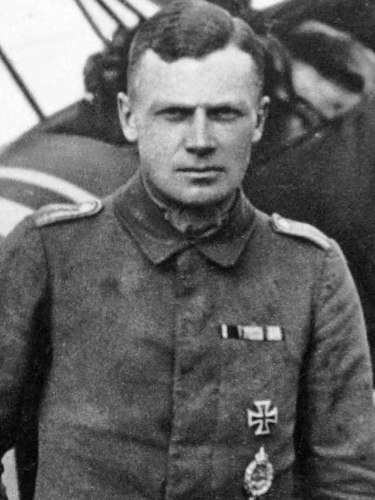
At the outbreak of war, he interrupted his studies in England to enlist in the 7th Kurassier Regiment and fought in France and in 1915 on the Eastern Front (Poland).
In 1915 he transferred to the GAAS, completed pilot training in July 1915 and was posted to KG 4 on reconnaissance duties.
Later that year was transferred to another bomber unit and teamed up with Manfred von Richthofen's brother, Lothar, as his observer.
Was badly wounded in October 1916.
Upon his return to duty, he was posted to Jasta 28 in July 1917 as a fighter pilot.
His first confirmed victory was an Airco DH 4 that he shot down on 8th August 1917.
Bolle was promoted to command Jasta 2 in January 1918.
In February 1918 he received his commission to Oberleutnant and in August was promoted to Rittmeister.
His final aerial victory was on 4th November 1918 and was a Sopwith Snipe.
Bolle survived the Great War.
BONGARTZ, Heinrich. (1892-1946)
Leutnant.
Victories = 33.
Highest award = Pour le Merité/Blue Max. (December 1917).
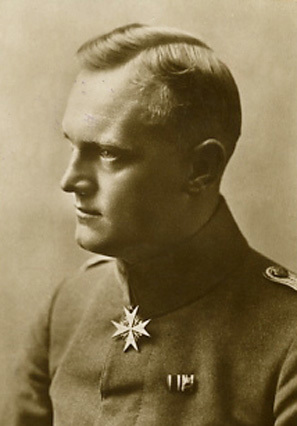
He enlisted in 16th Infantry Regiment in August 1914 and fought at Verdun in1915.
Commissioned to Leutnant March 1916.
Transferred to the GAAS in early 1915.
He trained as a pilot in FA 5 and on graduation in October 1916 was posted to reconnaissance duties with KG 5.
In January 1916, he was posted to another bombing unit and in April 1917 to Jasta 36 becoming commander in September 1917.
His first confirmed victory was a Spad S VII shot down on the 6th April 1917.
Bongartz was wounded four times in aerial combat and returned to duty each time. However, the fifth wound in April 1918 included a severe facial/eye injury and, although he successfully landed his aircraft on this occasion, the loss of stereoscopic vision meant his days as a fighter pilot were over.
His ultimate victory was a Sopwith Camel that he claimed on 27th March 1918.
Upon leaving hospital Bongartz became a Director of the German Aeroplane Inspectorate.
Bongartz survived the Great War.
BRUMOWSKI, Godwin Karol Marian von (1889-1936)
Hauptmann
Victories = 35
Highest award = Order of the Iron Crown (Austria)
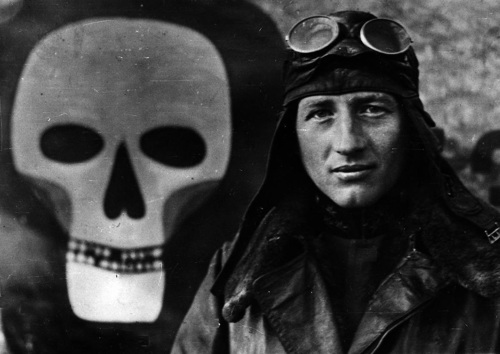
Brumowski was the most successful fighter ace of the Austro-Hungarian Air Force during the Great War.
On 12 April 1916, Brumowski was part of a two man crew in one of the seven Austro-Hungarian aircraft that bombed a military review attended by Russian Czar Nicholas II. In fight, they shot down two of the seven Russian Morane-Saulnier Parasol two-seaters that attempted to drive them off.
It is notable that Brumowski became an ace (on 2 January 1917 when he was shot down an Italian Farman two-seater) while still flying two-seater craft which were unsuited for air-to-air combat.
Brumowski continued his combat missions until 23 June 1918, when he was ordered on extended leave. His last successful fight was on 19 June; when he claimed his 35th victory.
BUCKLER, Julius. (1894-1960)
Leutnant.
Victories = 36.
Highest award = Pour le Merité/Blue Max (December 1917. One of only five recipients of the Pour le Merité and the Golden Military Service Cross).
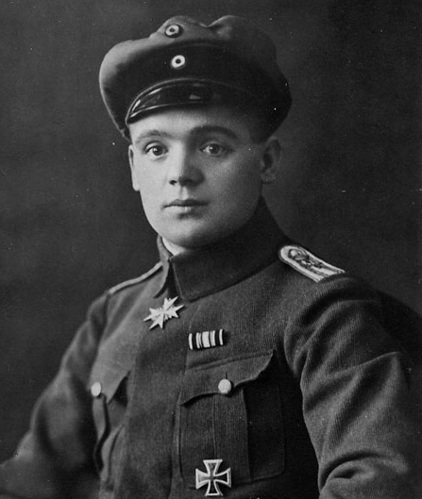
Joined the 117th Infantry Regiment in 1913 aged only 16.
He fought on the Western Front and was seriously wounded in August 1914.
Recovered, in November 1914 he was an early volunteer for the GAAS and was accepted for training in FEA 6 remaining on as an instructor.
After serving with FA 209 as an observer, he undertook pilot training and spent the remainder of his active service with Jasta 17, where he shot down his first confirmed victory - a Caudron (model unknown).
During his service he received a series of wounds culminating in a serious incident and a crash landing in November 1917.
Buckler was commissioned to Leutnant in November 1917.
Once recovered, Buckler returned to duty, but in May 1918 he was again seriously wounded.
That finished his participation as a fighter pilot, having suffered five separate woundings.
His final victory was Salmson 2A 5th October 1918.
Buckler survived the Great War and served with the Luftwaffe as a flying instructor in the Second World War.
BUCHNER, Franz. (1898-1920)
Leutnant.
Victories = 40.
Highest award = Pour le Merité/Blue Max (1898-1920).
Enlisted under-age (16) in the 106th Saxon Infantry Regiment in August 1914.
Commissioned to Leutnant in August 1915.
Served on both the Eastern and Western Fronts and was wounded on the latter in April 1916.
Transferred to the GAAS in late 1916.
Trained as a pilot in FA 270 and posted to Jastas 9 in July 1916 and 13 in October 1916
Buechner achieved the majority of his victories in the mid- and late-1918; the first was a Nieuport (model unknown) which he shot down on 17th August 1917.
On 10th October 1918, he narrowly escaped death whilst parachuting from his aircraft after it spun out of control after an aerial collision with a fellow Jasta 13 pilot.
His final victory was on the 22nd October 1918 when he shot down an enemy two seater of unknown marque.
Buechner survived the Great War but was killed by anti-aircraft fire whilst flying during the internecine warfare in the Germany of 1920.
DEGELOW, Carl. (1891-1970)
Leutnant.
Victories = 30.
Highest award = Pour le Merité/Blue Max (November 1918).
Nickname = Charly.
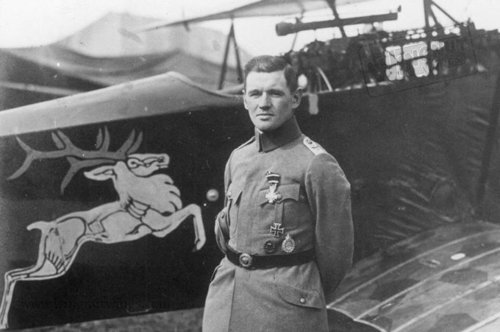
Voluntarily returned from the USA, in August 1914, to enlist in the 88th Infantry Regiment and served on the Eastern and Western Fronts; was seriously wounded whilst serving on the former.
Whilst hospitalised in July 1915, he was commissioned to Leutnant and, on his release from hospital, returned to the Eastern Front.
Transferred to the GAAS in July 1916. After training was posted in early 1917 to FA 216 as a reconnaissance pilot on the Western Front and claimed his first confirmed victory - a Caudron G IV - on 25th May 1917.
Posted to Jasta 36 as a trainee fighter pilot, Degelow graduated in August 1917 and served from August 1917 in Jastas 7 and 40 in both Flanders and France, taking command of the latter July 1918.
DORR, Gustav. (1887-1928)
Leutanant.
Victories = 35.
Highest Award = Golden Military Merit Cross.
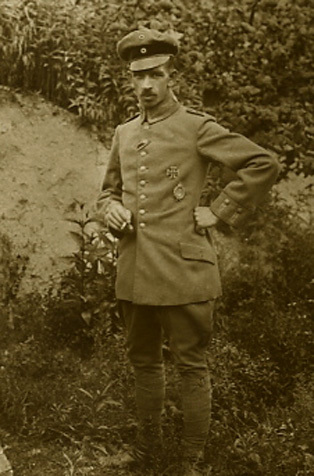
Enlisted in the infantry in 1908 and served until 1915 on the Western Front when he transferred to the GAAS.
He had a steady career with FA 6, 68, 257 and Jasta 45 with which he had his first confirmed victory - a Sopwith 1.1/2. Strutter - on the 17th March 1918.
He was at the relatively advanced age of 31 years when he achieved his first confirmed aerial victory and managed to survive the entire Great War. His final confirmed victory was on the 30th October 1918 and was a Salmson 2.
Sadly, due to the ending of the War he never received the PLM although many other lesser scoring aces did.
FROMMHERZ, Hermann. (1891-1964)
Leutnant.
Victories = 32.
Highest award = Military Order of St. Henry.
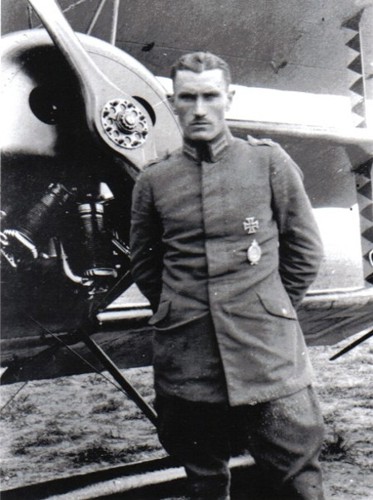
Nothing is known about his prior military service although he was 23 when the war started.
It is known that he flew with Jastas 2 (Boelcke) and 27 in France and Flanders. His first confirmed victory was on 11th April 1917 - a Spad VII - and 30 of his victories were achieved during 1918 with the ultimate - a Bristol F 2B - falling to his guns just a week before the Armistice..
He was never awarded the PLM despite his high number of victories.
Frommherz survived the Great War and as a Major General, he was Commander of Jagdfliegerführer Deutsche Bucht during the Second World War
GONTERMANN, Heinrich. (1896-1917)
Leutnant (Reserve).
Victories = 39.
Highest award = Pour le Merité/Blue Max (May 1917).
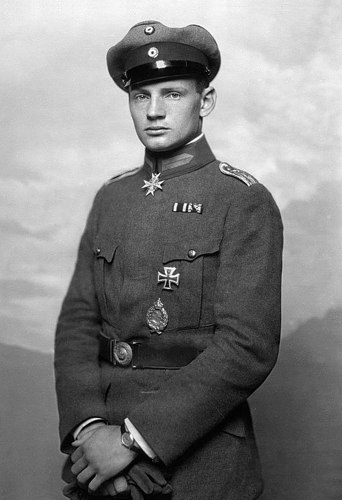
Enlisted in the cavalry - 6th Uhlan Regiment - in 1914 and was wounded on the Western Front.
He also served in 80th Fusilier Regiment.
Received his commission to Leutnant in February 1915.
By the end of 1915 Gontermann was transferred to the GAAS and in 1916 became a pilot and aerial observer with FA 25.
He graduated from fighter pilot training in November 1916 and shot down his first confirmed victory - a RAF FE 2b - on 14th November 1916.
Was posted to Jasta 5 in France in April 1917.
In April 1917 Gontermann was given command of Jasta 15, also in France.
Gontermann was a renowned barrage balloon buster claiming four in a few minutes in August 1917 and a personal total of 17, plus one unconfirmed which is counted in some accounts raising his total victories to 40..
He was killed on 30th October 1917, at Marle, SE of St. Quentin, France, when the wing of a new model Tri-Fokker DR1 he was testing crumpled in flight.
His last victory was on 2nd October 1917 when he shot down a Spad (model unknown).
JACOBS, Josef Carl Peter. (1898 -1978)
Leutnant.
Victories = 48.
Highest award = Pour le Merité/Blue Max (July 1918).

A pre-war pilot, he enlisted in the GAAS in August 1914 and undertook training with FEA 9 as reconnaissance pilot.
In 1915 was posted to FA 11 and became a fighter pilot in 1916.
Had his first unconfirmed victory - a Caudron - with FA 11 in February 1916 and his first confirmed victory - a balloon - on 22nd March 1916.
He served with Jasta 22 from February 1917, taking command of Jasta 7 in June 1917. Jacobs also served with Jastas 12 and 22.
In July 1918 he survived a mid-air collision with a fellow pilot.
Most of his victories took place over Flanders where he gained renown as a master of the Fokker Triplane.
He was a noted fighter ace and balloon buster, instantly recognisable by his totally black painted aircraft.
Jacobs survived the Great War and, amongst many other personal achievements, became a notable historian on German military aviation matters.
KOENNECKE, Otto. (1892-1956)
Leutnant.
Victories = 35.
Highest award = Pour le Merité/Blue Max (August 1918. One of only five GAAS recipients of the PLM and the Golden Military Merit Cross).
Only awarded to non-commissioned officers.
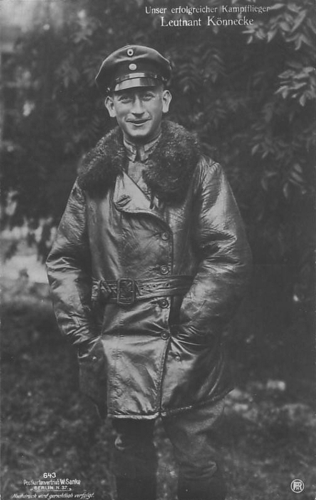
Enlisted as an infantryman in 1911 in Railroad Regiment No. 3.
He learned to fly in 1913 as a non-commissioned officer and became an instructor.
In December 1916, after training in FEA 4, was posted to Jasta 25 in the Balkans and scored his first victory - a Farman (model unknown) - on 1st February 1917.
In April 1917, was transferred to the Western Front flying with Jasta 5.
Koennecke finally received his commission to Leutnant in June 1918.
He always flew a distinctively painted Albatross aircraft with a green fuselage, black and white checkerboard and other markings.
Koennecke survived the Great War.
His final victory was an Airco DH 4 a week before the Armistice.
He went on to become the commander of a Military Flying School in the Second World War.
KROLL, Heinrich Claudius. (1894-1930)
Oberleutnant.
Victories = 33.
Highest award = Pour le Merité/Blue Max (March 1918).
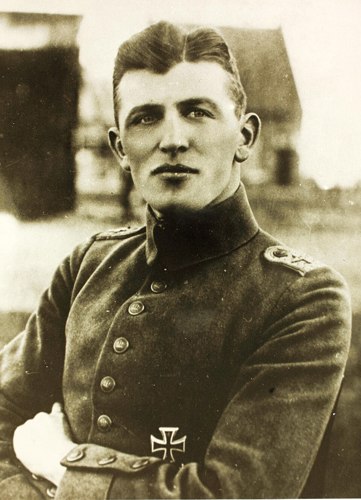
Enlisting in August 1914, Kroll joined the 86th Fusilier Infantry Regiment and served on the Western Front where he received his commission to Leutenant.
Transferred to the GAAS in 1916, he was posted first to FA17 as a reconnaissance pilot and then, after fighter pilot training, to Jastas 9 on November 1916.
With Jasta 9, on 1st May 1917, he downed his first confirmed victory - a Spad (model unknown).
In July 1917 Kroll joined Jasta 24, where he became commander.
His promotion to Oberleutnant came in March 1918.
Although shot down several times, he avoided serious injury until August 1918 when he received a serious and incapacitating wound to the shoulder. Thereafter, his flying career in the Great War was over.
His ultimate victory had been an RAF SE 5a which he shot down on 9th August 1918.
Kroll survived the Great War.
LOERZER, Bruno. (1891-1960)
Hauptmann
Victories = 44
Highest award = Pour le Mérite (February 1918)
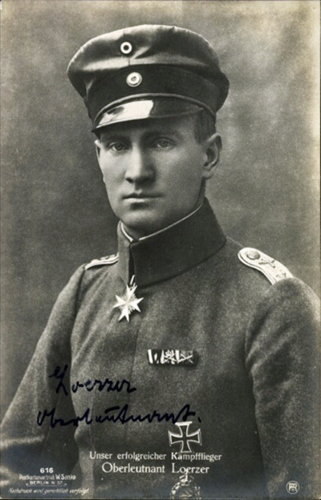
Loerzer was a prewar army officer who learned to fly in 1914. Hermann Göring flew as Loerzer's observer from 28 October 1914 until late June 1915.
Loerzer flew with two Jagdstaffeln in 1916. On 18 January 1917, he was promoted to leader of the newly formed Jagdstaffel 26.
His tally reached 20 victories at the end of October 1917, and he received the Pour le Mérite (Blue Max) in February 1918.
In February 1918 he was appointed to command of the newly formed Jagdgeschwader III, the third of Germany's famed "flying circuses." Among the aces in this unit was his brother Fritz, who claimed 11 victories.
LOEWENHARDT, Erich. (1897-1918)
Oberleutnant
Victories = 54
Highest award = Pour le Merité/Blue Max (May 1918).
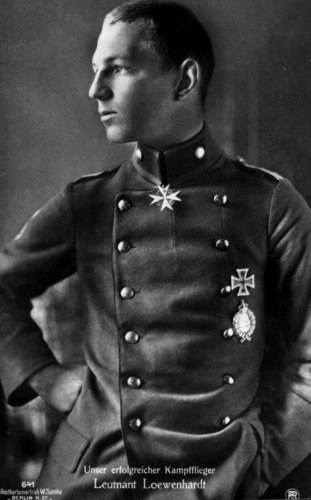
Originally Loewenhardt enlisted in an infantry regiment despite being only 17 years of age. He fought in the Battle of Tannenberg, being granted a battlefield commission on 2 October 1914.
Loewenhardt joined the GAAS in 1916. After serving as an observer and later as a reconnaissance pilot, he went for advanced training to become a fighter pilot with Jagdstaffel 10 in March 1917.
Between March 1917 and August 1918, Loewenhardt shot down 45 enemy aircraft and nine observation balloons.
Shortly after his final victory, he was killed in a collision with another German pilot. Despite being equipped with a parachute, he fell to his death when it failed to open
MAI, Josef. (1887-1982)
Leutnant
Victories = 30
Highest award = Iron Cross First and Second Class (the war ended before he was able to be awarded the Pour le Merite)
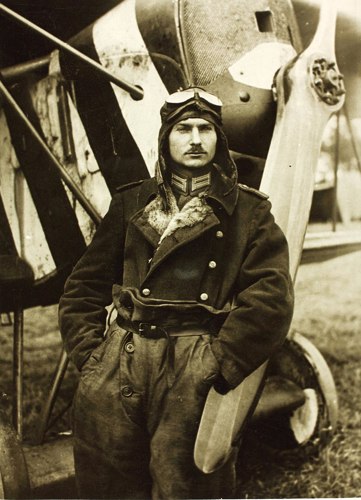
Mai joined the GAAS in 1915 and earned his pilot's brevet in July 1916. He then piloted reconnaissance aircraft for Kasta 29.
Mai scored his first victory on 20 August 1917, flying an Albatros D.V, by shooting down a Sopwith Camel of No. 70 Squadron RFC.
On 3 September 1918 he was wounded in action in the left thigh. Despite this, he flew again two days later, and added five more victories during the month.
MENCKHOFF, Carl. (1883-1949)
Leutnant der Reserve
Victories = 39
Highest award = Pour le Mérite (April 1918)
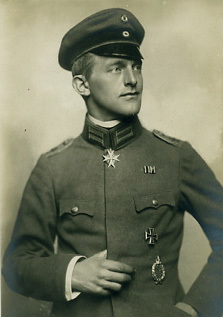
Menckhoff was already in his 30s when he learned to fly in February 1915. At that age he was one of the oldest pilots in the GAAS.
After being severely wounded in infantry service, Menckhoff transferred to Jagdstaffel 3 as a vizefeldwebel (staff sergeant), later to be commissioned.
Menckhoff gained his first victory on 5 April 1917, shooting down a Nieuport 23 fighter of No. 29 Squadron RFC.
On 25 July 1918, just three days after his 39th victory, he was undertaking an evening patrol when he came into contact with aircraft from the United States Air Service. In the ensuing dogfight, Menckhoff was shot down by Lieutenant Walter Avery of the 95th Aero Squadron, USAS - who was on his first combat mission.
Menckhoff was held as a prisoner of war, along with many other German pilots, at Camp Montoire, near Orléans. He was still a POW when the armistice was signed.
MULLER, Max Ritter von (1887-1918)
Leutnant
Victories = 36
Highest award = Pour le Mérite (September 1917)
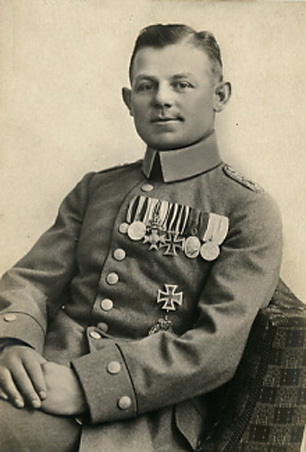
A prewar pilot, Müller had an inauspicious start to the war when broke both legs whilst taking off soon after the outbreak of the war, on 18 August 1914.
Initially he was a reconnaissance pilot, but underwent single-seat fighter training and later served with Feldflieger Abteilung 32, from May 1916.
Müller was promoted from the enlisted ranks to Leutnant in May 1917, this in the regular army, rather than the Reserve, the first time such a commission had been granted.
Müller was one of the most highly decorated aces in the entire GAAS, only behind Manfred von Richthofen (the famous 'Red Baron').
On 9 January 1918 he was killed in combat, a comrade recording the fight:
"The Kette (Flight) together attacked an RE two-seater. The observer fired alternately upon everyone and Müller must have received a fatal hit between the first and second button of his tunic. He fell out of the aircraft because he wasn't fastened, and later on his aeroplane was completely burnt. Except for this one hit, no others could be found."
NECKEL, Ulrich (1898-1928)
Leutnant
Victories = 30
Highest award = Pour le Mérite (November 1918)
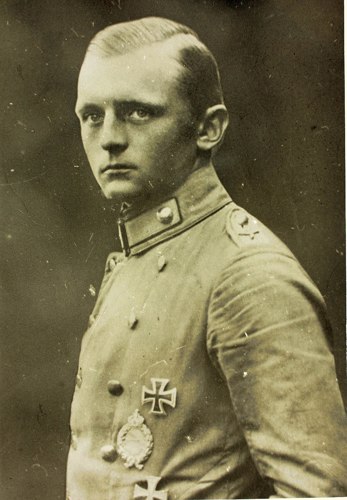
Neckel joined up aged 18 into an artillery regiment. After service in Russia he then transferred to GAAS in November 1916.
On 21 September 1917, Neckel claimed his first victory, a Sopwith Pup of 46 Squadron.
Neckel was a Vizefeldwebel until gaining a commission to Leutnant in April 1918.
His 30th victory, on 6 November entitled him to the Blue Max which was the penultimate awarded in War.
OSTERKAMP, Theodor. (1892-1975)
Oberleutnant (zur See).
Victories = 32.
Highest award = Pour le Merité (September 1918).
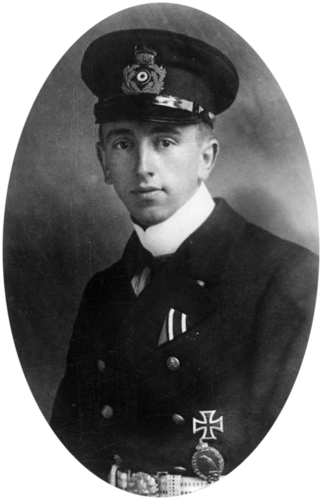
Was one of only two top-scoring aces from the German Navy in the Great War. Joined the German Naval Flying Corps in August 1914, and served for two years as an aerial observer largely on the Belgian Coast.
Osterkamp took the first aerial photographs of British naval bases on the mainland. Requesting fighter training he graduated in April 1917.
From then until the end of the year, served with MFJasta I and had his first confirmed victory on 30th April 1917 - a Sopwith (model unknown).
From October 1917, he was appointed as the commander of MFJasta II.
His promotion to Leutnant came in March 1918.
In September 1918, successfully bailed out from his aircraft and, a few days later, destroyed a tank on the ground.
His final victory took place in October 1918 (exact date is unavailable).
Osterkamp survived the Great War and died in Germany aged 83 years.
RICHTHOFEN, Lothar Freiherr von. (1894-1922)
Oberleutnant.
Victories = 40.
Highest award = Pour le Merité (May 1917).
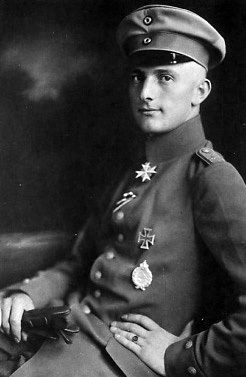
Younger brother of the Red Baron, Lothar transferred to the Imperial German Army Air Force from the 4th Dragoon Cavalry Regiment in late 1915.
He became an aerial observer with KG 4 in January 1916, gaining his pilot's certificate later that year.
Graduated as a fighter pilot in March 1917 and was posted to his brother Manfred's unit Jasta 11.
First confirmed victory was a RAF FE 2b on 28th March 1917.
Claimed, on 7th May 1917, as his 20th victim, British ace Captain Albert Ball, VC but there is little corroborative evidence to support this claim.
Wounded in combat in May 1917, he recovered and took over Jasta 11 in September 1917.
Flying again by November 1917, he was severely wounded once more in March 1918, and whilst hospitalised received his commission to Leutnant.
During August 1918 and shot down his final victory - a Sopwith Camel - on the 12th August 1918.
But was again hospitalised and was out of action until the Armistice and thus survived the Great War.
He was killed in a flying accident in July 1922 aged 27.
RICHTHOFEN, Manfred Freiherr. (1892-1918)
Rittmeister
Victories = 80 (top Great War ace).
Highest award = Pour le Merité (January 1917).
Nicknames = Red Baron, Red Knight, Petit Rouge = Little Red, Le Diable Rouge = Red Devil, Der Rote Kampfflieger = Red fighter pilot, Der Rote Baron = Red Baron, Ace of Aces.
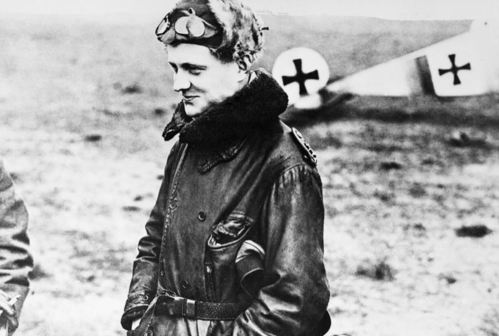
Brought up as an aristocratic military cadet from 11 years of age, he was commissioned to Leutnant in the cavalry (1st Uhlans Cavalry Regiment) in September 1912.
After service in Poland and France he transferred to the GAAS in May 1915.
Began his aviation career in June 1915 with FA 7 as an observer on the Western Front and then on the Eastern Front in FA 69 in the same capacity.
Obtained his first victory (unconfirmed) on the 8th September 1915 over France using his observer's cockpit mounted machine gun.
Graduated as a pilot in December 1915.
His first posting was to the Eastern Front but he returned in March 1916 to what was to become his personal stamping ground on the Western Front.
Served with Jastas 1, 2 (the latter later named Jasta Boelke in honour of the German ace) and 11, JG 1 and KG 2 all of which he subsequently commanded.
His first confirmed victory - a RAF FE 2b - was on 17th September 1916.
In January 1917 he was promoted to Rittmeister.
He became renowned (or notorious) for his famous red painted aircraft - hence the nickname 'Red Baron' - and his highly mobile 'Flying Circus' of exceptionally skilled pilots.
Richthofen was a natural pilot with the essential ruthless (even sadistic) streak: he had an unhealthy morbid preoccupation with the fate of his victims and in trophy gathering.
Major Lanoe George Hawker VC was just one of his more prominent victims.
For two years Richthofen was the scourge of the Allied air forces.
Although seriously wounded on two occasions, he seemed to lead a charmed life. His nemesis overtook him on 21st April 1918 in the form of a single British 0.303-in bullet - probably fired by an Australian soldier from the ground near Corbie, east of Amiens, France - on 21st April 1918.
His final victory had been a Sopwith Camel shot down the day before his death on 20th April 1918.
RUMEY, Fritz. (1891-1918)
Leutnant (Reserve).
Victories = 45.
Highest award = Pour le Merité (June 1917).
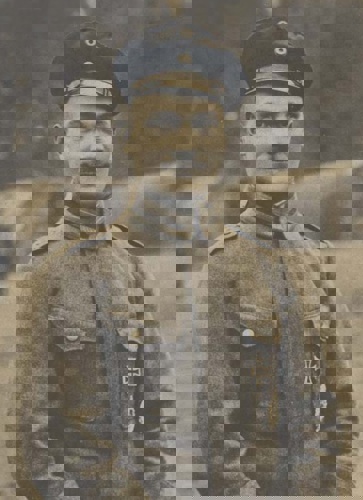
Enlisted in 1911 in the 45th Infantry Regiment and, after wartime service on the Eastern Front with the 3rd Engineer Regiment, he transferred to the GAAS in August 1915.
Firstly, he was deployed as a reconnaissance observer (non-commissioned) in FA 19, then, after training in Germany, from May 1917 as a pilot in Jastas 2 and 5. Commissioned to Leutnant in June 1917.
His first confirmed victory was an observation balloon shot down on 6th July 1917.
He was wounded in aerial combat in August 1917.
On 27th September 1917 he shot down his final victory - a Sopwith Camel.
The same day he was involved in a collision over Neuville, France. He bailed out from his damaged aircraft but his parachute failed to open and he was killed.
SACHSENBERG, Gotthard. (1891-1961)
Oberleutnant (zur See).
Victories = 31.
Highest award = Pour le Merité (August 1918).
The second of the German Naval Aviation top aces.
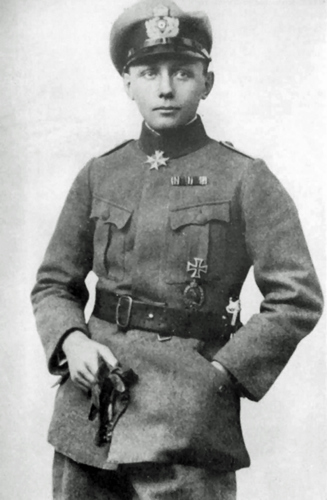
He joined the German Navy as a cadet in 1913 aged 22, but transferred to the German Naval Aviation in 1914 at the outbreak of the Great War.
Became an aerial observer with MFA 2.
Commissioned to Leutnant in January 1916.
Graduated as pilot in February 1916 and returned to MFA 2.
From February 1917 was given command of MFJasta I and on 1st May 1917 scored his first confirmed victory by shooting down a Farman.
In September 1917 he took command of MFJasta II.
His ultimate victory took place on 27th October 1918 when he downed an unidentified enemy aircraft. Some accounts do not include this victory.
Sachsenberg survived the Great War and died in Germany aged 70.
SCHAEFER, Karl Emil. (1891-1917)
Leutnant.
Victories = 30.
Highest award = Pour le Merité (April 1917).
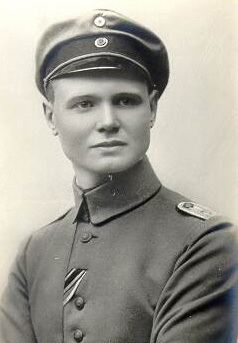
Having served his year of compulsory military service in 1909, Schaeffer was 23 years old and a trained soldier when the war broke out, so was immediately assigned to the 7th Jager Reserve Regiment.
He was involved in heavy fighting on the Western Front and was seriously wounded.
After a six months convalesce he returned to his unit and was commissioned as Leutenant.
He transferred to the German Army Air Service and graduated as pilot in July 1916.
That month he was posted to KG 2 on the Eastern Front as observer and bomber pilot.
Moved to the Western Front in December 1916 with KG 3 where he claimed his first confirmed victory - a Caudron (model unknown).
In February 1917 Schaefer was transferred to Jasta 11 in France.
He was then posted to Jasta 28 in Flanders and in April 1918 was given command of this unit.
His final victory was a Airco DH 4 shot down on the 4th June 1917.
Schaefer was shot down and killed in June 1917 at Beselaere-Zandvoorde SE of Ostend.
SCHLEICH, Eduard Ritter von. (1888-1947)
Hauptmann.
Victories = 35.
Highest award = Pour le Merité (December 1917).
Nickname = Black Knight of Germany.
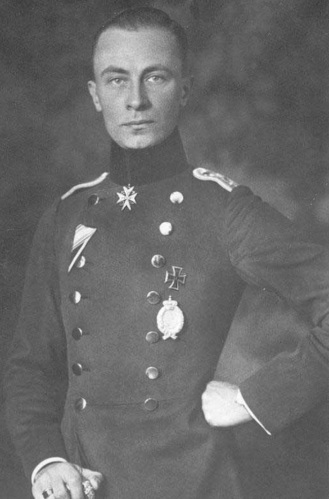
Joined the German Army as a cadet in 1908 aged 20 and was posted to the 11th Infantry Regiment in November 1910.
At the outbreak of the Great War, von Schleich was 26 years old and commander of his regiment.
Seriously wounded in the Battle of Lorraine in August 1914, he was, upon his recovery, transferred in April 1916 to the GAAS and eventually, as a pilot, to FA2 in October 1915 where he was again wounded in February 1916.
In September 1916 he became the commander of a Military Flying School (#1) and from there, in May 1917, he contrived to get posted as a fighter pilot and acting commander of Jasta 21.
He eventually shot down his first confirmed aircraft that month - a Spad S VII - and in June 1917 became the full commander of Jasta 21.
Schleich quickly established an exceptional high level of morale.
He was reassigned in October 1917 to Jasta 32, and then, once again, to Flying School #1.
In December 1917, he was promoted to Hauptmann and awarded the title of 'Ritter (Knight) von Schleich' and rejoiced under the nickname The Black Knight of Germany, due to his white banded and black painted aircraft.
In March 1918, he was promoted to command JG 8, and he continued his successes in the air.
His ultimate victory was a Bréguet 14 that he shot down on the 1st October 1918.
Schleich survived the War and participated in the Armistice Committee.
THUY, Emil. (1894-1930)
Leutnant.
Victories = 35.
Highest award = Pour le Merité (June 1918).
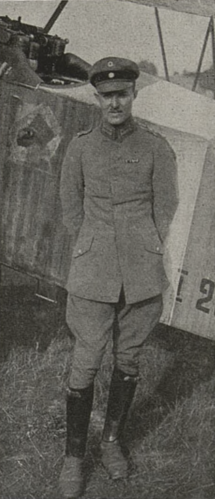
Enlisted in the 3rd Pioneer Regiment in August 1914 and was quickly posted to the Western Front.
In October 1914 he was badly wounded and repatriated to Germany as unfit for active service.
However, Thuy somehow managed to pass the medical for the GAAS and to graduate, first as a reconnaissance pilot in July 1915.
In this capacity, he acheived his first confirmed aerial victory on 8th September 1915.
In January 1917, he graduated as a fighter pilot.
Thuy received his commission as Leutnant in March 1917.
Served with FA 53 and Jastas 21 and 28, and became commander of the latter in September 1917, in France and, later, Flanders.
He was badly injured in a crash-landing in February 1918 but was able to return to duty.
In June 1918 was appointed to command JG 7, which comprised as Jastas 28, 33, 57 and 58. A tremendous achievement, in all respects, for a former private soldier invalided out of the Army in the first year of the War.
His final victory was an unidentified enemy aircraft on 14th October 1918.
Thuy survived the Great War but died in a flying accident at a Luftwaffe Flying School in 1930.
UDET, Ernst. (1896-1941)
Oberleutnant.
Victories = 62. (Second highest German Great War ace).
Highest award = Pour le Merité April 1918).
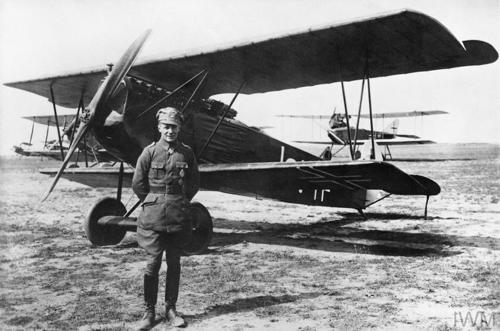
Served in 1914 as a volunteer motorcycle dispatch rider formally enlisting in the 26th Wittemburg Infantry Division (Reserve) in August 1914. Falling from his motorcycle between the Lines he was injured and hospitalised.
After he left hospital, he trained at his own expense as a pilot, whilst hopefully awaiting assignment to a military flying course with the GAAS.
He quickly passed the GAAS flying examination and was posted to FA 68.
He was soon in the focus of the action and, in a particularly important coup, forced the French ace Roland Garros, to land in German occupied territory; thus revealing for the first time the secret of the Garros propeller modification. This device allowed the machine gun to fire forward through the propeller blades.
Posted to FA 206 in March 1916, Udet quickly scored his first victory on 18th March 1916 - a Farman F40.
He was commissioned as Leutnant in January 1917.
Postings to Jastas 37, 11, and 4 followed from June 1917 onwards, all of which he was to command.
Udet had the German second highest number of air victories (after Manfred Richthofen), only withdrawing from the fray in September 1918 due to air combat injuries with his final victory - an Airco DH 9 - falling to his guns on 26th September 1916.
He had also successfully baled out of his damaged aircraft by parachute, and is said to have disabled a tank with his machine guns; perhaps the first ever such successful aircraft-to-tank duel.
Udet survived the Great War to become a senior Luftwaffe General in the Second World War but, disillusioned, he committed suicide in 1941.
VELTJENS, Joseph. (1894-1942)
Leutnant (Reserve).
Victories = 35.
Pour le Merité (August 1918).
Nickname = Seppl.
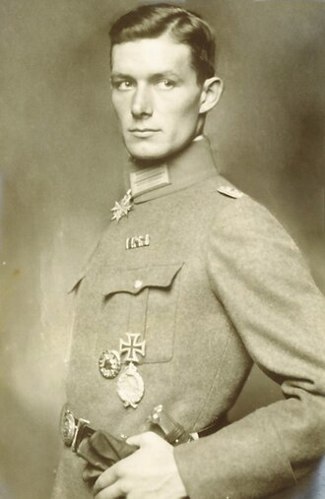
He joined the elite 4th Guards Infantry Regiment in August 1914, and in October 1915 transferred to the GAAS.
Graduated as a pilot in December 1915 and was put on aerial reconnaissance duties with FA 23 in May 1916.
Commissioned as Leutnant in December 1916.
In March 1917 he was posted to Jasta 14 on air combat duty and there scored his first confirmed victory on the 13th April 1917.
In August 1917 he was transferred to Jasta 18.
By March 1918 he was with Jasta 15 of which he took command in May 1917.
Veltjens survived the Great War, shooting down his last victory - an Airco DH 4 - on the 18th October 1918.
Veltjens was shot down and killed during Luftwaffe flying operations with the Luftwaffe over Jugoslavia in 1943.
VOSS, Werner (1897-1917)
Leutnant (Reserve).
Victories = 48.
Pour le Merité (April 1917).
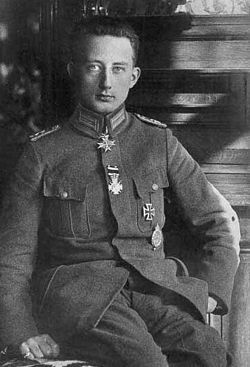
Since his youth, Voss was an active member of the cavalry militia, and in August 1914 was assigned to the 11th Hussar Regiment on the Alsase/Lorraine border.
He transferred to the GAAS in August 1915 and completed his pilot training in February 1916.
He first served as an aerial observer/instructor with FEA 7 then, after his promotion to Leutnant in September 1916, he flew as a pilot from November 1916 with Richthofen's famous Jasta 2.
On 27th November 1916, Voss had his first victory - a Nieuport 17.
In May 1917, he was given command of Jasta 5, and then 29, and 14.
He finally ended up serving in Richthofen's own Jasta 10; all before his 21st birthday.
Voss's last victory was an Airco DH 4 shot down on 23rd September 1917, the day he was shot down and killed in a desperate dogfight with seven British aces of 56 Squadron Royal Flying Corps - led by Captain James Thomas Byford McCudden, VC - in September 1917.
Voss was only 20 years old when he was killed.
WOLFF, Kurt. (1895 -1917)
Oberleutnant (Reserve).
Victories = 33.
Pour le Merité (April 1917).
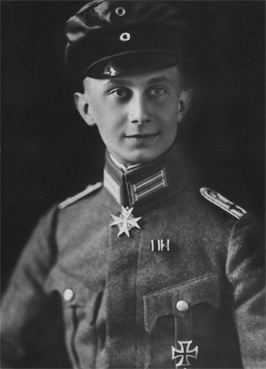
Enlisted pre-war in the 4th Eisenbahn Railway Regiment as a cadet and saw action on the Western Front.
Was promoted to Leutnant der Reserve in April 1915.
Transferred to the GAAS in July 1915 and graduated in December 1915 as a pilot serving on the Verdun Sector.
In November he was posted to Jasta 11, where he belatedly flourished under the 'wing' of Manfred von Richthofen.
Wolff's first confirmed victory was a RAF BE2d which he shot down on the 6th March 1917.
In May 1917, Wolff was given the command of Jasta 29, but was injured seriously enough in July 1917 to be off flying duties for two months.
In September 1917, Wolf was shot down above Moorslede, SW of Rumbeke, Belgium and killed; yet another victim of the new British Sopwith Camel fighter aircraft.
Wolff's last aerial victory was a Sopwith Triplane that he had downed on the 7th July 1917.
Becoming a member of The Western Front Association (WFA) offers a wealth of resources and opportunities for those passionate about the history of the First World War. Here's just three of the benefits we offer:

With around 50 branches, there may be one near you. The branch meetings are open to all.

Utilise this tool to overlay historical trench maps with modern maps, enhancing battlefield research and exploration.

Receive four issues annually of this prestigious journal, featuring deeply researched articles, book reviews and historical analysis.
Other Articles


