
General John Joseph Pershing: Commander of the American Expeditionary Force on the Western Front
Of the Allied Generals on the Western Front, John Joseph Pershing had a pre-Great War career as distinguished as any of them.
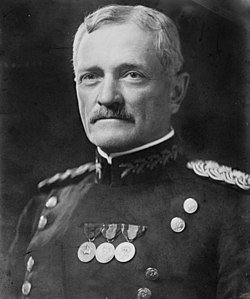
John was born on a farm in Laclede, Missouri, United States on 13 September, 1860 the son of farmer and store owner John Fletcher Pershing and homemaker Ann Elizabeth Thompson.
He graduated from West Point Military Academy in 1886, aged 26, and saw service with the Army of the United States in and outside the country, principally as:
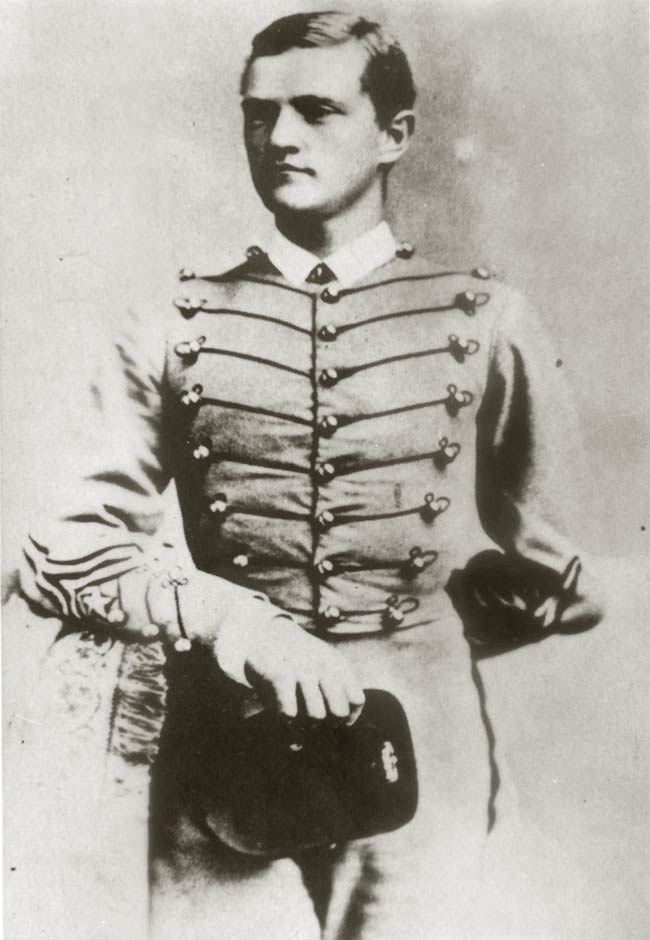
1886: Lieutenant in The Indian Wars with the U.S. 6th Cavalry Regiment
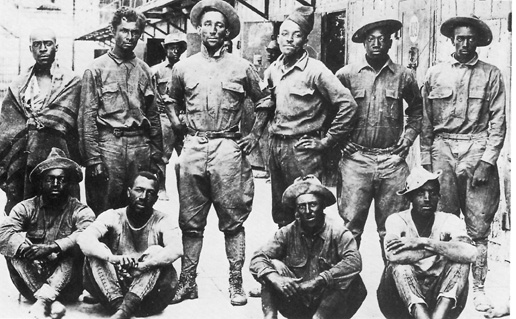
1887-1890: Commander of the U.S.10th Negro Cavalry Regiment which was composed of black American soldiers with white officers, from whence came his nick-name, Black Jack on the Western Front
1891- 1896: Professor Military Science and Tactics at Nebraska University, where he also took a degree in law
1897 - 1898: Instructor in Tactics at West Point
1898: Captain in the Santiago Campaign, Cuba
1899 - 1903: Commander 8th Army Corps on active service in the Philippines
1905: Observer in the Russo-Japanese War
1909-13: Commander and Military Governor, Philippines
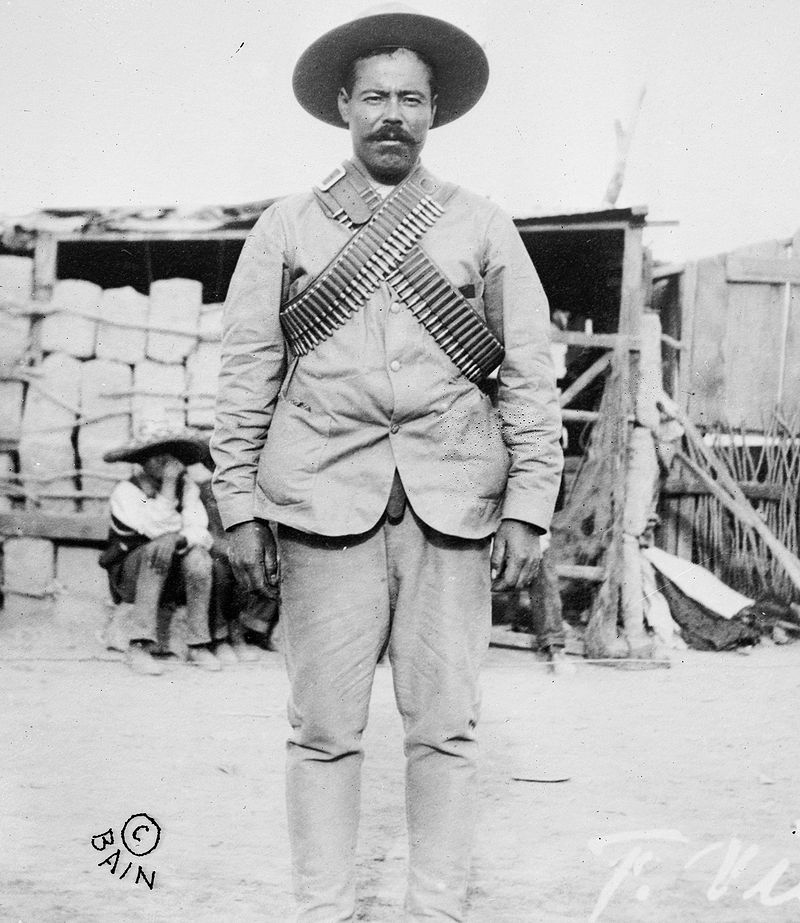
1915 - 17: Commander of 8th Brigade U.S. Punitive Expedition to Mexico against the revolutionary leader Francisco 'Pancho' Villa
On the 6th April 1917, The United States declared war on Germany and Pershing was appointed as Commander of the American Expeditionary Force (AEF) with the rank of Major General. He had earlier, controversially, been appointed Brigadier General (from Captain) in 1905 over the heads of 835 more senior officers.
Organizing the American Expeditionary Force for war
At the declaration of war between the United States and Germany the United States Army had a strength of only 27,000 officers and men.
Pershing was charged with raising a 'National Army' using this cadre as a nucleus and recruiting volunteers and conscripts (Selective Service Act, May 1918 = 2.8 million draftees) to raise the required number. In June 1917, he estimated this would reach one million by 1918, rising to three million in 1920, and, after the initial reaction of astonishment, this target was accepted by the U.S. Administration. By 1918, 250,000 United States troops were arriving in France every month.
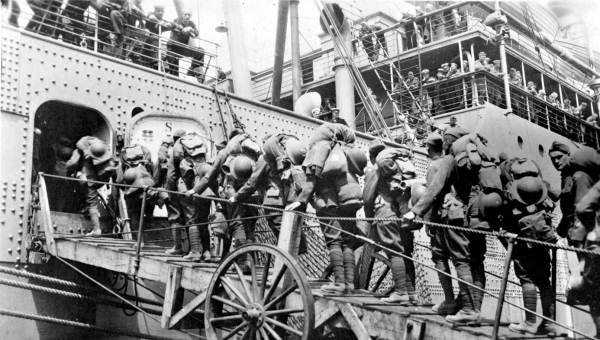
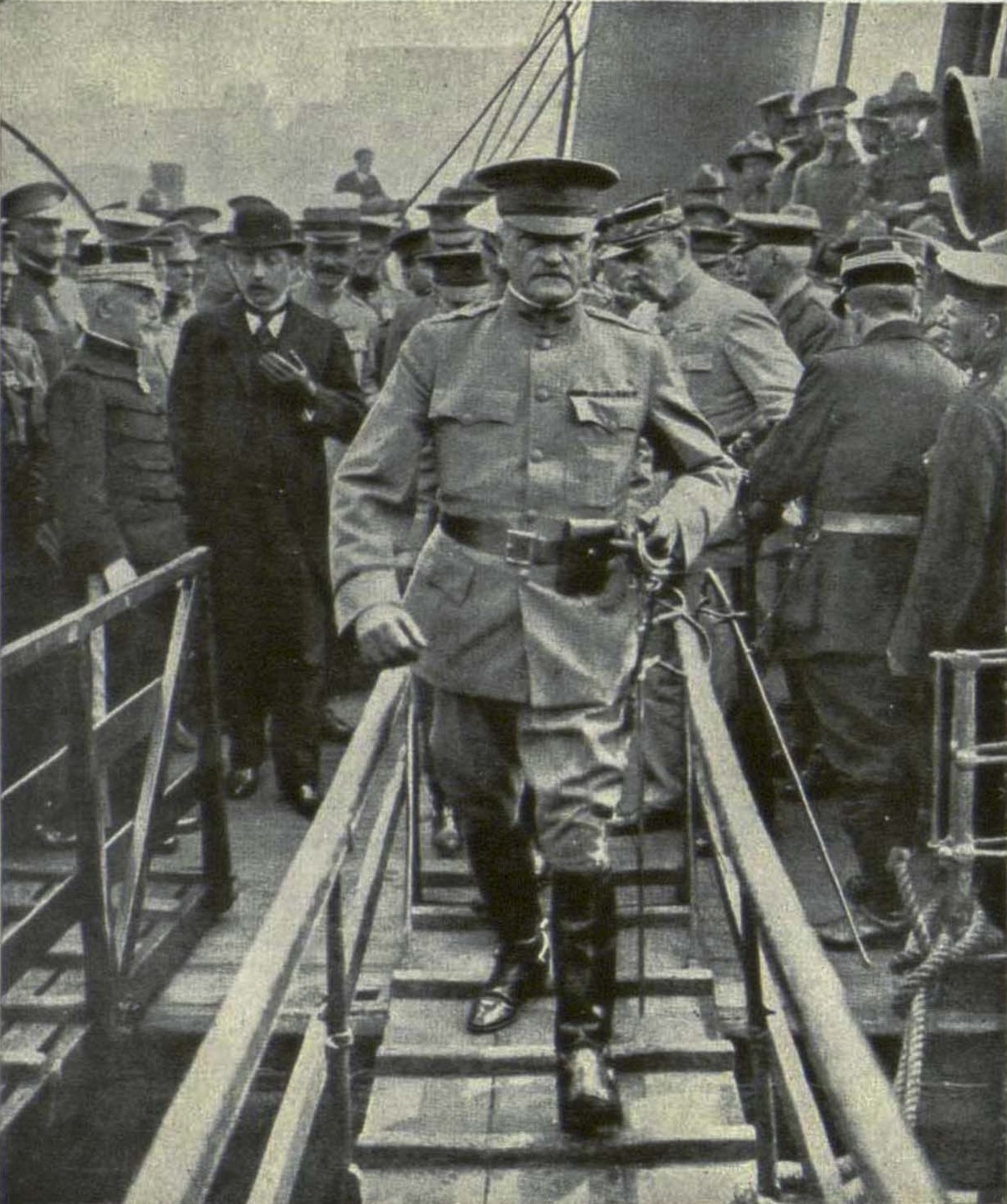
Pershing and his Staff sailed from New York for France, via Liverpool, aboard the British steamer 'RMS Baltic' on the 28th May 1917. Pershing quickly set up temporary headquarters in Paris. It was decided that the U.S. Army's area of operations would be Lorraine in north-east France, currently quiet, and a potential spring-board for the Saar industrial belt and German Lorraine. Accordingly, on the 6th September 1917, the advance headquarters of the AEF was set up at Chaumont in the Haute-Marne.
Terms of reference
Uniquely, Pershing was allowed to define his own terms of reference largely without interference from the U.S. Civil Administration.
Pershing was well aware of the often-disastrous record of the Allies tactics and strategy in the first three years of the Great War. Accordingly, his view from the outset was that his American troops should act as a separate and unified national force based on its status as an 'associate power' of the Allies, and free of all alliances. He was confident that his fit and youthful Armies would break the deadlock of static trench warfare. Accordingly, apart from the training phase of the first American divisions to arrive in France with the French Army, he insisted that the U.S. Army would train itself for action in the field with limited input from its Allies.
Also, he was firmly of the view that his army should not be used in a piece-meal fashion and should be kept away from any major involvement in the fighting until it was large enough in numbers to be effective and operationally ready for active service. However, he did eventually (1918) concede that black American soldiers could routinely serve with French Colonial troops.
Of course, Pershing's policy of separateness was directly opposed to that of the Allied military commanders who had foreseen the Americans as 'fillers' for their own depleted ranks; with the necessary field training being fitted into an active service role, much as was the case with their own men. This situation caused much tension with the Allies, not least because they, and particularly the French, were expected to divert some of their supplies to equip the Americans whom, at that time, had a very rudimentary munitions industry.
This resistance towards any close collaboration with the Allies meant Pershing's troops lost the opportunity of gaining active service combat with the war-experienced Allies; a deficiency that was to have its own human and tactical cost when the American troops eventually went into action under their own command.

Pershing always commanded from the rear, and censured his subordinate officers who got too close to the fighting.
Contrary to general practice on the Western Front, he made it clear incompetent senior officers would be dismissed; a rule he applied with some vigor on the battlefield.
His overall strategy was to avoid the static trench-warfare in favor of mobile tactics, focusing on the direct assault of enemy positions and closing in on enemy targets with close-quarter artillery.
When in 1918, the Allies discussed whether there should be a Supreme Commander in preference to a Supreme War Council; Pershing strongly supported the nomination of General Ferdinand Foch as Supreme Commander.
Pershing always stipulated that there should be a complete military victory over Germany before an Armistice could be considered.

The long wait for engagement
The assembling of a critical military force, 500,000 men, took the AEF much longer than expected by the Allies, and it wasn't until September 1918 that a large self-contained U.S. Army took the field.
However, prior to this, Pershing had allowed his troops to give a limited response to French calls for assistance during the German 1918 Spring Kaiserschlacht Offensive that began in March 1918.
The first real contact with the enemy was made on the 2nd November 1917 when AEF troops at battalion strength took over from the French at Barthelémont. A German raiding party killed three Americans, Corporal James B. Gresham, Private Thomas F. Enright, and Private Merle D. Hay. Two other American soldiers were wounded, and twelve were taken prisoner.

Another incident occurred on the 18th January 1918, when the 1st U.S. Division, AEF, entered the line at Ansauville in the St. Mihiel Salient on what was intended as a holding exercise. The Germans, learning of the American's presence, launched morale testing attacks that caused the deaths of six soldiers, wounded four and captured three. On the 20th April 1918, two companies of the 1st U.S. Division were attacked by 3,000 German troops at the village of Seicheprey in the same sector. The Americans, outnumbered 4:1, were driven back with over 600 casualties of whom 81 had been killed. Pershing and his Staff were appalled at what they considered to be bad American generalship, despite the unfavorable odds.
The British, who were supervising the training of seven other AEF divisions, were similarly harsh in their comments.
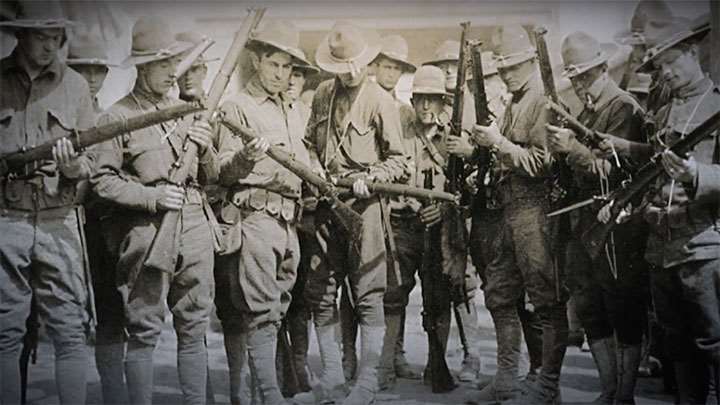

The same U.S. 1st Division at Brigade strength, 4,000 men, made the first large scale AEF action on the 28th May 1918 and captured the village of Cantigny south of Amiens. Once it was in American hands, Pershing gave the order 'No inch was to be given up'. Its capture and retention had a great morale building effect for the Americans.
This was followed by a joint French/AEF action, with two U.S. Divisions, on the 3rd June 1918 at Chateau Thierry. Later, Belleau Wood was captured.
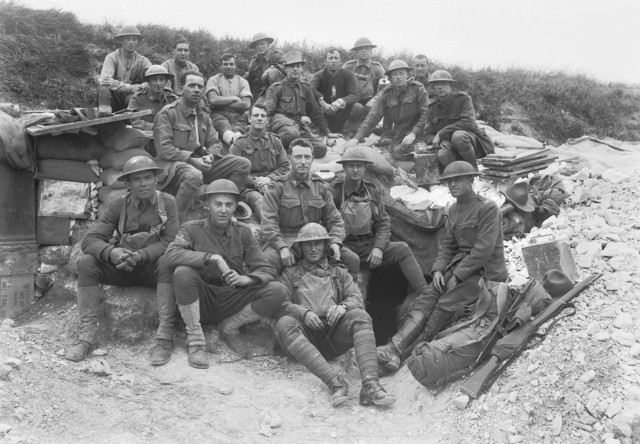
On the 4th July 1918, four U.S. Army companies were seconded to the Australian Corps for training in the Le Hamel Sector of the Somme and participated with the Australian 4th Division in the fighting to capture the village.
The Battle of Saint Mihiel
The German occupied St. Mihiel Salient in the Verdun Sector had existed since 1914.
On 12th September 1918, 13 Divisions of the First U.S. Army of the AEF and eight French Colonial Divisions launched an attack planned by Pershing's staff that was backed by 3,000 artillery guns and a formidable force of 1,500 Allied aircraft. The Germans offered only light resistance and in 30 hours they had been pushed out of the salient with the loss of 13,000 prisoners. Allied casualties were 8,000. The Allies were fulsome in their praise at this encouraging start by the AEF.
Meuse-Argonne
On the 26th September 1918, the U.S. First Army of the AEF and the French Fourth Army, launched a major attack at Meuse-Argonne Forest in the Verdun Sector. It was an area crossed by the Aisne, Aire and Meuse Rivers and included the Kriemhilde Stellung fortifications of the Hindenburg Line. The attack depended on a successful achievement of Foch's decision to relocate 400,000 U.S. and French troops from the St. Mihiel Sector, despite some reservations by Pershing.
The relocation was successfully effected, but despite the backing of French tanks progress was slow and failings in the AEF's command structure and logistics problems brought the advance to a halt on the 30th September 1918.
French Prime Minister Clemenceau even tried at one point to get Pershing replaced because the lack of progress.
The German Line essentially held until 4th November 1918, when a full-scale German retreat began. The exhausted French Army were unable to take advantage of this development, but the Americans continued to progress beyond the Hindenburg line to the outskirts of the town of Sedan and the Armistice brought an end to all hostilities.
Of the 4.3 million U.S. Soldiers serving in WWI, of that total 2.1 million served with the American Expeditionary Force on the Western Front.
- Total Deaths: Approximately 116,516
- Killed in Action/Combat Deaths: 53,402- 56,000 +/-
- Accidents and Disease (Non-Combat Deaths): 63,000+
- Wounded: Approximately 204,000
Conclusions
The consensus, in hindsight, is that General Pershing was correct in principle to insist that the Americans remained under his direct command as a coherent single unit, the AEF. The Allies intention of parceling out the American troops out to their own units as the divisions of fresh troops arrived on the Western Front, would have weakened the strong national and corps spirit of the Americans without having the desired strategic impact of a single, young and fresh cohort rearing to go.
However, there is little doubt that had Pershing more skillfully utilized the training potential of the war experienced troops of the Allies, his own casualties would have been far less. His commanders were poorly experienced in the prevailing conditions of warfare and some of the tactics he employed had already been proven to be defective in costly earlier Allied campaigns. His officers and soldiers literally had to learn it the hard way and many AEF soldiers died unnecessarily in the process.
As for the effect of the AEF on the outcome of the war, it is clear that the knowledge that a new and fresh U.S. Army of indeterminate size was coming to the Western Front had a strong psychological effect on the German High Command; and an already stressed General Ludendorff in particular. It was probably the prime reason for General Ludendorff's and Field Marshal Hindenburg's decision to launch the 1918 Kaiserschlacht Offensive in the Spring of 1918. A dispassionate view of the German strategic situation in early 1918, with the increasing numbers of German divisions arriving from the Eastern Front, would query that perhaps Ludendorff's best option would have been to retire behind his heavily fortified Hindenburg Line. Thus installed Ludendorff's ever strengthening Army would allow the new American Armies to destroy themselves in trying to break through it.
Finally, despite their long delayed entry into a major fighting role on the Western Front, effectively September 1918, the Americans proved to be a capable fighting force giving sterling support to a weary French Army and strengthening the morale of all the Allies at a critical time in the war.


