
The Truth About German Atrocities? The Bryce Report of 1915
Early in the First World War there were numerous accounts of German atrocities perpetrated on the civilian populations of France and Belgium. Within only a few weeks of the invasion of Belgium the government of that country had issued three reports on German war crimes supposedly committed during the invasion of Belgium. All of this was put to use as propaganda for the war effort.
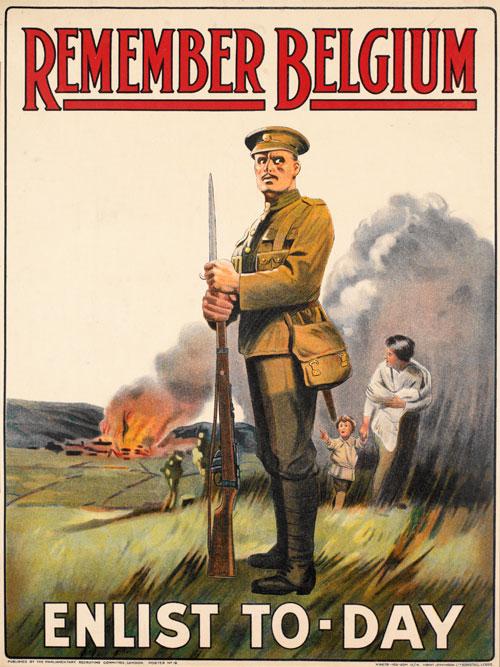
There were calls in the British Parliament and the press for a British commission to conduct its own inquiry. On 15 September 1914, British Prime Minister H. H. Asquith instructed the Home Secretary Reginald McKenna and the Attorney General Sir John Simon to investigate allegations of violations of the laws of war by the German Army.
On 4 December James Bryce was asked to chair the "German Outrages Inquiry Committee", which would review the material that had been collected and issue a report which came out in 1915
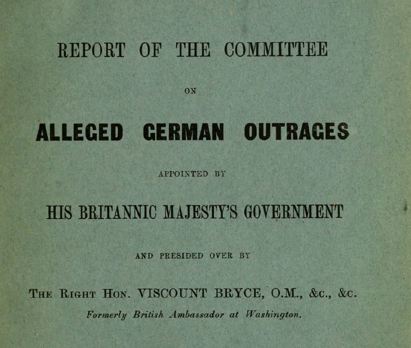
The report is available below.
The report concluded
It is proved:
(i) That there were in many parts of Belgium deliberate and systematically organised massacres of the civil population, accompanied by many isolated murders and other outrages.
(ii) That in the conduct of the war generally innocent civilians, both men and women, were murdered in large numbers, women violated, and children murdered."
(iii) That looting, house burning, and the wanton destruction of property were ordered and countenanced by the officers of the German Army, that elaborate provision had been made for systematic incendiarism at the very outbreak of the war, and that the burnings and destruction were frequent where no military necessity could be alleged, being indeed part of a system of general terrorization.
(iv) That the rules and usages of war were frequently broken, particularly by the using of civilians, including women and children, as a shield for advancing forces exposed to fire, to a less degree by killing the wounded and prisoners, and in the frequent abuse of the Red Cross and the White Flag.
Whilst the report has been written off as a piece of war-time propaganda, others have found Bryce's work to be "substantially accurate".
Becoming a member of The Western Front Association (WFA) offers a wealth of resources and opportunities for those passionate about the history of the First World War. Here's just three of the benefits we offer:

Identify key words or phrases within back issues of our magazines, including Stand To!, Bulletin, Gun Fire, Fire Step and lots of others.

The WFA's YouTube channel features hundreds of videos of lectures given by experts on particular aspects of WW1.

Read post-WW1 era magazines, such as 'Twenty Years After', 'WW1 A Pictured History' and 'I Was There!' plus others.


