
Did Seven Inauspicious Words Bring About The End Of The Great War?
As every school child knows, in Greek mythology, Helen of Troy was the face that launched a thousand ships. Is it possible that just seven words shouted out by a humble ship's stoker brought about the abdication of Kaiser Wilhelm II, ended 505 years of rule by the Prussian Hohenzolleren dynasty, precipitated the collapse of the German Army on the Western Front and, thus effectively ended the First World War on calamitous terms to the German people?
The cast of characters
The story properly begins with a most unusual character. She was a Polish-Russian Jew, who became a Swiss national and was married to a German national; her name was Rosa Luxemburg. Before the Great War began, she became prominent as an ardent supporter of, and spokeswoman for, the German Socialist Party (SPD) with the slogans 'All men become brothers', and 'Long live the Internationale'.
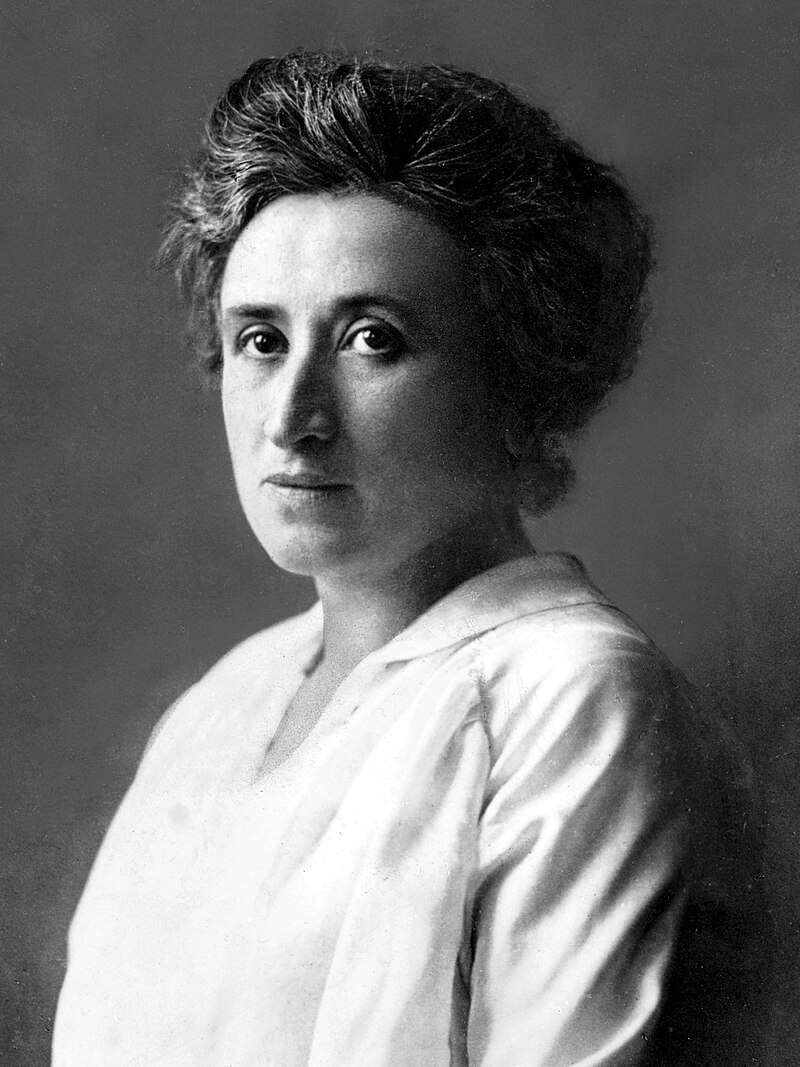
During the war (1916) she broke with the SPD, because of its support for the continuation of the war, and formed her own organisation called the Spartakus Bund or Spartacus League. Its name being derived from the legendary Thracian gladiator who in BC73 led an ill-fated revolt against the Roman State in southern Italy. The revolt ended with his crucifixion, and that of several thousand of his followers, along the length of the Appian Way - the road from Naples to Rome.
The Spartakus Bund was fervently anti-war and its leaders spent most of the war in prison, or actively campaigning against the war.
The location
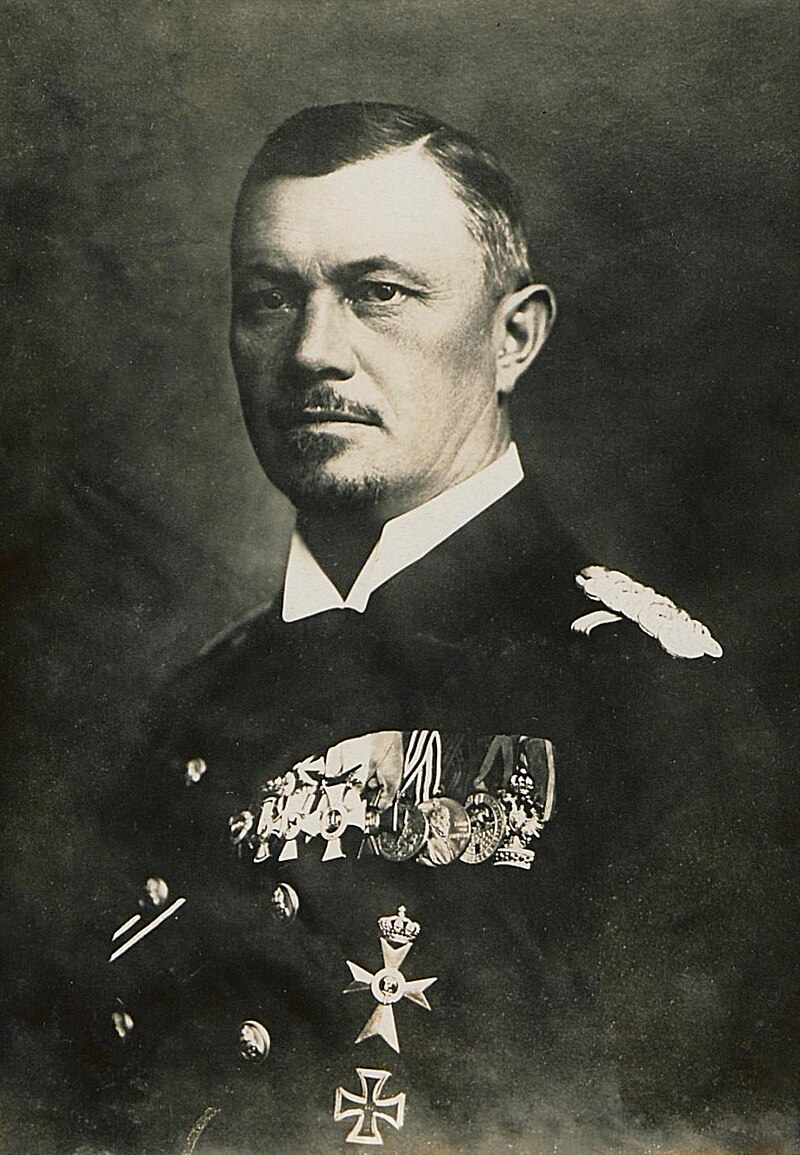
The next cog in the train of events was the port of Kiel where the part of the German High Seas Fleet had its home base. On 30th October 1918, the 3rd Squadron (five battle cruisers with 25,000 sailors and 15,000 marines aboard) was being readied for a final, desperate action against the British Grand Fleet. It was obvious to all concerned that this was clearly a futile and suicidal adventure; a final throw of the dice by Admiral Reinhard Scheer and others of the Naval Supreme Command.
The course of events
A small mutiny erupted. It was quickly quelled and the ring-leaders arrested. Then, members of the crew of the cruiser Markgraf demanded the immediate release of the mutineers. The commander of the Kiel base - Stadtcommandant Admiral Wilhelm Souchon - immediately confined the sailors to their units and armed the officer corps.

The mutinous sailors still refused to obey any commands, and organised a demonstration calling for peace and constitutional reform. In response, the Kiel base commander mustered the marines and ordered the Markgraf to sea; a move sabotaged by the mutineers via the simple expedient of extinguishing the boiler fires.
The dénouement
As the marines approached the demonstrating sailors, a ship's stoker - Karl Artelt, a German Communist - leapt up on to one of the mutineers' barricades and shouted out to the advancing marines the fated seven words, "We are not here to harm you!"
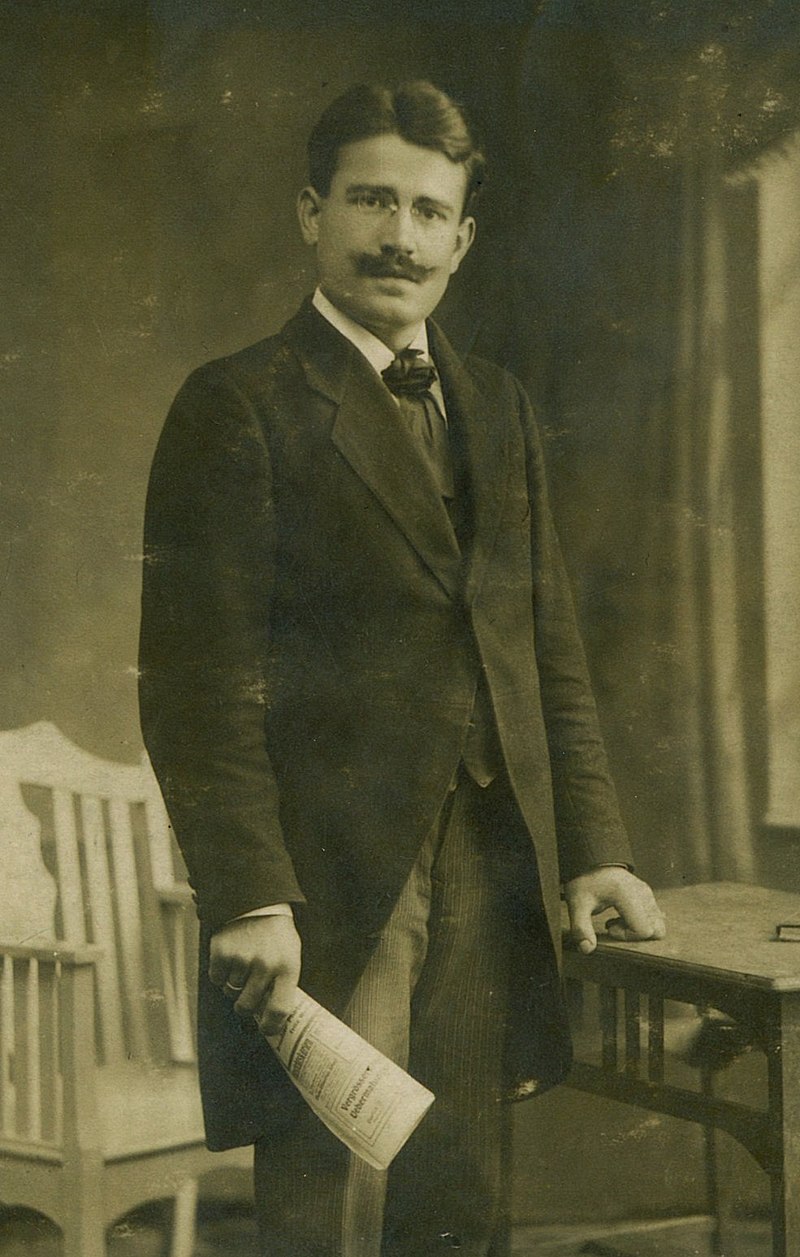
The marines halted their advance, and after some discussion, refused to obey the commands of their officers. Other marines were mustered but, almost to a man, they also refused to obey orders.
At this point an air of panic developed in the Kiel command. A state of martial law was declared and a group of neophyte officer cadets was formed into a 'White Guard'. When faced with the mob of unruly sailors, the cadets panicked and opened fire on the mutineers, killing about 40 of them.
The rampant sailors now raided the base armoury taking rifles, machine-guns and a large quantity of ammunition. Thus emboldened they voted to form a Soldatenrat (soldiers' council) modelled on the Russian Soviet. Quickly, other groups of sailors formed other soldiers' councils and individually and collectively issued demands.
Unable to comply with the demands, or snuff out the ever-widening rebellion, the Baltic Fleet admirals capitulated and eventually a Soldatenrate headed by a German socialist Gustav Noske was formed in Kiel. Although it was Noske's intention from the start to eventually eliminate the Bolshevik sailors from the newly formed movement, which subsequently he did, using ex-soldiers and other anti-Bolsheviks, the sailors movement had set the revolutionary movement en-train.
The collapse
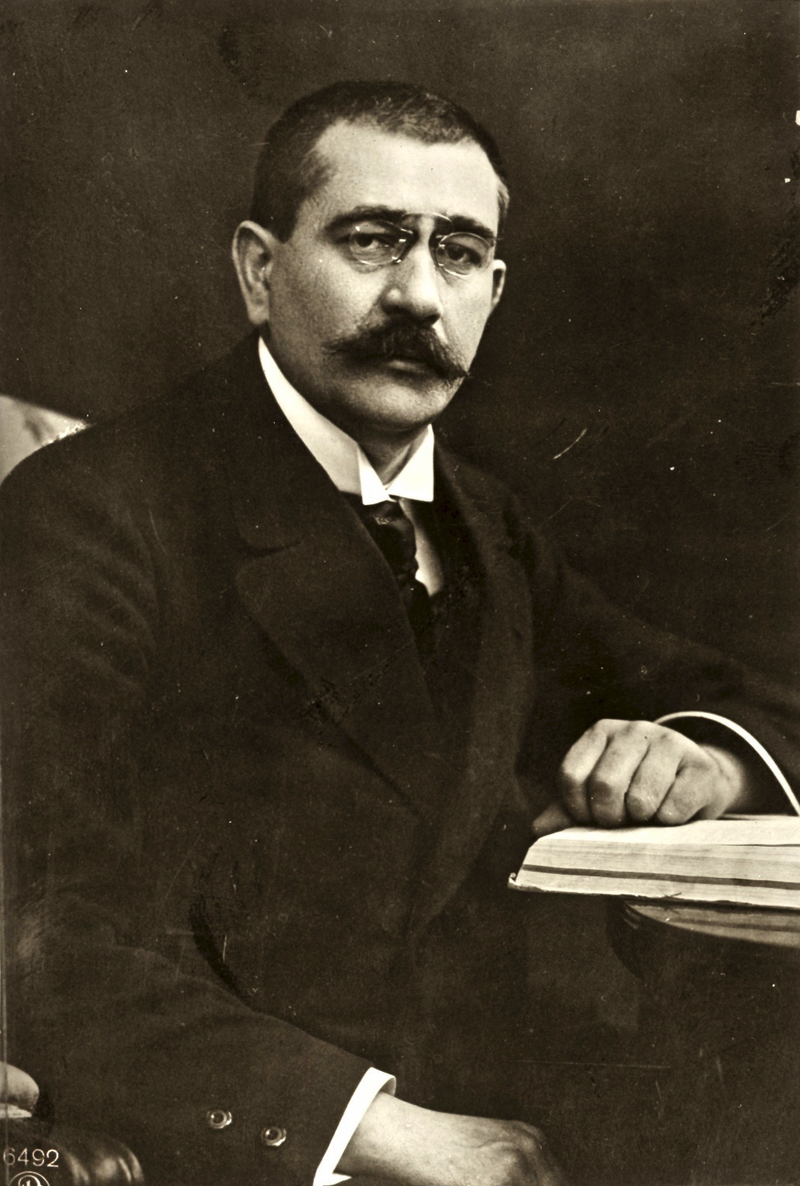
The outcome and potential of these ill-handled events, the stubborn refusal of the Kaiser to abdicate, and his avowed intention of leading a action with loyal professional troops against the mutinous sailors, meant that the new (3rd October 1918) Reichskanzler, Prince Max von Baden, was put into an almost impossible position.
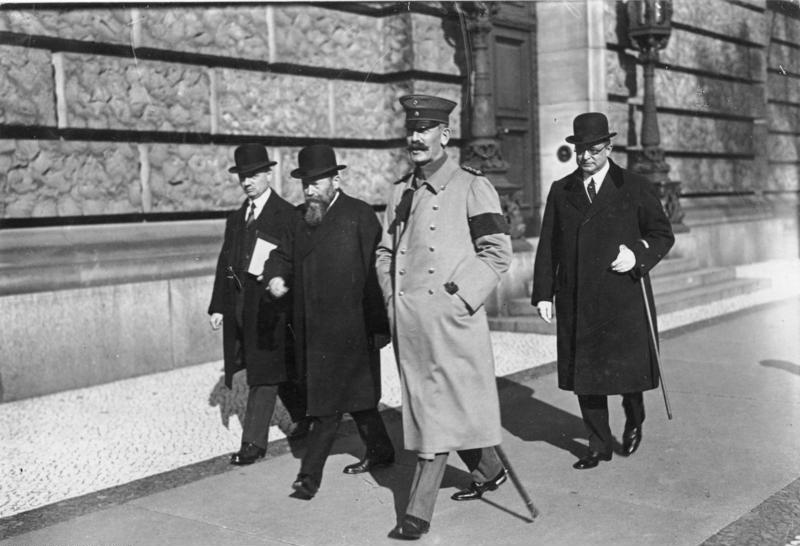
Added to this was the ever increasing numbers of reports of disaffected troops following the example of the sailors - the invincible German Army was literally disintegrating and revolution on a nation-wide scale was in the air. From the strong position in early 1918, when Germany still held large areas of France and most of Belgium in its iron grip, and not a single armed foreign soldier stood on German soil, von Baden knew the country was now collapsing inexorably from within.
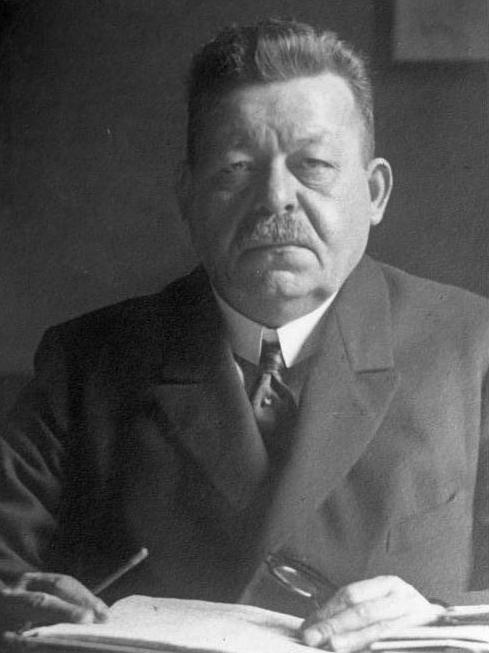
With the Kaiser's senior generals telling him to his face, 'Your Majesty no longer has an army', allied with the admirals of the fleet appearing to have lost all control of the navy, and crowds gathering to storm the Ministerrat (Council of Ministers), Reichskanzler von Baden had no other choice but pressure the Kaiser to abdicate with immediate effect. This the Kaiser finally did, but stubbornly insisted he would remain 'King of Prussia'. Not even waiting for the formal confirmatory telegram, von Baden announced the unconditional abdication of the Kaiser. He also announced the creation of a caretaker government under his stewardship, with Friedrich Ebert as Chancellor. With that news, the crowd joyfully celebrated 'The end of the war', and 'The downfall of the Kaiser'. The immediate crisis was over: the German monarchy was ended, and the socialist Republik Deutschland (German Republic) born.
Into exile and oblivion
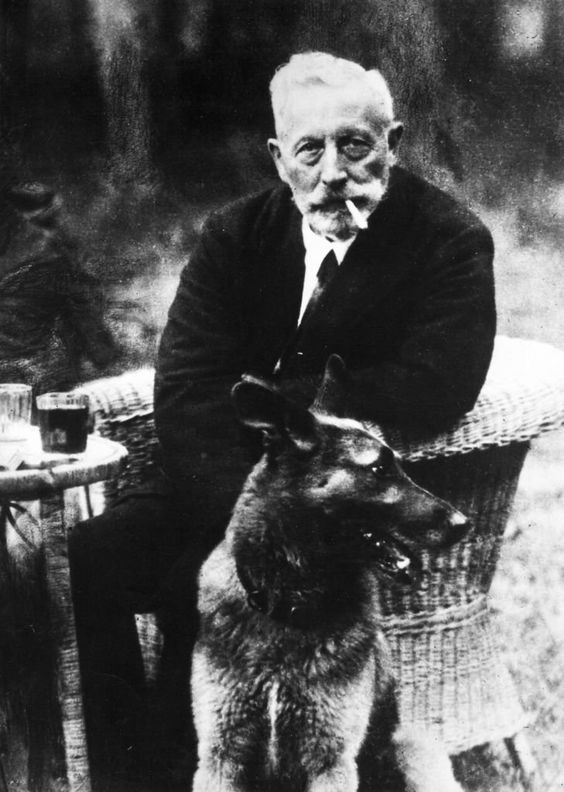
On the 9th November 1918, the Kaiser narrowly escaped, past mutinous Bavarian soldiers, over the border to the neutral Netherlands.
As for the Kaiser's wish to remain King of Prussia, Rose Luxemburg's Spartakus Bund had already stormed and taken over the Royal Palace in Berlin making any such initiative impossible.
On the 11th November 1914, the Armistice took effect, and The Great War was finally over. But as events were only to prove too well, the peace in Europe had still to be won.
Becoming a member of The Western Front Association (WFA) offers a wealth of resources and opportunities for those passionate about the history of the First World War. Here's just three of the benefits we offer:

Identify key words or phrases within back issues of our magazines, including Stand To!, Bulletin, Gun Fire, Fire Step and lots of others.

The WFA's YouTube channel features hundreds of videos of lectures given by experts on particular aspects of WW1.

Read post-WW1 era magazines, such as 'Twenty Years After', 'WW1 A Pictured History' and 'I Was There!' plus others.


