
Extract: "Somme.where in France"
Harry (Henry) Heptinstall, born on 16 August 1875 was one of four brothers whose military careers spanned from the early 1890s in the East Indies to the end of the First World War. Two of his brothers, Arthur and Albert, were already serving overseas with 1 Royal Scots, while Harry's youngest brother John would later enlist in the 16th (S) "Bradford Pals" Battalion. Through a collection of family letters, war diary entries and military records, we catch a glimpse of life as a private infantry soldier in the Great War.
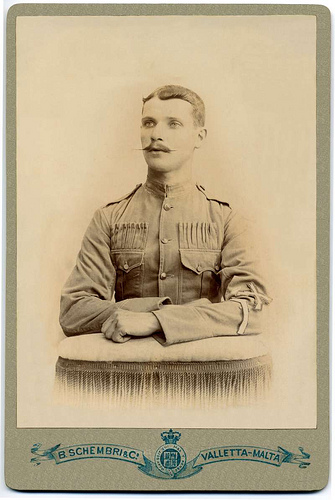
Pre-WW1 Years
From Harry's Account Book / Pocket Ledger (Army Form B.50), we know that at the age of 19, he enlisted on 1 October, 1894 in Bradford for a period of four years in the army and five years in Reserve. Enlisting with the 1st Battalion Duke of Wellington's Regiment, he became Pte H Heptinstall #4283.
Harry underwent military training in Malta, primarily at the Notre Dame Camp. From Harry's letters home, we find him on a course of field training, and not soon after, received instruction on building fort walls and mounting large guns on the parapets for defensive purposes. Harry was also sent to Valletta on a machine gun course.
Further details from Harry's Account Book and from Army Form B.51 (Monthly Settlements, and Savings Bank Account) reveals that, from 1898 to 1901, Harry received Musketry Classification of Marksman and it was during this time, that we find Harry serving in the East Indies, notably Rangoon, Burma.
On 5 July 1902, Harry went into Reserve, as Corporal with exemplary character.
The Dardenelles
In 1915, Harry re-enlisted at the age of 39 and joined the 8th Duke of Wellington's (West Riding Regiment), 32 Brigade, "W" Coy as Pte 10790. It is at this stage in Harry's military career that War Diaries play a pivotal role in piecing together his military path in conjunction with family letters (his service record was destroyed during WWII). The war diaries viewed by the author at the National Archives at Kew, were the 11th Division Base; 32 Brigade; HQ; 8th Division (Mediterranean Expeditionary Force, Egyptian Expeditionary Force, and the Western Front). From the MEF diaries, we know that Harry's division, mobilised on 30 June 1915 boarded the SS Aquitania at Liverpool to set sail for the Dardenelles. After the Aquitania escaped a near miss from a hostile sub torpedo on 4 July, they arrived in Lemnos on 10 July and began preparations for the Gallipoli landings at Suvla Bay.
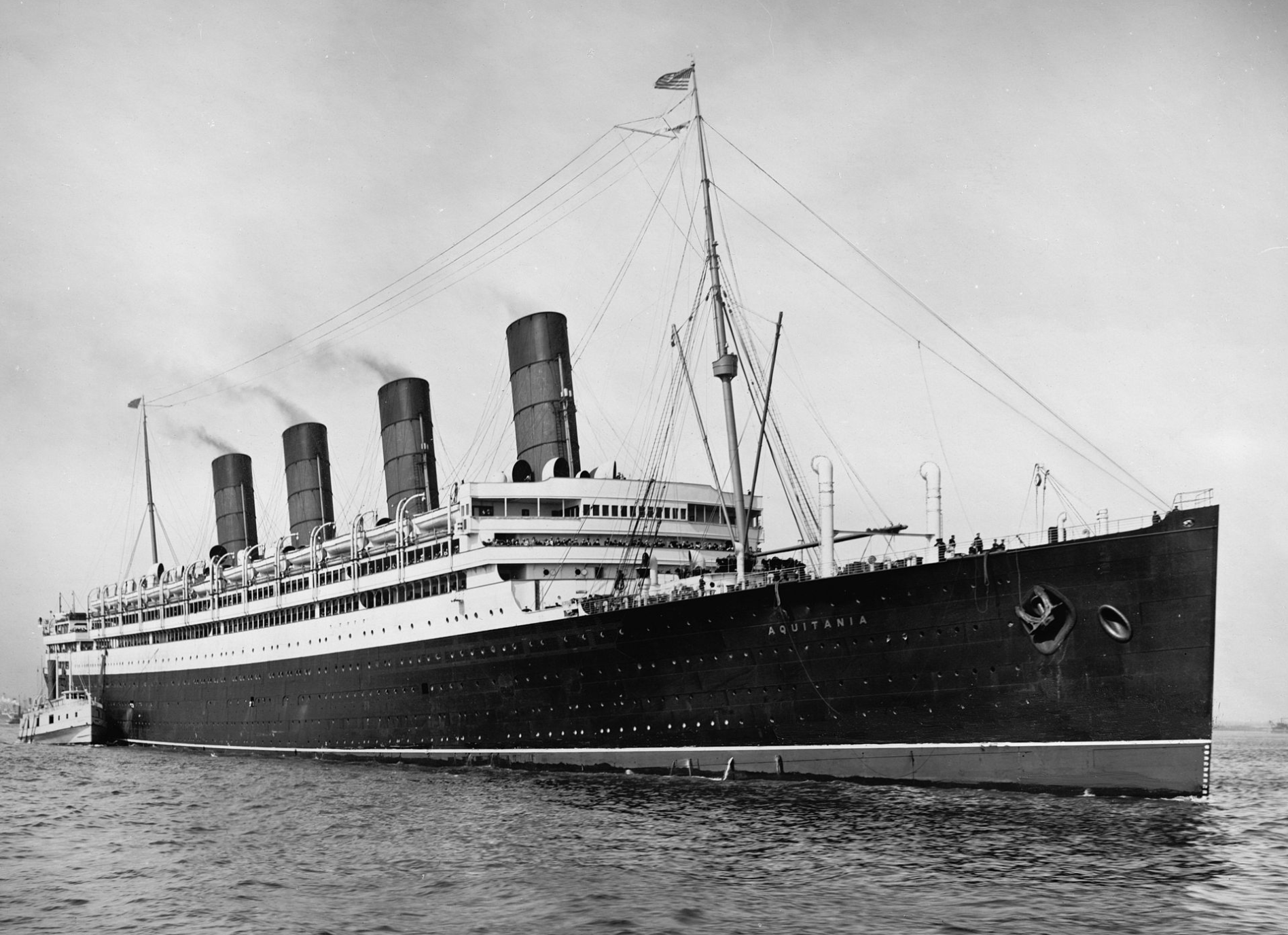
On 6 August, Harry's Regiment boarded destroyers at Imbros and landed under fire at Suvla Bay around midnight. They disembarked and headed to Lala Baba moving across Salt Lake under orders at 2am. The following are excerpts from one of the many letters written by Harry to family members while serving with the British Mediterranean Expeditionary Field Force during the Gallipoli Campaign. It details the conditions encountered by Harry's Division after landing at Suvla Bay, August 1915.
"32nd Bdge 11th Division, British Med. Exp. Field Force. 9 Aug 1915
Dear Brother and Sister,
...I can tell you we are having a stiff job here and I am sure France is not in it compared to with this place as it is all mountain fighting. I am writing this letter on the side of a mountain in my dug out 200 ft high and have to hold like a goat as least slip and down you go in to the bottom on to the sea beach.
....we affected a landing at Suvla Bay and we came over on Torpedo boats and ran ashore and I can tell you we were fired on by snipers but we landed successfully at about 11 o'clock at night."
The letter continues in detail and the harsh conditions the soldiers faced are only too clear from the following excerpt from the same letter.
"I can tell you we followed them (Turkish Soldiers) up until Sunday morning until sheer exhaustion compelled us to stop (2 days and nights) and we could not get any water for they had to send water carriers down to the beach as the Navy brought us a timely supply in barges.
...we caught the worst of it when we were advancing over the salt lake (dried up in summer) as it was all open for about 6 square miles and up to the knees in sand and I can tell you they just did give us some shrapnel if you could have seen it you would not think any thing could live.."
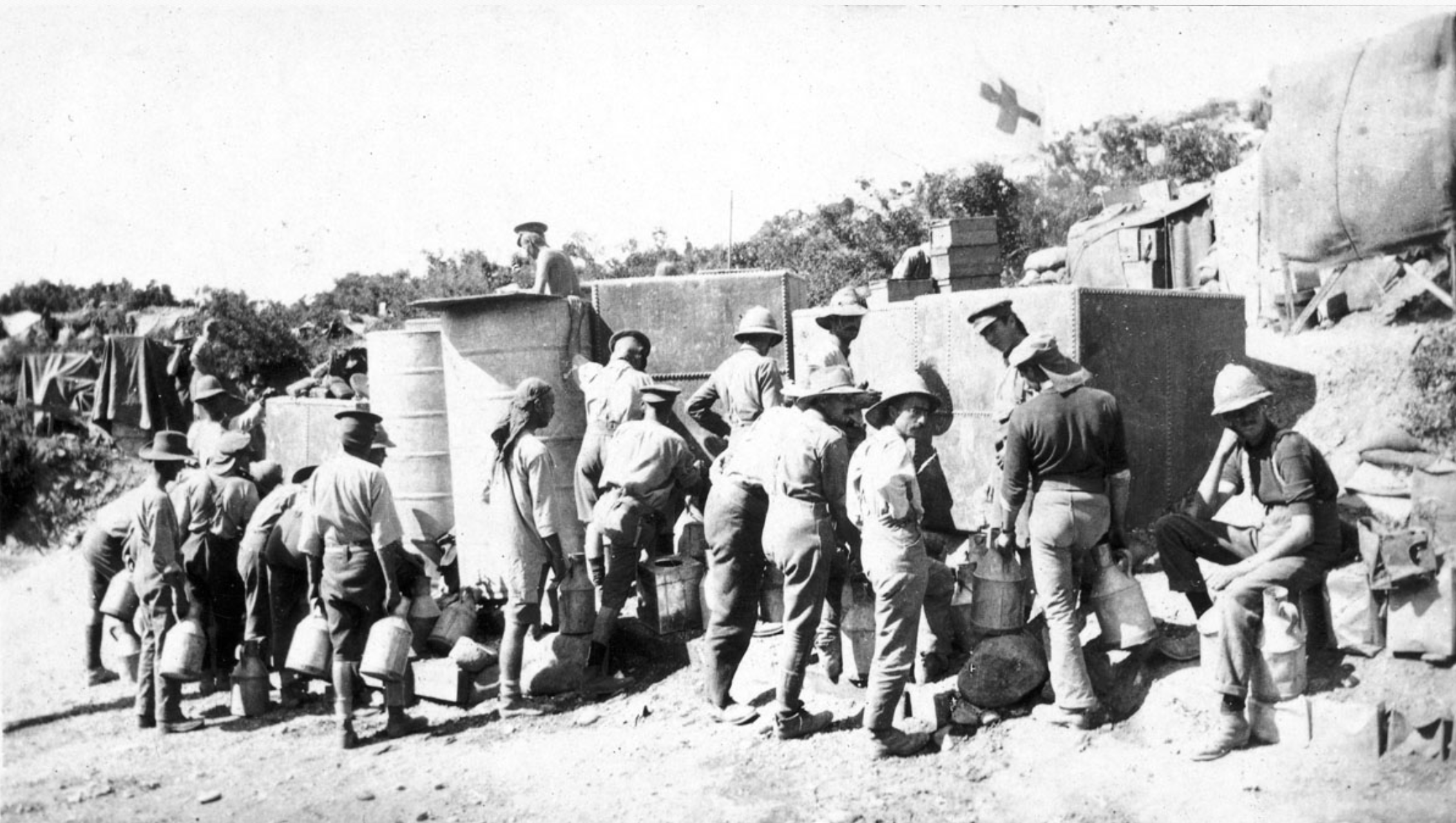
The short supply of water was a frequent topic in Harry's letters home:
"I would willingly pay more for water than beer here. You cannot get a wash when you want one. I can tell you you are lucky if you get one a fortnight, but our engineers are finding water but in limited quantities".
Canteens were soon erected but the distance from the front lines and the cost of supplies (eggs, tobacco, "butter" etc) to the men made many make do with standard issue provisions.
"...we have now got a canteen put up but it is about 3 miles away from us but it is only a dry one. If any men want anything from there up in the firing line they send an NCO and a few men down every night after dark. It is all on tick as we get no pay here and it comes out of the men's accounts, they go down with a bit of paper signed by the men but I don't care about that sort of business myself so I let it severely alone, and I have a few shillings that have gone rusty in my pocket...
I may tell you if it passes censor that when we came out of action on the 22nd of Aug we had only 1 officer, a 2nd Lieutenant and 231 men left out of nearly 1,000 officers and men..."
Harry was requisitioned to the stores after the Quarter Master and QMS were invalided home leaving Harry the only staff member left. His job was no less hazardous as the following excerpt shows:
"Well, we have a dangerous job taking the rations up to the firing line every night on the mules and we often have some narrow shaves. I got a hole made through my canteen with a piece of shell last night which was on my back but we are used to it and think nothing of it".
Back on the Home Front, Harry's relatives saw his name on the casualty lists and very much alarmed, wrote for confirmation only to receive this reply:
"Dear Brother and Sisters
I have just received your letter dated 15 Oct and was pleased to hear from you and I can tell you I am very much alive yet, I suppose you would get a bit of a shock when you saw us my name in the casual list, but I happen to know the man, he belonged to the Y and Lanc. Regt and there is another in the same Regt called John and they come from Sheffield. They belong to our Brigade, and I came to know them while we were at Witley Camp."
Port Said
After the Peninsula was evacuated, Harry's Regiment found themselves back on Imbros before boarding the HMT Empress of Britain for Sidi Bishr Camp in Alexandria, Egypt
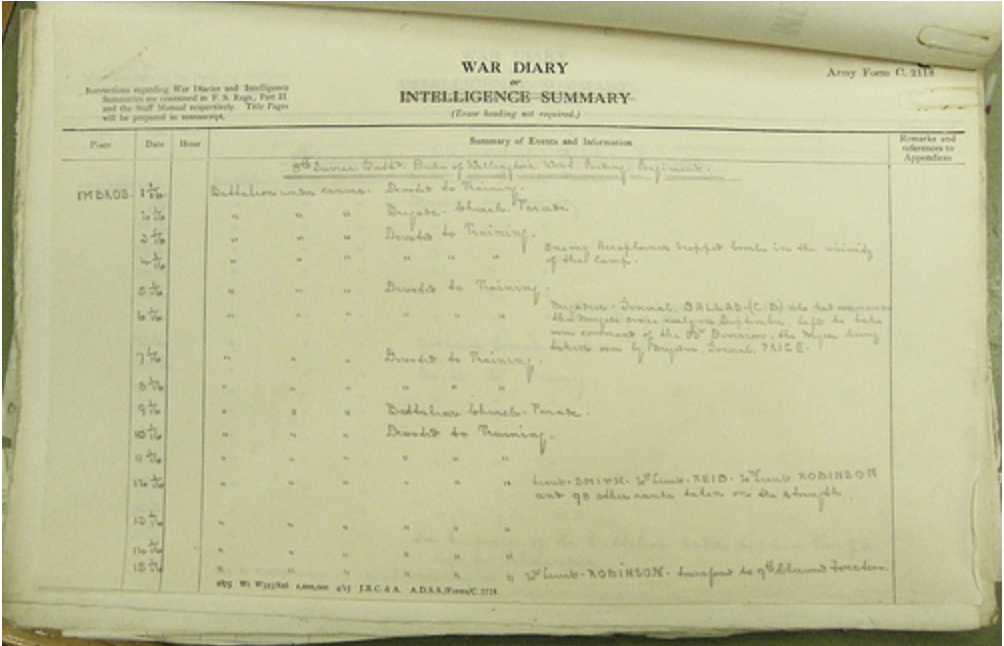
The Battalion, stationed at El-Ferdan, Egypt, formed part of the force protecting the vital Suez Canal. It was here, that Harry found out that his younger brother John had enlisted and had been sent to Egypt although the two never crossed paths. The monotony, heat and flies made living conditions for the soldiers almost unbearable mentally and a letter dated June 16, 1916 reflects this:
"Dear Bros, Sisters
I was just going to say I now take pleasure of answering your welcome letter but I can tell you it is an awfull pleasure as we cannot write for flies, and the only pleasure we have is when the great big ball of fire is extinguished about 7pm at night, it just pops up at about 4:30 am, then it is terrific for the rest of the day...it is the same thing over again day in and day out...there is nothing to see only sand as there is not even a blade of grass or a shrub nor a building in site."
"Somme.where in France"
Harry's Regiment soon found themselves billeted in Alexandria in preparation for departure on the HT Ionian, 26 June 1916. They disembarked at Marseille one day after his younger brother John fought alongside the Bradford Pals,1 July 1916 at Serre. The following is an excerpt from a letter written by Harry, 11 July 1916:
"Just a few lines to let you know that we have been in France a week now and you must have known by the tone of my letters, that we were about to leave the other place and was not sorry, We are having some cold weather here and wet, and are billeted out in a wrecked village and we feel the cold after being in the other warm place, Our regiment have gone up into the trenches, but on to a quiet front, for a time."
Harry's Battalion was stationed at Agny and served in the first and second line trenches although Harry was in the stores at this time:
"Our Regt is up in the trenches, but myself I am in the stores but go up every night, and it is well worth it for the sight is splendid but I can tell you they sling whole arsenals about here and it is surprising where all the shells come from and I can tell you we want all that we can get, we must have an inexhaustable supply and the screech of the shells and noise of the guns is something surprising and you get that used to it that you shout at one another when you talk."
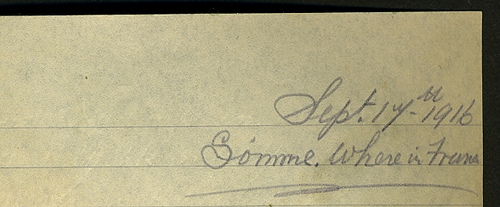
On 3 September, the Battalion moved to the Beaumont area and began preparations and rehearsals for the attack planned for 6.30pm on 14 September (Wunderwerk and Hohenzollern trench systems). The following is a passage from a letter written after the offensive:
"...there is plenty of excitement here both night and day in any sort of weather it is a continual roar of artillery from thousands of Guns and the prisoners that come in look proper nerve shattered and dejected".
Over the next ten months, Harry's Battalion remained in France undergoing training, holding front, support and reserve lines, and supplying fatigue and cleaning up parties. The following extract from a letter home dated 3 April 1917 relates the conditions of the Somme during the winter months:
"I have just received your most welcome letter dated 22nd March so you see it as took 11 days to find me in this way out place. We have been having some terrible weather here lately plenty of snow storms and rain and all sorts of weather and it as been most uncomfortable to get about."
The hardships endured by the local people are equally expressed:
"Yes we are treat with respect by the Villagers but you know they have nothing to give away as they get all there food by tickets and even coal and they only just get what will keep them going and have to be very careful. So you cannot expect much out of them, they do call us in to drink Coffee with them but you have to take your own sugar as it is very scarce as in England."
While still in the Somme, Harry receives the news that his brother John is missing:
"I received your letter dated 27 May and was sorry to hear the news about John been missing as I was hot on his trail as they have been in this place some time before us and had not been left long when we got here, Well we shall have to cling to the hope that he is a prisoner which is bad enough as you say. I must have received a letter from him just as they went up to the line as he told me he had come across our Arthur's grave and I have had a good look round myself but had no luck. (Arthur died in hospital from multiple gunshot wounds to the abdomen, after taking part in an offensive near Ypres on 14 October 1914, and is buried in Bethune Town Cemetery).

In a letter sent to his family on 2 July, 1917, Harry finally receives news of his brother's fate:
"Dear Bros and Sisters
I was very pleased to hear your good news to-day and waste no time to let you know how very pleased to hear that he was a prisoner in Germany which is bad enough no doubt but there is consolation he is alive and kicking without being knocked out."
(John was taken prisoner at Oppy Wood on 3 May 1917).
Despite all that Harry had witnessed and the conditions war ravaged on him, he still managed to keep a positive outlook in his letters as evidenced in the following passage:
"We are out of the trenches for a short spell and in a bit of grand country as everything is at its best, and away from the shells but can plainly hear the terrible bombardment that is going on continually night and day."
Harry continued writing letters home throughout his service with the Duke of Wellington's. Letters were written while in reserve at Canal Bank, after manning front line trenches at Langemarck and at Hill 70. His Battalion suffered several gas attacks and spent Christmas 1917 in relief at Contrainne. Although his Battalion disbanded in February 1918, Harry continued to serve on the Western Front.
The above narrative has been compiled from extracts from several works in progress by the author on the military careers of Albert, Arthur, Harry and John Heptinstall. Through family letters (Harry is the author's great-grandfather), documents, war diaries, service records and other military documentation, the military lives of four men are slowly being unravelled.
Becoming a member of The Western Front Association (WFA) offers a wealth of resources and opportunities for those passionate about the history of the First World War. Here's just three of the benefits we offer:

This magazine provides updates on WW1 related news, WFA activities and events.

Access online tours of significant WWI sites, providing immense learning experience.

Listen to over 300 episodes of the "Mentioned in Dispatches" podcast.


