
Retreating from Mons - a veteran's recollection
Random recollections of 1914-1918 by Trooper William Clarke, 3 Troop, B Squadron, The Queen's Bays (The Second Dragoon Guards).
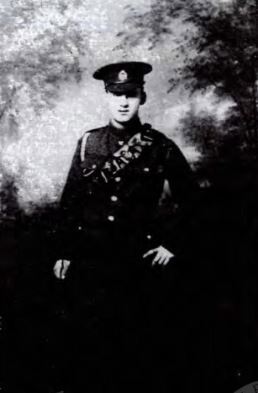
I can remember that we were at Audregnies on the 23rd August. Apart from hearing sporadic gunfire the day was pretty quiet. We were able to clean ourselves up and attend to the horses and equipment. Late evening, I think it was, somewhere about 11 o'clock, we had orders to saddle up and we marched to Quievrain. When we got there we found that a lot of miners and peasants were waiting for us, all set to help us dig trenches across the bank of the railway cutting. They got in our way a bit, though they did help, but what frightened us was that the locals had brought lanterns to work by and we feared that it might draw fire from the other side of the canal, but it was alright. We did not get much rest that night though.
Then we were on the move again and fell back with many stops and starts to Angre. There must have been some kind of action ahead because I can remember some riderless horses galloping back through our Squadron - they were some other Regiment's horses. By this time we and the horses were terribly tired, hungry and thirsty, but there was nothing for us to eat - we had lost touch with our supplies. So all we could do was to lie down with our horses in the open, resting up for a few hours.
I think we then made for Vertain, I am not too sure about that - and then on we went to Le Cateau. I remember seeing a lot of dumped equipment by the roadside as we passed. It was all very confused at Le Cateau and there were lots of blokes just lying around in the street. They looked as tired and as browned off as we were and probably had not had food or drinks either. We considered ourselves lucky! We had a ration of biscuits and water and we slept in a field that night. We left there before dawn and by this time our horses were in a pretty poor condition.
I remember when we got to Escaufort we were on high ground and there was some action by the R.H.A. going on. They kept it up for some time, doing a fair bit of damage. I think this was where we had our first hot meal for some time and we were able to attend to the horses and give them a good feed-up and a bit of spot-grooming.
Then we withdrew to St. Quentin. Somehow we found ourselves going across fields, not the road, which was jam-packed with people from the village, refugees I suppose, carrying as many of their things as they could. Anything with wheels had been loaded to capacity, and mixed up with all this were blokes of other units and their equipment and guns. Colonel Wilberforce, our C.O., gave the order that we were to march across the fields running parallel to the road, but in any event we lost about half of the Regiment. By that time our horses were exhausted and very hungry again and we tried to get billets in a couple of villages but they were already packed with our troops and refugees so we plodded on through the night. I remember falling asleep on my horse at intervals. We finally arrived at Ramicourt and bedded down in barns and sheds. We only managed to get a couple of hours rest that night, and again - no food. Before dawn we were up and away again going towards St. Quentin. On the way we met up with our missing blokes and that day we managed to get some decent food and tea.
While we were there, there was a rumour that orders were that supplies and equipment not immediately needed were to be dumped so that unfit men could hitch a lift on horses. They had not had their saddles off for some time and were in a distressed condition and nervous. We loved our horses and tried to take as much care of them as possible: but they did go through it.
Off we went again, picking up stragglers from other cavalry units. Somewhere around this area we had a little set-to with an advance patrol of German cavalry; we lost two or three of our men and some horses. We crossed the canal; I think we were headed to Bailly. All the Regiment had got together by then and we rested and then off we went again to somewhere outside Compiegne. We were needed to protect the flank of the retreat, but we could not find billets around there because the French cavalry had got there first. We ended up at Nery. About this time a rumour had been going around that the Germans had been asking for peace. I wondered if we had won, drawn or lost!
I remember that we were one of the last regiments to reach Nery on the 31st August 1914. There were a couple of other regiments there, one of which was the Fifth Dragoons. We were positioned on the west side of the village street and our horses were in a field west of us. We had reached Nery from Verbier, where we had stopped to water our horses. We came to Nery because, I remember, other villages on our march had been occupied by the French cavalry and we had to have somewhere to rest. The cavalry was needed in that area to protect the flank of the retreat from Mons.
'L' Battery, Royal Horse Artillery was positioned in a field south of the village near the sunken road running to the sugar factory. I still remember that day because it was the first time, apart from some skirmishes during the withdrawal from Mons, that I participated in an actual battle. I remember the morning as being very misty. Earlier on we had had orders to saddle-up but because of the mist we could not move so we were dismissed and had breakfast and watered the horses.
Suddenly we heard the sound of an explosion and then a barrage of shells. I am sure it was about 5 o'clock in the morning. We rushed to see what was happening and found that shells had burst amongst our horses. They belonged to 'C' Squadron. A lot of them were terribly injured and killed and many of them had stampeded off with fright. There were men hanging on to them but they could not stop the horses bolting. We had no idea what was really happening, just that we had been shelled. Then it seemed that everybody got into action. Gunners dragged their guns into action, troopers improvised a firing line. By this time the other horses of the Regiment, 'B' and 'A' Squadrons were stampeding after 'C' Squadron's horses.
Lieutenant Lamb, the machine-gun officer, got some of his men together and got a couple of guns going along the sunken road, helping the other gunners with their guns. I think another enemy battery started firing on the village then and the Fifth Dragoons engaged them. I was one of a small party of about fifteen men who were ordered forward to try to stop a German advance towards the sugar factory. The Germans had occupied some buildings alongside it. Lieutenants de Crespigny and Misa and a Sergeant Major led the attack.
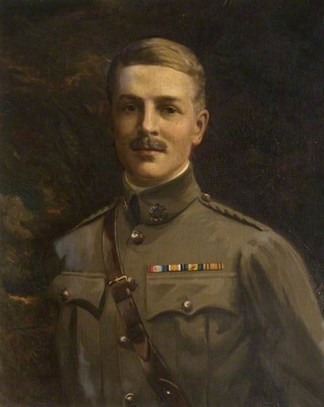
We managed to stem the German's advance for a time but due to casualties we had to withdraw. The Germans were machine-gunning us from the sugar factory and I remember that the Germans were finally shelled out of the factory and outbuildings by T Battery of the Royal Horse Artillery. Our casual-ties were heavy; Lieutenant de Crespigny was killed, and so were two or three other men and the rest were wounded. Lieutenant Misa, myself and one other man were the only ones to come back unwounded. I was incredibly lucky. That day, and to this day, I cannot remember how long we were actually engaged in our attack on the sugar factory.
Then reinforcements arrived. They had come across our horses stampeding and they opened fire on the German guns. I remember one was the Middlesex Regiment. T Battery of the R.H.A. were firing from higher ground.
When the battle had ended, somewhere about 10 am, we helped to collect the wounded and cleared up, collecting bits and pieces of useful equipment. It was my first sight of multiple death in battle with many men and horses, both German and British, dead. At the count I think the Queen's Bays lost about 150 horses, at least half of that number killed, the others lost by stampeding. One officer and three or four men were killed and perhaps about fifty wounded. That is not counting men and horses of the other regiments such as 'L' Battery, R.H.A., the heroes of the day.
Everything seemed to happen so quickly, events were out of control. I know that I felt frightened and excited at the same time. We were a very highly trained and efficient regiment and we did as were were trained to do, responding quickly to a situation without question. And if you wanted to live you had to kill.
I never saw my own horse again. She was called 'Daisy'. She was a lovely, docile, intelligent girl. I had a quick look 'or her but I suppose she had been either blown to bits or stampeded and ended up as someone else's mount in another regiment. The next mount I had was a pretty nasty one. A fussy, groaning, moan-ing rather spiteful creature. I lost that one somewhere near Albert later on in the war.
We learned later about the tremendous, heroic stand made by 'L' Battery. I cannot tell you about that part because we were busy with our own part in the battle but we saw t he carnage after. I think our Colonel Wilberforce had spoken to Captain Bradbury just before he died. Both his legs had been shattered by fire.
It is a funny thing, but very little was made of the Nery battle. For many years it was, you could say, made little of in official war histories and now, so much later, its significance has been recognised in the Battle of the Marne.
William 'Nobby' Clarke was a veteran member of the WFA. He died on 21st November 1986 aged almost 91.
This article first appeared in Bulletin 18, in February 1987. Bulletin is one of several magazines available for free to members of The WFA. If you want to see more articles like this one, you may wish to become a member of The Western Front Association.
Becoming a member of The Western Front Association (WFA) offers a wealth of resources and opportunities for those passionate about the history of the First World War. Here's just three of the benefits we offer:

The WFA regularly makes available webinars which can be viewed 'live' from home. These feature expert speakers talking about a particular aspect of the Great War.

Featured on The WFA's YouTube channel are modern day re-interpretations of the inter-war magazine 'I Was There!' which recount the memories of soldiers who 'were there'.

Explore over 8 million digitized pension records, Medal Index Cards and Ministry of Pension Documents, preserved by the WFA.


