
Lt Philip Neame VC
Lt Philip Neame was to become a career soldier.
Born in 1888 he took part in the Boer War and the outbreak of the Great War found him stationed in Gibralter with the 15th Field Company of the Corps of Engineers. Anxious to get to Flanders he arrived with his Company in November 1914 just after the First Battle of Ypres had died down. Two months later, on 19 December 1914, Neame was with his Field Company accompanying the 2nd Devonshire Battalion of 23rd Brigade (Eighth Division) in an attack against enemy positions at the Moated Grange, a farm building close to Neuve Chapelle. It was here that he was to win the Victoria Cross.
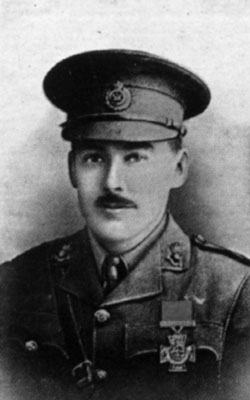
During the night after the 2nd West Yorks had replaced the Devonshires and were consolidating the British positions, the enemy began using bombs to counter-attack at dawn. Neame crawled along an open ditch in order to discover what was going on. On his return because, unlike many of his sappers, he knew the bombs could be used without a fuse, he gave orders for all the company's supply of bombs to be gathered up. With pin-point accuracy he then proceeded to bomb and defeat an enemy machine gun position, thus putting an end to any further resistance.
Lt Philip Neame' s VC was published in the London Gazette of 18 February 1915, and the King presented him with the decoration five months later at Windsor Castle. Neame was later to serve in the Second World War and rose to the rank and title of of Lt Gen Sir Philip Neame, VC, KBE, CB, DSO, DL.
He died at his home at Selling, in Kent, on 28 April 1978. His VC and campaign medals are on display in the Imperial War Museum.
Article and image kindly contributed by the author, Gerald Gliddon.
Becoming a member of The Western Front Association (WFA) offers a wealth of resources and opportunities for those passionate about the history of the First World War. Here's just three of the benefits we offer:

The WFA regularly makes available webinars which can be viewed 'live' from home. These feature expert speakers talking about a particular aspect of the Great War.

Featured on The WFA's YouTube channel are modern day re-interpretations of the inter-war magazine 'I Was There!' which recount the memories of soldiers who 'were there'.

Explore over 8 million digitized pension records, Medal Index Cards and Ministry of Pension Documents, preserved by the WFA.


