
Brigadier Percy Howard Hansen VC
Old Etonian Percy Howard Hansen was, by any standards, an exceptional soldier. Not only was he incredibly brave and extraordinarily lucky, he was also remarkable in that he was German-born of Danish parentage.
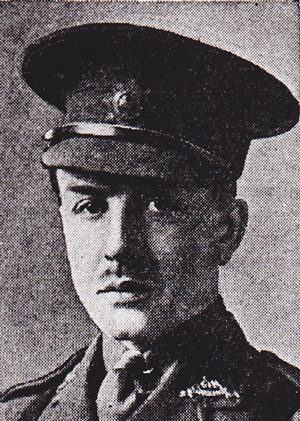
His father, a wealthy businessman with connections to the Danish royal family, applied for British citizenship to allow Percy to take up a commission, which he did in 1911 when he joined the Lincolnshire Regiment.
Though he would eventually rise to the rank of brigadier during the second world war, "Piccadilly Percy", as he was dubbed on account of his high society links, achieved his greatest distinction during a little more than three years service during the Great War.
Between 1915 and 1918, he joined an elite band of heroes who acquired the ‘full set' of gallantry awards, the Victoria Cross, Distinguished Service Order and Military Cross. His first, and highest honour, was gained on the Gallipoli peninsula, near Suvla Bay.
During an ill-starred advance on Hill 70, otherwise known as Scimitar Hill, on 9 August 1915, Percy, as adjutant of the 6th (Service) Bn, the Lincolnshire Regiment, not only helped prevent a rout but risked his life, leading a rescue party into blazing scrub swept by bullets to save wounded men trapped by the fires.
A month later, he performed a second act of bravery, involving a solo reconnaissance, which was recognised with the award of a Military Cross.
Evacuated through ill health, Percy was eventually transferred to France and appointed brigade major to 170 Infantry Bde, 57th (West Lancashire) Division. He remained a staff officer for the rest of the war, during which he served with 2nd ANZAC and added two mentions in despatches, a French Croix de Guerre (7 October 1918) and a Distinguished Service Order (16 September 1918) to his impressive list of awards.
The last honour, granted "for conspicuous gallantry" during another reconnaissance in the Ypres area, capped an outstanding war record that would overshadow the rest of his career which ended with his retirement in 1946.

Becoming a member of The Western Front Association (WFA) offers a wealth of resources and opportunities for those passionate about the history of the First World War. Here's just three of the benefits we offer:

The WFA regularly makes available webinars which can be viewed 'live' from home. These feature expert speakers talking about a particular aspect of the Great War.

Featured on The WFA's YouTube channel are modern day re-interpretations of the inter-war magazine 'I Was There!' which recount the memories of soldiers who 'were there'.

Explore over 8 million digitized pension records, Medal Index Cards and Ministry of Pension Documents, preserved by the WFA.


