
The Western Front Association helps St Paul's Cathedral identify a piece of its Great War History
During the First World War, many servicemen received serious injuries which required months of care. To aid recuperation from their injuries, they often undertook a range of craftwork which was encouraged to try to occupy wounded soldiers, to prevent them becoming bored and dispirited. Amongst other crafts, embroidery was often used as part of their rehabilitation
Examples of embroidery work by injured soldiersare still kept by their families. Some of the work is of a very high standard, such as this example by an Australian soldier Private Stanley Chivas.
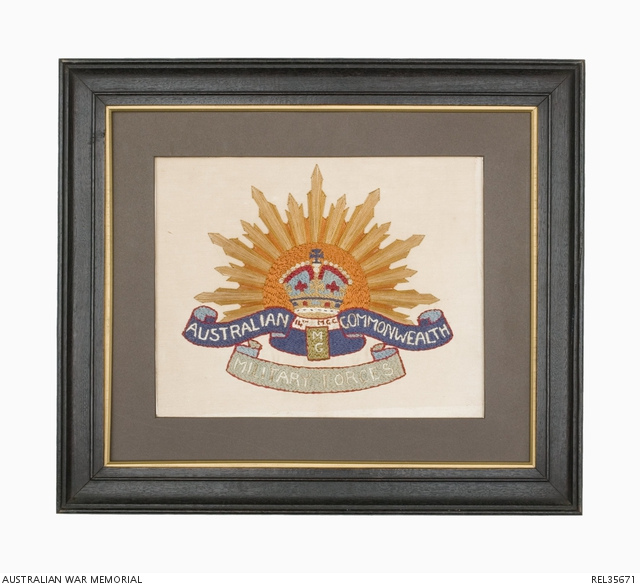
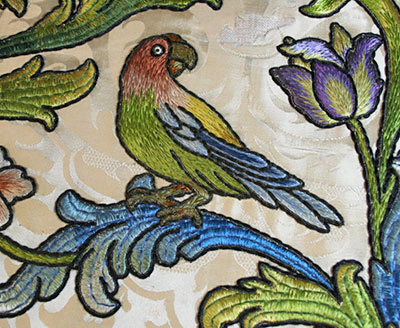
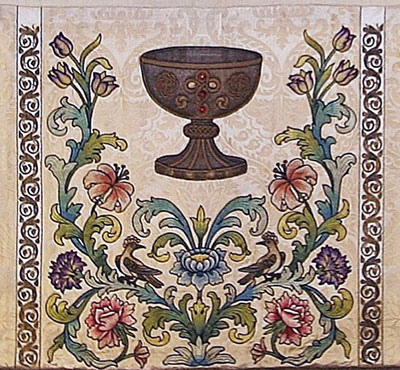
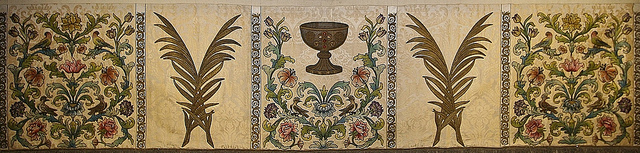
It is likely that men who were identified as the most skilful at embroidery were invited to take part in a project run by St Paul's Cathedral in London to create an Altar Frontal for the High Altar. Some 140 men took part in the project, and at least 35 of them (by far the largest single contingent) were patients at the 2nd Australian Auxiliary Hospital in Southall, Middlesex.
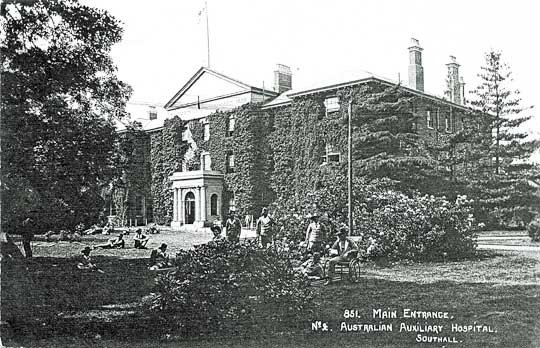
Southall Hospital, based at St Marylebone School in South Road, Southall, London, received its first patients in September 1916. Within a few weeks, another nearby school (the Beaconsfield) was also taken over, doubling the capacity of the hospital to nearly 500 beds.
It is not known why such a large proportion of the men working on the Altar Frontal project came from this particular hospital. It is, of course, possible that embroidery work was encouraged more than usual in this hospital; in contrast, the larger Bethnal Green Military Hospital, with over 700 beds, provided just three men.
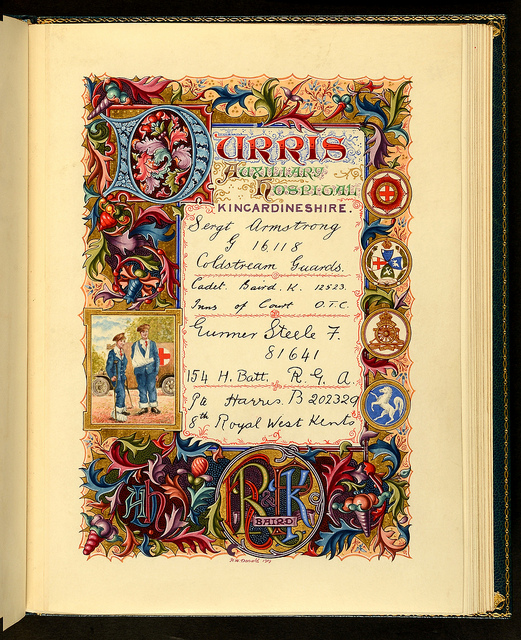
Other men volunteered for the project with St Paul's Cathedral from hospitals as far afield as: Southampton (Netley Hospital); Brighton (The Lady George Nevill Hospital); and Scotland (Durris Auxiliary Hospital, Kincardineshire).
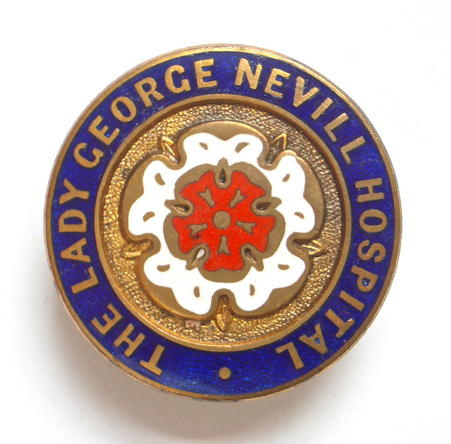
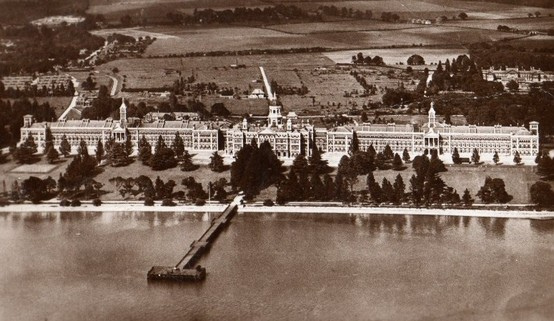
The men worked on small pieces of the embroidery at their hospitals and these pieces were subsequently sent to the Royal School of Needlework's headquarters in Kensington to be stitched onto the frontal as a whole.
As well as 35 Australians, there were at least 18 wounded soldiers from Canada, (including George Eades, who had been blinded, and James Muth) as well as 14 men from South Africa.
Altogether, approximately 65 men who worked on the project came from the Commonwealth (the then British Empire) forces. The remaining 75 came from the UK. It would appear that there was a deliberate attempt to ensure that the work was equally shared, with about half of the men from the UK and the other half from the Empire.
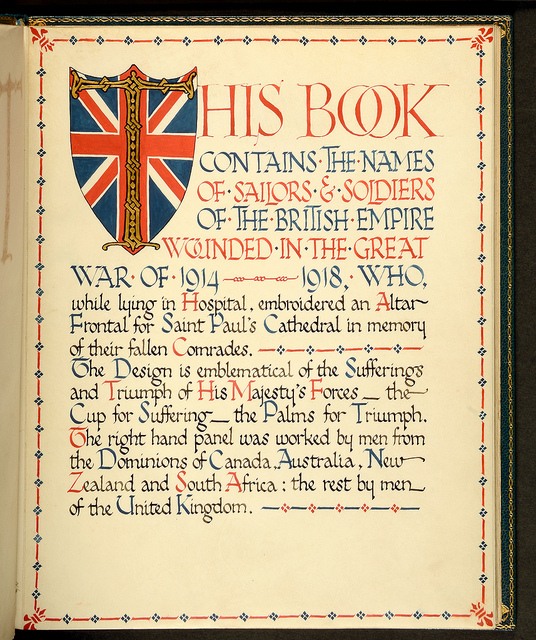
The men who worked on the project recorded their names for posterity in a gold-leafed book. The book is now the subject of a great deal of research. In order to mark the centenary of the outbreak of the First World War, St Paul's Cathedral is hoping to trace as many of the men who worked on this project as possible, in order to find their descendants. Unfortunately some of the names recorded in the book are proving difficult to decipher, and even those which are clear are sometimes difficult to identify with certainty.
You can download the list of names below.
Many of the records of the men from the UK were largely destroyed in the Second World War (a Luftwaffe air raid badly damaged the warehouse where the First World War service records were stored). Despite the destruction of records in the Second World War, we are fortunate that other records survive, notable some 6 million pension cards and ledgers recently saved by The Western Front Association.
The WFA is delighted to be able to help St Paul's with the investigation into these men. So far, a number of individuals have been positively identified.
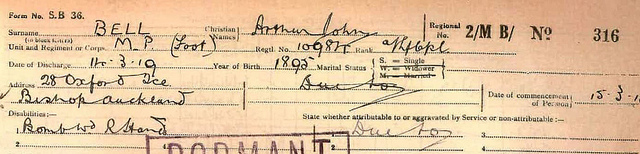
For example the name of L/Cpl Arthur Bell of the Military Foot Police is recorded: Arthur was a patient at the Royal Victoria Hospital, Netley. The WFA's records reveal that his home address was 9 Hill View, Broompark, Co Durham (later 28 Oxford Terrace, Bishop Auckland) and that he had suffered a bomb wound to his right hand.
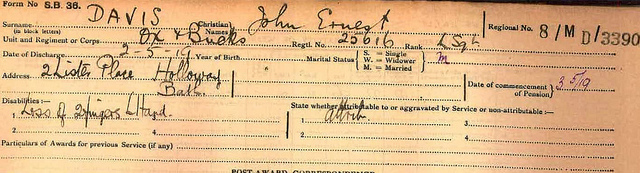
Private John E Davis of the Somerset Light Infantry is also recorded. At first it was not possible to identify this individual, but after extensive research it has been ascertained he later became Serjeant John E Davis of the Ox & Bucks Light Infantry. John lost two fingers of his left hand. He came from the Holloway area of Bath.
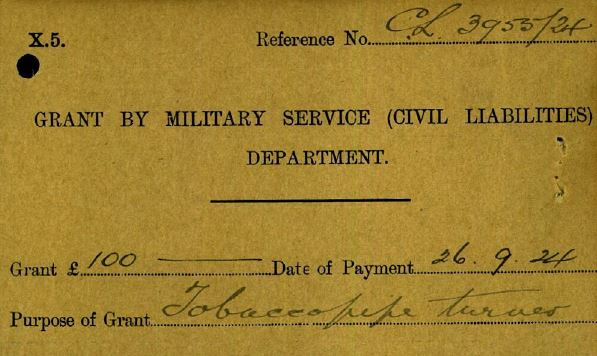
Albert Gutteridge of St George's Road, Richmond, was granted £50 after the war to start a boot repair business, whilst Henry Maxwell of First Avenue, Walthamstow was granted £100 in 1924 (the equivalent of £5,300 now) to start business as a tobacconist (see below).
It is possible, via the records of Thomas Tuckey (of 'The Black Dog', Emsworth, Hampshire) to understand when work on the frontal took place. Thomas (aged 32 in 1915) served in France from October 1915 to January 1919, and he was recorded in the St Paul's register as a patient at the Royal Victoria Hospital, Netley. This fact was confirmed by his surviving service record which showed he was a patient at the hospital from 8 January 1919 to 15 February 1919. It must have been in this brief period in hospital that he undertook some of the work on the Altar frontal. (The WFA's records indicate his later attempts to claim a pension were rejected.)
To date, nearly 80% of the British soldiers in the St Paul's book have been successfully identified by The Western Front Association, with further work likely to yield more positive results.
One of the Australians who were treated at the Middlesex hospital was also one of the very few officers to have taken part in the project: Captain Frederick Darling, of the Australian Imperial Forces.
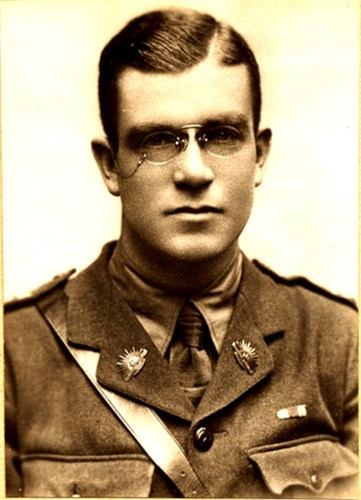
Captain Darling was twice awarded the Military Cross for gallantry. Tthe citation for the first reads:
For conspicuous gallantry during a severe bombardment and enemy counter-attack. By keeping his guns in action until his ammunition was exhausted, and assisting to serve them himself, he greatly aided in repelling the attack.
(Source: 'Commonwealth Gazette' No. 184, 14 December 1916)
The second citation, resulting in the loss of a leg reads as follows:
At Vortaverm, on 10th April 1918, after having to retire from his position, all his guns having been buried by enemy shell, he, with three men, brought into action under exceptionally heavy fire a mortar belonging to another unit, and fired several rounds into the enemy when practically surrounded by them. He was severely wounded, two of his three men were killed, while the third managed to fight his way back to his battery. The conduct of Captain Darling was of a high order, showing great courage and determination.
(Source: 'Commonwealth Gazette' No. 119, 17 October 1919)
Frederick Darling was later repatriated to Australia, living near Melbourne where he died in 1953, aged 61.
Used until the 1940s, it was fortunate that the Altar frontal survived the bombing of St Paul's in the Second World War. It was because the high altar was destroyed, and the replacement altar was of different dimensions, that the frontal had not been used since the Second World War.
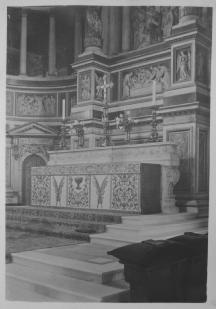
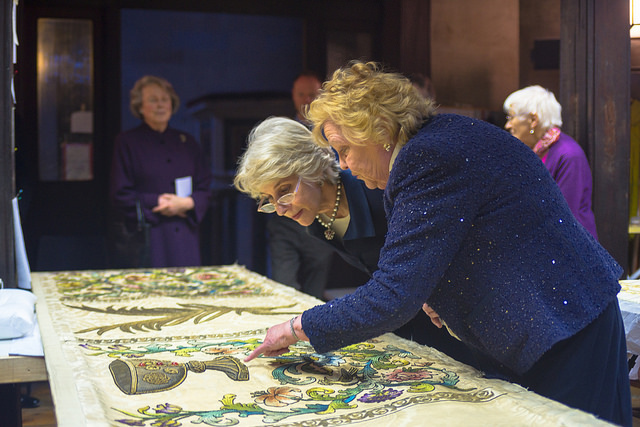
This will be rectified in a few week's time when the frontal will be used for a special service of the Eucharist on Sunday, 3 August 2014 at 6pm. A specially-made altar will be used to accommodate the frontal created by the wounded and injured soldiers.

Becoming a member of The Western Front Association (WFA) offers a wealth of resources and opportunities for those passionate about the history of the First World War. Here's just three of the benefits we offer:

This magazine provides updates on WW1 related news, WFA activities and events.

Access online tours of significant WWI sites, providing immense learning experience.

Listen to over 300 episodes of the "Mentioned in Dispatches" podcast.


