
The London Memorial
On 18 September 1919, the Court of Common Council under the presidency of the Lord Mayor of the City of London met in order to consider the idea of erecting a memorial to London troops who fell in the Great War. These troops, in the main, had served with either of the London Territorial Divisions: the 56th (1st London), 47th (2nd London), 58th (London) or the 60th (London). The 56th, 47th and 58th had served mainly on the Western Front in France and Belgium, whereas the 60th had only seen service there for four months before being transferred to Salonika and then to Egypt. In addition it should be mentioned that, although four regular battalions of the Royal Fusiliers (City of London Regiment) are commemorated here, that they have their own memorial in Holborn which was unveiled in November 1922 and which also commemorates the other 48 battalions.
It was agreed at the September 1919 meeting that a memorial should be erected in front of the Royal Exchange in Threadneedle Street and that the drinking fountain already there would be moved elsewhere. The Office of Works was asked for permission to go ahead with the scheme and, after consultations with the Treasury, permission was granted. The President of the Royal Academy, Sir Aston Webb, who ran one of the country's largest architectural practices, was the chosen designer. His first design consisted of two flag masts of 75 feet which would bear the Royal Standard and the City of London pennant respectively. At the base of each pole would be figures of Victory and Peace. However this design was rejected by the Court of Common Council and a new design requested.
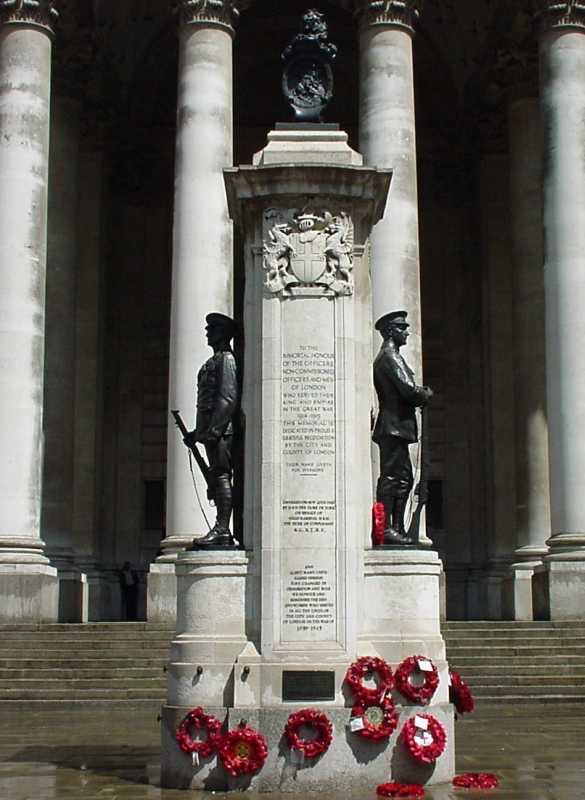
This time the memorial was to be made of Portland stone, with a granite base, and consist of a square panelled pillar with a lion atop with two shields representing the City and County Arms. The bronze panels below, which would be crowned with wreaths, would carry the names of the regiments who formed the London Troops, as well as a list of the principal battles in which they had taken part. Individual figures featuring troops in marching order on pedestals would flank the pillar. The height would be 25 feet which would balance the height of a statue of the Duke of Wellington close by. Lastly, any ugly lamp-posts would be removed and the entrance to the Mansion House Underground Station replaced with a stone balustrade. As a postscript the fountain ended up in Cornhill where it replaced a statue of Sir Rowland Hill which in turn was transferred to a position outside the GPO in St Martins-le-Grand.
Six weeks later a Joint Committee representing the City and County of London and the Lord Mayor's fund approved Sir Aston Webb's design at a cost of £7,000. Sir Horace Brooks Marshall, the Lord Mayor, made an appeal for funding and the money was raised very quickly. By May 1920 great progress had been made with the design and it was hoped that the memorial would be ready for unveiling in November 1920. The commission for the two bronze statues and lion had been awarded to the sculptor, Alfred Drury, and his sketch models were quickly given approval. The two figures were to be about 7½ feet high and would represent a Royal Fusilier and a Royal Field artilleryman respectively. They would be 7ft above the pavement. The memorial itself was being made from drawings and models which were made by Messrs Trollope and Colls; and W S Frith was to design the lettering. Webb and Drury, at the ages of 71 and 64 respectively, were both seniors in their chosen fields and before the war had worked before on the major project of the Victoria Memorial opposite Buckingham Palace.
It was planned that the memorial would be unveiled on 12 November by the Duke of Connaught, the King's uncle, but on the day he was indisposed. His place taken by Prince Albert, the Duke of York, one of the King's sons. The unveiling ceremony was carried out on a very foggy morning and was supported by a major parade through part of the City of London; the parade was made up of a detachment from the Royal Fusiliers (City of London Regiment) and representatives from the 56th (1st London) Division and the HAC (Artillery) and 47th (2nd London) Division. A guard of honour was provided by the 3rd Battalion Grenadier Guards who also supplied the band.
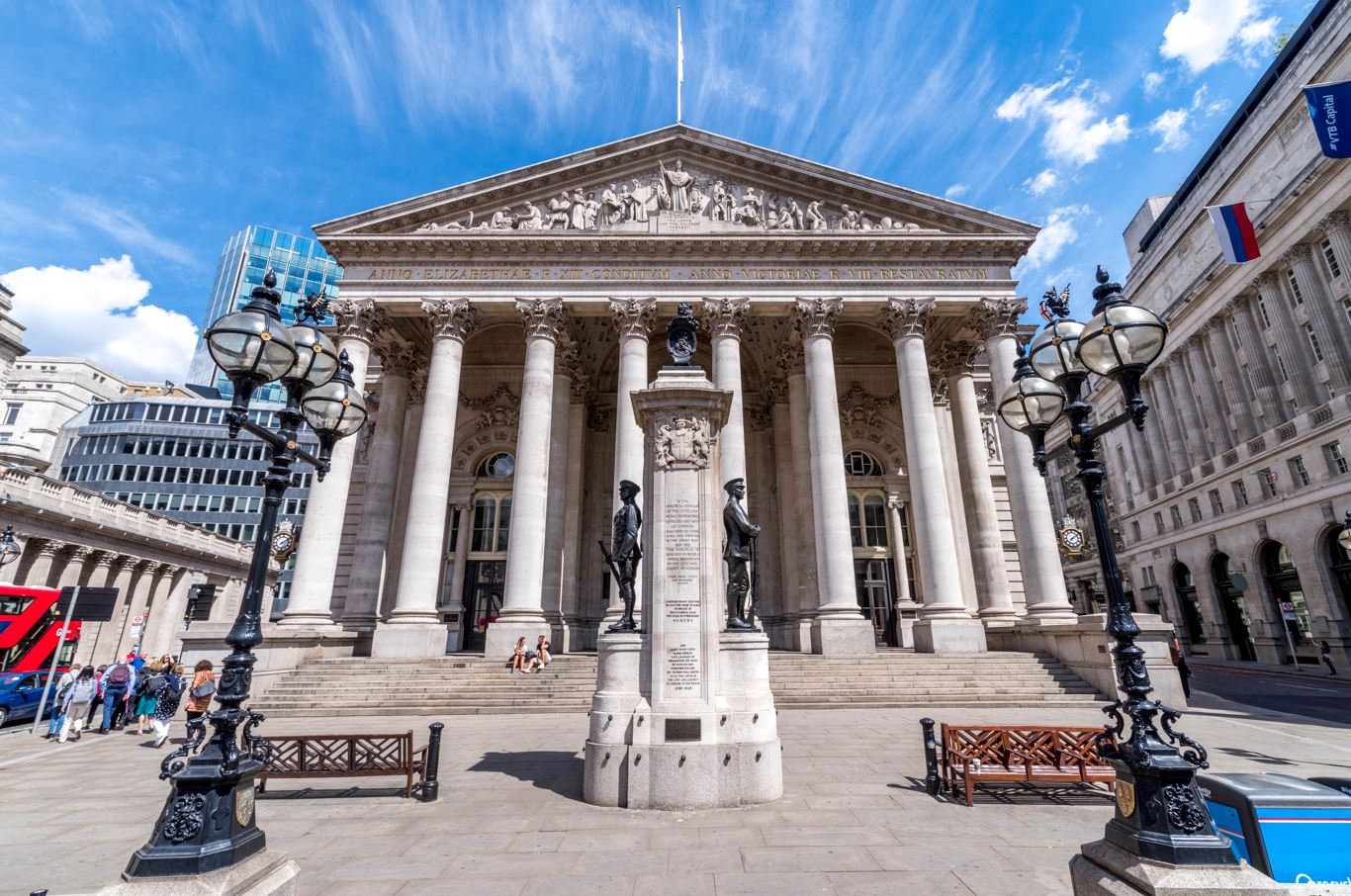
The official party left Mansion House, the residence of the Lord Mayor, and walked to positions in front of the Royal Exchange. Firstly a message from the Duke of Connaught was read out by Sir Horace Marshal, chairman of the Reception and Memorial Committee and former Lord Mayor. The Duke of York released the flags of the City of London which had been covering the memorial and read out a second message. Lord Crewe then thanked the Duke of York who afterwards inspected the memorial. The inscription on the memorial was as follows:
To the Immortal Honour of the Officers, Non-commissioned Officers, and Men of London, who served their King and Empire in the Great War, 1914-1919. This Memorial is Dedicated in Proud and Grateful Recognition by the City and County of London.
Their Name Liveth for Evermore.
Also noted on the memorial is an acknowledgement of the setting up of the memorial:
Erected by public subscription at the Mansion House in the peace year of 1919 during the Mayoralty of Col. the Rt. Hon Sir Horace Brooks Marshall K.C.M.O., L.L.L.D.
On 4 May 1923 the Duke of Connaught paid a visit to the Lord Mayor to present copper replica plaques of the memorial to various representatives of the London military units and he also laid a wreath at the memorial itself. The plaques were to be affixed at the main headquarters of the units involved.
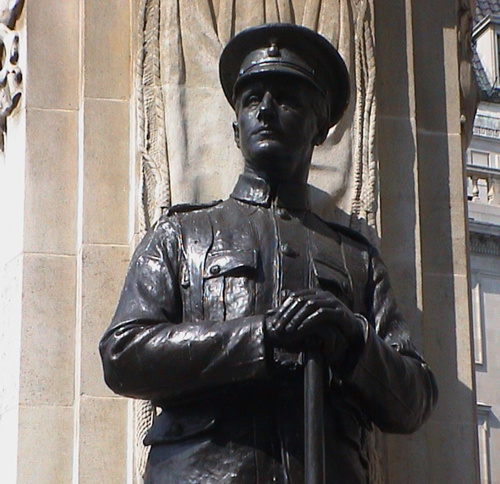
In January 1941 a German bomb fell at the crossing intersection of seven streets causing a heavy loss of life particularly in the underground station below. After the Second World War the dates 1939-1945 were added.
The City of London continues to be responsible for the upkeep of this fine memorial to this day.
Becoming a member of The Western Front Association (WFA) offers a wealth of resources and opportunities for those passionate about the history of the First World War. Here's just three of the benefits we offer:

The WFA regularly makes available webinars which can be viewed 'live' from home. These feature expert speakers talking about a particular aspect of the Great War.

Featured on The WFA's YouTube channel are modern day re-interpretations of the inter-war magazine 'I Was There!' which recount the memories of soldiers who 'were there'.

Explore over 8 million digitized pension records, Medal Index Cards and Ministry of Pension Documents, preserved by the WFA.


