
The Wagoner's Special Reserve Memorial
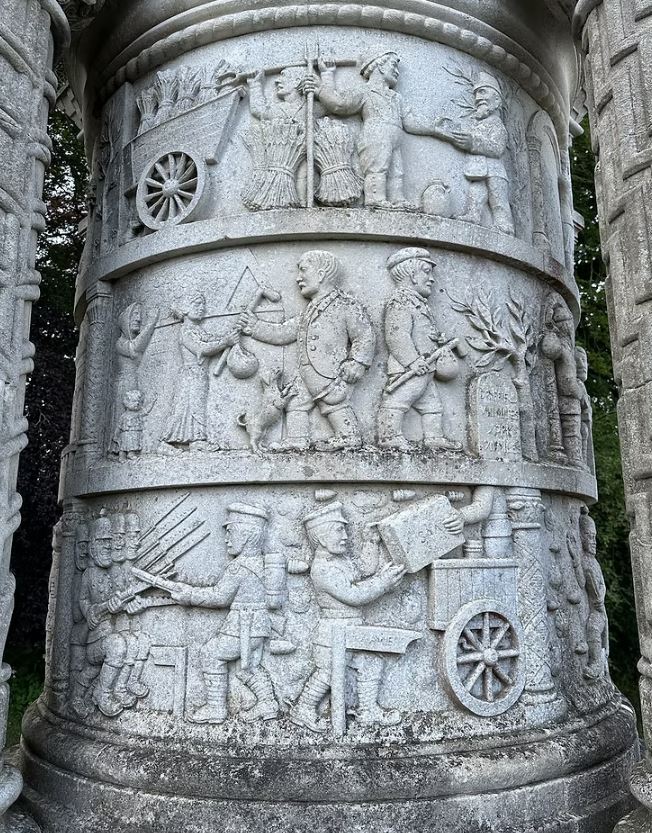
A striking memorial to the East Yorkshire farm lads who formed the Wagoner's Special Reserve is to be found in the village of Sledmere, North Humberside and was designed by their founder and Commanding Officer, Sir Mark Sykes. It was modelled on a Saxon monument in the Crypt of York Minster, the cartoons on the panels being drawn by Sir Mark himself. The panels reward closer inspection; one of the sign boards in the panel showing the landing of the Wagoners in France, for instance, says "drive on the right" and the panel of burning and raping by German soldiery was the subject of a famous demand by the German Embassy to Sir Mark's son to destroy the monument in 1938.
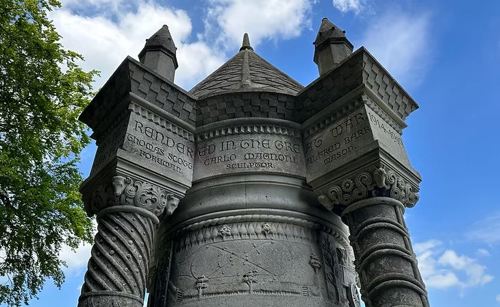
Somewhat to his surprise this demand was backed by the British Foreign Office in the air of appeasement of the time. The Wagoners, first recruited in 1912, were paid fifteen shillings a year from Sir Mark Sykes's own pocket. They were given a badge in silver metal showing a bridled horse's head encircled by the unit title to wear on their lapel and a coloured ribbon button-hole for their waistcoats. For this the Wagoners had to be under the age of 35 years, in good health and agree to turn out for a driving competition once a year, to take an oath of loyalty to the Crown and to serve abroad in the event of war. The following year the War Office took responsibility for them and their yearly retainer became a sovereign for a Wagoner, two for a Foreman (Corporal) and four for a Roadmaster (Sergeant).
The competition was held yearly in Sledmere, the main event being a timed run round a figure of eight obstacle course, the horses being driven postillion style. There were also competitions which involved dismantling and reassembling wheels and axles together with loading and unloading with fifty pound sacks against the clock. The competitions became a celebrated local event and in July 1913 there were two thousand spectators and fifty teams competed. The last competition in July 1914 was so thronged with competitors that heats had to be held and of course it was a good rehearsal for the coming events of war. At this time there were 960 Wagoners, 56 Foremen and 12 Roadmasters.
The Wagoners were mobilized within a couple of days of the declaration of war. It was an exceptionally early harvest that year and not a few were handed their mobilisation papers in the harvest field with orders to report to Bradford Moor Barracks by six o'clock that evening. Eight hundred Wagoners presented themselves in Bradford by the deadline and were put up in schools and church halls. There they were designated to five Army Service Corps Companies:
- 9th Company 1st Reserve Park
- 12th Company 5th Reserve Park
- 20th Company 4th Reserve Park
- 30th Company 2nd Reserve Park
- 34th Company 3rd Reserve Park
and were dispersed to their depots to pickup their equipment and within a matter of days most were in France.
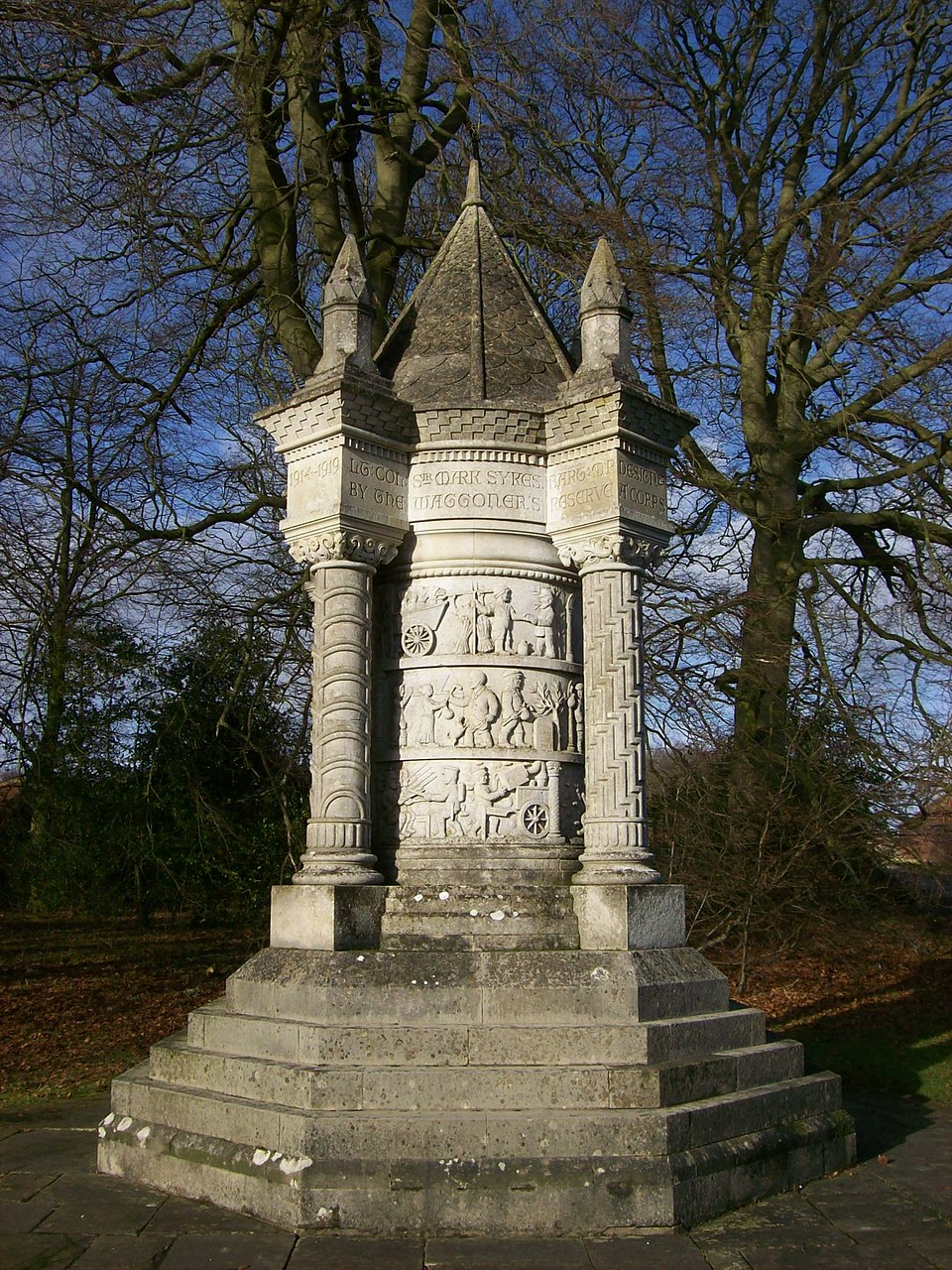
The Memorial
After the war ended Sir Mark Sykes set about building a memorial for the 80 men who had lost their lives.
The Wagoner's Memorial features engraved panels which show the story of the men leaving home and fighting the enemy in France. These being based on hand drawn designs from Sir Mark Sykes. The memorial was unveiled in September 1920.
Becoming a member of The Western Front Association (WFA) offers a wealth of resources and opportunities for those passionate about the history of the First World War. Here's just three of the benefits we offer:

With around 50 branches, there may be one near you. The branch meetings are open to all.

Utilise this tool to overlay historical trench maps with modern maps, enhancing battlefield research and exploration.

Receive four issues annually of this prestigious journal, featuring deeply researched articles, book reviews and historical analysis.


