
Haig and the Battle of Loos
Haig’s diary entries for the period of the Battle of Loos are, given the absence of a memoir, Haig’s only personal account of the battle.
In its planning and execution, it was ‘his’ battle - although one that he initially did not want to fight. There can be little doubt that his diary entries amount to the record of the battle that he wanted future histories to record.
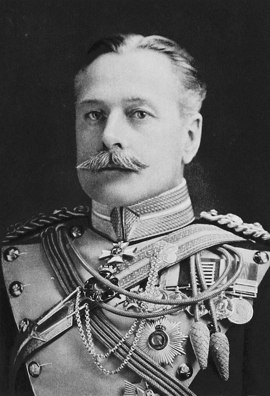
Haig’s account of the Battle of Loos (from his diary entries), paraphrased with dates:
- The attack will be difficult. (20 and 22 June)
- There is pressure from the French. (30 May, 20 June, 7 August)
- Kitchener insists the attack must take place but thinks that Sir John French is unenthusiastic. Losses will be heavy. (19 August)
- Poison gas must be used. (21 August)
- The battle is the greatest in the world’s history. Haig wrote: 'The day has been very satisfactory on the whole. We have captured 8000 yards of German front and advanced in places 2 miles from or old front line. This is the largest advance made on the Western Front since this kind of warfare started.[1] (25 September)
- The Reserve (21st and 24th Division) attack fails (26 September) (Subsequently Haig will suggest that this was French's fault).
- The Guards Division has only limited success. 28th Division arrives too late – it is Sir John French’s fault. (27 September)
- The Battle is wound down though localised attacks may continue. Breakthrough (and by implication, a victory) was prevented by French’s refusal to place the reserves close up. (28 September)
And after the Battle:
The criticism of French, above, is presented in a letter to Kitchener on 29 September.[2] Kitchener suggests to the PM that Haig should replace French. (3 December) French resigns, and the PM asks Haig to be C-in-C. (10 December). In summary: This great battle could have resulted in a great British victory – but for the mistakes of Field Marshal French, who must be replaced.
Not everyone agreed with Haig then or subsequently.
Criticism of Haig’s account must focus on the issue of the Reserves (Reserve XI Corps):
- Were they placed too far from the battlefield?
- Should they have been put into the attack?
- How well handled were they?
Were the reserves placed too far from the battlefield?
By 18 September Haig had learned of French's intentions to keep the Reserve XI Corps (21st and 24th Divisions and the Guards Division) at Lillers, some 16 miles from the battlefront. He protested, citing the experiences of Neuve Chapelle and Festubert, where it was clear that reinforcements had been needed within a few hours of the start of the attack. French’s view was that the reserves should be used on the second day of the attack. He did, however, give orders that by dawn on the day of the assault, the heads of the lead Divisions (21st and 24th) of the Reserve XI Corps should be at Noeux-les-Mines and Beuvry. They should be respectively (roughly 6 miles - 6 1/2 miles from the battlefield) with the Guards Division following up. Even then, the reserves would remain under French’s command until they reached the battlefield.
The story of the late arrival of the Reserve XI Corps
This is summed up by the Richard Holmes.[3]
Wanting to be closer to the battle, French had moved to a forward command post at Lillers on 24 September. He left Robertson (Chief of Staff of the BEF) and most of his staff behind at GHQ in St Omer. He had no direct telephone link to Haig’s First Army HQ at Hinges (about 11 miles from the battlefield). Haig's infantry attacked at 6.30 am on 25 September and at about 7 am he sent an officer by car to Lillers to report initial success and requesting the release of the Reserve XI Corps. At about 09.30 am Haig asked GHQ to put XI Corps at his disposal immediately. He did not hear until 10.02 am that the 21st and 24th Divisions were to move forward, coming under his orders when they reached the old British front line. French visited Haig between 11:00 am -11.30 am and agreed that Haig could take control of the Reserve XI Corps. But rather than using the telephone French drove to the Headquarters of Lieut. Gen. Haking, Commanding the Reserve XI Corps, and gave the order personally at about 12.30 pm. Haig then heard from Haking at 1.20 pm that Reserve XI Corps - less the Guards Division – was under his command and moving forward.
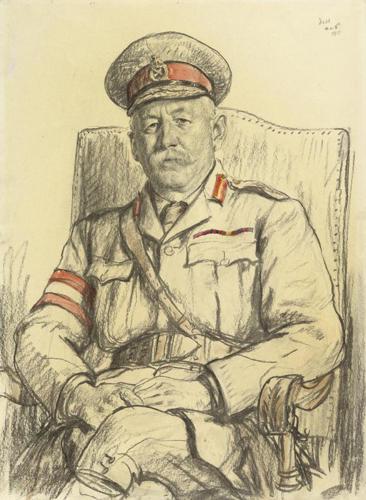
However, the men were exhausted from an overnight march in the rain to Noeux-les-Mines and Beuvry and then made slow progress through the chaotic conditions to the rear of the battlefield. When they reached the old front line (at 6:00 pm according to Haig’s Diary, 25 September), there was no time left that day for them to make an attack. That, against rapidly strengthened German positions, could not take place until the following morning.
Although Haig criticised French for holding Reserve XI Corps too far from the battlefield, in fact, he had little faith in their ability as fighting units.
All the following extracts are from Haig’s diary entries and taken from ‘Douglas Haig, War Diaries and Letters’.[4]
‘.... the 21st and 24th Divisions, having only recently arrived in France with Staffs and Commanders inexperienced in war, should not have been detailed for this work. It was courting disaster to employ them at once in fighting of this nature.’ (Haig’s Diary, 9 October)
Indeed, their casualties were appallingly high – 21st Division lost 3,800 men, and 24th Division lost 4,178 men for no apparent gain.
Should the reserves have been thrown into the battle?
Bearing in mind their later arrive on the battlefield, the condition of the men and their lack of preparedness, the obvious questions is: should the reserves have been thrown into the battle? Any favourable moment had already passed before they were deployed on 26 September. The decision to commit them, when it was already too late, was Haig’s. Good timing, even Haig’s staunchest defenders would admit, was never his strong point.
Perhaps unsurprisingly, John Terraine,[5] Haig’s defender and apologist, accepts Haig’s version of events as well as his decision to commit the unprepared and late-arriving 21st and 24th Divisions to the battle. He describes Haig’s letter to Kitchener of 29 September as ‘a passionate cry that was wrung out of him by the bitterness of seeing his troops ... wasted through the Commander-in-Chief’s sheer failure to grasp the nature of the War.’
In ‘The Real War, 1914-1918’,[6] Basil Liddell Hart wrote a succinct analysis of the battle. Liddell Hart was somewhat sceptical over Haig’s claim in his Diary, 28 September, that if there had been ‘even one division in reserve and close up, as I had requested, we could have walked right through’ the German second line. Haig’s confidence was probably exaggerated. According to Liddell Hart – the breach in the German front line was too narrow to be successfully exploited. Liddell Hart also suggests that they stood little chance of success in any case: ‘Never, surely, were ‘novice’ divisions thrown into a vital stroke in a more difficult or absurd manner, and in an atmosphere of greater misconception of the situation in all quarters.’
How well handled were the reserves?
The claim is well-known and often stated that Alan Clark was never able to name the true source of the description of the British Army as being ‘lions led by donkeys’.[7] However, his account of the destruction at Loos of the 21st and 24th Reserve Divisions of XI Corps remains movingly impressive. Clark stresses the confusion as the men of these divisions tried to press their way forward in pouring rain along a complex of roads against a tide of casualties flowing in the opposite direction. ‘Neither Division had had longer than two weeks in France and their total training period in England had been no more than four months. They had, moreover, only a slight leavening of regular officers and NCOs. None of the divisional staff was familiar with the ground, and there had been no time to issue large scale maps. The men were soaked to the skin and, as the kitchens had been left behind, there was no hot food available.
They had been continuously on the move for over eighteen hours. Ominously, a thick mist led to their artillery occupying positions in full view of the German artillery when it cleared and was quickly neutralised by accurate German shellfire.
In contrast to the first attack:
‘The hapless 21st and 24th Divisions were expected to cross No Man’s-Land in broad daylight with no gas or smoke to cover them, with no artillery support below divisional level, and attack a position as strongly manned as had been the front defences and protected by a formidable and intact barbed wire entanglement.’
Against all the odds, punctually, at 11:00 am, the British began their attack.
Clark quotes extensively from the War Diaries of two German Regiments – the 15th Reserve Regiment and the 153rd Regiment as they destroyed, respectively, the 24th and 21st Divisions. No doubt their machine gunners who never had ‘such straightforward work to do’ were as amazed their comrades at Aubers Ridge had been in May at the tactics the British employed of advancing ‘... in dense masses ... line after line ... ‘ resulting in the annihilation ‘of whole battalions’.
Robert Graves had written about the Battle of Loos and the dreadful fate of the 21st and 24th Divisions in ‘Good Bye to All That’ in 1929.[7] In the 1980s, Lyn Macdonald interviewed survivors of the Battle of Loos for ‘1915 – The Death of Innocence’[8].The generals had had their say – now it was the turn of the junior officers, NCOs and ‘other ranks’. Memories were still clear - and bitter.
‘The whole thing was an absolute shambles ... You’d no idea of what you were doing or supposed to be doing.’ Pte. G Marrin, 13th Battalion Middlesex Regiment, 73rd Brigade, 24th Division.
Tim Travers[9] supports Clark in his criticism of the handling of the reserves. He points out that, before the battle, Haig had appeared satisfied with the positioning of the three Reserve Divisions as ‘.... close up (my emphasis) in the places where I have arranged to put them and will go forward as soon as any opportunity offers.’ (Haig’s Diary, 23 September).
Travers focuses on the immense congestion of roads and railway crossings that the reserves had to negotiate behind the front line. Haking (OC XI Corps) initially agreed that this had been a problem then changed his mind and blamed the troops instead for their poor march discipline - and Haig had agreed.
Much later, in 1926, Brigadier F B Maurice (Brigade General, General Staff, GHQ) in correspondence with Brigadier General James Edmonds, the author of the ‘Official’ History, admitted that GHQ should have made better arrangements for the progress of the reserves towards the battlefield. Perhaps Haig’s criticisms, in retrospect, had been merely opportunistic. He wrote to Edmonds in January 1928: ‘.... when the facts are thoroughly gone into, it is found that the very best and seasoned troops, under the very best staff arrangements, could not have overcome an impossible situation.’
Haig could not refrain from a final swipe ‘.... all this could and ought to have been avoided – It was due to the obstinacy and conceit of one man (Sir John French).’
By then French was safely dead.
Denis Winter[10], in the view of some historians, somewhat overly biased against Haig, nevertheless makes a clear and significant point. Haig claimed that the crisis of the battle had been between 9:00 am and 11:00 am on the first day ‘when, if the reserves had been available, they could have pushed through with very little opposition’ (Letter from Haig to General Robertson 21.10.15).
However, given that the attack began at 6.30 am, even if Haig had at that time full control over the reserve; even if they had been on the fringe of the battlefield and at full strength; even if Haig had been able to assess accurately the degree of success within minutes of his attack, going in the reserve would have been unable to fight before 11:00 am where they were needed immediately behind the troops who had successfully attacked first and broken into the German line.
It was simply a logistical impossibility Winter argues.
Within a few minutes of the start of the battle on 25 September lightly wounded men of 1st Middlesex, the first in the attack at the north of the battlefield, had come stumbling back down a communication trench to a dressing station. The young Lieutenant Robert Graves, 2nd Battalion, Royal Welch Fusiliers, the next in the attack, had asked them for information.
‘Bloody balls-up' was the response he got; apt to this day.
The Battle of Loos has not had the impact on popular interest and imagination that the battles of the Somme and 3rd Ypres have. These are seen as the ‘bigger’ and more important battles. The Battle of Loos is also overshadowed by the other battles of 1915 – the German gas attack at Ypres and the Dardanelles campaign.
Much has been written about the ‘learning curve’ the generals were on as the war progressed. How far had the British generals moved along it as a result of the Battle of Loos? The Battle of the Somme seems to indicate that they had moved less than the German generals - if the relative casualty rates on the respective first days are anything to go by.
Loos
- 87 Battalions attacked.
- 10 Battalions suffered 500+ casualties.[11]
- Day 1 deaths - estimated 8,500.[12]
Somme
- 143 Battalions attacked.[13]
- 33 Battalions suffered 500+ casualties.[14]
- Day 1 deaths 19,240.[15]
The key point of comparison here is that the Day 1 Somme attack, in terms of battalions used, was 143/87 i.e., 1.64 bigger than the Day 1 Loos attack. So, for example, we might expect that, if the generals had not changed their approach, the number of deaths on Day 1 of the Somme would reflect this proportionately and approximately 13,940 (8,500 X 1.64) deaths would occur. However, we find that Day 1 deaths on the Somme are enormously greater than this: 19,240. Clearly, the German generals had anticipated what the British would do and prepared accordingly – and effectively. They had moved further along the learning curve than the British.
Among those who were at Loos we have good reason to remember the poet who survived and wrote about the battle - Robert Graves, and the poet who died - Charles Hamilton Sorley. However, a poet’s son was one of the missing - John Kipling - whose name is on the Irish Guards panel at the Loos Memorial to the Missing.
However, there is also a gravestone with John Kipling’s name on it (Plot VII, Row D, Grave 2) in St Mary's ADS Cemetery. This was inscribed originally as that of an unidentified Lieutenant in the Irish Guards. In 1992 the CWGC identified the grave in St Mary's ADS Cemetery as that of John Kipling on the grounds that there was only one full Lieutenant in the Irish Guards killed in the Battle of Loos - and that was John Kipling.
But is he buried in St Mary’s ADS Cemetery? Major Tonie and Mrs Valmai Holt (and others) have some misgivings about the identification of the remains in this grave. Their book ‘My Boy Jack?’ (pub. Leo Cooper 1998) is a fascinating read. You are, of course, free to draw your own conclusions.
Footnote on 21st and 24th Divisions
21st and 24th Divisions and the newly formed Guards Division in the Reserve XI Corps were part of the General Reserve (which also included the Cavalry Corps and the Indian Cavalry Corps). The Reserve XI Corps was itself newly formed, and some of its Staff Officers had neither worked together or served as Corps Staff. French’s decision to use 21st and 24th Divisions as the lead divisions seem puzzling when experienced divisions could have been called in from elsewhere. French seems to have been impressed by reports of the enthusiasm of these troops and their ability to carry out long marches. To him, their lack of experience had meant, that according to Richard Holmes, ‘they had not acquired the sedentary habits of trench warfare’ and that they would cope well with being moved around the battlefield.
References:
1. No mention is made of the total failure in I Corps' sector in the north of the battlefield near La Bassée Canal where the wind blew the poison gas back across British lines. This is where my late friend's father was with 2nd Royal Welch Fusiliers.
2. National Archive. Kitchener Papers. (WD/15, 1915)
3. Richard Holmes. (1981) 'The Little Field Marshal: A Life of Sir John French'. Jonathan Cape.
4. Gary Sheffield and John Bourne (eds). (2005) 'Douglas Haig, War Diaries and Letters'. Weidenfeld & Nicolson.
5. John Terraine (1963) 'Douglas Haig – The Educated Soldier'. Hutchinson.
6. Basil Liddell Hart (1930) 'The Real War enlarged' (1934) as ‘The History of the World War, 1914-1918’. Republished by Cassell (1970) as ’History of the First World War.
7. Alan Clark (1961) 'The Donkeys'. Hutchinson.
8. Lyn Macdonald (1993)'1915 – The Death of Innocence'. Headline. (One of this author’s five excellent books of recollections of the survivors of the great battles of the War).
9. Tim Travers 'The Killing Ground. (1987) Allen & Unwin.
10. Denis Winter. 'Haig’s Command – A Reassessment'. (1991) Viking.
11. Paul Reed website
12. History and Remembrance Centre of Northern France
13. Martin Middlebrook - ‘The First Day on the Somme.’ (1971) Allen Lane
14. Martin Middlebrook (op. cit) lists 32 but has omitted 1st Lancashire Fusiliers
15. ‘Official’ History
Becoming a member of The Western Front Association (WFA) offers a wealth of resources and opportunities for those passionate about the history of the First World War. Here's just three of the benefits we offer:

With around 50 branches, there may be one near you. The branch meetings are open to all.

Utilise this tool to overlay historical trench maps with modern maps, enhancing battlefield research and exploration.

Receive four issues annually of this prestigious journal, featuring deeply researched articles, book reviews and historical analysis.


