
The Raid on Yarmouth: 3 November 1914
The raid took place on 3 November 1914, and was an attack by the Imperial German Navy on the British North Sea port and town of Great Yarmouth by the German battlecruiser squadron under the command of Admiral Franz von Hipper. The intention was to lay mines off the coast of Yarmouth and Lowestoft and to shell Yarmouth.
Little damage was done to the town since shells only landed on the beach, but as German ships were laying mines offshore they were interrupted by the patrolling minesweeper HMS Halcyon and two old destroyers HMS Lively and Leopard. Three submarines HMS E10, D5 and D3 that were inside the harbour—moved out to join the chase, but D5 struck a mine and sank at 08:30 am.
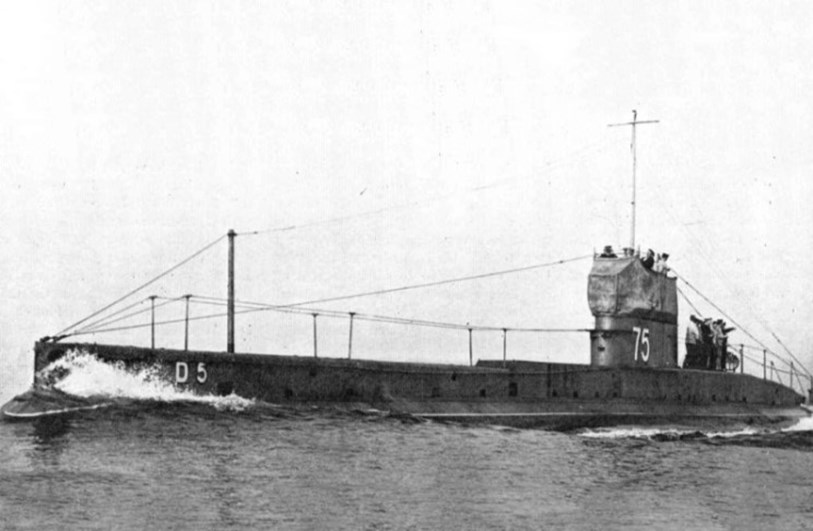
HMS D5 was one of eight D-class submarines built for the Royal Navy during the first decade of the 20th century. D5 met her fate off Great Yarmouth sunk by a German mine laid by SMS Stralsund. There were only five survivors.
Using the WFA's Pension Records search facility on the WFA web site (which links to the Fold 3 records provided by our partners Ancestry.co.uk), it has been possible to locate virtually all of the 21 men who lost their lives onboard Submarine D5. Below are the images of these records, which show the wide variety of types of records and the large amount of information that can be gleaned from these Pension Records.
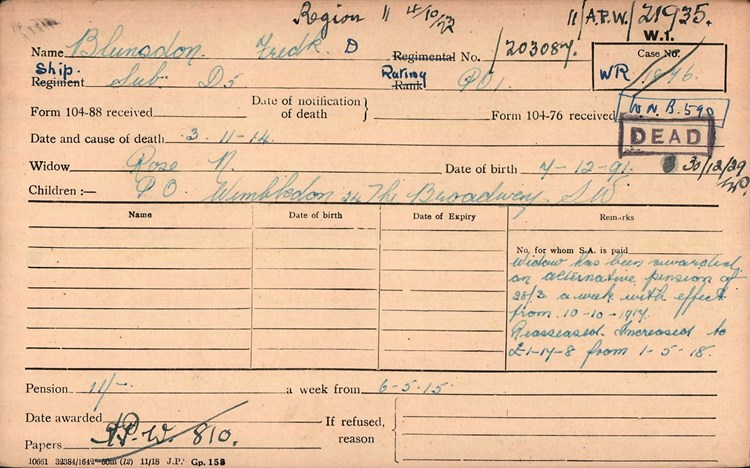
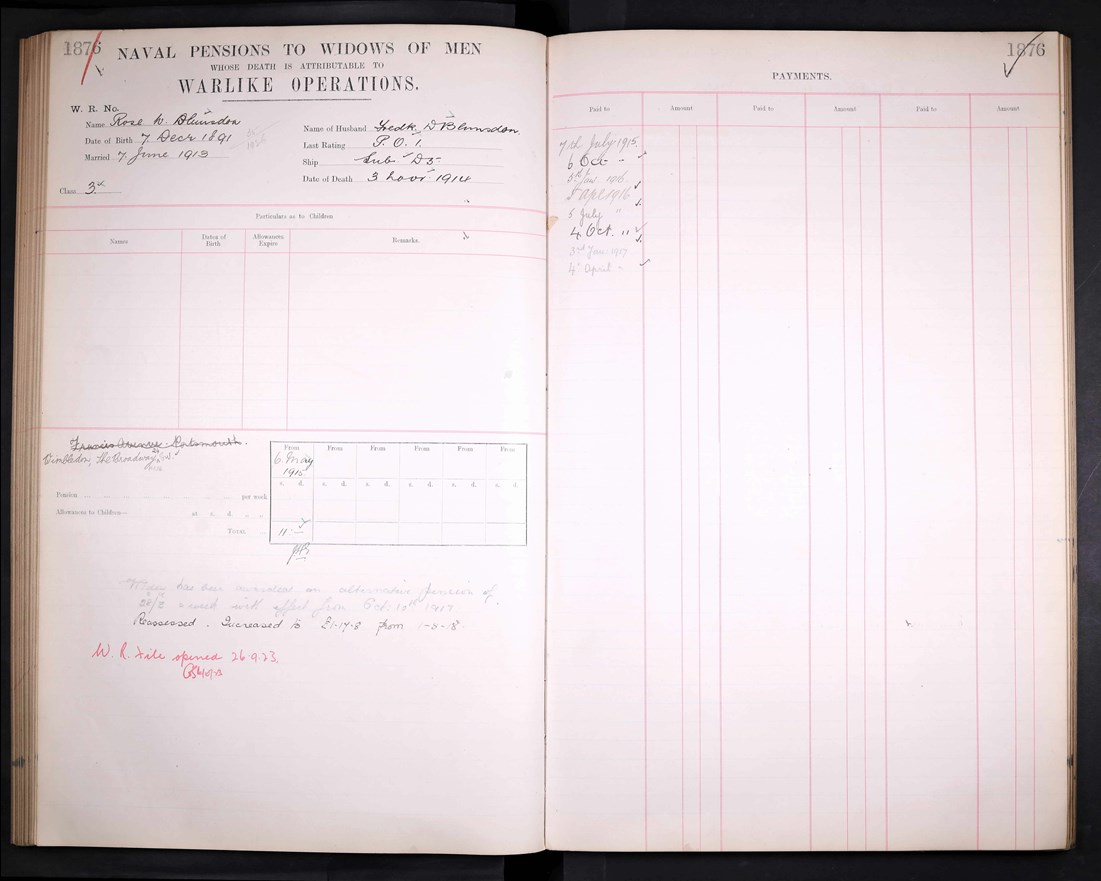
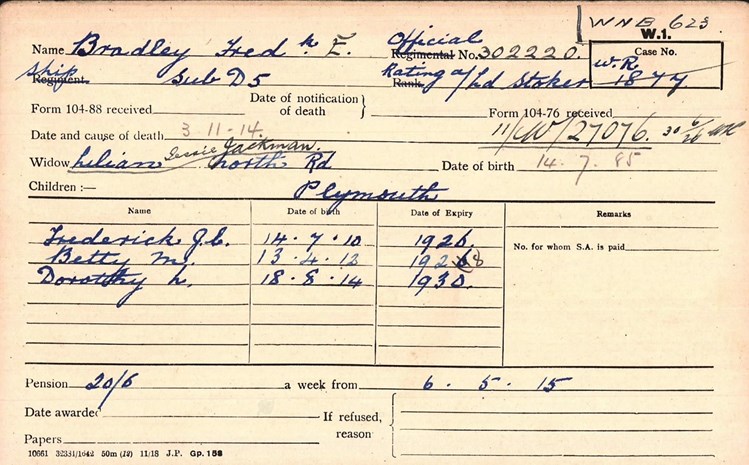
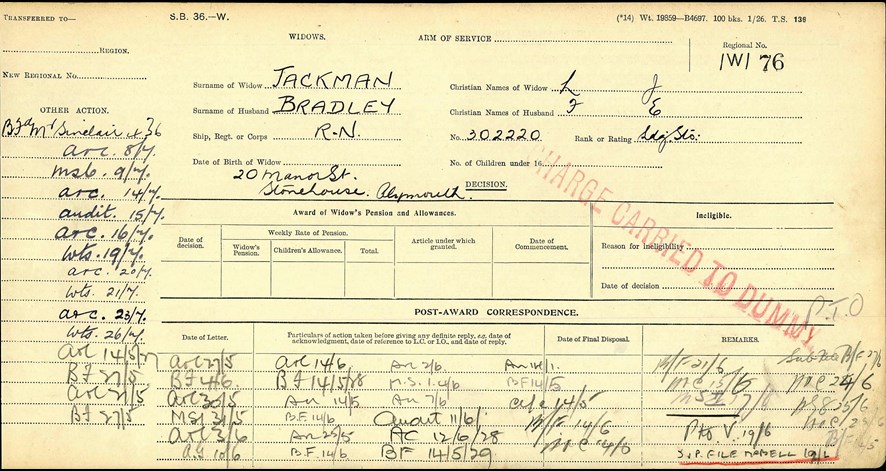

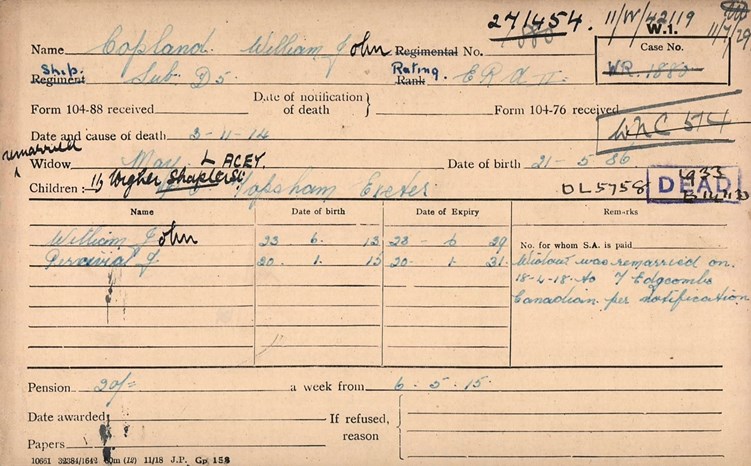
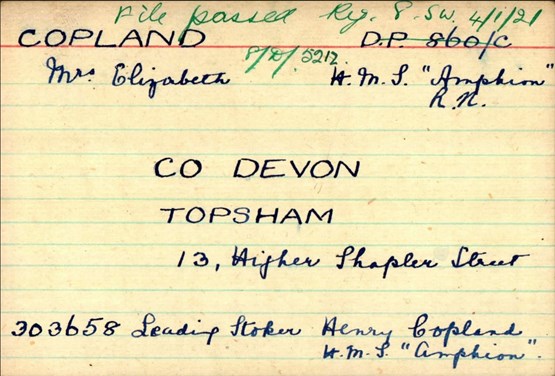
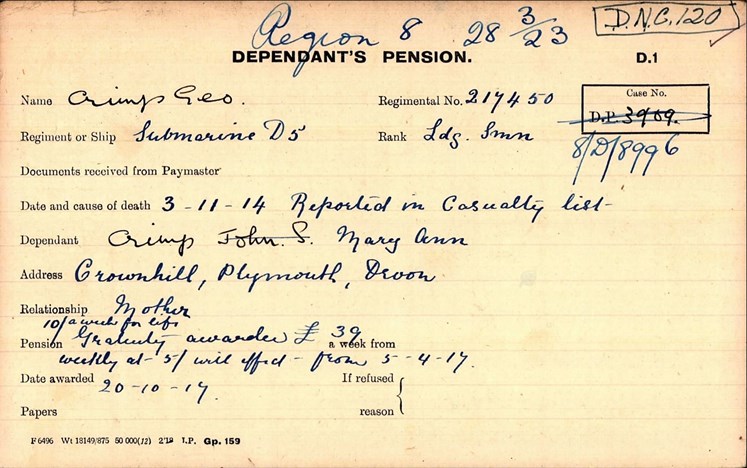
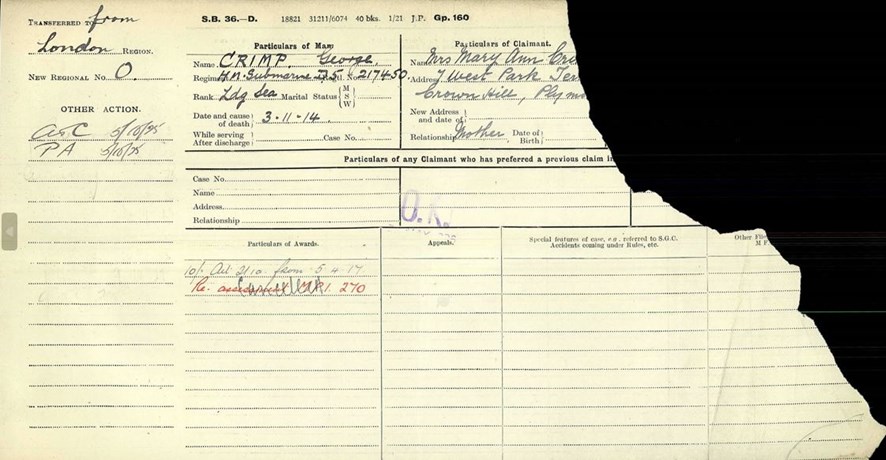
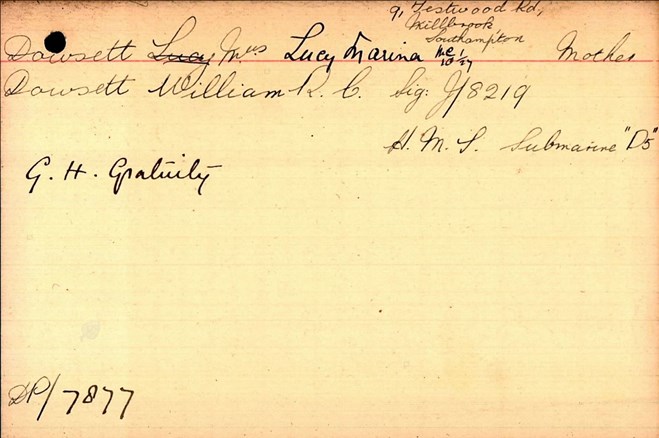
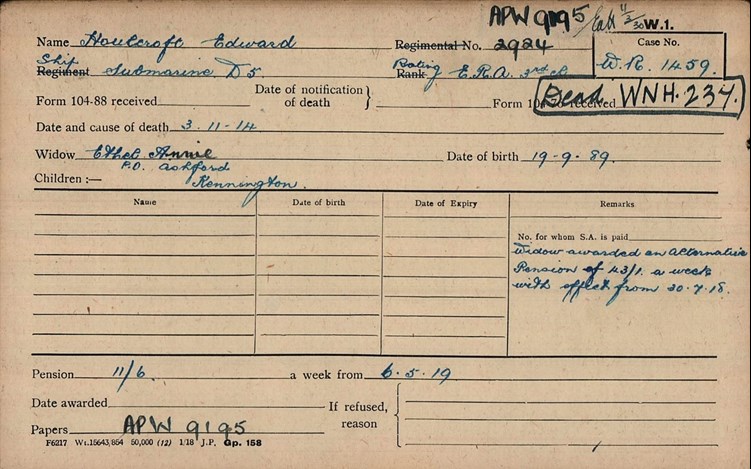
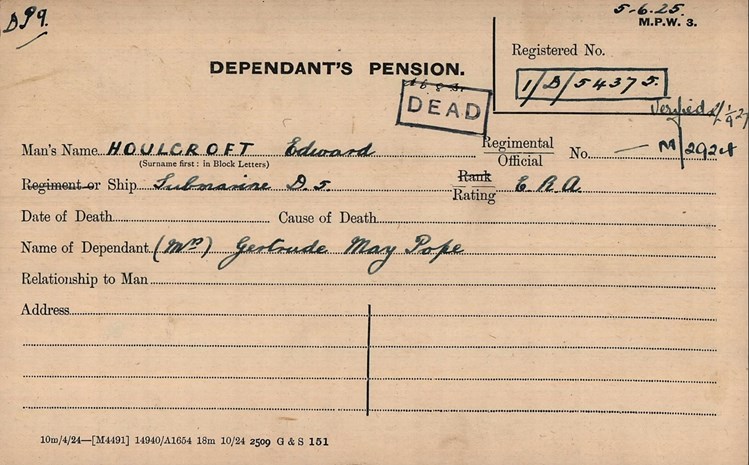
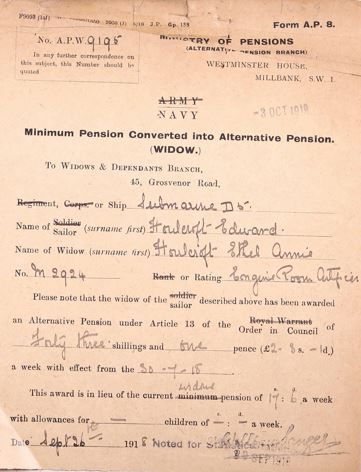
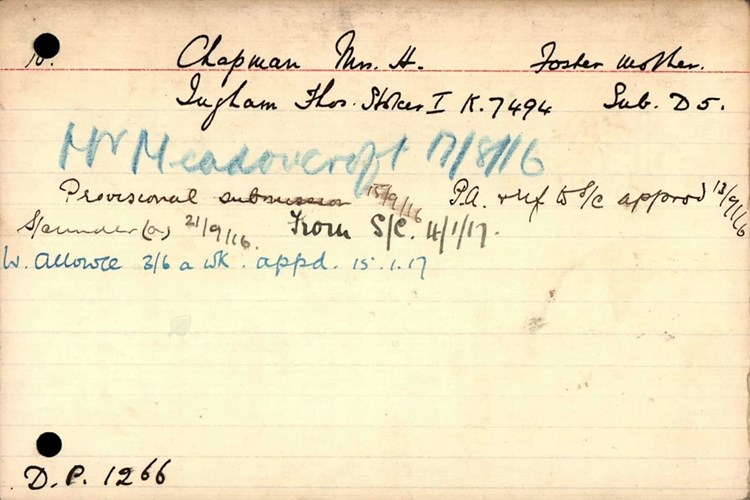
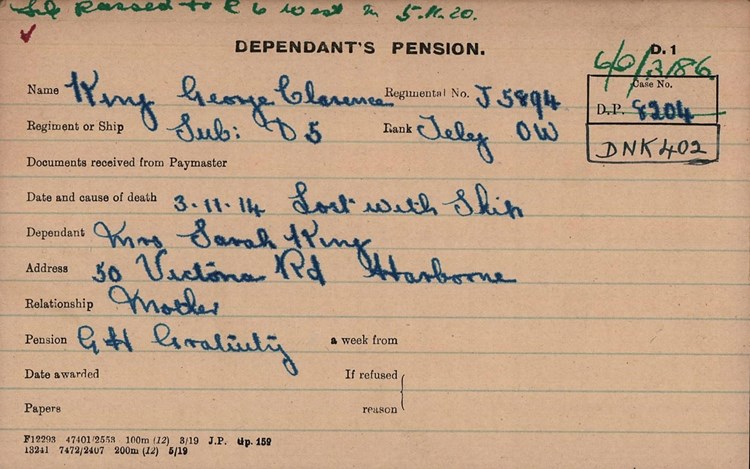
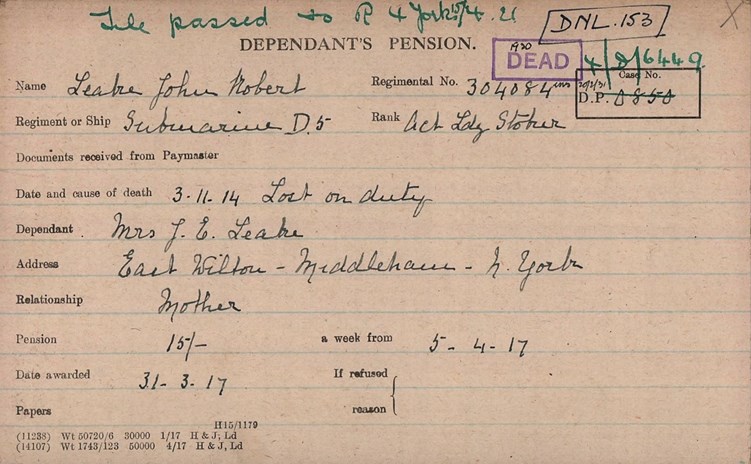
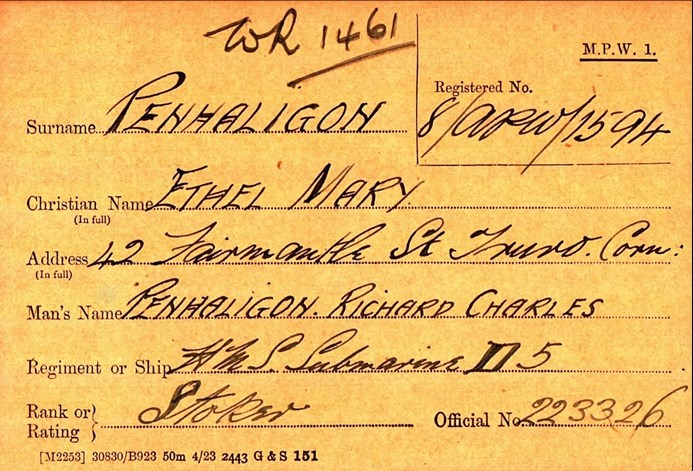
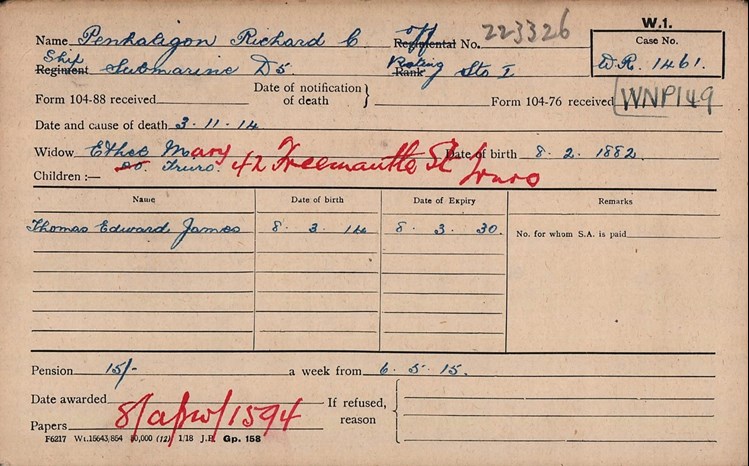
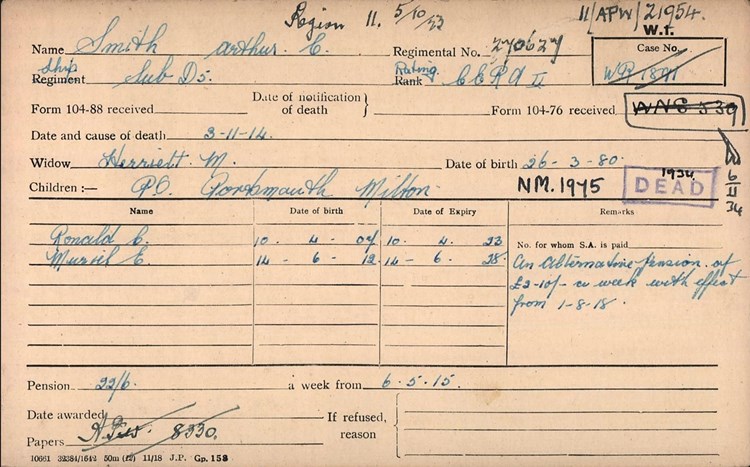
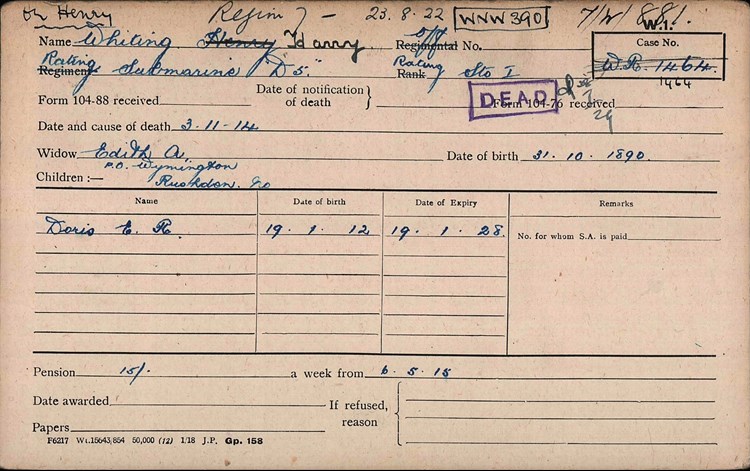
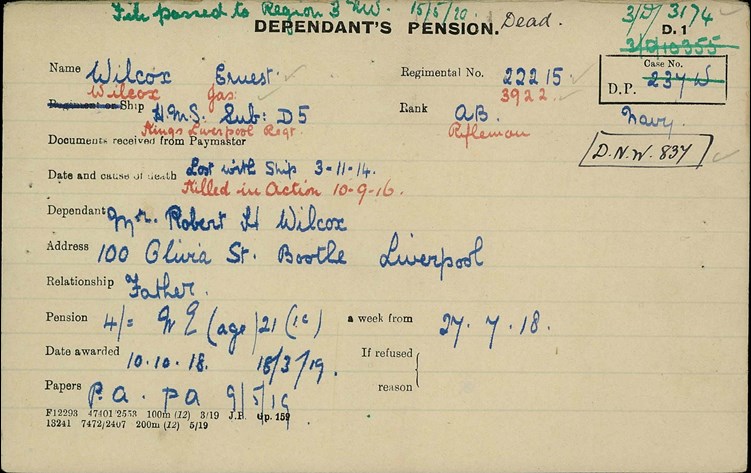
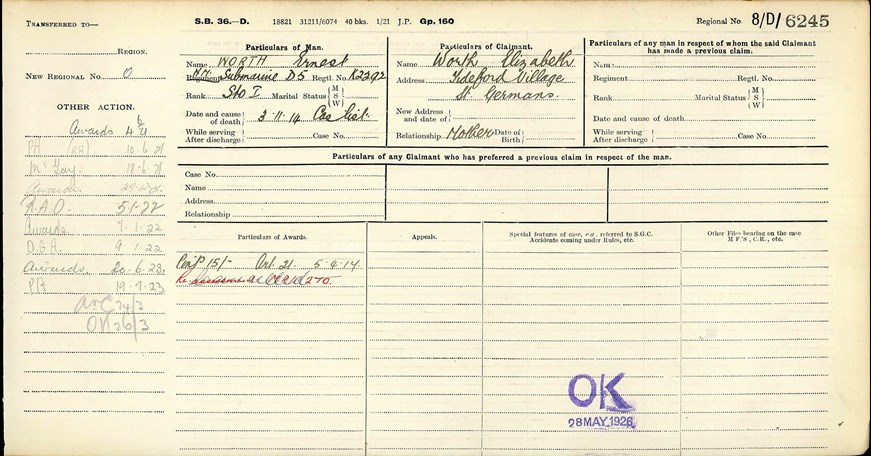
These records clearly show the value of the search facility and the ability to pull together the records of men who were lost in a particular action.
Read More:
How to use the WFA's Pension Records to locate naval fatalities
Becoming a member of The Western Front Association (WFA) offers a wealth of resources and opportunities for those passionate about the history of the First World War. Here's just three of the benefits we offer:

This magazine provides updates on WW1 related news, WFA activities and events.

Access online tours of significant WWI sites, providing immense learning experience.

Listen to over 300 episodes of the "Mentioned in Dispatches" podcast.


