
Every man for himself: The Loss of HMS Formidable 1 January 1915
Launched in November 1898 and commissioned on 10 October 1901, HMS Formidable was the third ship so named to serve in the Royal Navy.
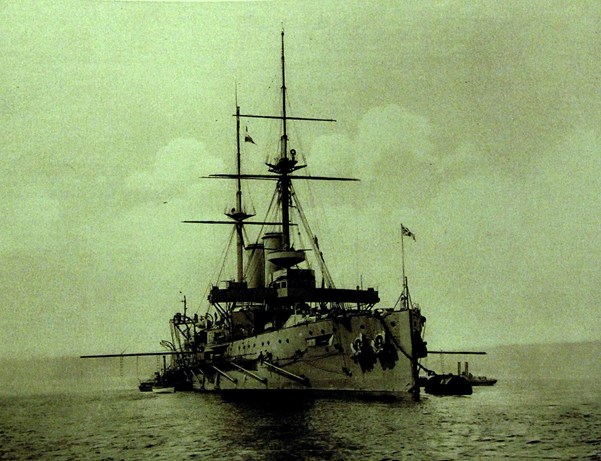
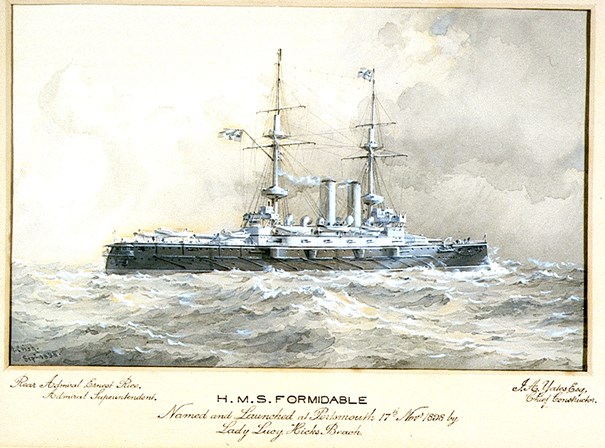
After service in the Mediterranean and Channel Fleets, on the outbreak of the war in 1914, HMS Formidable was initially based at Portland to defend the Channel. In November 1914 she was transferred to Sheerness and then back to Portland. HMS Formidable had a crew of around 750 men.
It was from Portland that, on 31 December 1914, HMS Formidable was taking part in gunnery exercises alongside several ships, under the overall command of Sir Lewis Bayly, Vice Admiral commanding the Channel Fleet.
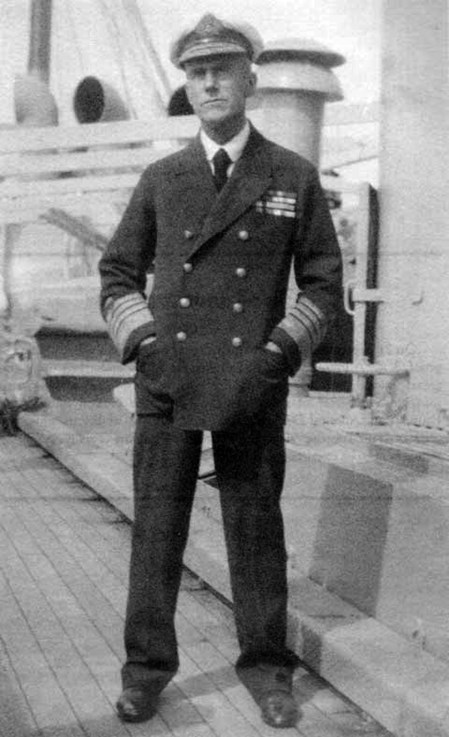
After the gunnery exercises, the fleet did not return to Portland. It was a stormy night, with rough seas, and it was not considered likely that a submarine could attempt an attack in such weather. Sir Lewis Bayly would later be criticised for not taking appropriate precautions but was later cleared of any charge of negligence.
The German submarine, U-24, was in the area, however, under the command of Rudolph Schnieder.
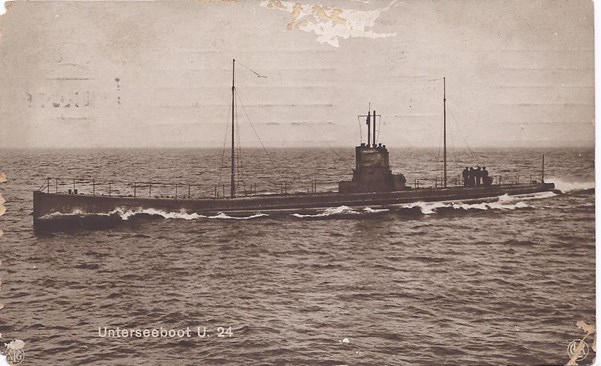
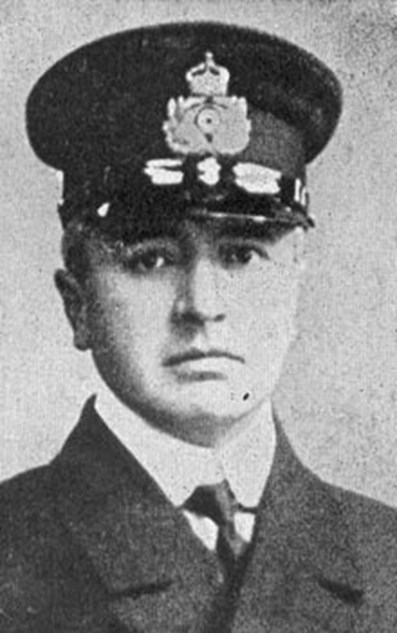
HMS Formidable was at the rear of the line of Royal Navy ships, in the so called ‘coffin’ position. In the very early hours of New Year’s Day 1915, U-24 fired a torpedo which hit the boiler room of HMS Formidable. The Captain, Arthur Noel Loxley, attempted to make for the shore but the ship soon lost steam and was listing to starboard, although some boats were launched with difficulty.
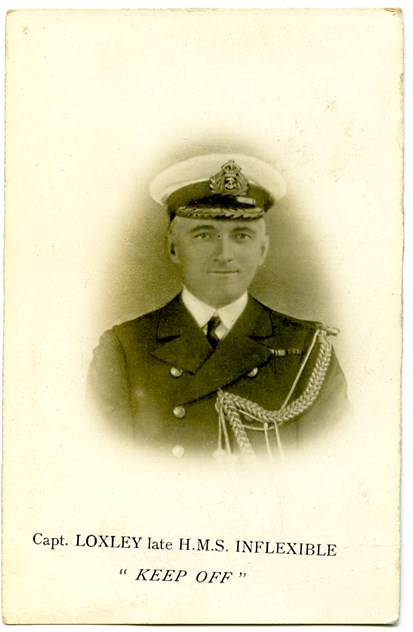
Two cruisers – Topaze and Diamond – managed to rescue some men but were ordered away by Captain Loxley when a submarine was spotted.
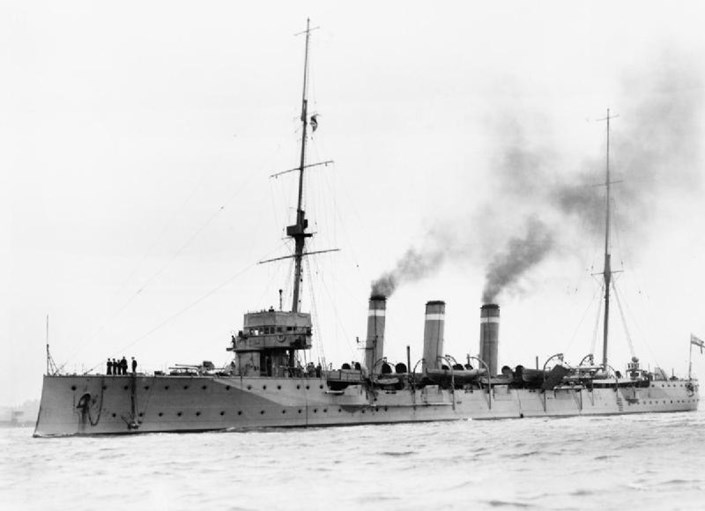
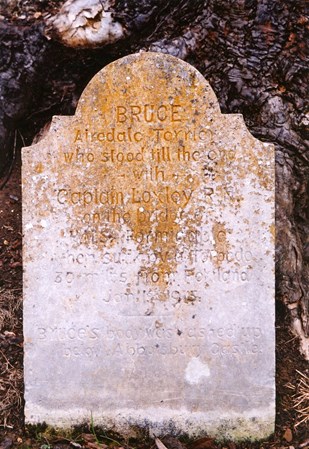
Not long after the first torpedo, a second hit the Formidable – within two hours, the ship sank. The Captain, his dog, Bruce, and several officers remained on the bridge and went down with the ship.
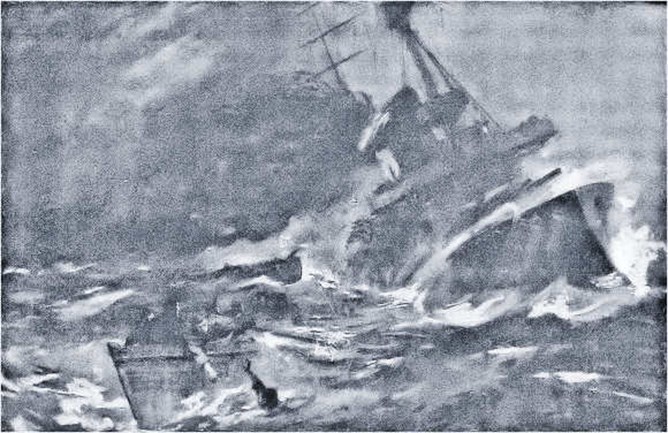
HMS Formidable carried a crew of around 780 officers and men – around 200 survived. Many stories from survivors appeared in press reports in the days after the loss of the ship. Typical of these was that from officers’ steward Alfred Hart, from Luton, whose account appeared in The Luton News on 14 January 1915.
“I rushed on deck at once and heard the order given for the boats to be got out. This was no easy task for the vessel had listed considerably and a heavy sea was running. There was absolute order among the crew and not the slightest sign of panic. The boats were got away and the occupants told to keep away from the ship for a time. The order was then given ‘every man for himself’ and the crew were told to get pieces of wood or anything they could cling to when the vessel sank. When everything had been done to save the Formidable the boats came alongside and took off as many as possible. There were five boats and two were swamped. In all about 129 were saved. All the boats had left the ship when the crew of one of them cried out ‘Room for one more’. Two of us tossed for it and the other chap won, but he said ‘You’ve got parents. I haven’t. Go on. Jump for it’”.
Those that made it to the boats then suffered many hours in freezing cold as Stoker Farrer recounted in a letter to his mother.
“We had a rotten time of it, being 21 hours in an open boat, with nothing to eat or drink, and in a very rough sea. We nearly gave up all hope……We shall get our own back when the Germans bring their fleet out.”
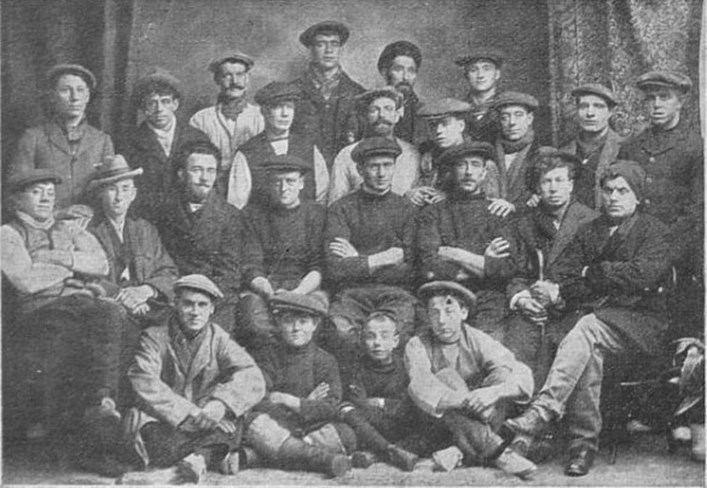
One newspaper report recounted the rescue of 40 survivors from the ship, when their boat reached the coast off Lyme Regis.
“Early Saturday morning the police of Lyme Regis heard cries for help coming faintly from the sea. Soon afterwards they found a warship cutter on the shore, containing forty men, all so exhausted that artificial resuscitation was required in many cases. In spite of medical aid, it was impossible to bring nine of the men back to life”.
Six men were buried in Lyme Regis Cemetery, with a funeral procession through the town, headed by a firing party. All businesses in the town closed in the afternoon as the funeral took place.

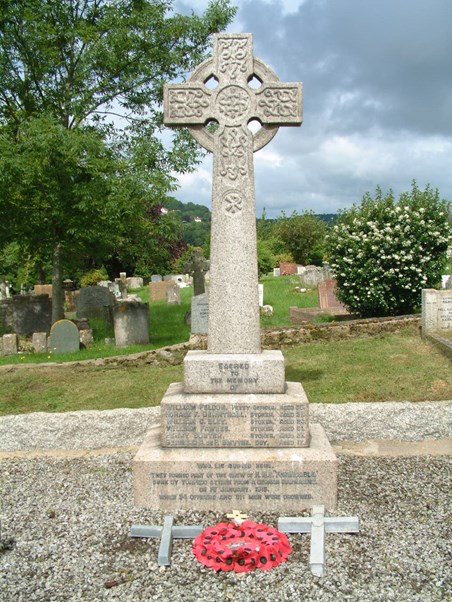
Two of those found to be dead on arrival at Lyme Regis were twins - John Villiers Russell and Henri Villiers Russell, aged 29, both Sick Berth Attendants on HMS Formidable from Crewe. They were buried in Coppenhall (St Michael) Cemetery.
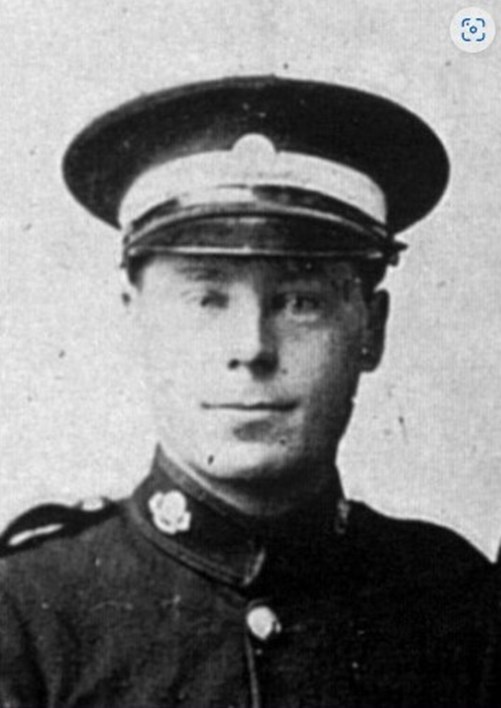
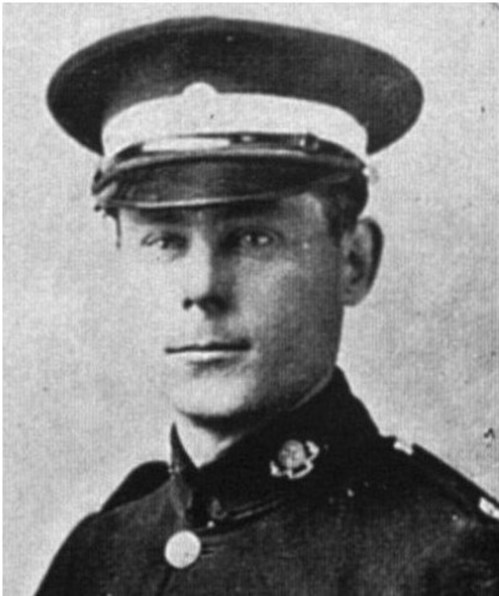
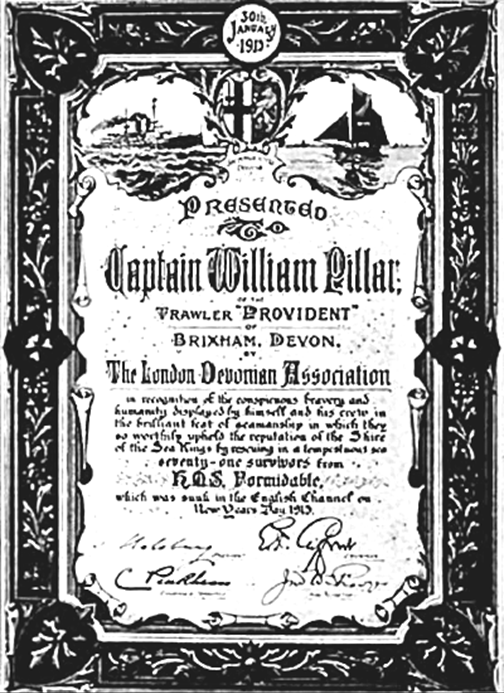
One of the boats launched from HMS Formidable were rescued by the crew of a Brixham trawler, the Provident (or Providence in some accounts), skippered by William Pillar.
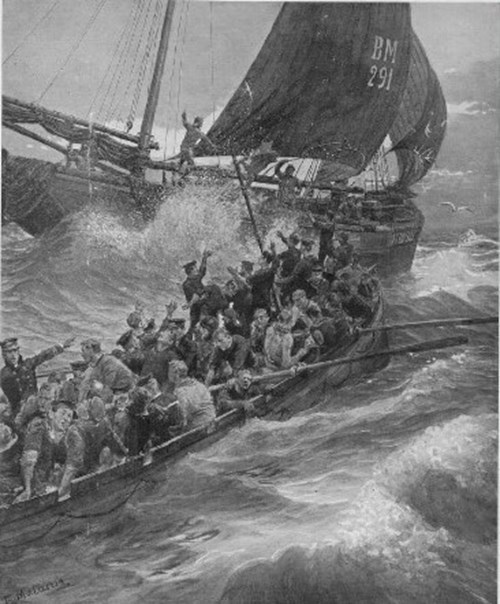
Pillar would later receive an award for his efforts in saving seventy men from HMS Formidable from the London Devonman Association at what was described as ‘a huge event’.
He, and crew members, were later decorated with the Albert Medal by King George V.
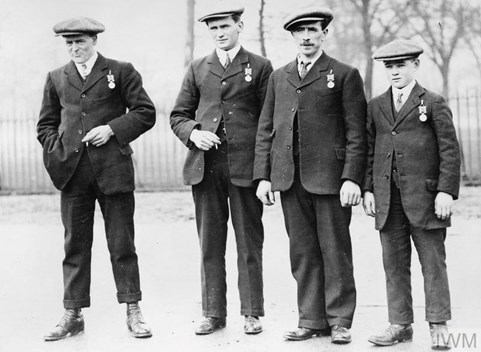
William Pillar also received £250 from the Board of the Admiralty, with £100 being given to his second and third hands, and £50 each to the cook and cabin boy.
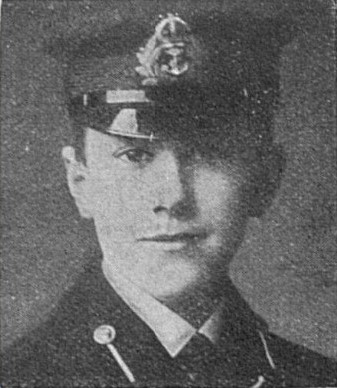
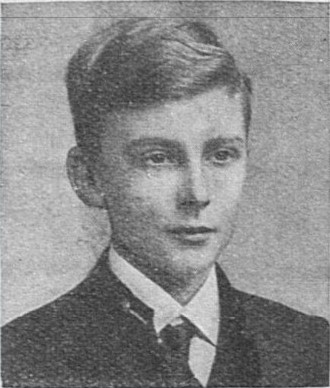
Six young cadets from Chatham Naval College who had joined HMS Formidable on the outbreak of war, commissioned as midshipmen, lost their lives in the sinking.
The body of Captain Loxley’s dog, Bruce, was washed up on to the shore some time after the sinking. It is buried at Abbotsbury.
Becoming a member of The Western Front Association (WFA) offers a wealth of resources and opportunities for those passionate about the history of the First World War. Here's just three of the benefits we offer:

With around 50 branches, there may be one near you. The branch meetings are open to all.

Utilise this tool to overlay historical trench maps with modern maps, enhancing battlefield research and exploration.

Receive four issues annually of this prestigious journal, featuring deeply researched articles, book reviews and historical analysis.


