
Not 'Coming up with the rations': The award of the final wartime second bar to the MM
It is sometimes said that the Military Medal, awarded to ‘other ranks’ in great numbers during the war ‘Came up with the rations’. This seems more than a little unfair – however as citations are somewhat difficult to come by, disproving this assertion (even if it was ‘tongue in cheek’) is difficult.
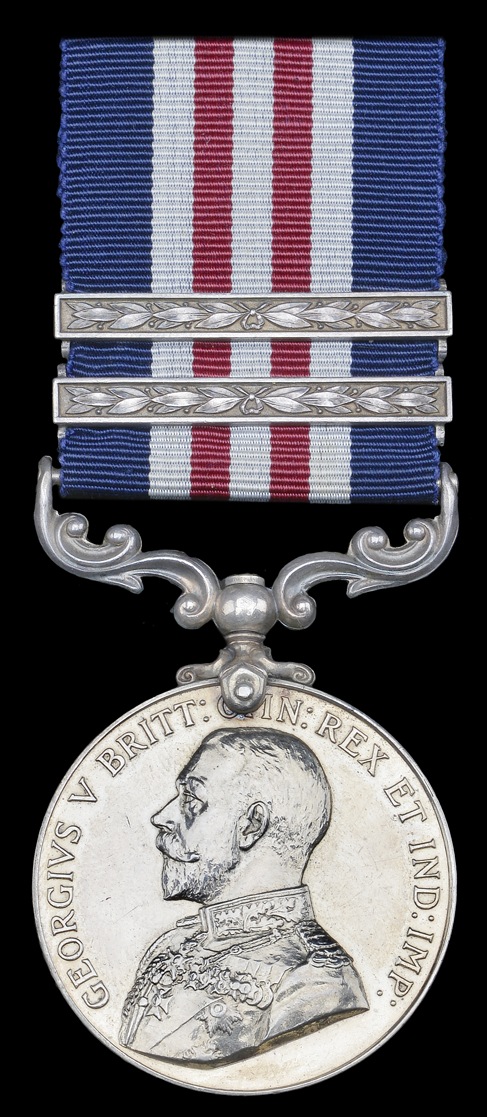
In this article we will look at one of the rare instances of the award being made on three occasions to a single soldier – Corporal Ernest Hayes of the King's Own Yorkshire Light Infantry who was awarded the MM and two bars.
First of all a couple of quotations to demonstrate the possible view of some soldiers to the Military Medal:
Following this, the British War Office decided to strike the new medals, the Military Cross for officers, and the Military Medal for N.C.O.’s and men. The boys in the line always referred to the M.M. as the Mulligan Medal and if anyone asked a chap how he got it, the reply was “It came up with the rations the other night.”
Victoria Daily Times (Victoria, British Columbia, Canada) of Monday 1 December 1919
It was certainly a common saying amongst the troops that decorations and medals came up with the rations, but he [i.e., ‘Sphinx’] cannot mean to acknowledge this as actual fact. Everyone surely realises that it was not possible for all brave deeds to be recognised.
A letter in which ‘First Fourth’ responded to ‘Sphinx’—letter published in The Halifax Daily Courier and Guardian (Halifax, Yorkshire, England) of Tuesday 19 November 1929 [1]
The MM was instigated to ‘fill a gap’ in the spectrum of gallantry awards that were available: ‘other ranks’ could be awarded the Victoria Cross and the Distinguished Conduct Medal (DCM), but there was no ‘lower level’ award.
The DCM was awarded for "distinguished, gallant and good conduct in the field," and in effect it was the equivalent of the officers' Distinguished Service Order (DSO) and second only to the Victoria Cross for gallantry. The fact that the Military Cross had been created at the very end of 1914 as a ‘third level’ award for officers meant that the need for an equivalent for ‘other ranks’ was pressing.[2]
The founding warrant of the Military Medal (dated 25 March 1916) enabled it to be awarded to:
“Non-commissioned officers and men for individual or associated acts of bravery on the recommendation of a Commander-in-Chief in the Field, and provided that the recipients’ names should be published in The London Gazette.”[3]
The first time the Military Medal was awarded was for gallant conduct during the bombardment of the Yorkshire coast on 16 December 1914 when Sgt Mallin of the Welsh Regiment was awarded the MM ‘for gallantry and distinguished service on the occasion of the attack on the Hartlepools by a German Fleet on the 16th December, 1914’. A large number of MMs were included in the 1916 Birthday honours lists when about 1,200 medals were awarded.
All commanders-in-chief in the various theatres and corps commanders were authorised to make ‘immediate awards’, and over 120,000 Military Medals (including bars for additional acts) were gazetted during with the First World War. Unsurprisingly about 94% of all awards were made for actions on the western front.[4]
Number of awards made
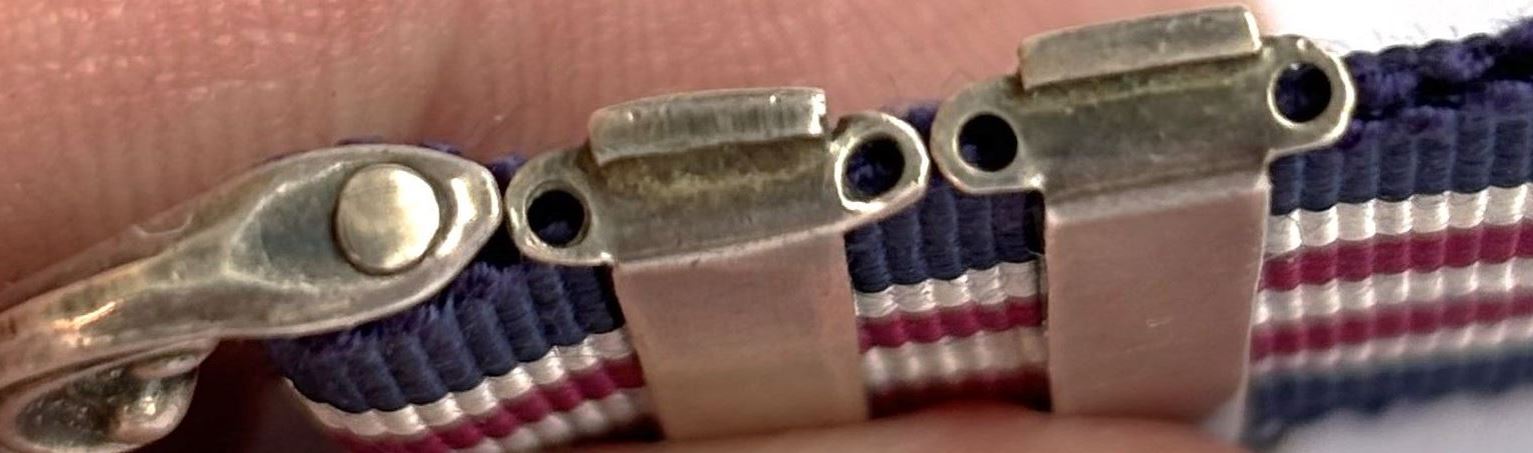
British Army, Navy personnel, RFC and RAF and Imperial troop recipients of the Military Medal totalled 114,560 and second awards were made to 5,543 soldiers. These second awards meant the recipient received a ‘bar’ to the MM as can be seen on this example.
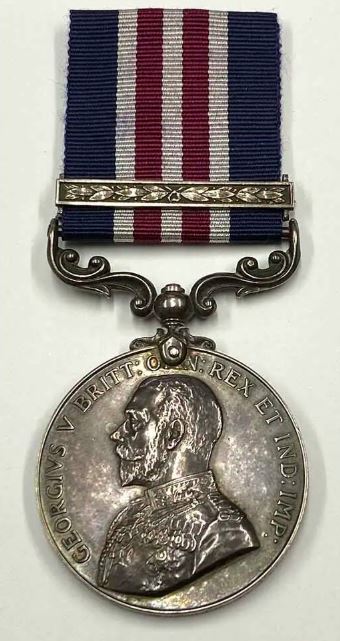
Very rarely third awards (a second bar) were made - these were awarded on just 182 occasions; uniquely a fourth award (MM and three bars) was award just once – this to Ernest Corey of the AIF.
Adding the number of first second and third bars awarded to the 114,560 single awards we arrive at a figure of 120,286 to service men and women.
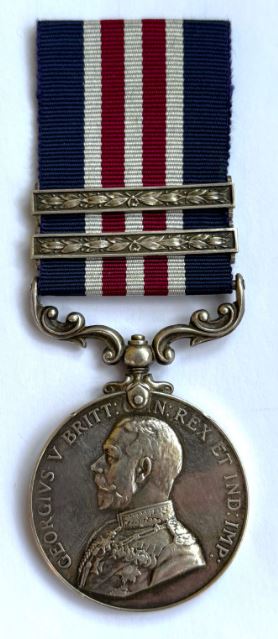
MM and two bars
Of the 182 men who were awarded two bars to the MM (in other words, were awarded the medal three times) it is almost certainly the case that the last of these awards was made for actions just a week before the Armistice.
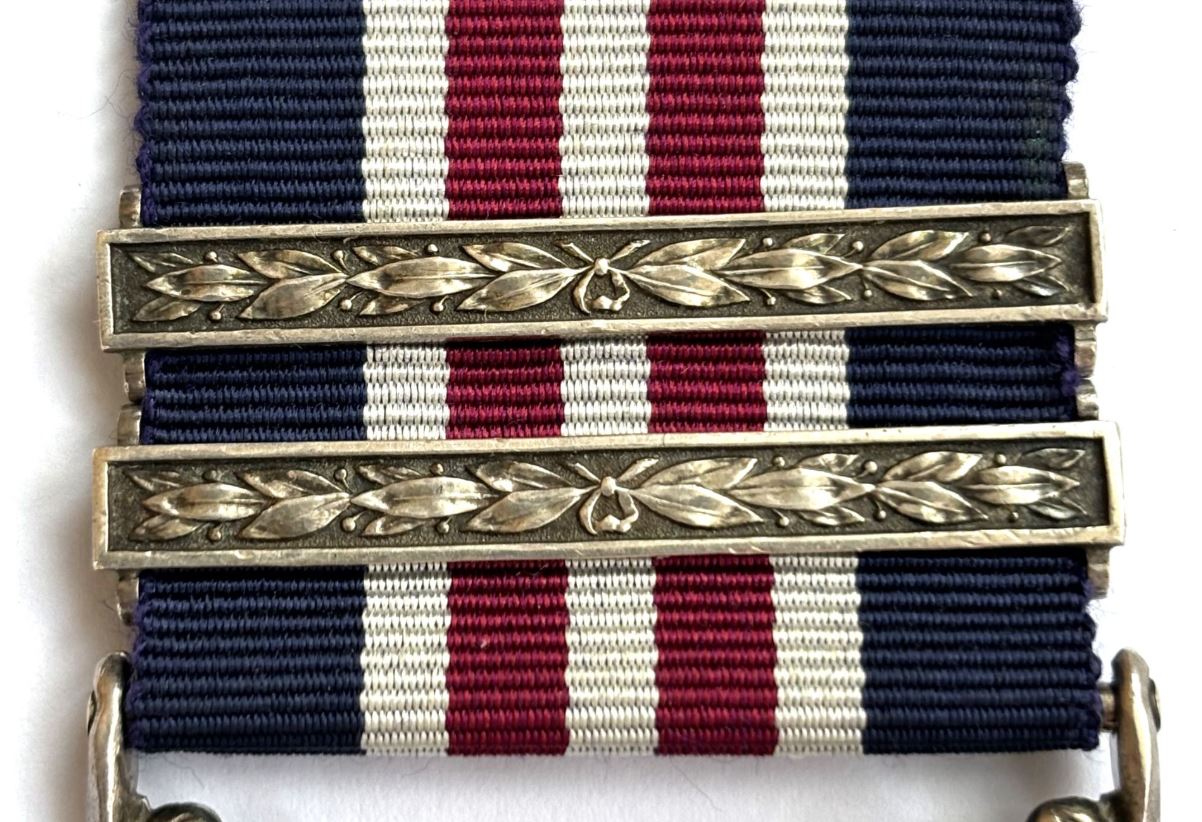
It was during the last ‘set piece’ battle of the war, the crossing of the Sambre Canal, when Corporal Ernest Hayes was to exhibit brave conduct which led him to be awarded a second bar to his Military Medal.
Cpl Ernest Hayes
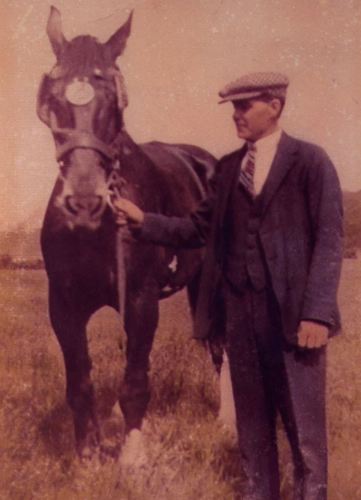
Ernest was born in 1898. He was the son of William and Sarah Hayes of Cotgrave in Nottinghamshire. William and Sarah had a large family: children named John, Annie, Harriett, Lizzie and Leonard were born before Ernest, with three more children (Albert, Emily and Mabel) arriving between 1901 and 1906.
With nine children, and William (the father) being (in 1901) a ‘farm labourer’ it is likely the family was impoverished. The Hayes family lived at 8 Gripps Cottages in Cotgrave.
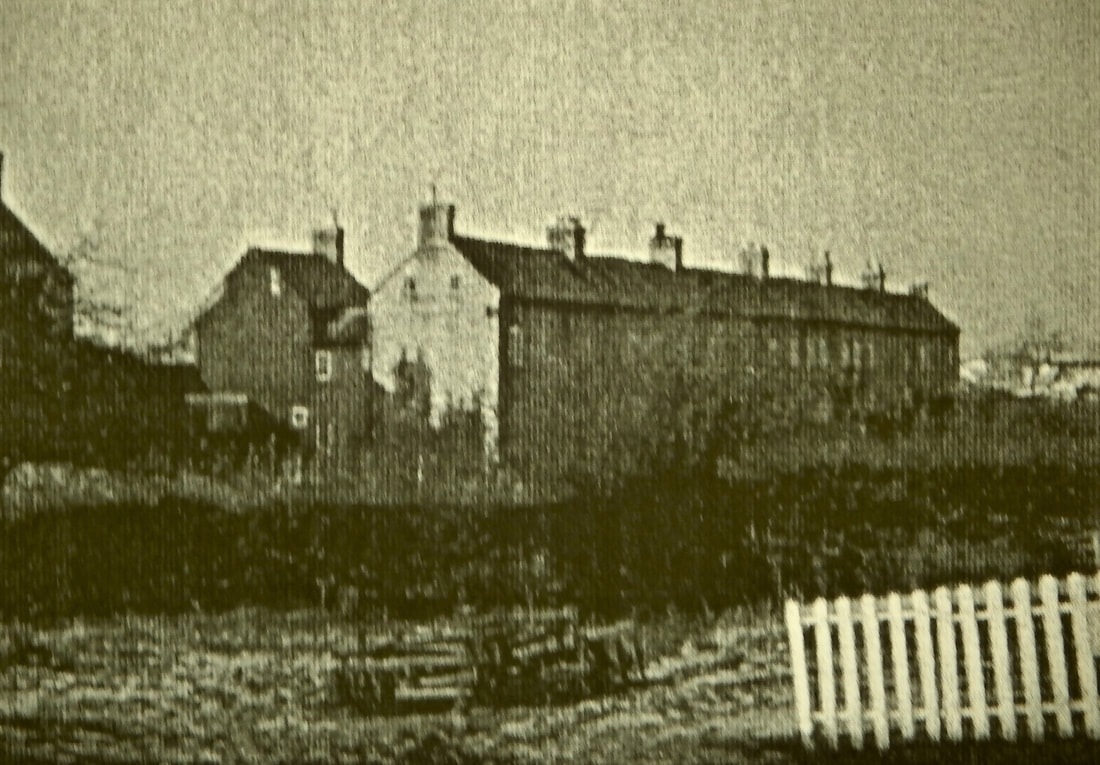
There were 16 of these cottages at the Gripps which were probably built around the turn of the century. They pumped water from the well outside and had about three toilets to serve all the residents. Nevertheless each property had 4 rooms.
Surviving service papers tell us that Ernest was called up on 24 July 1916 and was immediately posted to the reserve. He was ‘re-mobilised’ on 18 October 1916 and was posted to France on 15 January 1917. Although the records are damaged it is almost certain that this was with one of the territorial battalions of the King’s Own Yorkshire Light Infantry (probably the 2/4th KOYLI) which went out to France at this time as part of the deployment of the 62nd (West Riding) Division.
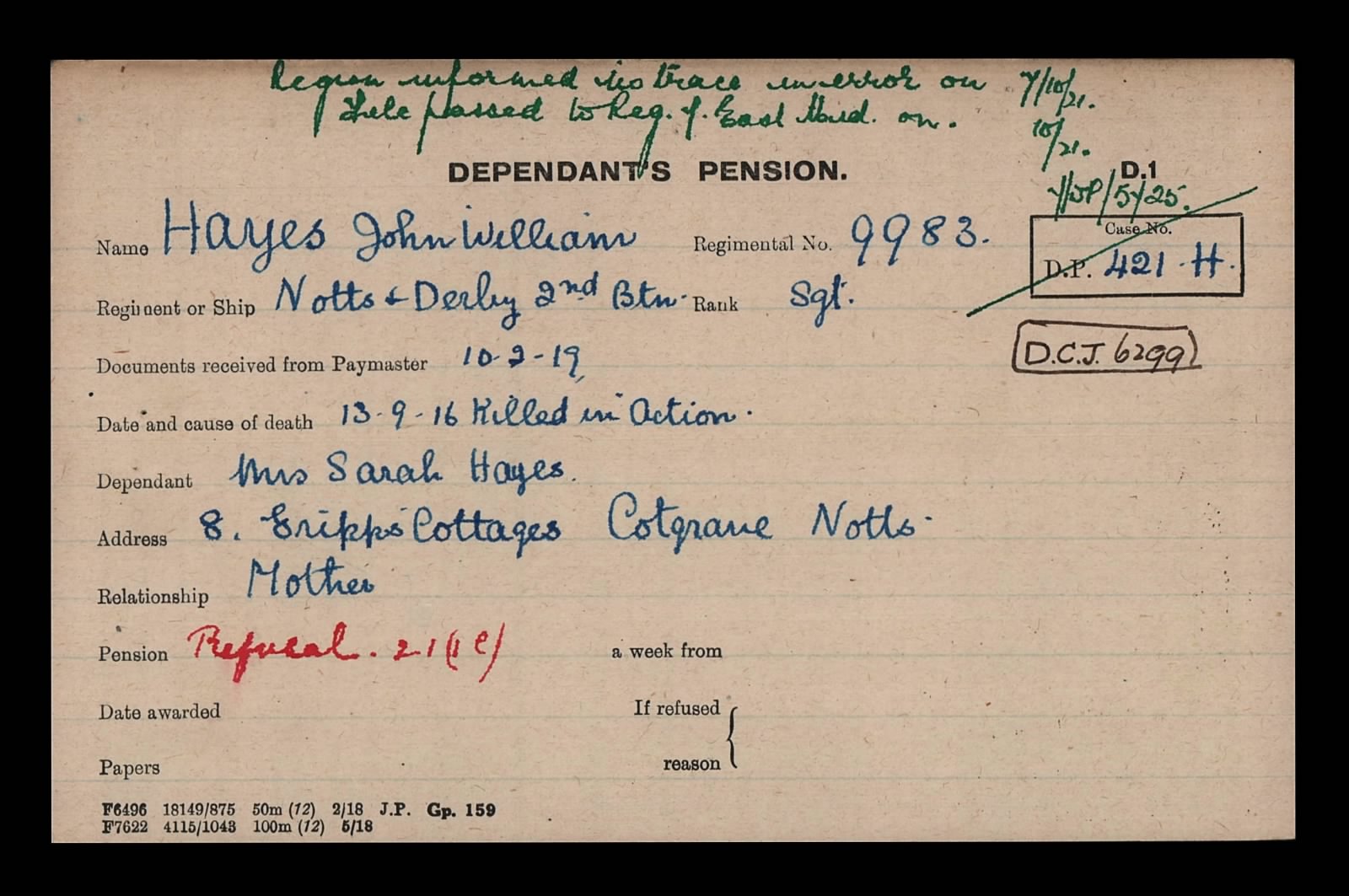
At the point Ernest was sent to France the family had suffered a loss: Ernest’s oldest brother, John, had been killed on 16 September 1916.
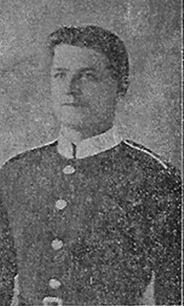
From his surviving service records we can see that Ernest was wounded on 9 May 1917 (this would have been during the ill-fated attack at Bullecourt) and again on 24 November 1917 (this at Cambrai). This second injury caused him to be sent back to the UK. The report on file reads ‘SW Back’ looks like an abbreviation of ‘superficial wound’. It presumably was not severe as he was only briefly in hospital – being discharged on 12 January 1918 - and held in the UK before returning to the front in April 1918, joining the (theoretically) regular 2nd Battalion of the KOYLI.
At some point during his service, almost certainly in 1917, he received a new regimental number, being 203928.
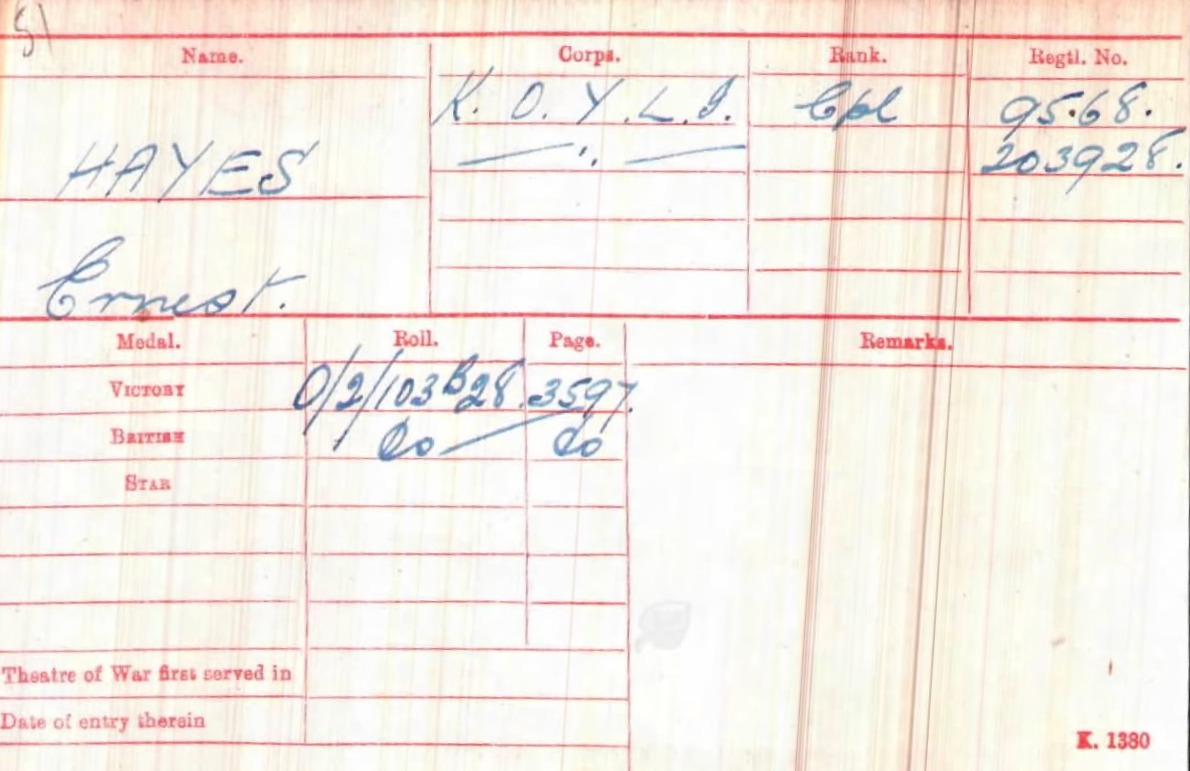
2/KOYLI
The 2nd Battalion KOYLI was - in 1918 - part of the 32nd Division having started the war in the regular 5th Division before being moved as part of a ‘strengthening process’ to the Kitchener Divisions when they were sent out. Prior to Ernest joining the 2/KOYLI, the battalion had seen much fighting on the western front and was to be heavily involved in the battles during the last months of the war. Although the ‘regular’ nature of the battalion had been diluted, the battalion had at least one piece of kit that many units did not have: a typewriter and someone competent in its use. This has made it relatively easy to look at the unit’s activities written up in the battalion’s war diary during 1918.[6]
The war diary of the 2 KOYLI notes, on 26 April 1918, that nine (named) officers and 22 (unnamed) other ranks joined the battalion. This brought the battalion strength up to 41 officers, six warrant officers, 48 Sergreants and 776 other ranks. It is more than likely that Private Ernest Hayes was among that draft.
Training was undertaken for several days before the battalion went into the line near La Cauchie (just south of Arras) on 13 May, it seems that Ernest – who had already been awarded the MM, almost certainly at Cambrai – was appointed to ‘unpaid Lance Corporal’ on 10 May 1918.
A blow by blow account of the battalion’s activities is outside the scope of this article, but it played a pivotal role in breaching the formidable Hindenburg Line, particularly at the Battle of the St Quentin Canal and at Beaurevoir.
The War diary entry for 19/20 October 1918 lists those from the battalion who had been awarded medals.

It is without doubt that despite the competence of the officer operating the typewriter, there is more than one error here. Given there’s no trace of anyone by the name of Hayes in the KOYLI with number 203928, it is almost certain that this should read
203928 Cpl E Hayes.
So this is the first bar to Ernest’s MM. We can possibly deduce when this was earned, as we can look at two of the other awards at the same time. This is the citation for the DCM awarded to Company Sergeant Major Francis Sullivan.
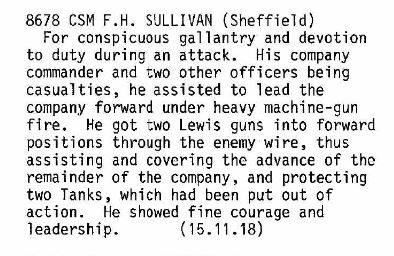
This citation does not give us a time or place but indicates it was during one of the battalion’s attacks.
The citation for Captain H J Knight who was awarded a Military Cross and who was mentioned at the same time as Hayes in the war diary has the following entry in the battalion war diary, referring back to Knight’s actions on 23 August 1918.
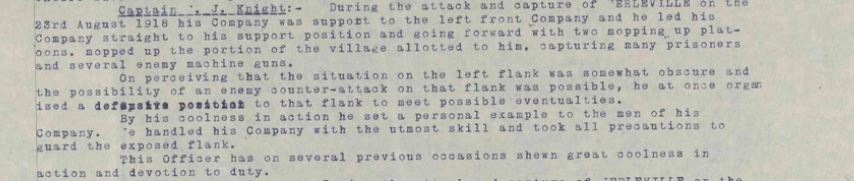
The above action, looking at the war diary, took place at Herleville (which is mentioned in conjunction with Harbonnières – both are villages just east of Villers-Bretonneux).
So, it is not provable, but it is possible that Ernest Hayes was awarded his second MM (first bar) for actions during the 23 August just east of Villers-Bretonneux.
November
On 4 November 1918, the Sambre Canal on was the site of the final major set-piece battle of the Great War. It was a decisive but costly attack intended to breach the German defenses. Under heavy fire, British troops, built pontoon bridges and stormed the canal near the Ors lock, securing a foothold the men taking part could not have guessed that the Armistice was only one week away.
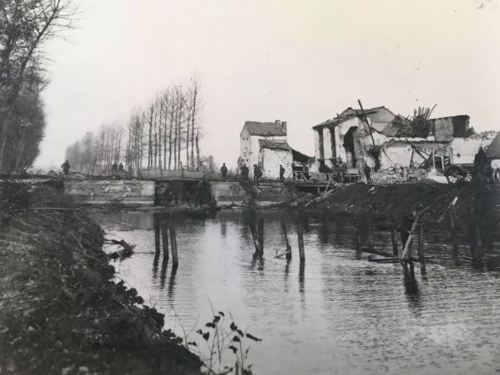
During the attack, which was undertaken by thirteen British divisions, seven Victoria Crosses were awarded,[7] and the poet Wilfred Owen was killed in action.
In scale it was similar to the first day of the Battle of the Somme: with a frontage of approximately twenty miles, and the infantry being supported by over 1,000 guns plus tanks and armoured cars.
On the other side of the wire, the German Army needed to hold a defensive line to include the Mormal Forest and the Sambre-Oise Canal. If they could hold the allied attack, it may give them space to undertake a more orderly strategic withdrawal to defensive positions between Antwerp and the Meuse. Such a withdrawal, with winter approaching and war weariness setting in could have enabled the Germans to negotiate a compromise peace in the spring of 1919.
Sambre Canal
Again, a detailed description of the battle is outside the scope of this article. The attack, as mentioned above, involved thirteen BEF divisions, but the two most southerly of these were the 32nd and 1st Divisions which faced the Sambre-Oise Canal, and thus had a difficult task – that of crossing this waterway. These two divisions were under the command of Sir Walter Braithwaite’s IX Corps.
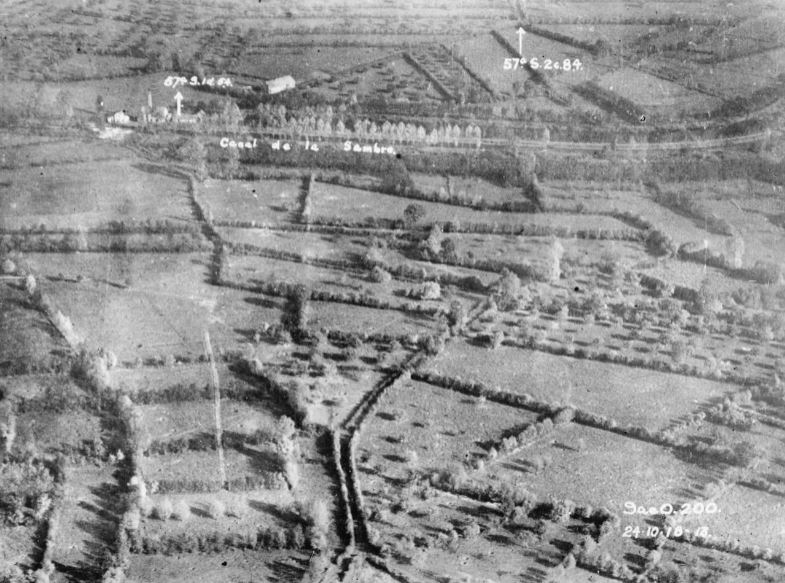
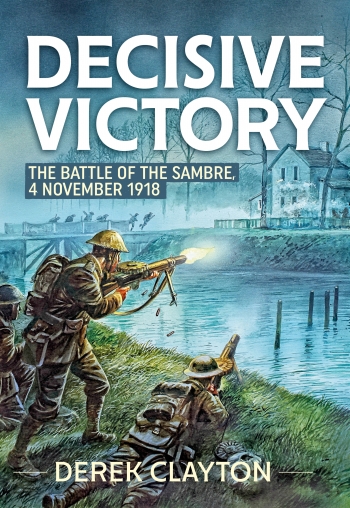
In ‘Decisive Victory’ by Dr Derek Clayton,[8] we read how
“The German defences consisting largely of machine gun teams, concentrated on the forward area, concealed amongst the hedges and orchards and lined up along some sectors of the eastern canal bank, were backed up by isolated batteries and sometimes single field guns….The crossing of the canal was to be attempted at just five locations. One of these was on the 96 Brigade front [in the 32nd Division sector]…. This attack was to bridge the waterway just south of the 90 degree bend in the canal two miles south west of Landrecies.”
Two companies (“A” and “C”) of the 2/KOYLI (97 Brigade) were sent forward to reinforce the 15/Lancashire Fusiliers who were on the extreme left of the 96 Brigade attack. They were to be supported by two tanks. The one company (“C” – commanded by Captain B V Pring) went into the centre of the Lancashire Fusiliers attack, with “A” Company (commanded by Captain H J Knight who – as we have discovered - was previously awarded the Military Cross) being in support.
The war diary of the 2/KOYLI gives us a wealth of detail:
"At 5.45am a tremendous barrage opened out on the enemy defences. Unfortunately the jumping off lines of “A” and “C” Companies caught the fringe of the barrage and suffered over thirty casualties.
"In a dense natural fog the Companies moved forward through hedges and railway cuttings and across a marsh to the Canal Bank. The enemy’s barrage came down with great intensity and caused many more casualties to the advancing companies. In spite of the enemy’s fire and difficulties of obstacles the two Companies gallantly continued on their way and gained their objectives in quick time: the other Companies of the Lancashire Fusiliers were work out somewhat with their previous heroic exertions and “A” and “C” Companies were the only Companies who were able to cross the Canal. The two companies most tenaciously stuck to their positions during the day, missing no opportunity of harassing the enemy, with the result that towards evening the hostile resistance had weakened and the 96th brigade crossed the Canal via LANDRECIES and occupied the Brigade objectives, East of the Canal.
"The failure of the right flank troops to cross the Canal hampered the two Companies throughout the day, but, having crossed, they were determined to hold out in the captured positions while yet a man remained and the tenacity of the Yorkshire troops secured the day."
Casualties on 4 November 1918
The 2nd Battalion KOYLI suffered fewer fatalities than one usually would expect for a similar attack during the First World War. One officer (2nd Lt Harry Colley MC) one sergeant, two corporals and nineteen privates were killed on this day.
War Diary – end of November
At the end of the month, the very conscientious battalion adjutant laboriously typed up the details of the awards handed out for the 4 November attack. This is reproduced in part below.


The text in the second image reads as follows:
No 203928 Cpl E Hayes: “For gallantry and devotion to duty during the successful attack on the SAMBRE CANAL, SW of LANDRECIES, on 4th November 1918. In face of an intense enemy artillery and machine gun barrage he led his lewis gun section forward through very close country, with great skill, on to his objective. On arrival there he consolidated his post and for some hours kept his gun team in action under heavy enemy fire. He was utterly regardless of personal danger and his calm method of picking up target after target had a most inspiring effect on the men in his post and other posts in his vicinity.”
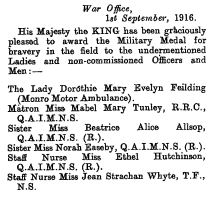
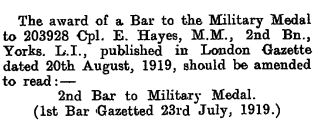
As was usual, the award was noted, but without the citation, in the London Gazette.
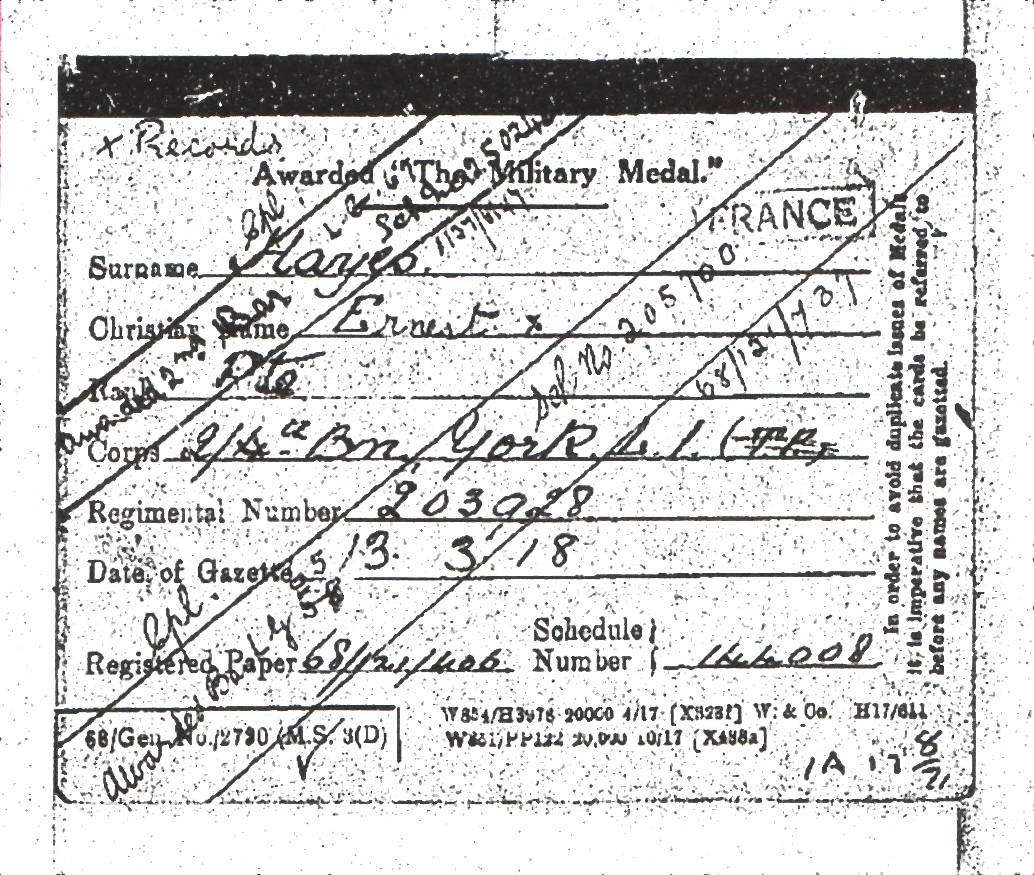
Those who served through
The battalion war diary also – very unusually – has the following on 11 November:
It is interesting to note that the following who came out with the Battalion and landed in France on 16 August 1914 were still serving and present with the Battalion on this, the day of cessation of hostilities.
| Officers | |
| Capt & Adjt (then Cr. Sgt) HS Howard, MC | |
| Warrant Officers | |
| 9651 RSM J Bradley | |
| 9188 CSM M J Turner | |
| 8912 RQMS A W Beeching | |
| NCOs and Men | |
| 9333 Sgt HR Archer | 8946 Sgt A Stenson |
| 9451 Sgt ACW Brooker | 10968 Sgt W H Pratt |
| 1095 A S Sgt J Elkin | 9039 Sgt A Burrell |
| 10009 CQMS W Burness | 9039 Sgt F H Pratt |
| 9281 Sgt C A Mellor | 8117 Cpl T Mart |
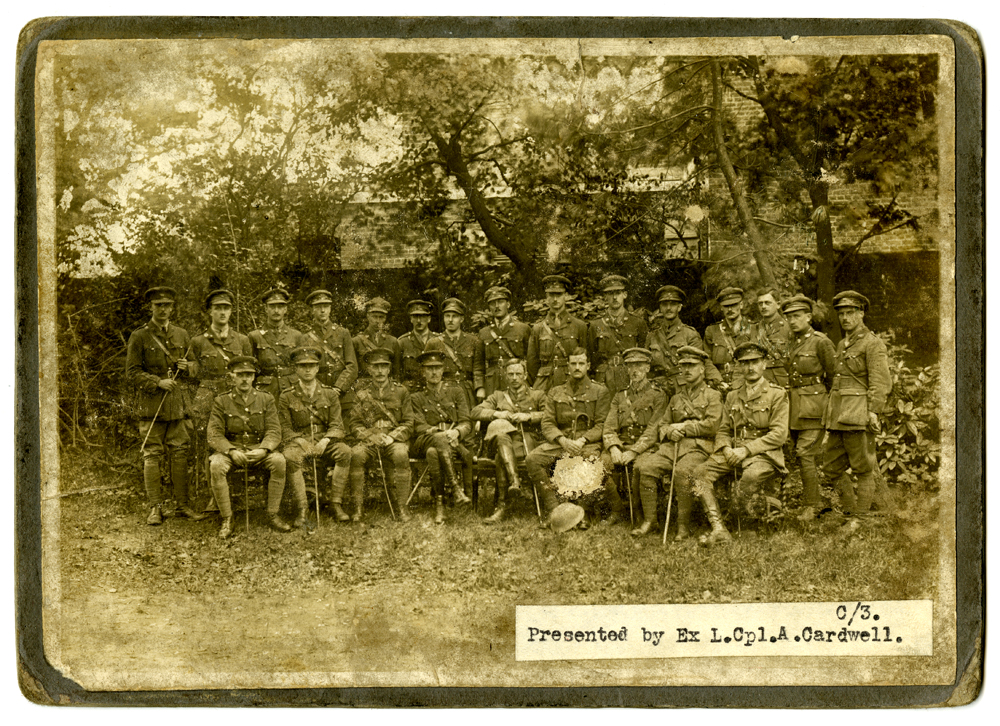
| 8035 Cpl A Thomas | 10405 L/Cpl A Cardwell |
| 8958 L/Cpl W C Risely | 10176 L/Cpl A McCarthy |
| 7419 L/Cpl A Shaw | 6184 L/Cpl W J Motley |
| 10539 L/Cpl H O C Coe | 9174 L/Cpl C W Bennett |
| 8287 L/Cpl A Rawson | 10916 Pte E Willey |
| 10459 Pte R Booth | 10638 Pte F R Jones |
| 10598 Pte G Barnacle | 10526 Pte W Smith |
| 10783 Pte F Beavers | 10697 Pte W Charles |
| 10538 Pte W Osbourne | 8474 Pte J Boswell |
| 8477 Pte A Stratford | 8018 Pte U Pollard |
| 10588 Pte W Locking |
Commemoration
As well as the cemeteries which contain the graves of those who fell (the men from the 2nd KOYLI are buried mainly in Landrecies British Cemetery. But others are buried at Highland Cemetery, Le Cateau (two burials from the 4 November attack) and Ors Communal Cemetery, Ors British Cemetery and Premont British Cemetery (one burial in each) plus the four men with no known grave on Vis-en-Artois Memorial.
There is also a plinth on the road adjacent the canal at Ors which was put up by The Western Front Association many years ago.
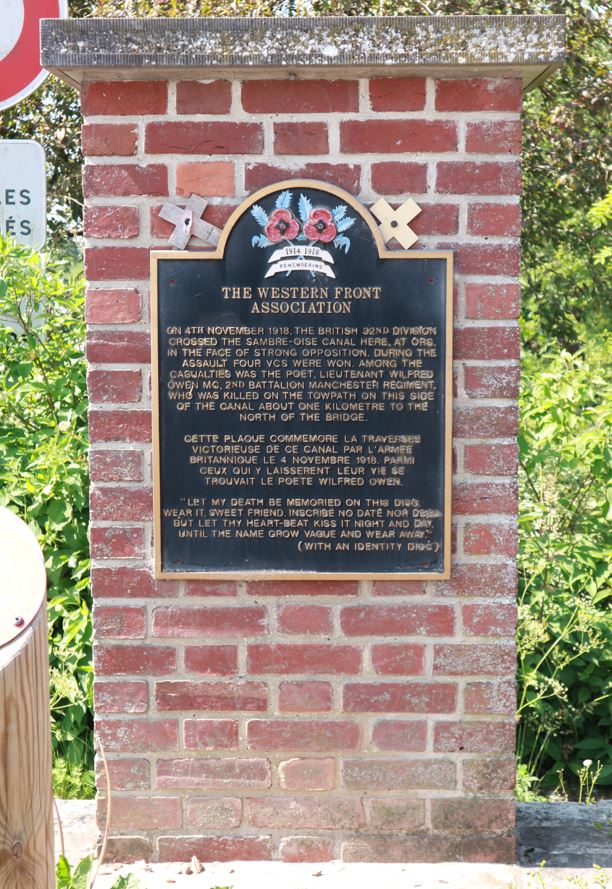
New Housing Estate
A very recent development of homes in Ernest's village has been named in his honour by the developers. Local town councillor Sam Mitchell, who is also chairman of the local Royal British Legion branch, said: "We thought it would be good to get road or a street after him but we had a word with the developer and they are naming the whole estate after him."
Work on Hayes View, a 45-home estate in Cotgrave, has already started, with homes set to be available from spring next year.
Conclusion
It is certain – at least in the view of this author – that Military Medals did not ‘come up with the rations’ and in the overwhelming majority of cases the awards were very well deserved.[9]
The fact that it is exceedingly difficult to locate citations for Military Medal awards makes it all the more rewarding when individual acts of courage (or in the case of Ernest Hayes, three acts of courage) can be identified and highlighted after more than 100 years. It is likely that the phrase that the medals ‘came up with the rations’ is more a case deliberate cynicism and grousing of soldiers rather than these medals not being deserved.
Epilogue
Ernest Hayes married Ivy Hodgkinson in Lenton, Nottinghamshire, on 24 December 1921 when he was 23 years old.
Ernest and Ivy had five children, Albert Ernest (1922-2001), Elizabeth (1923-1967), Sidney Arthur (1926-1993), Margaret June (1934-1999) and Barbara Grace (1936-2016)
Ernest Hayes MM** died on 19 February 1938 in Nottinghamshire when he was just 39 years old. He is buried in Beeston Cemetery, and his previously unmarked grave was given a marker as recently as 2005.
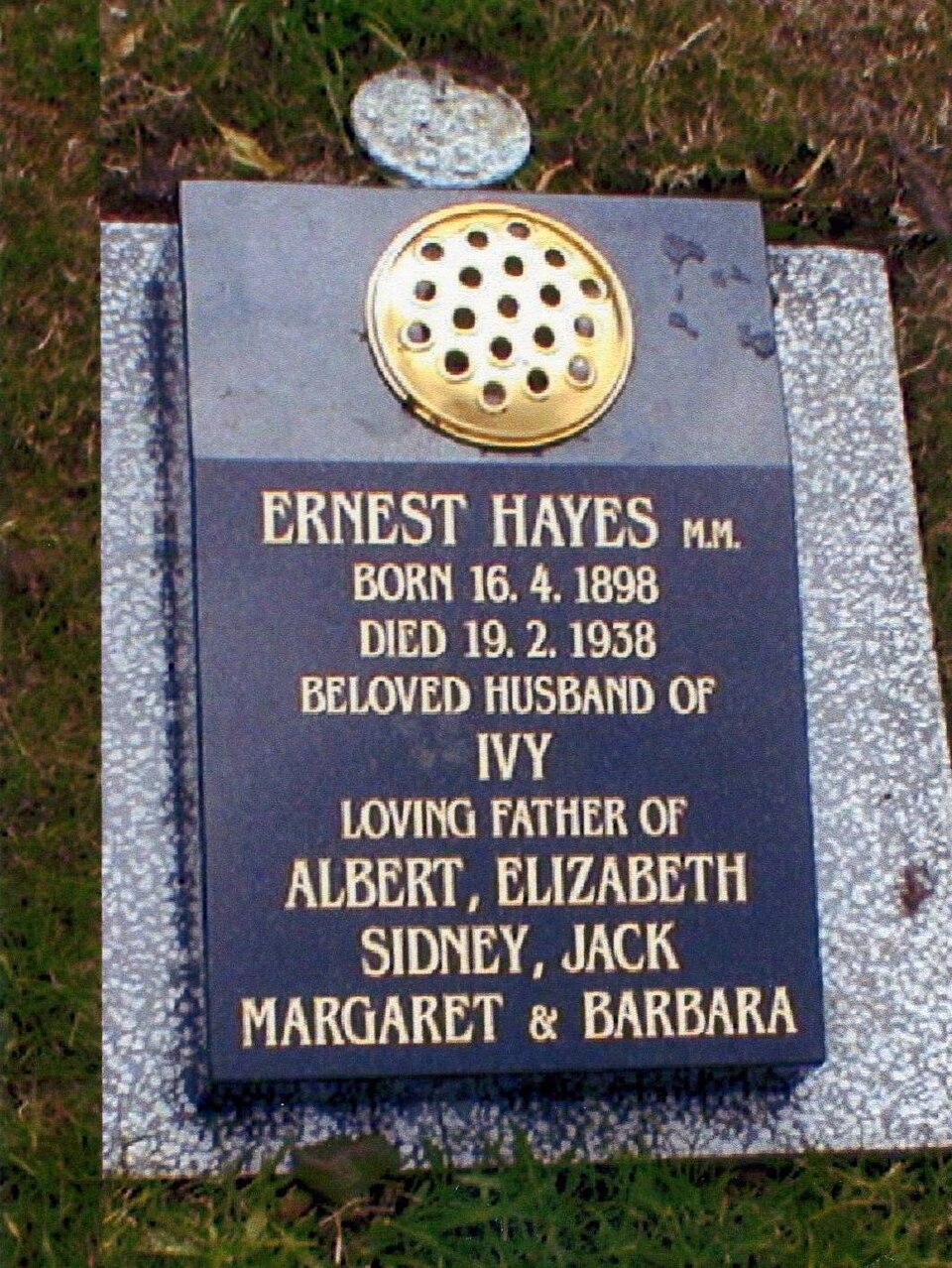
Further Reading
Decisive Victory. The Battle of the Sambre: 4 November 1918 by Derek Clayton.
References
[1] https://wordhistories.net/2020/12/11/come-with-rations/
[2] The Military Cross was initially available only to officers of the rank of Captain and below, plus warrant officers. It was extended to include those of the Royal Naval Division in September 1916 and again extended in June 1917 to include temporary Majors. The DFC was created for those in the RAF in June 1918
[3] https://www.thegazette.co.uk/all-notices/content/100842
[4] https://www.thegazette.co.uk/all-notices/content/100842
[6] The National Archive TNA WO95/2402
[7] VCs (North to South)
- L/Cpl W Amey 1/8 th Royal Warwicks
- Lt.Col J N Marshall 16 th Lancs Fusiliers
- Major A H S Waters 218 Field Company RE
- Sapper A Archibald 218 Field Company RE
- 2/Lt J Kirk 2 nd Manchester
- Major G de C E Findlay 409 Lowland Field Company RE
- Lt.Col D G Johnson 2 nd Royal Sussex
[8] https://www.helion.co.uk/military-history-books/decisive-victory-the-battle-of-the-sambre-4-november-1918.php
[9] Perhaps the exception that proved the rule is the case of S-18058 Acting Staff Sergeant Major T Martin was awarded the DCM in 1916 'For continuous good services throughout the campaign as Master Baker in charge of a bakery. He displayed conspicuous ability and resource in starting the bakery, and its success has been largely owing to his energy and capacity for hard work.' (Michael Young, Army Service Corps 1902-1918 p374)
Becoming a member of The Western Front Association (WFA) offers a wealth of resources and opportunities for those passionate about the history of the First World War. Here's just three of the benefits we offer:

This magazine provides updates on WW1 related news, WFA activities and events.

Access online tours of significant WWI sites, providing immense learning experience.

Listen to over 300 episodes of the "Mentioned in Dispatches" podcast.


