
Memories of ‘55’
Written by Captain W.E. Johns (author of the Biggles books), this account was first published in 'Popular Flying' Volume 4, Number 2 in May 1935. The text is true to the original, but end notes have been added.
No. 55 Squadron was a bomber squadron, not a fighter Squadron, but that does not mean that it did not fight. On the contrary, towards the end of 1918 it was engaged more than once in combats that might hold the record for duration, if not for ferocity, although it should be said that nearly all the actual shooting was done by the lads in the back seats.
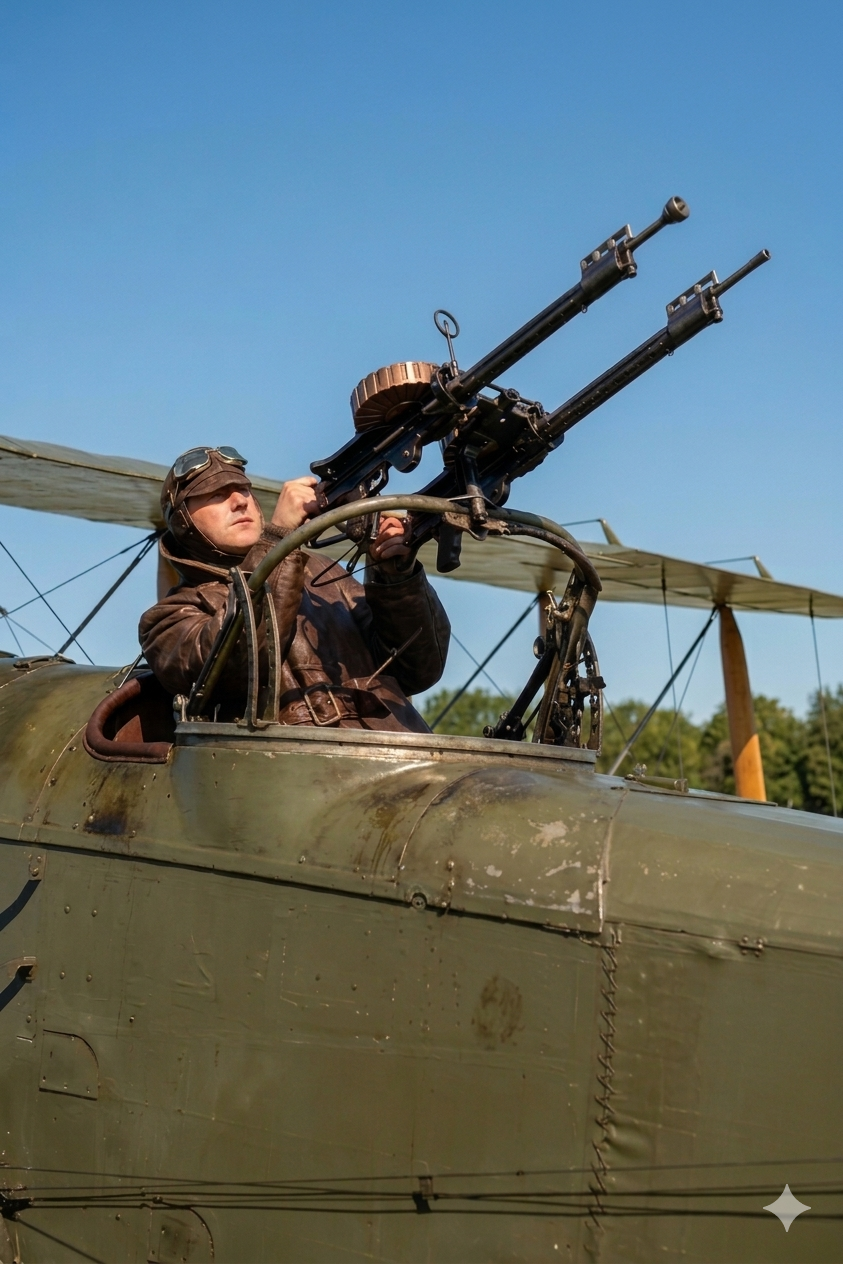
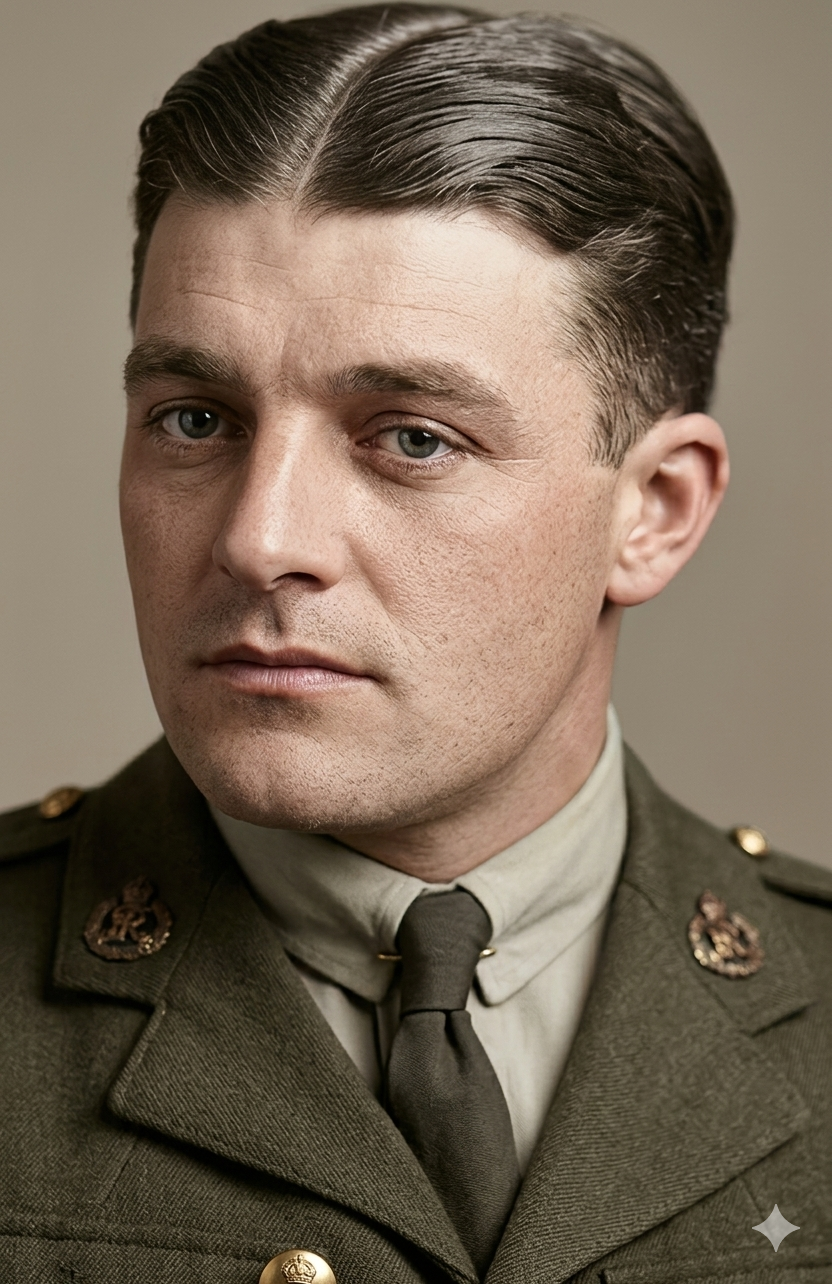
It is worth noting, too, that different from clashes between single-seaters, there was no question of breaking off a fight. We started, and whatever turned up, we went on, with the E.A. hanging on to our flanks and rear. I cannot remember a formation breaking up or turning back on account of E.A.; I don't think it ever happened.
Memories! Curious thing, memory. With one or two exceptions, the things that stand out most clearly in my mind are not major operations as a whole, the details of which are more than half forgotten, but fleeting impressions of incidents that occurred in a second or two of time, sometimes on the ground, sometimes in the air. I can see those pictures just as clearly now as I saw them then. Just why some things should focus so clearly and persist, while others, really more outstanding, become blurred with the mists of time, is hard to explain. Two regular scenes can never be forgotten: the dimly lit dining-room at dawn, with the stars still in the sky, and silent heavily clad figures of the fellows on the show drinking coffee round the tables, and, the sing-song round the piano after dinner.
One of the most vivid pictures I see is a D.H. 4 silhouetted against an unbroken background of blue sky. It is flying level, quite close, perhaps thirty feet away. From it, a long trail of jet black smoke swirls away aft in a dead straight line. The pilot was a friend of mine; I had taught him to fly. I was flying number 3 in the formation and he was flying 5.
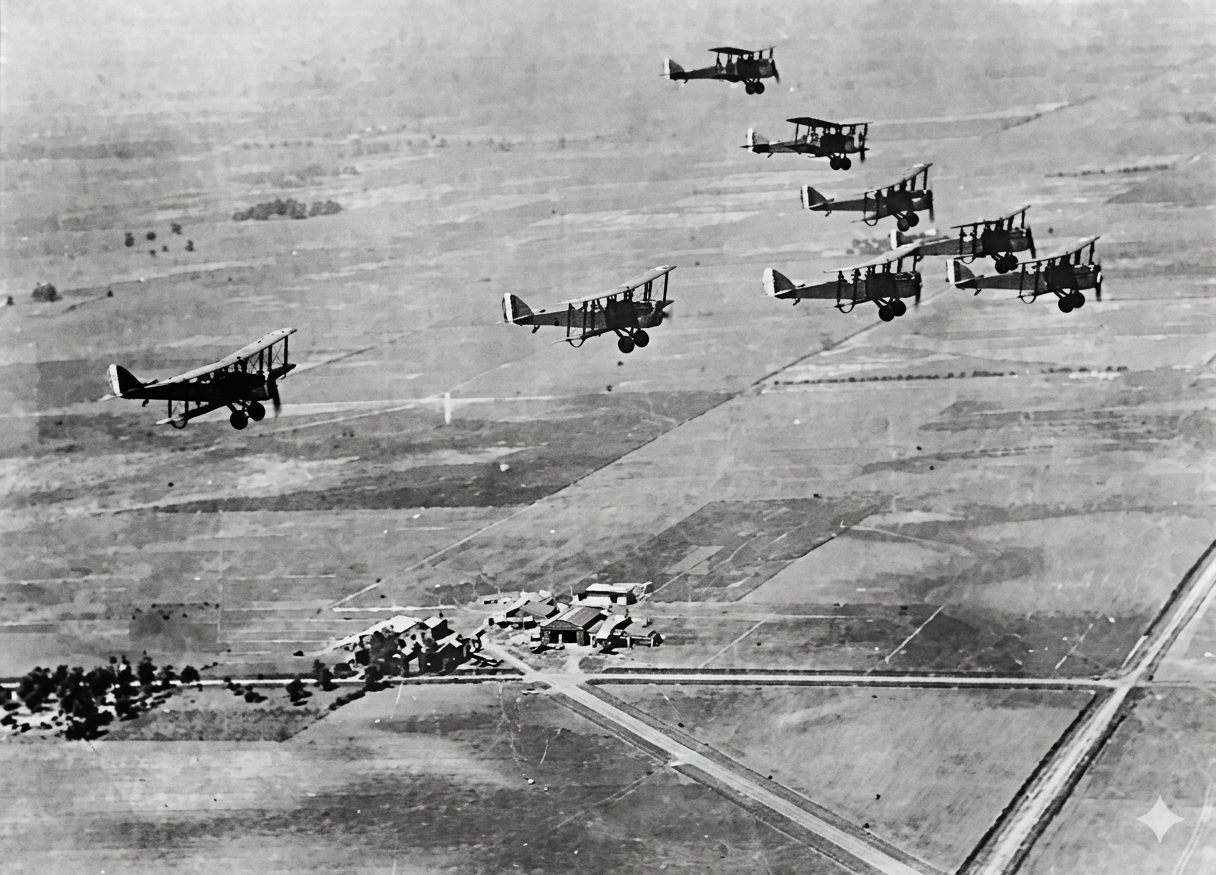
I looked across at him, as I had done a hundred times, and saw the smoke. He was, at that instant, unaware of the fate that had already claimed him, and was even now overtaking his gunner. He saw me staring. I pointed. He looked. His nose went down and he was gone. We were at twenty thousand. For half an hour or more I could see the smoke trail to the ground.
The next picture is of an Albatros, nose down, so close that by reaching out I could almost touch the yellow shark-shaped belly that was turned towards me. Silly got him.[1] He said afterwards that he thought the fellow was doing an altitude test. My own opinion is that he was looking for us, but couldn't see the wood for trees. I didn't see him until he was falling. We were homeward bound. Fifteen E.A. came in over Bobligen,[2] but we fought them off. Some more came up S.E. of Strasbourg, but soon faded away after Atwood had got one of them.[3] For the moment all seemed clear.
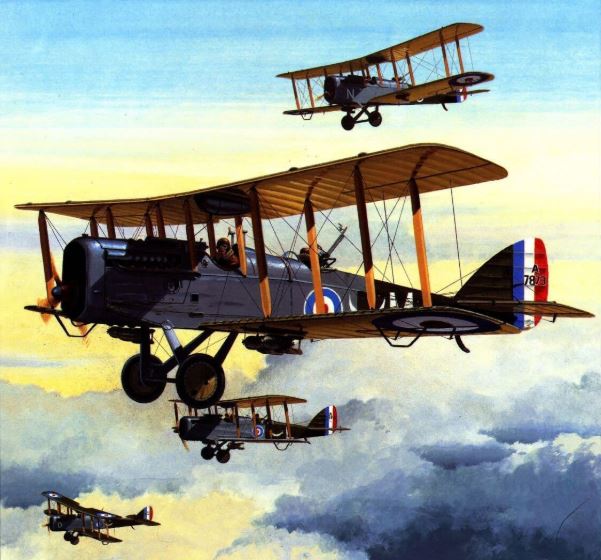
I had my eyes glued on Silly, who was leading, for we were sitting desperately close. Suddenly, I saw his nose creeping up. This was unusual, and I couldn't think what he was at. The leading edge of my centre-section would have prevented me from seeing above, even if I had looked, which I don't think I did. Then I saw his nose jerk up; the tracer jumped for an instant, and then his nose came down again. He had not moved five feet from his original position. Then I saw the Albatros for the first time.
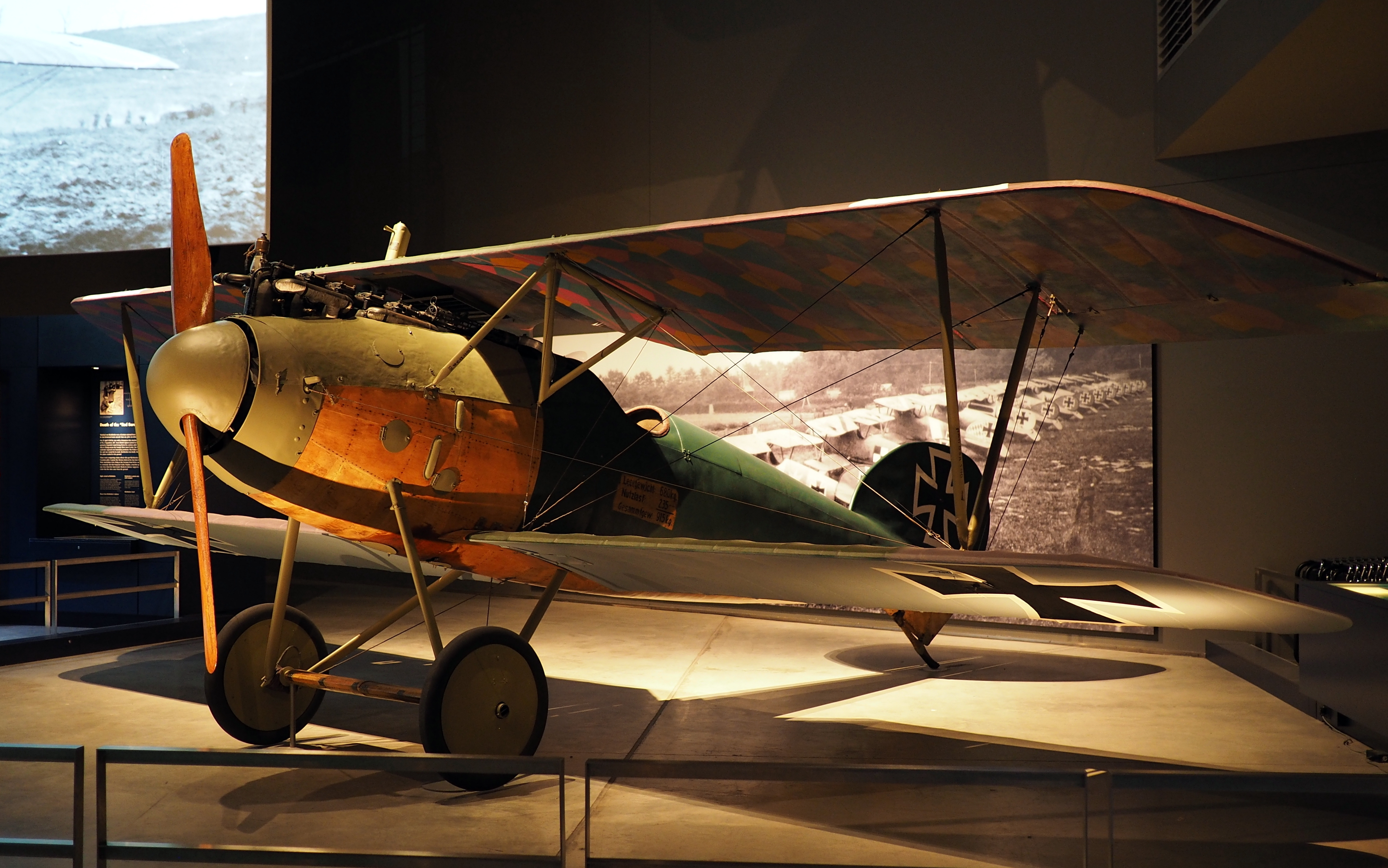
It was about thirty feet in front and above us. I saw it as it shot up over the leading edge of my top plane. As it went up it turned, as if the pilot had dragged the stick back into his right thigh without rudder. The movement held, became a tight, crazy loop, and then the machine roared straight down on to us out of control. I knew it must hit one of us—we were six—for we were too close together for it to go through—or so it seemed. Everyone skidded, and the Albatros went straight through the middle of the formation on its back. When I could get my breath I looked down. It was spinning, and never came out. We were at nineteen thousand. I didn't see the end, but the gunners said he crashed in a wood. I can still see that gentleman falling on me.
The third incident is rather confused.[4] We were bombing Stuttgart. I had a target all to myself—the magneto works.[5] The formation began to turn up-wind to do the dirty work, but I had to go on for perhaps two miles. I never got there. Half way the archie faded, and I looked round with my heart in my mouth. Huns were falling out of the sky between me and the formation.
Slinging my two 112 pounders clear, I turned, and saw that I could never reach the formation, which was now about three miles away and making for home. Then, to my right, I saw our second formation just arriving. I went for them like a drowning man making for the proverbial straw, but the Huns cut across and stopped the gap. They floated in—maybe you know that funny way they seemed to float, so lazily, with the props slowly turning the wrong way. I didn’t stop. I daren’t.
I can still see that scene: the E.A. all round taking a crack at me as I went through them like a partridge along a line of guns. I tailed on to our formation, and there I stayed until we got home, when I was soundly cursed for my pains. But this is all wrong; let us start at the beginning.
55 Squadron, RFC
Fifty-five Squadron was formed at Castle Bromwich in April, 1916, and went overseas with D.H. 4’s (Rolls Royce “Eagle VII’s”) in March, 1917. Shortly afterwards the intensive German raids on London called for reprisals, and the Independent Air Force was formed to hoist the Hun with his own petard.[6]
General “Boom” Trenchard was given command and took three Squadrons (55, day bomber; 100, F.E. 2B night bombers, and No. 16 Naval Squadron) to Ochey. Later, 55 moved to Tantonville and Azelot, where with 99 and 104 Squadrons, which joined the I.A.F. later, it served until the end of the War.
My own method of joining the squadron was most irregular, as I can claim to have posted myself to it. This is how it happened. I was instructing at No. 2 School of Fighting, Marske, when one day the C.O. sent for me and told me I was to proceed to France forthwith, reporting at the Air House for instructions. I caught the next train, and was at the Hotel Cecil early the next morning.[7]
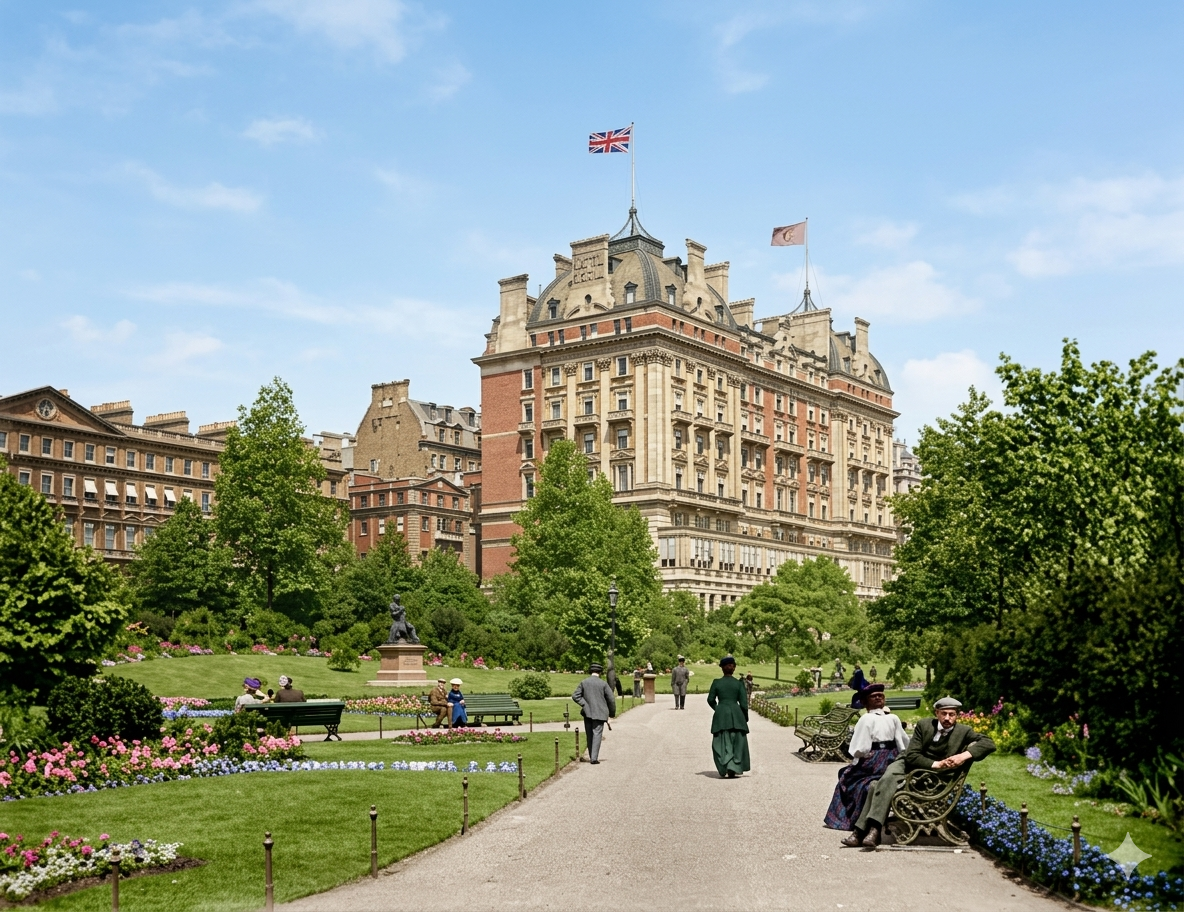
There I was given a warrant and told to report to Lympne forthwith, where I should find a D.H. 4 ready to be taken over; but on arriving there McKay, the C.O. told me he knew nothing about me or a D.H. 4. Nor did anyone else.
I hung about Lympne for three days, but nobody knew anything about anything. Life became boring, so I butted into a Canadian poker school. Two hours later I got up from the table, not only broke, but having distributed my next month’s pay in I.O.U’s. Which wasn’t so good. At that moment a queer looking cove with side-whiskers—I never did learn his name—blew in and said, “Well, I’m just off.” “Where?” said I. “France, in a H. Pip,” said he. “Wait a minute,” I told him. I paid my mess bill with a cheque I hoped Cox’s would meet,[8] but was afraid they wouldn’t, fetched my valise, threw it into the Handley and crawled into the front seat. Was it cold? It certainly was. That trip taught me never to fly in an open cockpit machine without a coat on.
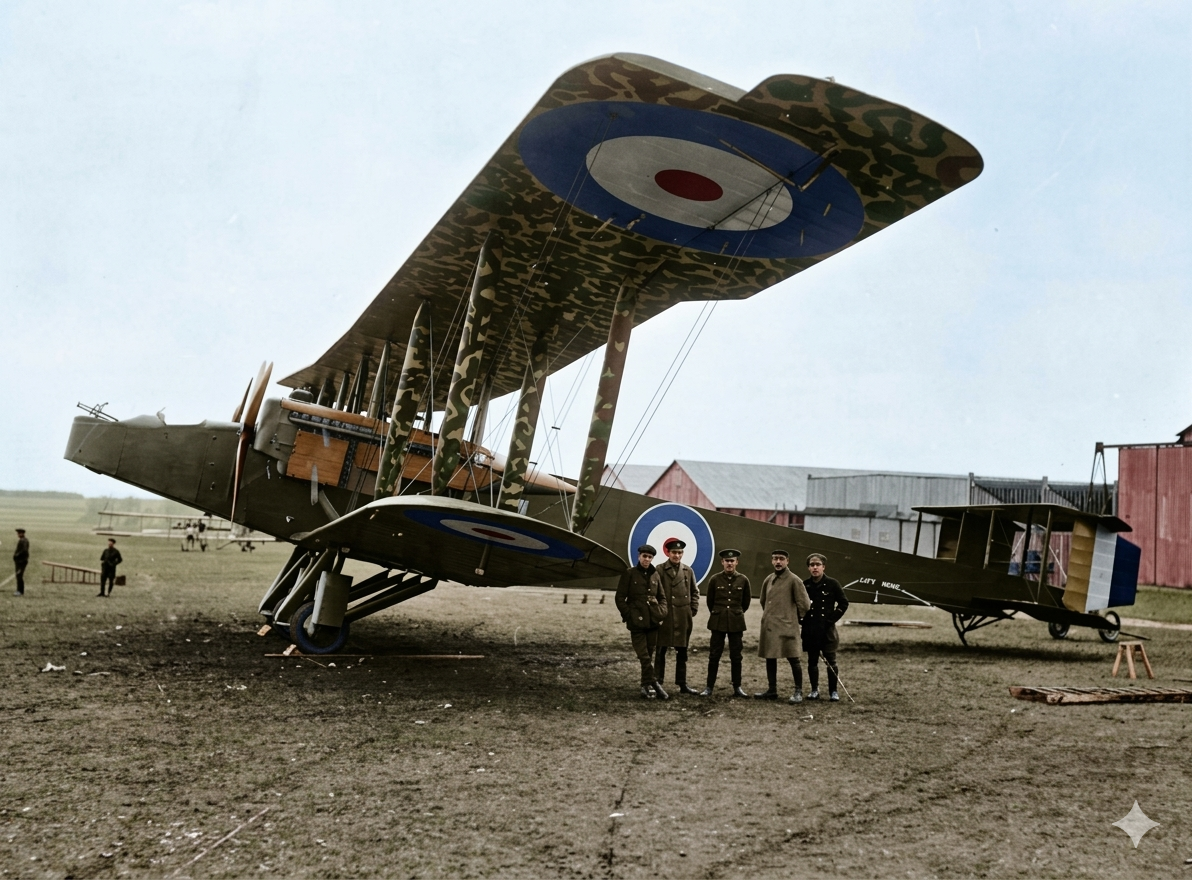
We had a drink at Marquise, which I discovered was our destination. I tried to get a little money from the field cashier, but there was nothing doing, so there seemed no point in staying. I saw the same H.P. that had flown me over being started up. I ran across and found a delivery pilot about to take the machine on to Bourget. Did I want to go to Paris? I did. There was already a fellow in the forward seat, and one in the second pilot’s seat, so I climbed into the carcase. There was nothing to sit on except the floor, so I sat on it, with my legs hanging through the bomb holes.
We had been in the air about five minutes when the main tank burst. A geyser hit me in the back, and soaked me through. Luckily I had just tapped my pipe out through the hole in the floor. The pilot was evidently still flying on gravity,[9] for he went on as if nothing had happened, and to get to him I had to force my way through the bomb-racks, pushing them on each side into the shape of a dog’s hind legs. We went back to Marquise, got another machine and went on to Paris.[10]
Arriving, I dumped my valise in the mess and tried to get some money, but there was still nothing doing. My pilot had a car going into Paris and offered to show me the sights. We parked our stuff at an hotel and then went to the Folies, where I lost him.
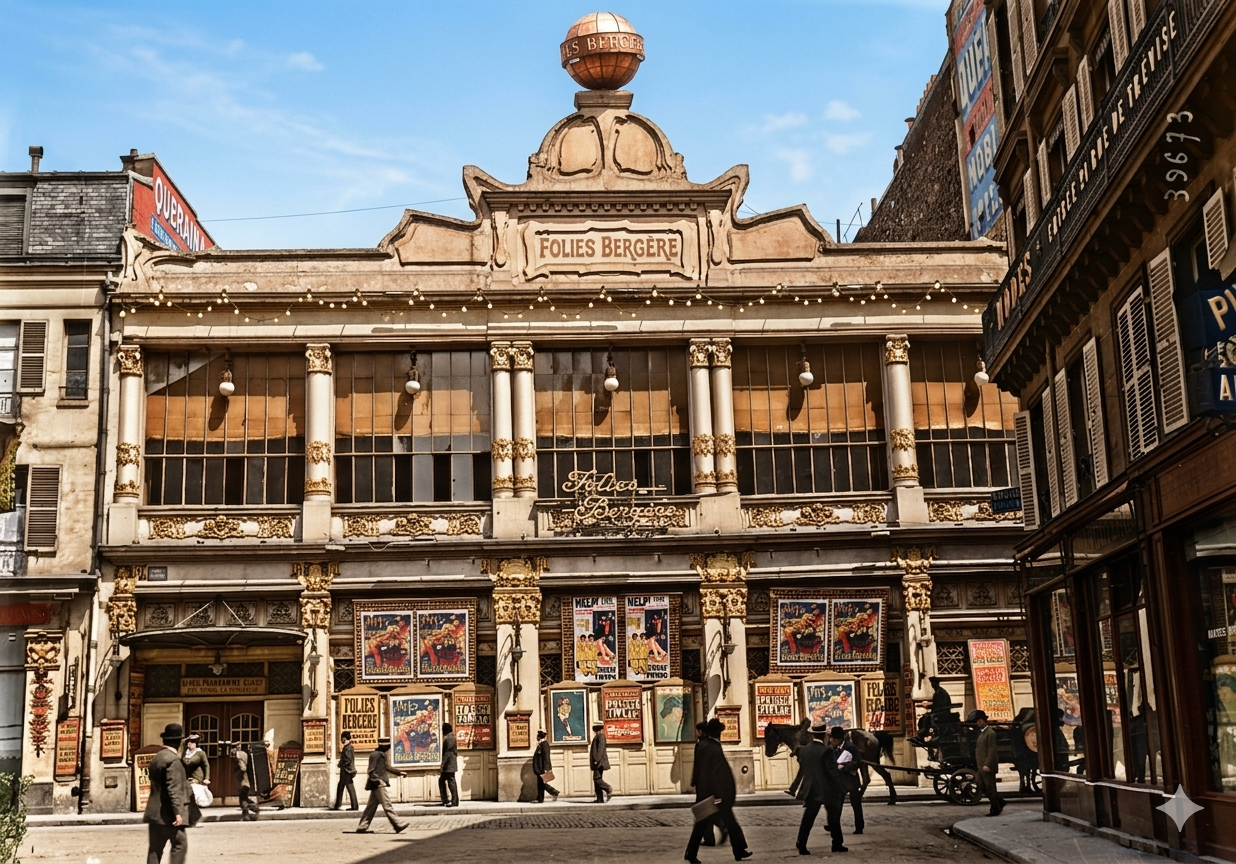
I came out about one in the morning and remembered I had forgotten to ask him the name of the hotel. I had never been to Paris before and it all looked alike to me. I cruised about a bit in a taxi, calling at hotels to see if I was staying there, but finally I had to make the driver take me to Bourget in order to get the money to pay him. I never saw my pilot again.
In the morning, finding I was unpopular with the mess secretary, I found a pilot who was taking a brand new D.H. 9 to Coulban. He offered to take me. I’d no idea where it was, nor have I to this day.[11] All I know is that it was a long way and, I think, an Aircraft Park.
The lad who was flying stalled at a hundred feet coming in, and threw me and my valise out on to the aerodrome. He killed himself doing it,[12] so it was no use saying anything. I reported to the Office, but the C.O. told me he had already more spare officers than he knew what to do with, so I’d better move on. He said there was a Handley Page leaving for Xaffervilliers[13] in a few minutes. It seemed as good as anywhere, wherever it was, so I went. I sat next to the pilot, who soon lost his way, with the result that we arrived after dark, and not being expected, no lights were put out. We hit the ground before I knew we were near it, and, I suspect, before my pilot knew it. The H.P. spread itself over the landscape; my valise burst and I lost some more kit.
The R.O. was a decent fellow,[14] but was disappointed when he found I hadn’t flown Handleys. While we were talking we heard another one coming, so lights were quickly put out. The Handley turned out to be a Hun, and no doubt the lights helped him to locate the aerodrome; he signified his approval in the usual manner. I slept that night on my valise in an empty room. In the morning I won nine hundred francs and his revolver from the delivery pilot, at two-handed pontoon, so I went to see the R.O. about getting somewhere before he could win them back. He told me the nearest squadron was 55, at Azelot, and offered to lend me a tender.
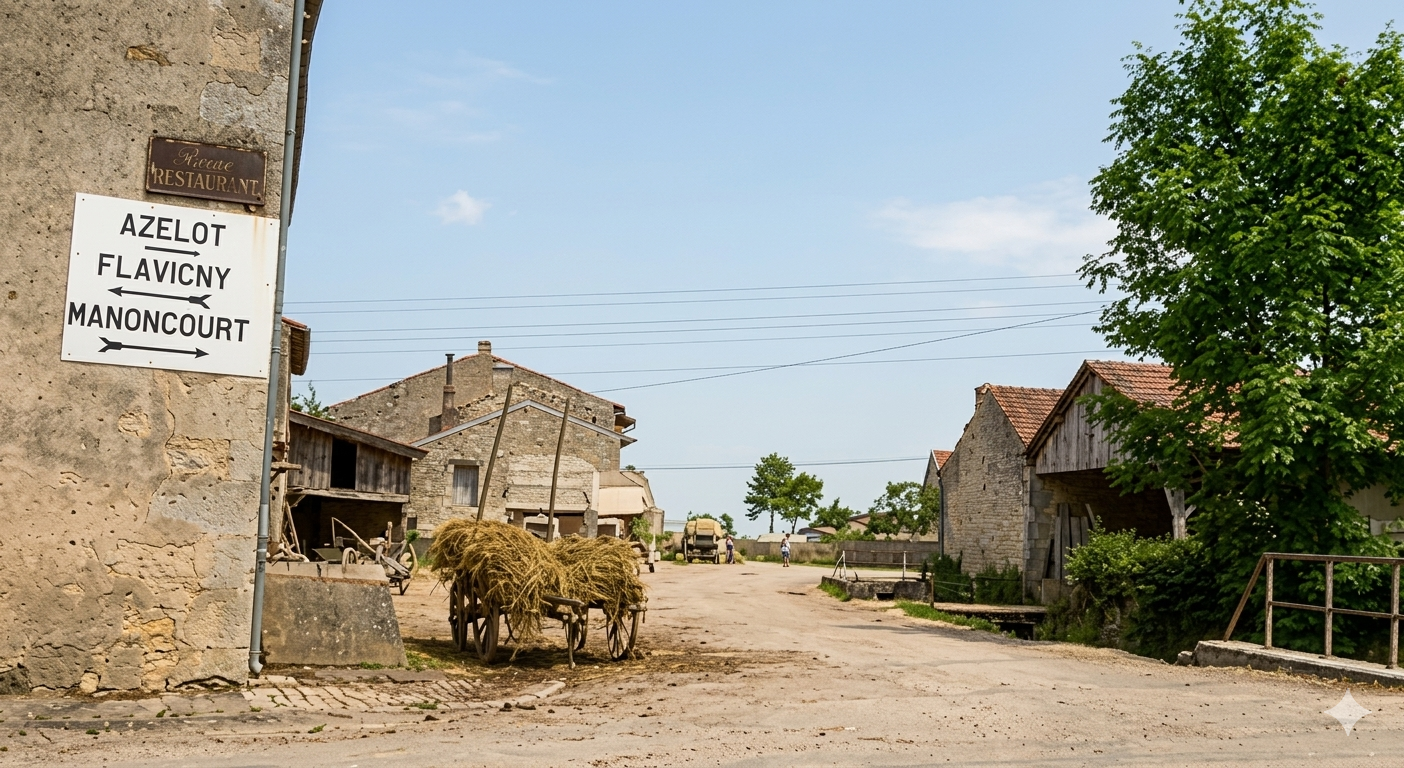
When I got there I reported to Alec Grey the C.O., who seemed surprised to see me.[15] I insisted that I had been posted however, and that seemed to please him. "I have just lost five machines," he said, "so I can do with some pilots."[16] It struck me that I had taken the wrong turning. But it was too late to go back.
Active operations
For a time things pursued the even tenor of their way, but towards the end of July and the beginning of August the Rhine towns raised such a stream about us that the German Higher Command had to do something. They started by sending down some really brisk squadrons from up north, to stop us. They did not advise us of this, but we were not slow to discover it. The air was stiff with E.A. and flying up the Rhine became a very serious business.
On August 10th a Frankfurt show became a nightmare. It started when a school of thirty-five Huns blew along just east of Saarburg. Clutson sent one down in flames,[17] but they hung on and so did we. Presently the enemy were joined by ten more, and, later, another thirty. One of this last lot was a stout lad. He went right down on Silly, who was leading, and, not being able to pull out, went slap through the formation. Silly brought us back with only one casualty. Stewart,[18] Bridgeland's observer, was killed. But we were not always so lucky.
The previous evening I was one of a poker school of six. By lunch-time the next day I was the only survivor, and that because I wasn't on the show. Bell took a formation of six machines over and came back alone after fighting twenty-seven E.A. for best part of an hour. Dowswell brought his machine back over the lines, but force-landed at Pont St. Vincent. Gompertz was his gunner.[19] He got two E.A., but what a mess he was in when the tender brought him home! This was due to the fact that Dowswell had an aileron shot off and could only fly dead straight. Gompertz's sidcot hung on him in ribbons; it had been literally shot off his back; and those who read this who saw him will confirm that this is no exaggeration. One bullet only hit him—in the shoulder. He didn't seem in the least upset. He just sat in the door of his hut, with the rags still hanging on him, and laughed.
In the month of August we had fifteen officers killed, five wounded and five missing.
Rather a funny thing happened about this time. Coming home from Offenburg we ran into E.A., and Dunn’s machine was shot about so that he had to force-land near La Matacuelle, which was just over our side of the line.[20] The Hun who got him was so excited that he landed beside him to take him prisoner, apparently unaware that he had crossed the lines. He hit the hedge, however, and stove his ribs in. He was taken prisoner, and was so sick with himself that he refused to eat, drink or speak. I expect he has by now, though.
A Raid on the aerodrome
About the same time, finding that he couldn't stop us in the air, the enemy tried to do it on the ground. We were in the mess, after dinner, singing, when someone shouted, "Come and look at this." We ran to the door and saw a magnificent parachute flare sailing down just over us. I don't think anyone knew just what it portended, and before we knew what was happening, hell had broken loose. What a mess! There was nothing to do but lie still and hope for the best. I remember seeing the corrugated-iron latrines take flight. One bomb fell right beside the mess, and, had it gone off, the mess would have gone off too. Luckily, it was a dud. The next morning, somebody—Don Waterous,[21] I believe—dug it out, and unloaded it. Some fool put a match to the explosive to see that would happen. It didn't explode, but it caught fire, and you couldn't see a yard for black smoke. It poured into the dining room where the C.O. was having his breakfast: he came cursing.
No. 104 Squadron had several people killed in this raid.[22] The same sort of thing happened several times afterwards, but we were never caught napping again; at the first warning we used to sprint up the road to the archie battery and watch the fun from there.
Spy scare?
Pip Rayment [23] reckoned a spy was at work and several fellows recalled seeing a car drive across the aerodrome with its headlights on just before the Boche arrived. It was decided to investigate this, and the next night, when the car came long we were waiting for it with a Lewis. Someone jumped out into the road and yelled to the fellow to stop, but he went all the faster, so the chap behind the gun—I forget who it was—turned the tap on and let him have a whole drum. Where the shots went I don't know, but they didn't stop the car, although the driver must have had a nasty moment. The fellow behind the gun was cursed up hill and down dale for missing, and the next night everyone who fancied his chance took a gun. If the car had come along, the driver would have thought he’d run into the front line by mistake, but it didn’t. Nor did we ever see it again.
The Yanks are Coming
Early in September the American First Army marched across the aerodrome into the St. Mihiel Salient. When they halted officers used to come into the mess for a drink, and they talked of the War as if it was a joke, referring to the line as the “shooting gallery,” and so on. They were “going to show us, and the Frogs.” I got fed up with this one day, and started saying something, but Jock McKay said, “Shut up, the poor B’s don’t know what they’re talking about.” And that was just about the truth of it. They knew in a day or two, though. We supported their show by bombing back areas. By midday it looked as if the U.S. lads had made about nine kilos, but by nightfall they were back pretty well where they started from, having suffered terrible losses. Poor beggars; how could they know what the War was like?
Two or three American pilots joined us about this time, and I must say they were very good chaps, quiet and unassuming, quite different from the article that is presented in fiction.
Stuttgart
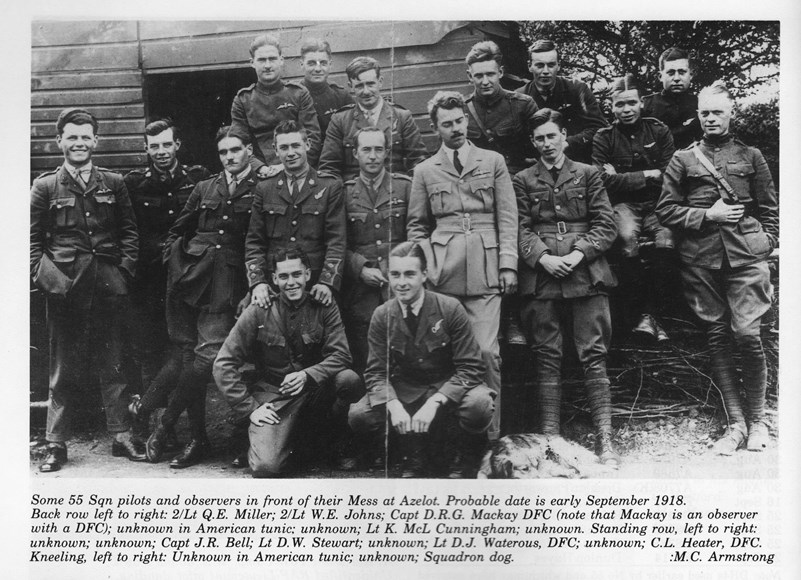
About this time, too, I had a nasty experience.[24] Coxhill,[25] who usually flew with me, went sick, so I took a new lad from some observers who had just come up. I told him what to expect and what to do when it happened. The show was Stuttgart, with Silly leading. We started with twelve machines, but only nine got to the objective.
We bombed the Daimler works, and were on our way home when fifteen E.A. intercepted us. One decided that I was his particular meat, and came close enough under my tail to make shivers run down my spine. I wagged my tail gently to give my gunner a clear view of him. His gun fired one shot, and that was all. Then he disappeared from sight. I had no doubt that he had been hit, and had a miserable quarter of an hour with the E.A. making nice shooting at me. Then two of our fellows—Miller was one, I think—seeing what was going on, closed in on each side and let him have it, which discouraged him somewhat. (I believe it was Miller’s machine that we once counted 114 bullet holes, after a show.)
When I landed I raced tail up to the ambulance, thinking my lad might have a spark of life left in him.[26] (In the D.H. 4 it was impossible for the pilot to see into the back seat.)
I switched off and turned round, and there he stood as large as life, but a trifle pale withal. My sympathy quickly gave way to marked displeasure, and I asked him in a few well-chosen words why he thought I cluttered my machine up with him. He said his gun had jammed. Before I could answer, the gunnery officer ran up, and, hearing what was going on, picked up the gun, gave it a shake, pointed the muzzle to the ground, and pulled the trigger. Away she went, as right as rain.
About half an hour afterwards I was lying on my bed wondering if I ought to report the matter when the lad himself blew into my room, and after admitting that he had had the wind up, asked me to give him another chance the next day. I did. I couldn't do anything else. And I am glad to say that he stood up and fought like a good 'un. But it was a bad show and he was killed. He had only been in France two days.[27] That was the luck of it.
Further reading
The account above was published in May 1935, but three years earlier Johns described how he had been shot down. This is entitled 'My Most Thrilling Flight'
Additionally, Johns described the raid on Stuttgart in an anonymous piece in 'Twenty Years After'. This can be read here: A raid on Stuttgart by 55 Squadron.
The raid on Azelot became the basis of a 'Biggles' short story. This can be seen here: Biggles, the Battle of the Flowers and the RAF in the First World War.
The career of W.E. Johns is summarised in a further article here: Biggles’ Last Flight: the flying career of Captain WE Johns
References
[1] Benjamin James Silly, an Australian-born officer who served with No. 55 Squadron during the First World War. At the time of the events described (1918), he was Captain B.J. Silly, a highly respected flight commander. By the time Johns published these recollections in the 1930s, Silly had reached the rank of Squadron Leader, which explains why Johns added the footnote "now Squadron-leader B.J. Silly, M.C., D.F.C.".
[2] Correctly Böblingen: This was a major German airfield and industrial hub. The "fifteen E.A." (Enemy Aircraft) that jumped the formation over Böblingen were likely from Jagdstaffel (Jasta) units tasked with home defence.
[3] 2/Lt J.T.L. Attwood (55 Squadron, RFC/RAF) served in 55 Squadron during the First World War. He was killed on 25 September 1918, while flying in a DH4 (aircraft number D8392). He is buried in Charmes Military Cemetery, Essegny, France.
[4] Johns did not date this - he is infuriatingly vague about the dates of the events he describes, but it is likely the raid was on 15 September 1918. The original article, ironically states: "This has been written from memory, so spelling of names may be incorrect. Dates are probably right as they have been checked with log book"
[5] In 1918, the Bosch magneto works in Stuttgart was a critical industrial target and a major manufacturing hub for the German war effort, specialising in magnetos for aircraft, trucks, and tanks.
[6] Correctly, this is the Independent Force, Royal Air Force
[7] The Hotel Cecil in London is famously known as the "birthplace of the Royal Air Force". It served as the very first headquarters for the newly formed RAF on 1 April 1918. The hotel was largely demolished in the autumn of 1930, but its Strand facade remains, with its frontage repurposed for a number of small shops.
[8] Cox & Co. acted as the primary army agents and bankers for British officers during WWI, scaling up rapidly from 180 staff in 1914 to 4,500 by 1918 to manage accounts for 250,000 men. Headquartered at Charing Cross, London, they managed pay, cashed cheques near the front, and were acquired by Lloyds Bank in 1923 following postwar financial strain.
[9] A "gravity tank" (often called a header tank) was a small fuel reservoir placed above the engine, usually in the upper wing, designed to feed fuel to the carburettor via gravity rather than relying on pressure pumps.
[10] Johns' route from from Lympne to Azelot was one he told in a number of articles in the 1930’s. Using google mapping, Johns' route from Lympne to Azelot can be tracked.
[11] Actually Courban, (which was later home to the US 840th Aero Squadron)
[12] It has proved impossible to trace any fatality that fits with this description. It is possible the pilot was not killed.
[13] Actually Xaffévillers
[14] Recording Officer (often captain/lieutenant rank) in the Royal Flying Corps and RAF acted as an intelligence officer and adjutant, handling administration, combat reports, and Operations Record Books (ORBs) for a squadron.
[15] This would appear to be Alexander Gray (with an 'A'). He was appointed Officer Commanding No. 55 Squadron in December 1917. In the original, Johns references "Now Wing Commander Alexander Grey,[sic] M.C." Subsequently, he was an Air Vice Marshal and served until 1949.
[16] Arriving without his kit or any paperwork, Johns was gladly accepted as a replacement for the losses the squadron had suffered on 20 July, when four pilots (Young, Butler, Baker and Pollock) had been killed.
[17] Possibly 2/Lt Charles W Clutson
[18] 2/Lt Earle Richard Stewart, buried at Charmes Military Cemetery. He was the observer to Lt C A Bridgeland in DH4, B3957 of No 55 Sqn
[19] Lieutenant Stanley L Dowswell and Lieutenant Harry Christopher Travers Gompertz. Having shot down five enemy aircraft, Gompertz was designated an 'ace'. Interestingly, in other accounts, Johns describes
“Captain ‘Jock’ McKay of my squadron [who] survived three years of air warfare, only to be killed by archie [anti aircraft fire] an hour before the Armistice was signed”. Captain Donald Mackay is the officer Johns refers to, he was injured on 10 November by anti-aircraft fire during an attack on railway sidings; his observer, 2/Lt Harry Gompertz managing to land the machine. Mackay succumbed to his wounds the following day. He is buried at, Jœuf some 40 miles north of Nancy."
[20] It has been impossible - so far - to locate 'La Matacuelle'. This is probably a mis-spelling of a location east of Nancy. The only possible match that has so far been located is the village of Mazerulles which is about 16 miles north-east of Azelot. 'Dunn' is almost certainly 2/Lt James Balfour Dunn who was killed, with his observer, 2/Lt Harold Orange on 25 September 1918.
[21] Lt D J Waterous flew DH 4s with No 55 Sqn in the Independent Force, RAF. He was involved in many raids, including that on Strasbourg on 14 August 1918 in DH 4 F5703, with 2/Lt C L Rayment as observer, when they were credited with sending down an enemy aeroplane out of control
[22] The raid is described in an article 'Biggles, the Battle of the Flowers and the RAF in the First World War'
[23] 2/Lt C L Rayment
[24] See A raid on Stuttgart by 55 Squadron
[25] 2/Lt FN Coxhill
[26] Although he does not name him, he is talking about 2/Lt Alfred Amey
[27] Johns does not go into detail, but he and Amey were shot down on 16 September 1918. Amey was killed. He was initially buried by the Germans at Saverne but after the war was re-buried at Sarralbe Military Cemetery.
Becoming a member of The Western Front Association (WFA) offers a wealth of resources and opportunities for those passionate about the history of the First World War. Here's just three of the benefits we offer:

Identify key words or phrases within back issues of our magazines, including Stand To!, Bulletin, Gun Fire, Fire Step and lots of others.

The WFA's YouTube channel features hundreds of videos of lectures given by experts on particular aspects of WW1.

Read post-WW1 era magazines, such as 'Twenty Years After', 'WW1 A Pictured History' and 'I Was There!' plus others.
Other Articles


