
The Nature of Courage: Lord Moran with the First Battalion Royal Fusiliers in the Great War
Lord Moran, born Charles McMoran Wilson, would become famous as Winston Churchill’s personal physician from May 1940 until the former prime minister’s death in January 1965. The year after his death, Moran controversially published a book titled The Struggle for Survival, revealing intimate details of Churchill’s mental and physical health to the offense of many. The book explored the psychological effect of leading a nation through war, including the fits of depression that Churchill famously referred to as the ‘Black Dog’ [1].
Twenty years earlier, Lord Moran had published a less controversial but seminal book, the thematically linked Anatomy of Courage, based upon his experiences as the medical officer (MO) attached to the 1st Battalion Royal Fusiliers during the Great War. This earlier work also focussed on the psychology of war; however, it did not concern those in power, rather those at the other end of the scale, the combatants on the front line, and in particular, their capacity for courage.
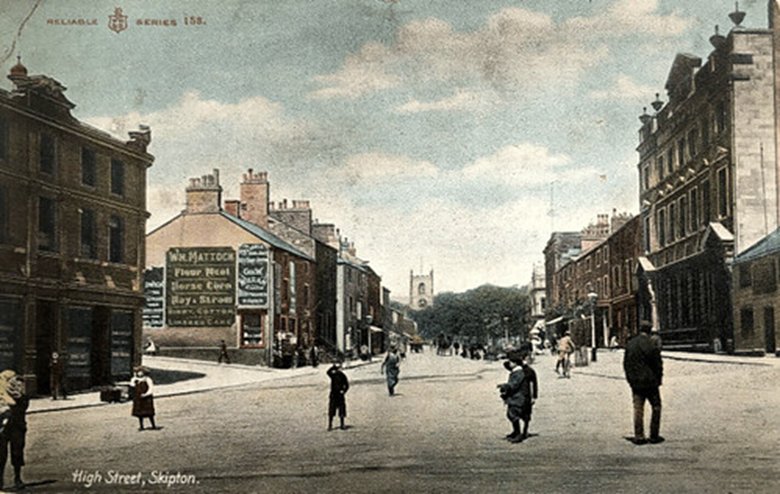
Charles Wilson came into the world on 10 November 1882, at ‘The Doctor’s House’ in the High Street, Skipton, where his father, Dr John Forsythe Wilson, practiced as a GP. Charles was the youngest of three children who arrived in quick succession following Dr Wilson’s marriage to Mary Jane Hanna in 1878. John Wilson suffered recurring attacks of rheumatic fever that plagued him throughout his life, affecting his heart and leaving him breathless. The young Charles was deeply affected by his father’s chronic illness, profoundly impressed with his stoicism and dedication in treating and caring for his patients whilst struggling with his own debilitating condition. Charles was to dedicate his book – somewhat self-deprecatingly – accordingly:
Dedicated to MY FATHER who was without fear by HIS SON who is less fortunate (Lord Moran’s capitals).
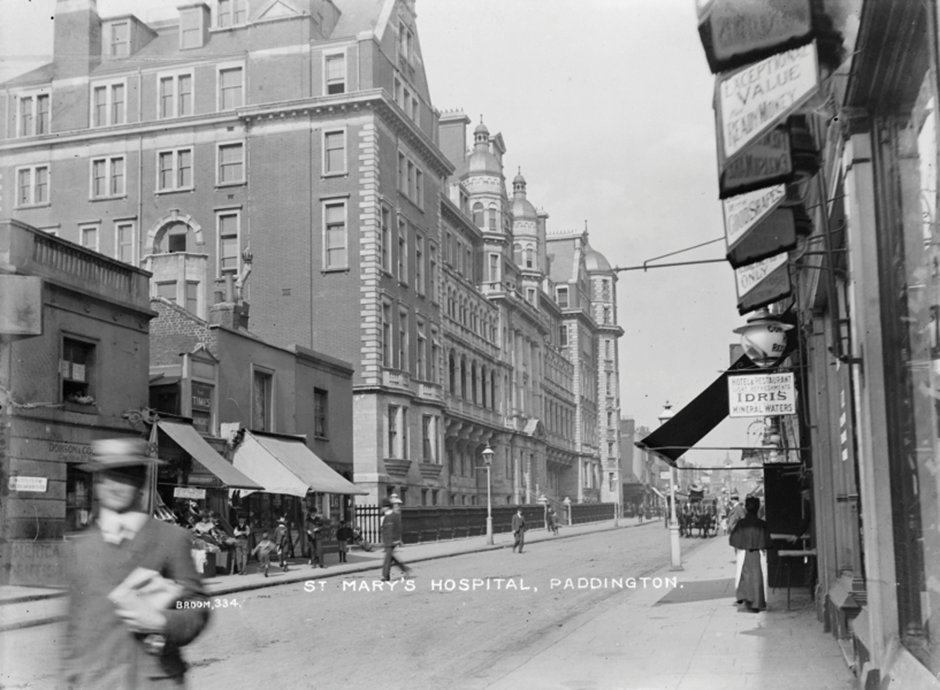
Charles was educated at Pocklington Grammar School, before putting aside his ambition to become a writer, instead following in his father’s footsteps by registering as a medical student – initially at Owen’s College Manchester before moving to St. Mary’s Hospital Medical School in London. Charles’ extracurricular interests included playing rugby and enrolling as a trooper with a Yeomanry regiment, one of the disparate volunteer forces that were forerunners of the Territorial Army. Qualifying at the age of 25, he successfully took up a resident post as a house physician at St. Mary’s.
Upon the outbreak of the Great War, Charles was holding the position of casualty physician at St Mary’s, as well as clinical assistant to the Nervous Diseases Department. Many of his peers immediately left St. Mary’s to join up. Charles was also anxious to do so but was conflicted: there was a much-coveted vacancy on the staff that he’d been working towards, which was only a few months away. Worried that the war might be over by Christmas, he finally decided to pass up this opportunity and eventually enlisted on 20 October, securing a commission as a surgeon with the temporary rank of lieutenant.
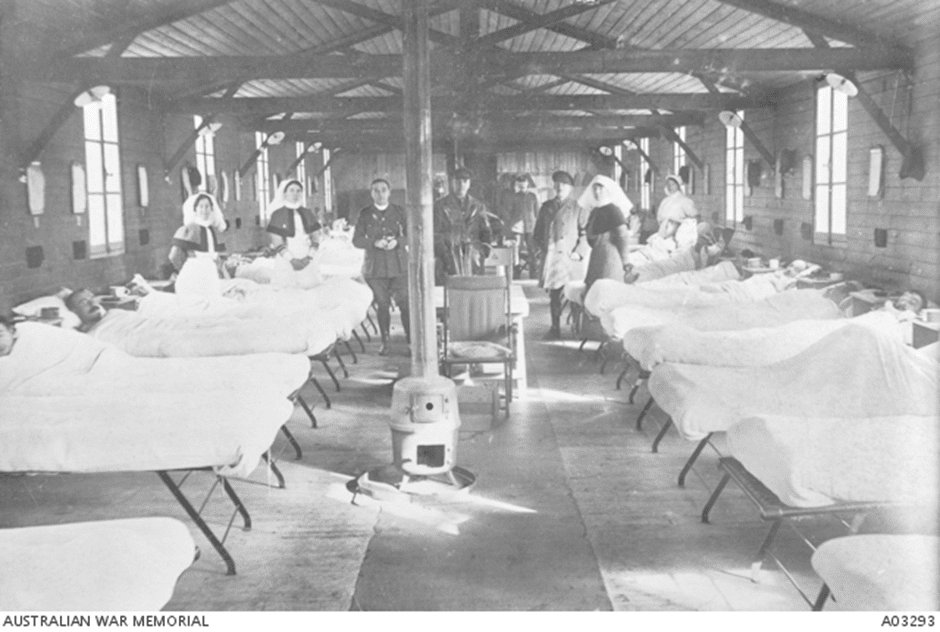
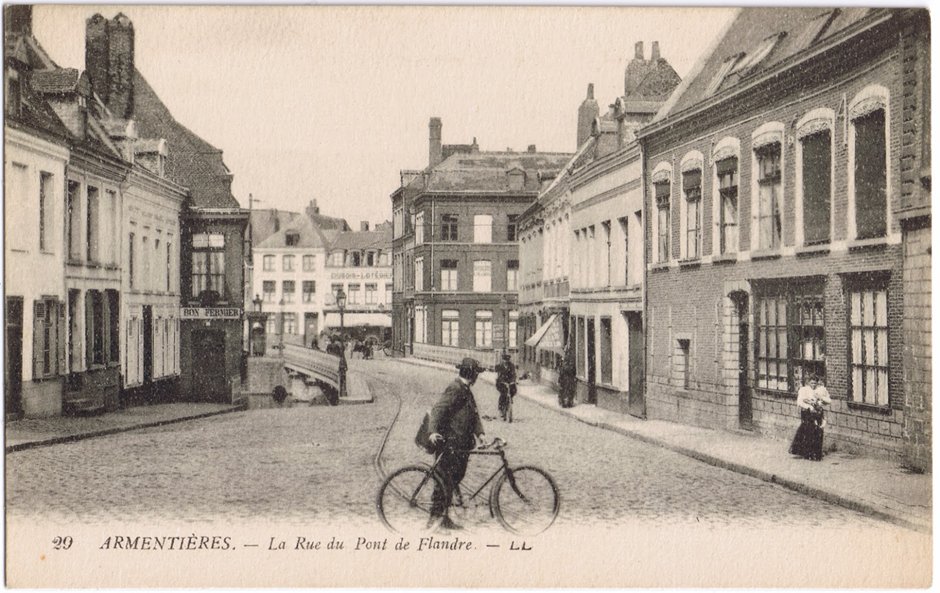
Charles landed in France towards the end of October, initially serving at No. 8 General Hospital, Rouen, before he was posted to the First Battalion, Royal Fusiliers, who were at that time deployed at Armentières. The Royal Fusiliers, a London-based regiment that recruited locally in the capital, were a culture shock to Charles. The Cockney character was alien to him; ‘whenever I imagined I was beginning to understand them, something happened, and I was utterly nonplussed. They are extraordinary people, I kept saying, just like children’ [2]. Along with his fellow officers, he learnt to view the activities of the men with ‘affectionate amusement.’
It wasn’t only their own officers that viewed the Londoners with amusement; Captain F.C. Hitchcock of the 2nd Leinster Regiment – a sister battalion that was part of the same brigade and division and often occupied the trenches alongside the 1st RF – observed the following incident on 9 September 1915: ‘The Germans yelled across to the 1st Royal Fusiliers, “London is on fire” and “What about the Dardanelles now?” The RFs, being Cockneys, strongly objected to the first remark, which happened to be the first news they had heard of the Zeppelin raid on their capital. The Fusiliers got on their fire steps, and never did I hear more amazing language than this Cockney regiment shouted across to the Huns!’ [3].
The 1st was an ‘old army’ battalion that still contained a ‘strong core’ [4] of regulars that were part of the pre-war, highly trained, professional army. In order to maintain this professionalism, the 1st RF had a policy of reinforcing with reservists and re-enlisted men – the official War Diary for the 16 March 1915 states, ‘Reinforcement (No. 15) of 89 other ranks joined battalion, 87 of these had been with the battalion previously’ and on the 11 April 1915 details, ‘25 other ranks joined battalion – the 16th reinforcement. All re-enlisted men’ [5] – some of these were veterans of the Boer War (my grandfather being one of them) and all were well-versed in the art of soldiering, thereby maintaining the integrity and the regimental ethos of the unit.
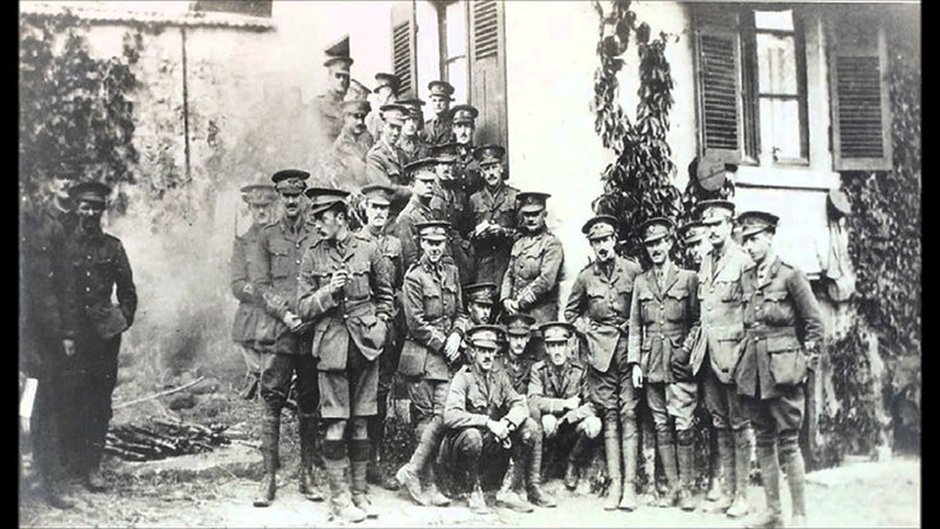
Charles believed that the character of these old sweats, the ‘Old Contemptibles’ as the Kaiser reportedly coined them, equipped them with the resilience to manage fear to a far greater extent than the ‘New Army’ of civilian volunteers who would, but for the war, otherwise never have considered a career in the army and, even more so, from the Spring of 1916, the conscripts. During the Somme offensive, Charles observes that ‘…it tells something of the battalion that during the battle there were no sick, for none would ask for an easy ticket to the rear.’ [6] and ‘it was the unwritten law among the men that they should not go sick.’ [7]. Charles quotes a veteran from the battalion who notes that ‘during a gas attack a hundred and fifty men drifted away from the battalion on our right while only ten left the fusiliers, though the conditions were the same.’ [8].
In his book, Charles goes further:
Likewise in the English professional army of 1914, which the Germans themselves called “a perfect thing apart”, there were battalions which were more than usually resistant to the corroding effects of strain and battle. It is from such a battalion that I have taken my illustrations of the birth of fear. These men had resolved to do nothing to besmirch the name of the Regiment, however fearful they might be in their hearts. They would rather have gone out than own defeat. I do not doubt that in less seasoned troops, where the idea greater than fear had taken no very definite shape, and the preparation of the individual mind for sacrifice had in consequence hardly begun, the birth of fear may have taken on ruder shapes. [9].
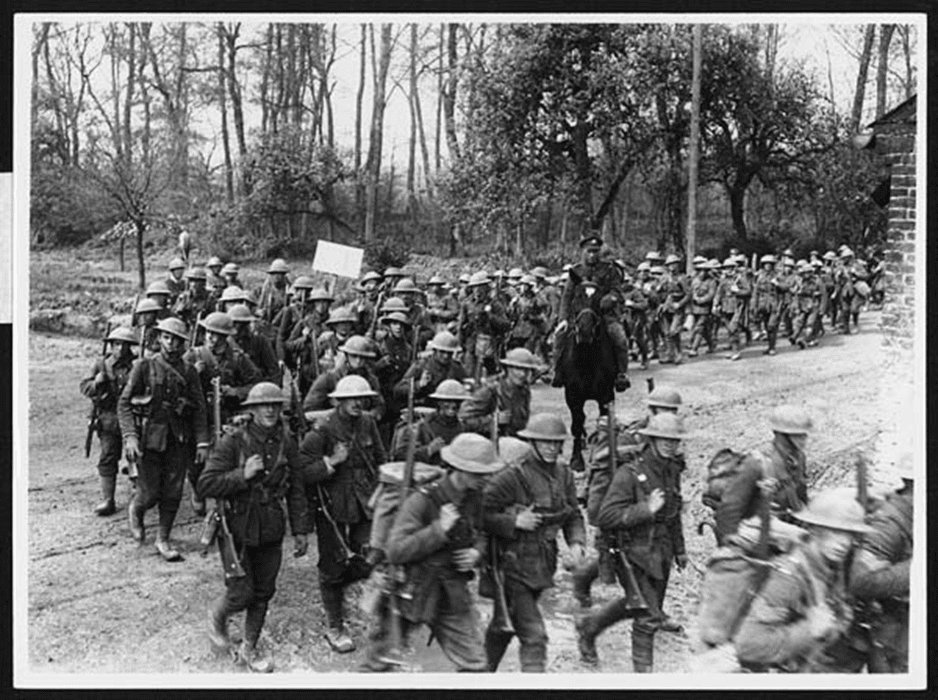
The character, resilience and professionalism of these grizzled veterans was deployed to great effect when, in October 1915, the 1st RF, along with the rest of the ‘old army’ 17th Brigade, were removed from the 6th Division and exchanged with a brigade from the ‘new army’ 24th Division. The 24th had suffered badly at the Battle of Loos, not entirely due to their inexperience. Following a forced march, they were thrown, not fully prepared, into the heat of battle with predictable results. The morale of this new army division shattered; the seasoned troops of the 17th brigade were brought in to provide a professional ‘spine’ to the 24th. Leading by example, the 1st RF and the rest of the 17th brigade were to teach them how to soldier. This caused some resentment on one occasion when the 1st were left in the line for a long spell in order to allow their relief, a ‘new army’ battalion, to come up to scratch. The old sweats of the 1st saw these newcomers as amateurs, no more than civvies in uniform. Wilson noted the contrast when walking through the trenches held by one of these ‘Kitchener’ battalions: ‘The sentries when they saw an officer approaching bobbed their heads up over the parapet and down again at once. “I spy” grinned my servant who was with me. It was a curious sight to eyes accustomed to see our fellows resting on the parapet at night as old sailors lean over the wall looking out to sea […] When we got back I overheard my servant unfolding the tale of the sentry to the other servants. “Gawd’s truth,” he added, “where ‘ave these blokes come out of? They’re scared pink.” [10].
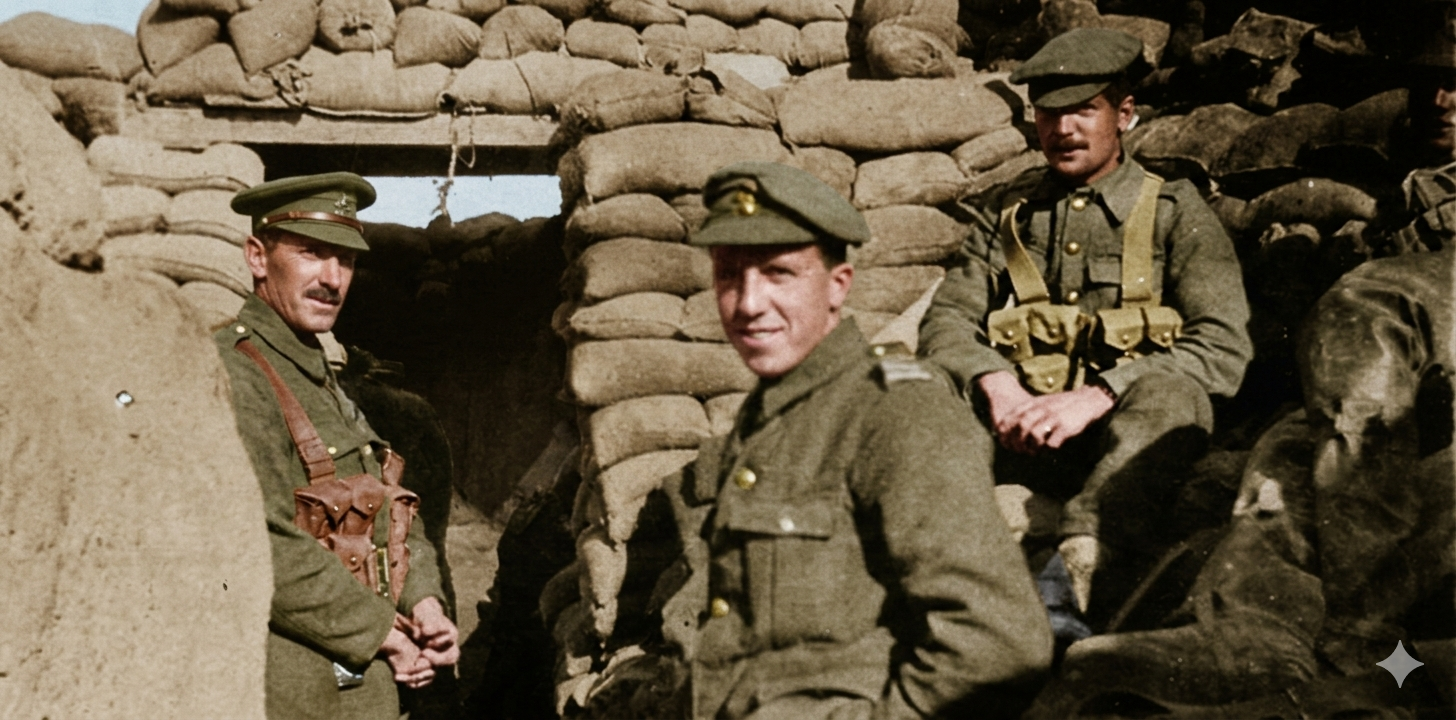
Wilson comes to the conclusion that the men of the ‘old army’ are a breed apart, whose choice of career is a result of Darwinist natural selection, and he does not entirely agree with the commonly-held notion that these are the ‘unemployed and the unemployable’. He sees something different in these men, that they ‘do not seem to fit into the structure of society’ and are ‘vaguely discontented’ with the humdrum existence of scraping a living; for them, the army is an escape from the suffocating and mundane labouring life. Routine manual work was anathema to the professional soldier. Wilson quotes Francis Bacon to illustrate this: ‘all warlike people are a little idle, and love danger better than travail.’ But in addition to the employment of this generalisation to characterise an old army regiment, Wilson identifies the Royal Fusiliers as having their own, distinct qualities; ‘the cockney soldier has become a legend’ which is explained ‘by more careful folk’ as being due to the ‘quickness and shrewdness of the non-commissioned officers’. This, in essence, is the inherent ability of the resourceful cockney to live on his wits, a streetwise approach that enabled him to effectively adapt to the battlefield in an agile way. The survival skills that served him so well in peacetime were easily transferable to the art of soldiering. But Wilson believes there is more to it than that. He suggests that, amongst a city of eight million people, a few thousand drifters, non-conformists, mavericks and misfits will be drawn to the army, seeking a life less ordinary - their sense of adventure overriding any tendency to domesticity, if any such tendency ever existed in the first place - giving the Royal Fusiliers its own particular character. Wilson also refers to the ability of the Londoner to use humour as a coping mechanism, mocking himself as much as he ridiculed the situation in which he found himself, contrasting him with his colonial colleagues ‘this gift of humour which encased our cockneys like chain-armour was not to be found among the Australians and Canadians. Perhaps nations in their infancy cannot afford to laugh at themselves.’
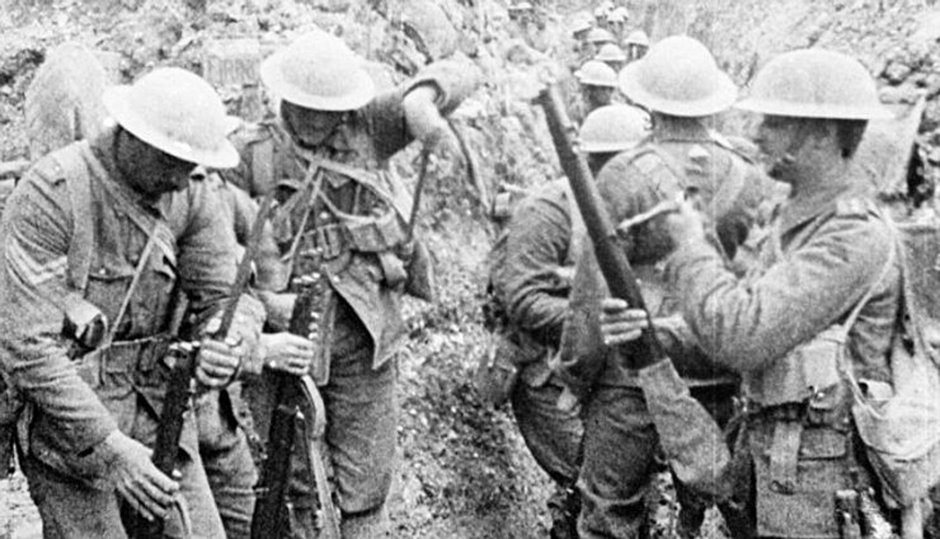
The soldiers of the 1st RF then, both officers and other ranks, were the subjects of Wilson’s recorded observations on the psychology of men at war that formed the basis for his book. Wilson had a long-standing professional interest in psychology. For a period he had held a post at the London County Lunatic Asylum at Hanwell. In the Acknowledgements section of his book, he thanks ‘the officers and men of the First Battalion, The Royal Fusiliers, who taught me what men can do in war’. Wilson served in the trenches with the 1st RF as their MO from late 1914 to early 1917.
In his diaries, written contemporaneously in the pages of an army field notebook – copies of which are held at the Wellcome Institute for the History of Medicine in London – he records numerous instances of behaviours by officers and men that he was able to analyse and draw conclusions from, thus formulating his theories relating to the quality of courage and how it is manifested. Wilson concluded that there were four categories of men whereby courage could be measured:
- Those that were fearless
- Those that experienced fear but concealed it
- Those that experienced fear, displayed their anxiety but functioned nevertheless
- Those that experienced fear, displayed their anxiety and acted upon it by deserting or refusing to soldier
One of his most insightful observations, a crucial one it might be said, is that a soldier could move between these four states, i.e. occupying a particular category was not necessarily a permanent condition: ‘At Ypres I was beginning to understand that few men spent their trench lives with their feet firmly planted on one rung of this ladder. They might have days without showing fear followed by days when their plight was plain to all the company’ [11].
He accepted that his classification system could be perceived as crude and open to challenge, but developed a coherent argument based upon his informal method of naturalistic observation. He identified the first category (fearlessness) as the rarest, citing a Colonel who ‘became a legend, as if men could scarcely believe what they had seen with their own eyes’ [12]. However, he deduces that this apparently awe-inspiring individual’s ‘courage’ was the result of an insensitivity to danger: a complete lack of imagination that made him totally unaware of the potential consequences of his recklessness. This view suggests that he sees the following two categories as more admirable, that the ability to overcome ones fears, whether such fears are apparent or not, requires true courage.
Perhaps the most significant conclusion that he reaches is that the capacity for ‘courage’ is finite, each man has limited and varying reserves of this quality that can be, and was, exhausted. He uses analogous financial terminology to illustrate this: ‘A man’s courage is his capital and he is always spending. The call on the bank may be only the daily drain of the front line or it may be a sudden draft which threatens to close the account’ [13]. In other words, courage is a well from which a man can only drink for so long, eventually it will run dry.
His thesis had obvious implications for the management and deployment of men in conflict that was particularly relevant in managing exposure to shell shock, and he was to lecture accordingly on the subject, regularly so at the Staff College in Camberley.
But what of Charles’s own ‘capital’? How many withdrawals had he made from his personal balance of courage during the approximately two and a half years he had served in the trenches – which included Ypres and the Somme - with the battalion. Which one – or more - of the four categories did he fall within?
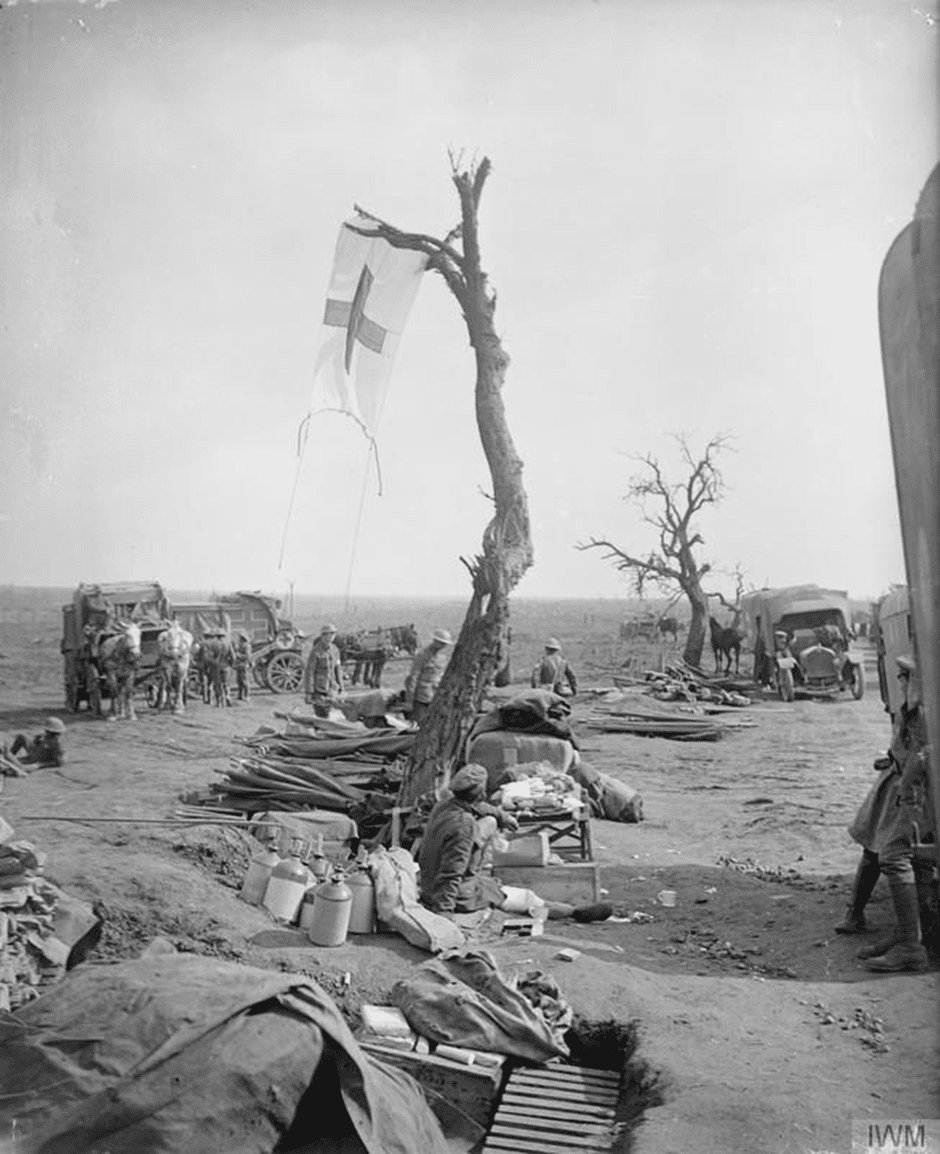
The Battle of the Somme proved to be a watershed, both for Charles personally and for the 1st RF. The battalion were re-deployed on 24 July 1916, leaving Flanders for the Somme and, following two weeks training, were in the trenches on 8 August, holding 1500 yards of the front line between Delville Wood and Trones Wood. They were preparing for an attack on the village of Guillemont, it was to be a torrid time.
On 10 August, about mid-morning, a heavy barrage began and Charles made his way to the trenches to assess the damage. But these were not German shells. He met the officer commanding ‘B’ Company, by the name of Burdett, who angrily exclaimed ‘It’s our God-damned guns. I can’t make out what the hell they’re up to.’ [14]. The ‘friendly fire’ had wreaked havoc, Charles found the trenches transformed into great piles of earth. It was complete chaos, the bombardment continued and the men were working feverishly amongst the black smoke and the deafening noise to disinter their buried comrades. The men redoubled their efforts on hearing the muffled cries of their pals, discarding their spades through fear of harming them and frantically clawing at the soil with their hands. The problem was that one man’s ‘spoil’ was hampering his nearest neighbour’s rescue efforts. Fearful that they were running out of time, Charles then experienced ‘a terrific noise, everything vanished for a moment.’ [15]. When the dust cleared he realised the officer and two men that were working alongside him had disappeared, buried under the debris of the explosion. This blast proved to be the climax to the barrage: whether this was because word had got back to the artillery that they were shelling their own men or that it had reached its intended conclusion is not recorded. Charles observed that ‘The men were angry; they had been let down; if this thing happened once it might happen again.’ [16]. This anger drove the men to even greater efforts, they picked up their spades again and dug them ‘viciously’ into the earth, caution was thrown to the wind, and it was a race against time. Incredibly, there was only one fatality on that day – although one was to die of his wounds later - and that was from an accidental drowning. Of the 29 casualties listed, the majority were rescued from being buried alive by the efforts of Charles and their comrades.
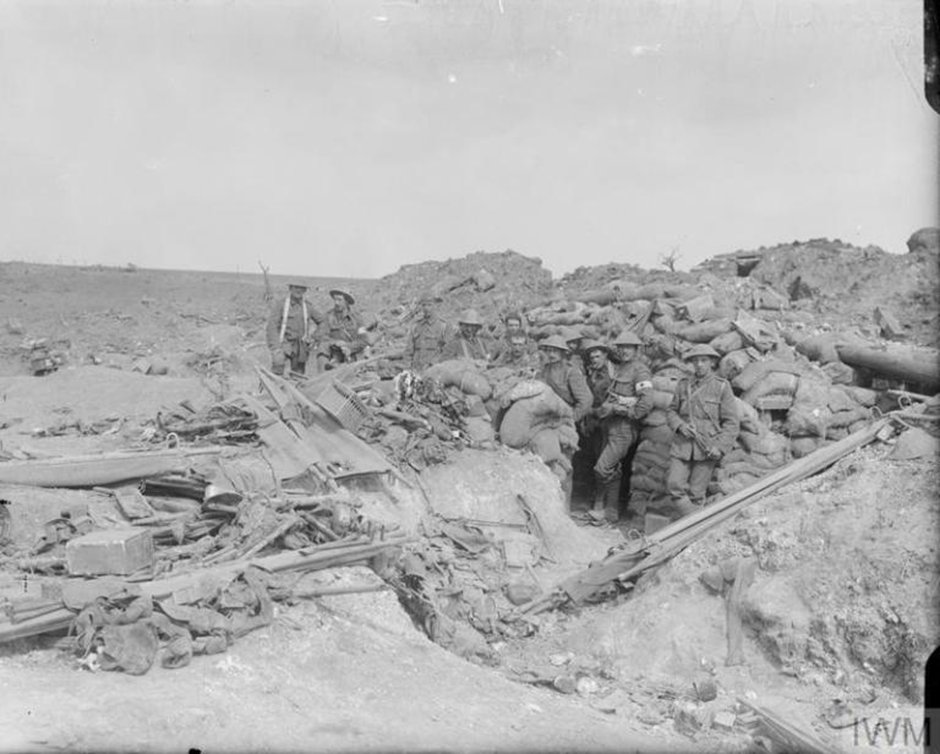
The official War Diary for that day recorded the events of the day as follows: ‘B Company were shelled by our own 9.2s losing 23 casualties mostly however were buried and bruised but all suffered severely from shock. Lt W van Greeson showed great gallantry in rescuing buried men, also Cpl J Scott who was himself buried, when dug out he rendered great assistance in getting others out. Capt. CM Wilson, our MO also distinguished himself at this time.’ And the following day, ‘Bosch shelled us this afternoon from 3 to 5. Casualties were small. Captain CM Wilson again distinguished himself by rendering aid and evacuating Major Musgrove who was wounded by shell fire in a CT near Trones Wood when on his way to the front line.’ [17].
On 18 August, the battalion took up their position in Trones Wood in readiness for the attack on Guillemont. The hot sun beat down out of a clear blue sky on Charles and his orderlies as they moved their stretchers and other medical equipment into a dug-out that had previously been used by the Germans to store ammunition. Captain Hitchcock of the 2nd Leinsters described the day as ‘sweltering’ [18]. At 3:30pm the stentorian roar of the guns commenced as the preparatory bombardment began; ‘the men grinned with glee and one big fellow, spitting on his hands, rubbed them on his hips […] all at once the men ran out, in spite of the stuff that was falling all around.’ [19]. Within 15 minutes of zero hour, a stream of German prisoners were being escorted into captivity, testament to the initial success of the attack. Charles busied himself with the few casualties, interrogating them as to the progress of the offensive but they knew little. The gunfire eventually diminished, indicating that it was over and Charles was desperate for news. He climbed to a high point in the trench system and scanned the horizon, finding the landscape practically ‘deserted’. At dusk, he went to the Battalion HQ, to find out that they ‘had succeeded in taking Guillemont station.’ [20]. But it was at a cost, Charles noted that ‘the best of the men seemed to have gone out. Somewhere up there out of reach, the battalion was slipping away and I could do nothing.’ [21].
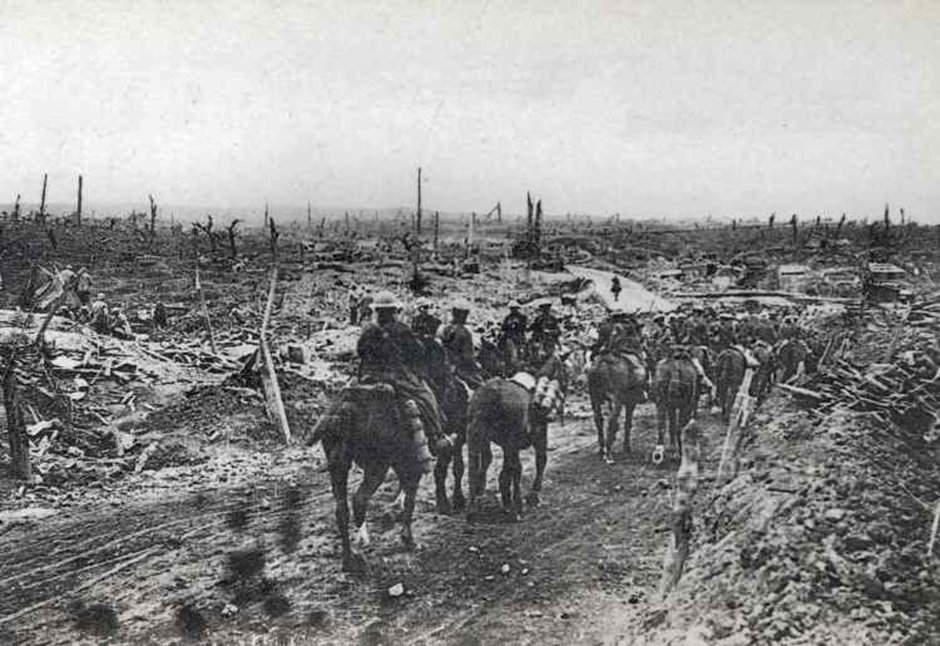
Over the following days they consolidated their position before resuming the offensive on 21 August with the 3rd Rifle Brigade on their left and the 8th Queens on their right. At 3:30pm, they attacked ‘Hill Street’ and ‘Brompton Road’ in Guillemont and the War Diary details that ‘after a strenuous fight all opposition was overcome and enemy driven from his trench in front of Hill Street.’ ‘A’ Company played a prominent role in the attack and an account of their contribution was recorded as follows:
‘Capt. M.C. Bell took out his two officers and four other ranks as markers, also a Lewis Gun team, some distance in front in no-man’s-land, for his Company to form up on, to enable the Company to start parallel to the objective. The whole Company moved out on to the alignment made by the markers, five minutes before “Zero Time”, under cover of our artillery barrage. Very few casualties were sustained in this movement. As soon as attack was launched a party of bombers including HQ bombers made an unsuccessful attack on a strong point between left of ‘A’ [Company] and right of RBs [Rifle Brigade]. Bombers were about 20 strong, and had heavy casualties amongst them, only three getting back to Company. Remainder of Company reached their objective as previously mentioned. Capt. M.C. Bell and Lt. F.E.B. de Uphaugh were both wounded early in the attack. Capt. Bell remained with his Company until consolidation had commenced, when 2nd Lt. J.H. Jacobs took command. 2nd Lt. L.O. Massey was killed when bringing up party with fresh supply of bombs. Capt. Bell and 2nd Lt. Jacobs displayed great coolness and courage. The bombers made a great and gallant fight against overwhelming odds. The strong point which they attacked having been overlooked by the Heavy Artillery. Sergeant Rye although wounded voluntarily took a message to his Company Commander and returned with the reply, being again wounded, in so doing. All ranks without exception upheld the traditions of the Regiment on this day.’ [22].
The Battle of the Somme took a heavy toll on the 1st RF, they suffered a total of 403 casualties, composed of 52 confirmed dead, 345 wounded, and 6 missing [23].
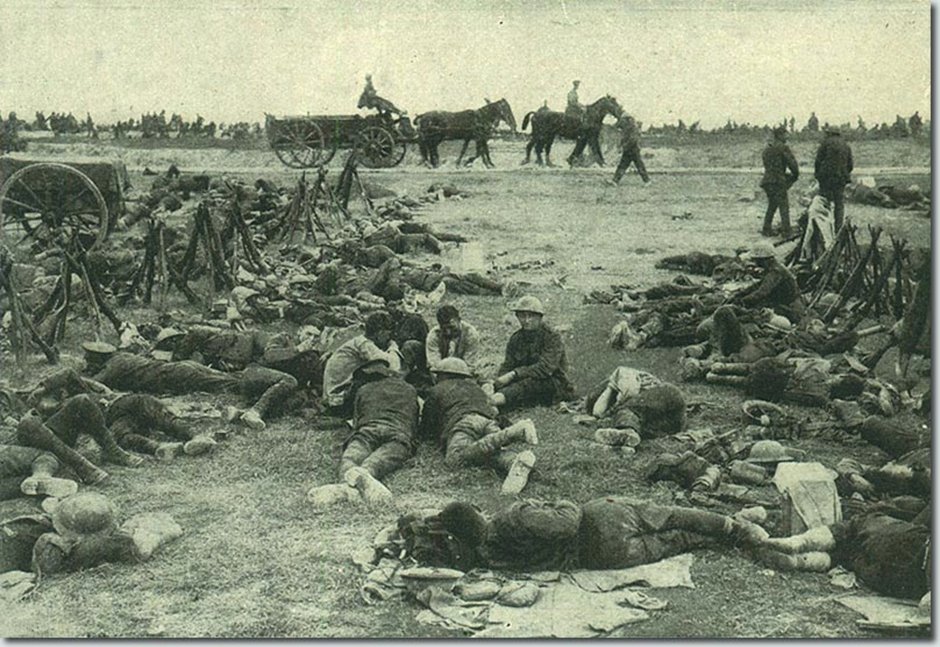
A fellow officer, Colonel MVB Hill, who was commanding the battalion at that time, noticed a change in Charles’ behaviour following the Battle of the Somme. Charles recounts that Hill told him ‘that for days after we came out of the battle my irritability was a nuisance, though I remember nothing of it. But when I look back I see that something happened to me then and that I have never been quite the same since.’ [24]. Clearly, the Somme was a huge drain on his reserves of courage. Continuing his financial analogy, this was a ‘sudden draft’ from his personal account.
It would seem then that Charles oscillated between the second category of his classification of courage; that he experienced fear but did not show it, and the third category, that he did show it but acted courageously anyway. In the case of the former, Charles observes when referring to his own decline in morale in the winter of 1916-17 as ‘obvious enough to me though not, I think, to others’ [25], however Colonel Hill’s observation puts Charles temporarily in the latter category; his ‘irritability’ was a manifestation of anxiety, but didn’t prevent him from acting courageously.
An incident the following year is proof that, even after the Somme there was still credit in Charles’s personal ‘account’ of courage. The battalion was to take part in a night raid near Loos on 14/15 January 1917. Included in the raiding party were eight stretcher bearers and Charles chose to go out with them. The wire was cut and the four officers and 110 other ranks crept out into no-man’s-land. Following a brief bombardment, the raiding party stormed the German trenches, methodically moving through the trench system and lobbing grenades into the deep dug-outs as the enemy attempted to emerge. They soon met some stiff resistance and shots were exchanged and hand-to-hand fighting ensued until eventually the signal for withdrawal was sent up. Two of the raiding party were killed and 29 wounded, all of them brought back by their colleagues. Three German prisoners were also taken; invaluable intelligence sources to be interrogated. The brass hats considered the raid a great success. Charles was commended for his part in the report attached to the War Diary as follows: ‘Capt. C.M. Wilson RAMC for his coolness in laying out in no-man’s-land, near the German wire during the enterprise so as to be handy in case a hitch occurred in the removal of the wounded, in which he very materially assisted. He then went to the Dressing Station at the head of Boyeau 51 and attended to the wounded.’
What is clear is that Charles was a very brave man indeed. He was awarded the Military Cross for his work during the Battle of the Somme, his citation read:
For conspicuous gallantry and devotion to duty during operations. He worked for over an hour digging out wounded men at great personal risk. He then returned to his aid post and attended to the wounded. Later, hearing that an officer had been wounded, he passed through a hundred yards of the enemy’s artillery barrage, dressed his wounds, and finally got him into safety as soon as the barrage permitted. On other occasions he has done fine and gallant work [26].
He was also awarded the Silver Medal for Military Valour by the King of Italy [27] and was mentioned in despatches twice.
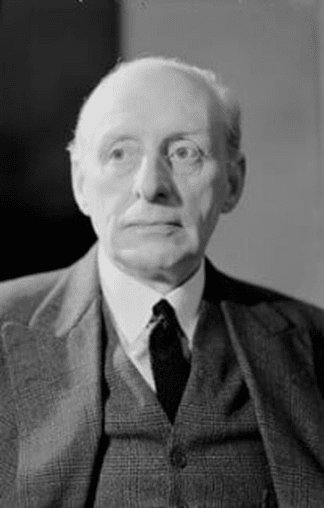
The courage displayed by Charles throughout his time with the battalion echoed the stoicism and strength of will displayed by his father, Dr John Forsythe Wilson, as he overcame ill health to tend to his patients. It might have taken a different form; Charles described his father as ‘without fear’ in the dedication in his book, and that he himself was ‘less fortunate’. But his courage in overcoming his fears to rescue and treat his own patients – the officers and men of the 1st Royal Fusiliers – upon the field of battle under the most extreme conditions, proved he was made of the same stuff. His father must have been a very proud man indeed.
(This article has been adapted from the author’s book, Fought Like a Lion: The Life of an East End Soldier).
References
- Lord Moran, Churchill at War 1940-45, Constable and Robinson Ltd, London, 2002, pp.204-5 and 222-3.
- Richard Lovell, Churchill’s Doctor: A biography of Lord Moran, Royal Society of Medicine, London, 1992,p.41.
- Francis Clere Hitchcock (Captain), Stand To: A Diary of the Trenches 1915-1918, Naval and Military Press, Uckfield, 2009, p.90.
- Lovell, p.38.
- WO95/1613 War Diary 1st Royal Fusiliers, The National Archives.
- Lovell, p.48.
- Lord Moran, The Anatomy of Courage, Avery Publishing Group, New York, 1987, p.183.
- Moran, 1987, pp. 175-6.
- Moran, 1987, p.33.
- Moran, 1987, p.77.
- Moran, 1987, p.3.
- Moran, 1987, p.4.
- Moran, 1987, p.xvi.
- Moran, 1987, p.121.
- Moran, 1987, p.121
- Moran, 1987, p.122
- WO95/2207 War Diary 1st Royal Fusiliers, The National Archives.
- Hitchcock, 2009, p.140.
- Moran, 1987, p.124.
- Moran, 1987, p.125.
- Moran, 1987, p.125.
- WO95/2207 War Diary 1st Royal Fusiliers, The National Archives.
- Lovell, 1992, p.49.
- Moran, 1987, p.32.
- Moran, 1987, p.59.
- London Gazette, 26th September 1916, Supplement 29765, p.9432.
- London Gazette, 25th May 1917, Supplement 30096, p.5201.
Bibliography and Sources
Blumsom, Paul, Fought Like a Lion: The Life of an East End Soldier, Reveille Press, Brighton, 2025.
Foss, Michael, The Royal Fusiliers, Hamish Hamilton, London, 1967.
Hitchcock, Francis Clere, Captain, Stand To: A Diary of the Trenches 1915-1918, Naval and Military Press, Uckfield, 2009.
Lovell, Richard, Churchill’s Doctor: A biography of Lord Moran, Royal Society of Medicine, London, 1992.
Marden, Thomas Owen (ed.), A Short History of the 6th Division August 1914-March 1919, Naval and Military Press, Uckfield, Facsimile edition.
Moran, Lord, The Anatomy of Courage, Avery Publishing Group, New York, 1987.
Moran, Lord, Churchill at War 1940-45, Constable and Robinson Ltd, London, 2002.
O’Neill, H.C., The Royal Fusiliers in the Great War, Naval and Military Press, Uckfield, Facsimile edition.
WO95/1613 War Diary for the 1st Royal Fusiliers, The National Archives.
WO95/2207 War Diary for the 1st Royal Fusiliers, The National Archives.
The London Gazette 26 September 1916, Supplement 29765.
The London Gazette, 25 May 1917, Supplement 30096.
Becoming a member of The Western Front Association (WFA) offers a wealth of resources and opportunities for those passionate about the history of the First World War. Here's just three of the benefits we offer:

The WFA regularly makes available webinars which can be viewed 'live' from home. These feature expert speakers talking about a particular aspect of the Great War.

Featured on The WFA's YouTube channel are modern day re-interpretations of the inter-war magazine 'I Was There!' which recount the memories of soldiers who 'were there'.

Explore over 8 million digitized pension records, Medal Index Cards and Ministry of Pension Documents, preserved by the WFA.
Other Articles


