
Alfred William Saunders: Irish Fighter Ace
Alfred William Saunders, an Irish ace pilot from World War I, was born on 16 January 1888 in Dublin, to Matthew J. Saunders from County Wicklow.
Alfred entered the Great War through the Royal Field Artillery, where he was commissioned as a probationary second lieutenant. His service commenced on 24 May 1915, during the Gallipoli campaign. Saunders’ rank was officially confirmed on 9 February 1916. Shortly thereafter, he transferred to the Royal Flying Corps, where he underwent training at Catterick Bridge Military School.
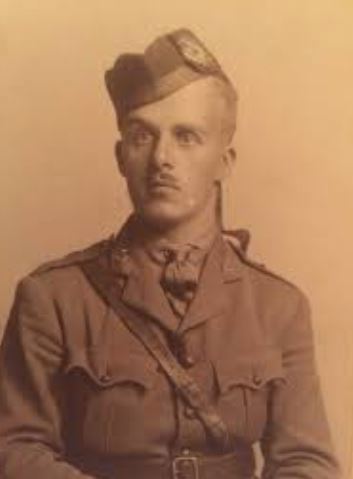
He obtained his Royal Aero Club Aviator’s Certificate, No. 3283, after completing a solo flight in a Maurice Farman biplane on 20 July 1916. On 25 August 1916, Saunders was appointed as a flying officer and assigned to No. 60 Squadron in France, where he piloted the Royal Aircraft Factory S.E.5.
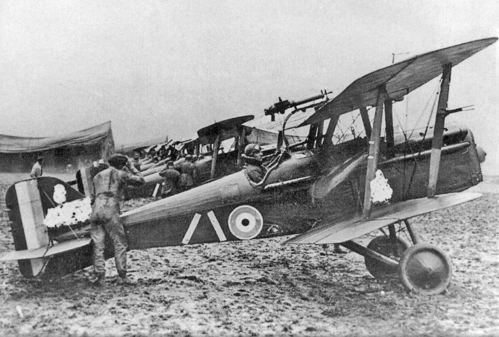
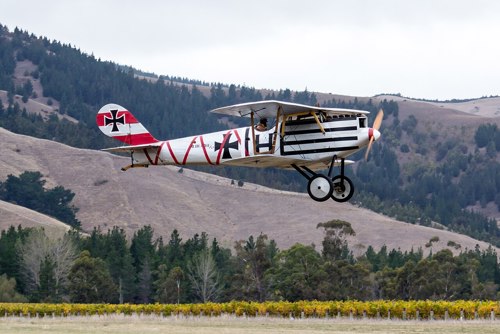
On 10 May 1918, Saunders achieved his first aerial victory by downing a German Pfalz D.III fighter.
His exceptional combat flying skills continued to develop, leading him to become an ace a month later, when on 9 June, he shot down a Hannover reconnaissance aircraft over Arras.
On 2 July 1918, Saunders undertook what may have been his most significant mission. Diving from an altitude of 8,000 feet, he led an assault on six German fighters, successfully downing a Pfalz D.III. During the encounter, two other D.IIIs collided while attempting to evade Saunders’ pursuit, and he was credited with the destruction of all three German aircraft.
On 3 August 1918, Captain Alfred Saunders was awarded the Distinguished Flying Cross.
His citation read:
Lieutenant Alfred William Saunders.
"A gallant and determined officer whose fighting spirit and enthusiasm has been a splendid example to his squadron. On one occasion whilst leading his formation of six machines, he attacked six enemy aeroplanes. Diving from 11,000 to 3,000 feet, he singled out a group of three, and shot down one. He then engaged the other two, which in their endeavour to get away collided and crashed."
By the conclusion of the First World War, Captain Saunders had downed twelve enemy aircraft. He continued to serve as an Officer in the reserves until February 1927.
Tragically, on 22 May 1930, Saunders lost his life while piloting passengers in his de Havilland Gipsy Moth in Te Awamutu, New Zealand
Becoming a member of The Western Front Association (WFA) offers a wealth of resources and opportunities for those passionate about the history of the First World War. Here's just three of the benefits we offer:

Identify key words or phrases within back issues of our magazines, including Stand To!, Bulletin, Gun Fire, Fire Step and lots of others.

The WFA's YouTube channel features hundreds of videos of lectures given by experts on particular aspects of WW1.

Read post-WW1 era magazines, such as 'Twenty Years After', 'WW1 A Pictured History' and 'I Was There!' plus others.


