
From Birkenhead to Bazentin
Houston Stewart Hamilton Wallace was born in Birkenhead in 1893, the only child of William Hamilton and Emily Constance (née Heap), of The Nook, Shrewsbury Road, Birkenhead. William was a Justice of the Peace for the borough; Emily was the daughter of Joshua Heap, a well-known and wealthy businessman.
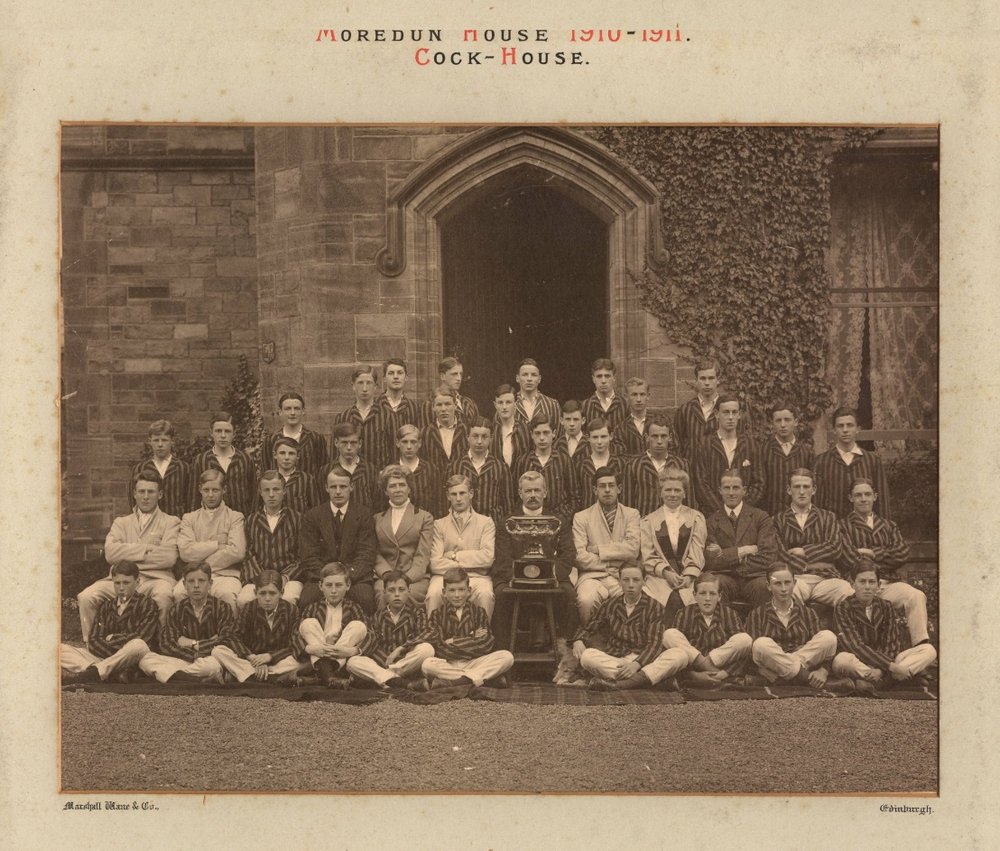
Houston was educated at Fettes College, Edinburgh from 1906 to 1912, before attending Merton College, Oxford.
Both his parents had died by 1914. His father met a tragic end in 1912: after playing golf at Wallasey, on returning home the gate to his drive was jammed. He stepped up onto a ledge, leaning over to release it from the opposite side, but slipped and impaled his arm on one of the railings. It severed an artery and he died shortly after from the loss of blood. Houston's mother, Emily, passed away after a short illness in April 1914 in North Wales. Both are buried at Flaybrick Cemetery, Birkenhead.
Military Service
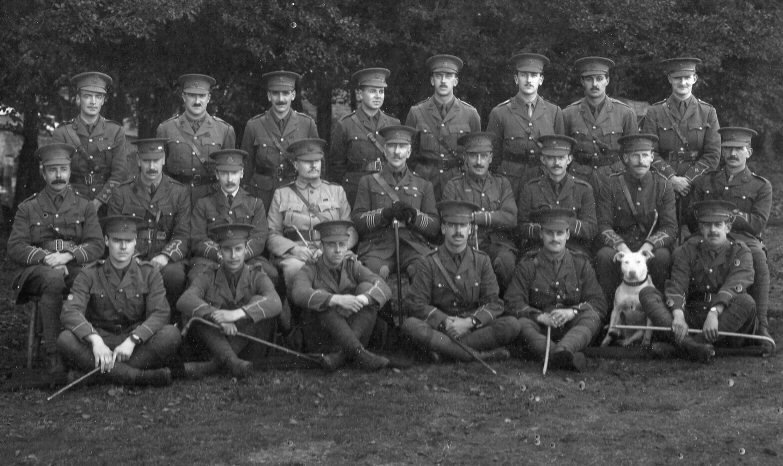
Houston gained a commission into the 10th Battalion Worcestershire Regiment on 2 October 1914 and embarked for France on 1 August 1915.
The Battle for High Wood: 22 July 1916
Houston was killed in action on 22 July 1916. His battalion, 10th Worcestershire Regiment, had orders to capture an elusive German machine gun post on the road between the village of Bazentin-le-Petit and High Wood.
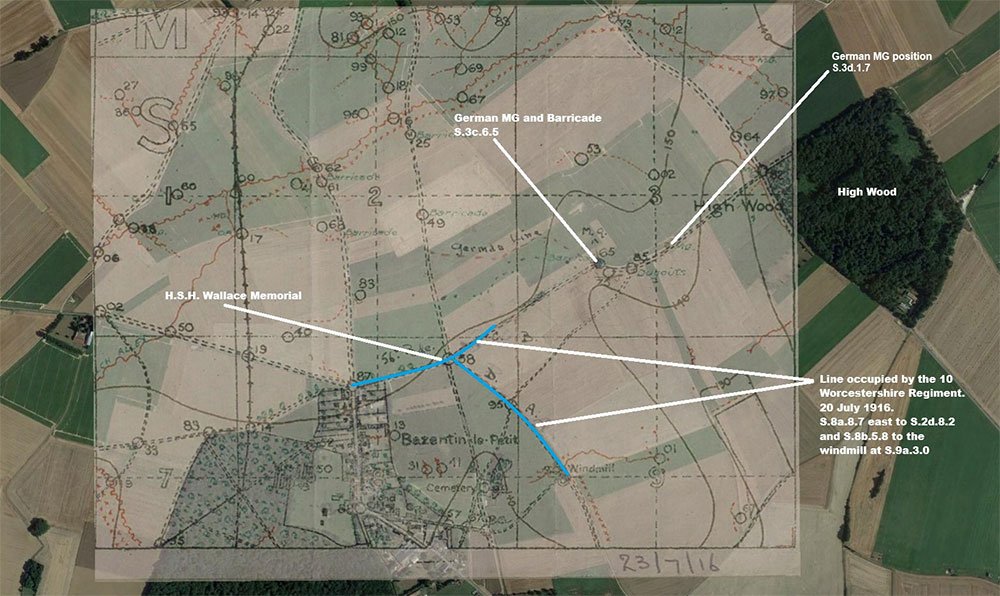
On 20 July 1916, the battalion rested all day. At 8.00 pm they proceeded to line just north of Bazentin-le-Petit to relieve 98th Brigade. On arriving at the Brigade Headquarters, it was found everything altered owing to attacks being driven out of High Wood. Great confusion during the relief owing to guides not knowing their way and the village being heavily shelled. The following morning the Battalion took up a line just before dawn as follows - S.8.a.8.7 East to S.2.d.8.2. then from S.8.b.5.8 to WINDMILL at S.9.a.3.0 where they were joined with the 2nd Worcestershire Regiment. The Staffordshire Regiment were in support in a line running WINDMILL CEMETERY to S.8.b.3.8. During the morning WINDMILL which was used as an Observation Post was shelled causing about 15 casualties in 'D' Coy. At 3.00 pm an attempt was made to capture German a machine gun about S.3.d.1.7., with bombers and Lewis gun in support. The attack failed and Lewis gun was lost. Another attack was made after dark with strong patrols who were heavily fired upon and forced to retire. Late into the night patrols were sent out to try and locate German frontline. They were partly successful in breaking into the line about 400 yards behind reverse slopes of the rise.
At 1.00am on 22 July, ‘C' Coy closed in to the right towards High Wood, their place being taken by the North Lancashire Regiment 56th Brigade. 'B' Coy fell back at right angles to 'C' Coy facing east. 'A' and 'D' were in support. Another attack was made on the machine gun by 2 Platoons of 'B' Coy on south of the road. The attack was a failure and the greater part of the 2 Platoons of 'C' Coy were missing. It was afterwards reported by a Sergeant who was leading a Platoon of 'C' Coy that the machine gun was firing from the barricade at S.3.c.6.5. This he had spent nearly 2 days in a dugout inside of road about S.3.c.4.4. and was bombed by our own men (58th Brigade) before he got back, his companion being killed.
By 11.30 am Germans were observed on the High Wood road and were fired upon by Lewis guns. During the morning another plan evolved for the capture of the elusive machine gun. The Corps 'Heavies' would bombard for an hour and at zero hour the attack would be launched on the barricade dugouts and machine post. The plan was a failure, no zero hour was notified and none of the 'Heavies' fired. 'D' Coy having mistaken the orders advanced to the attack but were driven back by heavy machine gun fire and shrapnel. They had considerable casualties including Captain Houston Stewart Hamilton Wallace.
On 23 July, the village was again heavily shelled by German artillery and the Warwickshire Regiment coming in to relieve the Worcester’s failed to arrive in the line until about 1.00am. The Battalion made its way back by degrees to a point south of BAZENTIN-LE-PETIT WOOD about S.14.c.4.7 where they rested for the remainder of the day. 8.00pm Proceeded back to BECOURT WOOD into bivouac.
The following account is extracted from Stack, pp. 183–184:
The night of July 21st/22nd proved very trying for the 10th Worcestershire. Reliefs on right and left entailed several shifts and contractions in the Battalion line. Another attack on the unconquered machine-gun was organised at 1 a.m. Four platoons worked their way down the 'Upper Road' - two platoons of "C" Company north of the road and two platoons of "B" Company south of it.
In the darkness the listeners in rear strained their ears and heard, amid intermittent shell-fire, a sudden outburst of machine-guns and musketry. Presently some survivors of the "B" Company platoons came back to the trenches. The attack had failed under a withering fire; what had happened to the two platoons of "C" Company was a mystery not cleared up until two days later, when the sergeant who had led one of the platoons made his way back. The enemy machine-gun, it appeared had been pushed forward in the darkness to a bend in the road on the forward slope of the hill. In that new position the machine-gun post had surprised the attacking platoons, all of whom had been killed or captured. The sergeant himself, with one companion had found shelter in an abandoned dugout during the ensuing forty-eight hours. When firing died down the two survivors made their way back. Unfortunately, on arriving at the British trenches (the front held by another regiment) they were not recognised in the darkness and were bombed: and the sergeant's companion was killed.
Furious at the defeat, the Battalion arranged yet another attack. Artillery support was requested, and a "set piece" attack was organised. All arrangements were made, but communication broke down and orders for the attack did not arrive. Mistaking their orders, "D" Company of the 10th Worcestershire advanced unsupported, only to be driven back by a storm of fire. That evening orders were received that the Battalion and the 8th Gloucestershire would attack a trench which the enemy had newly dug from the machine-gun position on the "intermediate spur" to the northward to link up with the Switch-Line. Preparations were in progress when counter-orders came that the 10th Royal Warwickshire would replace the 10th Worcestershire for the attack. That change was made at the last minute ("Zero" was midnight. The message arrived 11,20 p.m.) and inevitably caused confusion: the Royal Warwickshire were unable to arrive in time, and the attack, made disjointedly, failed with heavy loss.
The platoons of the 10th Worcestershire made their way back through heavy shellfire to a position in reserve in the valley just north of Flatiron Copse. There the Battalion rested throughout July 23rd. The 57th Brigade was now being withdrawn to rest, and after dark the 10th Worcestershire marched back into bivouac in Becourt Wood.
Casualties, 10th Worcestershire, July 20th-23rd:- Killed - 3 officers (Capt. W. F. Tree, Capt. H. S. H. Wallace, 2/Lt. J. Fish (all on 22nd) and 18 men. Wounded - 5 officers (2/Lt. W. M. Hartland and 2/Lt. O. A. Hicks (on the 21st), Lt. L N. Mason, Lt. W. S. Scammell, 2/Lt. C. G. Weld (on 22nd) and 71 other ranks. Missing - 64 N.C.O's. and men. The Battalion remained in bivouac during the ensuing week. Two more drafts came to fill up the ranks. Once more those drafts were composed of men from other regiments - Yorkshire and Rifles.
Remembering Houston Wallace
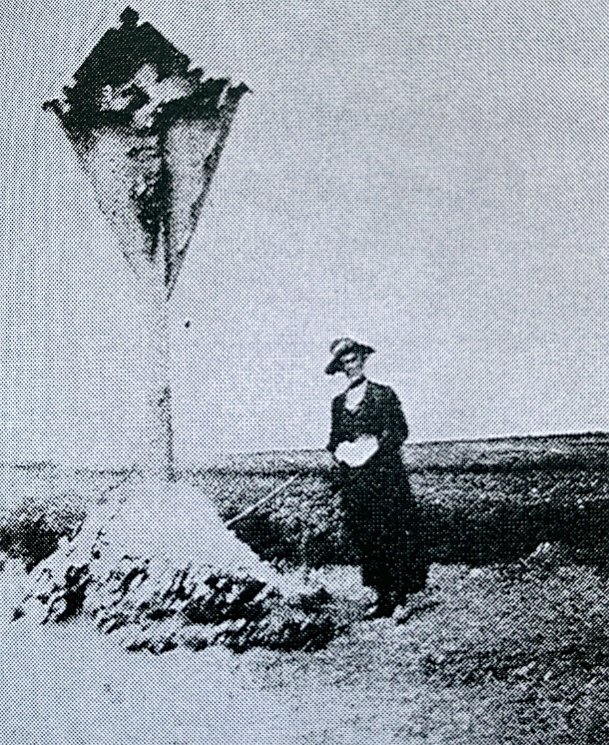
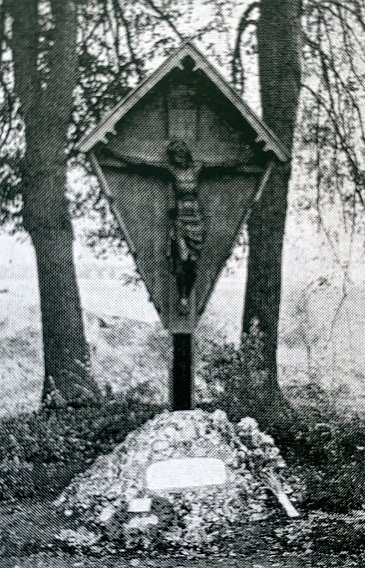
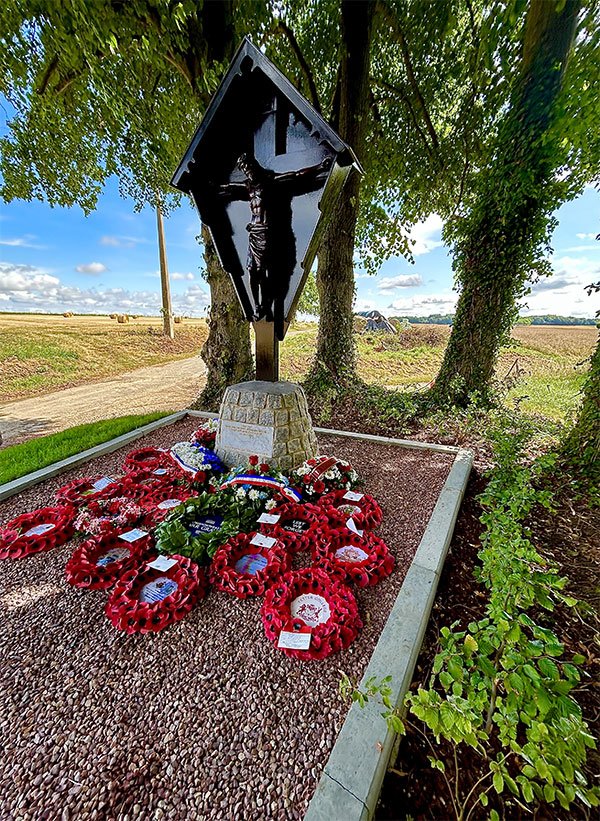
As both parents of Captain Wallace had passed away, his aunt, Beatrice Heap, was listed as his next of kin. After the war, Beatrice searched for the location of Houston's burial. Sadly, the location was lost. However, she had received a letter from his Commanding Officer, Colonel Sole, in which he stated that Houston was buried near to a calvary at Bazentin. She identified the location of where the calvary had been and had a replacement made, dedicating it to Houston.
Beatrice began writing to the then Imperial War Graves Commission (IWGC), her first letter being sent just two days after the Armistice was signed:
13 November 1918
To the Imperial Graves Registration Commission.
Sirs,
I should be much obliged if you could furnish me with particulars regarding the grave of the late Captain Houston Stewart Hamilton Wallace, 10th Battalion Worcestershire Regiment, who was killed in action on July 22, 1916, at Bazentin-le-Petit. [Information] from his commanding officer Colonel Sole [states] that he was buried together with two brother officers (one I believe named Fish) at a point slightly west of Bazentin-le-Petit and that a cross has been placed over his grave.
Any particulars will be received with gratitude.
Yours faithfully,
(Miss) Beatrice Heap.
Beatrice kept pressing the IWGC to support and maintain the Calvary. On 21 November 1925, she paid £122 for the upkeep of the memorial for an agreed period of 20 years.
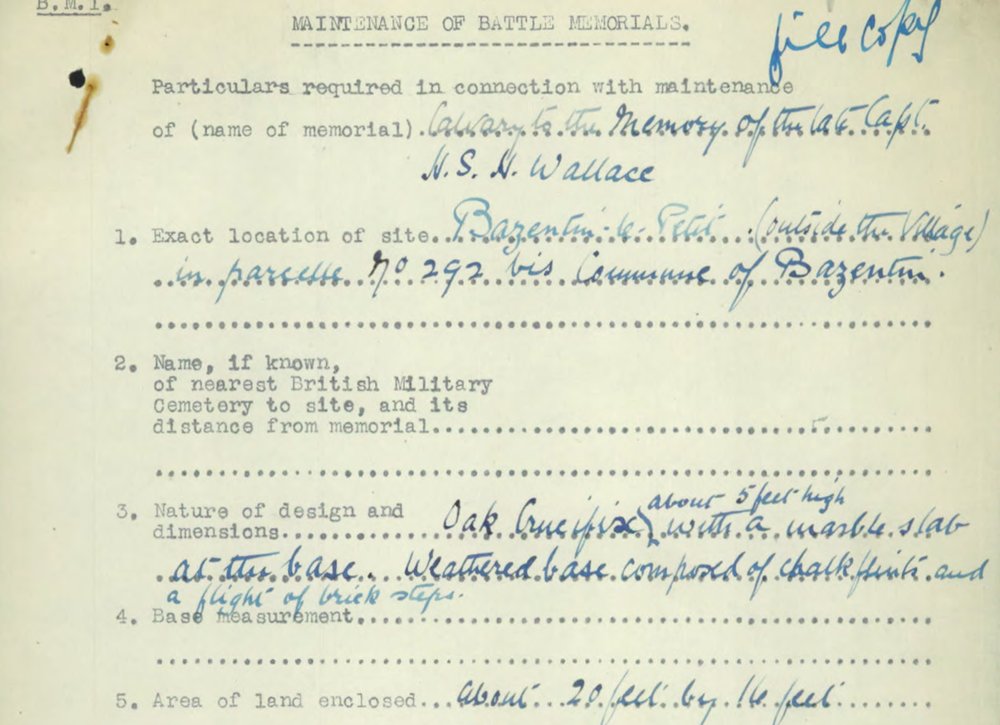
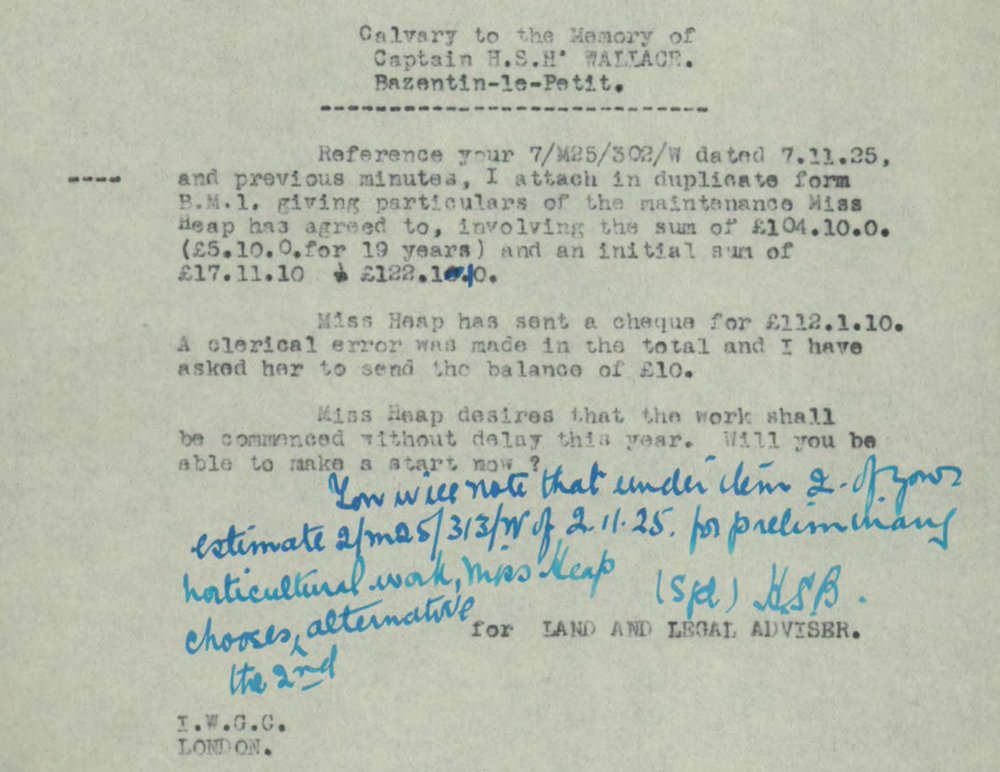
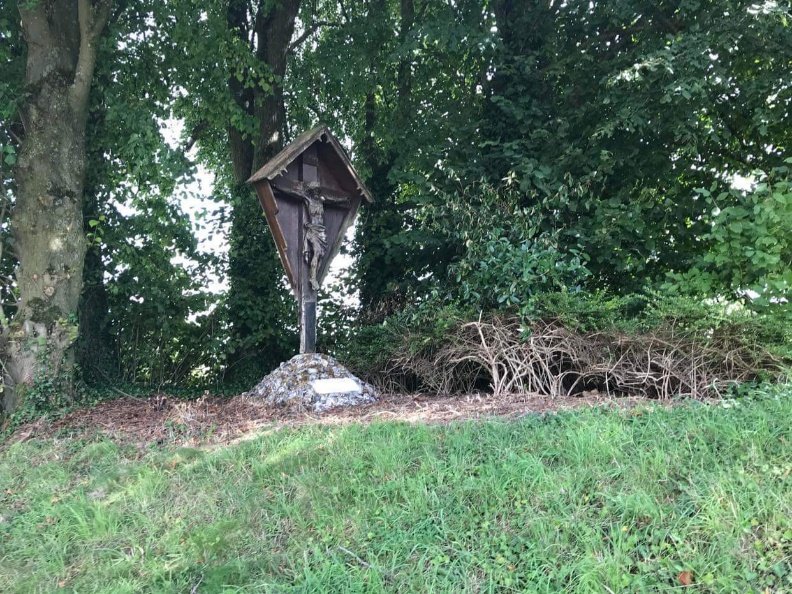
Beatrice passed away in 1940, and after the Second World War the IWGC tried to find family, but none were found. In 1991 the Western Front Association recorded the memorial; only the dilapidated cairn remained. Over the next three years, work was done to restore the memorial, which was achieved after the original cross was discovered by historian Paul Reed. Sadly, over the following 30 years, the memorial once again fell into a poor state.
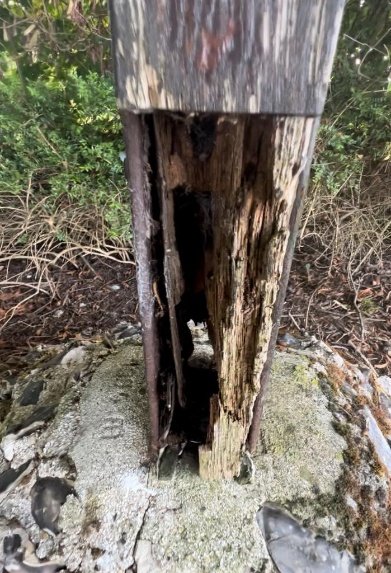
The Restoration Project
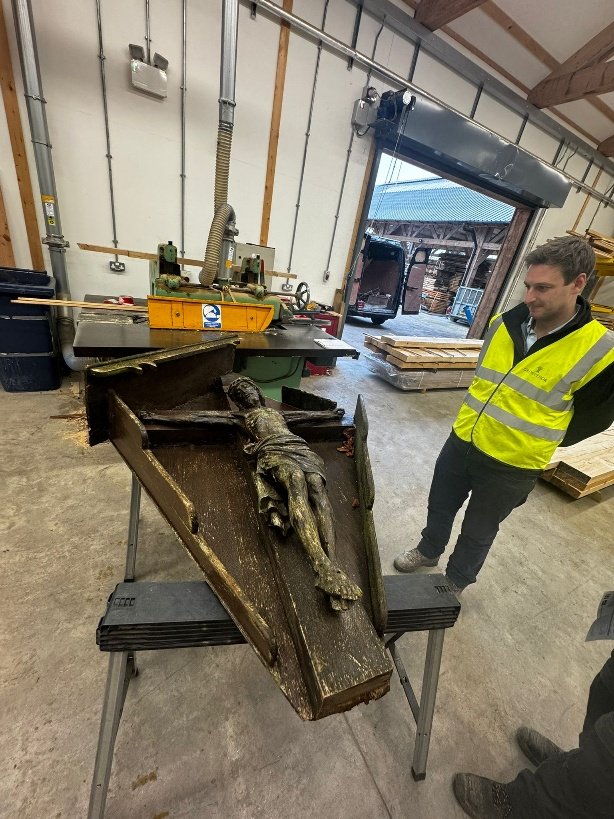
In the autumn of 2023, the Cheshire Roll of Honour, with support from Terry Berry and Rick Smith of Western Front Services Ltd, started a project to restore the memorial, expanding the project to include improving access to the site. After two years of fundraising—including a generous donation from the WFA and a very generous personal donation from Michèl Admiraal RA MA—agreements were put in place with the Mayor of Bazentin, and work on the memorial was completed.
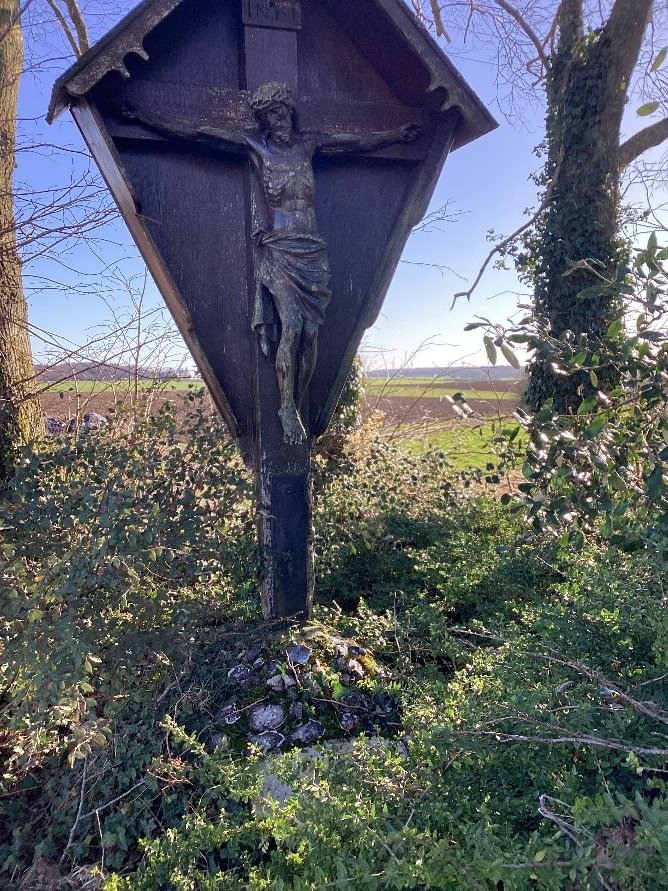
The Calvary was delivered to the Grosvenor estate in Chester; His Grace the Duke of Westminster kindly donated all the oak for the restoration.
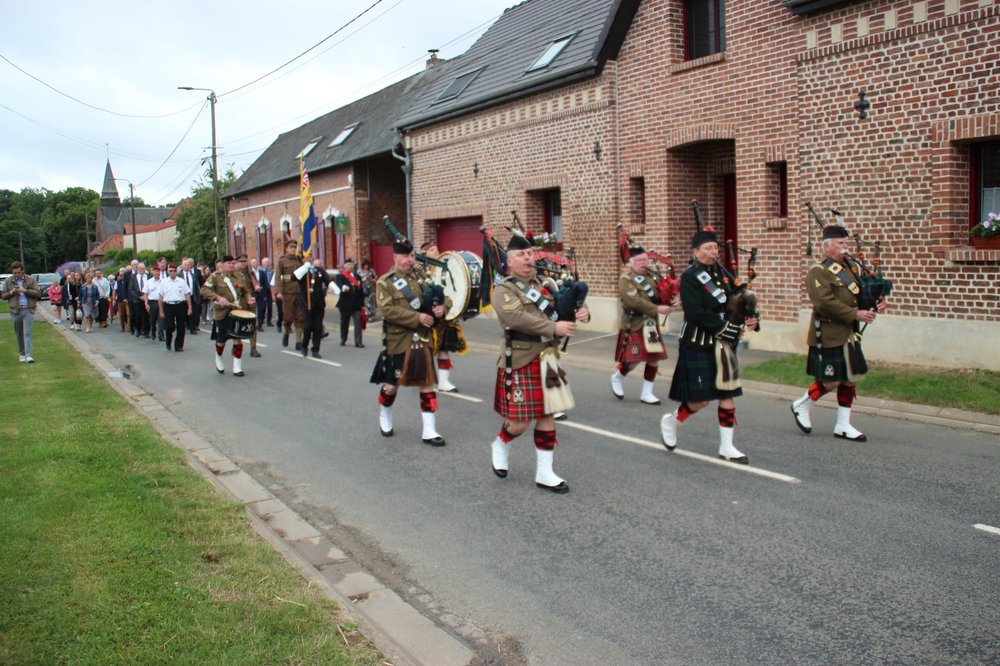
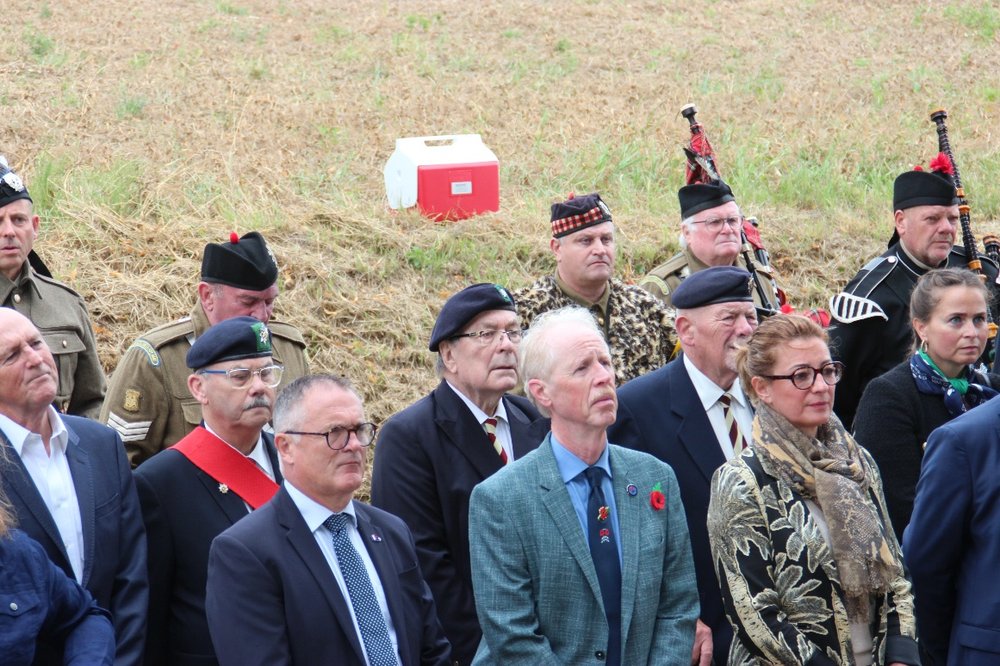
On 22 July 2025, a rededication service was held in the village, hosted by the Mayor of Bazentin and the Cheshire Roll of Honour. The ceremony also commemorated the restoration of the nearby Nine Brave Men memorial, honouring eight sappers and one pioneer of the 82nd Field Company Royal Engineers who died in late July 1916.
The memorial now has a dedicated webpage to help fund the continued maintenance of the site: Houston Memorial.
The Cheshire Roll of Honour lists over 33,000 men and women from the county who have served in conflict.
Becoming a member of The Western Front Association (WFA) offers a wealth of resources and opportunities for those passionate about the history of the First World War. Here's just three of the benefits we offer:

With around 50 branches, there may be one near you. The branch meetings are open to all.

Utilise this tool to overlay historical trench maps with modern maps, enhancing battlefield research and exploration.

Receive four issues annually of this prestigious journal, featuring deeply researched articles, book reviews and historical analysis.


