
A photographic record of the names on the Basra Memorial
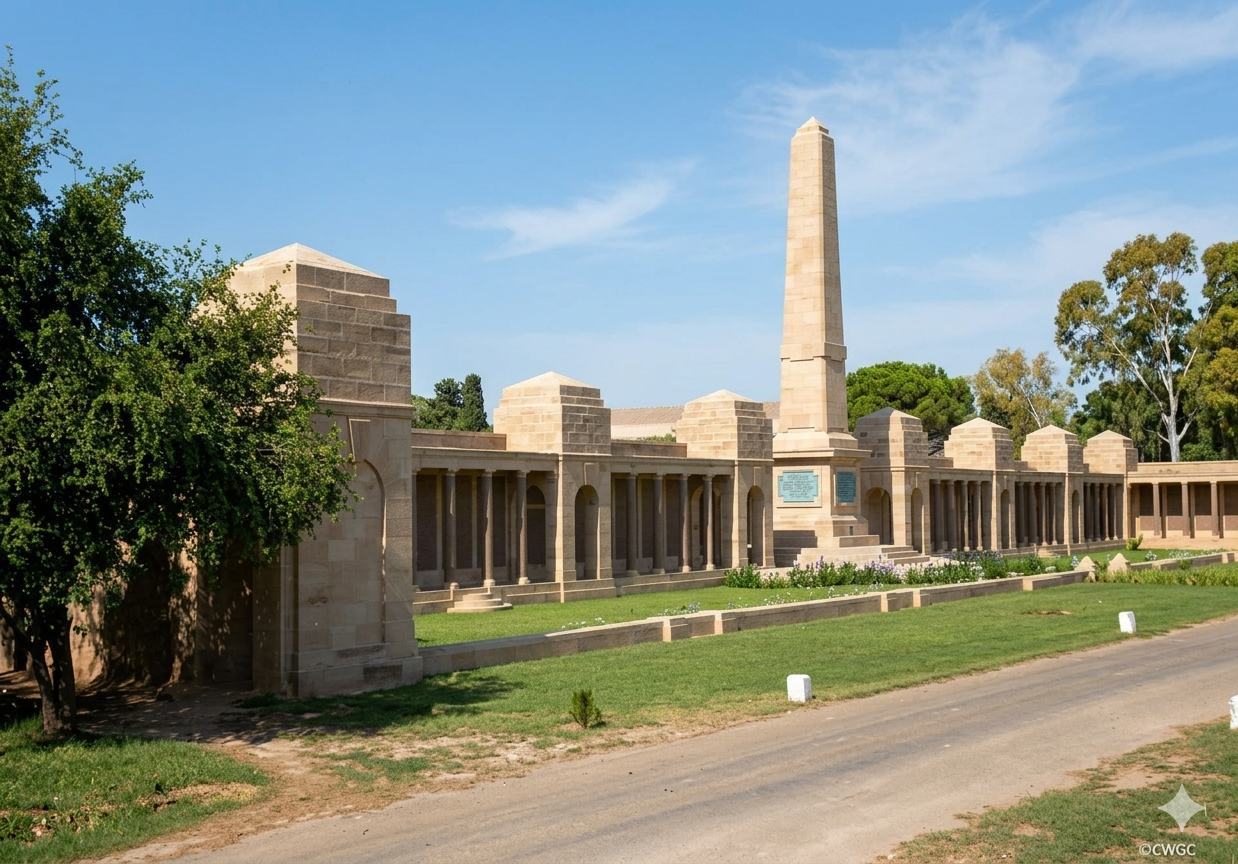
The Basra Memorial is unlikely to be visited by many Great War enthusiasts; the names recorded on its panels have been more or less unviewable for many decades.
The memorial commemorates 40,682 Commonwealth forces members who died during the Mesopotamian Campaign during the First World War.
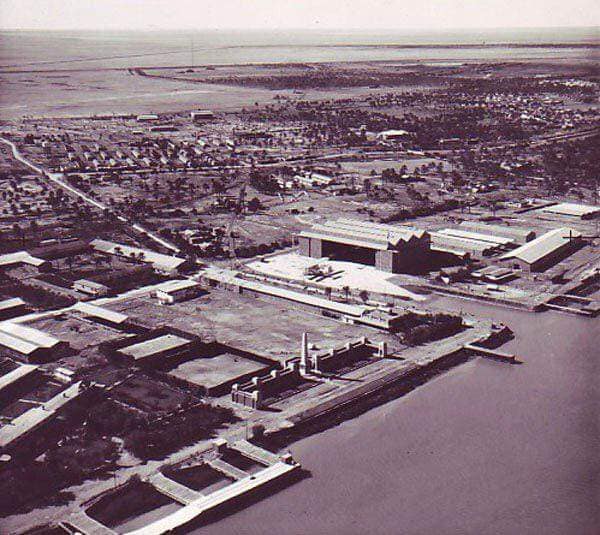
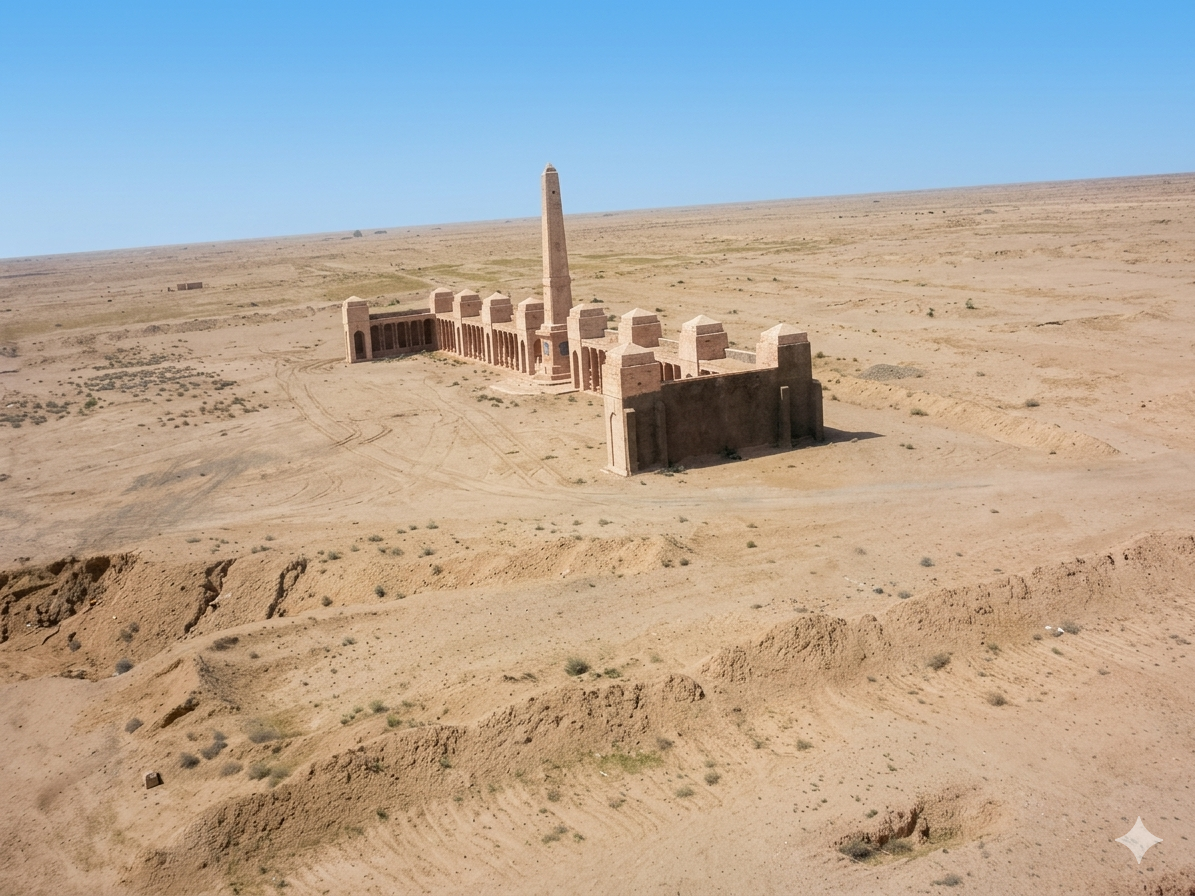
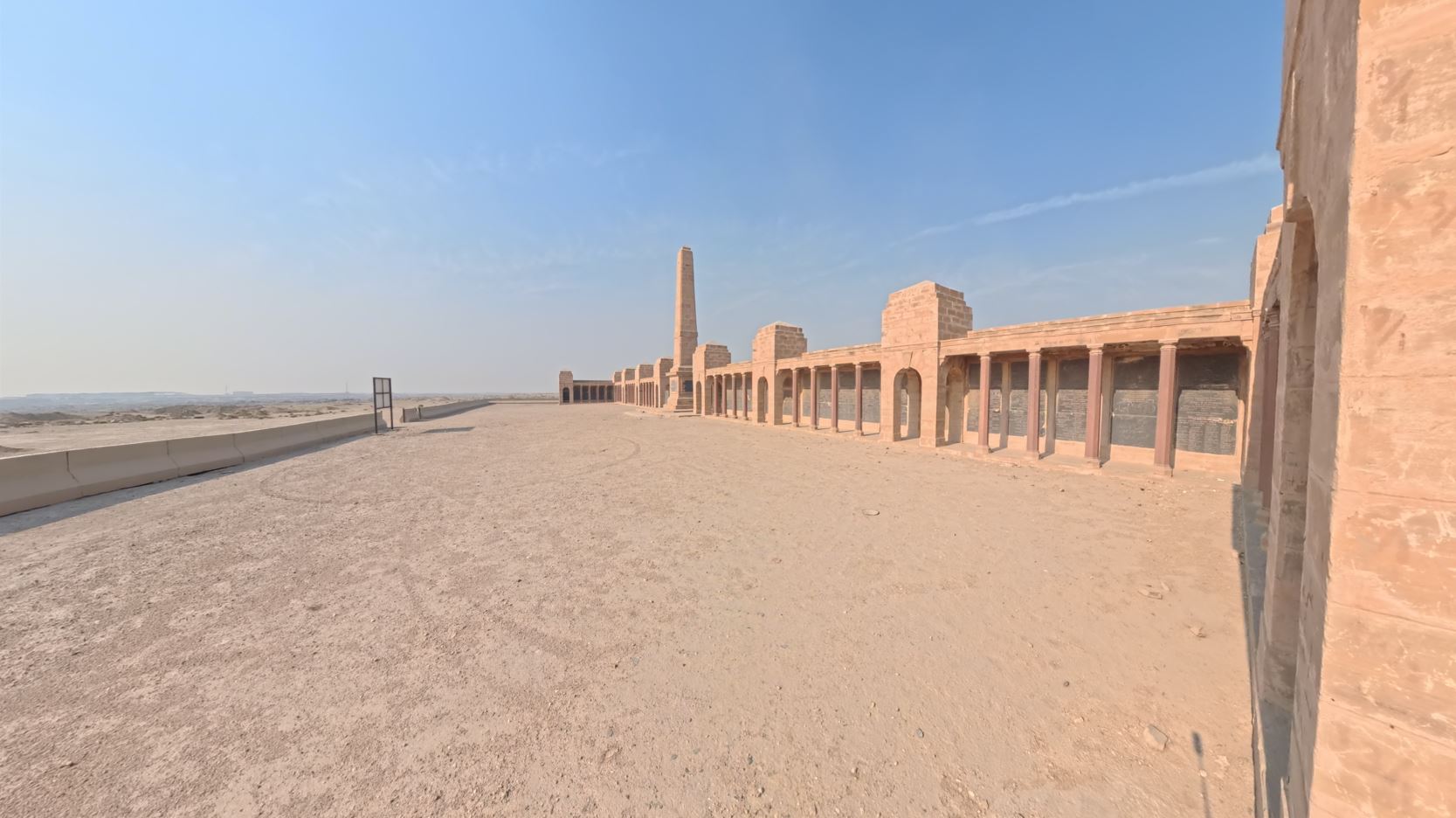
Now located some twenty miles south-west of Basra (Basrah) in the desert; when it was first constructed in the 1920's it was positioned in the naval dockyard at Maqil, alongside the Shatt al-Arab River.
It was moved to its present location in 1997 by the regime of Saddam Hussain. That it survived at all is really quite surprising.
In 2025 Ben Soppitt undertook a visit to all the CWGC memorials in Iraq, the details of this are recorded elsewhere on the WFA's website.
We are very grateful to Ben for photographing the panels on the Basra Memorial which can be viewed via the link below.
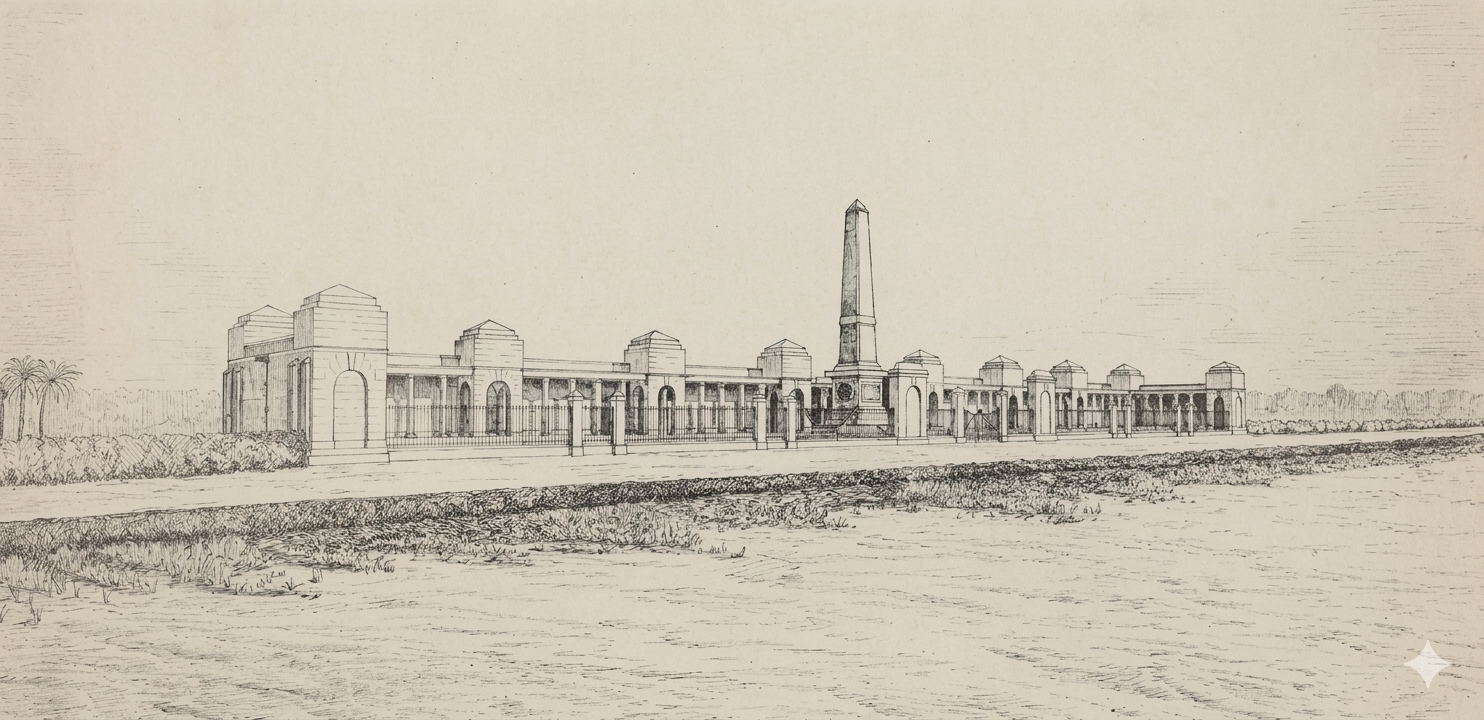
The images here are a combination of those taken by Ben and copies of the names on the panels taken from the original architect's design (courtesy of the CWGC website).
The image numbers correspond to the panel numbers, so for instance, we have 5.jpg; 5A.jpeg, 5B.jpeg and 5C.jpeg. Those images suffixed A, B, and C are the panel lists from the CWGC (that show the regiments and names when the memorial was originally designed).
How to find the panel which names your relative
If you have a relative who is named on the Basra Memorial, you need to know the 'panel number'. This will ordinarily be available via the CWGC search facility. However, this is slightly misleading in some instances.
The CWGC results will likely give two panel numbers. The first number is for the larger part of the memorial which lists those men who have no known grave; the second number is for the section of the memorial that details those who died as Prisoners of War and whose graves are not known. In the vast majority of cases the second panel number won't apply.
However, the first number provided will be the first panel for names of a particular regiment, and the name you are seeking may in fact be on a subsequent panel (for example, William Slack died in February 1917. The CWGC tell us that he is named on 'Panel 21 and 63'. His name actually appears on panel 22 as his regiment (Hampshire) is listed across panels 21 and 22, and those of that regiment who died as Prisoners are named on Panel 63.)
As with most CWGC memorials, the names are listed in regimental precedence order (Royal Navy, Cavalry, senior regiments first) and then by the rank (Lt Colonel, Major, Captain etc down to Private). So, knowing the rank of your relative will assist.
Once you know the panel number, and the rank of the person you are looking for, go to the images and find the number of the panel. There are also other images which show the architect's layout of the panels (these will be useful if the name you are looking for has been damaged or is otherwise unreadable).
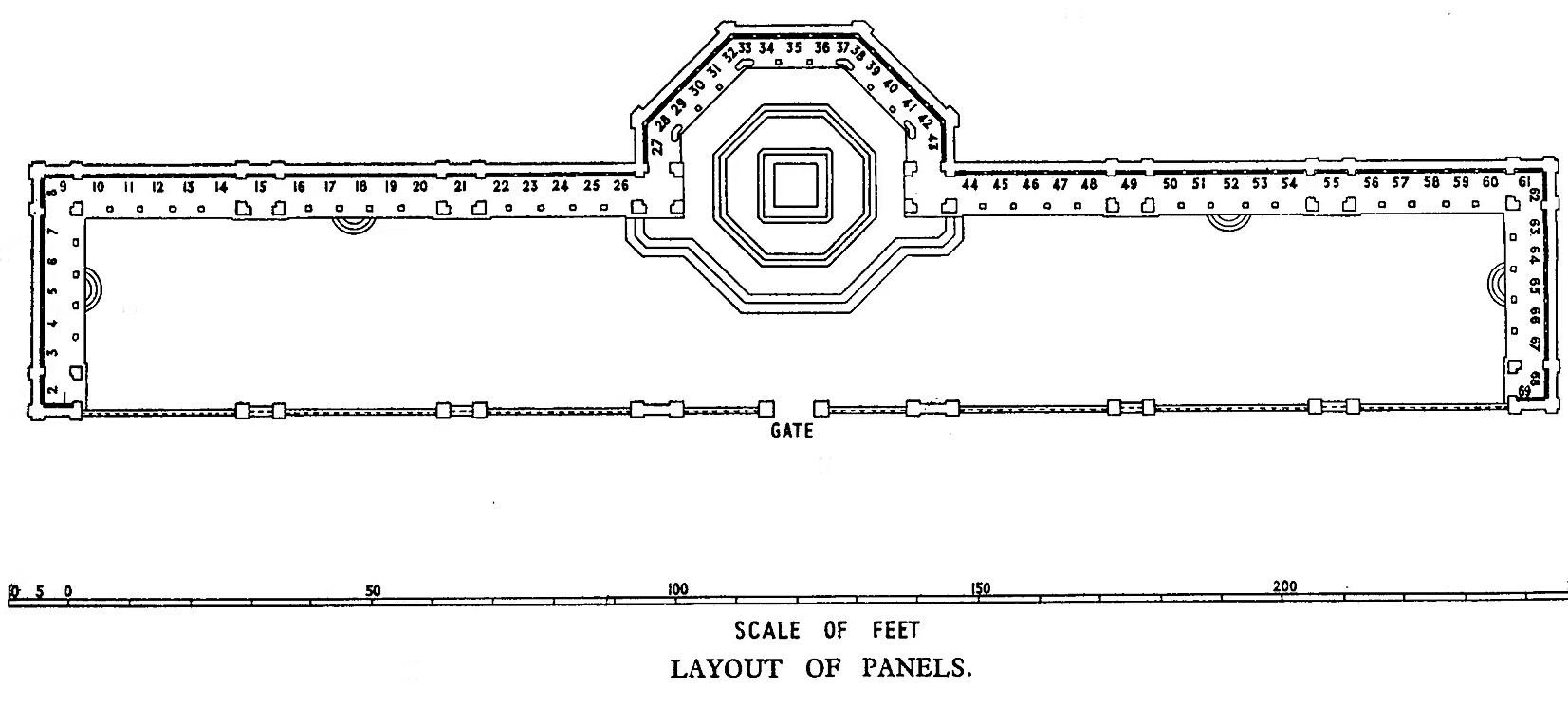
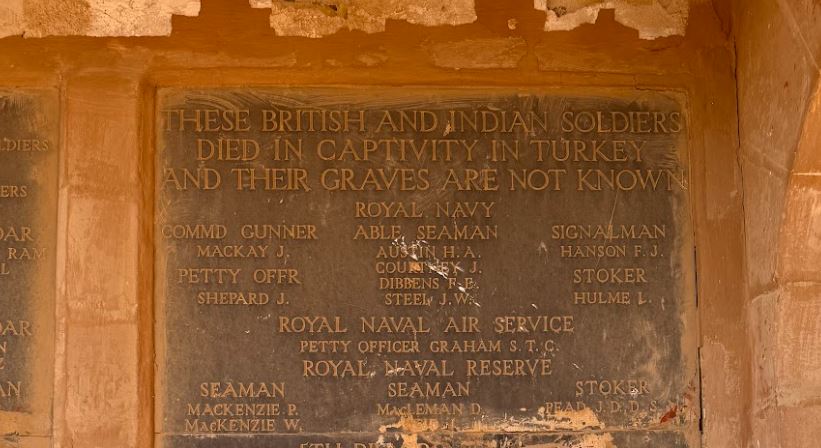
It should be noted that panels 61 and 62 are no longer attached to the walls of the memorial, panels 67 and 68 are only semi-intact and that the top of panel 25 is in the position that where the top of panel 50 should be located (and vice-versa).
The panels contain the names of some 7,385 British personnel (including white colonial troops from New Zealand and Australia) as well as Indian Army officers. The missing Indian troops are regrettably not named on the panels. The Indian Army listing starts at panel 44.
From panel 60 onwards are named those men who died in captivity.
Panels 1-3
Royal Navy,
RNVR,
7th (Queen's Own) Hussars,
8th (KRI) Hussars,
13th Hussars,
14th King's Hussars,
17th (DCO) Lancers,
21st (EOI) Lancers,
Notts & Sherwood Rangers Yeo,
Leicestershire Yeomanry,
Hertfordshire Yeomanry,
Royal Horse & Royal Field Artillery
Panels 4-6
Royal Horse & Royal Field Artillery,
Royal Garrison Artillery,
Royal Engineers,
Royal Flying Corps,
Royal Scots,
The Queen's,
The Buffs (East Kent Regiment)
Panels 7-9
The Buffs (East Kent Regiment),
Royal Lancaster Regiment,
Northumberland Fusiliers,
Royal Warwickshire Regiment
Panels 10-12
Royal Warwickshire Regiment,
Royal Fusiliers,
The King's Liverpool Regiment,
Norfolk Regiment,
Lincolnshire Regiment,
Devonshire Regiment,
Somerset Light Infantry,
Bedfordshire Regiment,
Leicestershire Regiment
Panels 13-15
Leicestershire Regiment,
Royal Irish Regiment,
Yorkshire Regiment,
Lancashire Fusiliers,
Cheshire Regiment,
Royal Welch Fusiliers
Panels 16-18
Royal Welch Fusiliers,
South Wales Borderers,
King's Own Scottish Borderers,
The Cameronians (Scottish Rifles),
Gloucestershire Regiment,
Worcestershire Regiment
Panels 19-21
Worcestershire Regiment,
East Lancashire Regiment,
East Surrey Regiment,
Duke of Cornwall's Light Infantry,
Duke of Wellington's Regiment,
Border Regiment,
Royal Sussex Regiment,
Hampshire Regiment
Panels 22-24
Hampshire Regiment,
Dorsetshire Regiment,
South Lancashire Regiment,
Welch Regiment
Panels 25-27 (including a mis-placed panel)
Panel 25 should be:
Welch Regiment
The Black Watch
Panel 25 actually is:
92nd Punjabis,
93rd Burma Infantry,
114th Mahrattas
See panel 50 for the panel's (incorrect) location
Oxford & Bucks Light Infantry,
Notts & Derby Regiment,
Loyal North Lancashire Regiment
Panels 28-30
Loyal North Lancashire Regiment,
Royal Berkshire Regiment,
Royal West Kent Regiment,
King's Shropshire Light Infantry,
Middlesex Regiment,
King's Royal Rifle Corps
Panels 31-33
King's Royal Rifle Corps,
Wiltshire Regiment,
Manchester Regiment
Panels 34-36
Manchester Regiment,
North Staffordshire Regiment,
Durham Light Infantry,
Highland Light Infantry
Panels 37-39
Highland Light Infantry,
Seaforth Highlanders
Panels 40-42
Seaforth Highlanders,
Cameron Highlanders,
Royal Irish Rifles,
Royal Irish Fusiliers,
Connaught Rangers,
Argyll & Sutherland Highlanders,
Royal Dublin Fusiliers,
The Rifle Brigade,
22nd Bttn London Regiment,
Army Cyclist Corps,
Machine Gun Corps (Infantry),
Machine Gun Corps (Cavalry),
Machine Gun Corps (Motor),
Royal Army Service Corps,
Royal Army Veterinary Corps,
Royal Army Medical Corps,
Royal Army Chaplains' Department
Panels 43-45
Royal Army Ordnance Corps,
Corps of Military Police,
Q A Imperial Military Nursing Service,
General List,
Royal Air Force,
Western Ontario Regiment,
Australian Flying Corps,
Indian Army Reserve of Officers,
Royal Horse & Royal Field Artillery,
Royal Artillery
Machine Gun Corps,
Royal Engineers,
Madras Volunteer Guards,
Calcutta Volunteer Rifles,
The Governor's Body Guard, Madras,
26th King George's Own Light Cavalry,
27th Light Cavalry,
1st D Y O Lancers (Skinner's Horse),
3rd Lancers (Skinner's Horse),
31st Duke of Connaught's Own Lancers,
32nd Lancers,
33rd Queen Victoria's Own Light Cavalry,
34th P A V O Poona Horse,
35th Scinde Horse,
4th Cavalry,
5th Cavalry,
6th King Edward's Own Cavalry,
7th Hariana Lancers,
8th Cavalry,
36th Jacob's Horse,
Q V O Corps of Guides Cav (F F) (Lumsden's),
21st P A V O Cavalry (F F) (Daly's Horse),
22nd Sam Browne's Cavalry (F F),
23rd Cavalry (F F),
25th Cavalry (F F),
9th Hodson's Horse,
10th D C O Lancers (Hodson's Horse),
27th Punjabis,
28th Punjabis,
29th Punjabis,
30th Punjabis,
31st Punjabis,
15th Lancers (Cureton's Multanis),
16th Cavalry,
17th Cavalry,
20th Deccan Horse,
18th King George's Own Lancers,
37th Lancers (Baluch Horse),
29th Lancers (Deccan Horse),
30th Lancers (Gordon's Horse)
Panels 46-48
39th K G O Central India Horse,
Bhavnagar Lancers,
Indore Mounted Escort,
Sardar Risala Jodhpur,
Kashmir Lancers,
Patiala (Rajindra) Lancers,
No 9 Mtn Bty RGA,
No 14 Mtn Bty RGA,
Frontier Garrison Artillery,
21st Kohat Mountain Battery (F F),
23rd Peshawar Mountain Battery (F F),
24th Hazara Mountain Battery (F F),
25th Mtn Battery,
27th Mtn Battery,
26th Jacobs Mountain Battery,
28th Mtn Battery,
30th Mtn Battery,
31st Mtn Battery,
33rd Mtn Battery,
34th (Res) Mtn Bty,
40th (Res) Mtn Bty,
45th Mtn Battery,
49th Mtn Battery,
50th Mtn Battery,
Signal Units,
1st King George's Own Sappers & Miners,
2nd Queen Victoria's Own Sappers & Miners,
3rd Sappers & Miners,
Maler-Kotla Imperial Service Sappers,
Sirmur Sapper Corps,
Tehri Sappers,
61st KGO Pioneers,
63rd Palamcottah L I,
62nd Punjabis,
64th Pioneers,
66th Punjabis,
67th Punjabis,
69th Punjabis,
72nd Punjabis,
1/73rd Carnatic Infantry,
74th Punjabis,
75th Carnatic Infantry,
80th Carnatic Infantry,
76th Punjabis,
1st Brahmans,
79th Carnatic Infantry,
101st Grenadiers,
81st Pioneers,
82nd Punjabis,
83rd Wallajahbad Light Infantry,
84th Punjabis,
86th Carnatic Infantry,
107th Pioneers,
102nd King Edward's Own Grenadiers,
1/103rd Mahratta Light Infantry,
104th Wellesley's Rifles,
105th Mahratta Light Infantry,
108th Infantry,
110th Mahratta Light Infantry
Panels 49-51 (including a mis-placed panel)
109th Infantry,
88th Carnatic Inf,
2nd Queen Victoria's Own Rajput Light Inf,
87th Punjabis,
89th Punjabis,
1/3rd Brahmans,
4th Prince Albert Victor's Rajputs,
112th Infantry,
90th Punjabis,
91st Punjabis (Light Infantry),
113th Infantry,
Panel 50 Should be:
92nd Punjabis,
93rd Burma Infantry,
114th Mahrattas
Panel 50 Actually is
Welch Regiment (this should be panel 25)
The Black Watch (this should be panel 25)
See panel 25 for the panel's (incorrect) location
116th Mahrattas,
117th Mahrattas,
5th Light Infantry,
6th Jat Light Infantry,
7th Duke of Connaught's Own Rajputs,
8th Rajputs,
120th Rajputana Infantry,
119th Infantry (The Mooltan Regiment),
121st Pioneers,
122nd Rajputana Infantry,
123rd Outrams Rifles,
124th Duchess of Connaught's Own Baluchistan Infantry,
125th Napier's Rifles,
9th Ghurkha Rifles,
1st KGO Gurkha Rifles (The Malaun Regt),
10th Jats,
11th Rajputs,
12th Pioneers (The Khelat-I-Ghilzie Regt)
Panels 52-54
126th Baluchistan Infantry,
13th Rajputs (The Shekhawati Regiment),
127th Queen Mary's Own Baluch Light Inf),
4th King George's Own Ferozepore Sikhs,
15th Ludhiana Sikhs,
2nd KEO Gurkha Rifles (The Sirmoor Rifles),
3rd Queen Alexandra's Own Gurkha Rifles,
QVO Corps of Guides Inf (F F) (Lumsdens),
51st Sikhs (Frontier Force),
52nd Sikhs (Frontier Force),
53rd Sikhs (Frontier Force),
54th Sikhs (Frontier Force),
129th Duke of Connaught's Own Baluchis,
128th Pioneers,
55th Coke's Rifles (Frontier Force),
56th Punjabi Rifles (Frontier Force),
58th Vaughan's Rifles (Frontier Force),
59th Scinde Rifles (Frontier Force),
4th Gurkha Rifles,
16th Rajputs (The Lucknow Regiment),
17th Infantry (The Loyal Regiment),
18th Infantry,
19th Punjabis,
20th DCO Infantry (Brownlow's Punjabis),
21st Punjabis,
22nd Punjabis,
1/23rd Sikh Pioneers,
2/23rd Sikh Pioneers,
3/23rd Sikh Pioneers,
24th Punjabis,
25th Punjabis,
26th Punjabis,
11th KEO Lancers (Probyn's Horse),
12th Cavalry,
13th D of C Lancers (Watson's Horse),
14th Murray's Jat Lancers,
32nd Sikh Pioneers,
33rd Punjabis,
5th Gurkha Rifles (Frontier Force),
34th Sikh Pioneers,
35th Sikhs,
37th Dogras,
38th Dogras,
3/39th Garhwal Rifles
Panels 55-57
36th Sikhs,
1/39th Garhwal Rifles,
2/39th Garhwal Rifles,
41st Dogras,
6th Gurkha Rifles,
7th Gurkha Rifles,
8th Gurkha Rifles,
45th Rattray's Sikhs,
46th Punjabis,
47th Sikhs,
48th Pioneers,
94th Russell's Infantry,
95th Russell's Infantry,
96th Berar Infantry,
97th Deccan Infantry,
98th Infantry,
2/9th Delhi Infantry,
99th Deccan Infantry,
42nd Deoli Regiment,
1/9th Bhopal Infantry,
3/9th Bhopal Infantry,
43rd Erinpura Regiment,
106th Hazara Pioneers,
44th Merwara Infantry,
10th Gurkha Rifles,
49th Bengalis,
5/70th Burma Rifles,
71st Punjabis,
85th Burman Rifles,
11th Gurkha Rifles,
142nd Jodhpur Inf,
150th Indian Inf,
3/153rd Rifles,
154th Indian Inf,
Kapurthala Infantry (Jagatjit Regiment),
Nabha Infantry,
Supply & Transport Corps,
Mule Corps,
Bullock Corps,
Camel Corps,
Bharatpur Transport Corps,
Gwalior Transport Corps,
Indore Transport Corps,
Jaipur Transport Corps,
Mysore Transport Corps
Benares State A.T. Corps
Panels 58-59
Imperial Service Transport Corps,
101st Indian Labour Company,
Indian Labour Corps,
Followers Central Depots,
Indian Medical Service,
Indian Medical Dept,
Army Hospital Corps,
Army Bearer Corps,
H H M Scindia's Convalescent Home,
Army Remount Department, India,
Indian Ordnance Department,
Indian Veterinary Corps,
Indian Military Works Services,
Indian Military Accounts Department,
Indian Postal &Telegraph Department,
Indian Political Department,
Indian Survey Department,
Indian Government Stationery Department,
Indian Police Force,
Assam Military Police,
Burma Military Police,
Indian Railways,
Nigeria Regiment,
British West Indies Regiment,
Ceylon Contingent,
Mauritius Labour Corps
Panel 60-63 (Died as Prisoners of War)
Royal Navy,
Royal Naval Air Service,
Royal Naval Reserve,
5th Dragoon Guards,
7th Dragoon Guards,
Notts & Sherwood Rangers Yeomanry,
Dorset (Q O) Yeomanry,
Royal Gloucester Hussars,
Worcestershire Yeomanry,
Fife and Forfar Yeomanry,
Royal Horse & Royal Field Artillery,
Royal Garrison Artillery,
Royal Engineers,
Royal Flying Corps,
Royal Lancaster Regiment,
Royal Fusiliers,
The King's Liverpool Regiment,
Norfolk Regiment,
Devonshire Regiment,
Somerset Light Infantry,
East Yorkshire Regiment,
Royal Scots Fusiliers,
Cheshire Regiment,
Royal Welch Fusiliers,
South Wales Borderers,
King's Own Scottish Borderers,
Royal Inniskilling Fusiliers,
Worcestershire Regiment,
Duke of Cornwall's Light Infantry,
East Surrey Regiment,
Royal Sussex Regiment,
Hampshire Regiment,
Dorsetshire Regiment,
Welch Regiment,
Black Watch,
Oxford & Bucks Light Infantry
Panel 64-66 (Died as Prisoners of War)
Oxford & Bucks Light Infantry
Northamptonshire Regiment,
Royal West Kent Regiment,
Middlesex Regiment,
Wiltshire Regiment,
Manchester Regiment,
Durham Light Infantry,
Highland Light Infantry,
Seaforth Highlanders,
Gordon Highlanders,
Connaught Rangers,
First Surrey Rifles,
23rd Battalion London Regiment,
Herefordshire Regiment,
Royal Air Force,
Indian Defence Force Artillery,
Indian Volunteer Corps Infantry,
27th Light Cavalry,
32nd Lancers,
31st Duke of Connaught's Own Lancers,
33rd Queen Victoria's Own Light Cavalry,
7th Hariana Lancers,
23rd Cavalry,
11th K E O Lancers (Proby's Horse),
Australian Light Horse,
Australian Flying Corps,
1st Bttn Australian Infantry,
Australian Army Medical Corps,
Indian Army Reserve of Officers,
Royal Horse & Royal Field Artillery,
12th Cavalry,
16th Cavalry,
18th King George's Own Lancers,
20th Deccan Horse,
Bhavnagar Lancers,
Hyderabad Lancers,
Sardar Risala Jodhpur,
Kashmir Lancers,
Mysore Lancers,
23rd Peshawar Mountain Battery (FF),
1st King George's Own Sappers & Miners,
3rd Sappers & Miners,
Signal Units,
Sirmur Sapper Corps,
66th Punjabis,
67th Punjabis,
1/73rd Carnatic Infantry,
75th Carnatic Infantry,
76th Punjabis,
79th Carnatic Infantry,
80th Carnatic Infantry,
81st Pioneers,
82nd Punjabis,
83rd Wallajahbad Light Infantry,
102nd King Edward's Own Grenadiers,
1/103rd Mahratta Light Infantry,
105th Mahratta Light Infantry,
104th Wellesley's Rifles,
107th Pioneers,
108th Infantry
110th Mahratta Light Infantry
87th Punjabis
89th Punjabis
112th Infantry
90th Punjabis
91st Punjabis (Light Infantry)
113th Infantry
114th Mahrattas
116th Mahrattas
117th Mahrattas
7th Duke of Connaught's Own Rajputs
119th Infantry (The Mooltan Regiment)
Panel 67-69 (Died as Prisoners of War)
120th Rajputana Infantry,
122nd Rajputana Infantry,
123rd Outram's Rifles,
51st Sikhs (F F),
124th Duchess of Connaught's Own Baluchistan Infantry,
1st K G O Gurkha Rifles (the Malaun Regiment),
2nd K E O Gurkha Rifles (the Sirmoor Rifles),
54th Sikhs (F F),
4th Gurkha Rifles,
16th Rajputs (The Lucknow Regiment),
17th Infantry (The Loyal Regiment),
19th Punjanis,
31st Punabis,
20th D C O Infantry (Brownlow's Punjabis),
22nd Punjabis,
24th Punjabis,
130th K G O Baluchis (Jacob's Rifles),
35th Sikhs,
37th Dogras,
7th Gurkha Rifles,
48th Pioneers,
95th Russell's Infantry,
43rd Erinpura Regiment,
99th Deccan Infantry,
Alwar Infantry,
Mule Corps,
Supply & Transport Corps,
Jaipur Transport Corps,
Mysore Transport Corps,
Indian Labour Corps,
Followers Central Depots,
Indian Medical Service,
Indian Medical Department,
Army Hospital Corps,
Army Bearer Corps,
Indian Ordnance Department,
Indian Postal & Telegraph Department,
Assam Military Police,
Burma Military Police
Panel 69 is missing, but is 'blank' on the memorial
A Video of the Basra Memorial
Below is a 'walk through' of the memorial showing the panels from number 1 to 69.
Roll of Honour
The full listing of those who are named by the CWGC can be found on their website via this link
Becoming a member of The Western Front Association (WFA) offers a wealth of resources and opportunities for those passionate about the history of the First World War. Here's just three of the benefits we offer:

With around 50 branches, there may be one near you. The branch meetings are open to all.

Utilise this tool to overlay historical trench maps with modern maps, enhancing battlefield research and exploration.

Receive four issues annually of this prestigious journal, featuring deeply researched articles, book reviews and historical analysis.
Other Articles


