
The Fellowship of the Trenches? J.R.R. Tolkien’s Brother Officers in the 11th (Service) Battalion Lancashire Fusiliers, June-October 1916
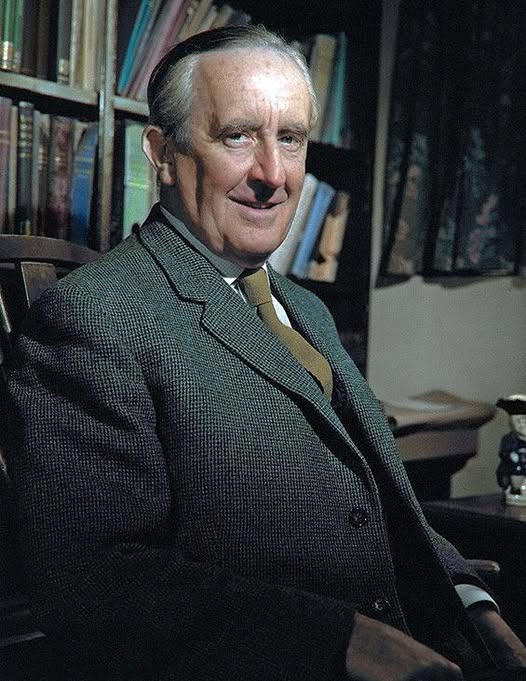
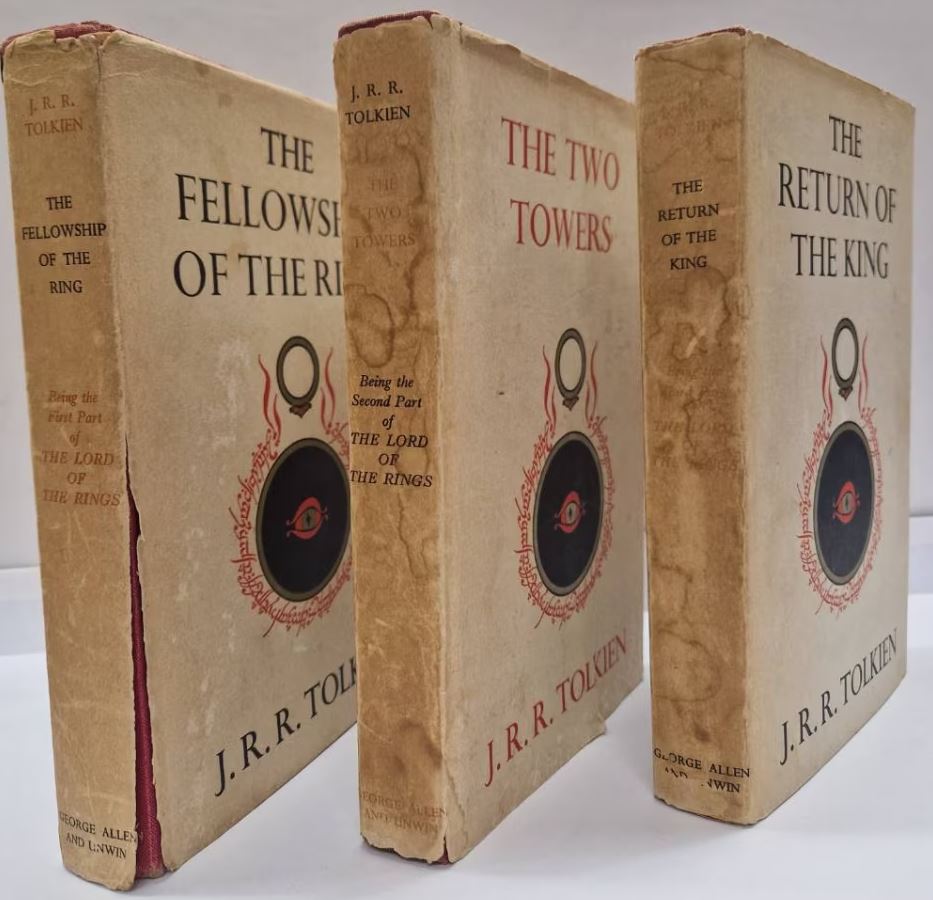
J.R.R. Tolkien, author of The Hobbit and The Lord of the Rings, is one of the major literary figures of the twentieth century to have served in the Great War and survived it.[1] [2] The significance of the war in Tolkien’s life and work is contentious. John Garth has written a detailed and scholarly study of the impact of the war on Tolkien’s writing and thoughts that emphasises the way the war ‘reinvented the real world in a strange extreme form’, focusing Tolkien’s fiction on a ‘conflict between good and evil’.[3] Humphrey Carpenter’s authorised biography, however, devotes only eight pages to Tolkien’s time on the Western Front.[4] The collection of Tolkien’s letters that Carpenter edited with Christopher Tolkien prints only one letter - to his friend G.B. Smith - that covers the time he spent with the 11th Lancashire Fusiliers.[5]
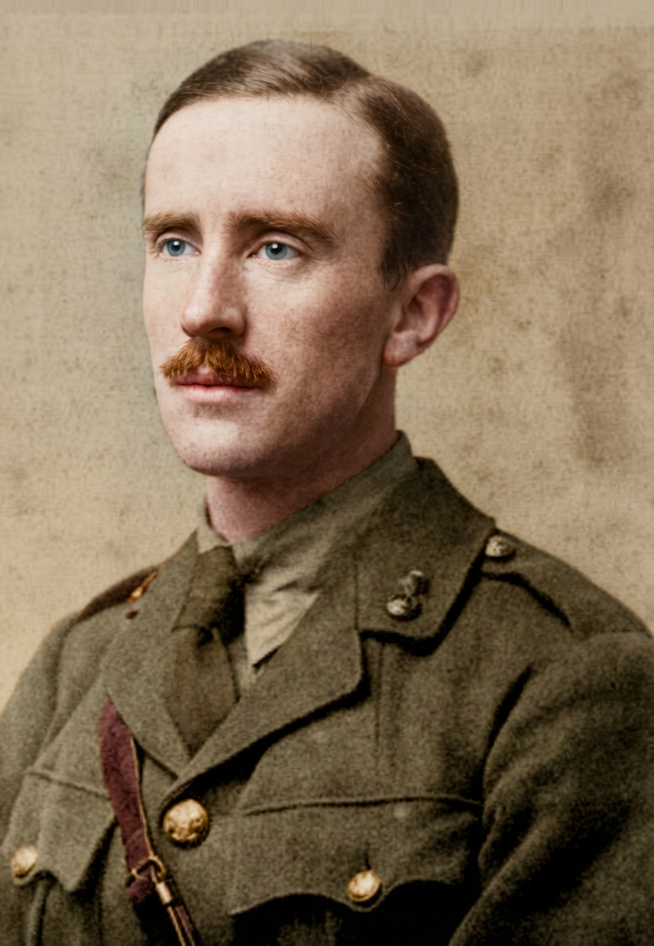
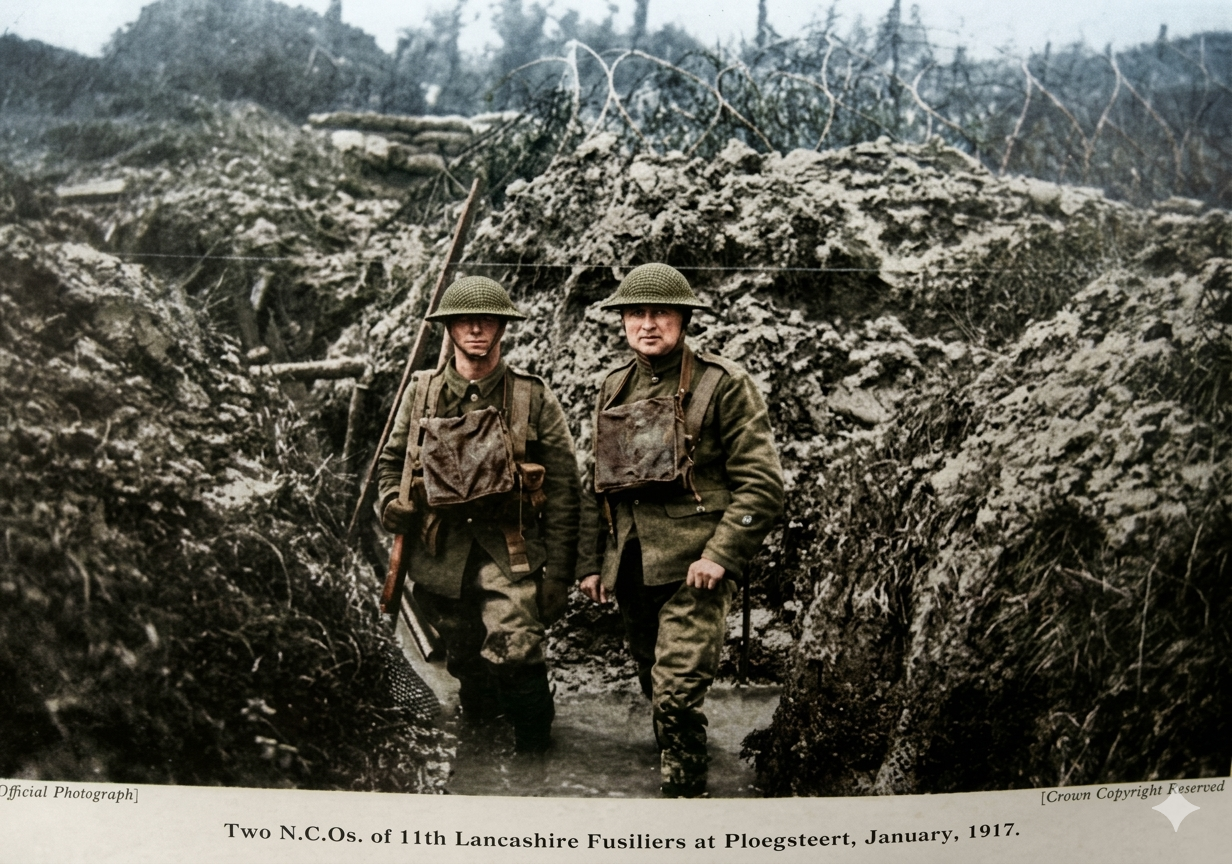
There are numerous passages in The Hobbit and The Lord of the Rings that can be seen at least as ‘references’ to the Great War,[6] but Tolkien himself was very clear that The Lord of the Rings was not an analogy. In a letter to his publisher Rayner Unwin on 10 December 1960 Tolkien wrote:
‘Personally I do not think that either war (and of course not the atomic bomb) had any influence upon either the plot [of The Lord of the Rings] or the manner of its unfolding. Perhaps in landscape. The Dead Marshes and approaches to the Morannon owe something to Northern France after the Battle of the Somme. They owe more to William Morris and his Huns and Romans, as in The House of the Wolfings or The Roots of the Mountains’.[7]
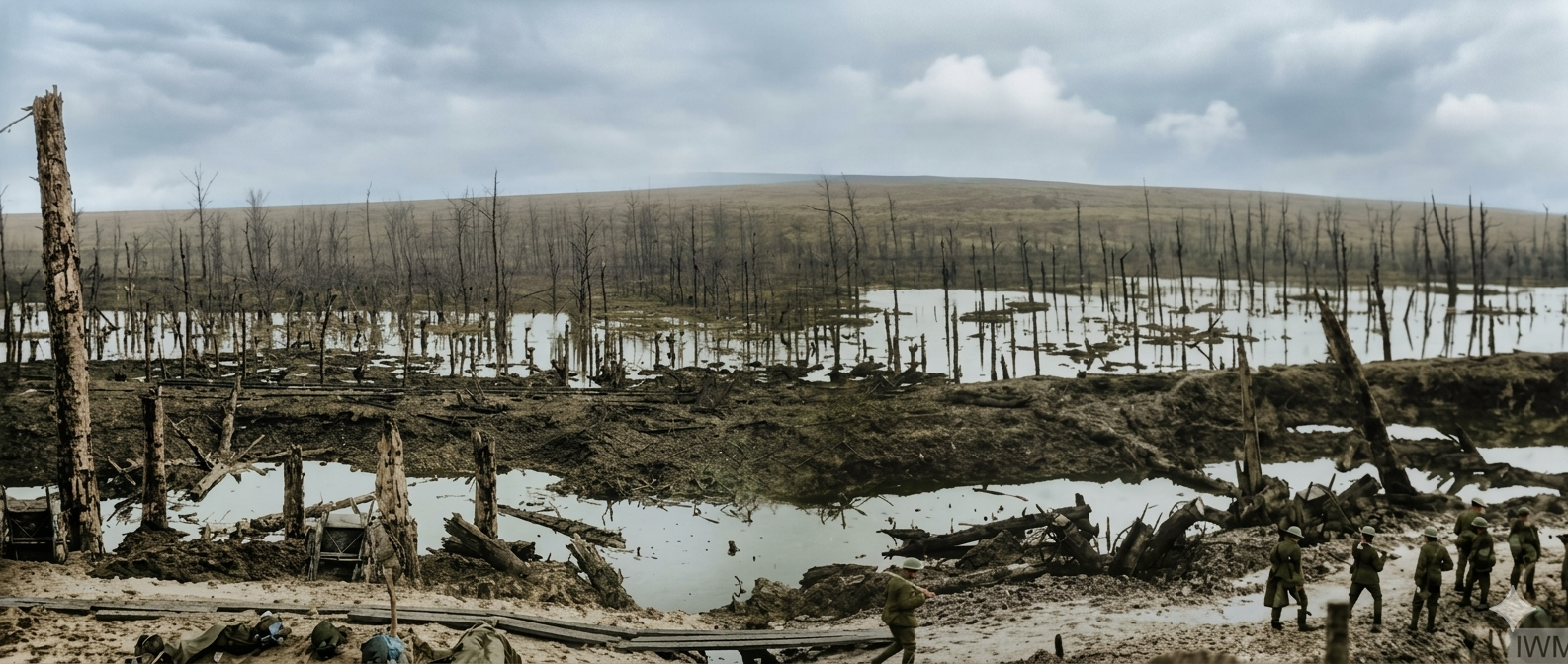
Tolkien undoubtedly suffered the personal loss of two of his closest friends as well as others in his wider circle at King Edward’s School, Birmingham,[8] but in later life he gave little indication that he had been ‘traumatised’ by the war or that it had been the defining experience of his life. If Tolkien had a ‘defining life experience’ it was almost certainly the death of his beloved mother from diabetes at the age of thirty-four, when he was twelve.
The Road to War
In August 1914 Tolkien was about to enter his final year at Exeter College, Oxford. He did not behave in the stereotypical way public school and Oxbridge men are supposed to have behaved.
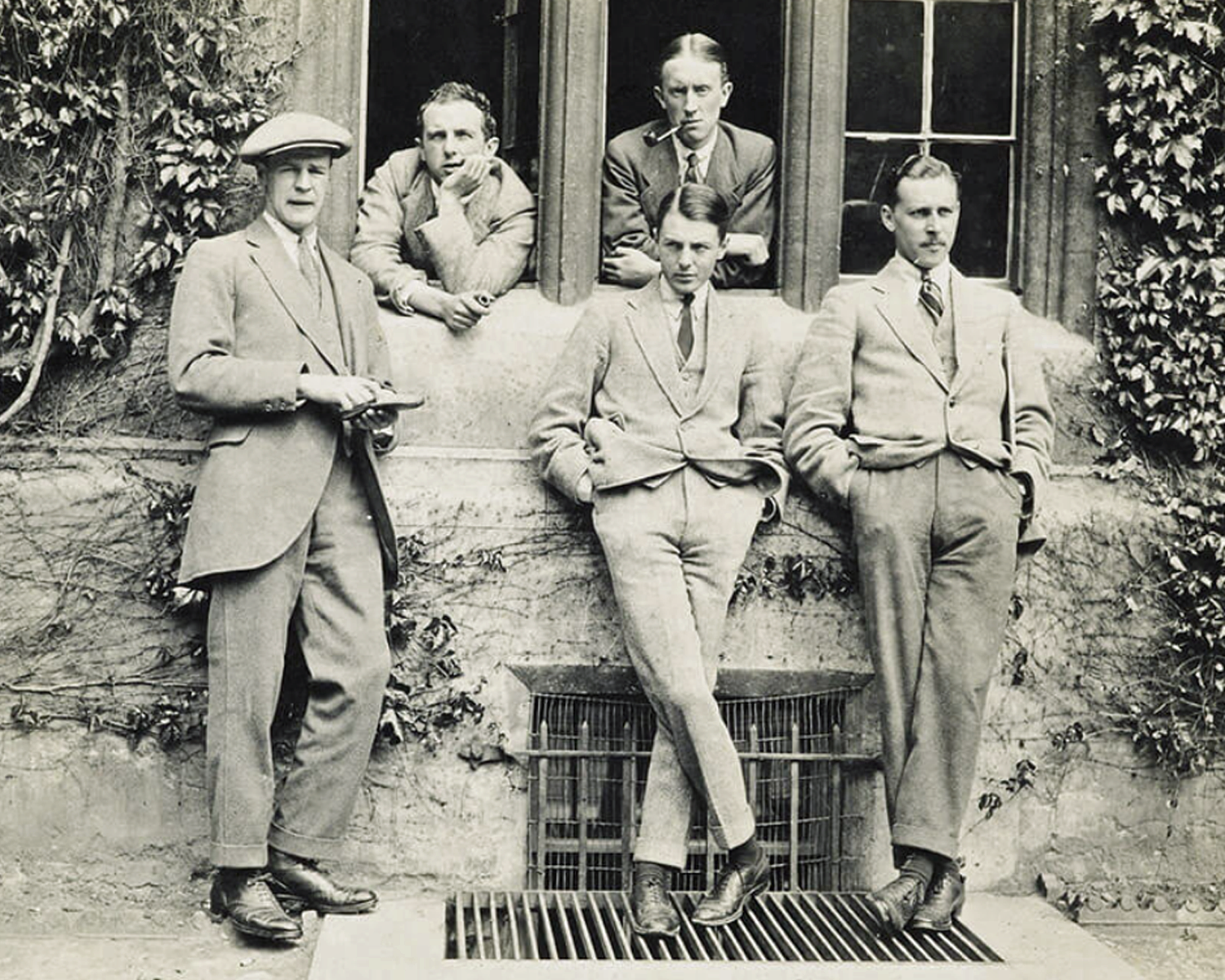
He did not rush to the colours in a ferment of patriotic enthusiasm. He had his heart set on an academic career and, as a young man without money or influential friends, he needed to ‘stamp his ticket’ by taking a First Class degree. He devoted himself successfully to this in his final year. Meanwhile, he joined the University OTC.
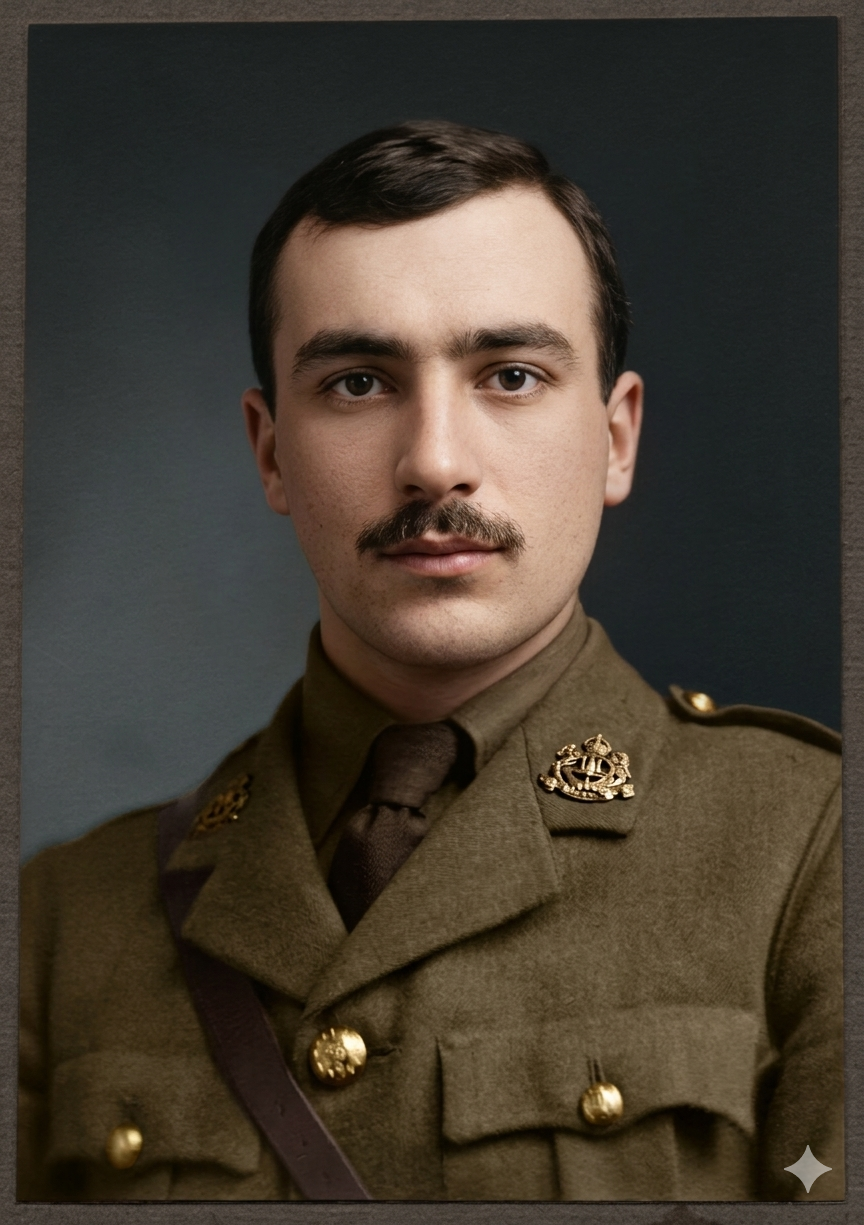
Tolkien’s closest friends were similarly circumspect. Christopher Wiseman, a mathematician, also completed his final year of study at London University before joining the Royal Navy.[9] Rob Gilson was under pressure from his father, the Head Master of King Edward’s School, not to volunteer immediately. He returned to Trinity College, Cambridge, in October and wrestled with his conscience, finally deciding to volunteer after he reached his majority on 25 October.[10]
G.B. Smith also returned to university. He did not volunteer immediately but also joined the Oxford University OTC. He applied for a commission on 1 December 1914 and joined the 8th (Service) Battalion Oxfordshire and Buckinghamshire Light Infantry [OBLI] before transferring to the Lancashire Fusiliers,[11] a decision that would influence Tolkien.
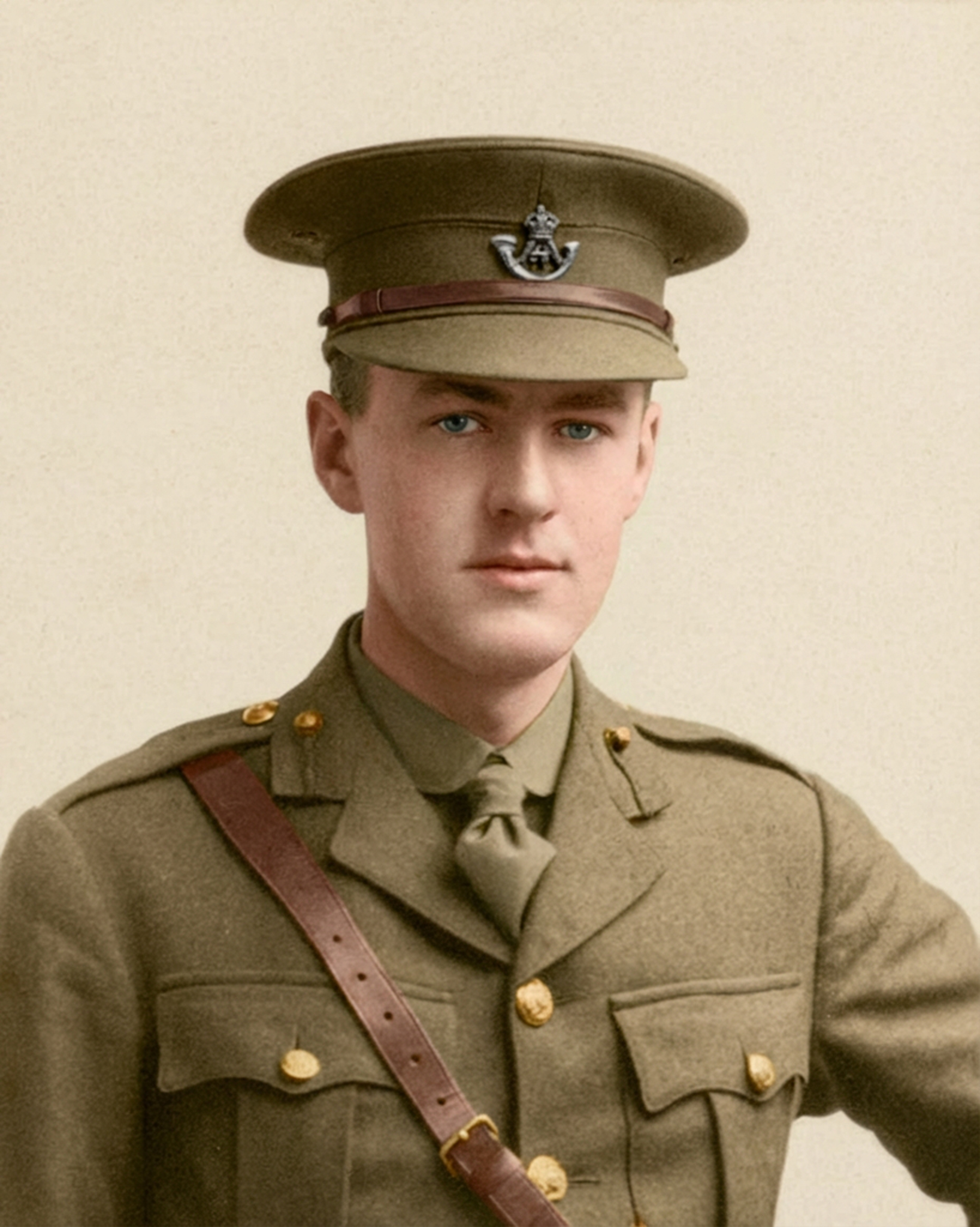
Garth argues that Smith, having delayed volunteering, found himself ‘supernumerary’ in the OBLI. He was among a number of other ‘literary Oxford lights’ who had ‘gone in a body to officer the Lancashire Fusiliers’.[12] But Smith also had a relative, an Old Edwardian and a fellow West Bromwich man, Harold Godfrey Bache, a renowned footballer for West Bromwich Albion, already serving as an officer in the regiment.[13]
Tolkien’s outer circle of friends acted differently. T.K. (‘Teacake’) Barnsley abandoned his studies at Cambridge, where he was reading history, in order to join the 14th (Service) Battalion Royal Warwickshire Regiment (1st Birmingham), one of the units raised by his father, the Lord Mayor of Birmingham.
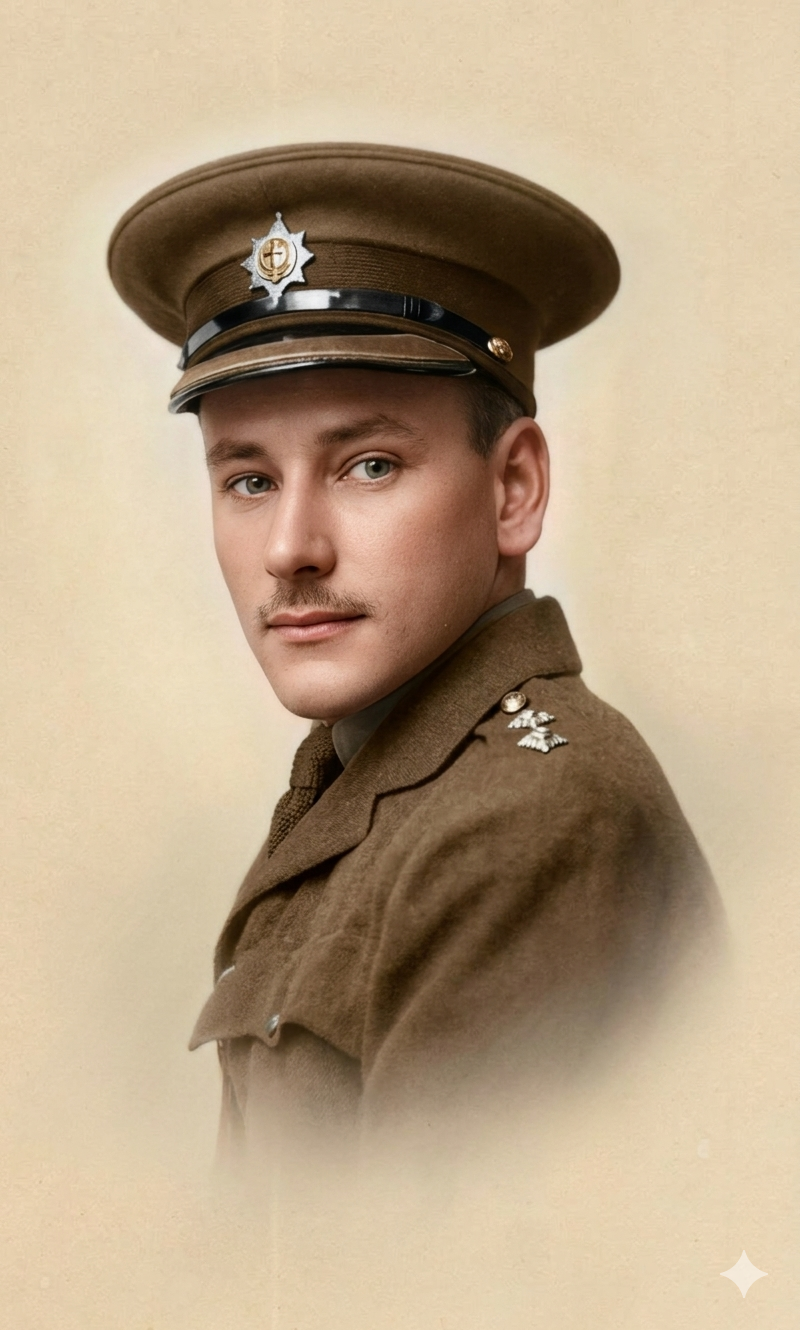
The Barnsleys were leading Methodists and Teacake had thought of training for the Methodist ministry, but alone among Tolkien’s friends military uniform seemed to sit lightly on him. He was killed in action on 31 July 1917 while a Captain in the Coldstream Guards. Tolkien’s younger brother, Hilary, and his friends Ralph Payton (‘The Baby’) and Sidney Barrowclough, were also early volunteers. Hilary and Payton joined the ranks of the Birmingham Pals; Barrowclough joined the Royal Field Artillery; Payton’s brother Wilfred (‘Whiffy’) joined the Indian Civil Service and was posted to Burma.[14] G.B. Smith’s older brother, Roger, was another early volunteer. After serving in the ranks of the Army Service Corps, he was commissioned in the South Wales Borderers and killed in action in Mesopotamia on 25 January 1917.
Tolkien volunteered once he had taken his degree. We are unaware that he ever offered an explanation for why he volunteered. He did not carry any ‘anti-German’ baggage. His own surname was Germanic in origin. His love was for the literature and mythology of the ‘Old North’, which he would do much to advance.[15] In later years, at least, he was noticeably anti-French. There is no sense that Tolkien was engaged with the war at an ideological or idealistic level. He volunteered because ‘everyone else’ had done or was doing, including his own circle of friends. It was expected of him. He expected it of himself.
On his application form for a commission, completed on 29 June 1915, he requested to join the 19th (Service) Battalion Lancashire Fusiliers (3rd Salford) (Pioneers), G.B. Smith’s unit. His request was destined not to be fulfilled, but he was commissioned in the same regiment on 15 July 1915.
After initial training at Bedford and Lichfield, Tolkien’s introduction to army life began in earnest in October 1915 at the huge improvised training area on Cannock Chase in Staffordshire in the 13th (Reserve) Battalion Lancashire Fusiliers.[16] It was while with the 13th Battalion that Tolkien was initiated into the mysteries of army signalling.
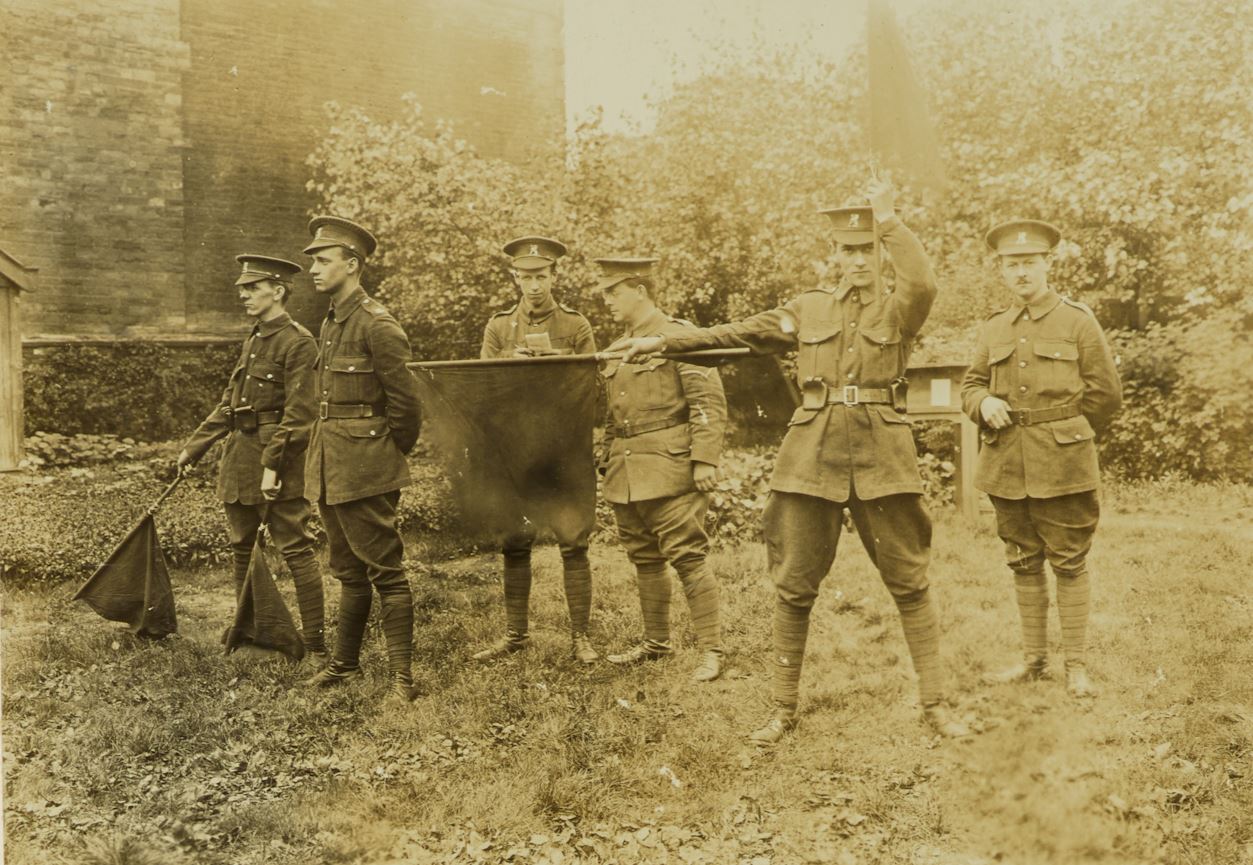
Some Tolkien enthusiasts contend that the army ‘must have’ recognised his interest in invented languages and secret codes and spotted him as a potential signaller. This may be doubted. The army was probably ignorant of Tolkien’s interests and even if they were not ignorant his interests had little relevance to contemporary signalling, which was about miles and miles of underground, overground and airline cables, telephones, power buzzers, signal lamps, flags, human messengers (runners) and even pigeons.[17]
In truth, little is known of why, or even if, Tolkien was selected to become a signaller. He may have volunteered for the role or he may have been ‘told off’ to learn it. In the short term his training course in Ripon at least got him away from the depressing surroundings of Cannock Chase. The signalling arrangements that he was preparing to join were confused, exacerbated by heavy casualties among signals personnel. The post of ‘battalion signals officer’ that he was eventually to fulfil was abolished before the war and was not formally reinstated until December 1917.[18] As the historian of the Signals Service, Raymond Priestley, somewhat drily commented, ‘The whole question of the “signals” of a battalion was shown by the Somme battles to be on a somewhat unsatisfactory footing’. In the 11th Lancashire Fusiliers the situation was addressed by the appointment of an ‘unofficial signalling officer’. It was in this role that Tolkien went to war. Well, almost.
The 11th (Service) Battalion Lancashire Fusiliers
Tolkien’s ‘military family’ for the duration of his active service was to be the 11th Lancashire Fusiliers. Tolkien joined the battalion in the field at Rubempré, nine miles north of Amiens, on 28 June 1916, and was attached to “A” Coy.[19] The battalion war diary recorded his arrival, misspelling his name as ‘Tollkein’.[20] By this time the preliminary bombardment that would signal the start of the battles of the Somme was already underway and it was only eleven days before the battalion attacked at Ovillers.
Carpenter claims that Tolkien found little congenial company in the 11th Battalion. ‘The junior officers were all recruits like himself, some less than twenty-one years old; while the older company commanders and adjutants were in many cases professional soldiers dug out of retirement, men with narrow minds and endless stories of India and the Boer War.’ [21] This characterisation is, to put it bluntly, nonsense.
The 11th Lancashire Fusiliers was formed at Codford on Salisbury Plain in September 1914. It was a ‘K3’ battalion, raised during Lord Kitchener’s third call for a further 100,000 volunteers, and was at the end of the queue for experienced officers and NCOs. This was true even of its first Commanding Officer, James Dayrolles Crosbie.
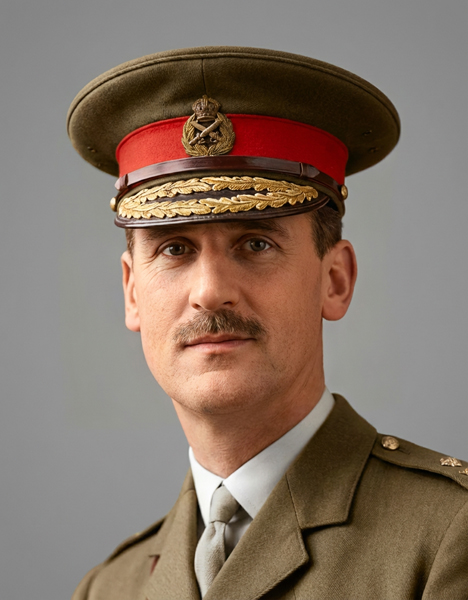
Crosbie was commissioned in the Royal Welsh Fusiliers on 3 June 1885. He was Adjutant of the 2nd Battalion from 1891 to 1893. This was usually the sign of a serious-minded professional, but Crosbie resigned his commission after the death of his father in 1897 and went to live on the family estate in Co. Kerry, where he was active in local government and society. When the European War broke out he was under no obligation to return to the colours, but he did so on 19 August 1914, his forty-ninth birthday. Crosbie was given command of the 11th Lancashire Fusiliers in February 1915. He took them to France in September 1915 as part of 74 Brigade, 25th Division. He remained in command until 4 June 1916, when he was appointed GOC 12 Brigade, 4th Division.[22]
Crosbie was the only officer in the battalion who (almost) qualified as one of Carpenter’s ‘dugouts’. He was not actually ‘dug out’ of retirement because he had left the army not retired from it. One of the striking features of the 11th Battalion is the almost total lack of professional soldiers among its officers during Tolkien’s time. Crosbie’s successor, appointed only nine days before Tolkien’s arrival, was the thirty-eight-year-old Lennox Godfrey Bird, an architect and property developer, whose only military experience appears to have been with the local militia forces in Hong Kong. The 11th did not get a professional officer as CO until Bird was replaced on 6 February 1917 by Edward Cuthbert de Renzy Martin, a Regular officer of the Indian Army.[23]
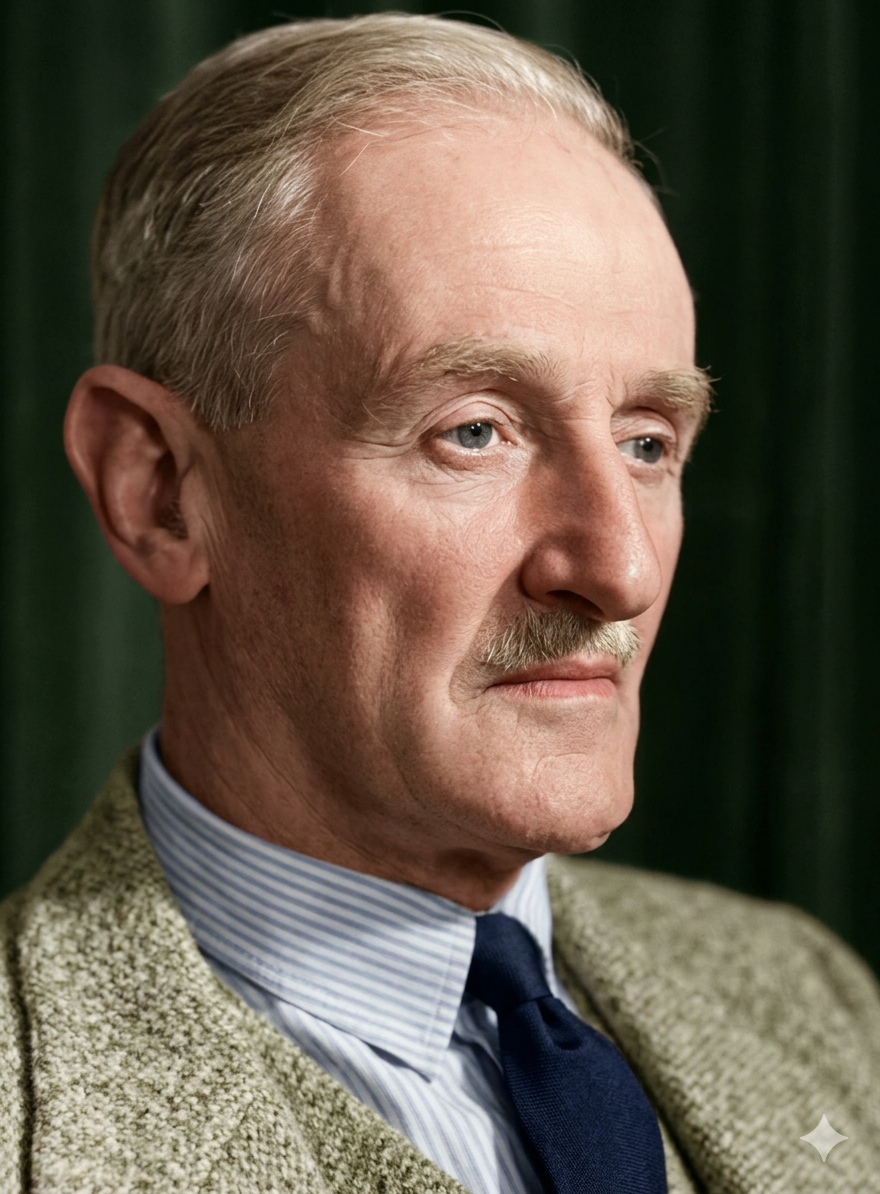
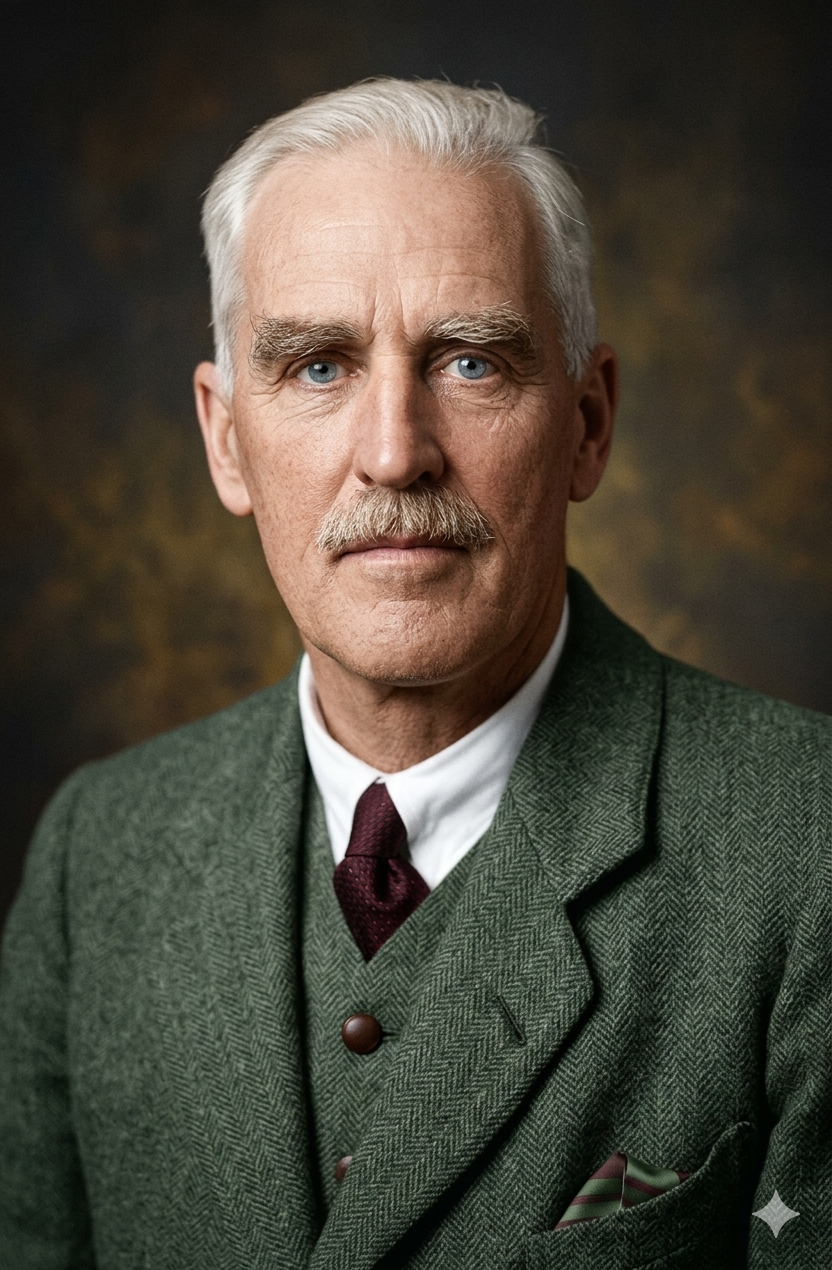
Carpenter’s characterisation of the ‘older company commanders and adjutants’[sic] was hopelessly wide of the mark. The battalion 2 i/c was Jack Metcalfe, who at 20 was actually younger (by four years) than Tolkien. Tolkien’s “A” Coy was commanded by Robert Dunn (23), “B” Coy by Maurice Ward (22), “C” Coy by Roger Ganly (26) and “D” Coy by Percy Ward (24).

The Adjutant was Valentine Kempson (25). Only Ganly and Kempson were older than Tolkien. And Ganly was the only professional soldier among the officers, having enlisted in the ranks of the Royal Inniskilling Fusiliers in 1908 before being commissioned on 10 January 1916. The mean age of the battalion’s officers on 1 July 1916 (excluding Colonel Bird) was 25.2, with a median age of 25. They were not ‘schoolboys in uniform’.
The battalion’s officers were very different from the ‘military types’ identified by Carpenter. The only ones to have any pre-war military experience other than service with school or university OTCs, were Bird (militia forces of Hong Kong), Callaghan (Irish National Volunteers), Ganly (Regular soldier), Glendinning (Liverpool Scottish TF), Kempson (Honourable Artillery Company TF), Melling (Poona Volunteer Rifles, aged 12-14!), Newman (Volunteer Battalion Sherwood Foresters and Southern Rhodesia Volunteers), and Stubbs (Imperial Light Horse). Stubbs, who served in the South African War, was the only one with any pre-war active service. In this context, Tolkien’s brief service in King Edward’s Horse (October 1911-January 1913) and his pre-commissioning experience with the Oxford University OTC was par for the course in this most civilian of battalions. He was not a civilian ‘outlier’ among a cadre of military professionals.
Accounts of Tolkien’s early life sometimes portray him as an ‘outsider’, the poor, orphaned Roman Catholic scholarship boy with a strange interest in invented languages and obscure mythologies, who didn’t quite fit in. The death of his mother undoubtedly inflicted ‘continuing emotional distress and anxiety’ on Tolkien.[24] Despite this, Tolkien’s childhood, especially his school life at King Edward’s, was remarkably happy. He was one of the school’s leaders, intellectually, socially and sportingly. When Tolkien arrived at the 11th Battalion he found a group of men who were very similar in background to his friends from school. Wiseman was the son of a Methodist minister, Gilson’s father was a head master, Smith’s was a clerk (who died when he was thirteen), his Bache relations were solicitors, Barnsley’s family were builders and contractors, the Payton brothers’ father was a ‘merchant’ with connections to the Birmingham jewellery trade, especially silversmithing, Barrowclough’s father was the branch manager of a rubber company.
Twenty-two of Tolkien’s fellow officers (like him) went to public schools, a further fourteen attended independent schools or ancient grammar schools. Eight attended Oxford or Cambridge Universities, while others went to Edinburgh, Glasgow, Bristol and London universities. A small number had only an elementary education and were the sons of father’s who worked with their hands. A few others came from quite wealthy families, but most came from backgrounds very similar to those of Tolkien’s school friends: the sons of clergymen, schoolmasters, clerks, lawyers, businessmen, manufacturers. Tolkien was not the only Roman Catholic officer and he would have found many co-religionists among the Other Ranks of a battalion recruited from the most Catholic county in England. Nor was he the only married officer. In a pre-war Regular battalion it would have been virtually unthinkable for any junior officers to be married. In the 11th Lancashire Fusiliers six (including Tolkien) were married men.
Tolkien also had something else in common with most of his brother officers. He had been commissioned according to the same social criteria as them – public school/university education, membership of an OTC and a degree of sporting acumen. Only seven officers during Tolkien’s time had been promoted from the ranks after significant overseas service – Atkins, Ganly, Glendinning, Kinna, McDougall, Newman and Potts. (The commissioning of Alexander McDougall, the son of a blacksmith, from the ranks of the Scots Guards, was something of a social harbinger.) But it was not until the arrival of 2nd Lieutenants H.F. Heath and H.C. Stead in October that the battalion acquired officers who had been trained and commissioned via the Officer Cadet Battalion system established in February 1916. Tolkien’s brother officers were in most respects typical of those in New Army battalions, a mixture of pre-war students, clerks, civil servants, and professional men (engineers, solicitors, barristers) with a handful of more ‘exotic’ occupations - engraver, electrician, colonial police officer and millinery salesman.
If not an outsider, Tolkien was certainly a ‘newbie’. Sixteen officers remained from when the battalion landed in France on 25 September 1915: Bell; Bird; Callaghan; Edwards; Fawcett-Barry; Fowkes; Holden; Kempson; Lermit; Mackinnon; Metcalfe; Reynolds; Smale; Waite; M.A. Ward and P.D. Ward. They doubtless set the ‘tone’ of the battalion. This would have required some adjustment on Tolkien’s part, but he was not the only newcomer. Four other officers - Atkins, McDougall, Newman and Potts – arrived the day before him.
When Tolkien joined the battalion the 11th already had a signalling officer, W.H. Reynolds. There is no evidence that Tolkien was involved in signalling while Reynolds was in place. Until then, Tolkien was just another platoon officer, but one who was ‘signals ready’ when the time came. It came quickly. Reynolds was promoted to brigade signals officer 74 Brigade on 20 July 1916. From that moment, until he left France, Tolkien was involved in signalling.
The Somme
It was not a gentle introduction. Tolkien and his battalion were thrown into the greatest battle in British military history within days of his arrival. It was a challenge for which, in retrospect, they seem woefully unprepared. The battalion was principally engaged twice during the Somme fighting: at Ovillers in July and against the Stuff Redoubt in October.
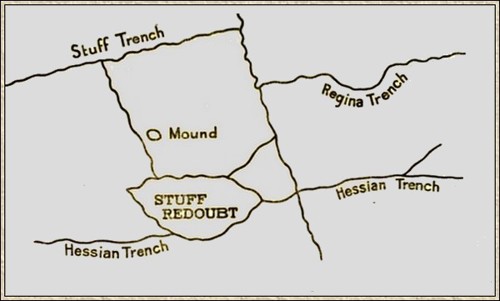
The battalion lost 85 Other Ranks and three officers in July, including Tolkien’s Company commander, Lieutenant Robert Dunn. A further four “A” Company officers - Atkins, Melling, Glendinning and Waite – were wounded. (Atkins had only been with the battalion since the day before Tolkien arrived.) Other officer fatalities were 2nd Lieutenant C.R. Rowley (“C” Coy), Lieutenant L.N. Holden and 2nd Lieutenant J.C. Kay (“B” Coy). A further four officers – 2nd Lieutenant A. McDougall (who also joined the day before Tolkien), Captain P.D. Ward (“B” Coy), 2nd Lieutenant M.A. Callaghan DSO (“B” Coy) and 2nd Lieutenant R.H. Stubbs (“D” Coy) – were wounded. There was less offensive action in September until the end of the month, but a further three officers were killed, including the grievous loss of Captain Roger Ganly MC (OC “D” Coy), undoubtedly one of the battalion’s warriors.[32]
Heavy fighting returned in October, with the attack against Stuff Redoubt. 21 October 1916 saw the heaviest losses suffered by the battalion on the Somme, with 56 Other Ranks and two officers killed. From a strictly military point of view, it was also the battalion’s finest achievement so far, with the capture of Regina Trench, together with five officers and 731 Other Ranks, nineteen machine-guns, two automatic rifles and three field guns of the German garrison. The success was attributed to careful and thorough preparation, excellent artillery support and the willingness of the troops to get close behind the creeping barrage.
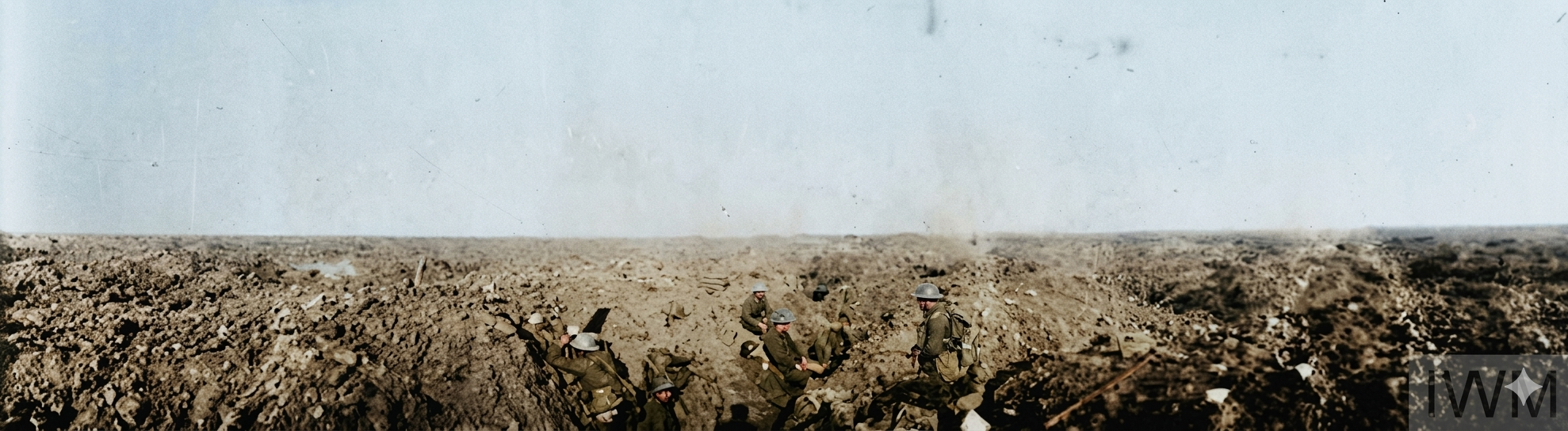
The October fighting took a heavy toll of the battalion’s officers, including two Company commanders, Captain Percy Ward (“B” Coy) and A/Captain Ronald Mackinnon MC (“D” Coy), both killed in action. Other key members of the battalion, including Captain J.C.P.E. Metcalfe, Captain H.H. Fowkes and Captain V.H. Kempson (Adjutant), were wounded, as was Tolkien’s designated successor as signals officer, 2nd Lieutenant L.R. Huxtable, perhaps the closest to a friend that Tolkien had in the battalion. These losses removed key figures from the ‘battalion command team’ and on 13 October a new second-in-command, Major W.G. Constable, was drafted in from the 16th (Service) Battalion Sherwood Foresters. By the end of October seven of the sixteen original officers of the battalion who had greeted Tolkien on his arrival had been killed or wounded and an eighth promoted out of the battalion.[33]
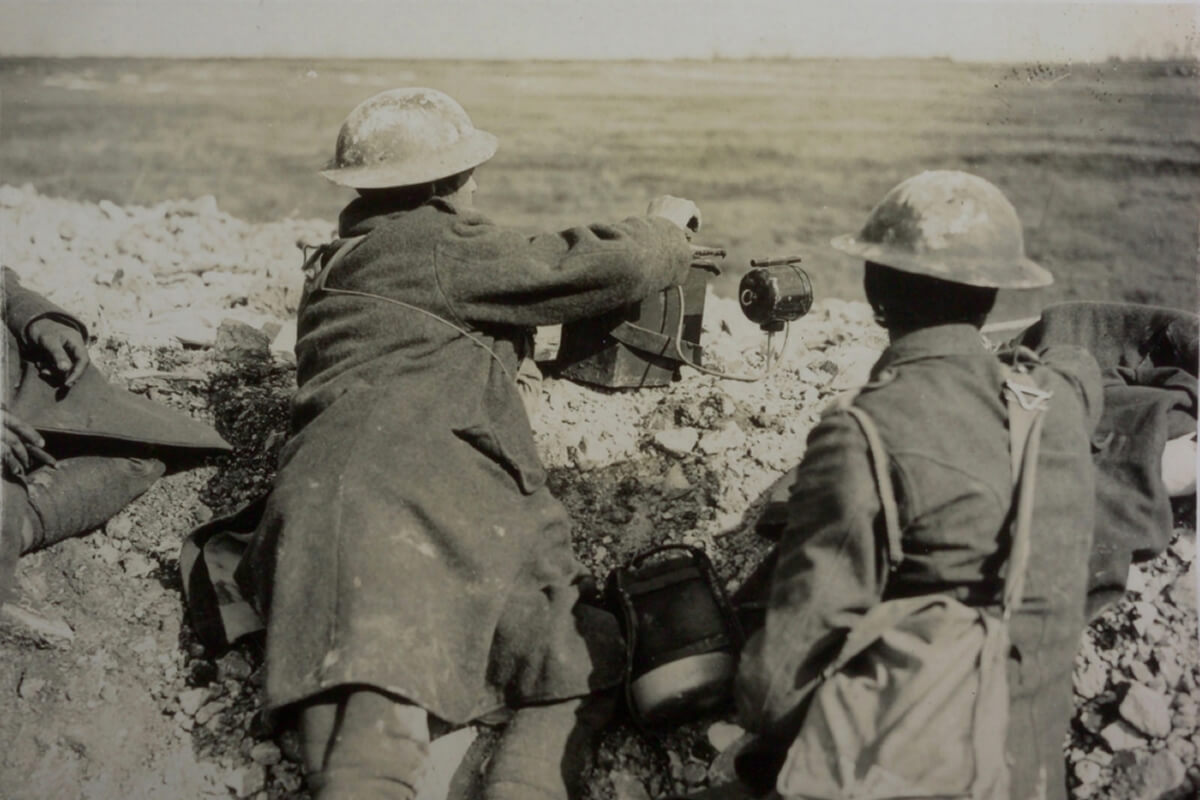
At the conclusion of the Somme fighting, 25th Division Staff undertook an analysis of the formation’s operations.[34] It is an impressive document that gives the lie to those who believe the BEF to be incapable of self-examination and improvement. Appendix 1 of the report dealt with ‘Communications in 25th Division from 1 July to 23 October 1916’. It is critical of signal arrangements in the July fighting: ‘Up to 18 July, when the Division came out of the line, communications were never satisfactory.’ The tendency of battalion commanders to take away Battalion Signal Officers to fill gaps among company officers was reprimanded. (This seems to have happened in the 11th Battalion.)[35]
The division itself took action to remedy signals problems. On 10 August, when the division came out of the line again, a signal course was held for Battalion Signal Officers at Bus-lès-Artois, which Tolkien attended. The officers who had been taken to replace casualties amongst company officers, were ordered back by the Division for signalling duties, and ‘efforts were made to point out and rectify mistakes previously noticed’. On 7 September a Divisional Signal School was started and ‘six untrained men from each Infantry unit in the Division commenced training. Later one officer per battalion joined the School for training as Battalion Signalling Officers’. In this way, the importance of signalling was recognised and strengthened and provision made for trained officers to replace casualties without delay. The Battalion Signal Officer was an important cog in the machinery of war, to whom operational orders were sent as a matter of course, along with the company commanders, the bombing officer and the Lewis gun officer.
Tolkien’s active service ended six days after the capture of Regina Trench, when he reported sick. He was immediately sent down the line, arriving at the Duchess of Westminster Hospital in Le Touquet on 29 October.
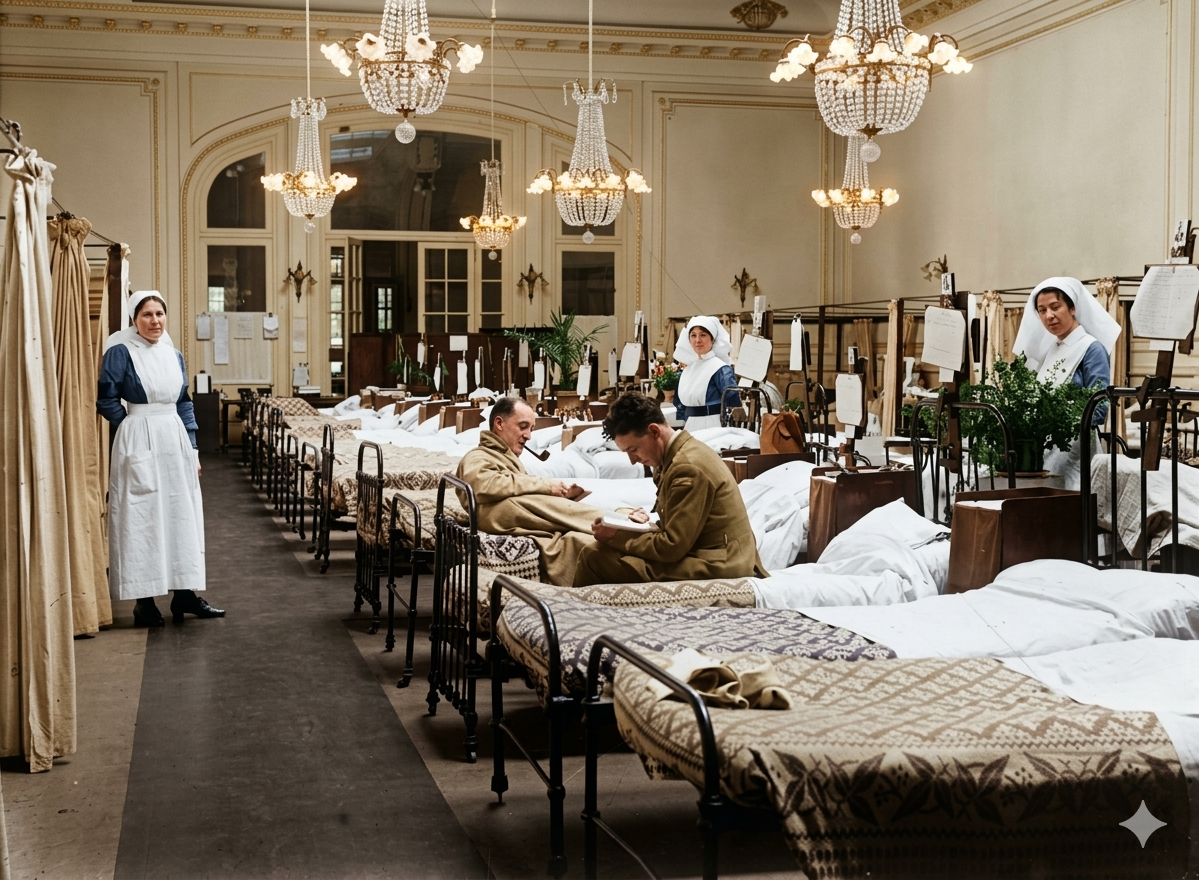
By 9 November he was back on familiar ground at the 1st Southern General Hospital on the Edgbaston Campus of Birmingham University. He was clearly very unwell, suffering from vomiting and diarrhoea. He lost two stones in weight. Other officers in the battalion and possibly the GOC 74 Brigade, Brigadier-General George Armytage, were also affected by whatever was causing the ‘trench fever’. Tolkien’s time with the 11th Lancashire Fusiliers had lasted 122 days, long enough to experience the full fury of the Great War on the Western Front. He had played an important role in the battalion’s operations.
His Commanding Officer valued his work ‘highly’ and was anxious to see his return.[36] Ten of his brother officers had been killed, roughly a third of the battalion’s establishment. Another eight would die in the months ahead, one by his own hand. More suffered illness or wounds, some cruel and life-changing, beginning lifelong struggles with pain and depression that in one case, at least, proved to be unbearable. These life stories can be seen in Appendix 1, below.
Acknowledgements
The authors are delighted to acknowledge the help of David Harte, Lorraine Murray (Archivist, The Glasgow Academy Archive), Professor Michael Snape, Dr William Spencer and Phil Tomaselli in researching this article.
Appendix 1
Officers of the 11th (Service) Battalion Lancashire Fusiliers, 27 June-27 October 1916
Below are short biographies of fifty-one officers whose service in the 11th Battalion Lancashire Fusiliers definitely overlapped with that of Tolkien. The names are based on the Monthly Army Lists for 1916, but we realised at an early stage that the Army Lists alone were not a reliable and definitive source. Confirmation was sought in the battalion War Diary,[37] the battalion history,[38] and the officers’ respective personal files.[39] John Garth’s Tolkien and the Great War: The Threshold of Middle-Earth (Boston & New York: Houghton Mifflin, 2003), which had access to the Tolkien Collection in the Bodleian Library, was also useful. The turnover of officers was such that many of those listed below overlapped with Tolkien only very briefly.
2nd Lieutenant (later Lieutenant) (Abraham) Clifford Altham MC (1893-1923):
b. 7 January 1893 at Habergham Eaves, Lancashire (aged 23 on 1 July 1916); s. of Peter Holgate Altham (1867-1934), of Reedley Hall, Burnley, tea merchant and manufacturer, and Bertha Altham (née Walton) (1869-1948); educ. Mill Hill School. Altham was employed in the family business before the war; he attested on 4 September 1914 and joined the ranks of the 20th (Service) Battalion Royal Fusiliers (3rd Public Schools), from which he was commissioned into the Lancashire Fusiliers on 19 May 1915; he joined the 11th Battalion on 27 May 1916, being attached to “A” Coy. His service with the 11th was short-lived. He was evacuated to England in August 1916 in order to undergo surgery on a deflected nasal septum. After a period of sick leave he was attached to the 3rd (Reserve) Battalion Lancashire Fusiliers on 18 October 1916. It is not known when he returned to active service, but he suffered shrapnel wounds in his thighs at Épehy on 20 November 1917, while attached to the 2/5th Battalion Lancashire Fusiliers TF, an action for which he was awarded the Military Cross. He was not pronounced fit for active service until two days after the Armistice and was discharged from the army on 29 January 1919. He returned to work as a tea merchant. He died on 19 October 1923 from pulmonary tuberculosis, aged only 30. He did not marry.
Honours & Awards: MC
Service File: TNA WO339/49223
Probate: £7,124 7s 9d
2nd Lieutenant (later Lieutenant) Robert Percy Foster Ashburner (1891-1961):
b. 14 May 1891 at Dalton-in-Furness, Lancashire (aged 25 on 1 July 1916); s. of Thomas Ashburner (1859-1920), a solicitor, and Jane Ashburner (née Foster) (1864-1930); an articled accounts clerk before the war and later a Chartered Accountant. He was commissioned in the Lancashire Fusiliers on 9 September 1915, joining the 11th Battalion on 25 July 1916 and being attached to “C” Coy. He was wounded on 8 October 1916 and did not rejoin the battalion until 29 October. He was wounded again on the Westhoek Ridge, Belgium, on 11 August 1917. He was posted to 9th (Service) Battalion Lancashire Fusiliers on 23 August 1917. He died in Pembury Hospital, Tunbridge Wells, on 12 September 1961, aged 70.
Honours & Awards: BWM VM
Service File: Not found
Probate: £19,881 16s 0d
2nd Lieutenant Frederick Melvin Atkins (1893-1964):
b. 29 August 1893 at Hendon, Co. Durham (aged 22 on 1 July 1916); s. of Andrew Atkins (1865-1939), marine engineer, and Anna Isabella Atkins (née Telford) (1869-1945); educ. Bede Collegiate School and Sunderland Technical College; a marine engineer before the war. He volunteered for military service on 27 December 1914 and served abroad in the ranks of the Scots Guards from 6 October 1915 until 25 May 1916. He was commissioned in the Lancashire Fusiliers in June 1916 and joined the 11th Battalion on 27 June, the day before Tolkien arrived. In July 1916 he was blown up by a shell and was unconscious for two hours. He was treated for a shell wound in the hand and ‘nerves’. He was in hospital for ten days, but five days after returning to the unit he was sent down by the MO, Captain McFarlane, to No. 2 Red Cross Hospital, Rouen, with ‘trench fever’. He was evacuated to the 5th Southern General Hospital, Portsmouth, where the diagnosis was ‘poisoning resulting from shell’. After a long period of recovery, he was posted to the 9th (Service) Battalion Lancashire Fusiliers in September 1917. On 23 December 1917 Atkins was reported as being ‘unfit to serve as an officer’ and it was recommended that his services be dispensed with. He was compelled to resign his commission in February 1918. Atkins contested the decision, which he attributed to ‘prejudice’ by the CO of the 9th Lancashire Fusiliers, who was definite in his view that Atkins was not suitable as an officer ‘owing to want of reliability and power of command to lead men in action’.
In 1914 Atkins had been 4th Engineer on the SS Siamese Prince when it was captured by the German cruiser SMS Dresden. The ship was allowed to proceed subject to all on board signing a paper to the effect that they would not take up arms against Germany. Because Atkins had signed this paper it was agreed by the military authorities that he should not be conscripted back into the ranks after resigning his commission, even though he had been ‘in arms’ against Germany for three years!
Frederick Atkins returned to engineering after the war, both at sea and in the brewing industry. He died at Kingston-upon-Thames, Surrey, on 13 December 1964, aged 71.
Honours & Awards: 1915 Star BWM VM
Service File: TNA WO 339/65909
Probate: £5,031 0s 0d
Lieutenant (later Captain) (William) Stanley Bell (1884-1953):
b. 17 May 1884 at Newcastle-upon-Tyne (aged 32 on 1 July 1916); s. of William Edward Bell (1852-1922), grocer, and Isabella Skipsey Bell (née Reay) (1850-1932), a family of devout Methodists; educ. Royal Grammar School, Newcastle-upon-Tyne and Peterhouse, Cambridge; schoolmaster, Newcastle-under-Lyme High School, before and after the war, teaching Classics. He was commissioned on 23 December 1914 and was one of the original officers of the 11th Lancashire Fusiliers who deployed to France on 25 September 1915. His service was dogged by ill-health. He had two bouts of neurasthenia (shell shock), each requiring hospitalisation, in February 1916 and April 1917. He was again evacuated to England in June 1917 suffering from neuritis in his right leg. During his recuperation he was attached to 17th (Garrison) Battalion Royal Sussex Regiment. He returned to France in January 1918 ‘mainly on base duty owing to symptoms of neurasthenia, insomnia and failure of concentration’. He reported sick again in September 1918 and was again evacuated home in October.
On 26 November 1918 he was ‘recommended as permanently unfit for Military Service’ by a Medical Board and allowed to relinquish his commission on 4 February 1919. He commanded the OTC contingent at Newcastle High School until October 1920. Family legend believed his real desire was to be ordained in the Church of England, but it never came to pass. Stanley Bell died at Harrogate on 19 December 1953, aged 69.
Honours & Awards: 1915 Star BWM VM
Service File: TNA WO 374/5622
Probate: Not found
2nd Lieutenant (later T/Major) Rodney Knight Beswick MC* (1890-1953):
b. 15 May 1890 in London (aged 26 on 1 July 1916); s. of Frank Beswick (1858-1929) and Clare Beswick (née Knight) (1868-1938); both parents were landscape artists. He was a salesman in an antiques shop before emigrating to Canada in April 1912. He returned to England in 1914 and enlisted in the ranks of King Edward’s Horse (in which Tolkien had briefly served before the war). Beswick deployed to France with B Squadron (The American Squadron) on 21 April 1915. His unit served as the divisional cavalry of 48th (South Midland) Division TF. He was commissioned in the Lancashire Fusiliers on 19 December 1915 and joined the 11th Battalion on 31 July 1916. He was awarded his first Military Cross for actions in the attack on Regina Trench on 11 October 1916. He was OC “B” Coy throughout 1917. He was awarded a Bar to his MC in the desperate fighting on the River Lys in April 1918. He found himself Acting CO of the battalion from 14-21 April 1918 and 9-12 August 1918, when the unit was disbanded following its heavy losses.
Beswick was the last CO to sign the battalion War Diary. He was subsequently T/Major 52nd (Graduated Battalion) Manchester Regiment, serving as part of the British garrison in Germany. He returned to antiques dealing in North Wales after the war. He served again on home defence duties as an Emergency Reserve Officer in the Second World War. Rodney Beswick died in Liverpool on 17 April 1958, aged 67.
Honours & Awards: MC* 1915 Star BWM VM
Service File: Not available
Probate: Not found
Major (A/Lieutenant-Colonel) Lennox Godfrey Bird (1878-1954):
b. 18 January 1878 at Trull, Somerset (aged 38 on 1 July 1916); s. of Frederick Vincent Godfrey Bird (1842-99), Captain Royal Marine Light Infantry, and Anne Narcisse Elise Bird (née Wood) (1848-1900); educ. Felsted School. He was an architect by profession and later ran a successful property development company in Hong Kong. It seems probably that he had some pre-war military experience in the Hong Kong Artillery and Rifle Volunteer Corps. This may explain why he was commissioned as a Captain in The Queen’s (Royal West Surrey Regiment) on 3 December 1914. He transferred to the Lancashire Fusiliers sometime in the spring of 1915. He was one of the original officers of the 11th Battalion who deployed to France on 25 September 1915. He was given command of the unit on 19 June 1916 after Colonel Crosbie was promoted to command 12 Brigade, having previously been Adjutant. This was a week before Tolkien joined. He was 38, quite young for a battalion commander with limited military experience, at this period of the war. He seems to have been a calm, sensible and humane CO. He remained in command until 6 February 1917 when he was replaced after an adverse report described him as ‘unfit to command a battalion in the field, but recommended to command a Training Battalion at home’.[40] This was part of what Peter Hodgkinson has called the BEF’s continuous process of quality control. Bird took up flying after the war and obtained his Royal Aero Club Aviator’s Certificate on 2 October 1930, the same day as his daughter, Jean, who became the first woman to be awarded RAF wings. He died at Beech, Hampshire, on 31 March 1954, aged 76.
Honours & Awards: DSO MiD 1915 Star BWM VM
Service File: TNA WO 339/19035
Probate: £27,609 9s 9d
2nd Lieutenant (later Captain) Frank Bowmer (1886-1932):
b. 5 May 1886 in Nottingham (aged 30 on 1 July 1916); s. of Arthur George Bowmer (1846-1915), railway cashier, and Clara Bowmer (née Pitchfork) (1851-1931); educ. Nether Street School, Beeston, Nottinghamshire; employed as a railway clerk before the war. He volunteered for military service on 8 August 1914 and was posted to the 2/1st Nottinghamshire Yeomanry (South Nottinghamshire Hussars). It was from this unit that he was discharged to a commission in the 3rd (Reserve) Battalion Lancashire Fusiliers on 29 November 1915. He had married Mary Eleanor Selby (1887-1968) a week before he was commissioned. He joined the 11th Battalion on 22 August 1916. He was evacuated to the UK with influenza on 3 March 1917, rejoining the 11th on 27 August 1917. He injured his left elbow while running across a field in December 1917. This required surgery. Worse was to come. He was badly wounded on 3 November 1918, losing his right leg and left arm. He spent the rest of his life as an army pensioner. Frank Bowmer died at Louth Hospital, Lincolnshire, on 26 June 1932, aged only 46.
Honours & Awards: BWM VM
Service File: TNA WO339/47330
Probate: £1,183 1s 0d (Resworn £88 19s 0d)
2nd Lieutenant Alfred Harold Bradbeer (1896-1916):
b. 19 August 1896 in Exeter (aged 19 on 1 July 1916); s. of Alfred Bradbeer (1862-1955), builder, and Ethel Bradbeer (née Mildon) (1873-1944); educ. Queen’s College, Taunton, and Bristol University, where he was a medical student before the war and a member of the OTC. He was commissioned in the Manchester Regiment on 28 December 1915. He joined the 11th Lancashire Fusiliers on attachment from the Manchesters on 30 July 1916 and was killed in action on 21 October during the attack on Regina Trench. Alfred Bradbeer has no known grave, but is commemorated on the Thiepval Memorial, France, and on the Queen’s College and Bristol University Rolls of Honour.
Honours & Awards: BWM VM
Service File: TNA WO339/51573
Probate: Not found
2nd Lieutenant Michael Augustine Callaghan DSO (1888-1966):
b. 29 December 1888 at Rathmore, Co. Kerry (aged 27 on 1 July 1916); s. of John Callaghan (1858-1932), Head Constable, Royal Irish Constabulary, and Catherine Callaghan (née O’Regan) (1860-1916); educ. Christian Brothers School, Cork. He worked as clerk [paymaster] with the City of Cork Steamship Company, but also held a commission in the Irish National Volunteers, Cork City Regiment.
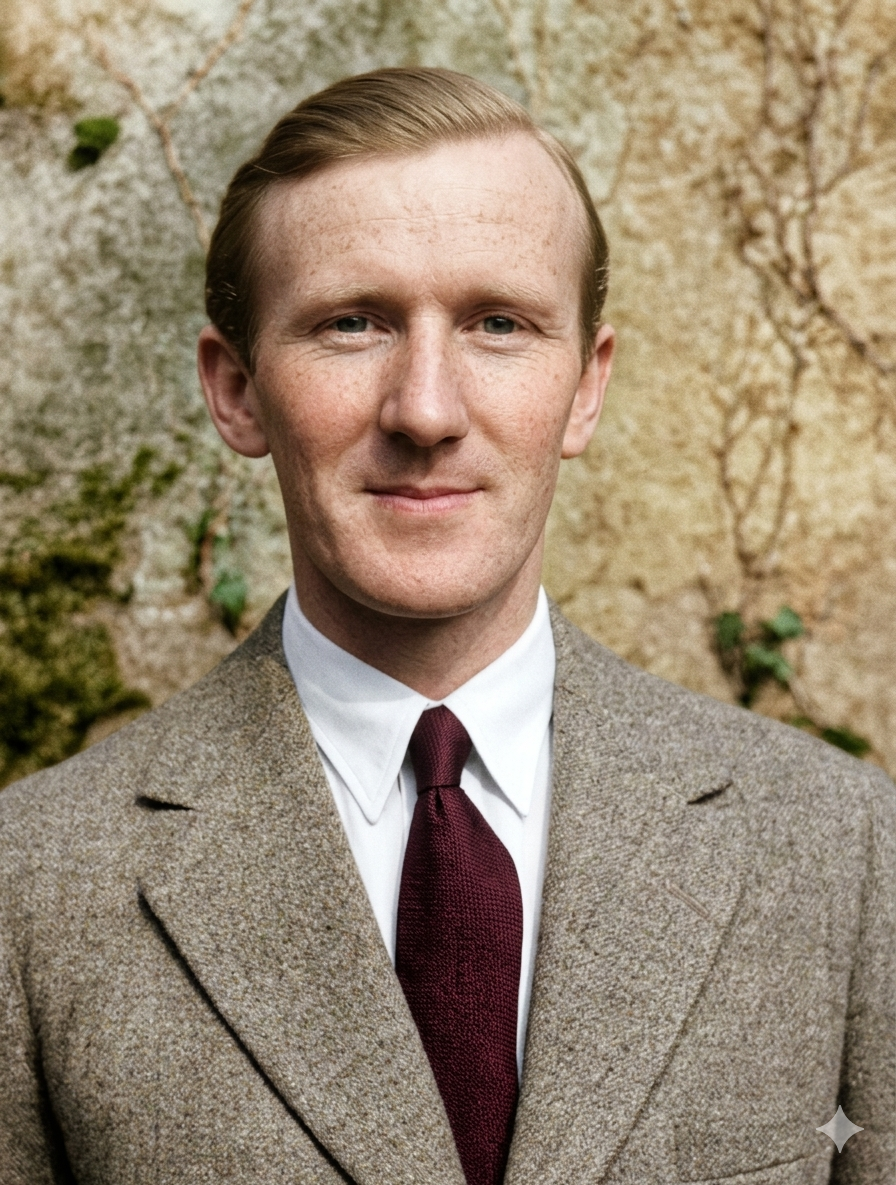
The National Volunteers were the majority faction of the Irish Volunteers who sided with the Irish Parliamentary Party Leader, John Redmond. Redmond, to the surprise of many, pledged support for the British war effort, as did Callaghan, who was commissioned in the Lancashire Fusiliers on 25 February 1915. He was one of the original officers of the 11th Battalion who deployed to France on 25 September 1915. On 16 July 1916 he led sixteen men in a ferocious assault on a German position east of Ovillers in order to rescue the beleaguered 1/5th Battalion Royal Warwickshire Regiment [143 Brigade]. The attack resulted in the surrender of the German garrison, including two officers and 124 ORs of the Prussian Guard Fusiliers. Callaghan was wounded in the attack, but remained at duty. He was subsequently awarded the Distinguished Service Order for this remarkable achievement, an unusual honour for a junior officer. It also resulted in his being Mentioned in Despatches on 4 January 1917. He was wounded again on 25 August, this time more seriously. A gunshot wound to his right forearm and left thigh resulted in a 40 per cent disablement. He spent 1917 serving with a Labour Coy before being attached to the British Mission to North America in Montreal, where he served until 1919. In a strange apotheosis for an Irish Nationalist, Michael Callaghan’s post-war career was spent as an Administrative and, later, as a District Officer in British East Africa. He died in Dublin on 8 October 1966, aged 77.
Honours & Awards: DSO MiD 1915 Star BWM VM
Service File: TNA WO339/35138
Probate: £6,351 0s 0d (in England)
Major William George Constable (1887-1947):
b. 27 October 1887 in Derby (aged 28 on 1 July 1916); s. of William George Samuel Constable (1861-1947), elementary schoolmaster, and Remeliah Isabella Constable (née West) (1859-1926); educ. Derby School and St John’s College, Cambridge; an Extension Lecturer in Economics before the war; called to the bar in 1914 (Inner Temple). He served in the ranks of the Inns of Court OTC from 29 September 1914 until 4 May 1915. He was discharged to a commission in the 16th (Service) Battalion Sherwood Foresters (Chatsworth Rifles) on 5 May 1915. He joined the 11th Lancashire Fusiliers as 2 i/c on 13 October 1916 and remained with them until he was invalided home on 29 January 1918.
After the war, he changed academic horses and became an art historian and gallery director, holding posts at the National Gallery, the Courtauld Institute, the University of Cambridge and the Boston Museum of Fine Arts. He is the only officer of the 11th Lancashire Fusiliers to have an entry in the Dictionary of National Biography other than Tolkien. Professor Constable died in Boston, Massachusetts, on 3 February 1976, aged 88. One of his sons, Giles Constable, was Professor of Medieval History at Harvard University, specialising in the religious and cultural history of twelfth century Catholic Europe, which would surely have pleased Tolkien.
Honours & Awards: MiD BWM VM
Service File: TNA WO339/30897
Probate: Not found
2nd Lieutenant Thomas Charnley Cook (1891-1948):
b. 19 March 1891 at West Derby, Liverpool (aged 25 on 1 July 1916); s. of William Simpson Cook (1853-1905), engraver, and Frances Ann Cook (née Charnley) (1851-1902); an engraver before the war. He was commissioned on 2 April 1915, but did not deploy to France until 24 April 1916. At some point, he transferred to the Royal Air Force. He married a farmer’s daughter, Ellen Jane Coulam (1895-1977) on 1 May 1918 and took up farming and dairying after the war. He was not a success, going bankrupt in 1935. The 1939 Register of England and Wales found him living alone in a boarding house in Nottingham and working as a GPO clerk. His wife was living at her father’s farmhouse. Their son, Trooper Thomas Charnley Cook (1920-42), 2nd Royal Gloucestershire Hussars, died in Libya on 4 June 1942.
Honours & Awards: BWM VM
Service File: Not available
Probate: Not found
Lieutenant Frederick Charles Robert Dunn (1893-1916):
b. 8 April 1893 at Bromley, Kent (aged 23 on 1 July 1916); s. of Herbert George Dunn (1849-1940), cabinet maker and undertaker, and Felicia Dunn (née Harman) (1854-1935); educ. Cranleigh School. He was employed as an accounts clerk before the war. He enlisted in the 18th (Service) Battalion Royal Fusiliers (1st Public Schools) on 2September 1914, and was commissioned from their ranks into the 11th Lancashire Fusiliers on 4 December 1914. He was killed in action on 9 July 1916 at Ovillers while serving in “A” Coy. Frederick Dunn has no known grave, but is commemorated on the Thiepval Memorial, France.
Honours & Awards: BWM VM
Service File: TNA WO339/2041
Probate: £492 19s 2d
Lieutenant (later T/Captain) (William) Ian Edwards MC (1896-1917):
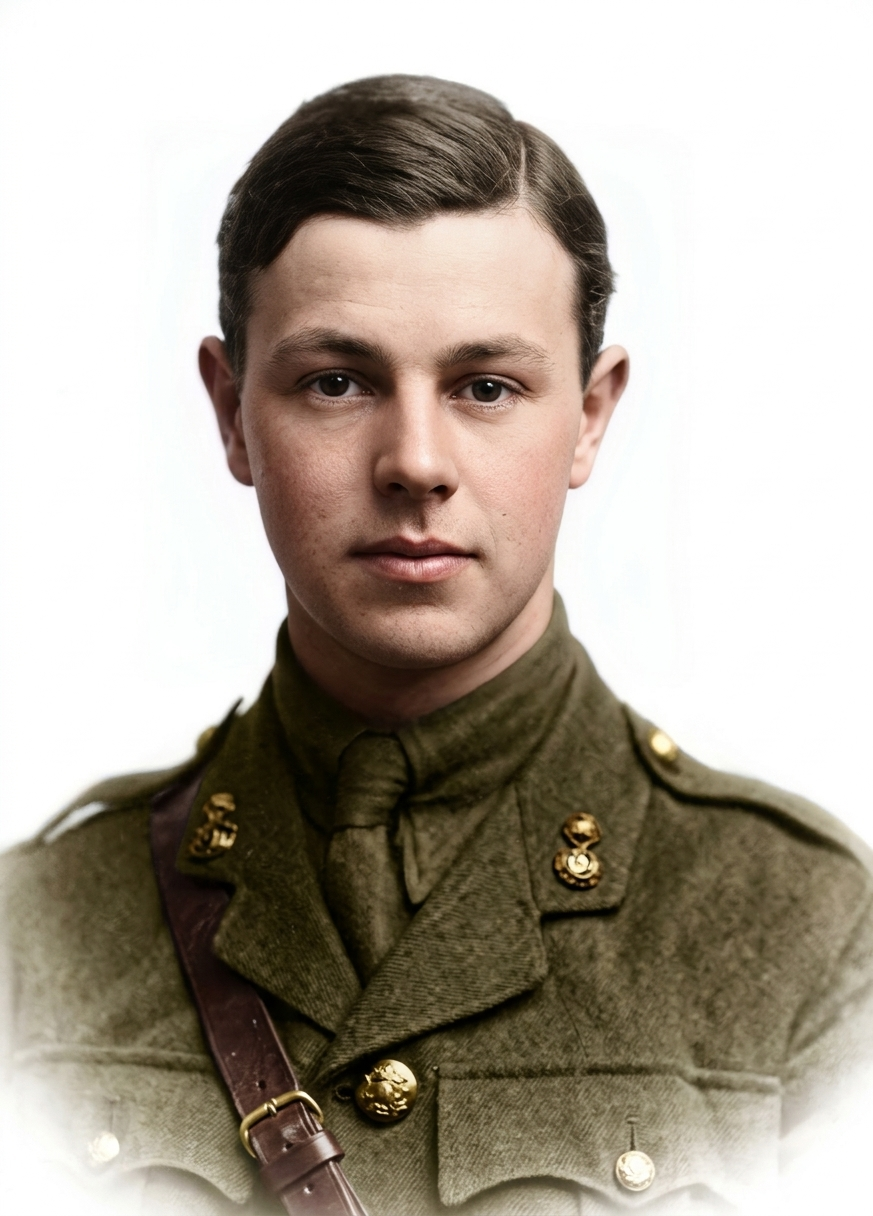
b. 22 September 1896 at Islington, Middlesex (aged 19 on 1 July 1916); s. of Samuel Henry Edwards (1871-1949), Member of the Stock Exchange, and Emily Edwards (née Shanks) (1868-1955); educ. Hurstpierpoint College, where he was in the OTC. He was commissioned in the Lancashire Fusiliers on 4 December 1914 and was one of the original officers who landed with the 11th Battalion in France on 25 September 1915. He was awarded the Military Cross for actions at the Crosbie Craters, 15-16 May 1916. Captain & Adjutant Ian Edwards was killed in action on the Westhoek Ridge, Belgium, on 5 August 1917. He has no known grave, but is commemorated on the Ypres (Menin Gate) Memorial and the Hurstpierpoint College Roll of Honour.
Honours & Awards: MC 1915 Star BWM VM
Service File: TNA WO339/2042
Probate: £700 13s 9d
2nd Lieutenant Patrick Francis Jervoise Fawcett-Barry (1888-1977):
b. 7 February 1888 in Co. Cork (aged 28 on 1 July 1916); s. of Edward and Kathleen Barry. He was commissioned on 29 January 1915 and was one of the original officers who took the 11th Battalion to France in September 1915. He became OC “A” Coy (Tolkien’s company) in July 1916, following heavy losses suffered at Ovillers, with the rank of T/Captain. Fawcett-Barry was wounded in October 1916. He was evacuated to the UK where he spent some time as Adjutant 3rd (Reserve) Battalion Lancashire Fusiliers at Thirtle Bridge, East Yorkshire, where he would once more have overlapped with Tolkien. On 13 October 1917 the London Gazette announced that Fawcett-Barry was one of four officers who had been transferred to the General List for service with the West African Frontier Force. John Garth described Fawcett-Barry as ‘an army careerist’,[41] though on what basis is unclear. He was not a professional soldier and he relinquished his commission on 2 September 1919 with the non-stellar rank of T/Lieutenant, but remained on the Reserve of Officers or joined it later. He was not released until 7 February 1938, with the rank of Lieutenant.
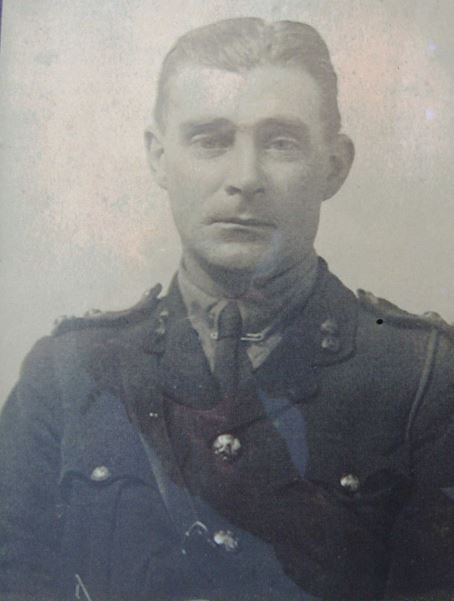
Much about the remainder of his long life remains obscure, but some things are clear. He married Lavinia Watts in May 1916. The marriage ended in divorce in 1924 after his wife gave evidence of his constant drunkenness, threats of physical violence and adultery. Much of this took place while they were living in the Federated Malay States. She was granted a decree nisi with costs and custody of their two children. He married twice more, the final time in 1945, when he was described as ‘Captain Fawcett-Barry’. He seems to have been a film extra and was Chairman of the Film Artists Association in 1941. He died in Gloucester on 8 December 1977, aged 89. A collection of his private papers covering his service with the 11th Lancashire Fusiliers from January to October 1916 is in the Imperial War Museum.
Honours & Awards: 1915 Star BWM VM
Service File: Not available
Probate: £4,951 0s 0d
Lieutenant (later T/Captain) Henry Humphrey (‘Tommy’) Fowkes MC (1896-1926):
b. 23 January 1896 at Lewisham, Kent (aged 20 on 1 July 1916); s. of Henry Evett Fowkes (1864-1932), solicitor, and Alice Maud (née de la Bere) (1865-1929); educ. Dulwich College, where he was a member of the OTC. He was a student before the war and was due to go up to Trinity College, Oxford, in 1914. It is unclear whether he took up his place, but he did not apply for a commission until 12 December 1914, which would have been at the end of the University Michaelmas term. He was commissioned on Christmas Eve 1914 and was one of the original officers of the 11th Lancashire Fusiliers who deployed to France on 25 September 1915. On 22 January 1916 he was awarded the Military Cross for his actions in a raid at Le Touquet on 28 December 1915. 2nd Lieutenant R.F. Mackinnon was awarded the MC for the same raid. These were the first gallantry awards made to officers in the 11th Battalion. Fowkes was wounded on 26 April 1916 and more seriously on 21 October 1916, during the attack on Regina Trench, when his right leg had to be amputated. Despite this, the army seemed desperate to hang on to him. He was not struck off the establishment of the 11th Lancashire Fusiliers until 21 May 1917 and he officially relinquished his commission only on 18 March 1919. During his period of recovery he was variously employed on clerical duties with the Labour Corps in Northern Command and in the Royal Air Force. Fowkes was a tea merchant after the war. He was drowned in a yachting accident off Shanghai on 11 September 1926, aged 30.
Honours & Awards: MC
Service File: TNA WO 339/4686
Probate: £320 0s 0d
T/Captain Roger Prendergast Ganly MC MiD (1890-1916):
b.15 March 1890 at Poona, India (aged 26 on 1 July 1916); s. of Major W. Wrench Ganly (1859-1928), army officer, who had risen from the ranks to a commission in the 2nd Battalion Lancashire Fusiliers. Roger Ganly was a professional soldier who joined the Royal Inniskilling Fusiliers on 1 May 1908. He was an Old Contemptible, suffering a gunshot wound to the jaw while serving with 2nd Battalion Royal Inniskilling Fusiliers on 22 September 1914. After medical treatment in the UK he returned to his battalion on 27 April 1915. On 5 January 1916 he was posted to 19th (Service) Battalion Lancashire Fusiliers as CSM. On 26 January 1916 he was commissioned in the field as a 2nd Lieutenant in the 11th Lancashire Fusiliers. He was awarded the Military Cross for actions at the Crosbie Craters, 15-16 May 1916. He was appointed Temporary Lieutenant on 11 July 1916 and Temporary Captain on 29 July 1916. He was killed in action on 29 September 1916, near the Schwaben Redoubt. He was shot through the head by a sniper while leading a strong fighting patrol as OC “D” Coy. Captain Ganly has no known grave, but is commemorated on the Thiepval Memorial, France.
Honours & Awards: MC MiD 14 Star BWM VM
Service File: TNA WO 339/53979
Probate: £129 12s 0d
2nd Lieutenant John Angus Glendinning (1895-1971):
b. 24 August 1895 at Toxteth Park, Liverpool (aged 20 on 1 July 1916); s. of John Walter Glendinning (1853-1930), fishmonger, and Alice Maude Glendinning (née Glendinning) (1859-1932); educ. Lucton School, Herefordshire. Glendinning was unusual among Tolkien’s contemporaries in the 11th Lancashire Fusiliers in being a pre-war Territorial ranker in the 1/10th Battalion King’s (Liverpool Regiment) (Scottish). He went to war as early as 1 November 1914, reaching the rank of Sergeant before being commissioned on 29 November 1915.
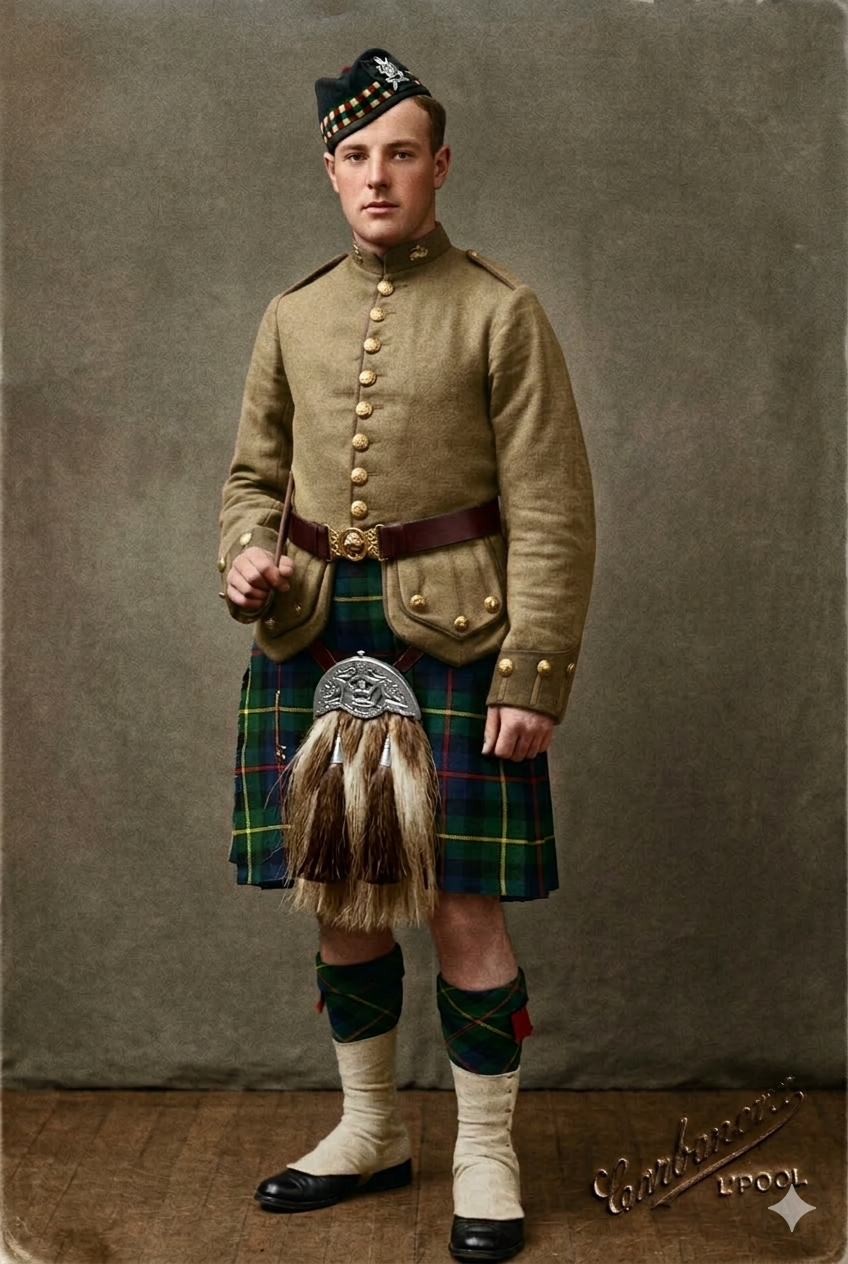
It is unclear at what point he transferred to the Lancashire Fusiliers, but he joined the 11th Battalion on 1 July 1916 in Tolkien’s “A” Coy and was wounded a fortnight later. His career beyond that point descends into a bureaucratic black hole until 1918, by which point he was a Captain attached to the Ministry of Shipping.
The 1921 Census lists him as a ‘tile manufacturer/ employer’. During the Second World War he was granted an Emergency Commission as a 2nd Lieutenant in the Royal Artillery, but became Permanent President of Courts Martial for the North West District and ended the war as a Lieutenant Colonel. John Glendinning died in Devizes, Wiltshire, on 13 December 1971, aged 76.
Honours & Awards: 14 Star BWM VM
Service File: Not available
Probate: £19,963 0s 0d
2nd Lieutenant William Lilburn Grey (1896-1939):
b. 3 November 1896 at Berwick-upon-Tweed, Northumberland (aged 19 on 1 July 1916); s. of James Lilburn Grey (1856-1940), wine merchant, and Beatrix Mary Grey (née Riddle) (1858-1940); educ. North East County School, Barnard Castle, and Edinburgh University (he was a member of the OTC at both institutions); commissioned in the 13th (Reserve) Battalion Lancashire Fusiliers on 23 July 1915 (eight days after Tolkien). He was posted to the 11th Battalion on 11 August 1916. His service there was short-lived. He suffered a shrapnel wound to the back on 25 August 1916 and was evacuated to the UK. He never returned to active service and was invalided out of the army on 22 August 1917.
After the war, he took up the profession of mining engineer, for which he had started training in 1914. He lived in Australia from c.1922-27. But his wounds left him with a legacy of poor health, which deteriorated to the extent that he was unable to work. This made him very depressed and on 12 July 1939 he committed suicide by cutting his throat. He was 42 years old and living with his sister. A Freemason.
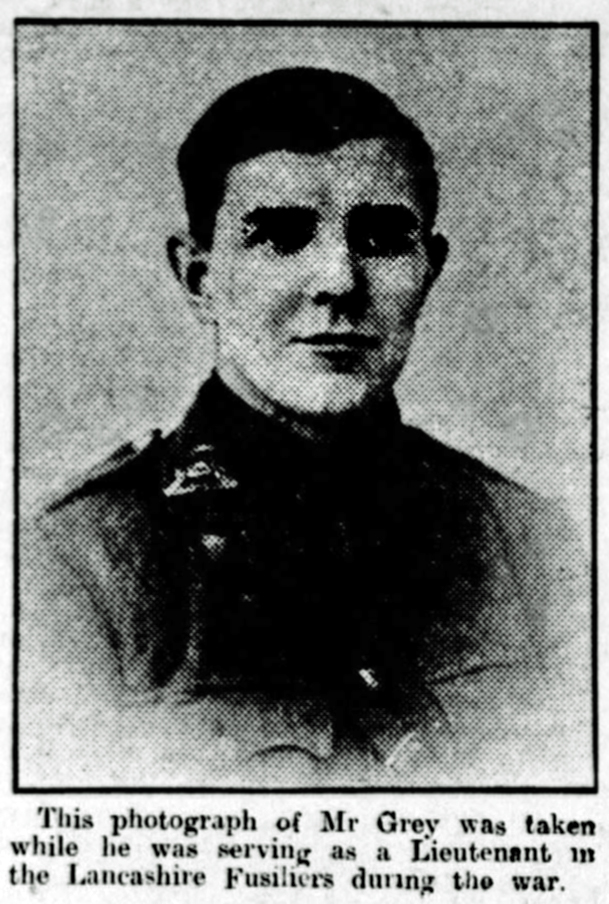
An older brother, 2nd Lieutenant Patrick Riddle Grey, 15th (Reserve) Battalion Northumberland Fusiliers, attached 8th (Service) Battalion Northumberland Fusiliers, was killed in action on 26 September 1916.
Honours & Awards: BWM VM
Service File: TNA WO 339/35864
Probate: £559 8s 9d
2nd Lieutenant William Henry Halfpenny (1886-1918):
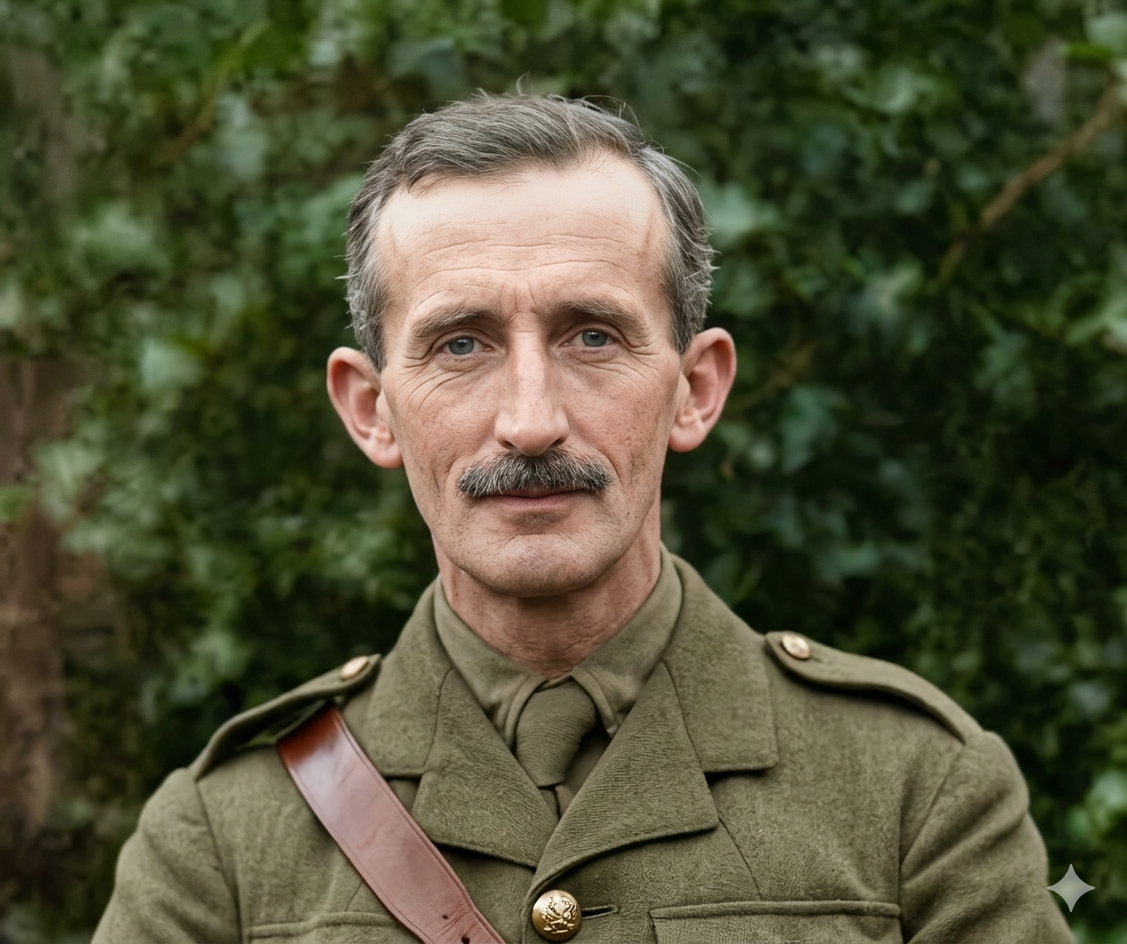
b. 18 September 1886 at Woore, Shropshire (aged 29 on 1 July 1916); s. of William Halfpenny (1856-1945), insurance clerk, and Mary Ann Halfpenny (née Brockley) (1857-1942); educ. Liverpool Collegiate Institute; employed as a bank clerk before the war. He volunteered for military service on 16 November 1914 and was posted to 2/6th (Rifle) Battalion King’s (Liverpool Regiment). He was commissioned in the 15th (Reserve) Battalion King’son 12 May 1915, the same year that he married Sarah Ann (‘Sally’) Dickinson (1885-1945). His service with the 11th Lancashire Fusiliers began on 1 July 1916. At some point he transferred to the RFC/RAF. He was based at 49th Training Depot Station RAF at the time of his death in a flying accident near Catterick on 24 November 1918, aged 32.
Honours & Awards: BWM VM
Service File: TNA WO 339/41313
Probate: £318 17s 7d
2nd Lieutenant (later Lieutenant) Harold Ford Heath (1895-1992):
b. 8 June 1895 at Heaton Mersey, Cheshire (aged 21 on 1 July 1916); s. of Robert Heath (1863-1951), wholesale druggist, and Sarah Emma Ford (1868-1942); educ. Sale Grammar School; a book keeper in an electrical stores before the war. He volunteered for military service on 18 November 1914 and was posted to the 21st (Service) Battalion Royal Fusiliers (4th Public Schools).[42]
He served abroad in the ranks from 14 November 1915 until 24 March 1916, when he was posted to No. 2 Officer Cadet Battalion, Pembroke College, Cambridge, for officer training. He was commissioned in the 11th Lancashire Fusiliers on 4 August 1916, joining the battalion in the field on 17 October. In December 1916 he succumbed to trench fever. He had experienced previous attacks and returned to the front, but on 28 December he became feverish and was sent home on leave on 3 January 1917. He had another attack while in Manchester and was admitted to No. 2 Western General Hospital, where he was treated for a month. Like Tolkien, a series of Medical Boards found him unfit for active service. He was posted to the 3rd (Reserve) Battalion Lancashire Fusiliers and, like Tolkien, spent time at Thirtle Bridge.
At a Medical Board held in Ripon on 6 February 1918 it was stated Heath ‘suffers from palpitation and shortness of breath. The action of his heart is very rapid, 140 per minute. As the condition of this officer’s heart has not improved with treatment the Board are of the opinion that he will never make [Medical Grades] A, B or C’. He was accordingly allowed to relinquish his commission on the grounds of disability on 10 May 1918. After the war he became a commercial traveller for Heath Bros, Cycles of Manchester [1921] and later manager for a ‘Chemists and Sundry Goods Manufacturer’ [1939]. Harold Heath died at Bingley, West Yorkshire, on 14 November 1992, aged 97, a remarkable outcome for someone who suffered from atrial fibrillation and tachycardia in his early twenties.
Honours & Awards: 1915 Star BWM VM
Service File: TNA WO 339/60365
Probate: Not exceeding £125,000
2nd Lieutenant Stephen Owen Hetherington (1893-1916):
b. 22 March 1893 in Liverpool (aged 23 on 1 July 1916); s. of Joseph Hewson Hetherington (1860-1933), engine fitter, and Ann Hetherington (née Owen) (1861-1919); educ. Anfield Road Council School, Liverpool; employed as a merchant’s clerk before the war. He attested on 3 February 1915 and was posted to 5th (Reserve) Battalion King’s Royal Rifle Corps (part of the Thames and Medway Garrison) on 19 February 1915. He was discharged to a commission in the 15th (Reserve) Battalion King’s (Liverpool Regiment) on 8 January 1916. He joined the 11th Lancashire Fusiliers on 1 July 1916 and died of shell wounds suffered in the attack against the Schwaben Redoubt on 29 September 1916. 2nd Lieutenant Hetherington is buried at Mill Road Cemetery, Thiepval, France.
Honours & Awards: BWM VM
Service File: TNA WO 339/52467
Probate: £20 15s 2d
Lieutenant Leonard Neil Holden (1889-1916):
b. 29 December 1889 at Ormskirk, Lancashire (aged 26 on 1 July 1916); s. of John James Holden (1844-1914), manufacturing chemist, and Margaret Holden (née Neill) (1855-1934); educ. Sedbergh School. He was employed as a salesman for the Globe Cotton Spinning Co., Manchester, before the war. He was commissioned in the 11th Lancashire Fusiliers on 23 November 1914. He married Doris Marjorie Bracewell on 29 June 1915 and, like Tolkien, entered the war with a wife at home. Holden was one of the original officers of the battalion who landed in France on 25 September 1915. On 9 July 1916 he was severely wounded in the left shoulder and leg in attack near Albert, on the Somme. Stretcher bearers attempted to bring him back, but had to leave him in a front line dug out after a German counter-attack. The position was retaken the following day when Holden was found dead, having apparently been bayonetted. Lieutenant Holden has no known grave, but is commemorated on the Thiepval Memorial, France, and on the Sedbergh School Roll of Honour. A Freemason.
Honours & Awards: 1915 Star BWM VM
Service File: TNA WO 339/2361
Probate: £22,561 8s 1d
2nd Lieutenant (later Lieutenant) Leslie Risdon Huxtable (1894-1961):
b. 26 November 1894 at Tiverton, Devon (aged 21 on 1 July 1916); s. of William Henry Huxtable (1851-1925), cashier in a lace factory, and Ellen Huxtable (née Cann) (1855-1927); educ. Blundell’s School; a student before the war and a schoolmaster after it. He attested on 19 March 1915 and was posted to the 5th (City of London) Battalion London Regiment (London Rifle Brigade) from which he was discharged to a commission on 26 July 1915. He first met Tolkien while in training at Cannock Chase. And, like Tolkien, he joined the 11th Lancashire Fusiliers as ‘signals ready officer’ in September 1916. He was wounded on 10 October 1916, however, before he could take over battalion signals from Tolkien. He was partially buried by a shell that exploded on the parados and embedded shrapnel in his left calf. He made light of the leg wound in a letter to his parents that was referred to in the Devon & Somerset News. But when he was fit enough for duty, he was posted to the 3rd (Reserve) Battalion Lancashire Fusiliers, where his path once more crossed that of Tolkien. He also had a period attached to No. 2 Officer Cadet Battalion, Cambridge. He returned to the 11th Battalion on 16 September 1917. On 23 March 1918 he was wounded again, sustaining a gunshot wound to his back and arm, the bullet penetrating then exiting his chest. He relinquished his commission on 26 March 1919. He died at Ashton-under-Lyne, Lancashire, on 25 April 1961, aged 66.
Honours & Awards: BWM VM
Service File: TNA WO 339/35319
Probate: £15,494 14s 0d
2nd Lieutenant John Calvert Kay (1885-1916):
b. 18 September 1885 at Burnley, Lancashire (aged 30 on 1 July 1916); s. of William Entwisle Kay (1854-1938), cotton spinnerand manufacturer, and Melissa Kay (née Calvert) (1859-1933); educ. Sutton Valence School.[43] When the war broke out he was working as an electrical engineer in the United States, where he had been since 1908. He immediately returned to the UK and attested in Maidstone on 15 September 1914, being posted to 19th (Service) Battalion Royal Fusiliers (2nd Public Schools). He was discharged to a commission on 19 May 1915, but did not join the 11th Lancashire Fusiliers until 20 May 1916 as a platoon commander in “B” Coy. He was killed in action on 15 July 1916 while leading his men in a night attack near Ovillers. 2nd Lieutenant Kay has no known grave, but is commemorated on the Thiepval Memorial, France.
Honours & Awards: BWM VM
Service File: TNA WO 339/48722
Probate: £665 7s 3d
Lieutenant (later Captain) Valentine Harold Kempson (1891-1973):
b. 14 February 1891 at Harringay, Middlesex (aged 25 on 1 July 1916), s of William Joseph Kempson (1862-1940), accountant, and Frances Kempson (née Wainwright) (1864-1950); educ. Dulwich College; he was employed as a mercantile clerk according to the 1911 Census, though on his Protection Certificate he is described as a salesman He had spent four years with the Honourable Artillery Company before the war until he ‘left the district’. He attested on 15 September 1914 and was posted to the 18th (Service) Battalion Royal Fusiliers (1st Public Schools), from whose ranks he was discharged to a commission on 24 November 1914. He was one of the original officers who deployed with the 11th Lancashire Fusiliers to France on 25 September 1915. He was Battalion Adjutant from 19 June 1916 until he suffered a gunshot wound to the chest on 21 October 1916 during the attack on Regina Trench. While recovering at home on 20 February 1917 he was posted to the 3rd (Reserve) Battalion Lancashire Fusiliers on the East Coast at Withernsea. It is not clear when he returned to action, but on 28 September 1918 he suffered a gunshot wound to an eye while serving with the 1st Battalion Lancashire Fusiliers. The wound to his cornea resulted in astigmatism that had to be corrected with glasses. He was released from military duty on 20 February 1919. In the 1921 Census he was described as a ‘purveyor’ and in the 1939 Register of England and Wales as a ‘retired retail butcher’. Valentine Kempson died at Bromley in Kent on 12 April 1973, aged 82.
Honours & Awards: 1915 Star BWM VM
Service File: TNA WO 339/2346
Probate: £49,952 0s 0d
2nd Lieutenant (later Lieutenant) James Eckersley Kinna MC (1889-1917):
b. 8 November 1889 at Creebridge in Minnigaff, Dumfriesshire (aged 26 on 1 July 1916); s. of James Green Kinna (1854-1911), bank accountant, and Mary Jane Kinna (née Hannah) (1860-1937); employed as an electrician before the war. He volunteered for military service with the 9th (Highlanders) Battalion Royal Scots TF, from whose ranks he was discharged to a commission on 22 January 1916. He joined the 11th Lancashire Fusiliers on 1 February 1916. He was awarded the Military Cross for actions at the Crosbie Craters, 15-16 May 1916. He left the 11th Battalion on 30 June 1916 after suffering shell shock as the result of a mine explosion on Vimy Ridge. When he returned to front line service it was with the 16th (Service) Battalion Lancashire Fusiliers (2nd Salford). Lieutenant Kinna died of a self-inflicted wound from his own revolver at the St John’s Ambulance Hospital, Étaples, on 12 September 1917. A Court of Enquiry decided that his death was a deliberate act resulting from depression occasioned by chronic Bright’s Disease. Lieutenant Kinna is buried in Étaples Military Cemetery, France.
Honours & Awards: MC 1915 Star BWM VM
Service File: TNA WO 339/54666
Probate: £106 9s 0d
2nd Lieutenant Harold Noel Layton (1888-1963):
b. 17 April 1888 at Hounslow, Middlesex (aged 28 on 1 July 1916); Rev. Henry Layton (1842-1914), Clerk in Holy Orders (Vicar of St Stephen’s, Hounslow), and Ada Mary Layton (née Gurney) (1856-1950).[44] Harold Layton was a schoolmaster and preparatory school proprietor (St Peter’s School, Seaford, Sussex) before and after the war. He was commissioned in the Lancashire Fusiliers on 12 November 1915 despite stating a preference for the King’s Own (Royal Lancaster Regiment). He joined the 11th Lancashire Fusiliers on 4 July 1916, but was struck off its strength on 13 August, following his attachment to 74 Trench Mortar Battery. He was taken ill when home on leave in October 1916 and diagnosed with shell shock. He never returned to the front. He spent time at the Special Hospital for Officers, Palace Green Kensington, where he was under the care of Dr (later Sir) Maurice Craig (1866-1935), psychiatrist and pioneer in the treatment of mental illness. It was Craig’s opinion on 5 June 1917 that Layton ‘never will be fit again for active service and that it will be some long time before he would be fit to carry out even ordinary home service duties’. He was duly discharged from the army on 26 June 1917. He had been working for the War Trade Intelligence Department from April 1917, but his release from the army allowed him to return to managing his prep school, which freed his business partner, Rolf Henderson, to join the army. Layton died in Hove on 21 July 1963, aged 75. He never married.
Honours & Awards: BWM VM
Service File:TNA WO 339/48193
Probate: £43,239 6s 0d
2nd Lieutenant (later Captain) Henry Walter John (‘Jock’) Lermit (1895-1985):
b. 1 January 1895 at Howrah, India (aged 21 on 1 July 1916); s. of Rev. Lawrence Hosier Lermit(1859-1943), Clerk in Holy Orders, and Frances Theresa Lermit (née Radcliffe) (1857-1943); educ. Haileybury College and Oriel College, Oxford; he was commissioned on 7 December 1914, but did not join the 11th Lancashire Fusiliers in France until 25 August 1916, the year in which he married Kathleen F. Elsmore (1898-1973). He acted as battalion Bombing Officer during the attack on Thiepval Wood in September 1916. He was a civil servant in the Inland Revenue after the war. A Freemason. Captain Lermit died at Christow, Devon, on 21 June 1985, aged 90.
Honours & Awards: BWM VM
Service File: Not found
Probate: £41,551 0s 0d
2nd Lieutenant (later Lieutenant) Geoffrey Loseby (1892-1949):
b. 10 April 1892 at Market Bosworth, Leicestershire (aged 24 on 1 July 1916); the tenth of thirteen children of Arthur John Loseby (1841-1925), solicitor, and Dorothea Loseby (née Smith) (1852-1937); educ. Market Bosworth Grammar School; he went to South Africa in January 1914 to work as a clerk;[45] his occupation stated on his Protection Certificate was ‘manager of a brewery depot’. Geoffrey returned from South Africa, where he was serving in the South African Defence Force, on 3 August 1915 and was commissioned in the 4th (Extra Reserve) Battalion Lancashire Fusiliers within less than a month, on 1 September 1915. (His older brother, Charles, had also been commissioned in the Special Reserve of the Lancashire Fusiliers and had already been gassed on the Western Front by the time his brother returned from South Africa.) Geoffrey joined the 11th Battalion on 4 July 1916 in Tolkien’s “A” Coy. He was evacuated to the UK on 2 October 1916 suffering from ‘diphtheria following previous treatment for pirea [pyrea] and tonsillitis’. He does not appear to have returned to active service. He came down with appendicitis on 21 April 1918 while stationed in South Wales. He was placed on the retired list on 25 September 1919 owing to ‘ill health contracted on active service’. He returned to South Africa after the war, where he was variously described as a ‘brewery manager’ [1927] and a ‘stores clerk’ [1946].
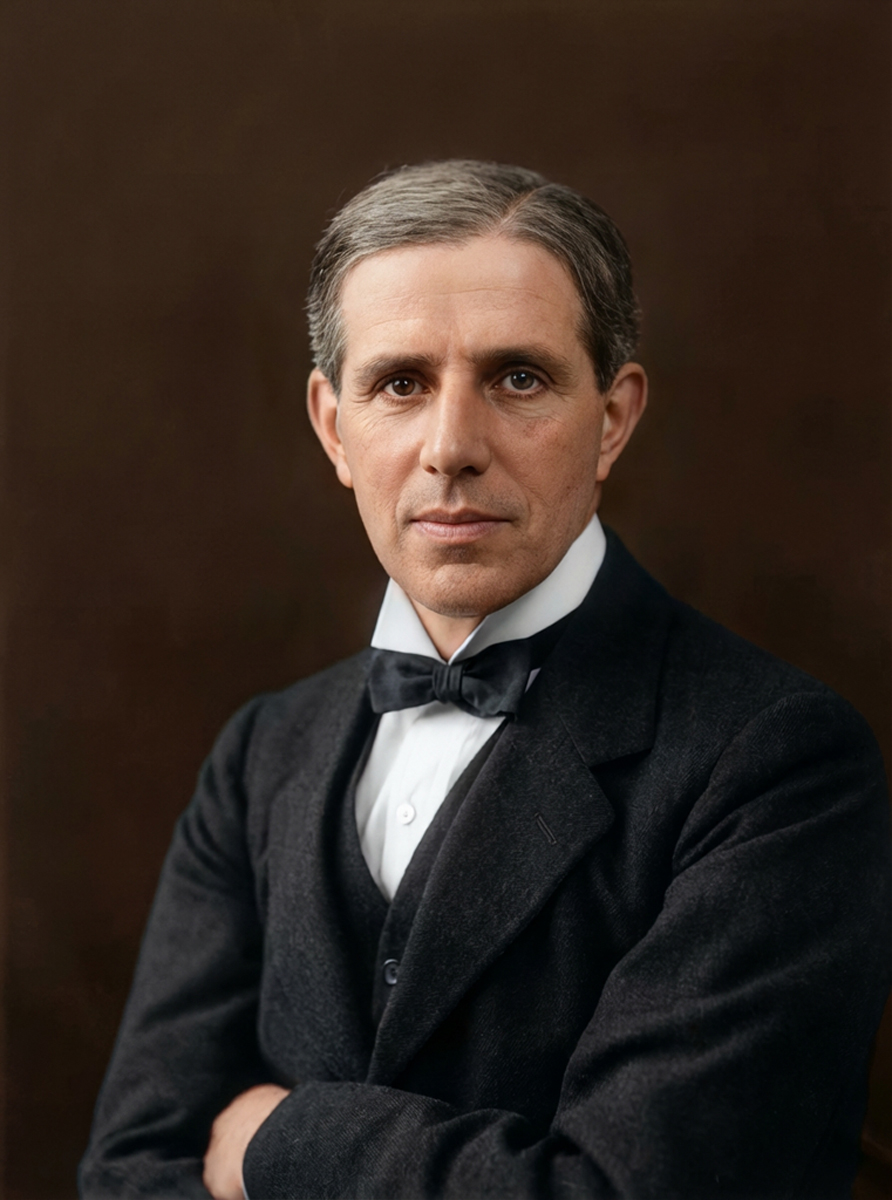
Geoffrey Loseby died in the Park Infirmary, Market Bosworth, on 26 February 1949, aged 56. His death certificate described him as a ‘civil servant’.
Honours & Awards: None found
Service File: TNA WO 339/41114
Probate: £117 2s 6d
Lieutenant (A/Captain) Ronald Fullarton Mackinnon MC (1889-1916):
b. 23 October 1889 in Kingston, Jamaica (aged 26 on 1 July 1916); s. of Louis Fullarton Mackinnon (1848-1911), Colonial Civil Servant and Director of the Jamaica Railway, and Agnes Louise Ann Mackinnon (née Lynch) (1865-1961); educ. Dulwich College; a clerk in the Bank of England before the war. He was in Canada when the war broke out but returned to the UK and was commissioned on 20 March 1915. He was one of the original officers who landed with the 11th Battalion in France on 25 September 1915. He was awarded the Military Cross on 22 January 1916 for actions at Le Touquet on 28 December 1915. On 11 May 1916 he was evacuated to the UK after an attack of malaria and did not return to the battalion until July 1916.
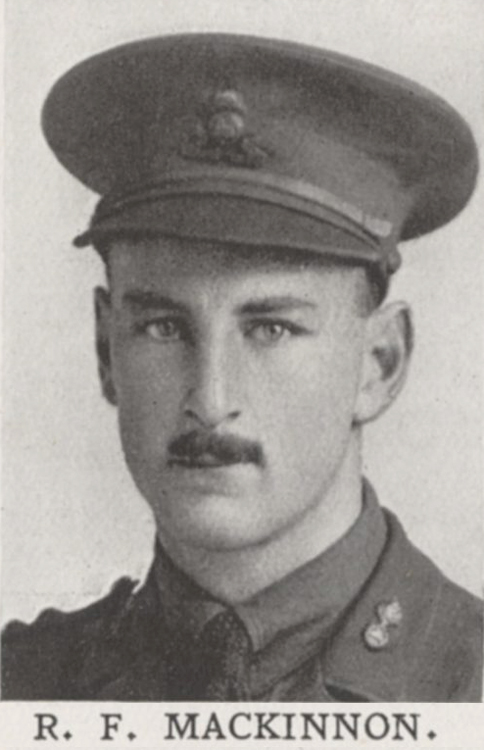
Captain Mackinnon was killed in action on 21 October 1916 while on attachment to the 9th (Service) Battalion Loyal North Lancashire Regiment, a sister battalion in 74 Brigade. He has no known grave, but is commemorated on the Thiepval Memorial, France, and on the Dulwich College Roll of Honour.
Honours & Awards: 1915 Star BWM VM
Service File: TNA WO 339/36978
Probate: £136 1s 8d
2nd Lieutenant (later Lieutenant) Albert Geoffrey Borodaile Manson (1891-1976):
b. 5 February 1891 at Walton-on-Thames, Surrey (aged 25 on 1 July 1916); s. of Edward William O'Donoughue Manson (1850-1919), barrister-at-law, and Eliza Charlotte Manson (née Percy) (1848-91); educ. Dulwich College and Wadham College, Oxford. He was admitted to the Inner Temple in 1912 and commissioned in the Lancashire Fusiliers from the ranks of the Inns of Court OTC on 14 December 1914. He was badly wounded by the accidental explosion of a grenade while being instructed at Lichfield on 1 November 1915, but had recovered sufficiently to join the 11th Battalion on 28 July 1916. He went sick on 20 January 1917 with a chest abscess, possibly connected to his earlier wound, and was evacuated to the 3rd London Hospital in Wandsworth. He did not return to action until 1918 when he was posted to the 12th (Service) Battalion Lancashire Fusiliers, which had been brought from Salonika to France, where it was absorbed by the 6th Battalion Lancashire Fusiliers TF. This unit was in the 66th (2nd East Lancashire) Division TF, which was one of the spearheads of the Great Advance in the autumn of 1918. Manson was called to the Bar in 1919 and later became a Magistrate and Judge in the Colonial Service in West Africa. He died in London on 1 October 1976, aged 85.
Honours & Awards: BWM VM
Service File:TNA WO 339/4811
Probate: £25,974 0s 0d
2nd Lieutenant Alexander McDougall (1891-1918):
b. 24 September 1891 at Port Glasgow, Renfrewshire (aged 24 on 1 July 1916); s. of Alexander McDougall, foreman blacksmith, and Agnes McDougall (née Dunlop); employed as a clerk (cashier) before the war. He volunteered for military service with 1st Battalion Scots Guards on 20 December 1914 (he was 6’ 2” tall) and went to war with them on 11 July 1915. He was discharged to a commission on 25 June 1916 and posted to the 11th Lancashire Fusiliers. He was badly wounded at La Boisselle on 8 July 1916. His left leg had to be amputated six inches below the hip. 2nd Lieutenant McDougall died on 26 October 1918 of lobar pneumonia, aged 27.
Honours & Awards: 1915 Star BWM VM
Service File:TNA WO 339/65908
Probate: £723 7s 6d
Captain Wilfrid McFarlane MC* (1878-1961):
b. 2 January 1878 in Edinburgh (aged 38 on 1 July 1916); s. of John McFarlane (1837-1903), wire cloth manufacturer, and Marian Elizabeth McFarlane (née Newton) (1841-1883); educ. Glasgow and Edinburgh Universities. McFarlane began his working life in an insurance office, but abandoned this in favour of studying medicine at Edinburgh University. After qualifying, he was appointed a medical missionary under the auspices of the London Missionary Society. He and his wife, Ella, left for Central Africa in April 1904. He resigned in 1914 following a disagreement over London Missionary Society policy. He volunteered for military service in the Royal Army Medical Corps and was commissioned in December 1914. He deployed to France in April 1915, but it is not clear at which point he was appointed Medical Officer of the 11th Lancashire Fusiliers. He would have been the first point of medical contact when Tolkien fell ill in October 1916. McFarlane was twice awarded the Military Cross, on 11 December 1916 and 9 January 1918, on both occasions for treating and evacuating the wounded under heavy enemy fire.
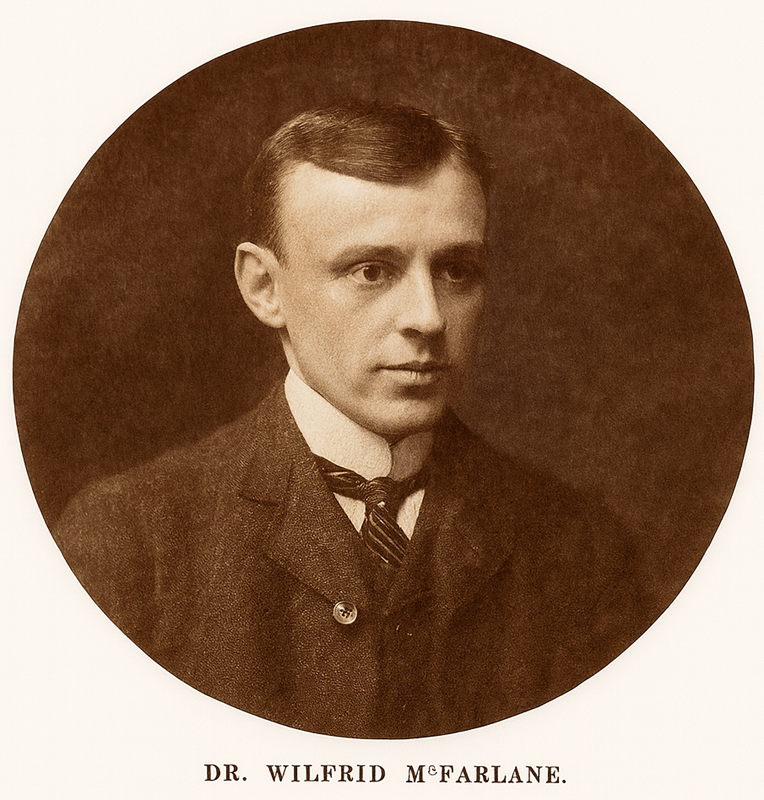
After the war, McFarlane and his wife worked with the Church of Scotland mission in Blantyre from 1920 until 1936. He died in Bournemouth on 7 April 1961, aged 83.
Honours & Awards: MC* 1915 Star BWM VM
Service File: Not available
Probate: £50,059 19s 5d
2nd Lieutenant (A/Captain) Charles Flower Melling MC (1893-1918):
b. 16 July 1893 at Maharastra, India (aged 22 on 1 July 1916); s. of Samuel Flower Melling (1851-1926), Bombay Port Trust, and Eliza Fanny Melling (née Williams) (1859-1937); educ. Dulwich College; he was a touring actor before the war. He served from the age of 12 to 14 with the Poona Volunteer Rifles! He volunteered for military service on 2 September 1914 and was posted to 18th (Service) Battalion Royal Fusiliers (1st Public Schools) a fortnight later. He was discharged to a commission in the Special Reserve on 15 May 1915. He joined the 11th Lancashire Fusiliers on 27 May 1916 in “A” Coy. He was awarded the Military Cross on 27 July 1916 for actions at Ovillers on 7-10 July 1916, suffering a wound to his left forearm. He was wounded for a second time, by now with 9th (Service) Battalion Lancashire Fusiliers, at Poelcapelle on 4 October 1917.
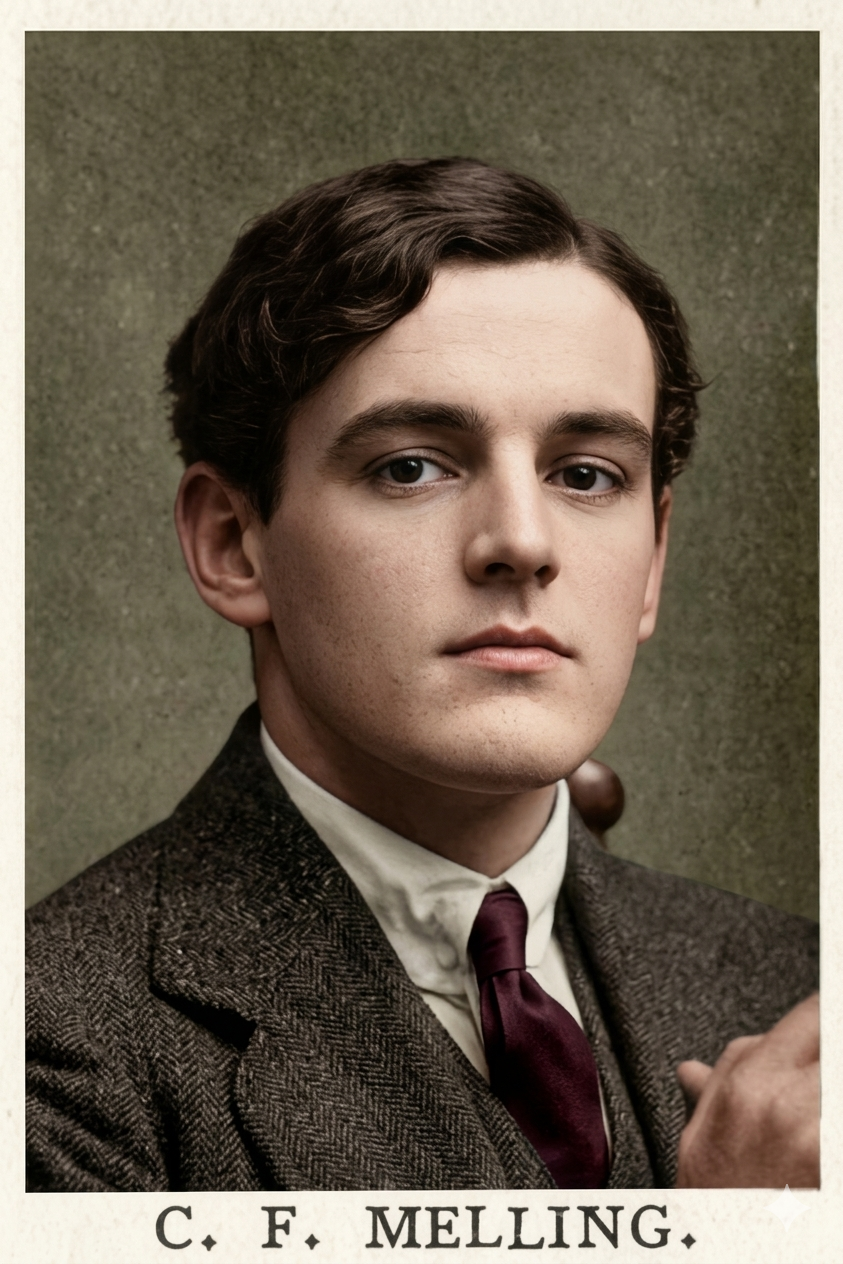
The circumstances of Captain Melling’s death are uncertain, though not the fact of it. He returned to No Man’s Land on his own near the Nieppe Forest on 12 May 1918 to complete a reconnaissance he felt had been previously inadequate. He did not return and was posted missing on 13 May. His death on 13 May 1918 was eventually accepted for official purposes. Captain Melling has no known grave, but is commemorated on the Ploegsteert Memorial, Belgium, and on the Dulwich College Roll of Honour.
Honours & Awards: BWM VM
Service File:TNA WO 339/49221
Probate: £145 5s 0d
Captain John Christian Prideaux Eamonson (‘Jack’) Metcalfe (1896-1997):
b. 21 May 1896 at Newbottle, Northamptonshire (aged 20 on 1 July 1916); s. of Rev. John Prideaux Metcalfe MA (1864-1957), Clerk in Holy Orders (Vicar of St James’s, Newbottle), and Hilda Christian Metcalfe (née Whall) (1873-1959); educ. Oakham School, where he was a Prefect and played cricket and football for the school. He was commissioned in the Lancashire Fusiliers on 22 September 1914, aged 18 (according to John Garth, he ‘ran away from home’ to join the army)[46] and was promoted Lieutenant as early as 22 December 1914. He was one of the original officers who took the 11th Battalion to France on 25 September 1915. He was awarded the Military Cross for actions at Ovillers between 7 and 10 July 1916. There was something of the ‘happy warrior’ about him. Garth quotes a letter from Tolkien to his friend G.B. Smith in which he refers to a ‘sharp disagreement’ he had had with a superior officer. Garth does not say who this was, but rather hints that it was Metcalfe, who was acting CO of the battalion at the time.[47]
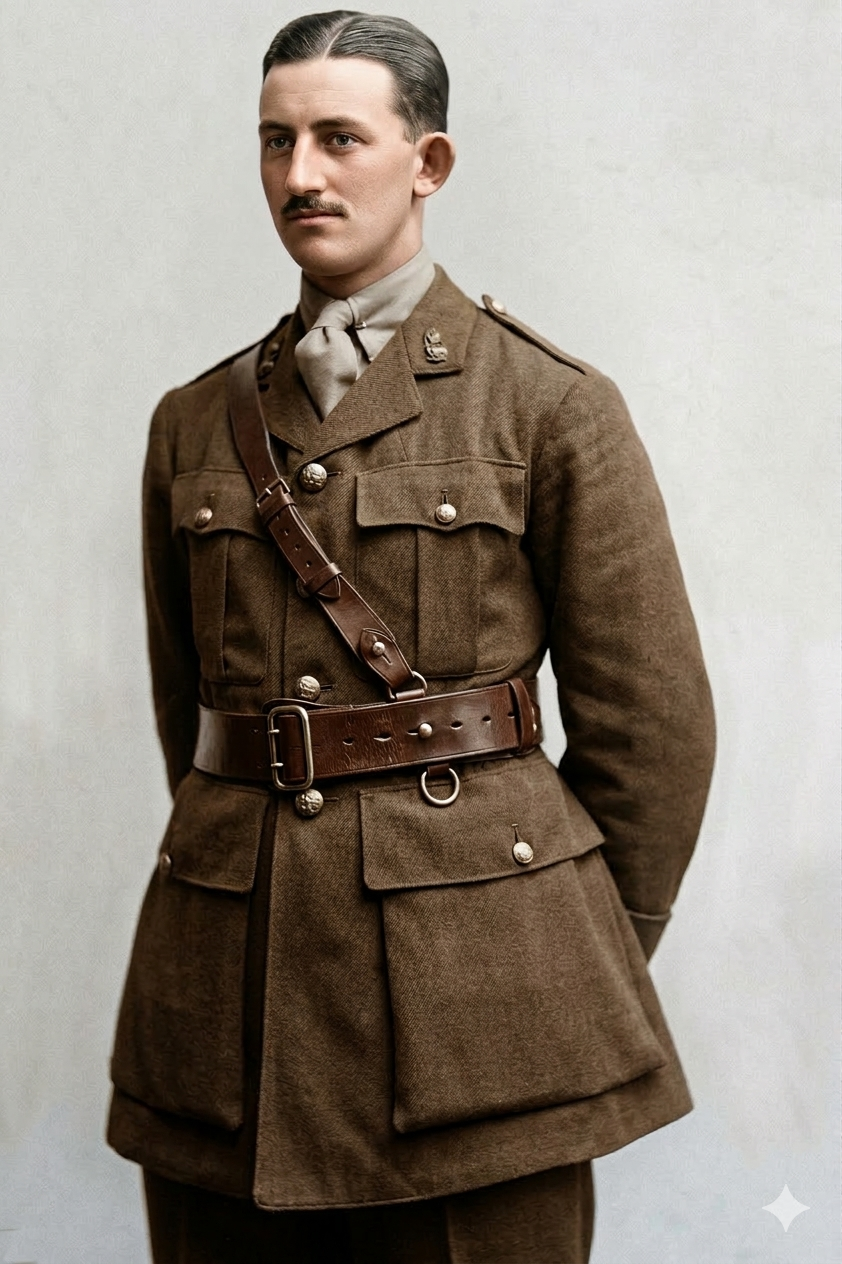
Metcalfe was 2 i/c of the battalion from some point in July 1916 until 12 October 1916, when a more senior officer, Major George Constable (qv) was brought in. Metcalfe became OC “C” Coy. He was wounded in the attack on Regina Trench on 21 October 1916. He was passed fit on 21 May 1917 but again hospitalised on 28 June 1917, with illness resulting from his wound. He relinquished his commission on 10 July 1918 owing to ill health caused by wounds and was granted the rank of Hon. Captain.
His postwar life was interesting to say the least. In the 1921 Census he is described as a ‘student of advertising’. In the 1939 Register of England and Wales he is described as a ‘minister of religion’ and was at one time Principal of Wallington Bible Institute (Mission Church and Training School), an evangelical organisation. In 1957 he was a ‘company director’. He served again in the Second World War, being commissioned in the Royal Warwickshire Regiment with the rank of Major and appointed to the post of DAAQMG.
Jack Metcalfe died at Poole, Dorset, in 1997, having lived to the age of 100!
Honours & Awards: MC 1915 Star BWM VM
Service File: TNA WO 339/13007
Probate: Not available
2nd Lieutenant William Morris (1895-1979):
b. 26 March 1895 at Bury, Lancashire (aged 21 on 1 July 1916); s. of Hugh William Morris (1867-1952), schoolmaster, and Esther Morris (née Nuttall) (b. 1868); educ. Bury Grammar School, where he was School Captain (1912-14) and School Athletics Champion (1913), and Emmanuel College, Cambridge, where he was reading Classics; he was a member of the OTC both at school and university; he volunteered at the end of his first term at Cambridge and was posted to 20th (Service) Battalion Royal Fusiliers (3rd Public Schools), from whose ranks he was discharged to a commission in the Special Reserve of the Lancashire Fusiliers on 19 May 1915.
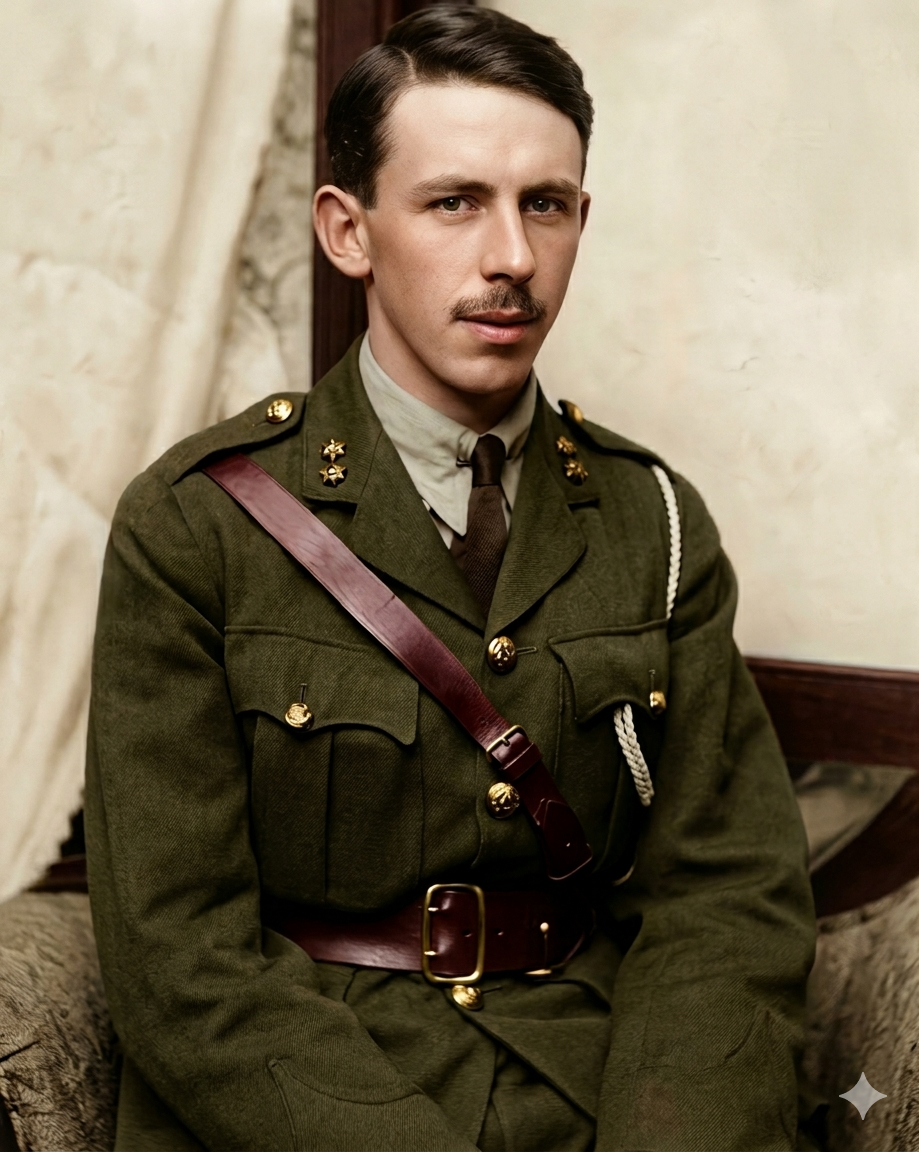
He joined the 11th Battalion in the field on 10 September 1916 and was posted to “D” Coy. He suffered multiple shell wounds while commanding a reconnaissance platoon at Thiepval on 26 September 1916. Two of the wounds were serious and both became septic. A shell splinter in the outside of his left leg damaged the peroneal nerve, causing paralysis and ‘foot drop’. Surgery was eventually sanctioned and took place on 11 March 1917, followed by specialist orthopaedic treatment. He never returned to active service. He was demobilized on 29 June 1919 and relinquished his commission on 1 April 1920. Morris returned to Cambridge University after the war, but changed his degree programme from Classics to Medicine, graduating BA in 1921. He does not seem to have practised medicine, however, becoming a manager and later a Director of Fry’s Chocolate. He died in Keynsham on 24 November 1979, aged 84.
His brother, Lieutenant Joseph Morris (1899-1918), "C" Coy, 16th (Service) Battalion Lancashire Fusiliers (2nd Salford) was killed in action in the crossing of the Sambre-Oise Canal on 4 November 1918.
Honours & Awards: None found
Service File:TNA WO 339/51316
Probate: £48,203 0s 0d
2nd Lieutenant (later A/Captain) Cyril Mainwaring Newman OBE MC VD MiD (1885-1965):
b. 7 June 1886 at Manor Park, London (aged 30 on 1 July 1916); s. of Thomas Henry Newman (1855-1899), station master and railway goods agent, and Ellen Eliza Newman (née Reed) (1856-1940); a clerk with the Midland Railway before the war; emigrated to Southern Rhodesia in 1906. He seems to have been a keen amateur soldier, serving in a Volunteer Battalion of the Sherwood Foresters for a year until he left for Bulawayo, where he joined the Southern Rhodesia Volunteers. He was granted leave from Rhodesian Railways in order to join the British Army. He enlisted as a private soldier in the 10th Hussars on 8 September 1914 and proceeded to France on 18 May 1915 with the 18th Hussars, from whose ranks he was discharged to a commission in the Lancashire Fusiliers on 26 June 1916, joining the 11th Battalion on 27 June 1916, the day before Tolkien’s arrival. In September 1916 he succumbed to trench fever, which later afflicted to Tolkien, and was evacuated to England. He returned to the battalion on 9 April 1917.
On 3 June 1919 he was awarded the Military Cross for his actions on 25 April 1918 at Mount Kemmel, a key position that had been lost by the French Army. A day later, as OC “A” Coy, he rushed a nest of German machine-guns, capturing twelve prisoners and two guns. He was taken prisoner on 28 May 1918 at Breuil near the River Vesle while OC “B” Coy. He had been commanding a rearguard, which became enveloped by the German assault. On 15 August 1919 a Standing Committee of Enquiry into the circumstances of his surrender acquitted him of all blame. He was Mentioned in Despatches on 4 January 1920.
Newman sailed for South Africa on 19 September 1919 and arrived in Bulawayo on 14 October, the day of his demobilisation from the army. He forged a successful career in Southern Rhodesia as a railwayman, businessman and politician and was a sometime Mayor of Bulawayo. He also maintained a military connection, eventually commanding the 2nd Battalion Rhodesia Regiment. He was made OBE in 1938 for public services. He died in Bulawayo on 12 November 1965, aged 79.
Honours & Awards: MC MiD VD 1915 Star BWM VM
Service File:TNA WO 339/65907
Probate: £1,087 0s 0d (in England)
2nd Lieutenant (later Captain) Gordon Alan Potts MC (1893-1978):
b. 15 May 1893 Ventnor, Isle of Wight (aged 23 on 1 July 1916); fourth of five sons of Arthur James Potts (1856-1928), commercial traveller, and Margaret Fanny Potts (née Lewis) (1867-1953); educ. Rydal Mount School.[48] He began his military service in the Army Service Corps and deployed to France in their ranks on 24 September 1915. He was commissioned in the Lancashire Fusiliers on 26 June 1916 and joined the 11th Battalion the following day, one day before Tolkien. He was awarded the Military Cross on 1 January 1918. He was wounded twice, firstly in April 1918, during the German spring offensive, while battalion Adjutant, and secondly in November 1918 at the crossing of the Sambre-Oise Canal while Adjutant of the 16th (Service) Battalion Lancashire Fusiliers (2nd Salford), a battalion commanded by the warlike J.N. Marshall VC. After the war, Potts went to work in Singapore, where for a while he commanded the 1st Battalion Straits Settlements Volunteer Force (Singapore Volunteer Corps), with the rank of Lieutenant-Colonel, for which he was made OBE (Military) in 1937. He was also active in Diocesan and charitable endeavours. Potts died at Chinnor Hill, Oxfordshire, on 7 February 1878, aged 84. A collection of his private papers, consisting mainly of letters to his wife, Dorothie Gwenllian Davies (1892-1972), whom he married on 13 July 1918, at a ceremony in which the Chaplain of 74 Brigade, Rev. M.S. Evers MC, participated, may be found in the Imperial War Museum.
His brother, Rifleman David Ewart Potts (1899-1918), 16th Battalion London Regiment (Queens’ Westminster Rifles), died of sepsis in German captivity on 2 July 1918, aged 19.
Honours & Awards: MC 1915 Star BWM VM
Service File: Not found
Probate: £83,770 0s 0d
Lieutenant William Herbert Reynolds MC MiD (1891-1966):
b. 25 April 1891 at Nunhead, London (aged 25 on 1 July 1916); s. of Herbert Reynolds (1858-1928), manufacturer’s agent and commercial traveller; and Annie Waine Reynolds (née Lea) (1858-1932); educ. Alleyn’s School, Dulwich, and Imperial College, London. Reynolds was commissioned on 12 December 1914 and was one of the original officers of the 11th Lancashire Fusiliers who deployed to France on 25 September 1915. He had a background in science, which made him a sensible choice as battalion signalling officer. He vacated this role not long after Tolkien joined the battalion as the ‘signals-ready officer’. Reynolds was discharged to the General List, ‘attached Army Signal Service from 20 July 1916’, on becoming Signals Officer 74 Brigade, and was succeeded in the 11th Battalion by Tolkien. Reynolds ended the war as 2i/c East Lancs Divisional Signal Coy. He was awarded the Military Cross on 4 June 1917. The citation gives a clear idea of the challenges faced by signals officers: ‘For conspicuous gallantry and devotion to duty as Brigade Signalling Officer under exceptionally difficult circumstances. He maintained communications under continuous and heavy enemy shell fire, which made it impossible to utilise ordinary line. Making use of lamps, runners and buzzer, he established an excellent means of communication, by which he enabled counter-attacks to be rapidly dealt with and very greatly contributed to the success of the operation. No buried cables existed, and, taking into consideration the extraordinarily difficult circumstances, his indefatigable energy and ability deserved the highest praise.’ He was a schoolmaster and secondary school headmaster after the war. He died at Bexley, Kent, in 1966, aged 74.
Honours & Awards: MC MiD 1915 Star BWM VM
Service File: Not found
Probate: Not found
2nd Lieutenant Lewis William Rogers (1897-1952):
b. 18 May 1897 at Sanawar, Bengal, India (aged 19 on 1 July 1916); s. of William Julius Claxton Rogers (1866-1927), a teacher in India, and Mabel Winifred Rogers (née Haslewood) (1867-1945); educ. St Paul’s School, where he was in the OTC; he was an articled pupil to a mining engineer before the war. He was commissioned in the Special Reserve of the Lancashire Fusiliers (4th Battalion) on 21 June 1915 and spent a year in England under training. He joined “B” Coy of the 11th Battalion on 26 July 1916. He was evacuated to England in August 1916 suffering from shell shock and trench fever. He was further diagnosed in November 1916 with Disorderly Action of the Heart. On 12 March 1917 he was sent for treatment for gonorrhoea at the City of London Military Hospital. On 26 January 1918 a Medical Board concluded that he was permanently unfit for any service and he was placed on the retired list on account of ill health caused by wounds on 6 February 1918. He died in the United States in 1952, aged c. 55.
Honours & Awards: BWM VM
Service File: TNA WO 339/68367
Probate: Not found
2nd Lieutenant Lewis Rose (1881-19??):
b. 23 April 1881 at Cathcart, Renfrewshire (aged 35 on 1 July 1916); s. of Alexander Rose (1849-1929), ships’ stores merchant, and Agnes Rose (née McMurchy) (1855-1944); educ. Glasgow Academy and Glasgow University; a solicitor. He attested on 12 January 1915 and was posted to “B” Coy, Inns of Court OTC, from whose ranks he was discharged to a commission in the 3rd (Reserve) Battalion Seaforth Highlanders on 1 June 1915. He joined “B” Coy, 11th Lancashire Fusiliers on 27 May 1916. At some point in 1916 he was evacuated with neurasthenia. A Medical Board on 15 March 1917 rated him ‘unfit for three months’. At the expiry of the three months he returned to France, but was confined to base duties at Abbeville until he was evacuated on 10 December with nephritis and cystitis and admitted to Leith War Hospital on 31 December. He did not return to France. After a month with the 3rd Lancashire Fusiliers at Thirtle Bridge, he joined the Ministry of Labour on 28 May 1918 and remained there until the war’s end. He was demobilised on 6 February 1919.
His brother, Lance Corporal Andrew Mackenzie Rose, 18th Battalion Australian Imperial Force, died as a prisoner of war on 23 April 1918 from wounds received on 15 April.
Honours & Awards: Not found
Service File: TNA WO 339/32807
Probate: Not found
2nd Lieutenant Charles Ronald Rowley (1893-1916):
b. 25 July 1893 at Oswaldkirk, Yorkshire (aged 22 on 1 July 1916); s. of Sir George Charles Erskine Rowley 3rd Bt. (1844-1922), late 23rd Foot, and Lady Amy Isabel Rowley (née Batt) (1867-1961); educ. Wellington College, United Services College and Edgeborough School. He was commissioned in the 9th (Service) Battalion Lancashire Fusiliers on 4 November 1914, but applied for a Regular commission in 1915, for which he was recommended. He joined the 1st Battalion Lancashire Fusiliers on the Gallipoli peninsula on 28 August 1915. He was evacuated to Malta on 23 December 1915 suffering from ‘debility and trench feet’. He was subsequently evacuated to England. After recovery, he was posted to the 11th Lancashire Fusiliers on 11 June 1916 and was killed in action on 9 July at Ovillers. 2nd Lieutenant Rowley has no known grave, but is commemorated on the Thiepval Memorial, France, and in St Mary’s Church, Stoke-by-Nayland, Suffolk.
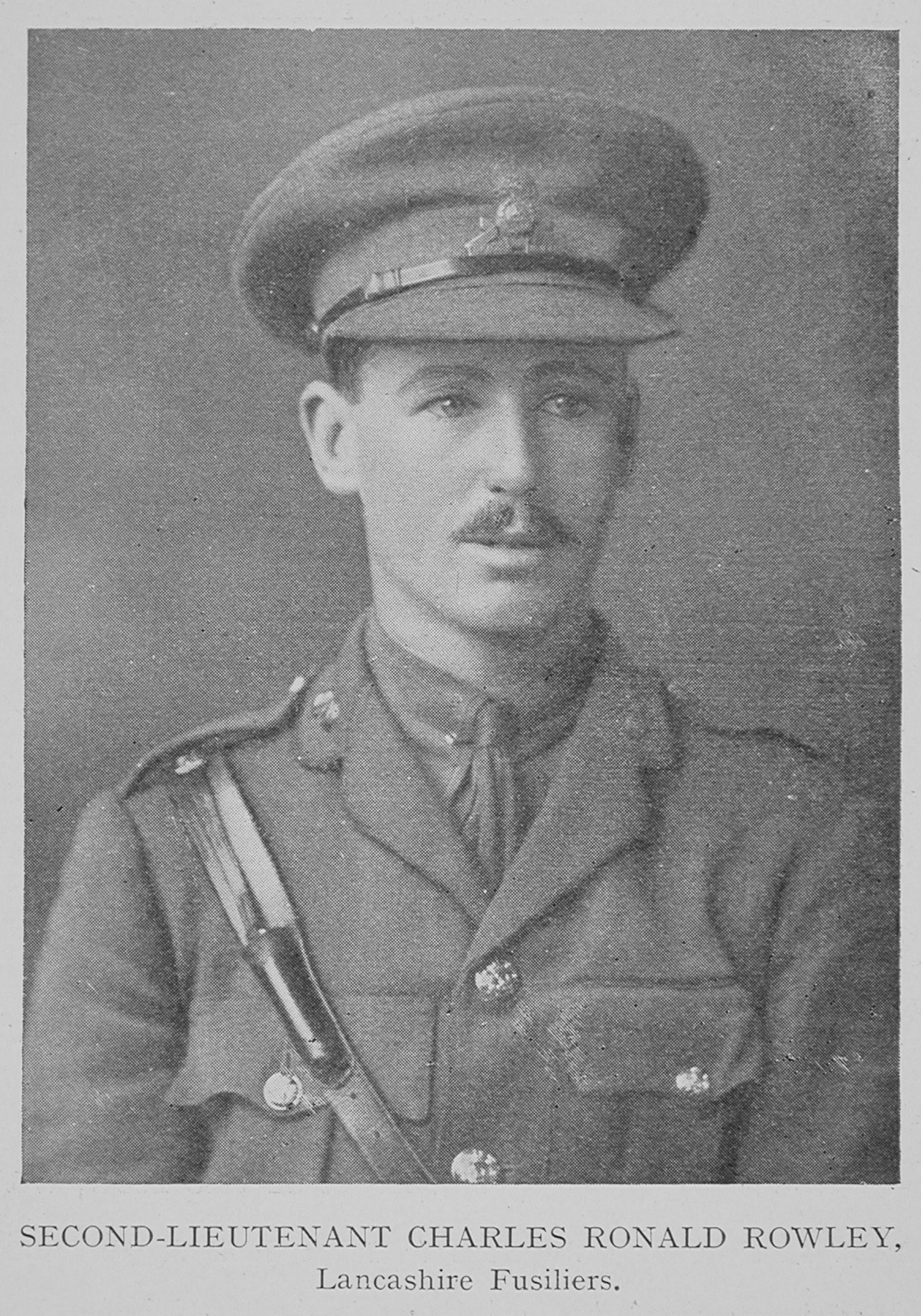
His brother, Lieutenant Reginald Frederick Rowley, 462 Bty. Royal Field Artillery, was killed in action on 21 March 1918.
Honours & Awards: 1915 Star BWM VM
Service File: TNA WO 339/66
Probate: Not found
2nd Lieutenant Stanley Rowson (1886-1916):
b. 20 May 1886 at Prestwich, Lancashire (aged 30 on 1 July 1916); s. of William Brown Rowson (1856-1936), bank manager, and Mary Kezia Rowson (née Taylor) (1856-1922); employed as a millinery salesman before the war. He was ‘embodied’ in the Inns of Court OTC on 4 January 1915 and discharged to a commission on 12 May. He deployed to France on 12 February 1916, joining the 11th Lancashire Fusiliers on 4 July. 2nd Lieutenant Rowson was posted missing on 29 September 1916. He simply disappeared after being hit by a shell while leading “A” Coy through the trenches towards the front line in what was left of Thiepval Wood. His death on that date was accepted for official purposes on 29 October 1917. He has no known grave, but is commemorated on the Thiepval Memorial, France.
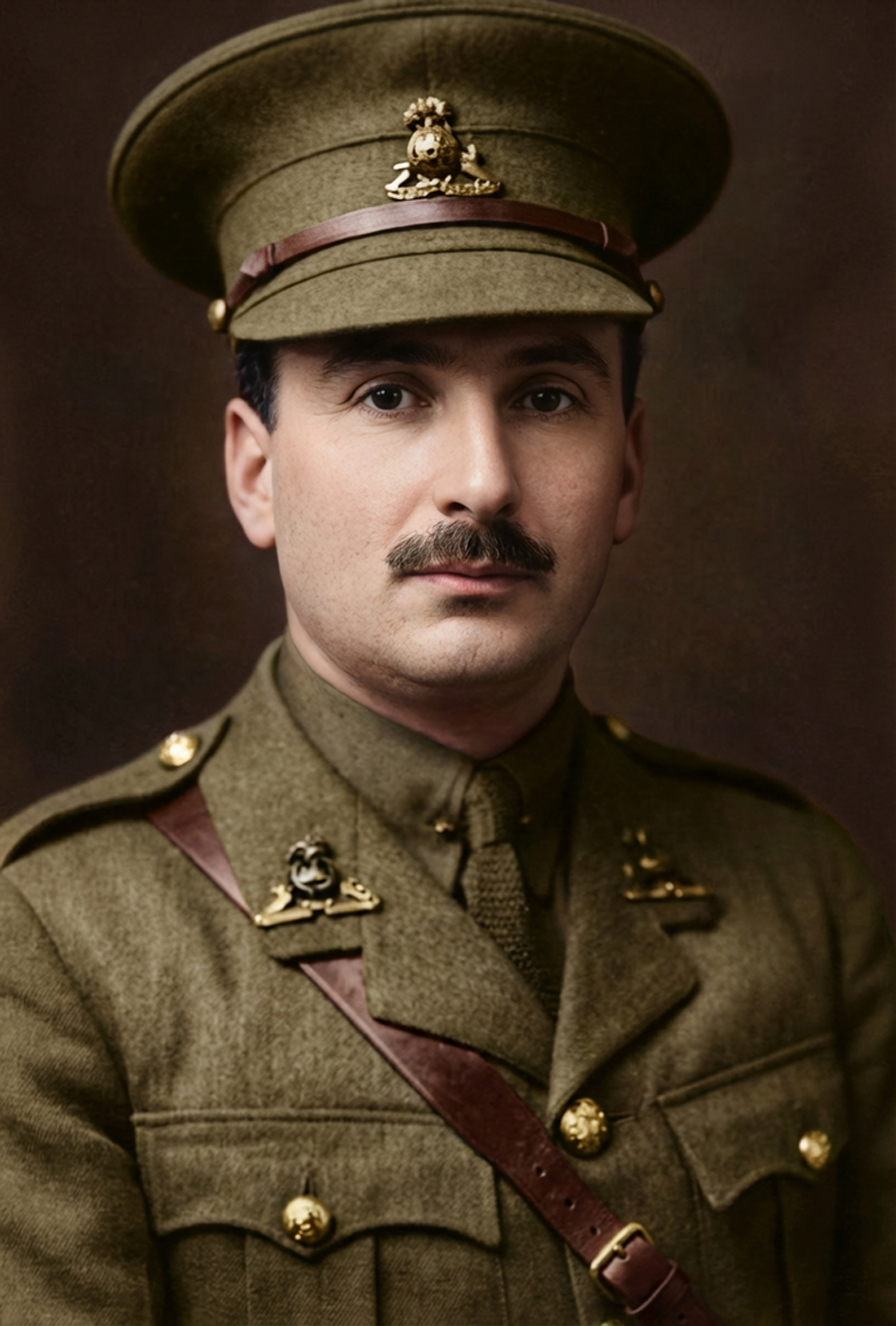
Honours & Awards: BWM VM
Service File: TNA WO 339/619
Probate: £2,024 15s 10d
2nd Lieutenant (later Lieutenant) George Frederick Philip Smale (1894-1973):
b. 14 August 1894 at Blackheath, Kent (aged 21 on 1 July 1916); s. of George Frederick William Smale (1856-1913), tea merchant, and Eva Kate Smale (née Preston) (1868-1934); educ. Charterhouse and Pembroke College, Cambridge; a member of the OTC at both institutions; an undergraduate when the war broke out. He immediately applied for a temporary commission in the Regular Army. His application was endorsed by the GOC 74 Brigade, Brigadier-General A.J. Whitacre Allen (1857-1939), but after a medical in Cambridge on 29 August 1914 he was informed by the Director of Military Training that he was ‘unfit for military service’ and his appointment could not be proceeded with. Smale appealed and a second examination passed him fit. He was commissioned in the Special Reserve on 17 October 1914. He was one of the original officers who took the 11th Battalion to France on 25 September 1915. He was in “B” Coy. He was wounded at Ovillers on 14 July 1916, suffering a gunshot wound to his buttock/left thigh and hand. He was admitted to No. 2 General Hospital at Le Havre before being evacuated on 23 July to Queen Alexandra Military Hospital, Millbank, where he spent 74 days. After a period of Home Service with the 3rd (Reserve) Battalion Lancashire Fusiliers, he returned to the Front on 1 April 1917. He was wounded again at Messines on 7 June 1917, suffering a gunshot wound to his right arm that was treated at No. 11 CCS. He rejoined the battalion on 20 August 1917. He was wounded for a third time on 5 September 1918 at Havrincourt Wood while attached to 1/7th Lancashire Fusiliers TF. He suffered a gunshot wound to his left forearm resulting in a ‘bad compound comminuted fracture of the ulna’, a severe injury where the bone breaks into three or more pieces. He was eventually classified as Cii (fit only for service in home garrisons) in November 1918. Even so, the army seemed curiously unwilling to let him go, but he was eventually released on 22 March 1919. While still in the army, he had applied to take a course in agriculture run by the Ministry of Labour. He subsequently became a fruit farmer in Surrey, specialising in strawberries. He died at Chobham, Surrey, on 21 October 1973, aged 79.
Honours & Awards: Not found
Service File: TNA WO 339/25326
Probate: £60,377 0s 0d
2nd Lieutenant (later Captain) William Buckle Solly MC (1888-1918):
b. 8 June 1888 at Garlinge, Kent (aged 28 on 1 July 1916); s. of William Thomas Solly (1860-1947), landscape gardener, and Jessie Powley Solly (née Buckle) (1855-1937), school teacher; educ. Yerbury Road School. On the outbreak of war, he returned home from Russia where he had been working as the assistant manager of an oil company, having previously served as a policeman in Shanghai for 2½ years. He immediately enlisted in the Royal Fusiliers and was discharged to a commission in the Special Reserve from the ranks of the 24th (Service) Battalion Royal Fusiliers (2nd Sportsman’s) on 9 April 1915. He married Katie Maud Batson (1886-1962) in January 1916. He joined the 11th Lancashire Fusiliers in the field on 5 June 1916, but was struck off its strength on 13 August, following his attachment to 74 Trench Mortar Battery. He was awarded the Military Cross on 26 September 1917 for organizing three Stokes mortars to take out a German strongpoint that was holding up an infantry attack, capturing or killing the entire garrison and taking six enemy guns. He was severely wounded a few days later, suffering a gunshot wound to his face and right arm that required a 48 day stay in Queen Alexandra Military Hospital, Millbank. He died of wounds at 104 Field Ambulance on 19 October 1918 while serving with 101 Trench Mortar Battery, 34th Division. Captain Solly is buried in Wevelgem Communal Cemetery, Belgium. He is also commemorated on memorials in Margate - at the Old Town Hall Museum, the war memorial in Trinity Square, and the Westgate and Garlinge memorial in St James’ Church, where he used to sing in the choir. A Freemason.
Honours & Awards: MC BWM VM
Service File: TNA WO 339/49213
Probate: £534 16s 11d
2nd Lieutenant John William Stanley (1886-1917):
b. 10 March 1886 at Tonbridge, Kent (aged 30 on 1 July 1916); s. of Lieutenant-Colonel Charles Edward Henry Stanley (1843-1909), army officer (late Grenadier Guards), and Frederica Lucy Phipps Stanley (née Hornby) (1844-1936); educ. Wellington College. He was a student at Aspatria Agricultural College and Royal (Dick) Veterinary College, Edinburgh, in August 1914. He enlisted on 15 September 1914. He was posted, firstly, to the 19th (Service) Battalion Royal Fusiliers (2nd Public Schools) and, secondly, on 9 February 1915, to the 21st Royal Fusiliers (4th Public Schools). It was from this unit that he was discharged to a commission in the Special Reserve on 9 September 1915. He joined the 11th Lancashire Fusiliers on 4 July 1916. In February 1917 he was evacuated with debility and perforated eardrums. He was killed in action on 7 June 1917 on the Messines Ridge. 2nd Lieutenant Stanley has no known grave, but is commemorated on the Ypres (Menin Gate) Memorial, Belgium, and on the Wellington College Roll of Honour.
Honours & Awards: BWM VM
Service File: TNA WO 339/41126
Probate: £609 13s 6d
2nd Lieutenant (later A/Captain) Harold Collier Stead (1885-1925):
b. 22 December 1893 at Stockport, Cheshire (aged 22 on 1 July 1916); s. of Charles Albert Stead (1868-1948), paint and colour traveller, and Maria Annie Stead (née Collier) (1868-1909); educ. King Edward VII School, Lytham St Annes; a bank clerk before the war. He volunteered for military service and was posted to 19th (Service) Battalion Royal Fusiliers (2nd Public Schools). He deployed to France on 14 November 1915 and remained with this unit until he was posted to No. 1 Officer Cadet Battalion on 24 March 1916 for officer training. He was commissioned in the Lancashire Fusiliers on 4 August 1916 and joined the 11th Battalion in the field on 17 October. He suffered a gunshot wound to his thigh while OC “D” Coy on 23 March 1918 in the early days of the German spring offensive and was evacuated to England on 17 April, where his leg was amputated above the knee. In March 1919 he was declared to be permanently unfit for military service. He was gazetted as having relinquished his commission on account of ill health caused by wounds and was allowed to retain the rank of Captain. He remained in banking after the war, but by 1939 he had become a ‘colour manufacturer’s agent’. Harold Stead died in the Cumberland Infirmary, Carlisle, on 22 August 1962, aged 68.
Honours & Awards: 1915 Star BWM VM
Service File: TNA WO 339/60878
Probate: £2,539 17s 0d
2nd Lieutenant Ronald Harrison Stubbs MC (1883-1952):
b. 25 January 1883 at Simonstown, South Africa (aged 33 on 1 July 1916); s. of Tom Campbell Stubbs (1851-1916) and Lilian Elizabeth Stubbs (née Robey) (1850-1898); described as a ‘clerk’ on his arrival in London on 2 September 1915, but as a ‘farmer’ on his Protection Certificate. Stubbs was one of the very few officers of the 11th Lancashire Fusiliers during Tolkien’s time with the battalion who had any previous military experience, having served in the South African War in the Imperial Light Horse. This was reflected in his quickly being commissioned on 7 October 1915, just over a month after his arrival in England. He joined the 11th Battalion on 13 June 1916. He was wounded on 15 July 1916 at La Boisselle. His treatment required evacuation to the UK and kept him out of active service until 1917. He was wounded again at Infantry Hill, Monchy, on 31 May 1917 while serving with the 1st Battalion Lancashire Fusiliers. He led his company three times into the attack ‘rallying and reforming his men under heavy machine gun fire’. He was wounded three times, the last time severely, resulting in his left arm being amputated. He was awarded the Military Cross on 26 July 1917. Stubbs returned to South Africa after the war and died there on Christmas Day 1952, aged 69.
Honours & Awards: BWM VM
Service File: TNA WO 339/43506
Probate: Not found
2nd Lieutenant Wilfrid Fabian Waite MiD (1884-1956):
b.25 May 1884 at Norham-on-Tweed, Northumberland (aged 32 on 1 July 1916); s. of Rev. Dr Joseph Waite MA DD (1824-1908), Clerk in Holy Orders (Vicar of St Cuthbert’s, Norham, Northumberland), and Rosamund Eliza Waite (née Evans) (1851-1927); educ. Clifton College and Downing College, Cambridge; a barrister-at-law (Lincoln’s Inn) and Counsel to the Board of Trade.
He was embodied for military service at the Inns of Court OTC on 16 October 1914 and commissioned on 25 February 1915. He was one of the original officers of the 11th Lancashire Fusiliers who deployed to France with the battalion on 25 September 1915. He married Dorothy Ebden (1885-1949) shortly before leaving for France. On 15 July 1916 he suffered two penetrating bullet wounds to his abdomen, which he did well to survive. He was eventually passed fit for ‘light duty at home’ in April 1917. Thereafter, he always walked with the aid of a stick. The army eventually released Waite from military service after strong representations in December 1917 from the Minister of Food, Lord Rhondda, who wanted to utilise Waite’s specialist legal skills in ‘drafting orders and advising thereon’. He was allowed to resign his commission and joined the Ministry of Food on 1 January 1918.
His son, Lance Corporal Peter Wilfrid Waite, 2/6th Battalion The Queen’s Royal Regiment (West Surrey), was killed in action on the Coriano Ridge, Italy, on 9 September 1944. The inscription for his headstone chosen by his parents reads ‘DEAR SON, BRAVE, JUST AND TRUE AND LOVED FOR EVER’.
Wilfrid Waite died in Deal, Kent, on 15 August 1956, aged 72.
Honours & Awards: MiD 1915 Star BWM VM
Service File: TNA WO 339/35150
Probate: £33,749 15s 7d
Captain Maurice Arthur Ward MC (1893-1918):
b. 5 December 1893 at Lucknow, India (aged 22 on 1 July 1916); s. of Arthur William Ward (1858-1919), Professor of Physics, Canning College, Lucknow, India, and Annette Mary Isabel Ward (née Bond) (1861-1900); educ. St Paul’s School. After leaving school in 1913, he started to make a career in the Indian police. He was commissioned on 22 September 1914 and was one of the original officers who deployed to France with the 11th Lancashire Fusiliers on 25 September 1915. He had a period of rest and rehabilitation in England from July to September 1916 after suffering from physical and mental strain and being ordered to report sick by his Commanding Officer. He was awarded the Military Cross on 16 August 1917 for actions at Messines on 7 June 1916. Captain Ward died from a gunshot wound to the abdomen on 10 April 1918 at No. 33 CCS, Haverskerque, France. He is buried in Haverskerque British Cemetery. He is also commemorated on the St Paul’s School Roll of Honour, which has some interesting and revealing memories of him, and the Southport War Memorial.
Honours & Awards: MC 1915 Star BWM VM
Service File: TNA WO 339/14606
Probate: Not found
T/Captain Percy Duncan Ward (1891-1916):
b. 23 August 1891 at Hammersmith, Middlesex (aged 24 on 1 July 1916); s. of Percy Carlyle Ward (1866-1948), wholesale ironmonger, and Annie Eliza Ward (née Duncan) (1865-1896); educ. St Paul’s School; a civil servant in the Inland Revenue (Taxes Branch) before the war. He applied for a temporary commission in the Regular army on 10 August 1914, but this was rejected on medical grounds (varicose veins in both legs) on 28 August. It is not clear whether any medical intervention was made, but he was embodied in the Inns of Court OTC on 19 November 1914 and commissioned on 9 January 1915. He was one of the original officers who deployed with the 11th Lancashire Fusiliers to France on 25 September 1915. He was wounded on 15 July 1916, but returned to duty as OC “B” Coy on 4 September 1916. He died of his wounds at No. 49 CCS, Puchevillers, France, on 11 October 1916. He is buried in Contay British Cemetery, Contay, France.
Honours & Awards: 1915 Star BWM VM
Service File: TNA WO 339/31336
Probate: £198 3s 2d
References
[1] For biographical details of the 11th Lancashire Fusiliers officers, see Appendix One.
[2] For Tolkien’s importance, see T.A. Shippey, J.R.R. Tolkien: Author of the Century (London: HarperCollins, 2000)
[3] John Garth, Tolkien and the Great War: The Threshold of Middle-Earth (Boston & New York: Houghton Mifflin, 2003), p. 309
[4] Humphrey Carpenter, J.R.R. Tolkien: A Biography (1977; London: HarperCollins, 2016), Chapter VIII. Tolkien did keep a diary of his time at the front, something Carpenter says Tolkien only did at times of ‘depression’. We have not seen the dairy, which is mentioned in Garth.
[5] Humphrey Carpenter (with the help of Christopher Tolkien), eds, The Letters of J.R.R. Tolkien ([1981]; London: Harper Collins, 1995), pp 9-10. The collection deliberately excluded Tolkien’s letters to his wife.
[6] See, for example, J.R.R. Tolkien, The Hobbit (1937; London: HarperCollins, 2007), p. 257. We owe this particular example to Quintin Watt.
[7] Carpenter & Tolkien, eds, The Letters of J.R.R. Tolkien, p.303
[8] For Tolkien’s friends, the famous TCBS - Tolkien himself; Robert Quilter Gilson; Geoffrey Bache Smith; and Christopher Wiseman, see Carpenter, J.R.R. Tolkien, Chapter IV. The book is dedicated ‘to the memory of the T.C.B.S.’. Two hundred and forty-five Old Edwardians who died in the Great War are listed on the school Roll of Honour, to which seventeen ‘forgotten casualties’ were added in 2019. These losses have been characterised as a ‘winnowing’. See Quintin Watt, Tolkien’s 'bitter winnowing' and the War Memorial at St. Augustine’s Church, Edgbaston
[9] Wiseman served on HMS Superb at the Battle of Jutland. He survived the war and became Headmaster of Queen’s College, Taunton. Tolkien named his youngest son after him.
[10] Gilson was commissioned in the 11th (Service) Battalion Suffolk Regiment (Cambridgeshire) on 28 November 1914. He was killed by a shell on 1 July 1916.
[11] Smith died of wounds on 3 December 1916, the unlucky consequence of a random shell burst behind the lines. The photograph of Smith in military uniform found in books about Tolkien show him wearing the cap badge of the Ox and Bucks Light Infantry.
[12] Garth, Tolkien and the Great War, pp. 67, 68
[13] Bache was killed by a sniper on 16 February 1916.
[14] Hilary Tolkien and Sidney Barrowclough survived the war. Ralph Payton was later commissioned in the 14th Royal Warwicks and killed in action on 22 July 1917.
[15] See Tom Shippey, ‘Tolkien and “that noble northern spirit”,’ in Catherine McIlwaine, ed., Tolkien: Maker of Middle-Earth (Oxford: Bodleian Library, 2018), pp. 58-69
[16] See C.J. & G.P. Whitehouse, A Town for Four Winters: Great War Camps on Cannock Chase (Privately published, 1987).
[17] See R.E. Priestley, Work of the Royal Engineers in the European War, 1914-19: The Signal Service (1921: Uckfield: The Naval & Military Press, 2006). This account is a mine of information, but it is quite the dullest and most impenetrable book ever written. For a scholarly and accessible modern study, see Brian N. Hall, Communications and British Operations on the Western Front, 1914-1918 (Cambridge: Cambridge University Press, 2017).
[18] Priestley, Signal Service, p. 146. We owe this reference to Dr Brian Hall.
[19] Carpenter has Tolkien joining the battalion at Ētaples, which is wrong. Tolkien sailed from Folkestone on 5 June 1916 and arrived in Calais the following day. After spending some time at No. 32 and No. 25 Infantry Base Depots at Ētaples Tolkien was posted to the 11th Battalion on 27 June, arriving on 28 June.
[20] TNA WO 95/2246-2-01, 28 June 1916. This was one of only two mentions of Tolkien by name in the War Diary. The second was on 18 November 1916: ‘2nd Lt. J.R.R. Tolkien (sick) struck off the strength’.
[21] Carpenter, J.R.R. Tolkien, p. 114
[22] Crosbie remained in command of 12 Brigade until 17 January 1917 when he was replaced by a man fifteen years his junior, Adrian Carton de Wiart VC.
[23] Martin remained in command until he was wounded on 10 April 1918.
[24] Oxford Dictionary of National Biography, ‘Tolkien, John Ronald Reuel. T.A. Shippey revised. Published online 23 September 2004.
[25] Defining what was a public school can be a bit of a minefield. We favour the definition, proposed by Tim Halstead, that public schools were those schools which were pre-war members of the Headmasters’ Conference. These included King Edward’s, Birmingham.
[26] Tolkien married his fiancée, Edith Bratt, on 22 March 1916.
[27] The Regular Army mantra was ‘Subalterns cannot marry, Captains may marry, Majors should marry, and Colonels must marry’.
[28] The other married officers were Bowmer, Fawcett-Barry, Halfpenny, Holden and Solly.
[29] Several of the battalion’s officers had been commissioned from the ranks of the Public School battalions of the Royal Fusiliers, but without overseas service.
[30] See Charles Fair, ‘From OTC to OCB: The Professionalisation of the Selection and Training of Junior Temporary Officers During the Great War,’ in Spencer Jones, ed., The Darkest Year: The British Army on the Western Front 1917 (Warwick: Helion, 2022), pp. 78-109.
[31] The battalion had suffered six officer fatalities before Tolkien’s arrival.
[32] The other officer fatalities on 29 September were 2nd Lieutenant S.O. Hetherington (“C” Coy) and 2nd Lieutenant S. Rowson (“D” Coy). 2nd Lieutenant W. Morris (“D” Coy), who had only joined the battalion on 10 September, was also wounded.
[33] Soldiers Died in the Great War shows 213 Other Rank fatalities in the 11th Lancashire Fusiliers between 1 July and 31 October 1916. We make the figure 220.
[34] TNA WO 95/2222. War Diary of 25th Division, Somme Battles.
[35] Garth,Tolkien and the Great War, p. 173
[36] Garth,Tolkien and the Great War, p. 206
[37] TNA WO 95/2446. Battalion war diaries are somewhat hit and miss, but the 11th Lancashire Fusiliers’ is one of the better ones. The scrupulous recording of OR deaths by name and number is unusual and impressive. Its reporting of officers joining, leaving and rejoining the battalion, however, is patchy.
[38] Andrew Mackay & Amy Warburton, “Made of the Right Stuff”: The History of the 11th Battalion Lancashire Fusiliers 1914-18 (Burnley: self-published, 2013). The publishing information was taken from the catalogue of Bolton Central Library. The book itself has none. Nor does it have an index. It is otherwise a worthy effort that makes good use of local newspapers.
[39] Forty-two of the fifty-one officers listed have available personal files. All were consulted. A further fifteen files were also consulted, ruling out a Tolkien connection.
[40] Bird’s successor as CO 11th Lancashire Fusiliers was Edward Cuthbert de Renzy Martin, a Regular officer of the Indian Army. Martin commanded the battalion until he was wounded on 10 April 1918.
[41] John Garth, Tolkien and the Great War: The Threshold of Middle-Earth (Boston & New York: Houghton Mifflin, 2003), p. 171
[42] 19th and 21st Battalions Royal Fusiliers were disbanded on 24 April 1916 owing to so many in their ranks having been commissioned.
[43] Sutton Valence School was founded by William Lambe of the Worshipful Company of Clothworkers in 1576.
[44] Ada Gurney was the Rev. Layton’s second wife. He divorced his first wife on the grounds of her adultery, which caused something of a scandal in Hounslow.
[45] The Loseby family had a link with South Africa that seems to have gone back to Geoffrey Loseby’s oldest brother, Rev. Percy Loseby MA (1875-1964), who ministered and taught there before and after the Great War. Another brother, Charles Loseby (1881-1970), lived in South Africa from 1906 to 1911 and two sisters also went to live there and married South Africans. Rev. Percy Loseby joined the RAMC as a private soldier in 1914 and later joined the Royal Army Chaplains Department. Captain Charles Loseby MC served with the 1st and 2nd Lancashire Fusiliers and 2nd Lieutenant Francis Loseby (1883-1967) served with the Royal Field Artillery in Salonica. Charles Loseby was a barrister and Francis a solicitor. Both worked in Hong Kong after the war.
[46] Garth, Tolkien and the Great War, p. 172
[47] Garth, Tolkien and the Great War, p. 190
[48] Rydal Mount was a Methodist boarding school in Colwyn Bay, Denbighshire. The Potts family were keen Methodists.
Becoming a member of The Western Front Association (WFA) offers a wealth of resources and opportunities for those passionate about the history of the First World War. Here's just three of the benefits we offer:

The WFA regularly makes available webinars which can be viewed 'live' from home. These feature expert speakers talking about a particular aspect of the Great War.

Featured on The WFA's YouTube channel are modern day re-interpretations of the inter-war magazine 'I Was There!' which recount the memories of soldiers who 'were there'.

Explore over 8 million digitized pension records, Medal Index Cards and Ministry of Pension Documents, preserved by the WFA.


