
The Globetrotter
Introduction
The following card was originally highlighted as of potential interest during the recent ‘Big Push’ project, to examine why a man who had served in the Royal Flying Corps should give his address as the seaman’s mission in Tilbury Docks.
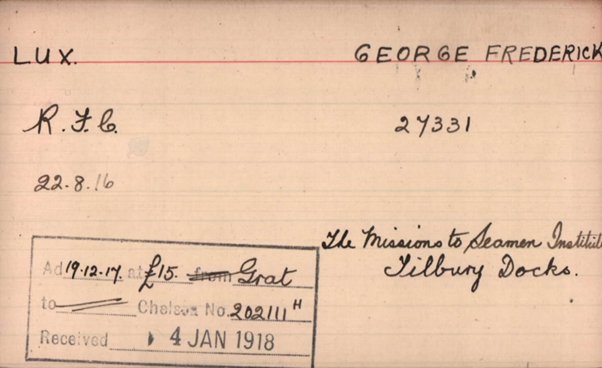
Initial research into his service with the R.F.C. showed he was born in Agra and his next of kin was his mother living in South Africa. Having an unusual name helped further investigation, and an early suspicion that he was perhaps the son of a serving soldier led to the discovery of his name in the index to army births, and revealed his father’s regiment.
Eventually the research revealed the story of a man born to parents from Luxembourg and Germany, and who had joined the R.F.C. after arrival from South America. He subsequently served in the Merchant Navy during and after the Great War, before eventually showing an intention to become a citizen of the United States, before opting to settle in Australia.
While coverage of his wartime exploits is limited, the study revealed an example of the sometimes extremely diverse backgrounds of men who were prepared to serve the allied cause.
His family background and subsequent history are presented here in chronological order, rather than the sequence in which the various documentary evidence was found.
Family Background
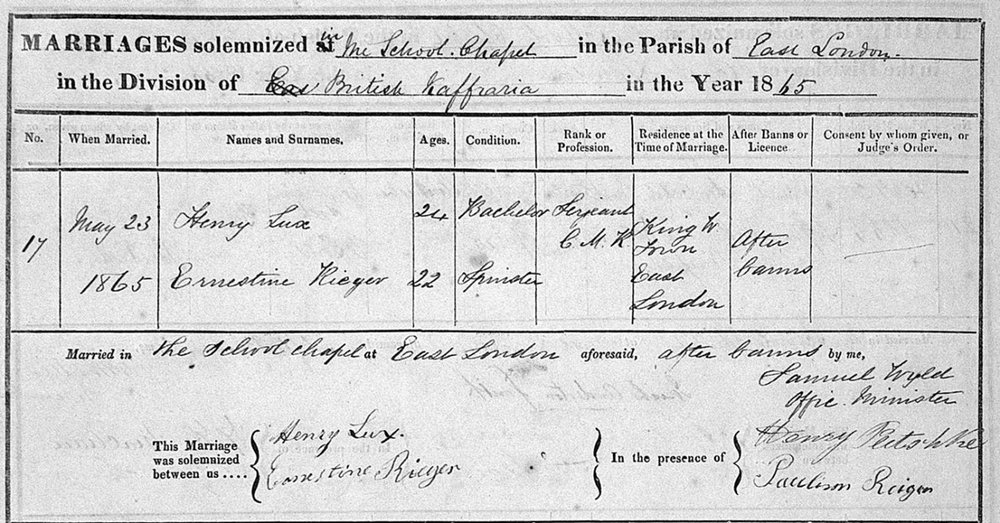
George Frederick Lux’s father, Henry Lux was a 22 years old shoemaker from Luxembourg, then associated with Holland, when he enlisted in 1858 at King William’s Town in the Cape Mounted Rifles. He was a sergeant when he married Ernestine Rieger, in East London, South Africa, in 1865.
Henry was transferred in 1870 to the 85th Regiment of Foot, the Bucks Volunteers, which served in India from 1868 to 1881, undertaking garrison and convoy duties. Promoted to colour sergeant he was awarded the Long Service and Good Conduct Medal.
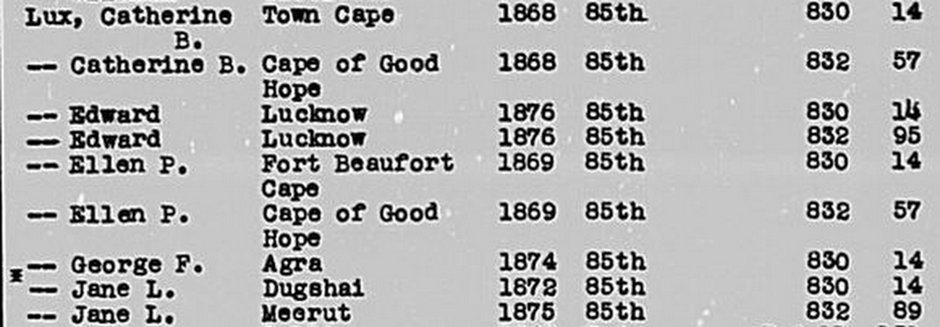
Of the above, Henry and Ernestine’s children were shown from other records to be Ellen Pauline, registered in South Africa, followed in date order by Jane Louisa, George Frederick (our man at Agra), and Edward, all registered in India.

Henry left Lucknow for England at the end of 1877, suffering from hepatitis, contracted in Agra in 1875, and aggravated by climatic conditions, and also from chronic eczema, particularly of the face, neck and feet, aggravated by military service, and he was discharged at Oxford in 1878 as unfit for further duty.
His service papers on discharge are available at the National Archives, in series WO 97, along with further records relating to his discharge and pension to be found in series WO 22 and WO 116. His intended place of residence on leaving the army was East London, which was re-designated as a part of the Cape of Good Hope from 1865 onwards.
The family evidently did return to East London as planned, but Henry and his wife made a journey from South Africa to Southampton in June 1900 aboard the SS Tantallon, and were recorded in St Helier, Jersey in the 1901 census, with their respective places of birth listed as Luxemburg and Germany. A young William Lux, aged just 8 and born Cape of Good Hope, was almost certainly a grandson rather than a son as stated in the record.
Another son, Henry Francis, born in 1868 but missing from the army births index, followed in his father’s footsteps and was a corporal in the Cape Mounted Rifles when he married in 1899, and recorded as a soldier in the 1901 Southampton census. He had left the army and was recorded as living on the island of Jersey in the 1911 census. Sadly, he died the following year in the Shirley district of Southampton.
Henry Lux senior evidently returned to South Africa, and his death occurred in King William’s Town in 1908.
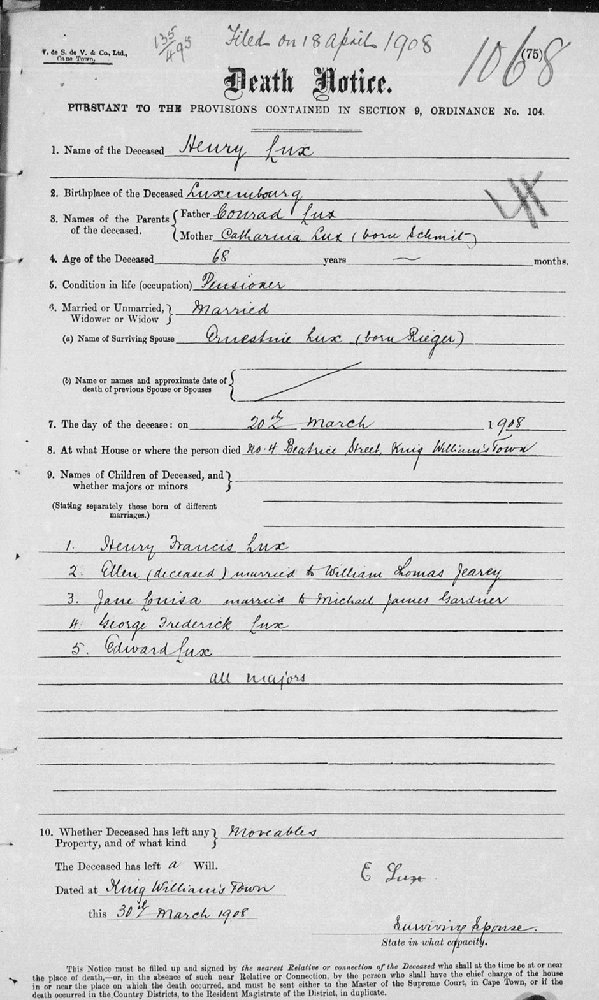
Although slightly out of sequence the family background can be conveniently completed with the death of his mother.
George was elusive in the years leading up to the Great War, and although marriage certificates for his siblings Jane Louisa, Henry Francis and Edward, in 1898, 1899 and 1913 respectively, were examined, he wasn’t a witness at any of these events.
George Frederick Lux – The Great War Years
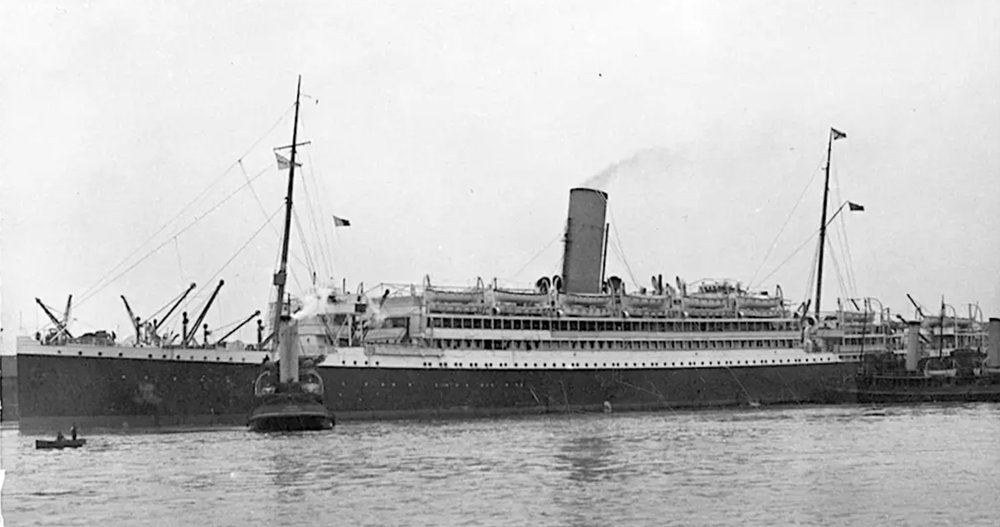
The first documentary evidence of George was in 1916 when he set foot in England. The passenger manifest relating to arrival in London from Buenos Aires on 18th April 1916, aboard the Royal Mail Steam Packet Company ship ‘Araguya’ indicates that his last country of permanent residence was given as South Africa, where his mother is known to have lived in 1918. His occupation is open to doubt, the field containing a ‘ditto’ refers to details of the previous passenger, who was listed as a ranch manager.
George enlisted as a batman in the Royal Flying Corps on 27th April 1916, just a few days after landing. His service record has survived in WO 364, the ‘unburnt’ series, and is also partly duplicated in the RFC service records.
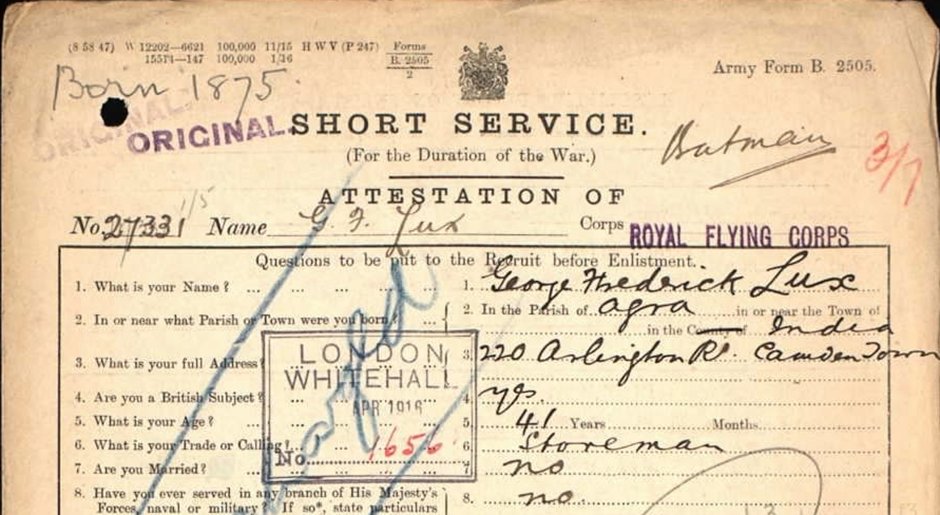
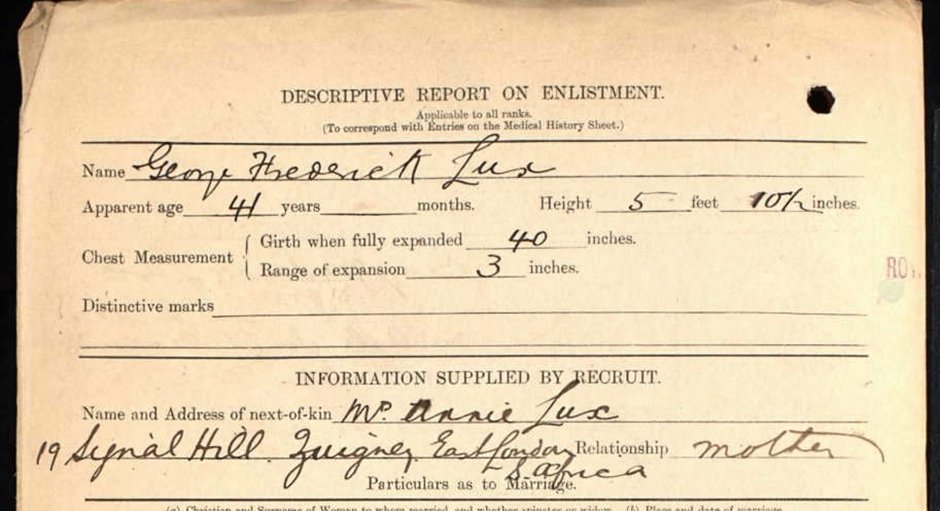
His height was above average for the time, and clearly a family trend, as his father’s height had been recorded, in his own service papers, as just above six feet.
Unfortunately George was discharged on the 22nd August 1916 as not being likely to become an efficient soldier. The reasons given were that he was over military age, and also suffering from an infection of the bladder.
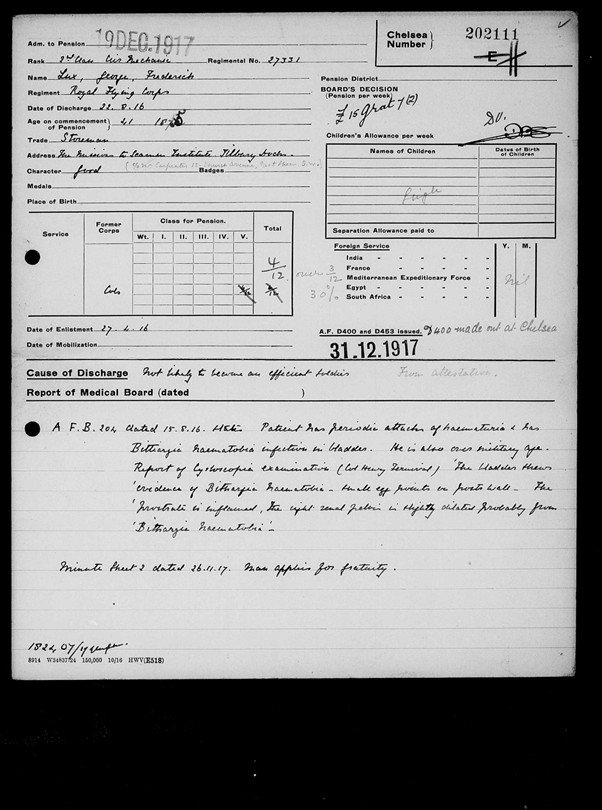
His entry in the Silver War Badge roll confirms the medical condition which led to his discharge. Bilharzia is caused by parasitic worms, and can cause serious damage to internal organs, George had evidently contracted the disease in Africa, which resulted in haematuria, a condition where blood appears in the urine.
His address on discharge was the Tilbury seamen’s mission, as seen on his pension card.
Seemingly undeterred by rejection from the R.F.C., George had entered the Merchant Navy. He was awarded the British War Medal and Mercantile Marine Medal for his services, indicating he served at sea on at least one voyage through a danger zone. As was customary, the medal ribbons were issued several years before the actual medals.
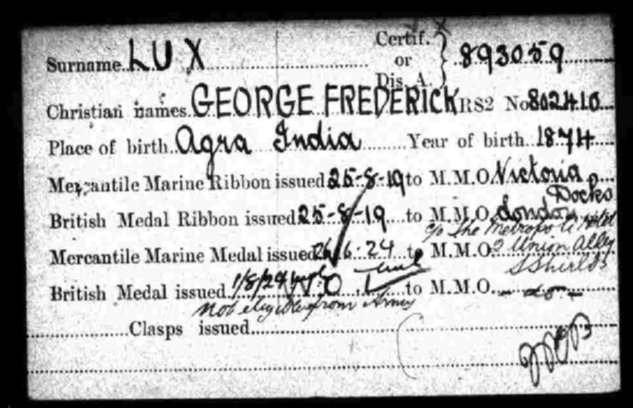
Post War Service in the Merchant Navy
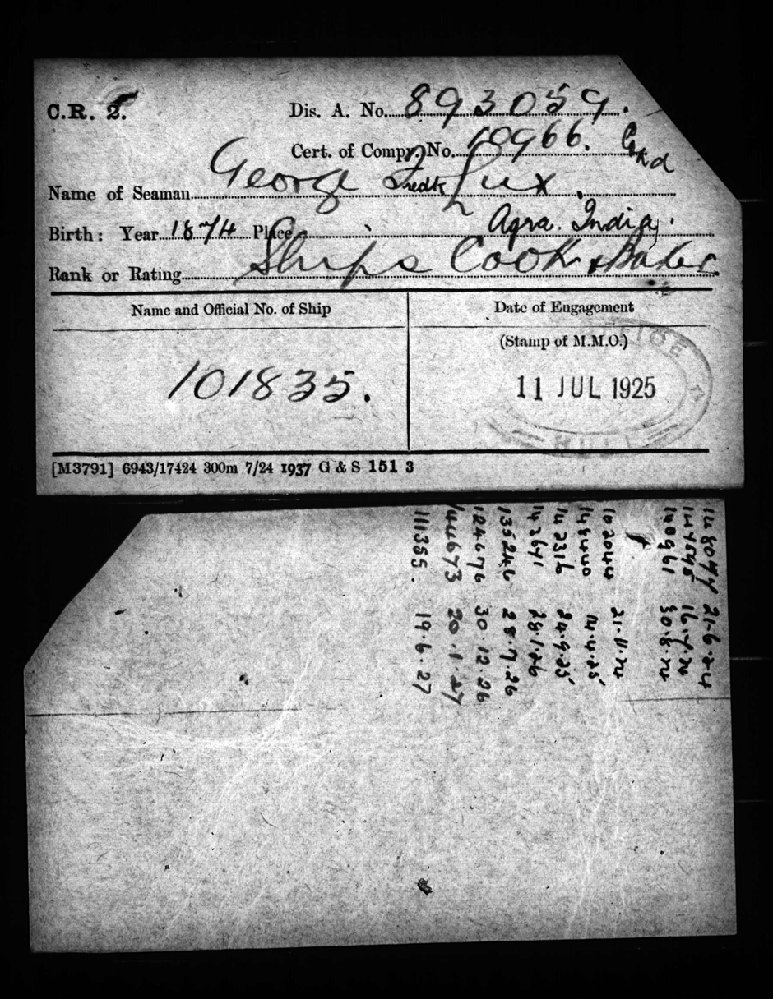
George may have been a merchant seaman before the war, which could explain his presence in Argentina in 1916, but unfortunately pre-war records do not survive, and neither do records of service for the war years. He clearly remained in the Merchant Navy after the war, and a copy of his Identity Certificate is shown below, complete with photograph, and carries the same discharge number, 893059, which would be logged at the end of each voyage undertaken, and also appears on his medal roll card.
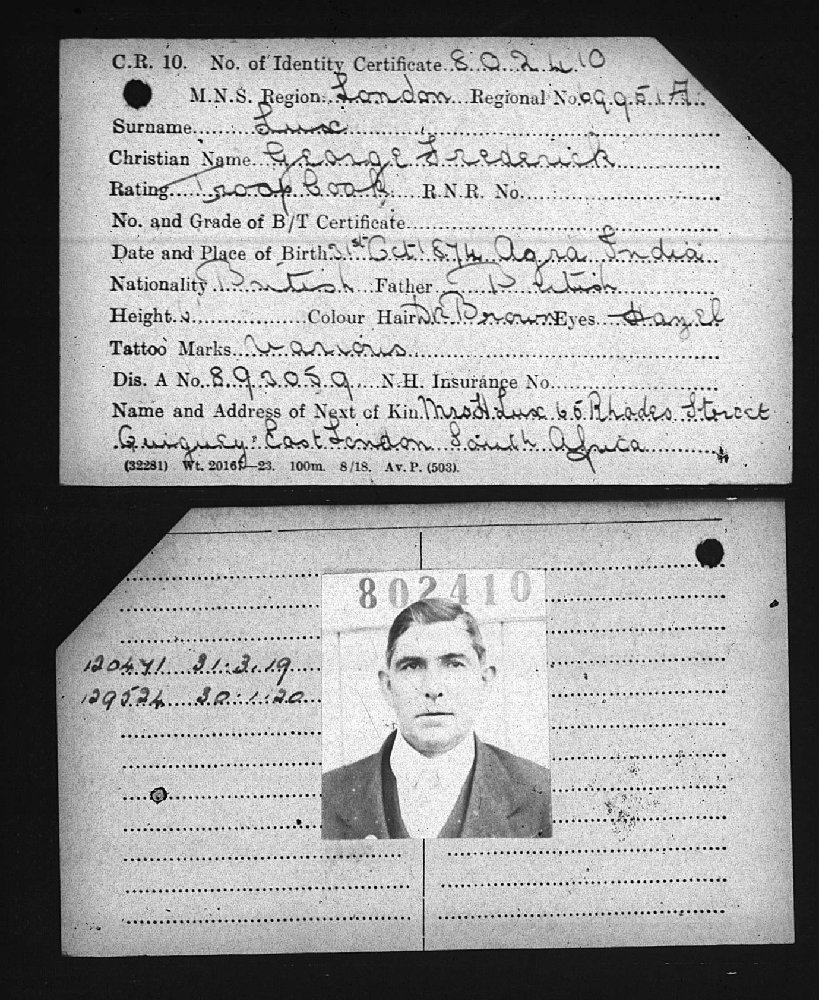
A further record confirms year and place of birth as 1874 in Agra, India.
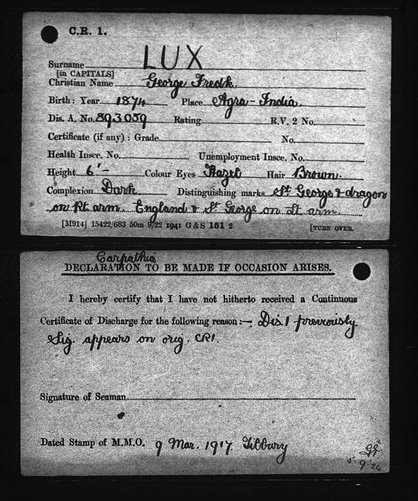
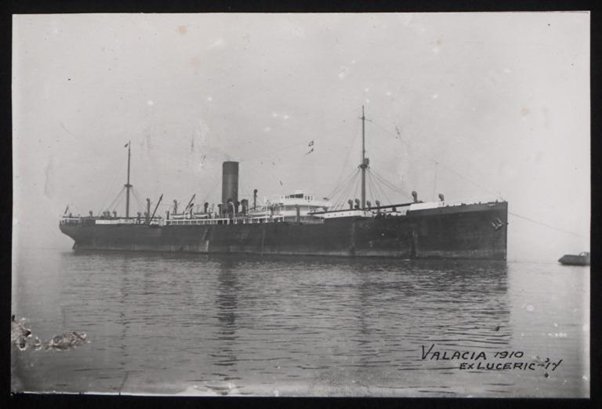
He is known from the ship’s manifest to have sailed from London to New York as a cook onboard the ‘Valacia’, arriving at the immigration centre of Ellis Island, New York, on 20 February 1920, a voyage corresponding with details previously seen on his CR 10 card.
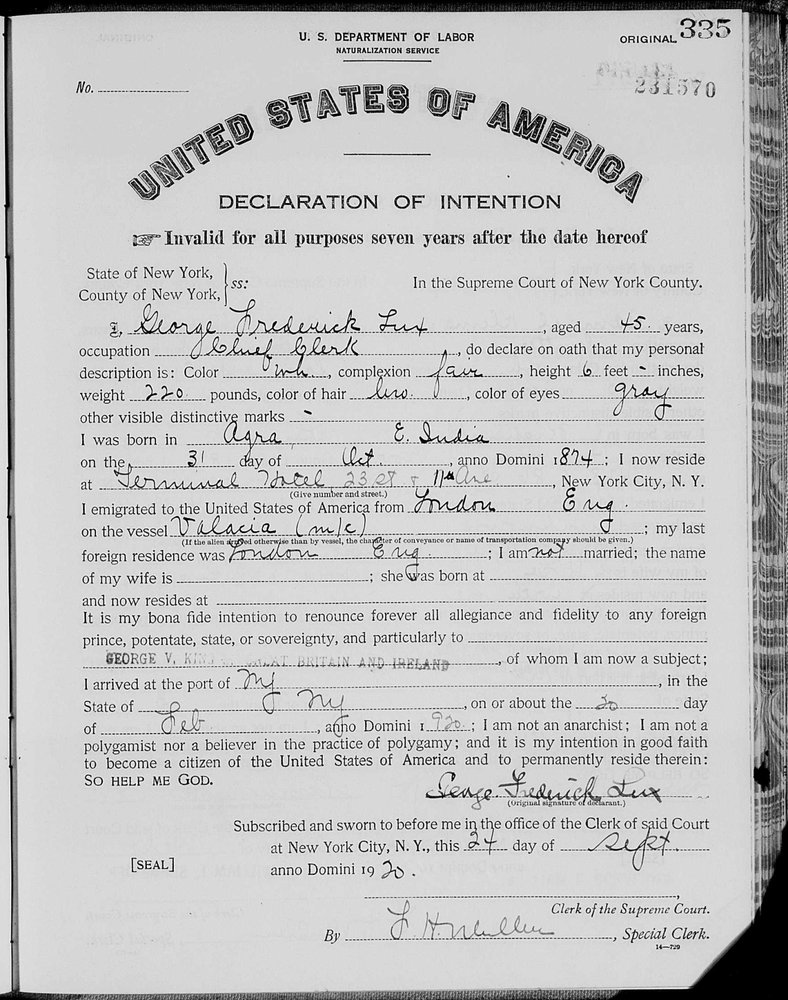
It would appear that George considered staying in the States, having signed a declaration of intention form later in 1920.
He may have stayed in the States for some time, as there are no further entries in his record cards until 1924. He does however appear to be absent from the 1920 US census.
Australia
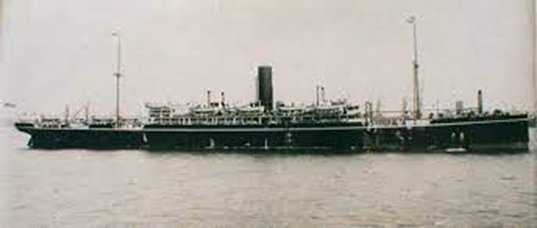
Following this spell at sea he evidently returned to South Africa for a while, before travelling as a crew member to Adelaide, from Cape Town, onboard the SS Berrima. This ship, official number 135332, is not shown in his record cards.
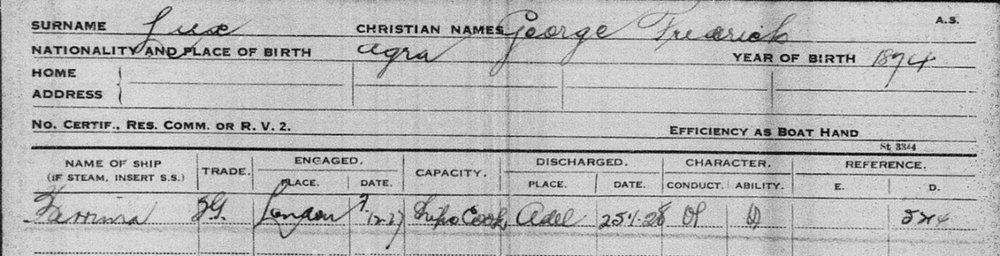
George seems to have settled in Adelaide, South Australia, but evidently committed an offence relating to the tramways.
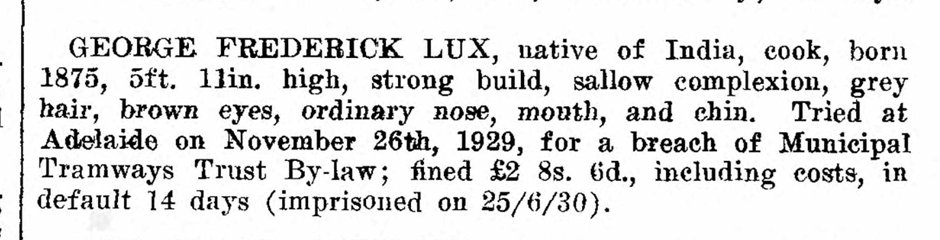
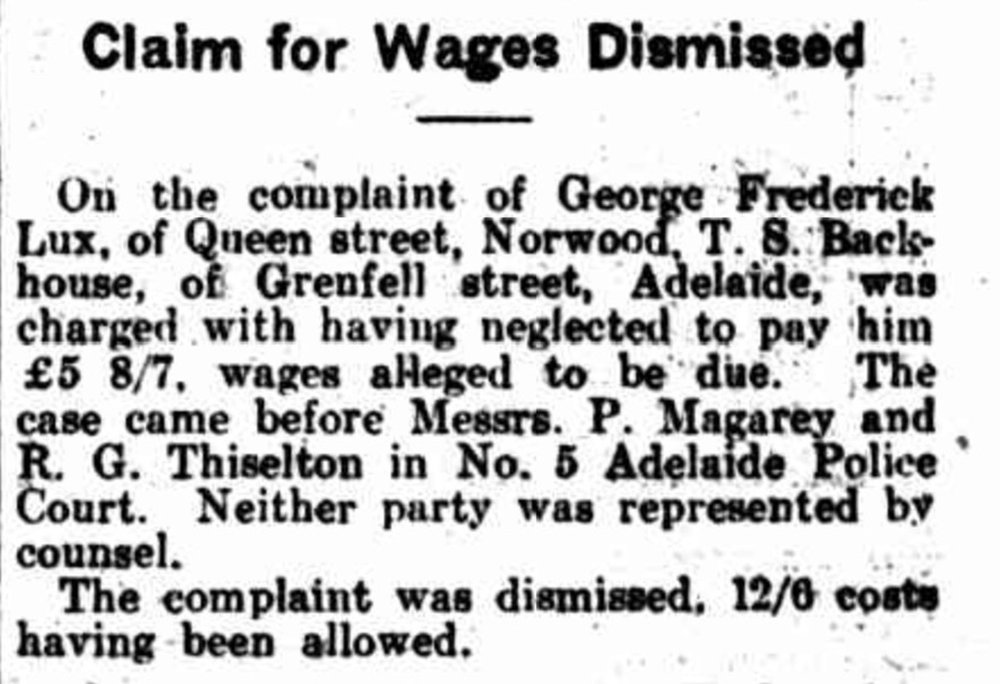
It seems he may have been harshly treated, as immediately after this court case, and before imprisonment, he was involved in a dispute for unpaid wages, which might otherwise have covered his fine.
George evidently stayed in Adelaide, and made another appearance in the Police Gazette, on 25 November 1936. On this occasion he was applying for a Marine Stores Collectors’ Licence, giving his address as 124 Wakefield Street, Adelaide. To quote from the Marine Stores Act of 1898/9, this allows the licensee to collect second hand anchors, cables, sails, old junk, rags, bottles and marine stores of every description, copper, iron, brass, lead etc.
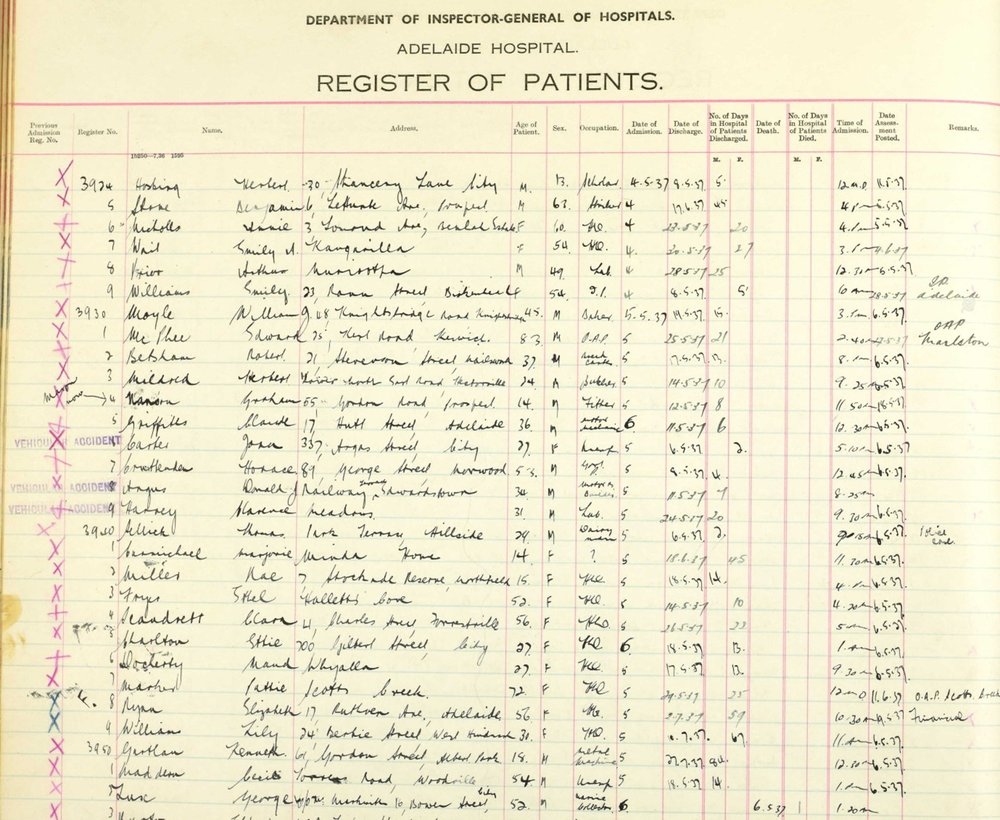
This rather sad existence came to a close in 1937, his death being recorded in Adelaide, South Australia, but with the incorrect age of 52 rather than 62.
Summary
So ended the life of a man, born in India, the son of a British Army sergeant from Luxembourg, and a mother from Germany, and who subsequently became a resident of South Africa, and enlisted in the R.F.C. after arriving in England from South America. Following discharge from the R.F.C. he joined the Merchant Navy, contemplated settlement in the USA, briefly returned to South Africa and although a cook he ultimately ended up in Australia in an unskilled job. It seems that he remained single throughout his much-travelled life.
Acknowledgement
My thanks to Pam Raven (a Project Ledger volunteer) who instigated this research and who provided RFC and Merchant Navy records and crucially, the birth index entry in the army records which was key in unravelling this account.
Becoming a member of The Western Front Association (WFA) offers a wealth of resources and opportunities for those passionate about the history of the First World War. Here's just three of the benefits we offer:

Explore over 8 million digitized pension records, Medal Index Cards and Ministry of Pension Documents, preserved by the WFA.

The WFA regularly makes available webinars which can be viewed 'live' from home. These feature expert speakers talking about a particular aspect of the Great War.

Featured on The WFA's YouTube channel are modern day re-interpretations of the inter-war magazine 'I Was There!' which recount the memories of soldiers who 'were there'.


