
'A Time to Die and a Time to Live'. Medical Advances on the Western Front.
Tom Scotland will describe groundbreaking developments in the surgical management of wounded soldiers in the British Expeditionary Force.
In 1914 and early 1915, definitive management of soldiers with filthy contaminated wounds took place at base hospitals near the French coast, many miles from front line trenches. The journey sometimes took days, surgery was inadequate and results were appalling. Many developed catastrophic wound infections and died.
Pioneering surgeons introduced a new technique called wound excision to deal with overwhelming sepsis. This involved complete and early removal of all devitalised contaminated tissue, converting a filthy wound into a macroscopically clean one. Casualty clearing stations much closer to the front line were adapted for this purpose. Safer anaesthesia and effective resuscitation, including blood transfusion by 1917, also helped to increase chances of survival.
Surgeons would significantly improve the chances of survival and lay the foundations of modern war surgery.
Tom Scotland graduated in Medicine from the University of Edinburgh in 1971. He was an Orthopaedic Surgeon with NHS Grampian - and became a Fellow of the Royal College of Surgeons of Edinburgh. Tom has written or edited several highly regarded studies on war surgery during the 19th century and the First World War.
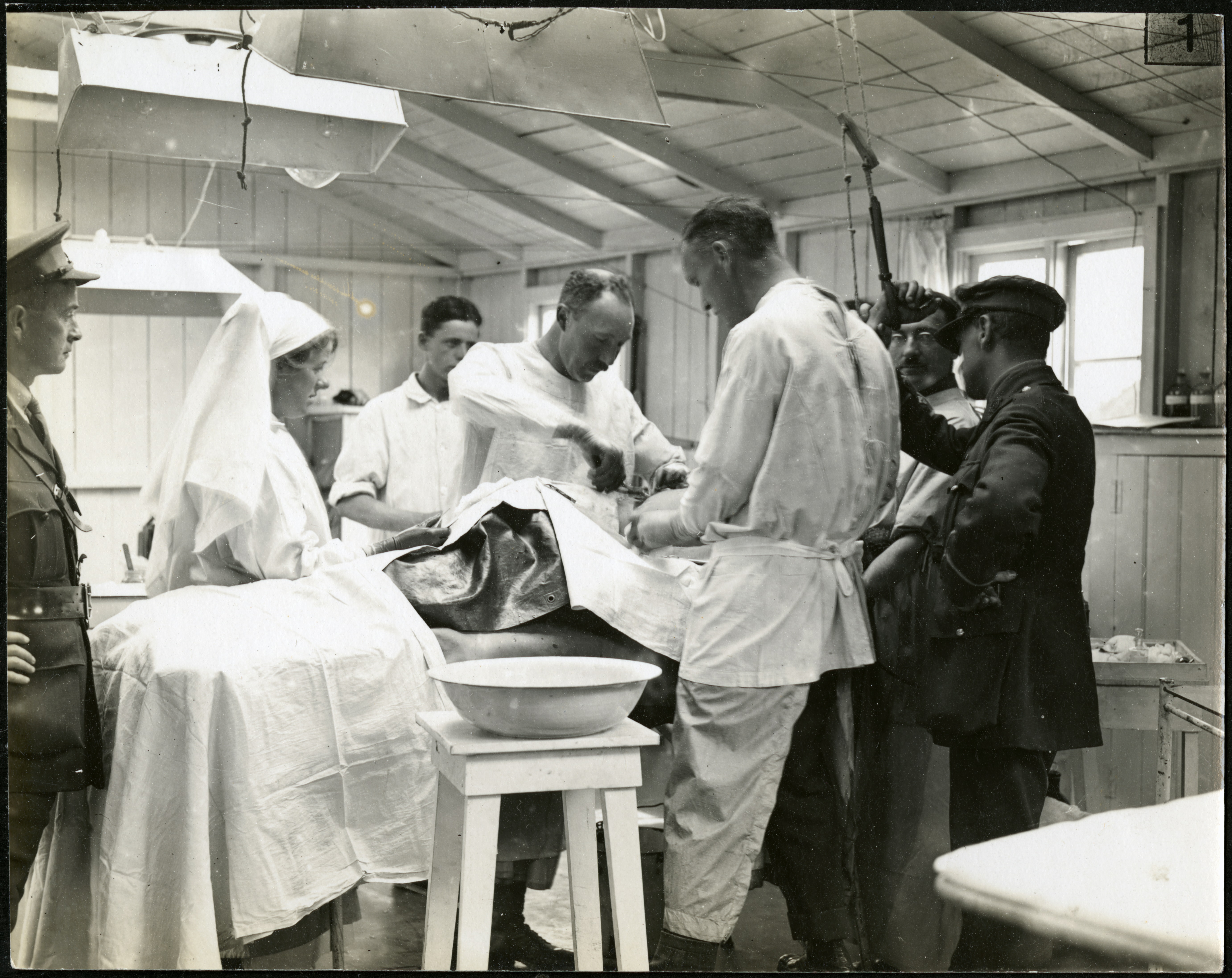
Main image: Surgeon George Gask operating in Canadian CCS 2 at Remy Siding near Poperinghe during the Third Battle of Ypres. Gask had a particular expertise in successfully treating penetrating wounds of the chest. He is pictured performing a thoracotomy. (Courtesy Archives of Ontario).
(Branch Chairman)
Other upcoming events for Scotland (South) branch


