
John Terraine - Obituary
Military Historian and Patron, The Western Front Association, 1921-2003
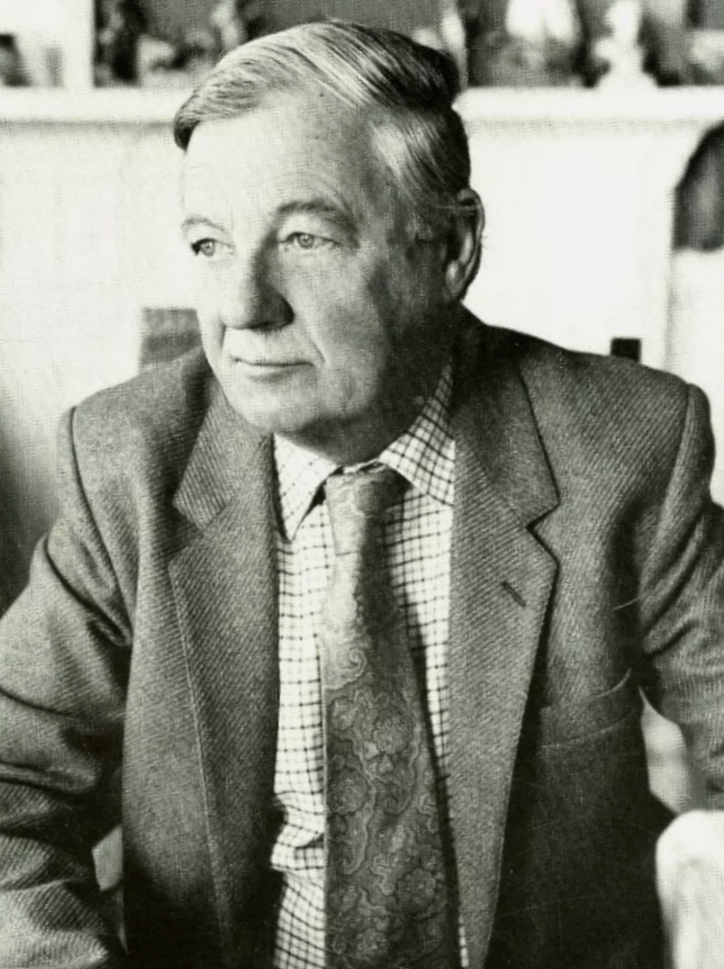
John Terraine, FRHists, Hon Fellow, Keble College, Oxford, who has died aged 82, was the outstanding English-speaking authority on the conduct of the war on the Western Front in 1914-18. He was a member of Council of the Royal United Services Institute for Defence Studies from 1976 to 1984 and in 1991 became the founding President, later Patron, of The Western Front Association. His books on the Western Front, commencing with `Mons: The Retreat to Victory' in 1960 and `Haig: the Educated Soldier' in 1963, have been instrumental in shifting the balance of historical opinion from facile condemnation of the British High Command, to an understanding of the complex political and military dilemmas posed by the German occupation of Northern France after 1914. He successfully demonstrated how the ill-trained `Kitchener's Army' of 1915-16 matured into the war-winning instrument of 1918, high in combat skill and master of an impressive array of new military technology.
To his friends, Terraine was wonderful company, convivial, a stimulating conversationalist with a tremendous sense of humour, full of shrewd if unfashionable opinions on the personalities and events of the day. To others he could sometimes appear aloof, even hostile, abrasive in argument. This was however, a shell protecting a man who was actually highly emotional, sensitive and vulnerable to slight, whether intended or not - especially since over the years, his controversial views earned him many hurtful personal attacks. Terraine was also a man of strong intellectual integrity, which sometimes made it difficult for him to compromise when part of a team effort.
Although his work on the Great War and the Western Front constitutes his central achievement as an historian, he also wrote with distinction on wider aspects of twentieth-century warfare. He won the 1985 Yorkshire Post Book of the Year award for his history of the Royal Air Force in the European war 1939-1945, `The Right of the Line' (1985), now the standard work on the subject. He wrote perceptively about the U-boat wars in 1916-1945 in `Business in Great Waters' (1989), a book which particularly illustrated his ability to see the two twentieth-century wars against Germany as episodes in a single conflict, offering many points of continuity and comparison, whether with regard to grand strategy; fighting tactics or technology.
John Alfred Terraine was born in London on 15th January 1921, educated at Stamford School and Keble College, Oxford, of which he was elected an Honorary Fellow in 1986. In 1944, he joined the BBC as a Recorded Programmes Assistant; from 1953 to 1963, he was the Pacific and South African Programmes Organiser for the World Service at Bush House. He resigned in 1963, the year when `Haig: the Educated Soldier' (his vindication of the Commander-in-Chief of the British Army on the Western Front) was published to acclaim but also to fierce criticism for its unconventional views. Henceforth, Terraine was to pursue a career as a freelance historian.
In 1963-1964, he acted as Associate Producer and principal scriptwriter to the ground-breaking twenty-six part BBC Television documentary series `The Great War' for which he received the 1964 Screenwriters Guild Award for the best documentary script. Thereafter he combined authorship of books with television documentary scripts. In 1986 he wrote the Thames Television series `The Life and Times of Lord Mountbatten', for which he won the 1969 Society of Film and Television Arts Script Award, and in 1970, `The Mighty Continent', a BBC Television history of Europe in the twentieth century.
The 1970's and 1980's, when the emphasis of Terraine's work shifted from television to written history, proved an especially fruitful period for him. Apart from his major histories of the Royal Air Force and of the U-Boat wars, he published such important and closely-argued studies of the Great War as `The Road to Passchendaele' (1977), `To Win a War, 1918 The Year of Victory' (1978), `The Smoke and the Fire' (1980), and `White Heat: the New Warfare 1914-1918' (1982), a particularly interesting analysis of the influence of technological invention on the conduct of war.
For his services to military history, he received the Chesney Gold medal in 1982, the highest award of the Royal United Services Institute for Defence Studies.
In 1945, Terraine married Joyce Waite and they had a daughter, Carola, herself an historian. In his latter years, he enjoyed a devoted companion in Kathy Stevenson, who played a major part with him in building up The Western Front Association as a focus for research and education.
Correlli Barnett, Honorary President, The Western Front Association
This first appeared in Bulletin 68, in February 2004. Bulletin is one of several magazines available for free to members of The WFA. If you want to see more articles like this one, you may wish to become a member of The Western Front Association.
For more about John Terraine, see here.


