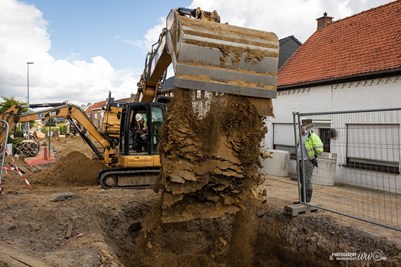
Bunker excavation at 'Whitesheet'
One of the largest underground bunker systems of the First World War has been uncovered by archaeologists in Wijtschate, as reported in The Times on 14 July.
The vast tunnel system is believed to hold the remains of dozens of German soldiers who were entombed in the network when the British launched their attack during the Battle of Messines in 1917.
The bunker, located beneath the village of Wijtschate in Belgium, would have housed up to 300 troops, and at a depth of 20ft would have been shell-proof.
However, the British pummelled the German fortifications on the ridge with millions of shells and it is thought the bombardment caused the timber-lined walls and ceilings around the entrances to collapse, burying men inside alive.
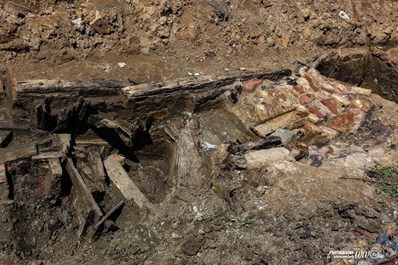
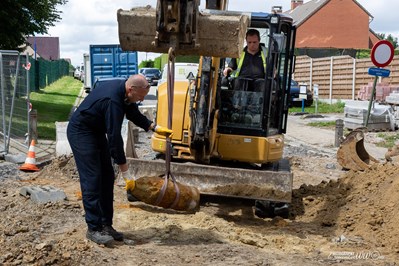
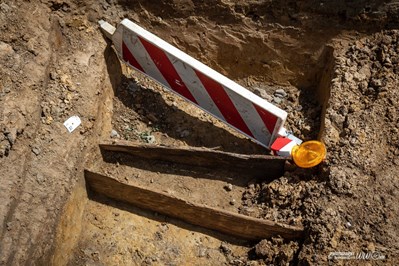
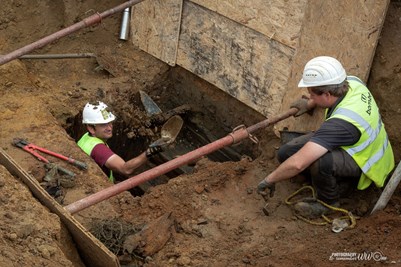
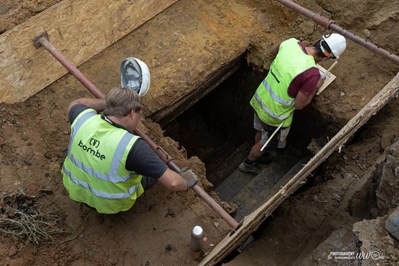
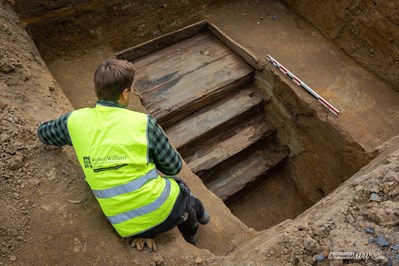
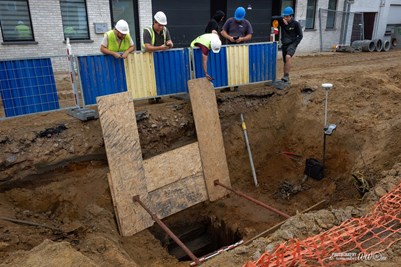
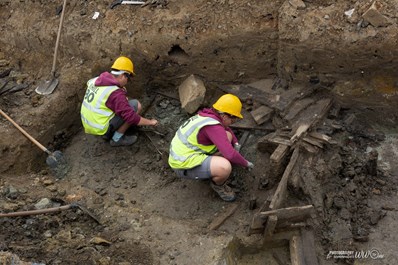
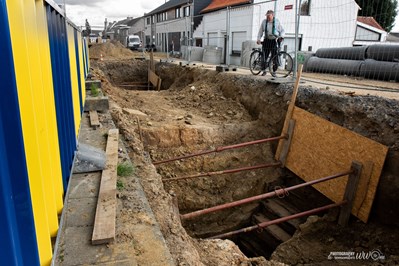
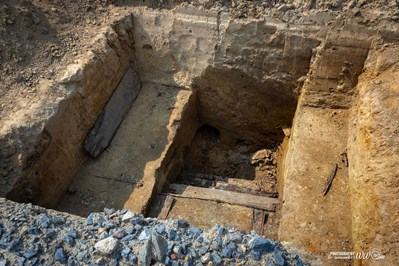
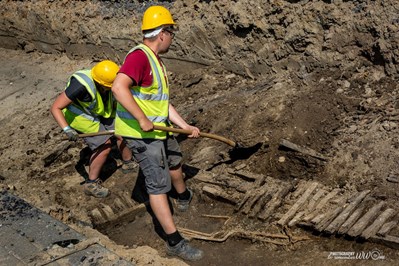
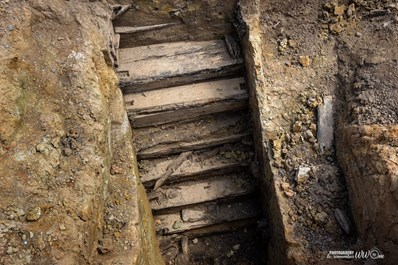
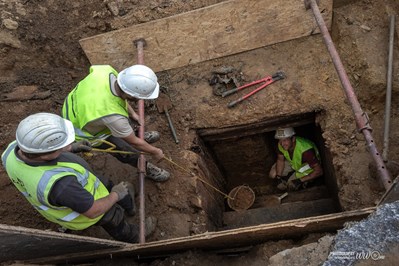
When workmen digging a new sewerage system in the village last year began finding artefacts in the soil, archaeologists were brought in and discovered four entrances, each leading to a flight of 21 wooden steps.
The openings at the bottom of the steps remain blocked by tonnes of earth but experts believe that there are three or four more entrances to the network, which covers an area under a 400 metre section on the main road through Wijtschate.
It is hoped that one of these will be accessible to allow them to safely enter the dugout or send in a remote camera.
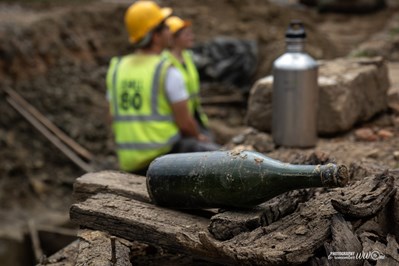
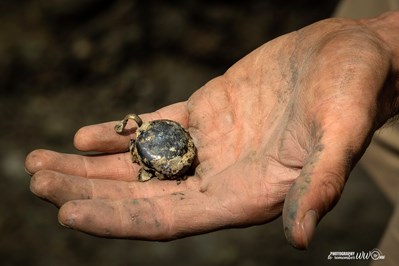
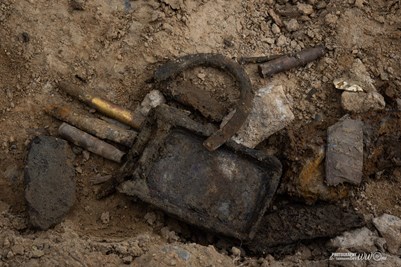
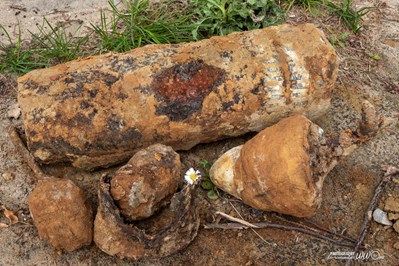
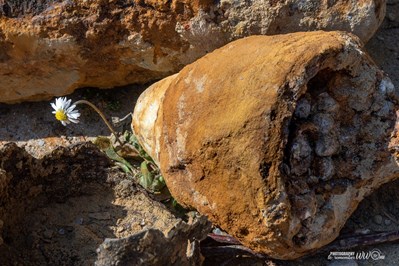
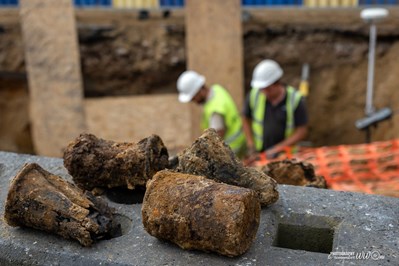
About 200 military and personal artefacts dating back over 100 years have been found, including German army helmets, a bayonet, a pair of wire cutters, glass bottles, a perfectly preserved wooden stretcher, parts of a narrow-gauge railway and a wooden cartwheel.
Sam De Decker, of the Flemish Heritage Agency, said his team had found some human remains at the site but they were too small to identify or even to point to a nationality. They have been handed to the police and the Belgian army.
“What makes [this tunnel] remarkable is that we are able to investigate such a construction. Most of the time, they are hidden deep in the soil and completely out of our reach,” Mr De Decker said.
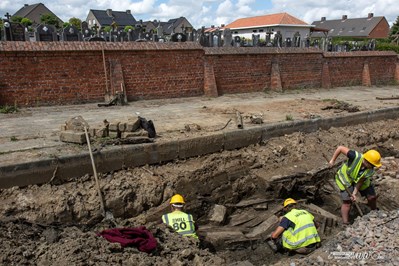
“Now we found at least six entrances; wooden stairs that lead down in the soil, to enter the German dugout. The tunnels, bunker and trenches are found in the middle of the village, in one of the main streets. The soldiers entered their underground shelters from the street.
“The village was completely destroyed during the war, so in that street we find hundreds of artefacts that can be connected to the war.”
The Germans occupied the ridge near the town of Ypres from 1914 until June 1917, until it was taken by British, Irish and Australian troops during the seven-day Battle of Messines.
The British attack opened with the explosion of vast mines dug under the German lines, causing a virtual earthquake that is estimated to have immediately killed as many as 10,000 German soldiers.
The Germans suffered 35,000 casualties in the battle, and about 1,300 men of the 33 Fusiliers Regiment were reported missing. Some of these men could be buried in the underground shelter.
The area around Wijtschate was captured and held several times by both sides during the war. After the Battle of Messines, the Germans re-took the ridge in 1918.
Construction of the sewerage works is on hold and the archaeologists have until July 17 to find the main gallery area of the tunnel. Excavation work is being carried out by the Flemish Heritage Agency with the help of archaeology students from Ghent University.
Robin Schaefer, a German military historian who has been advising the excavation work, said it is one of the largest underground structures ever found in Flanders.
He said: “It would have been smaller than you think inside. There would have been very cramped little rooms, not comfortable at all and very oppressive with low ceilings.
“After the battle the whole area was like the surface of the moon. Everything was shelled to smithereens, we are talking millions and millions of shells. The entrance shafts to this dugout may have collapsed under the shell fire.
“Most of the men were taken prisoner but many of them were never found and they still rest there. There could be a real time-capsule in the tunnel.”
Above text: The Times, 14 July 2020
Read More: Dig Hill 80 Project Whitesheet, 2018