
200 Brentano’s Launch on Stereoscope: A Call to Action!
We’re extremely excited to announce the beginning of a large-scale project to unravel the mystery of the group of manufacturers generally referred to as Brentano’s (see Stand To! issue 123). Cataloguing and describing Brentano’s stereoviews is an unenviable task, for reasons that will shortly become clear. Fortunately, through a collaboration between the hundreds of avid stereography buffs who frequent the Jordan/Ference Collection, and the thousands of keen Great War enthusiasts who belong to the The Western Front Association, we now have a unified front with which to tackle the conundrum of defining the undefinable, and describing the indescribable. But we need your help to do it!
What Are Brentano’s Stereoviews?
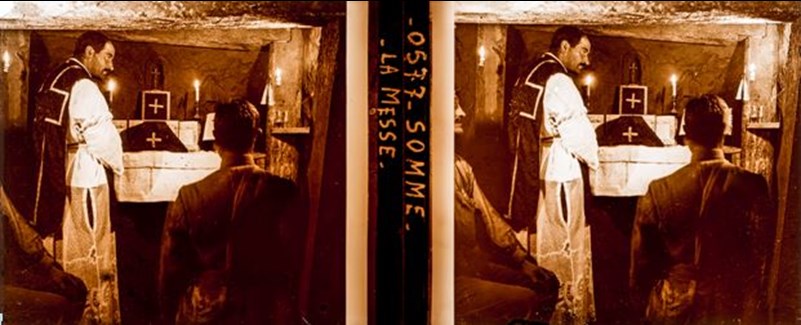
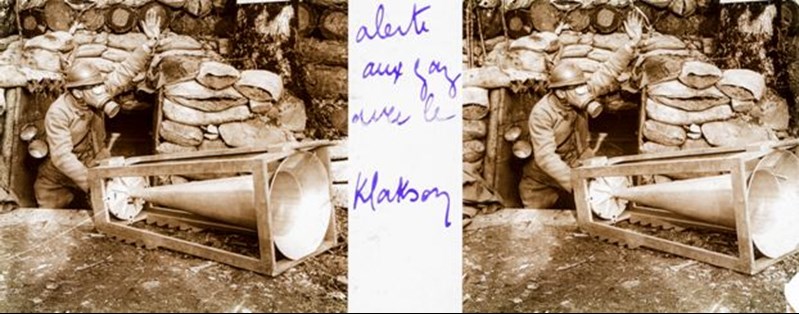
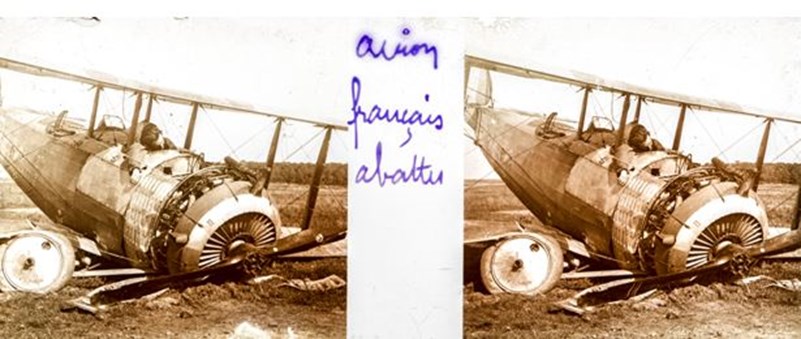
Currently, 200 Brentano’s stereoviews have been uploaded both to the WFA’s Stereoscope gallery and to the Great War in 3D Image Library. For those acquainted with paper card stereography, but unfamiliar with the glass slides more prominent on the Continent, some of these images might be shocking in their realism. There is a simple reason for this: as the cameras used to take these stereoscopic images were small enough to conceal in a rucksack (or indeed, in a spare pair of boots), daring soldiers could capture front-line action, trench life, and the horrible aftermath of the war in stunning detail. There was no need to stage scenes behind the lines for bulky large-format cameras, as many of the cameras used to create Brentano’s (and other French glass stereoviews) were no larger than a brick (and considerably lighter).
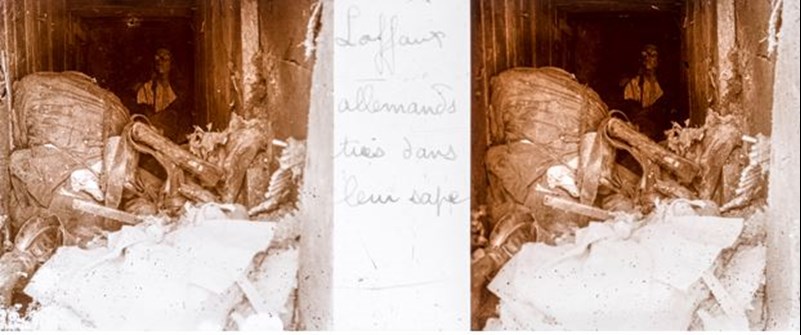
Unlike other manufacturers, however, there was little rhyme or reason to any of the various numbering schemes which exist on various Brentano’s slides, and oftentimes the captions are inconsistent. Sometimes, there is no caption. Sometimes, rival captions will place a scene at various battlefields, likely in editions from separate imprints using the same negatives in different scenes. With any information on these manufacturers long since vanished into history – much of it during the Second World War – we’re left with the physical artifacts, unordered and with dubious captions where captions exist. Remember the above mention of the fact that these would be hard to catalogue?
How You Can Do Your Bit
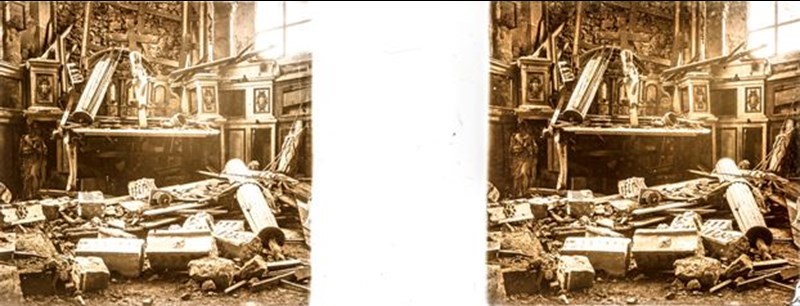
We would like to encourage anybody with a bit of a Sherlock Holmes streak to closely examine the images, and report anything that they might notice – from a clue which suggests a unit, location, date range, etc, down to little titbits about uniforms, artillery pieces, landscape, or architecture that are simply interesting. Feel free to (respectfully) disagree with our findings or the findings of other amateur sleuths; basically, the broader the discussion, the more we’ll be able to ascertain about the place of these artifacts within the broader context of Great War studies. Western Front Association members can simply use the new Comment feature within Stereoscope; Great War in 3D visitors can email me directly (although obtaining a Western Front Association membership is heartily encouraged).
Ian Ference, Lead Stereoscopic Archivist
Further reading:


