
George Armstrong was killed in action on this day in 1918
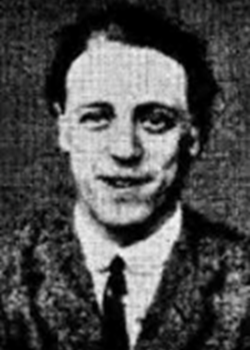
George Armstrong was born in Hawick, Roxburghshire 18 March 1892.
His parents were Richard (a Tweed Packer) and Jane (née Riddell) of 8 Wellington St, Hawick the youngest of five children.
He was educated at Buccleuch Public School, Hawick which was opened in 1860 in Buccleuch Street.
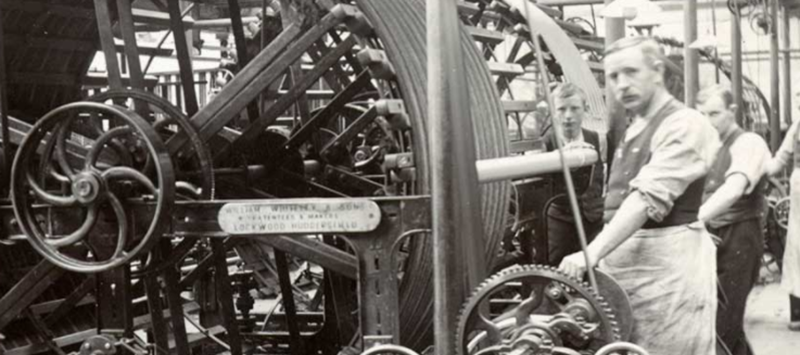
Before the war, he worked as a tweed warehouseman at Messers Scott Bros, woollen manufacturers.
On 14 June 1915, George enlisted in the 1st Lothians and Border Horse, a Scottish Territorial cavalry unit, which served often dismounted, performing infantry, scout, and escort duties.
He served in France from 29 March 1916 and, towards the end of August 1917, the unit was transferred to the 17th Royal Scots who, at the time, were on the Somme. In October, the Battalion moved to Proven near Poperinghe. and spent most of the time, until February 1918, on relief duties and training in the Ypres area.
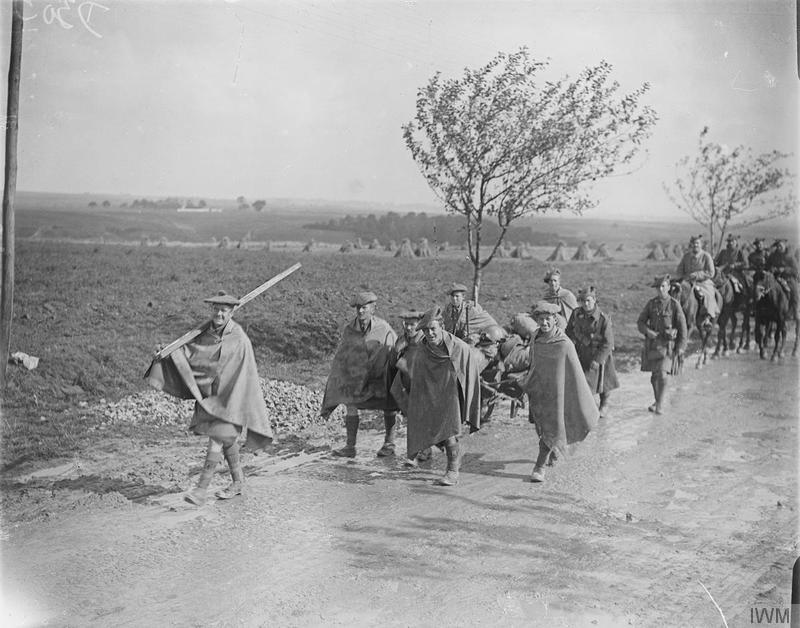
On 21 March 1918, the Germans launched their Spring offensive, also known as Kaiserschlacht or the Ludendorff offensive, a series of attacks along the British Front. On 23 March, the Battalion returned to the Somme where they took up defensive positions at Bray-sur-Somme. Forced to retire by the German attacks, the Battalion took up a rearguard position at Morlancourt before retiring further to Dernancourt on the 27th.
On the morning of the 28th, the War Diary reported "Battalion front quiet" but, at 3pm the same day, it added "heavy casualties by enemy shelling of front".
George was killed in action on 28 March 1918 and is commemorated on the Pozieres Memorial. He was 26 years of age and single.
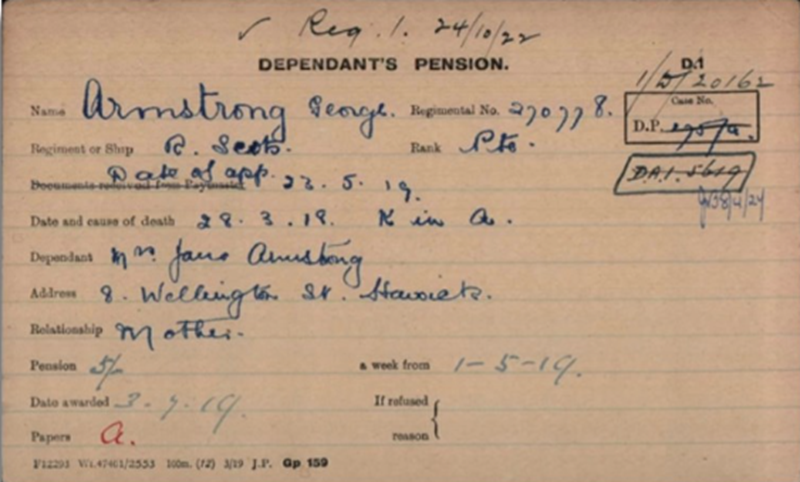
270778 Pte George Armstrong, 17th (Service) Bn, The Royal Scots (Lothian Regt)