
Thomas Palmer Watson was killed in action on this day in 1917.
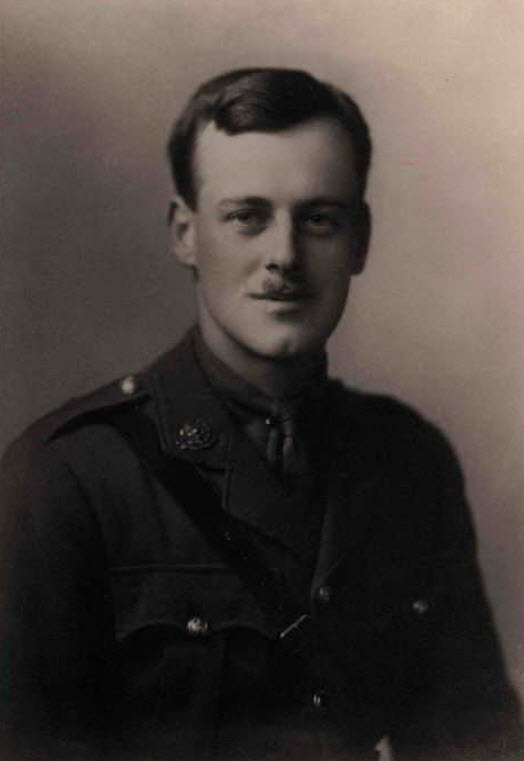
Thomas Palmer Watson was born on 23 January 1891 in Breaston, Derbyshire. His father was William John Watson, a solicitor in Nottingham, his mother Alice Jane Watson (née Harrison). They lived in a large 5 bedroom property - The Hollies, 14 Blind Lane in Breaston, Derbyshire.
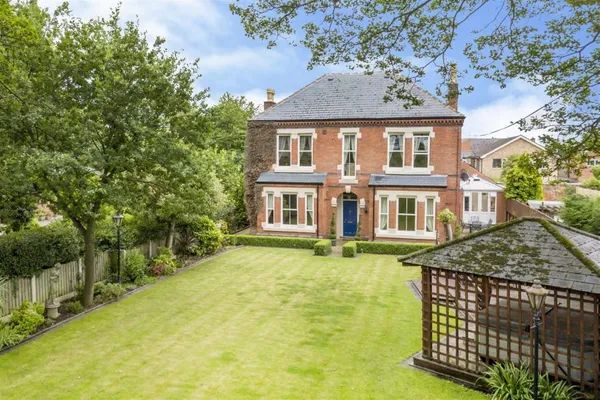
Thomas had an older brother, John Harrison Watson, born in 1899. He also had a younger sister, Alice Mary Watson. In 1911, the family and their domestic servant were still living at The Hollies, although father, William, was lodging in Nottingham, 10 miles away, as he had been at the time of the 1901 Census. Thomas was a student, his brother, John, an engineering student.
Both brothers attended Stancliffe Hall school in Matlock, 30 miles away.
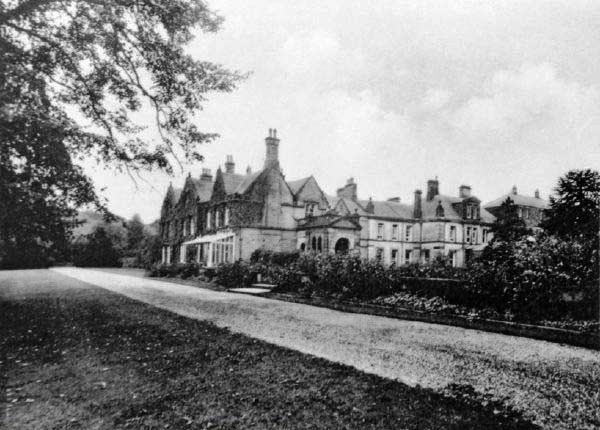
They both went on to Malvern College where they were members of the Malvern Officers Training Corps. Thomas was at the college from 1905 to 1910. He won an academic award for English verse, served as School Prefect, Head of House, Cadet Officer, and also represented the School in the Shooting VIII.
He entered Sidney Sussex College, Cambridge, graduating B.A. (Hons) Classics in 1913. According to the University Annual for 1917, he was "among the most popular men of his time, and was a good oar and tennis player".
When he left college, he became a teacher at Forres School in Northwood, Middlesex. At the outbreak of war, he rejoined the Cambridge University O.T.C. and, on 3 September 1914, he was gazetted 2nd Lieutenant, 6th Battalion, The East Lancashire Regiment. Meanwhile, on 17 October 1914, his brother John, joined the Royal Naval Air Service (Armoured Cars) and served as a Petty Officer Mechanic in Pembroke.
In early 1915, Thomas was promoted to Lieutenant whilst John was nominated for a commission in the Army. He was appointed 2nd Lieutenant in the 6th Battalion, East Lancashire Regiment - the same battalion as Thomas.
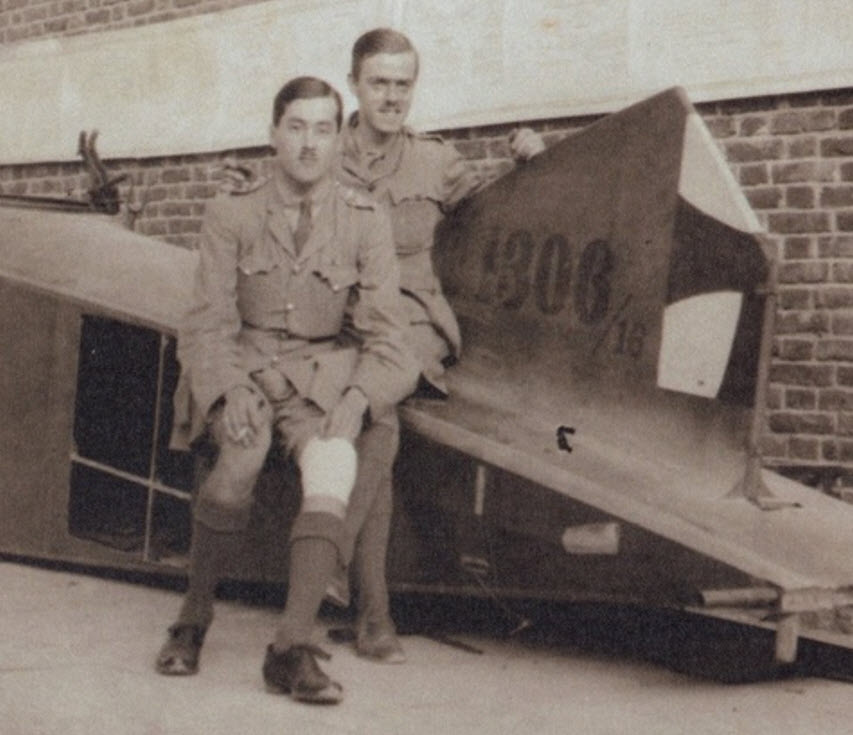
The brothers sailed from Avonmouth with the 6th Battalion on 16 June 1915, landing at Alexandria then moving to Mudros in preparation for the Gallipoli Campaign. The infantry landed on Cape Helles over 6-16 July to relieve 29th Division. Returning to Mudros at the end of the month, the 6th Battalion then landed at Anzac Cove between 3-5 August, and saw action at the Battles of Sari Bair, Russell's Top and Hill 60.
On 9 August 1915, Thomas was severely injured on the fourth day of the Battle of Sari Bair when British forces made a last attempt to break the stalemate and seize control of the peninsula in preparation for the final push to Constantinople. He received a bullet wound to the right neck and another to the left thigh. Evacuated, it would not be until 4 December 1915 that he was deemed fit enough to return to the Battalion, being promoted Temporary Captain eleven days later.
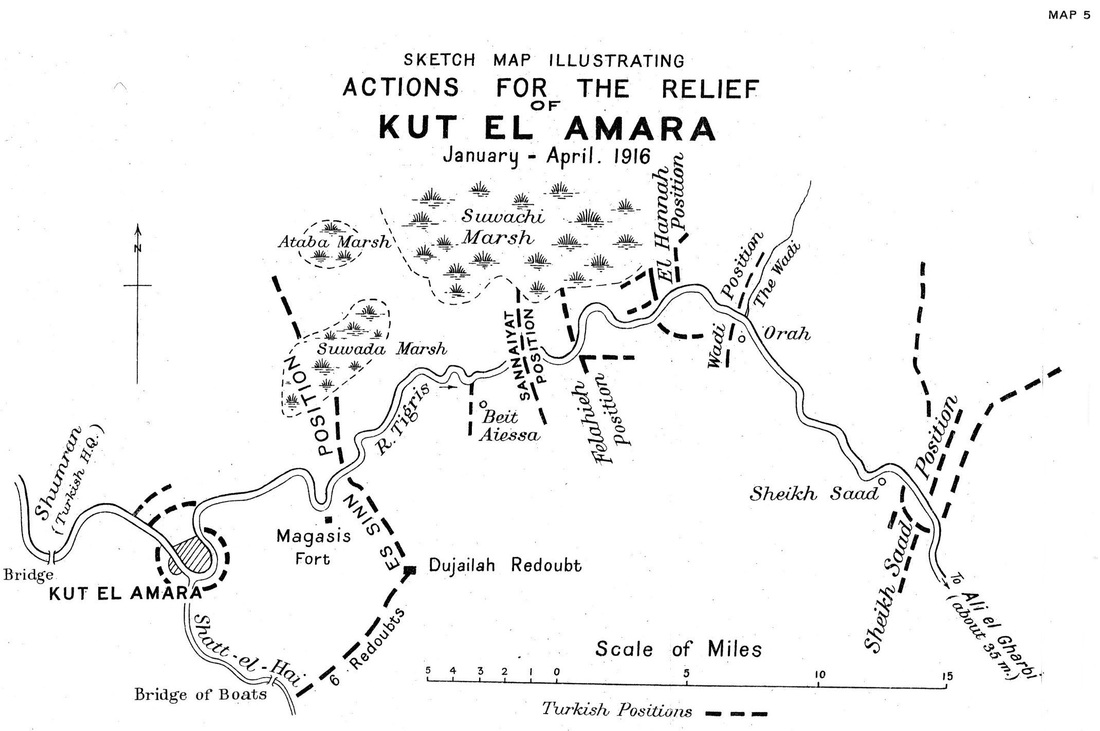
In February 1916, he travelled with his Regiment to Basra with his brother, and the pair fought alongside one another at Kut. Admitted to hospital sick on 7 June 1916, he spent over two weeks suffering from dysentery before re-joining as Adjutant and Temporary Captain in Command of 'A' Company. For his service in Mesopotamia, Thomas was mentioned in despatches (London Gazette 19 October 1916) and, in December 1916, he and his brother John were both awarded the Military Cross for their conduct in June 1916.
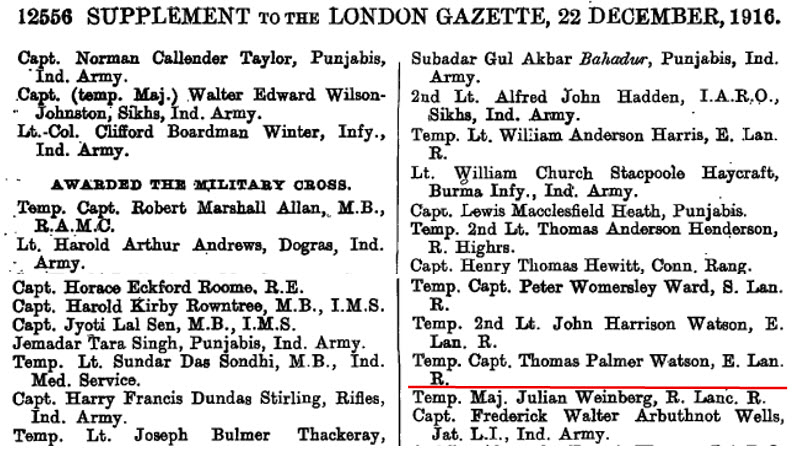
Thomas' citation read:
"For conspicuous gallantry, initiative and coolness during the night of 17 April 1916. He took command of D Coy when its officer was wounded and was especially cool in leading each company across a zone of machine-gun fire and keeping the battalion together. During the two successive days he was of the greatest assistance, when nearly every officer was wounded, in keeping the line intact in the Beit Aieesa Trench, thereby making it possible to repel the counter-attacks of the enemy.
"His Majesty the King has been graciously pleased to approve of the Honour and Reward of the Military Cross for distinguished service in the Field in Mesopotamia, with effect from 3rd June 1916."
In December 1916, the London Gazette announced that he was to be a Temporary Major (although this isn't borne out by any other sources).
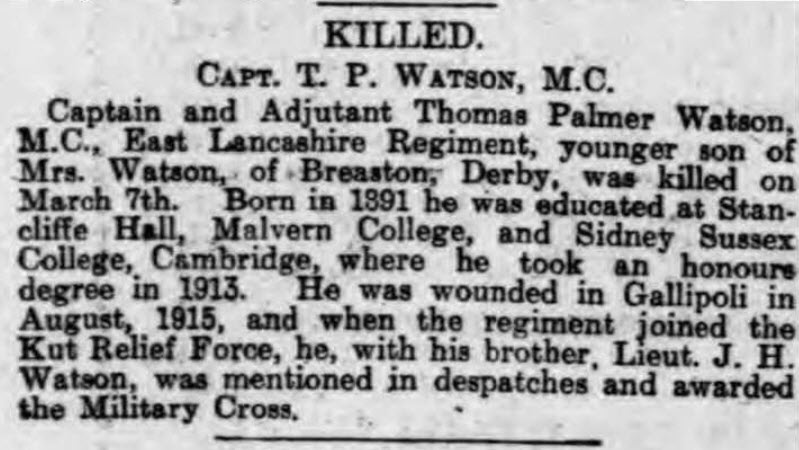
On 7 March 1917, Thomas was killed in action. The War Diary gives a brief account:
'At 3pm 38th Bde ordered to cross Diala River at night. K.O.'s on left, E.L.'s on right. Heavy fire destroyed 3 boats in which K.O. attempted to cross and owing to the improbability of getting back across under heavy fire, the attempt was given up that night and E.L. ordered not to endeavour to cross.' (X) Officer killed (Capt. & Adj. T. P. Watson, M.C.), X Officer wounded (Lieut. H. G. Wood)'.

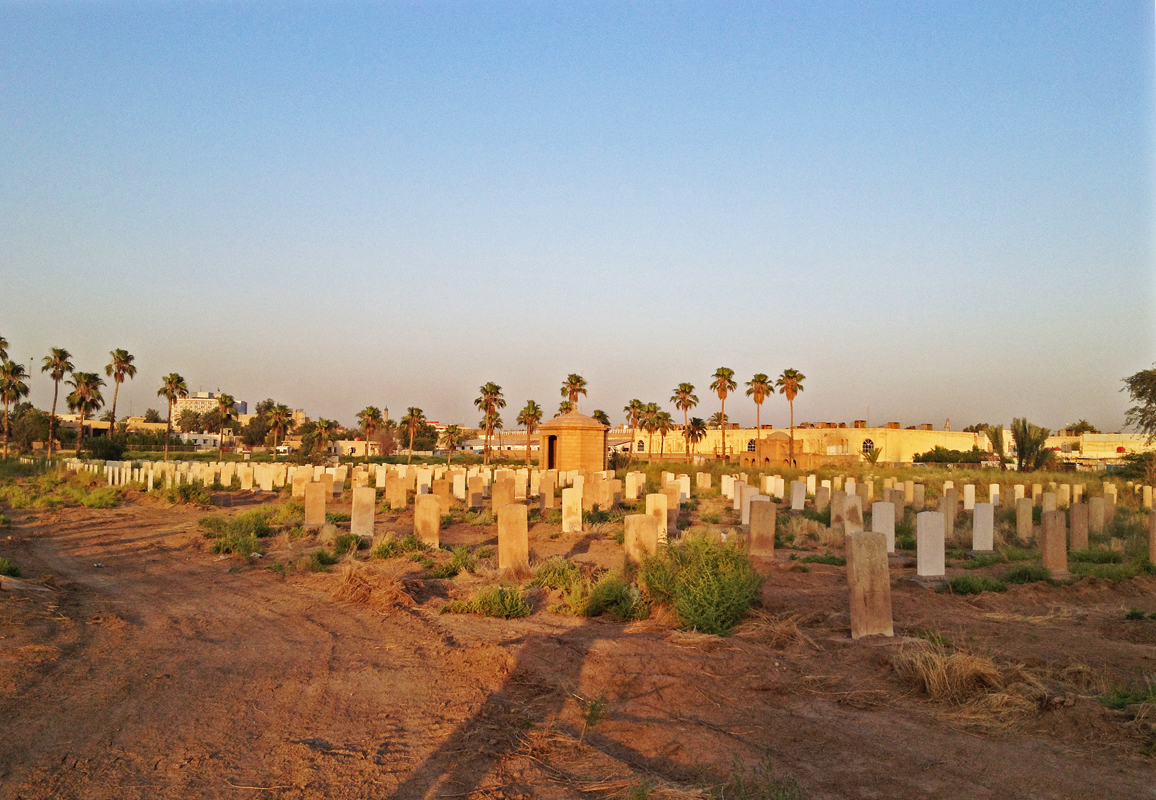
He was initially buried in the vicinity of Diala Village, although his body was later exhumed and reburied at Baghdad (North Gate) War Cemetery. His headstone bears the inscription 'Gladly did I live and gladly die', as selected by his mother.
Thomas' Commanding Officer wrote of him:
"He was beloved by every officer and man who came into contact with him; he devoted the whole of his life since he had been Adjutant to the welfare of every officer and man in the regiment. His rare unselfishness, devotion to duty, and his charming character made the handling of men with him an easy thing. His fine brain made all work easy to him, and his devotion to the Regiment seemed to make him tireless, and his great spirit overcame physical fatigue".
His brother, John, survived the war. He had fallen ill on 3 May 1916, and was invalided to India. He was also mentioned In despatches (London Gazette 19 October 1916). He had various postings in India but, in December 1917, likely tired of service in India, he travelled to Egypt and joined the Royal Flying Corps Base Depot where he later began training with the Royal Air Force. Once again his health held him back and he was admitted to hospital in Cairo on 29 January 1918. Found 'unsuitable' for further training, he was posted back to India in November 1918, from where he travelled home on 18 January 1919. He died in 1964.
Captain and Adjutant Thomas Palmer Watson M.C., 6th (Service) Battalion, East Lancashire Regiment.