
Biggles, the Battle of the Flowers and the RAF in the First World War
In the rarely visited Commonwealth War Graves Commission cemetery at Charmes (some 25 miles due south of the city of Nancy) are several graves of men from the RAF. The reason for this is this was the area from which the Independent Force (sometimes called the Independent Air Force) operated against Germany in the later stages of the First World War.
Three of the squadrons undertaking these raids into Germany (typically against Stuttgart and other towns) were 55, 99 and 104 Squadrons. These flew out of the airfield at Azelot.
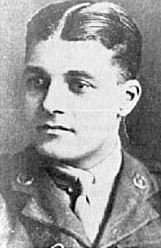
One of the pilots of 55 Squadron was 2/Lt William Johns. After the war he was to promote himself to 'Captain' and write as WE Johns. Many readers will be familiar with his 'Biggles' character.
In the Charmes Military Cemetery, plot I, row E are four men who were killed around the same day - 30/31 August 1918.
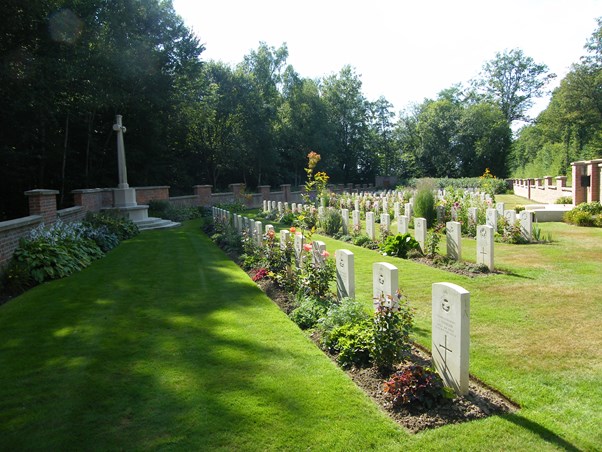
They are Serjeant George Nye, Serjeant Harry Wilson, Serjeant John Lowe, and Chief Mechanic Robert Dawson. Wilson belonged to 99 Squadron, the others 104 Squadron. Lowe's headstone tells us he died on 30 August 1918, the others state 31 August.
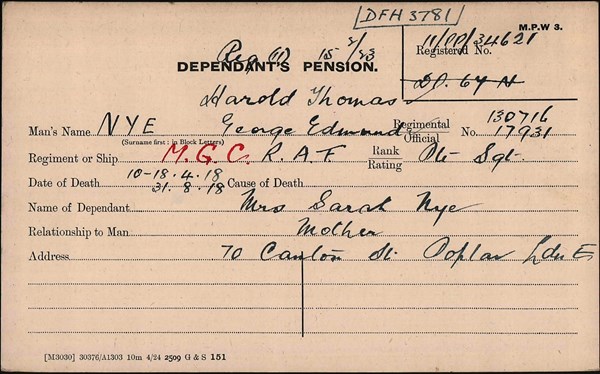
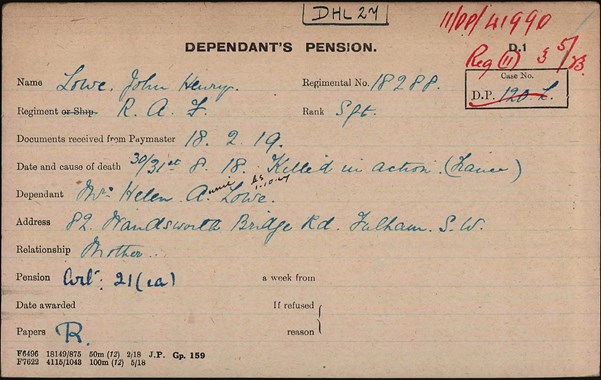
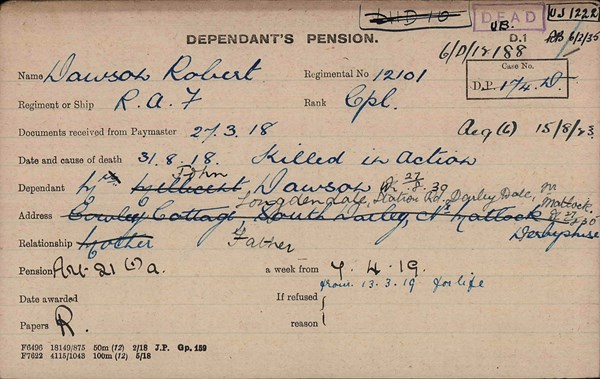
At first glance there is no explanation for these four men (who were ground crew) having been killed on the same day. However 'Captain' WE Johns seems to be able to provide the answer.
A number of incidents at Azelot have been the basis for some of Johns’ stories. For instance, in Popular Flying (a magazine published in the 1930's) in May 1935, Johns described his aerodrome being the target of a German bombing raid. This seems to have taken place on 31 August 1918 when the above four casualties were sustained.
The above piece however is predated by a fictional account in 'Popular Flying' when Johns wrote a 'Biggles' article in the edition dated October 1932 about the 'Battle of the Flowers' (he used the pseudonym "William Earle"). In this story, a German bomber destroys one of the pilot’s flower beds.
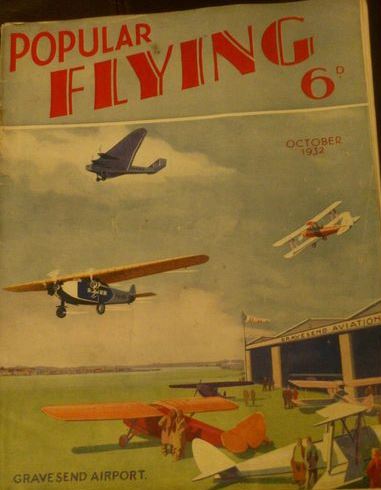
Algy (a pilot with Biggles's squadron) becomes rather angry about a German pilot bombing his just-planted sunflower bed, to the point where he goes to bomb the aerodrome where the German alights in the early morning. He is escorted back by Biggles and some other pilots of C flight, after which he jumps jubilantly out of the Sopwith Camel (the squadrons at Azelot did not fly this type), running over and yelling, 'I got it- I got it!'. After some confusion on Biggles part on what exactly he bombed, since he certainly didn't bomb the German hangers, he realises that Algy bombed the aerodrome's flowerbeds, going as far as to make a 'salad of their lettuce patch' in retaliation for the German bombing of his sunflowers.
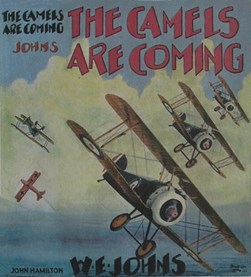
Johns was not averse to recycling his stories. The Battle of Flowers was subsequently collected as the 12th chapter of the very first Biggles book The Camels are Coming.
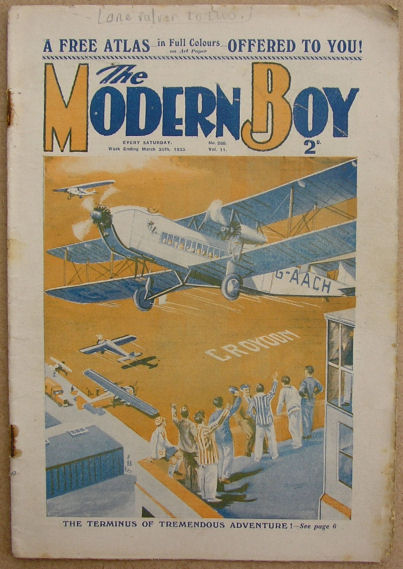
The story was subsequently republished in The Modern Boy Issue 268.
It finally appeared as the fifth short story of Biggles Pioneer Air Fighter published in 1954.
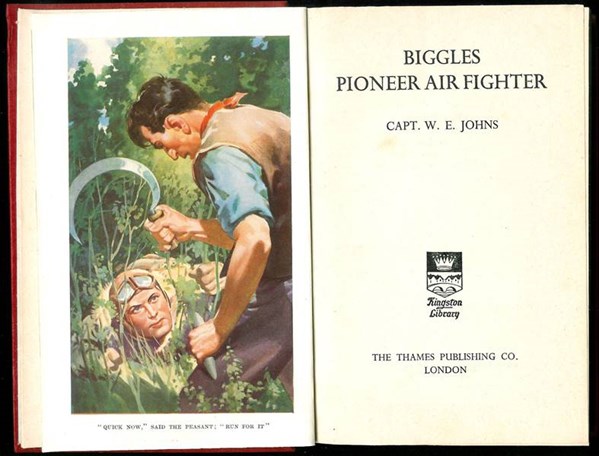
In the years before the outbreak of the Second World War Johns produced 63 RFC/RAF short stories plus two full length Biggles books (numbers vary according to different sources due to Johns recycling so many of his stories). But arguably the best of his prolific output are the early stories dealing with the life of a RFC/RAF pilot. None of the Biggles stories were set in the context of the Independent Force, RAF (the 'mundane' but obviously dangerous work of bombing Germany was not 'exciting' enough) but instead based Biggles vaguely in the area of the Somme/Ypres which was not, in reality, where Johns did any of his operational flying.
The airfield at Azelot is still there. It is now the base of a Parachute club.
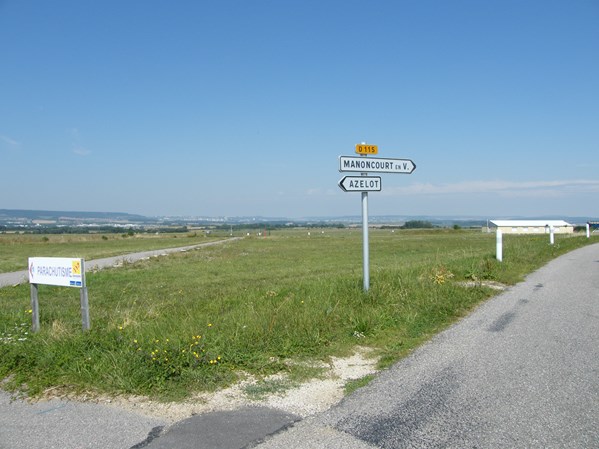
But the quiet village of Azelot has no visible signs of the war, other than four lonely CWGC graves in the village cemetery, being of men from the Indian Labour Corps.
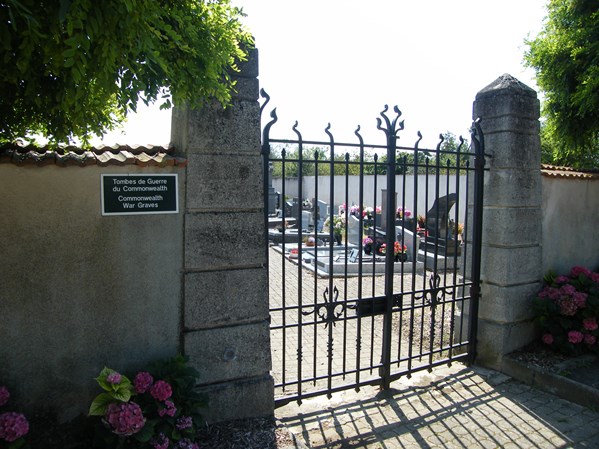
In the area around Azelot are a sprinkling of RAF graves in churchyards. These - and the cemetery at Charmes - represent many of the fatalities of the Independent Force, RAF which fought in this area which is many miles away from the 'usual' battlefield areas further north. It is an area that is certainly well worth a visit.
Further reading:
Becoming a member of The Western Front Association (WFA) offers a wealth of resources and opportunities for those passionate about the history of the First World War. Here's just three of the benefits we offer:

Identify key words or phrases within back issues of our magazines, including Stand To!, Bulletin, Gun Fire, Fire Step and lots of others.

The WFA's YouTube channel features hundreds of videos of lectures given by experts on particular aspects of WW1.

Read post-WW1 era magazines, such as 'Twenty Years After', 'WW1 A Pictured History' and 'I Was There!' plus others.
Other Articles


