
Spring Forward, Fall Back. The changing of the clocks and the First World War
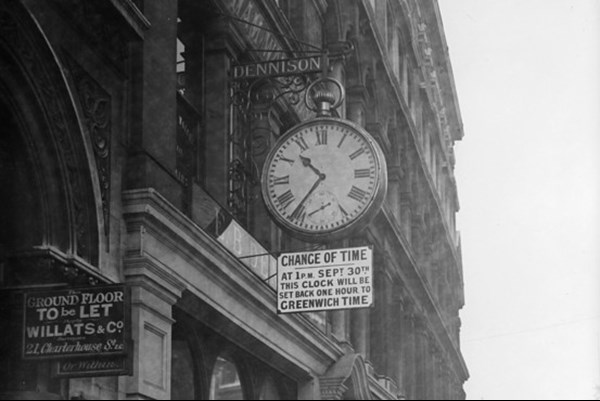
Every year, in late October, everyone in the UK puts their clocks back as we move from British Summer Time to Greenwich Mean Time. It may be useful to ponder, in the extra hour that is made available to us a few facts around this ‘changing of the clocks’.
The introduction of Daylight saving time is largely due to the campaigning of William Willett, a British builder who was born in 1856. It is said that part of his desire to advance the clocks during the summer months was due to his wish to play more golf!
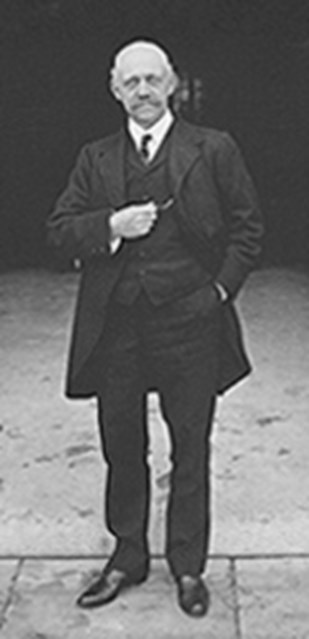
Using his own money, in 1907 William published a pamphlet 'The Waste of Daylight'. In this publication he proposed that the clocks should be advanced by 80 minutes (albeit in four stages) during April and put back by 80 minutes (again in four 20 minute steps) in September.
Why 80 minutes rather than a full hour was suggested is (in retrospect) surprising, and changing clocks four times rather than once seems odd.
Although he gained some support (including that of Winston Churchill) nothing came of his proposal.
Until, that is, the First World War.
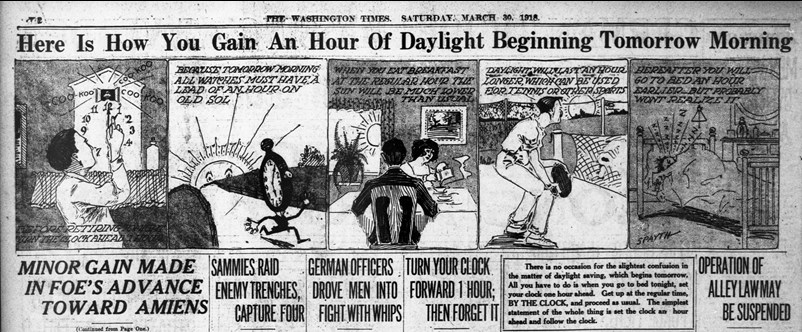
Willet died in 1915 but his idea was adopted – not by Britain, but by Germany, who along with Austro-Hungary, were the first countries to introduce Daylight Saving Time, on 30 April 1916 as a way to conserve coal.
In Britain a bill was finally passed in parliament on 17 May 1916 and the clocks were advanced by an hour on the following Sunday, 21 May. But what about other countries, and the armies in France and Belgium?
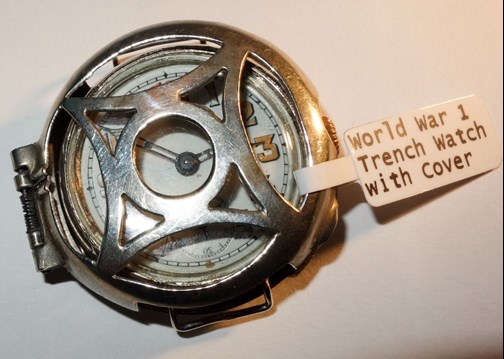
G.R.O. 2334 , dated 14.6.16 said the following:
"The armies in France will adopt the same time as ordered by the recent decree of the French Government."
To give effect to this Order, at 11:00 p.m. on the 14 June 1916, the time will be advanced sixty minutes, and 11:00 will become 12 midnight. All clocks and watches will be altered accordingly.
So just before the start of the Battle of the Somme, all clocks in the British Army were advanced by one hour. In practical terms, this meant that had they not done so, the Battle of the Somme would have commenced at 6.30am rather than the well known 7.30am.
Becoming a member of The Western Front Association (WFA) offers a wealth of resources and opportunities for those passionate about the history of the First World War. Here's just three of the benefits we offer:

The WFA regularly makes available webinars which can be viewed 'live' from home. These feature expert speakers talking about a particular aspect of the Great War.

Featured on The WFA's YouTube channel are modern day re-interpretations of the inter-war magazine 'I Was There!' which recount the memories of soldiers who 'were there'.

Explore over 8 million digitized pension records, Medal Index Cards and Ministry of Pension Documents, preserved by the WFA.


