
The Sinking of HMS Hawke
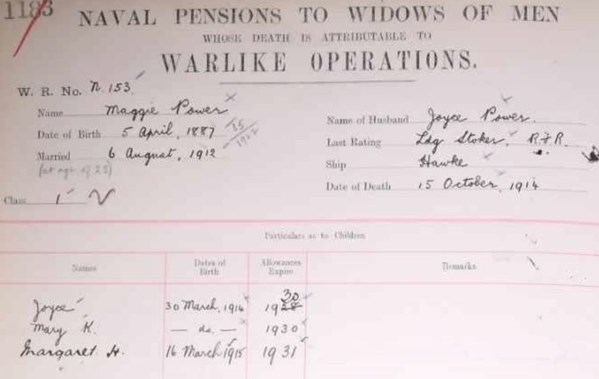
Margaret Lyness died on 10 April 1987 and with her went one of the last connections with a major incident in the early weeks of the war. Margaret was born on 16 March 1915 and christened 'Margaret Hawke'. Her parents were Joyce (an unusual name for a man) and Maggie Power. What is striking is the middle name that was chosen for Margaret. She was named 'Hawke' after HMS Hawke, on which vessel her father sadly died on 15 October 1914, some five months before her birth.
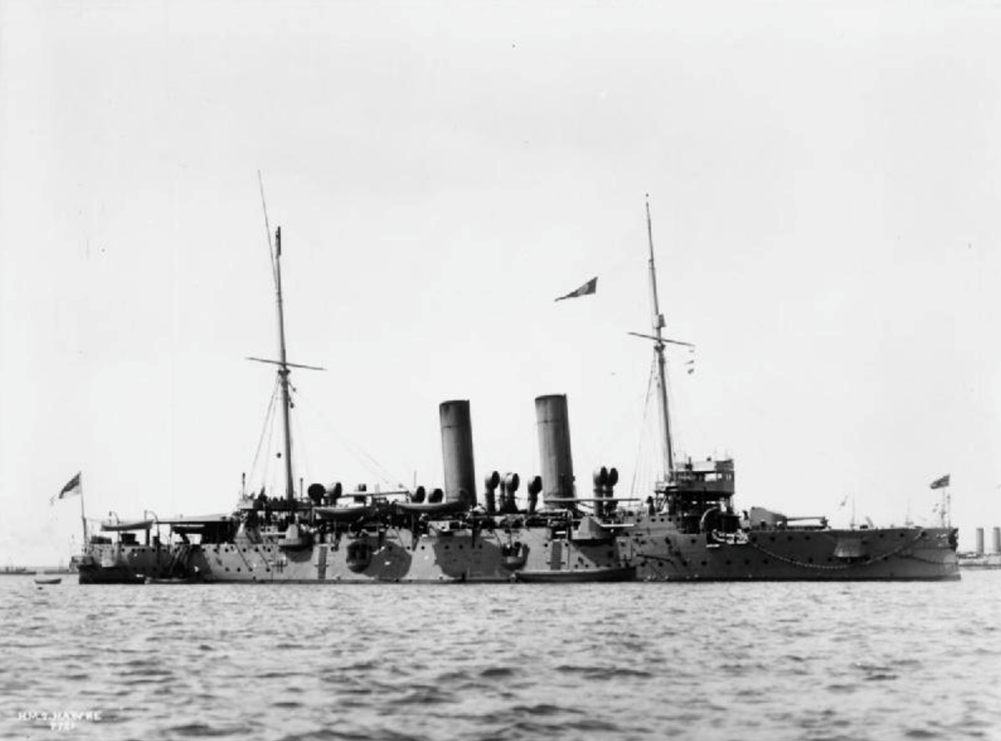
The loss of HMS Hawke was an early indication of the vulnerability of Royal Naval warships to German u-boats. This was something that had been brought home to the admiralty only a few weeks earlier with the losses of three warships off the Belgian coast when the famous 'live bait squadron' fell victim to submarine U-9 (pictured below) which was commanded by Kapitänleutnant Otto Weddigen.
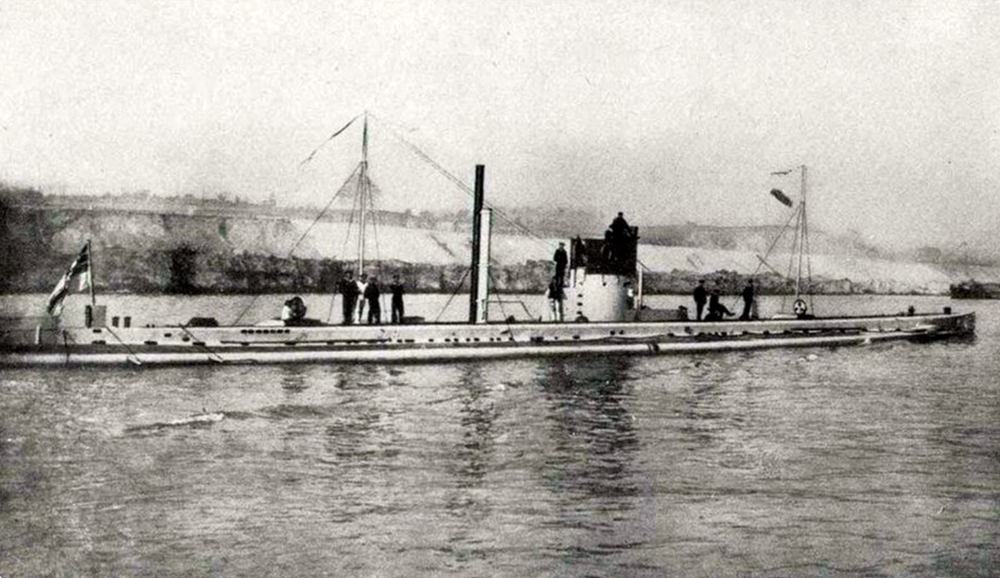
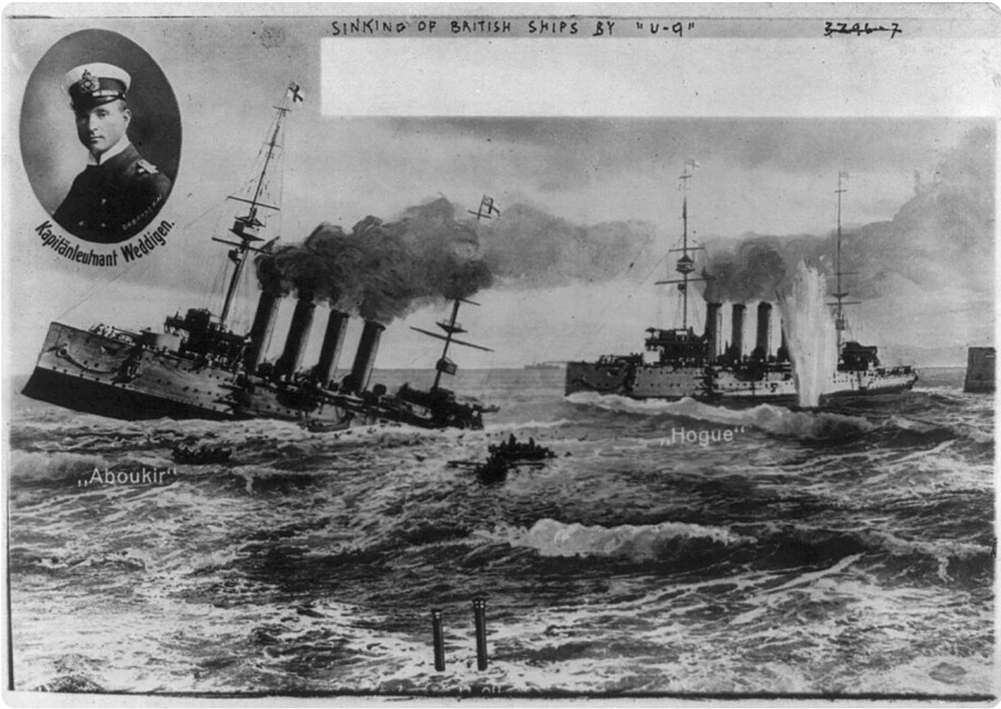
The control of the North Sea was of course vital to British interests, so - despite the risks that had become apparent in September, the patrolling continued, but no doubt with extra vigilance and counter measures being applied. But these countermeasures were to prove ineffective.
On 15 October, the 10th Cruiser Squadron was on patrol off the Scottish east coast (Aberdeen being exactly 100 miles to the south west). The 10th Cruiser Squadron comprised of 'Edgar' class vessels and were among the oldest operational warships in the Royal Navy, HMS Hawke having being launched in 1891.
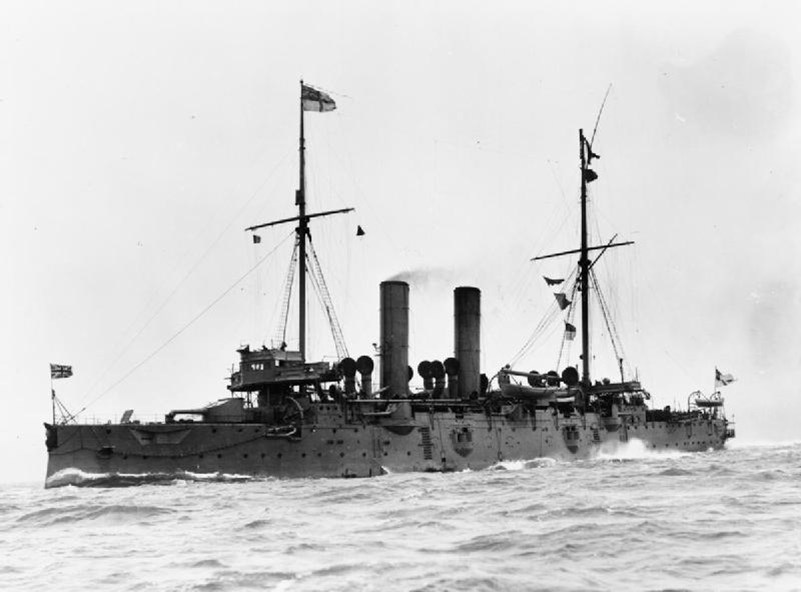
The ships of the squadron were deployed in line abreast at intervals of about 10 miles. The plan was for the vessels to assist with the blockade between Norway and the Shetland Islands.
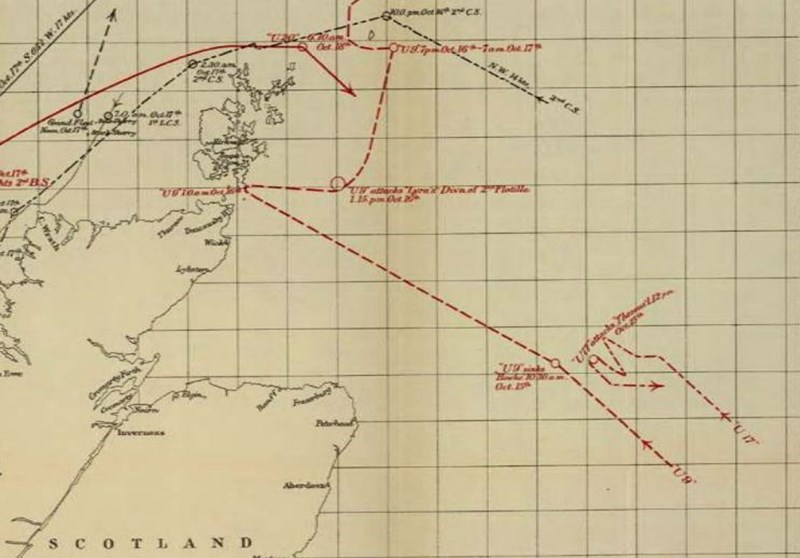
Hawke stopped at 9:30 am to pick up mail from another vessel (this was undertaken by dropping a small cutter to ferry the mail across to the Hawke). After recovering the small cutter, and out of sight of the rest of the Squadron, Hawke hastened to catch up, and proceeded at 13 knots but without zig-zagging to regain her station with the other ships. At 10:30 a single torpedo from the German submarine hit HMS Hawke.
Once again - as with the 'live bait squadron' - Submarine U-9 had struck.
Some accounts of the sinking have survived:
We were struck right amid ships between the two funnels, quite close to one of the magazines. All hands were on deck, and it was a terrible explosion. The vessel immediately took a heavy list to starboard. I have never been on a ship so well equipped with life saving apparatus, but the way the vessel heeled over made it almost impossible to get the boats out. The boat in which I was saved had a narrow escape from being taken down with the suction. We were struck about 11o’clock in the forenoon, and just as we got away from the Hawke, we distinctly saw the periscope of the enemy’s submarine come to the surface. We thought he was going to ram us, but apparently he was on the lookout for any other rescuing vessels. Prior to the accident the Hawke was cruising about zigzag fashion, and we never saw the submarine until we felt her. It was beginning to get hazy when we were almost run down by the Norwegian steamer which picked us up. This boat, after affecting the rescue, cruised about in search of the rafts, but nothing was seen.” [1]
One of the few survivors was the Boatswain Sidney Austin who had already been through the trauma of being torpedoed by U9 earlier in September 1914 having been on board HMS Hogue.
The three youngest sailors to perish were 'Boys First Class' Warden, Searle and Roberts who were 14, 15 and 15 respectively. Nearly 50 others who were aged 16 and 17 also perished.
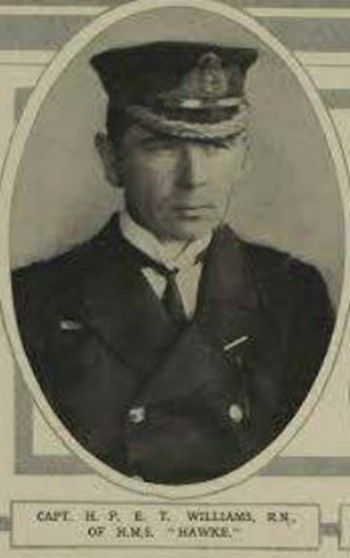
HMS Swift sailed from Scapa Flow to search for Hawke and found a raft carrying one officer and twenty-one men, while a boat with a further forty-nine survivors was rescued by a Norwegian steamer called The Indesta. It is believed that 524 officers and men died, including the ship's captain, Hugh P. E. T. Williams.
Along with Joyce Power's pension card, many of the records of men who were lost can be found.
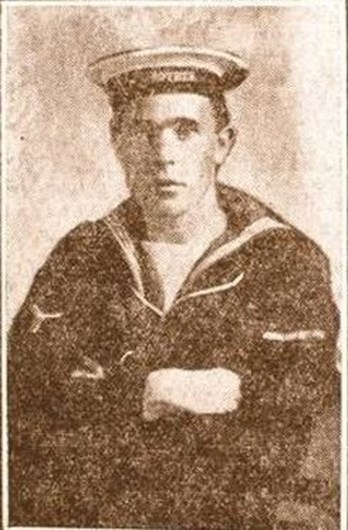
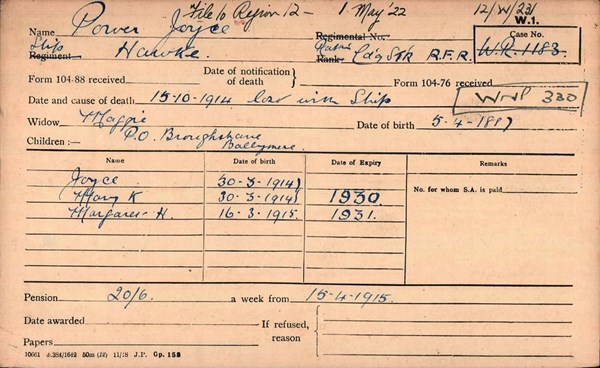
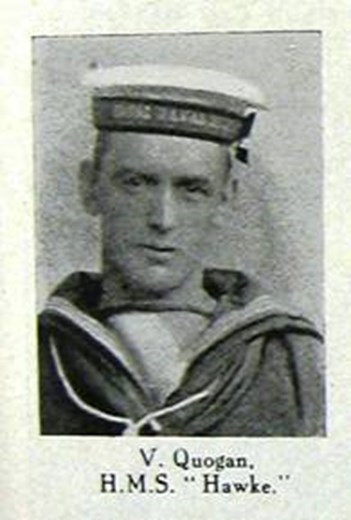
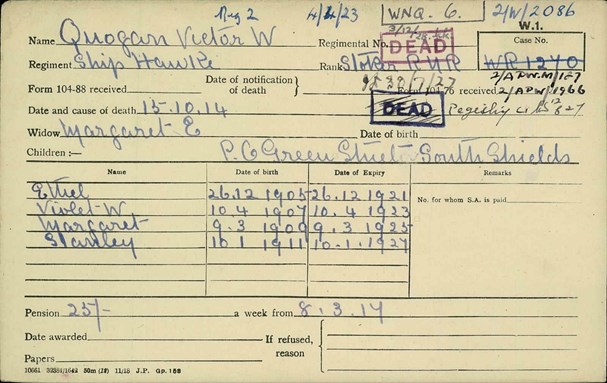
News of the disaster was reported in newspapers subsequently, such as this in the Portsmouth Evening News, on Tuesday, 27 July 1915
In connection with the rescue of three officers and five men of HMS Hawke (1914) in the North Sea in October last, the Lord Mayor of Hull on Monday presented a gold watch to Mr Isak Swedswig, master, silver cups to the first mate and first and second engineers, and £2 each to the crew of the Norwegian steamer Indesta. the steamer sighted the men in a boat, and after taking them aboard and transferring them to a trawler, returned to search for further survivors.
On March 18th 1915, Kapitänleutnant Otto Weddigen, now commanding the U-29, was manoeuvring for a shot at the modern British warship HMS Dreadnought when the ship’s lookouts spotted the periscope, and just seven minutes later the 17,900 ton Dreadnought, travelling at eighteen knots, rammed into the U-boat raising the bows out of the water. The identifying number was clearly visibly as the Dreadnought sliced through the submarine, there were no survivors. U-9 was the only U-Boat to survive the war.
HMS Hawke lies at 57 47′ 05″ x 00 11′ 50″
References:
[1] From 'THE SINKING OF HMS HAWKE, 15th October 1914' Compiled by E.J.Sparrow
Online resource. www.merseamuseum.org.uk/MMPDFs/HMS%20HAWKE.pdf
[2] From https://snake43.webs.com/the-sinking-of-hms-hawke
[3] From https://www.naval-history.net/
Becoming a member of The Western Front Association (WFA) offers a wealth of resources and opportunities for those passionate about the history of the First World War. Here's just three of the benefits we offer:

The WFA regularly makes available webinars which can be viewed 'live' from home. These feature expert speakers talking about a particular aspect of the Great War.

Featured on The WFA's YouTube channel are modern day re-interpretations of the inter-war magazine 'I Was There!' which recount the memories of soldiers who 'were there'.

Explore over 8 million digitized pension records, Medal Index Cards and Ministry of Pension Documents, preserved by the WFA.


