
A Gate to the Past
This must be one of the most unusual First World War memorials.
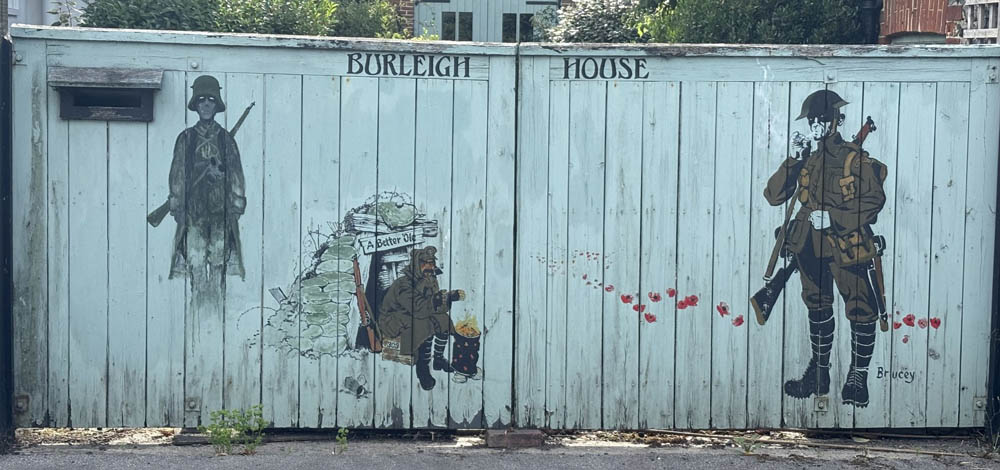
It’s a mural on a double gate to the garden of a house in the hamlet of Baythorne End in a rural corner of Essex near the border with Suffolk.
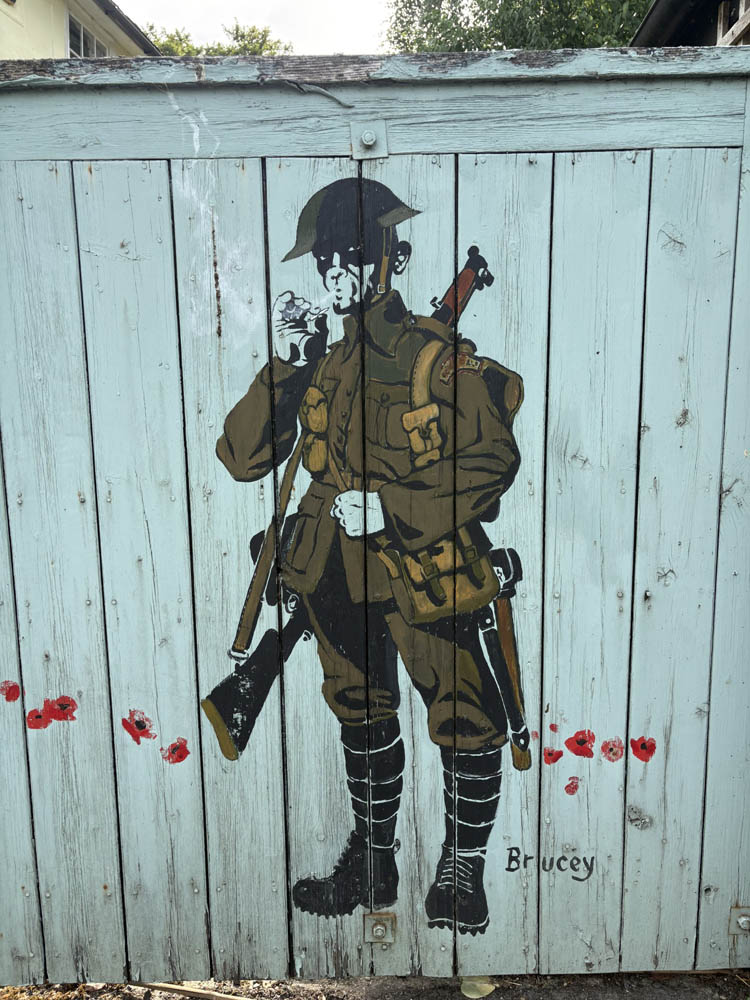
On one side, we have a Tommy, fully armed, drawing on his cigarette.
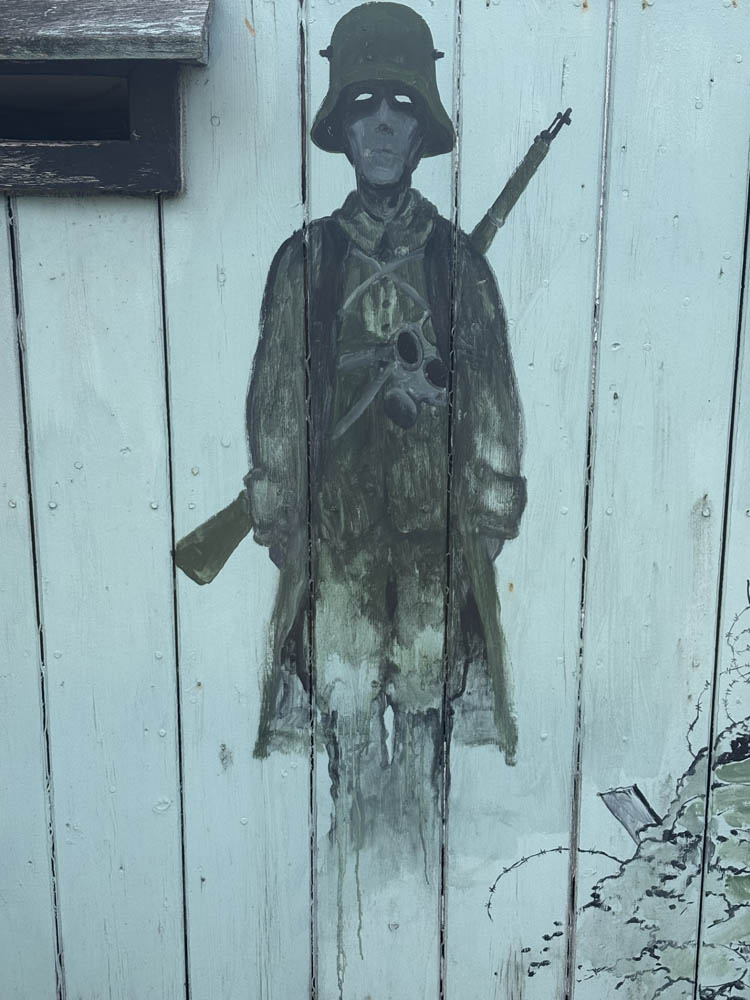
On the other, we have a German soldier, also armed, gaunt and menacing.
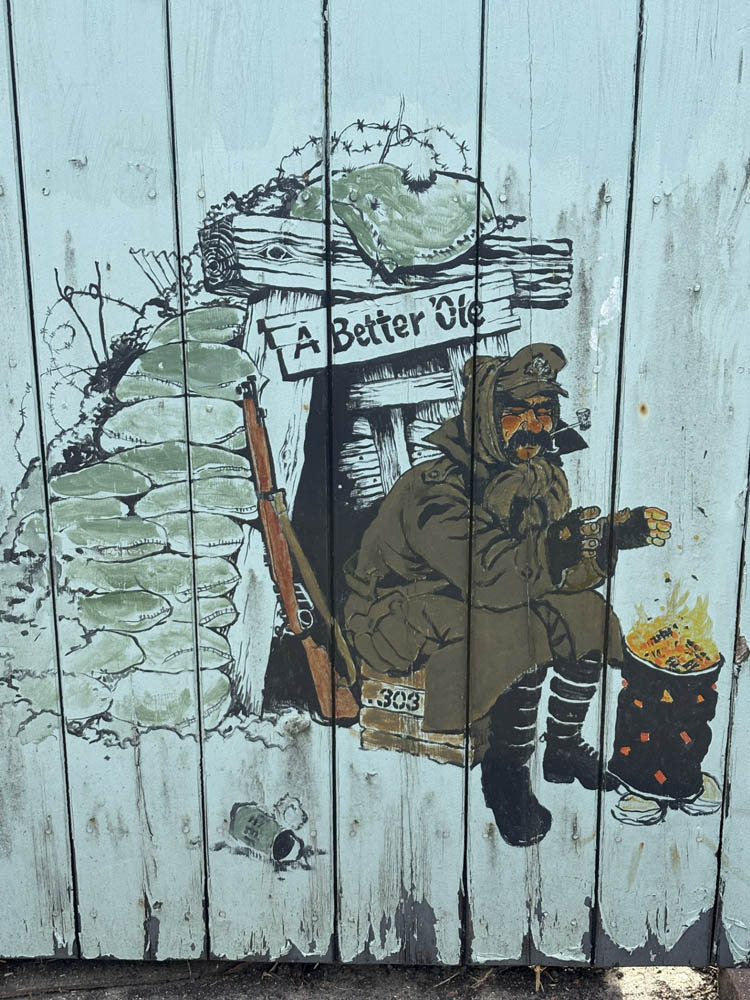
And in the middle, recognisable to anyone interested in WWI, we have an image of Bruce Bairnsfather’s ‘Old Bill’, sitting in front of his iconic ‘Better ‘Ole’.
The eagle-eyed will notice that there is a signature, ‘Brucey’, near the foot of the Tommy. This is a double reference – to Bruce Bairnsfather and to the artist, Bruce McNally, who lives at the house.
Bruce is a retired artist with a stellar career in graphic design, art and sculpture. Among his many credits: artistic director on the Muppet Show, the Dark Crystal and the Labyrinth, Disney’s creative director in Paris, the illustrator of many books, and the designer of the Churchill Insurance bulldog (aww yess!)
Bruce says:
I was repainting my gates some time ago and suddenly thought of my grandfather’s brother Alexander Kirkpatrick, killed in Ypres in 1915, and decided on the spot to memorialise him in art. Instead of the usual "sad" posture I decided on a tough lad from Scotland who wasn’t going to be pushed around. Sadly he was.
The original painting contained an image of an eight-inch howitzer because a neighbour’s son asked for one.
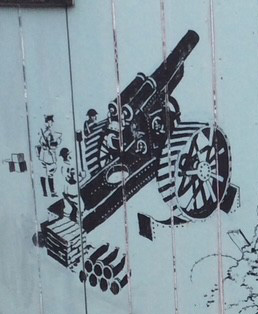
But Bruce says:
I painted it out and added the German; after all, those poor souls were in the same situation.
Private Alexander Kirkpatrick (6854) came from Burnbank near Hamilton in Lanarkshire, Scotland. He was the eldest son of a former policeman, Thomas, who emigrated to north America and disappeared. His mother, Marjorie, lived in Stirling. He had five siblings, one of whom was Bruce’s grandfather.
At the time of his death, Alexander was serving with the 1st Battalion, Royal Scots Fusiliers, but his military career began long before the outbreak of the First World War.
His service record indicates that he was a blacksmith when he joined up in November, 1907, at the aged of 19. He joined the Royal Scots Greys and was sent to training at Tidworth Camp on Salisbury Plain.
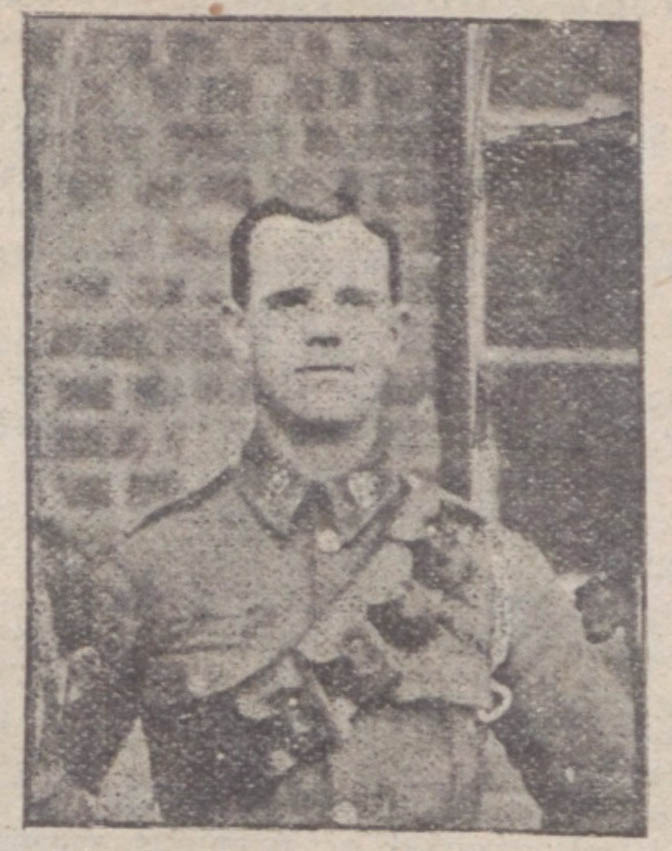
His military career at this point was short and inglorious. Within two months, in January, 1908, he was ‘in confinement awaiting trial’ for ‘offering violence to his superior officer’. He was given a 28-day sentence.
Nine months later, Alexander was in trouble again. In September, he twice went ‘AWOL’ (absent without leave), but worse was to come. In October, he was tried and convicted at Winchester Quarter Sessions for breaking into a ‘counting house’, and was given a twelve-month sentence, with hard labour.
He was discharged from the Royal Scots Greys on November 12th, 1908, ‘having been convicted by a civil power of felony’.
Alexander resumed his military career when war broke out, this time with the Royal Scots Fusiliers.
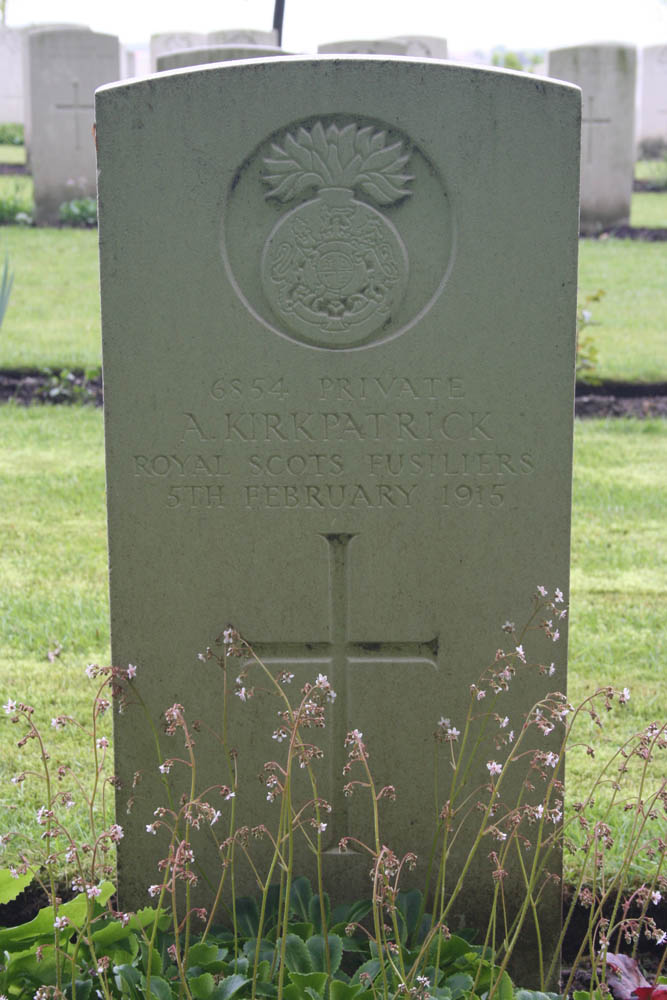
His date of death is recorded by the Commonwealth War Graves Commission as February 5th, 1915.
He is buried at Kemmel Chateau military cemetery near Ypres (A.33). He was 26 when he died, and he left a widow, Mary Sweeny, and a daughter.
Bruce has visited the cemetery and seen the headstone.
The War Diary for the 1st Battalion, Royal Scots Fusiliers (WO 95/1432/1) confirms that in early February, 1915, the men were stationed near Kemmel. The officer making the report noted: Heavy bombardment of enemy positions by our artillery. The regiment then returned to billets at a village called Locke (or Locre or Loker).
Alexander must have been very unlucky, because his is the only death listed and named that day; three others were wounded.
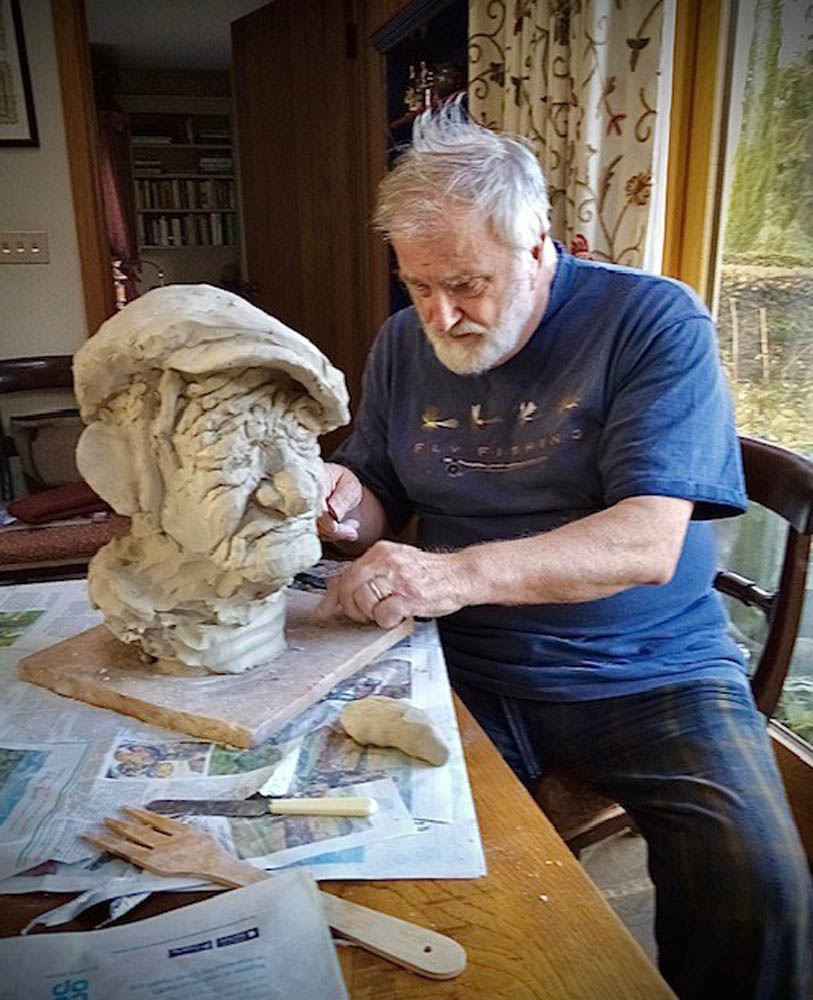
The First World War has had a profound impact on Bruce, seen here sculpting a head, not only because of what happened to Alexander but also because of the effect of the war on his grandfather Thomas, Alexander’s brother and the father of Bruce’s mother. Thomas survived, but he was seriously damaged by what he’d experienced, and home life was extremely difficult.
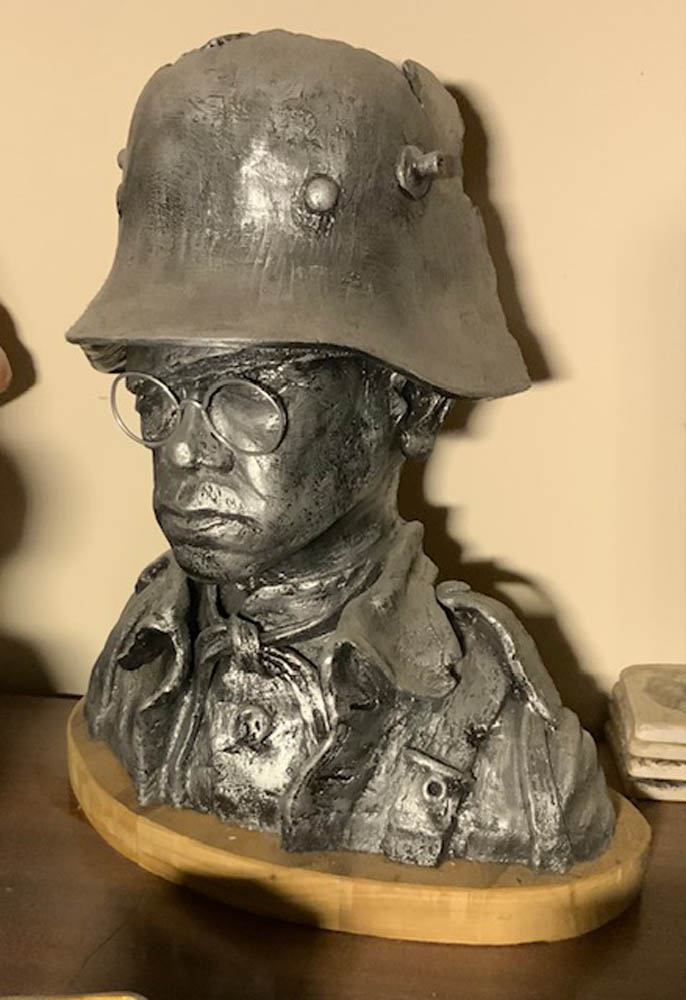
One of Bruce’s earliest sculpted heads was of a wounded German soldier.
He says:
The dreadful waste of that ghastly war still upsets me.
Footnote
The day after Alexander’s death, two men from his Battalion were convicted by courts martial of attempting to desert. The war diary noted: The sentence was carried out this morning at 8am.
Acknowledgements
Special thanks to www.findagrave.com for access to the obituary with a portrait of Alexander, a press notice, and a picture of the headstone.
Thanks, too, to the historian and author John A Taylor, for drawing attention to Alexander’s surviving Service Record.
Update, 29 October 2025
Bruce has refurbished the gates and refashioned the painting following this article. Read more.
Becoming a member of The Western Front Association (WFA) offers a wealth of resources and opportunities for those passionate about the history of the First World War. Here's just three of the benefits we offer:

Identify key words or phrases within back issues of our magazines, including Stand To!, Bulletin, Gun Fire, Fire Step and lots of others.

The WFA's YouTube channel features hundreds of videos of lectures given by experts on particular aspects of WW1.

Read post-WW1 era magazines, such as 'Twenty Years After', 'WW1 A Pictured History' and 'I Was There!' plus others.
Other Articles


