
- History and Purpose
- The Cenotaph and Remembrance
-
Schools and Universities
- Schools and Competitions
- Malcolm Doolin Award for local history research
- Colin Hardy Memorial Award
- Autumn project: with prizes for 12- 14 year-olds
- Schools Quality Mark
- University PhD Grant Scheme
- Our PhD grant winners
- Resources for University Students
- Online Course: Imperial Forces on The Western Front
- Support Us - Donations and Legacies
- Office Holders and Executive Committee
- Contact Us
- Our Team
- Policies and Guidelines
- Annual General Meeting: papers, registration and voting
Autumn project: with prizes for 12- 14 year-olds
Our annual competition offers secondary students in the UK and Republic of Ireland a creative way to engage with their First World War history lessons. Running every autumn term, the project features a new theme each year – past topics have ranged from the Unknown Warrior and recruitment to animals at war and wartime advertising.
To support classroom integration, we provide all necessary materials, and the project is designed to take just one lesson and one homework session. We award books and certificates to the winners, with additional certificates for entries that particularly impress our judges.
2026 competition
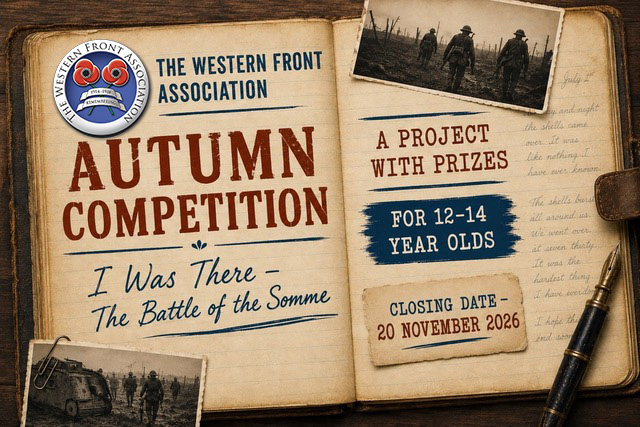
I Was There – The Battle of the Somme
2026 marks the 110th anniversary of the Battle of the Somme and for this year's Autumn Competition we ask students to think about the battle and the people involved or affected by it.
The Battle of the Somme was one of the most significant battles of the First World War. It took place in northern France between 1 July and 18 November 1916. British and French forces fought against the German army, mainly to break through German defences and to reduce pressure on the French army at the Battle of Verdun.
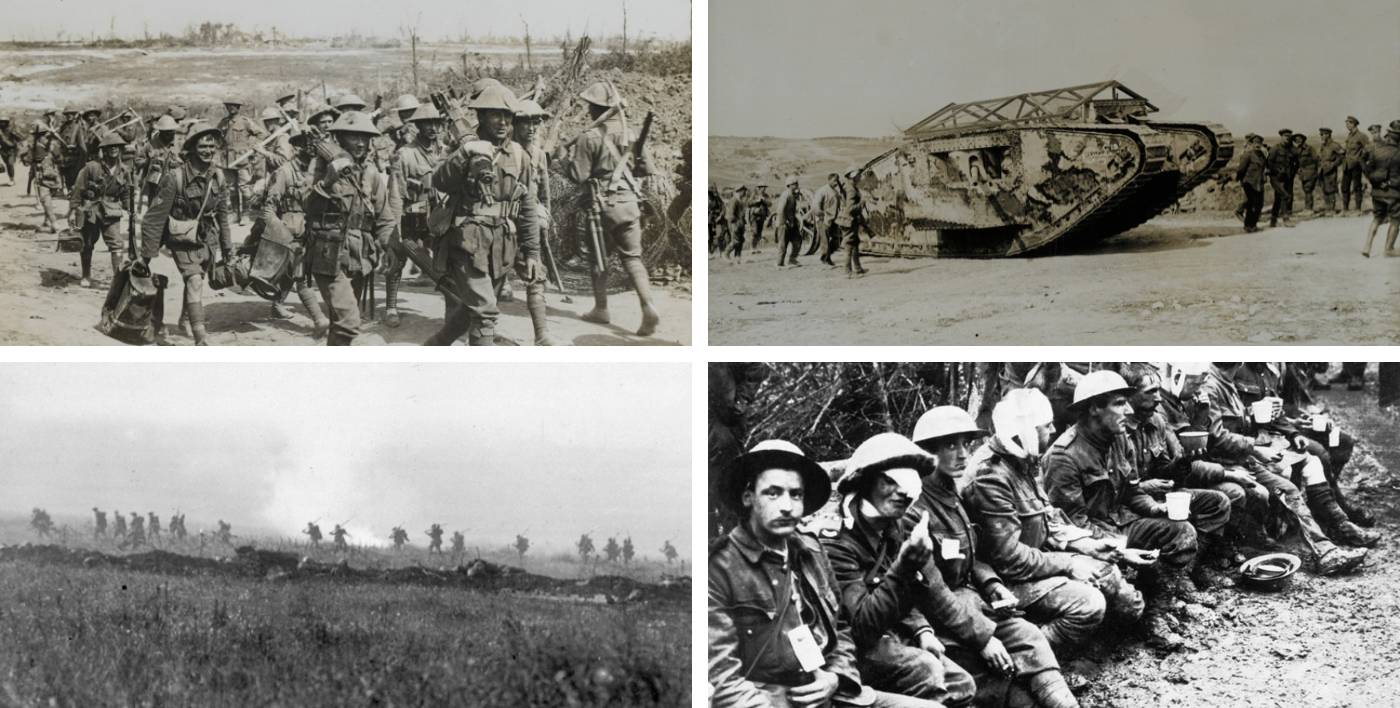
Before the attack, the Allies bombarded German trenches for a week, hoping to destroy enemy defences. However, many German soldiers survived in deep dugouts. On the first day of the battle, 1 July 1916, British troops went "over the top" of their trenches. They were met by heavy machine-gun fire, making it the deadliest day in British military history, with nearly 60,000 casualties.
Fighting continued for over four months in terrible conditions. Soldiers endured mud, shellfire, disease and constant danger. New weapons were used, including tanks in September 1916, but they were slow and unreliable.
The battle gradually came to an end in November 1916 as winter weather made fighting impossible. It officially ended on 18 November, with the Allies having captured some land but at a huge cost. The Battle of the Somme is remembered as a powerful symbol of the bravery and sacrifice of soldiers and the devastating nature of modern warfare.
This Year’s Competition
We would like you to create part of a journal or a diary belonging to one of those involved in the battle. They can be dated 30 June 1916 (the day before the battle), 1 July 1916 (the first day) or 18 November 1916 (the last day). You can choose one or more of these dates.
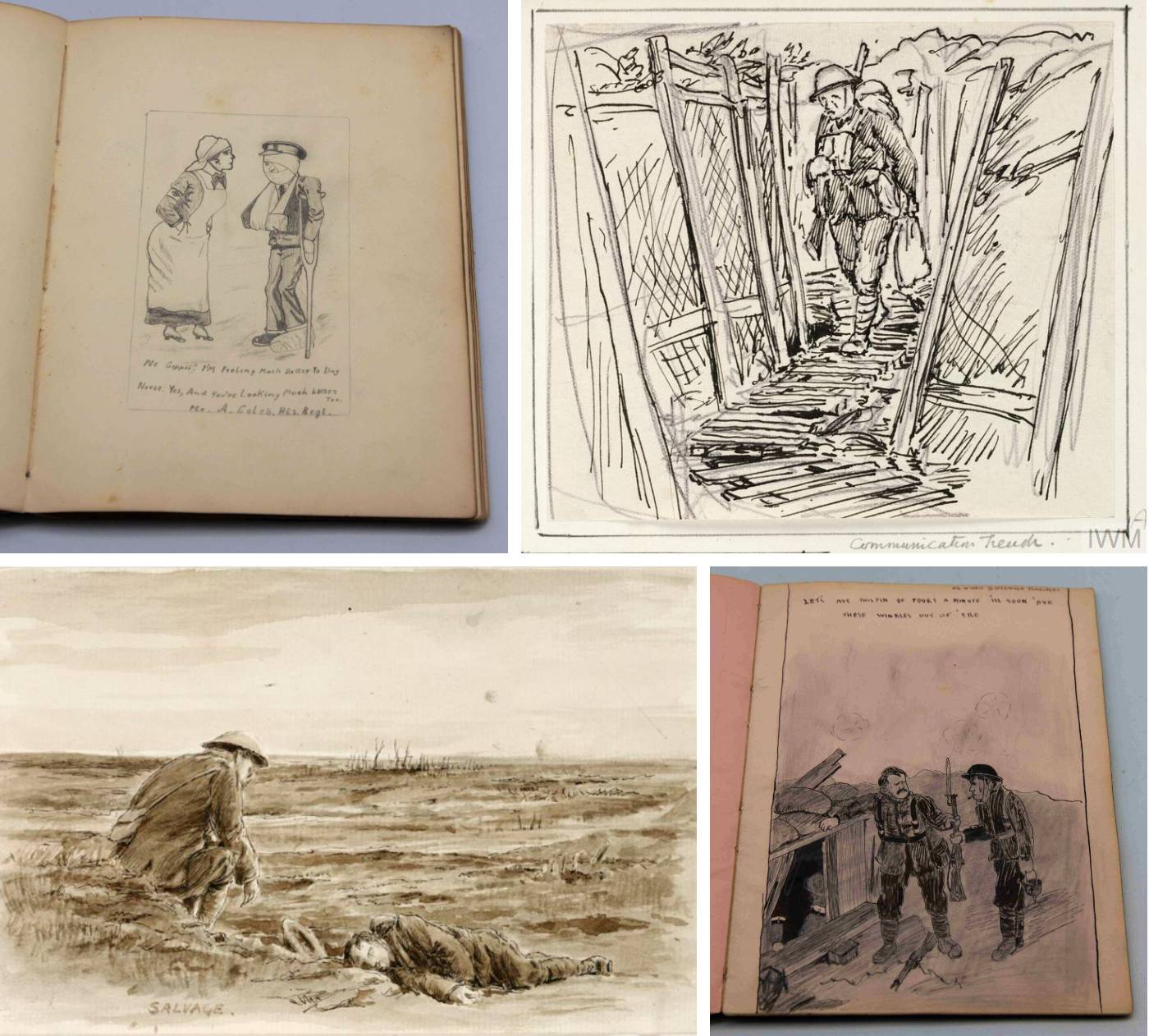
People who kept diaries and journals sometimes simply recorded what had happened but sometimes they wrote about them creatively as poetry or drew or painted pictures inspired by what they had seen.
First, you will need to decide who you are:
- Do you come from the British Isles or the Empire - or maybe you are German?
- What is your role? Are you a soldier? An officer or a private? A professional soldier or a volunteer member of Kitchener's army fighting for the first time? Are you a member of a Pals battalion?
- Or maybe you have a specialist job. As well as "fighting soldiers", there were many other roles including the sappers who dug tunnels, cooks, messengers, stretcher bearers, transport or ambulance drivers. Photographers, film makers, reporters and war artists were there too. Maybe you were at a field hospital as a doctor or nurse?
You will need to do some research – we will look for historical accuracy as well as imagination. You may want to look at some photographs as well as reading about the battle.
You can create:
- A diary entry or entries giving details of events and your thoughts about them. (Maximum 500 words)
- A poem
- A sketch or sketches
Make sure to include your full name (first and family name), age and name of your school on the front of your entry.
Entries must be submitted by a teacher (or by a parent if you are being home schooled) by 20 November 2026.
Information for Teachers
Resources to use with students:
- Commonwealth War Graves and the British Council (resources created for the centenary in 2016)
- BBC Bitesize
- National Army Museum
The inspiration for this year's competition comes from a project you can access on The Western Front's YouTube channel where there are over 120 readings from the 1938-9 publication “I Was There”. It published first hand accounts from those involved in the First World War. The episodes are more suitable for adults rather than children but you may find them interesting. There are several eyewitness accounts of the Somme including this one.
What happens next?
Entries should be submitted by teachers (or parents who are home-schooling). Students' full names must be clearly written on the front of their entries. These will only be seen by the judges and we will not publish any names of students or entries without prior permission from their school. Entries without this information will not be considered.
We realise that scanning a large number of entries can be quite a chore for teachers. Some schools in the past have held their own internal competitions and submitted only the winners' work. Scanning 1 to 20 entries is probably less daunting than submitting 200. In any case, we suggest that schools restrict themselves to a maximum of 30 entries per school.
The creators of the best entries will receive a book and certificate; runners up will receive certificates. Some entries may be published on our website or in our magazine. Winners' schools will be invited to enter a ballot for an invitation to the Western Front Association Service of Remembrance on 11 November 2027.
Entries should be sent to education@westernfrontassociation.com
Closing date: 20 November 2026.
Last year’s competition (2025)
The 2025 theme was The Forgotten Armies – the World’s War.
On 11 November, or the Sunday nearest to that date, in towns and villages throughout the UK, people pause to remember those who have given their lives in conflict. It is a tradition that began after the First World War. The countries at war signed the Armistice – an agreement to stop fighting – at the 11th hour of the 11th day of the 11th month and we remember those killed in that war and other conflicts since in a two-minute silence at that time each year.
If you have ever taken part in that two-minute silence or been asked to reflect on what it means, perhaps you have imagined the people involved in the First World War. What pictures come to mind? What do they look like? How old are they? Where do they come from?
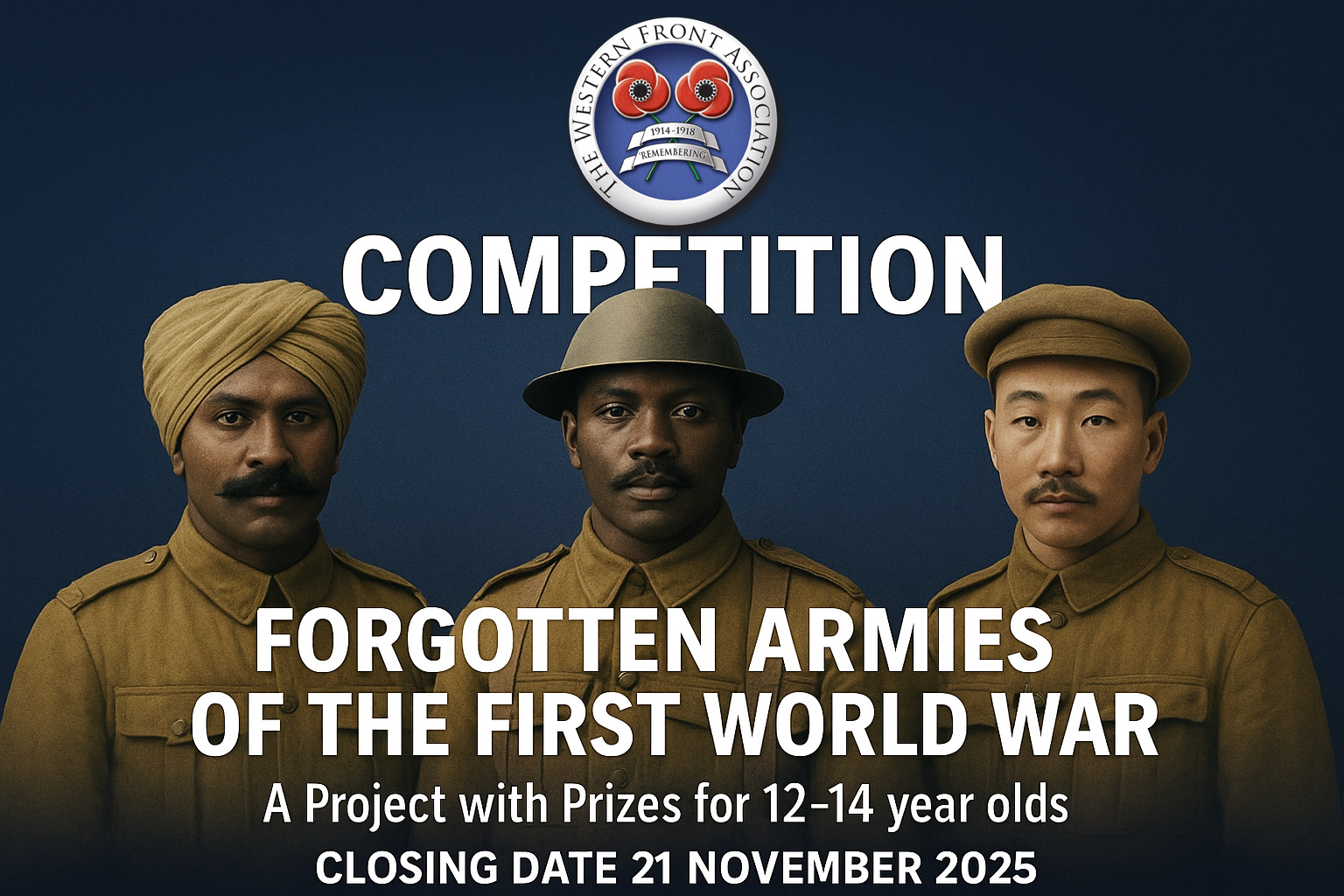
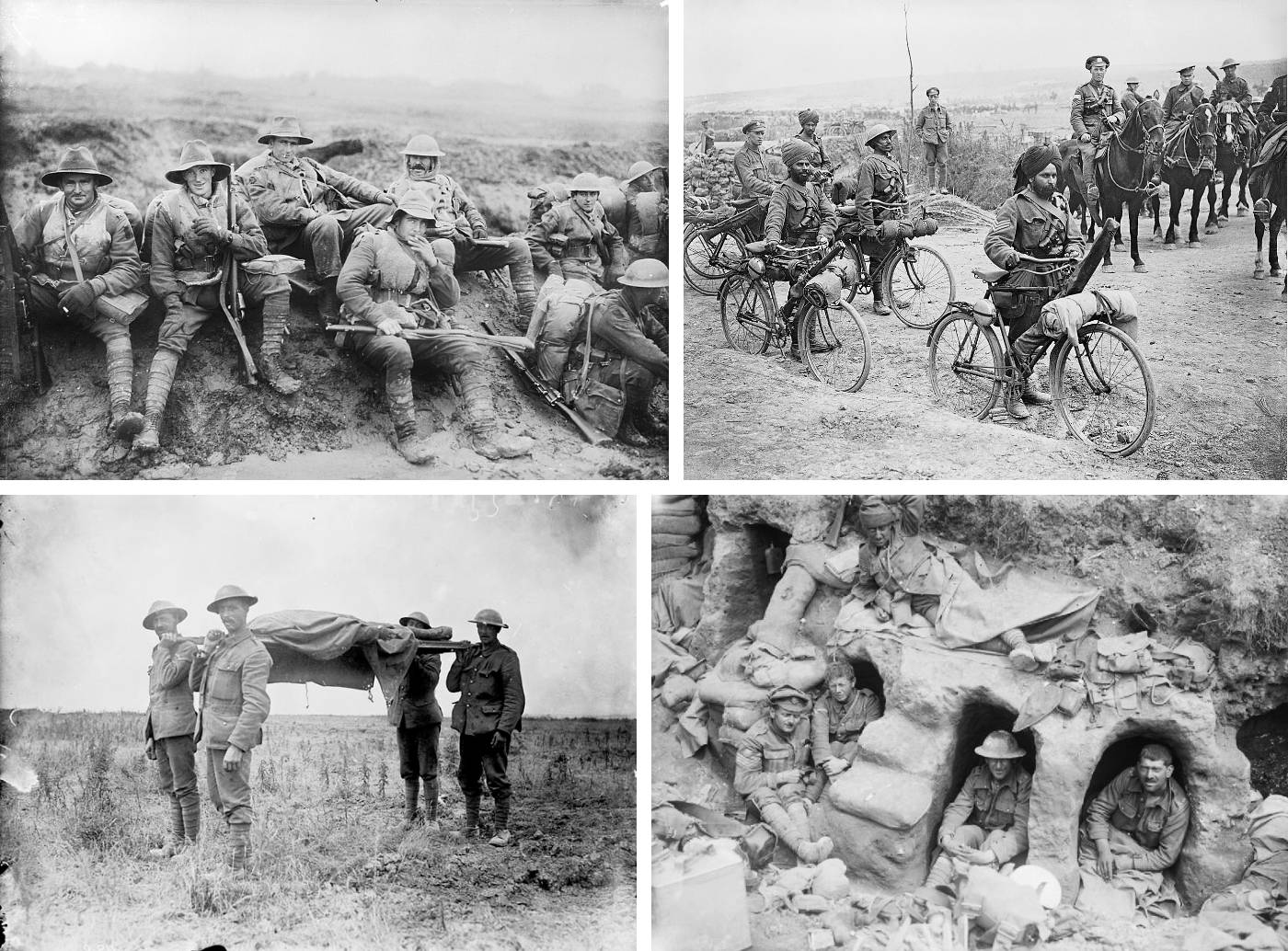
A lot of people will imagine them to be young white European men who were fighting in trenches in France and Belgium. In fact, the war was being fought in Turkey, the Middle East and parts of Africa too and, because Britain and France had empires, people involved in the conflict included those from many other countries across the whole world: including India, Africa and China. Indigenous people came from Canada, Australia and New Zealand as well as people of European descent. It really was a World War.
Some were involved as soldiers but a war requires people doing many other jobs too. Many were recruited as labourers, for example, and what they were asked to do was often as dangerous as going into battle. For a long time, the contribution made by people from other parts of the globe was not very well known or well researched and so these have sometimes been called the “Forgotten Armies”. That has changed a little in recent years and for this year’s competition we would like you to be part of that change.