
Sport in the Royal Flying Corps, 1914-1918
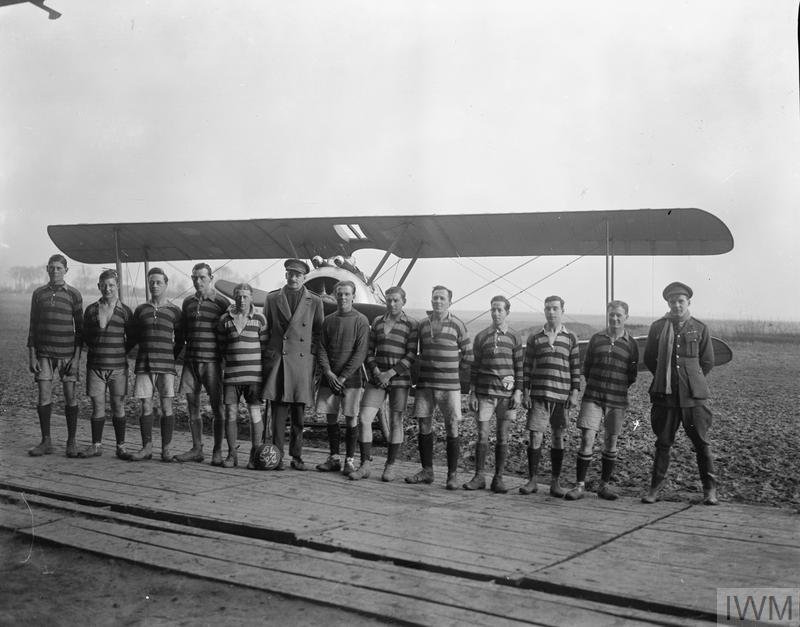
The newly formed Royal Flying Corps believed the promotion of all forms of sport and recreation was of paramount importance in the creation and maintenance of the esprit de corps and good fellowship essential for officers in the fighting forces.
Many squadrons and their commanders organised their own sporting activities, such as boxing, wrestling, cricket, football, hockey and equestrian-based sports, with baseball being introduced by aviators from the USA, once they joined the war in 1917. These activities were often supported and enabled by chaplains and voluntary-aid organisations like the YMCA.
However, as the war progressed there were concerns that physical fitness was no longer a priority in RFC units, the men’s duties not affording them much opportunity for physical exercise. Attention to the physical fitness of Officers and Men in RFC units started to be discussed at an organisational level in March 1917, culminating in the creation of the Air Force Gymnastic Staff later that year.
This talk will give an overview of the role of sport and physical training in the RFC during the Great War, and how it developed in the period immediately after the formation of the Royal Air Force.

Dr Emma Hanna is Senior Teaching Fellow in the University of Portsmouth's Military Education Team working with the Royal Air Force at RAF Halton. She has more than 20 years of experience teaching Military History at the Universities of Kent and Greenwich, with a focus on the history and memory of the two World Wars, and particular interests in the fields of military discipline, war and the media, and early military aviation.
Members and non-members of The Western Front Association are equally welcome. Any new visitors are guaranteed a friendly atmosphere and a warm welcome from a group of like-minded enthusiasts.
Main image: 54 Squadron Football team (and Sopwith Camel) IWM Q9944.
(Branch Chair)
(Branch Treasurer)
(Secretary)
Other upcoming events for London (East) branch


