
After 108 years, soldiers of the Essex and Bedfordshire Regiments laid to rest
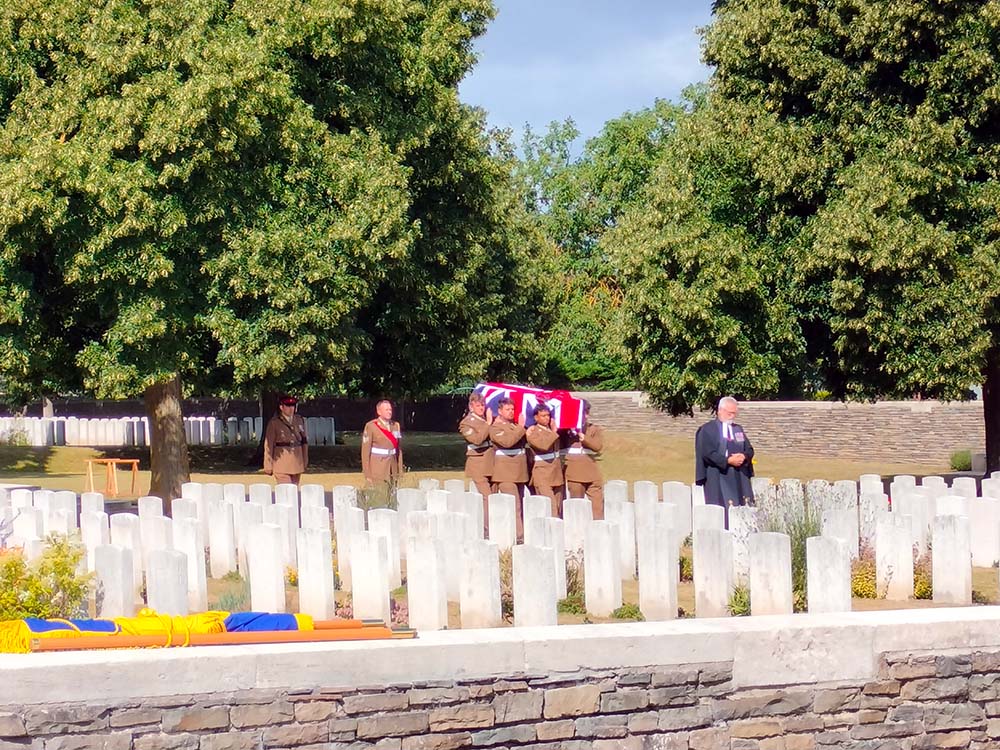
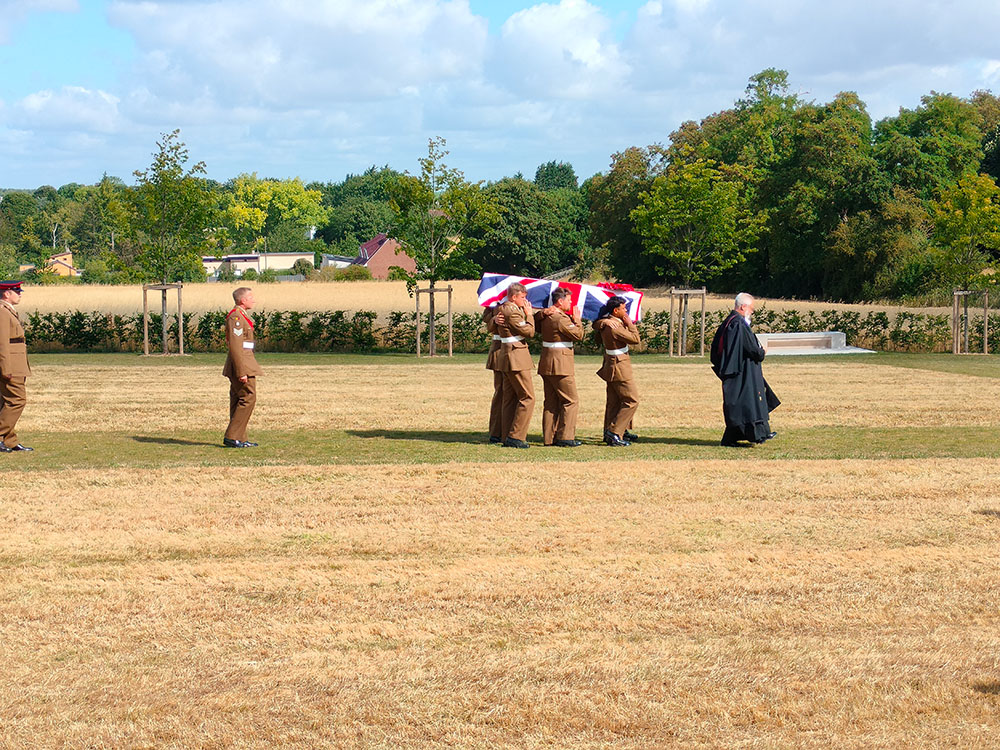
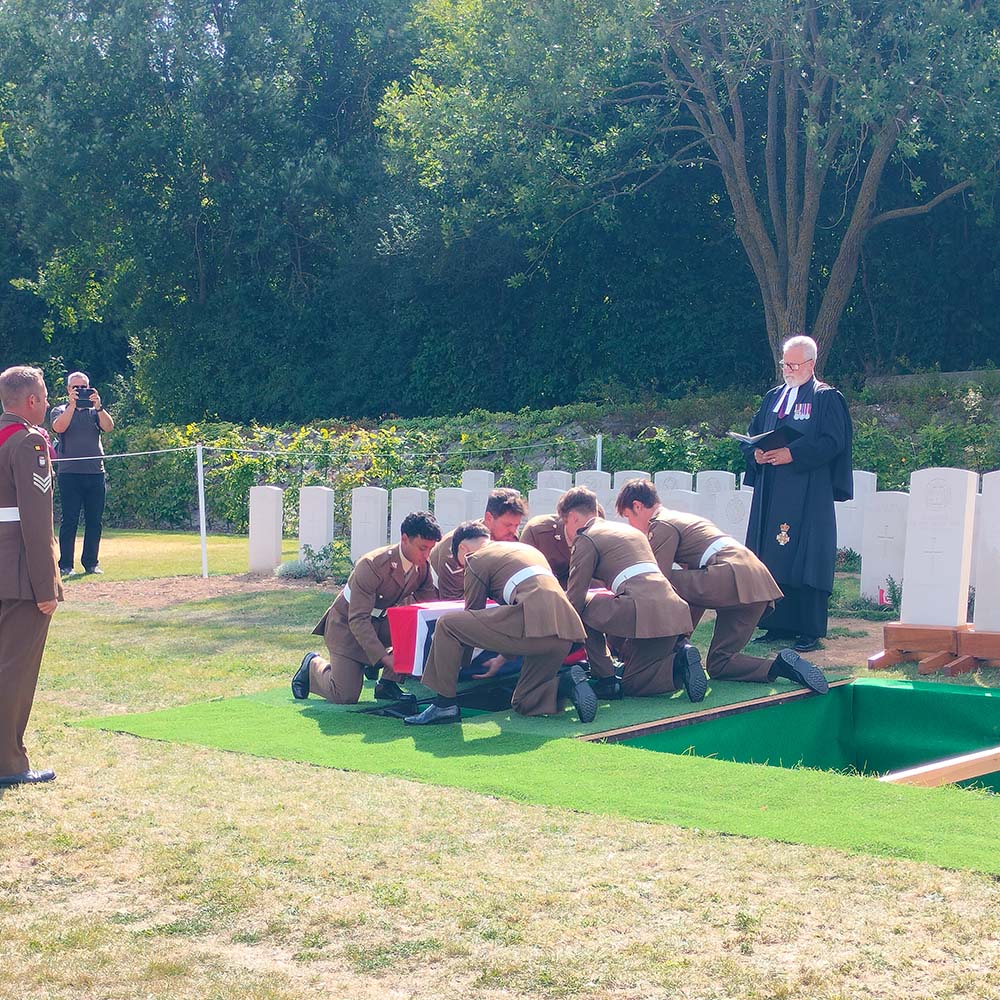
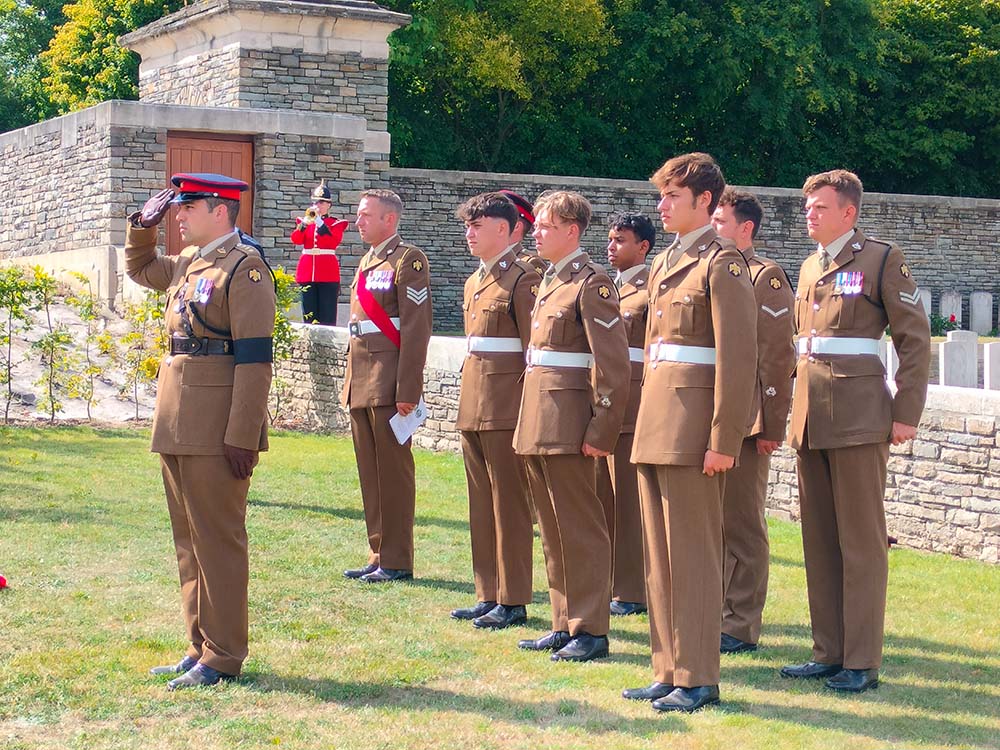
This morning, Wednesday 16 July 2025, at the Loos British Cemetery Extension, a solemn burial service was held for soldiers of the 11th Battalion The Essex Regiment and the 8th Battalion The Bedfordshire Regiment who were killed in action in April 1917.

The ceremony, organised by the Ministry of Defence's Joint Casualty and Compassionate Centre (JCCC), also known as the 'War Detectives', provided a final, dignified resting place for these men over a century after they fell.
Those laid to rest included Corporal Alfred James Morrant and Private Henry Joseph Rycraft of the Essex Regiment, alongside four of their comrades who remain unknown.
Also buried were Private Arthur Albert Grayston and Private Lewis Ephraim Lambert of the Bedfordshire Regiment.
This was the last of several burial and re-dedication ceremonies in July.
Private Arthur Albert Grayston
Private Arthur Albert Grayston was born in Ipswich, Suffolk, in 1892. He was one of five children born to Thomas Daniel Grayston and his wife Eliza. Before enlisting into the Army he worked as a dock labourer. In 1911 Arthur married Florence Caroline. Private Grayston was killed in action on 19 April 1917 whilst serving with 8th Battalion The Bedfordshire Regiment. He was 25 years old.
His brother Private George Grayston was killed whilst serving with 1st Battalion The Suffolk Regiment on 26 April 1915. He is commemorated on the Menin Gate.
Private Lewis Ephraim Lambert
Private Lewis Ephraim Lambert was born in 1897 in Wootton, Bedfordshire. He was one of four sons born to George William Lambert and his wife Caroline. Before enlisting into the Army he worked as a farm labourer. Private Lambert was killed in action on 19 April 1917 whilst serving with 8th Battalion The Bedfordshire Regiment. He was 19 years old.
Corporal Alfred James Morrant
Corporal Alfred James Morrant was born in Hutton, near Brentwood, Essex, in 1889. He was one of eight children born to Joseph Morrant and his wife Sarah. Before enlisting into the Army he worked as a horseman on a farm. Alfred joined The Essex Regiment and was posted to 9th Battalion. He arrived on the Western Front on 30 May 1915. The then Private Morrant was wounded in the autumn of 1915. It is most likely that it was after this that he transferred to 11th Battalion The Essex Regiment. Corporal Morrant was killed on 22 April 1917. He was 27 years old.
His elder brother Corporal Charles Alfred Morrant was killed on 10 September 1914 whilst serving with 4th Battalion The Royal Fusiliers. He is still missing and is commemorated on La Ferté-sous-Jouarre Memorial.
Private Henry Joseph Rycraft
Private Henry Joseph Rycraft was born in 1898 in Little Bromley, near Manningtree, Essex. He was one of four children born to Joseph Rycraft and his wife Elizabeth. Before enlisting into the Army he worked as a farm labourer. Private Rycraft arrived on the Western Front on 30 August 1915. He was killed in action on 22 April 1917 whilst serving with 11th Battalion The Essex Regiment. He was 18 years old.
Loos British Cemetery Extension
The Loos British Cemetery Extension stands as a contemporary testament to the enduring legacy of the First World War. It is only the second new cemetery to be constructed by the Commonwealth War Graves Commission (CWGC) since the end of the Second World War, a direct response to the continuing discovery of remains of fallen soldiers in the region.
The impetus for this significant undertaking arose from extensive research by the CWGC, which indicated that hundreds of soldiers who have remained missing for over a century may be discovered during major infrastructure projects in the Loos-en-Gohelle area. This includes the construction of a new hospital in Lens and the development of the Canal Seine Nord Europe. The extension ensures that these casualties, as they are found, can be given a dignified burial alongside their comrades.
Loos was selected as the most suitable location for this new extension due to the high number of potential recoveries in the surrounding area. This allows for those who fell together to be buried together, a guiding principle for the CWGC. The project has been undertaken in collaboration with the French government, which acquired the land and granted its use to the CWGC in perpetuity.
While the site is named the Loos British Cemetery and Extension, it will serve as the final resting place for Commonwealth casualties of the First World War discovered across northern France. The CWGC also recovers the remains of soldiers from other nations, working with its international partners.
Read more: cwgc.org/our-work/loos-british-cemetery-extension/


