
HMS Vanguard: Ship's bell recovered over a century after sinking
A recent report by the BBC provided the news of the bell from WW1 Battleship HMS Vanguard has been brought to the surface after 108 years.
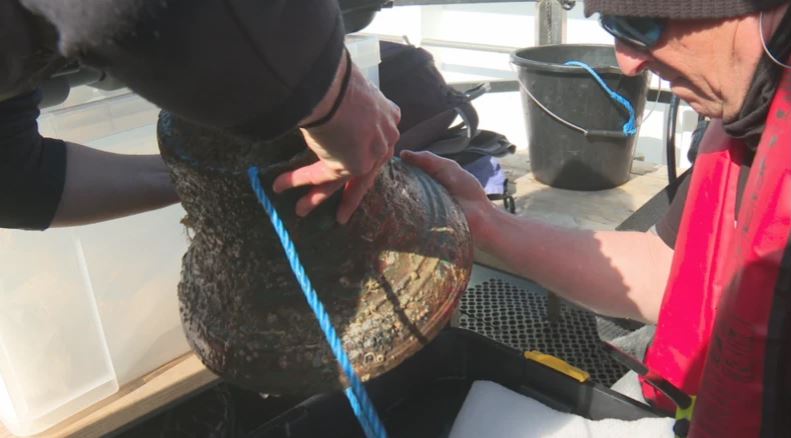
The project to recover the bell and other artefacts has taken three years and involved the Ministry of Defence, Orkney Islands Council (OIC), the National Museum of the Royal Navy and the Scottish government.
The wreck of HMS Vanguard lies at a depth of 110 feet and is protected under the Protection of Military Remains Act (1986) as a Sovereign Immune Wreck so special permission was needed to bring the artefacts to the surface.
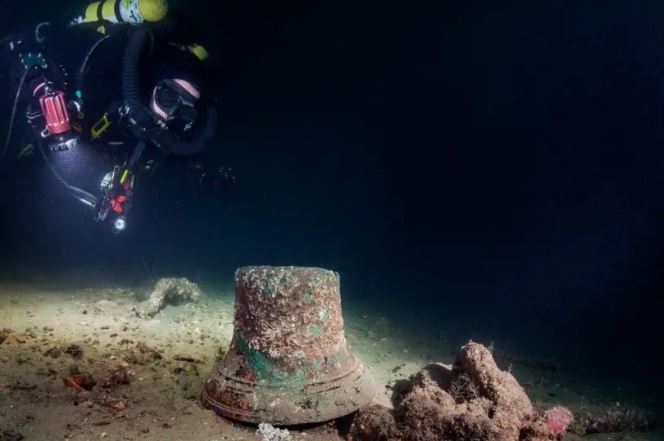
Vanguard's bell was distorted by the force of the explosion and was located about 650 feet from the shipwreck.
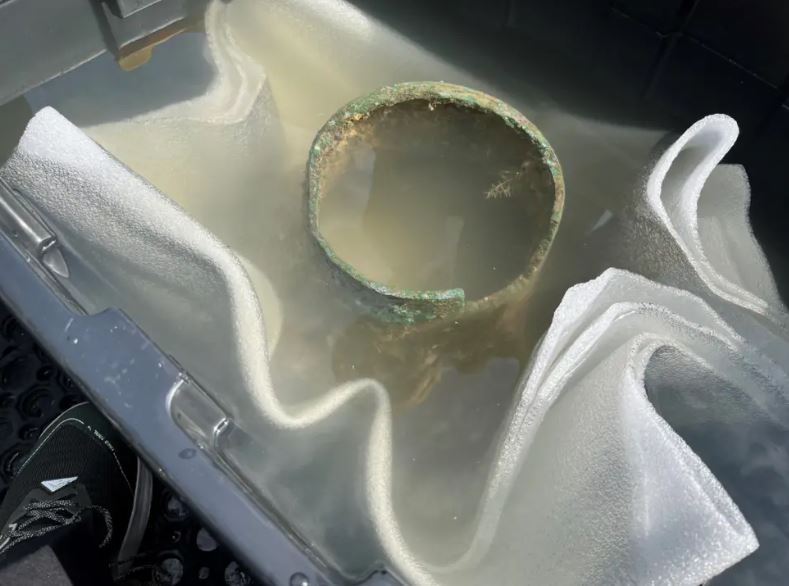
Two other items from HMS Vanguard were also recovered, these were a metal badge from one of the the guns and a protective plug from a gun barrel, known as a tampion.
What happened to HMS Vanguard
On the morning of 9 July 1917, HMS Vanguard’s crew undertook routine exercises before the ship returned to its anchorage with the rest of the fleet at about 6.30pm.
At about 11.20pm witnesses reported:
… visible flame coming up from below just abaft the foremast, this being followed, after a short interval, by a heavy explosion accompanied by a very great increase of flame together with a very large quantity of wreckage fragments thrown up abaft the foremast in the vicinity of "P" and "Q" turrets. This explosion was followed after a short interval by a second explosion which considerably increased the volume of flame and smoke (and no doubt debris), but smoke had previously obscured the ship so that the vicinity of this explosion could not be exactly located. The evidence, however, points to it being just abaft the first one.
Report of the Court of Enquiry into the Circumstances Attending the Loss of H. M. S. Vanguard on the 9th July, 1917, from The National Archives, Reference ADM 137/3681
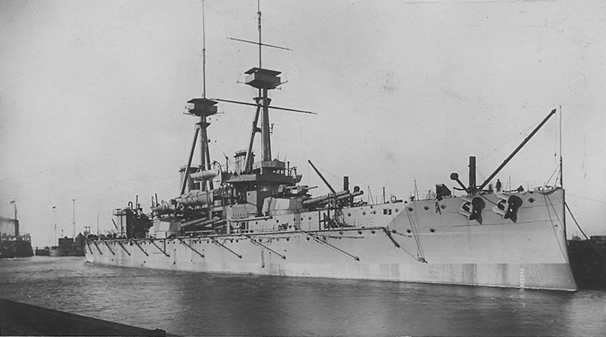
Vanguard had been launched in 1909, being commissioned the following year. She was part of a class of Battleship that had been based on the design of HMS Dreadnaught – a vessel which redefined Battleship design. First Sea Lord Admiral ‘Jacky’ Fisher was determined that Britain would not be ought-gunned at Sea by the rapidly expanding Imperial German Navy, so commissioned a number of classes of Battleships as part of the pre-war arms race with Germany.
Present at the Battle of Jutland, (which took place on 31 May 1916) Vanguard returned to Scapa Flow with the rest of the Grand Fleet in readiness for any future naval action. No action came, and the a routine of exercises and drills were undertaken. With a complement of about 758, it seems from surviving lists, about 95 officers and crew were fortunate enough not to be on board at the time of the explosion, however the CWGC database lists a total of 835 who were killed on 9 July 1917 who were part of the ship’s crew. Of these 621 are commemorated on the Chatham Naval Memorial, and most of the rest on the Portsmouth and Plymouth Naval Memorials. Only seventeen bodies were recovered. Just three men survived the explosion, one of them Lt-Commander Duke died of his injuries a few days later.


