
Digital Preservation of World War I Heritage: The Dig Hill 80 Virtual Simulation
The Applied Research in Immersive Experiences and Simulations (ARIES) team, operating within University Libraries at Virginia Tech, has developed an immersive, web-based 3D digital simulation of Hill 80. Located near Wijtschate, Belgium, Hill 80 served as a critical German stronghold and trench fortress during World War I, most notably during the 1917 Battle of Messines.
Using over three terabytes of data, researchers are transforming Hill 80 into an interactive, web-based virtual museum.
The soccer-field-sized excavation yielded an incredible amount of historical data from both German and British occupations between 1914 and 1918.
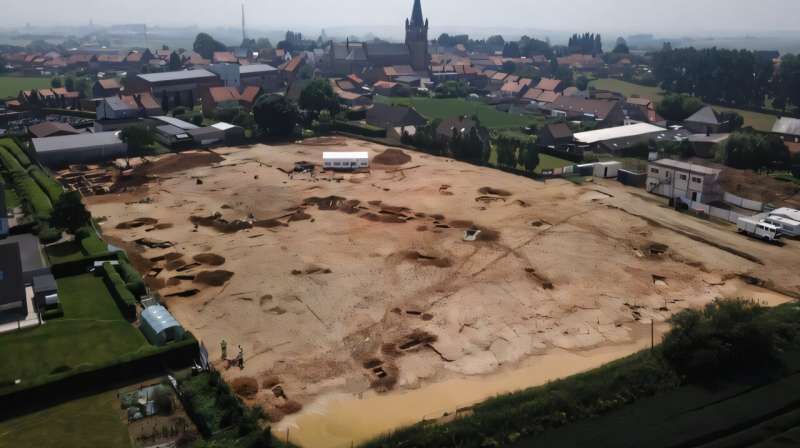
The remains of 125 soldiers were recovered, some as young as 15 years old and personal artefacts were recovered, items ranging from military gear (helmets, rifles) to deeply personal everyday belongings (toothbrushes, rosary beads, a harmonica, and bottles of British HP sauce) were unearthed.
This initiative originated as a rescue archaeology project, spearheaded by Flemish archaeologist Simon Verdegem and initiated via crowdfunding in late 2017. The primary objective was to survey and excavate the terrain before the modern construction of a housing development on the site in late 2018. Because the physical terrain was fought over for nearly the entire duration of the war, comprehensive spatial and physical documentation was critical prior to site destruction.
To prevent the excavation from disappearing forever, the ARIES team at Virginia Tech spent over a week on-site capturing data.
Students applied software and skills traditionally used for video game development and engineering simulations to historical preservation. They utilised aerial drones, high-resolution orthophotos, photogrammetric models, and structured-light scans to build the archive.
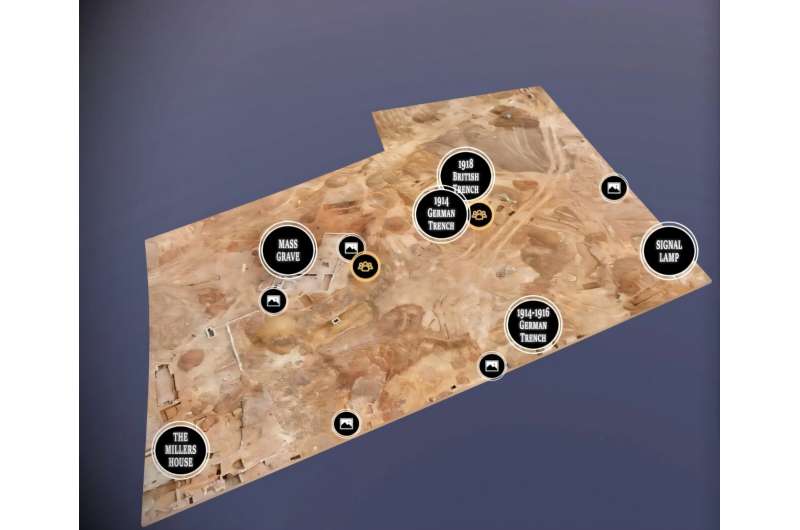
When the platform launches, virtual visitors will experience:
• An Aerial Overview: A bird's-eye view allowing users to click into five primary areas: the Miller's House, a mass grave, and three distinct German and British trench lines from various years of the war.
• 360-Degree Exploration: Immersive views of the photos captured during the dig.
• Geo-Mapped Artifacts: Highly detailed 3D representations of artifacts placed exactly where they were uncovered in the real world, accompanied by text descriptions.
“Digital tools give us the chance to preserve not only the artifacts but also the spatial relationships, context, and stories that make archaeology meaningful,” manager for immersive learning and research with ARIES, manager for immersive learning and research Sarah Tucker said in a statement.
Tucker selected specific artefacts to highlight the "layers of history" and human experiences of the war. For instance, digital visitors can rotate German uniform buttons to see regional symbols—like the Bavarian lion or Prussian crown—reflecting Germany's recent unification at the time. Another highlight is a recovered harmonica, illustrating how soldiers sought moments of normalcy amidst the terror of trench warfare.
Ultimately, the project aims to give the public access to a lost archaeological site, ensuring the context, spatial relationships, and human stories of Hill 80 are preserved forever.
Sarah Tucker expects the project should be fully viewable to the public sometime early next year.


