
President’s Address: ‘Everyman at War’ Revisited
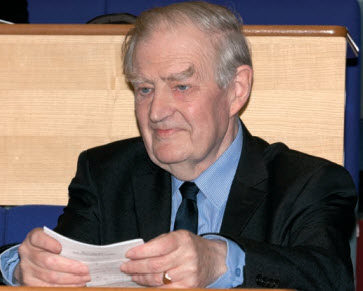
Twenty-one years ago, in 1991, I contributed an essay to a book - edited by Brian Bond - called The First World War and British Military History. The essay bore the title Everyman at War: Recent Interpretations of the Front Line Experience. In it I surveyed the work of various British and Commonwealth historians from the mid-1960s to 1990 and, in particular, those who had made extensive use of both published and unpublished personal accounts to produce what one Canadian historian called group memoirs of the Great War.
The authors whose work I discussed at that time included Tony Ashworth, Bill Gammage, Peter Liddle, Lyn Macdonald, Martin Middlebrook, Desmond Morton and Denis Winter, among many others. Such writers had, by 1990, helped to cause a shift in focus away from the traditional debates on generalship towards the views and activities of junior officers and other ranks. One of the main virtues of their books is that, collectively and individually, they tend to provide an overview of British and Dominion soldiers on active service and to deal in some depth with daily life and routine at the front, rather than merely detailing the movements and deeds of battalions and divisions.
When I looked at the situation as it was in 1991, I was encouraged (as I am now) by the continuing and growing interest in the First World War. Among the factors which I identified as crucial to this trend were:-
(a) the opening for research of the bulk of the British official records of the conflict;
(b) the establishment and growth of major collections of private papers at the IWM, the University of Leeds and elsewhere;
(c) the increasing respectability of military history as an academic discipline;
(d) the advent of the portable tape or cassette recorder, which made it possible to interview surviving veterans of the Great War (an avenue sadly no longer available to us);
(e) the contribution of the mass media, especially television, in creating an awareness of the value of historical material;
(f) the emergence of a more egalitarian social climate from the 1960s onwards;
(g) the notable increase in battlefield touring ; and, not least
(h) the founding of organisations such as the WFA - then only ten years old, but now a mature and sturdy adult of thirty-two.
I observed at the time that the study of strategy, generalship and army organisation could never illuminate all the questions raised by First World War battles, and I argued that research on the experience of frontline soldiers was critical to any analysis of the reasons for variations in operational performance. I contended that we should be asking various questions in this regard. What motivates a unit to perform well, or to fail badly in a particular action? What are the effects of continuity of command, or frequent changes, at divisional, brigade and battalion level? How far were junior officers and other ranks briefed about their objectives before an action or given time to rehearse a forthcoming assault? Did the formation in question possess social cohesion or esprit de corps? If so, did this stem from a shared geographical or social identity among its citizen soldiers, and to what extent was it affected or weakened by casualties and the dilution of its original character? These and similar questions can often be more fully answered, in my view, from personal experience accounts.
Since 1991, research facilities and opportunities at the major public archives in the UK and the Commonwealth have, in some respects, changed out of all recognition - not least because of stunning advances in technology. For example, one little thought, in 1991, that twenty-one years later, one would be able to sit at one’s own desk in Oxford, Cheltenham or Dundee and, through the magic of computers and the internet, download Australian and Canadian divisional, brigade and battalion war diaries. None of us who are old enough to recall, with a shudder, how making notes at the Public Record Office once involved hours of laborious handwriting with pencils that constantly needed sharpening, will have failed to embrace the advent of the laptop or the digital camera. And how many of us foresaw the colossal boom in family history research made possible by ancestry websites on the internet? The physical aspects of research are therefore now much easier than they were - though the process of analysing and digesting the data thus gathered remains as challenging as ever.
While the flow of new books on all aspects of the Great War, especially the struggle on the Western Front has been more than maintained since 1991, the points which I made then still seem valid and relevant. It is encouraging to note that, in recent years, a new generation of gifted writers and scholars has produced an impressive body of works which demonstrate perfectly how, in the right hands, personal experience accounts can enhance our understanding of the tactical and sociological factors influencing the conduct of units in combat. Perhaps the most outstanding of these works to appear in recent years is Tommy: The British Soldier on the Western Front, 1914-1918, a massive 717 page study by the late and much-missed Richard Holmes which appeared in 2004. While acknowledging the undoubted advances and improvements in First World War scholarship, Holmes remained keenly aware that one of the principal problems in trying to write about the conflict is that many people will have read Siegfried Sassoon, Wilfred Owen, Pat Barker and Sebastian Faulks before you get to them. By studying the war primarily in terms of literature, Richard argued that ‘we do not simply colour our view of the past and make it all but impossible to teach the war as history. We go on to tint our picture of the present and our image of the future too’. Richard similarly points out that, for years, it was impossible to attend a military presentation without a clip of Blackadder Goes Forth discussing the strategic imperative of moving Haig’s drinks cabinet an inch or two closer to Berlin. There was thus a distinct danger of losing sight of the men who actually fought the war. Holmes’s Tommy - which embodies a judicious and skilful mixture of personal experience accounts (from both published and unpublished sources) and balanced scholarly analysis - happily does not suffer from the ‘cut and paste’ approach evident in some anthologies whereby the historian, if he or she is not careful, can all too easily become, in Holmes’s opinion, little more than a ‘copy typist’.
Rightly, I think, Richard urged caution about how we use oral history and other non-contemporary evidence. Even survivors of the Great War, he wrote, sometimes became ‘Veterans, General Issue, neatly packed with what we wanted to hear, exploding at the touch of a tape-recorder button or the snap of a TV documentarist’s clapper-board. Up to my neck in muck and bullets, rats as big as footballs, the sergeant major was a right bastard, all my mates were killed. And sometimes, just sometimes, they tell us this because they have heard it themselves’. Much better, says Richard, to go back to what people thought at the time, not least by looking at the diaries, letters and unpublished memoirs of junior officers and other ranks deposited in the IWM and elsewhere. Holmes is not advocating that we ought not to read Sassoon and Graves but he does suggest that ‘the closer we get to events the better our chance of finding out how people really felt’. Scholarly overviews of the front-line experience are not, of course, solely the province of British historians. Desmond Morton’s When Your Number’s Up : The Canadian Soldier in the First World War, published in 1993, is a worthy example of this genre, Moreover, a new generation of First World War scholars has emerged in Canada, including such historians as Tim Cook, whose two-volume work At the Sharp End : Canadians Fighting the Great War, 1914-1916 and Shock Troops : Canadians Fighting the Great War, 1917-1918, published in 2007-2008, represents a welcome modern overview of the Canadian Corps on the Western Front.
In Australia, Peter Pedersen’s The Anzacs : Gallipoli to the Western Front, which appeared in 2007, builds upon earlier general studies of Australians on active service by Bill Gammage and Patsy Adam-Smith. Fortunately, current Australian scholars are continuing to demythologise the ‘Digger’ stereotype and, like their Canadian counterparts, are seeking to avoid the narrow and nationalistic ‘colonial supermen’ approach that permeated much Commonwealth writing on the Great War until the mid-1990s. The same might be said of recent work by Glyn Harper - including his Dark Journey : Three Key New Zealand Battles of the Western Front (2007) which enhances our understanding of the motivation, morale, attitudes and achievements of the officers and men of the splendid New Zealand Division in 1917-1918.
Earlier I referred, with Richard Holmes, to the pitfalls of employing the ‘cut and paste’ or copy-typist approach to history. One should observe, however, that a fair number of historians have successfully avoided the problems inherent in that approach while still mining the rich seams of private papers and personal experience accounts housed at the IWM and in other archives. This applies especially to a succession of writers who have followed the lead of Martin Middlebrook and Lyn Macdonald in providing studies of particular battles or campaigns which remain substantially based upon oral history and the letters and diaries of junior officers and other ranks. Malcolm Brown, whose Imperial War Museum Book of the Somme and Imperial War Museum Book of 1918 : Year of Victory - which came out in 1996 and 1998 respectively - has proved one of the most popular of such writers, combining, in his books, well-chosen extracts from documents and oral history with a highly-readable narrative.
One of the most encouraging features of the period under review has been the steady flow of books on particular battles or campaigns which have made excellent use of first-hand accounts. It would be tedious for me to try to list all of them, but worthy of mention, I feel, are lan Passingham’s Pillars of Fire, on the Battle of Messines, and Jonathan Walker’s The Blood Tub,
on the Battle of Bullecourt, both of which were published in 1998 ; Paul Cobb’s Fromelles 1916 (2007); Charles Messenger’s The Day We Won the War : Turning Point at Amiens, 8 August 1918 and Bryn Hammond’s Cambrai : The Myth of the First Great Tank Battle, both published in 2008 ; Paul Kendall’s Bullecourt 1917 : Breaking the Hindenburg Line (2010); and three works which appeared last year, namely Dale Blair’s The Battle of Bellicourt Tunnel, Scott Bennett’s Pozieres : The Anzac Story, and Chris Baker’s The Battle for Flanders : German Defeat on the Lys, 1918. The prolific Jack Sheldon deserves a special commendation, I suggest, for preventing us from being totally Anglocentric in outlook and his books on the Imperial German Army at First Ypres, the Somme, Vimy Ridge, Passchendaele and Cambrai, all published between 2005 and 2010, have added greatly to our understanding of the front-line experience of the Feldgrauen across No Man’s Land. If nothing else, Jack Sheldon has made it absolutely clear that not all the pain and suffering was felt by one side alone on the Western Front.
The modern master of this type of popular, anecdotal history is almost certainly Peter Hart who has, in many respects, inherited the mantle of Martin Middlebrook and Lyn Macdonald. Peter’s long career at the IWM has unquestionably given him direct access to its wonderful collections of letters, diaries and oral history interviews, but it still requires extensive subject knowledge, a lot of research and considerable skill and empathy in order to turn such raw material into coherent and compelling accounts of military operations. Not least in his book on 1918, Peter adopts a broadly ‘revisionist’ stance in noting the importance of the tactics, technology and training that not only helped the BEF to withstand the German onslaught in the spring of 1918 but also enabled it to conduct the all-arms battles which were the foundation of its ultimate victory. Hart is the first to concede that he does not always present detailed operational analysis but instead relies, in his own words, mainly on ‘hundreds of personal stories that illustrate the nature of the fighting and how individuals responded to some of the worst fighting of the war’. The veterans’ original words, he asserts, ‘have a real immediacy and power that can’t be beaten’ and his message, in his book on 1918, is that war is ‘always dirty, murderous and frightening’, rarely in any way glorious or inspiring. One story from among many will offer something of the essential flavour of Peter’s work on 1918. Captain Charles Brett, of the 5th Connaught Rangers, relates how on 10 October that year, near Le Cateau, a shell fragment disemboweled one man while another soldier had a leg almost severed below the knee. Brett completed the amputation by cutting the remaining strands of flesh with his own penknife. Later on, while falling back in the face of a German counter-attack, Brett found himself sharing a shell-hole with the same amputated limb. One doesn’t get much closer to the reality of the frontline experience than that! What Hart conveys best, perhaps, is the raw courage, doggedness and sheer bloody-mindedness of the junior officers, NCOs and men of Haig’s armies who were called upon to go into action repeatedly in the final months and weeks of the war.
One might reasonably contend that the biggest single growth area in First World War studies since 1991 has been that of new unit histories, especially battalion studies - a field in which the output has been prodigious over the past two decades.
Pride of place here should perhaps be given to the series of Pals battalion histories published by Leo Cooper and Pen and Sword since the mid1980s. Bill Mitchinson’s Cotton Town Comrades, on the 24th Manchesters, published in 1993, was one of the few Pals battalions’ studies not originally published by Pen and Sword. Other New Army battalions which fall outside the ‘Pals’ category have also received detailed attention. One could cite, for example, Matthew Richardson’s book The Tigers on the 6th, 7th, 8th and 9th Leicesters (2000); Jack Alexander’s McRae’s Battalion on the 16th Royal Scots (2004); Derek Clayton’s book on the 9th King’s Own Yorkshire Light Infantry (also 2004); John Stephen Morse’s study of the 9th Sherwood Foresters (2007); and Wayne Osborne’s ongoing work on the 10th Notts and Derby Regiment, the first volume of which came out in 2009. Local Territorial battalions too have received their share of scrutiny. From this group, one could justifiably single out Bill Mitchinson’s Gentlemen and Officers(1995), which covered the London Rifle Brigade; the late Jill Knight’s All Bloody Gentlemen, on the Civil Service Rifles (2004); Alec Weir’s Come on Highlanders, on the 9th Highland Light Infantry (2005); and Derek Bird’s The Spirit of the Troops is Excellent, on the 6th Seaforth Highlanders (2008). Neither should one overlook Leonard Sellers’ work on the Hood Battalion of the Royal Naval Division (1995). Regular battalions have not been totally ignored, I am pleased to say - as demonstrated by the appearance of John Ashby’s Seek Glory, Now Keep Glory, on the 1st Royal Warwickshires (2000), and by James W Taylor’s fine books on the 1st and 2nd Royal Irish Rifles in the Great War (2002 and 2005).
While it may be unfair even to consider placing works in any sort of order of merit, one or two, I feel, are models of their kind and possibly provide scholarly templates for future unit studies. In her Citizen Soldiers (2005), Helen McCartney examines in depth the wartime experience on the Western Front of two Territorial units - the Liverpool Rifles and the Liverpool Scottish - and the links between the troops of these mainly middle-class battalions and the civilian society from which they came. She argues persuasively that, far from being passive victims of the conflict, officers and men of these units largely retained their civilian outlook throughout the war and used it to modify and influence their experience in the front line. The maintenance of close cultural and personal ties with home buttressed their morale to an appreciable extent. Dr McCartney likewise presents convincing evidence that, despite heavy casualties, conscription and changes in the reserve and drafting system, these battalions at least retained a strong local and county identity up to the Armistice. Dale Blair’s stimulating book Dinkum Diggers (2001) is an equally penetrating analysis of the 1st Battalion of the Australian Imperial Force (AIF). Apart from providing a fresh look at the causes and effects of the mutiny in that veteran battalion in late September 1918, Blair seeks to identify some of the points at which the reality of the front-line experience on the one hand and the Digger myth on the other may be seen to diverge. He places particular emphasis on the myths of egalitarianism and individualism that have long been synonymous with the Anzac stereotype. He contends that the actual experience of the 1st Battalion reveals significant contradictions to the accepted Digger image and he also has some useful things to say about the degree of anti-British sentiment that contributed to the establishment of that image and to the emerging sense of Australian nationhood. Recently, however, the unit history has been taken to its ultimate extreme by Peter Stanley in his Men of Mont St Quentin (2009) - a fascinating microscopic study of the lives, and in some cases the deaths, of a dozen or so members of No.9 Platoon, 21st Battalion AIF, who were involved in the capture of Mont St Quentin, near Peronne, on 1 September 1918.Besides continuing to help concentrate a fair amount of attention on the front-line experience of junior officers and other ranks, many of the new battalion histories I have mentioned offer a very useful service to military and family historians alike, in providing detailed rolls of honour and service, lists of decorations and awards, and information as to where the fallen are buried or commemorated. Nevertheless, I remain slightly uneasy about the possibility that the lingering focus on Pals battalions may have distorted our interpretation of the front line experience and to overrate their achievements - though not their sacrifice. My own research into the performance of New Army divisions on the Somme in 1916 appears, for example, to run counter to the original claims and expectations of the raisers of Pals units - i.e. that those who shared a common geographical, social or occupational background would necessarily train and fight better than those who did not enjoy such advantages. In fact, I have found that, in general, not only did those divisions which were essentially composed of Pals battalions actually have lower success rates in offensive operations than War Office-raised New Army formations, but also that they tended to have a worse disciplinary record in terms of soldiers who were executed during, or as a result of, operations on the Somme that year.
While the writing of battalion histories has undoubtedly flourished since the early 1990s, the same cannot be said, overall, of divisional histories. Some work, it must be conceded, has been done in this field. Kenneth Radley’s work on the 1st Canadian Division, published in 2006, is one example that springs to mind, and I have already mentioned, in another context, Glyn Harper’s recent writings about the New Zealand Division. To these one might add Mitch Yockelson’s Borrowed Soldiers (2008) which covers the story of the US 27th and 30th Divisions, under British command, in the summer and autumn of 1918. Mark Ethan Grotelueschen’s The AEF Way of War (2007), which examines in detail the performance of four other American divisions - the 1st, 2nd, 26th and 77th - in the final Allied offensive; and Leonard Smith’s Between Mutiny and Obedience, published in 1994, which analyses the experience of the French 5th Infantry Division, a formation with a fine fighting record but which, in 1917, was the most mutinous division in the whole French Army. Smith looks, in particular, at the key role played by junior officers and NCOs who both exerted command authority yet also shared the dangers and privations of the ordinary poilu. His argument is that soldiers developed self-determined rules of how they would, or would not, fight and imposed these rules on those above. By altering the parameters of command authority to fit their own perceived interests, soldiers and commanders negotiated a behavioural space between mutiny and obedience (hence the title of the book). Whether or not one agrees with all of Len Smith’s conclusions, it is a pity that his work generally failed to inspire similar, and new, studies of British divisions. Indeed, some British divisions have no published history at all - let alone a new one - to the best of my knowledge. The 1st, 3rd, 21st, 30th, 32nd, 37th and 41st Divisions are cases in point. There is, then, still plenty of scope for bright young historians to exercise their talents in this particular area.
That said, the twin topics of the morale and discipline of the front-line soldier - the central themes of Leonard Smith’s book - have certainly not been overlooked by British historians in the years under review. Far from it, many of us inevitably became involved in, and swept along by, the heated debate which raged throughout the 1990s and until 2006 over the campaign to pardon the 306 British and Empire soldiers shot at dawn for military offences during the Great War. One could maintain that no other aspect of First World War history generated more hot air or stirred up more hot blood than this subject. Since the pardon was granted in 2006, things have calmed down somewhat but, even when the debate was at its height, a handful of British historians, to their great credit, managed to make contributions to it which were notable for their objectivity as well as their scholarship. In his essay on Capital Courts-Martial, published in Look to your Front in 1999, Dr John Peaty reminded us that a fair proportion of those executed were already under suspended sentences for a previous offence (including some under two suspended sentences) or had been previously sentenced to death. One had been sentenced to death for desertion on two previous occasions. Two years later, in their book Blindfold and Alone (2001), Cathryn Corns and John Hughes-Wilson not only provided us with a much needed balanced, yet compassionate, overview of British military executions in the Great War but also with a number of in-depth case studies which were solidly based upon detailed examination of the original court-martial records.
As in 1991, scholarly surveys of morale and discipline in the BEF as a whole are still comparatively thin on the ground, although some outstanding work in this field has been published in the intervening years. Gary Sheffield’s excellent Leadership in the Trenches, which appeared in 2000, focuses upon officer-man relations as a factor in the maintenance of the British Army’s morale in the First World War. Gary argues persuasively that the paternalistic ethos of the pre-war Regular officer infused the wartime officer class and was essential to such maintenance of morale. Deference on the part of the other ranks was similarly accepted as part of an interdependent, reciprocal relationship which worked as long as the officers kept their side of the paternalistic bargain and acted in a way that inspired trust and permitted the socially conservative British working man, who was neither revolutionary nor abjectly submissive, to retain self-respect. In this context one must also mention Timothy Bowman’s book, published in 2003, on discipline and morale in Irish regiments in the Great War. Tim demonstrates that, in fact, discipline and morale varied at the battalion, let alone the brigade or divisional, level. He concedes that, generally, Irish units had worse courts-martial records than their English, Scottish or Welsh counterparts. He also shows that, while there is little evidence to suggest that soldiers in Irish formations felt any real sympathy for the emerging Sinn Fein movement, events in Ireland did cause some mistrust among non-Irish units as well as some concern in the War Office.
The long-neglected subject of the role of the junior infantry officer on the Western Front has similarly, if belatedly, received serious attention from scholarly historians within the past two or three years. John LewisStempel, in his eminently-readable and sometimes moving Six Weeks (2010) - sub-titled The Short and Gallant Life of the British Officer in the First World War - asserts that the wartime junior officers from public schools and grammar schools brought with them the very values that the country needed. ‘After all’, he asks, ‘who could withstand the highly drilled militarism of the Kaiser’s Army - except for a corps of young British men who believed in the qualities of courage, patriotism, selfless service, leadership and character?’ He is clearly in no doubt that, in the Great War, Britain helped to overcome a ‘right-wing military dictatorship’ because of the ‘thin khaki line of 1914-1918, led by their junior officers’. A similar, if slightly less emotional, stance is adopted by Christopher Moore-Bick in Playing the Game : The British Junior Infantry Officer on the Western Front, 1914-18, published only last year. The latter author suggests that junior officers were fortunate in possessing an ability, in the front line, to create and maintain positive conceptions of their work and status by adapting familiar practices and ideas. This was due, he writes, ‘partly to their elevated status as officers and partly to their backgrounds and educations, despite claims that the public-school ethos was unsuited to conditions on the Western Front...’. Crucially, he recognised the degree to which faith in the justice of their cause and a traditional belief in honour and self-sacrifice sustained most of them in the most trying conditions, the emergence of disillusionment - as expressed by Sassoon and Owen - notwithstanding. In his view, young officers ‘did not merely cling blindly to an outdated creed. As they became increasingly experienced they achieved an understanding of the nature of the Western Front, retaining that conviction in the justice of their cause and subtly (and unconsciously) remoulding their ethos to enhance its relevance’. If the juxtaposition of Victorian concepts of honour and glory with the horrors of the Western Front was strikingly incongruous, many officers were still able to adapt their expectations of soldiering and their sense of military virtue so that ‘this dislocation was not insupportably stark’. Moore-Bick rightly emphasises that British officers were neither the ‘inbred, ineffectual fops of some popular mythology nor the undifferentiated plaster saints created by some commemorative practices’.
Finally, one must not forget the thought-provoking comparative approach adopted by Alexander Watson in his important study Enduring the Great War : Combat, Morale, and Collapse in the British and German Armies, 1914-1918, which appeared in 2008. The purpose of the book, Watson states, is ‘to provide a new understanding of the impressive resilience demonstrated by the British and German armies...by focusing on individual soldiers’ psychology’. Concentrating on the Western Front, Watson analyses the impact of attritional trench warfare on the British and German armies and discusses the nature and extent of the physical and mental strains it imposed on front-line soldiers. He then surveys the motives and factors -including unit loyalty, coercion, discipline, comradeship and the need to protect home and family - which persuaded men to endure discomfort and danger and sustained their will to fight. He also looks at the various coping mechanisms, such as fatalism, religious beliefs, superstition and self-deception about chances of survival, that helped most soldiers avoid psychological meltdown and retain some sort of combat motivation. When assessing the role of junior officers in this process, Watson underlines both the similarities and differences between the British and German officer corps, while conceding that inter-rank relations in the German Army ‘were perhaps never so good’ as those in the BEF. He also maintains that it was not ‘better nerves’ but ‘superior supplies and a lower level of exhaustion’ that allowed the BEF to survive the trials of 1918 and ultimately triumph. In his judgement, hunger, lack of rest and apathy - rather than anger, resentment or revolutionary aims - lay at the root of Germany’s military collapse, with this taking the form of an ‘ordered surrender’ led by junior officers whose own morale was eroded.
Perhaps the last word on 1918 should be left to an ordinary British soldier - the late Geoffrey Husbands, a Derby lad who, between the ages of 18 and 22 served in three different battalions of the Sherwood Foresters. His wonderful 550-page memoir, Joffrey’s War, has just been published. It is one of the very best First World War memoirs of a citizen-soldier that I have read and I have been privileged, with John Bourne and Bob Bushaway, to have played a small part in bringing it to public attention. As Geoffrey wrote of the German March 1918 offensive : ‘It was one thing to grouse and contemplate more drastic measures to end a stalemate and an unending state of trench warfare, but to let Jerry walk through without a fight, no fear!’
In several respects, then, scholarship on the front-line experience in the First World War has come a long way since my survey of 1991. There is now general recognition of the existence of a learning process in the BEF, particularly from 1916 to the Armistice. The debate now is not whether there was a learning process but, instead, how patchy or uniform that process actually was and how it may have varied - in both depth and speed - in different parts of Haig’s forces on the Western Front.
Thanks to the acknowledgement of this learning process, the junior officers and ordinary soldiers of the Great War are no longer seen - at least not in scholarly circles or by bodies such as the WFA - simply as helpless and passive victims or as lions led by donkeys. Rather, they are viewed as men who, to varying degrees, contributed to the learning curve by actually applying - and in some cases helping to originate - the improved tactics and techniques that eventually broke the trench stalemate in France and Flanders. But quite how far this recognition extends is another matter entirely, as the popular conception of the front-line experience is far more likely to coincide with, or be influenced by, Blackadder Goes Forth, Birdsong or Downton Abbey than by the works of Gary Sheffield or Peter Hart.
The years 2014-2018 will undoubtedly prompt a veritable torrent of new books on the First World War as publishers and writers seek to take advantage of the commercial opportunities offered by the Centenary. Let us earnestly hope that the high standards attained by much recent scholarship are not totally sacrificed in an unseemly scramble to meet the anticipated public demand for fresh books on the subject.
This article first appeared in Bulletin 93, in July 2012. Bulletin is one of several magazines available for free to members of The WFA. If you want to see more articles like this one, you may wish to become a member of The Western Front Association.
Becoming a member of The Western Front Association (WFA) offers a wealth of resources and opportunities for those passionate about the history of the First World War. Here's just three of the benefits we offer:

This magazine provides updates on WW1 related news, WFA activities and events.

Access online tours of significant WWI sites, providing immense learning experience.

Listen to over 300 episodes of the "Mentioned in Dispatches" podcast.


