
Balloonatics during the First World War 1914-1918
There are many groups of combatants who could claim to be the ‘unsung’ heroes of the First World War. One group with a particularly strong claim are those men who operated the observation balloons. Not for them the glamour of flying Sopwith Camels or even DH4’s, but they still had to face the dangers of being suspended several thousand feet in the air with nothing between their feet other than a whicker basket.
Whilst – initially - the RNAS had charge of all things lighter than air, in the autumn of 1915 responsibility for Kite Balloons in France was transferred to the RFC.
Each RFC Brigade had a Kite Balloon Wing commanded by a Lieutenant Colonel. Within each wing was a number (typically five) Kite Balloon Companies – these being commanded by a Captain or Major. Each Company would have two or three Kite Balloon Sections.[1]
Major Alastair Cosmo Burton Geddes was the most senior British Kite balloon officer to be killed during the First World War.
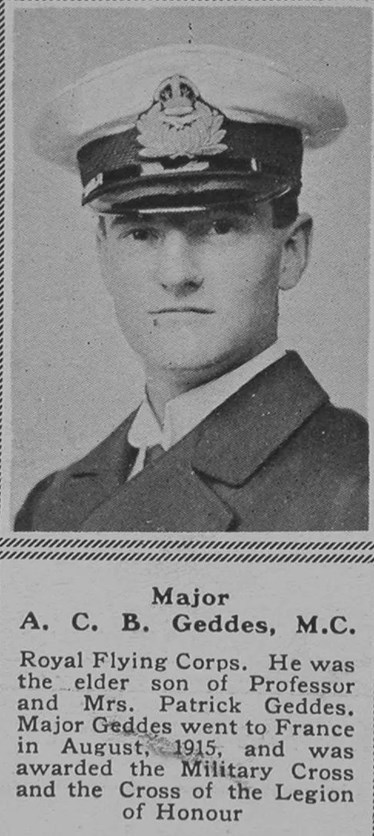
He was born in 1891 and gained a degree from Edinburgh University in 1914. Joining the RNAS in 1915 he was posted to Number 6 Kite Balloon Section, RNAS later that year. The following year, he was transferred to the Army – joining the RFC. By August 1916 he was serving as a section commander in 13 Kite Balloon Section, being awarded a Military Cross on New Year’s Day in 1917 for his actions near Thiepval during the Battle of the Somme when he spent 14 hours aloft observing for the artillery.
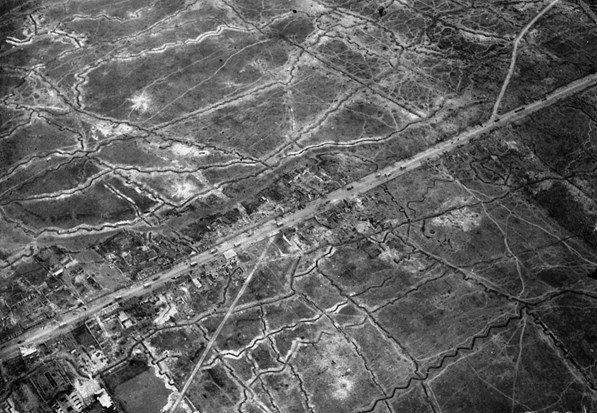
By the end of the year 13 and 18 KBS became part of the newly formed 17 Kite Balloon Company and Geddes – promoted to Major – was given command of the Company.
On 3 April 1918 Geddes and his brother in law (Lt Frank Mears) were observing from one of 13 section’s balloons when they were attacked by an enemy aeroplane. Both managed to parachute to safety, but two weeks later, whilst walking back to his unit after visiting an artillery battery with which his company was cooperating, he was killed by German shell fire.
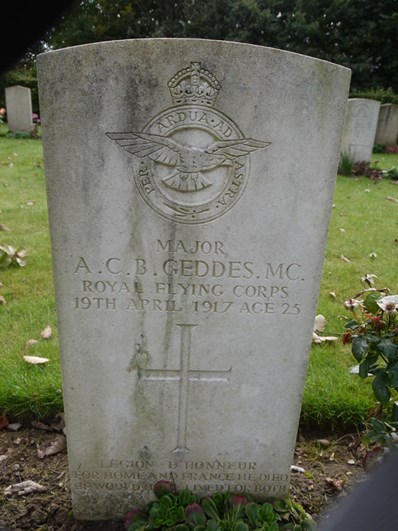
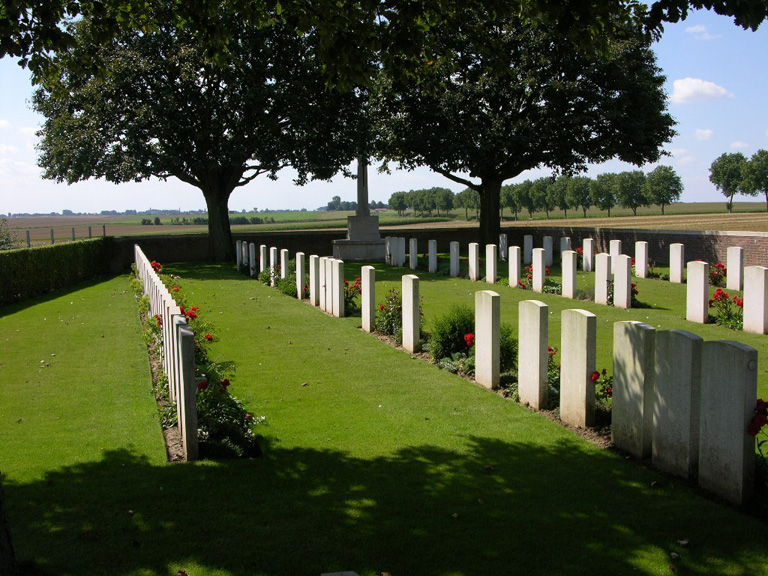
Major Geddes is buried at Vaulx Australian Field Ambulance Cemetery.
There were of course humorous incidents, one of which is told by Goderic Hodges (‘Memoirs of an Old Balloonatic’ published in 1972)
It may have been that same trip that saw the end of a beloved old balloon. It had been patched up more than once and the patches did not match the original fabric. It has a Heath Robinson look and was known as ‘Lousy Lydia’. Old age had made it porous, and there was a plentiful mixture of air in the hydrogen.
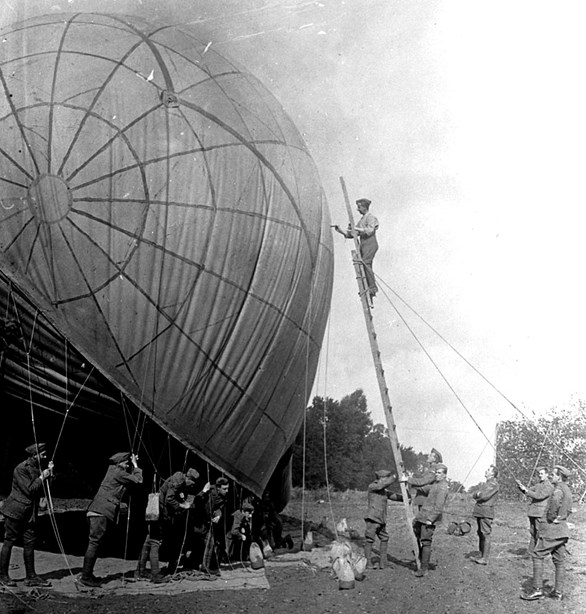
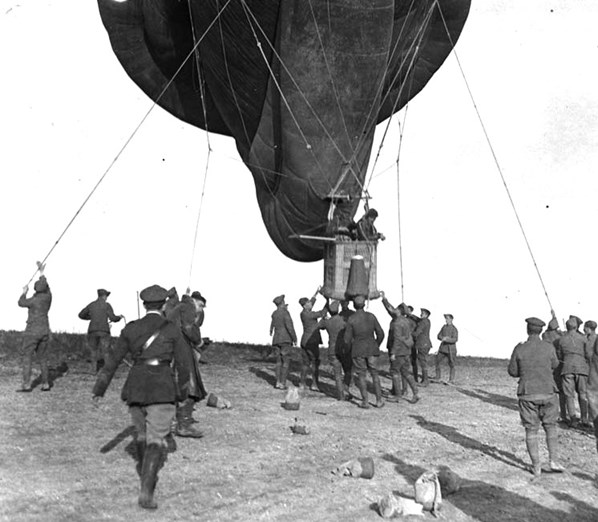
On what was to be its last day it could hardly lift us above 1000 feet. The result was furious enquiries from Wing.
‘What are you doing at this absurd height, practically on the ground?’
I explained that the balloon just would not go any higher.
‘Nonsense’ said the incredulous MacNeece. ‘Come down and I’ll go myself’.
We were proved to be liars. We went down. The Colonel was put in a parachute harness and hitched onto a parachute. We all stood around. The command ‘Let up!’ was given. One end of the basket rose a foot or two from the ground. The Colonel’s end remained on the ground. Lousy Lydia couldn’t lift him even one foot. The old lady was dead. In a silence that could be heard, the Colonel got out and departed.
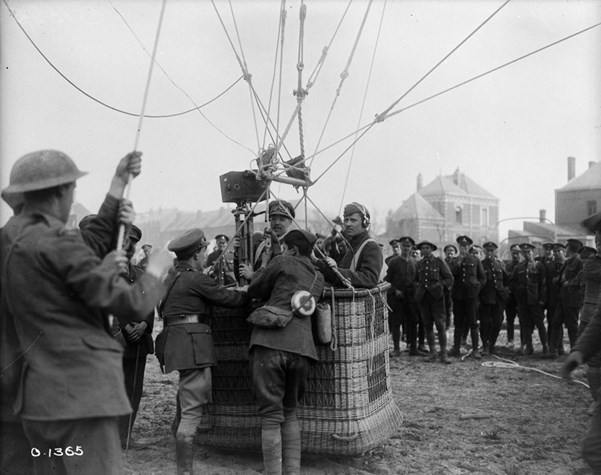
Despite the anecdote detailed here, Lt Col MacNeece had more hours observing than any of his subordinates. By October 1917 he had logged more than 500 hours and been awarded a DSO. On 10 August 1918, whilst commanding 5 Balloon Wing (in 5 Brigade RAF) he had to parachute to safety after being shot down in a ‘friendly fire’ incident by a British SE5 scout. He was injured on landing. He remained in the post war RAF retiring in 1946 as an Air Vice-Marshal.
14 Section: Some stories
There are many accounts of bravery that can be related about the officers who manned these balloons.
On 17 March 1917 Lt. George Simpson died of wounds after his balloon was hit by enemy fire. He was observing from a twin-basket Cacquot.
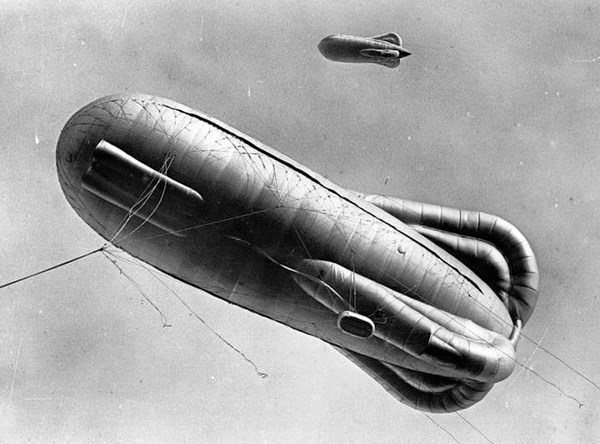
George had enlisted in September 1914 as a member of what would go on to be the 2nd Canadian Contingent, but that November was granted a discharge in order that he could make his own way to Europe and join the fighting sooner. He came to England and was granted a commission in the Royal Garrison Artillery in March 1915 before transferring to the Royal Flying Corps that October. He was sent over to the front for the first time in May 1916, serving as an observer with the 14th Kite Balloon Section. He served through the Somme during which time he was promoted to Lieutenant and later given the role of Balloon Commander in February 1917. The balloon he was in was hit by enemy incendiary fire.
George refused to abandon the balloon until he had helped his fellow observer clear first, and as a result was caught up and enveloped in the burning remnants whilst parachuting to the ground. He was severely burnt and died from his injuries, several days later. He was posthumously nominated for a Military Cross which was awarded six weeks after his death. He is buried at Bray Military Cemetery.
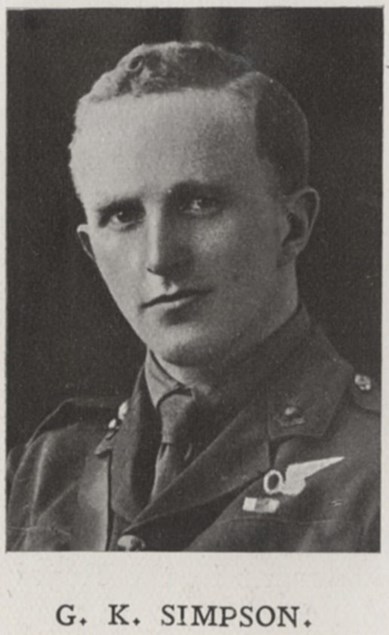
Lt. Sharp twice parachuted from burning balloons on 21 April and again on 4 May. On the second occasion Lt. Sharp stayed in the basket firing his revolver at the enemy aircraft although the balloon was well alight. It seems he survived this experience.
On 3 July 1917, Lt. Eric Arnold Cleaver parachuted from balloon which burst at 4,000 feet. The balloon caught him up and the suction closed his parachute; he fell rapidly with the balloon and was killed. He is buried at Villers-Faucon Communal Cemetery.
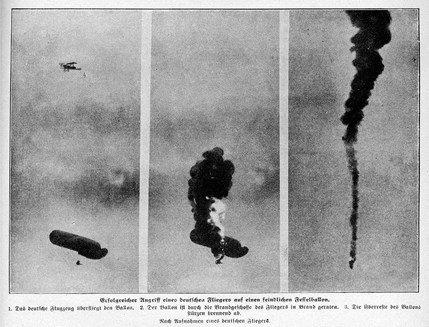
Below is the sequence of three subsequent images by an unknown German WW I pilot shows a biplane shooting successfully at a tethered "kite" balloon flying below. The photos appeared in the leading German WW I magazine in 1918. The photo is undated.
11 Kite Balloon Section
Lt Albert Dodd was born 20 October 1898 in Widnes.
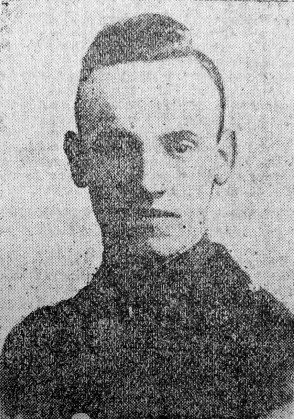
After attending the Port Sunlight School (gaining a “Lever Scholarship”) he continued his education at the Birkenhead Institute, and also gained an Oxford Junior and Senior Scholarship in 1914 and 1915. Certificates for the Lancashire and Cheshire Institute of Chemical Courses of 1915-16-17, and matriculated as a student of the London University in 1916.
Albert was employed by Lever Brothers, Port Sunlight, as an Analytical Chemist. On 1 June 1917, at the age of 18 years and eight months, he joined the Artists’ Rifles OTC, and gained his commission to the Balloon Section on 1 November 1917. He served with No.11 Balloon Section until 30 October 1918, when he was killed in action at Salache. He was originally buried at Vicely, in a French cemetery but his body was exhumed in 1922 along with 2/Lt JA Carter who was killed with him and reburied at St Souplet British Cemetery.
Lieut. Col. G F H Faithfull, command 3rd Balloon Wing, Royal Air Force, wrote to Dodd's parents: “Your son was a very promising officer and a good Observer, who had done a great deal of very valuable work during the strenuous times of the last few months,” and Major W Huxley:
“He was one of my most keen young observers, and I was most interested in him, as he had shown great promise. He had, as you know, gained his Observer’s badge just before going out..."
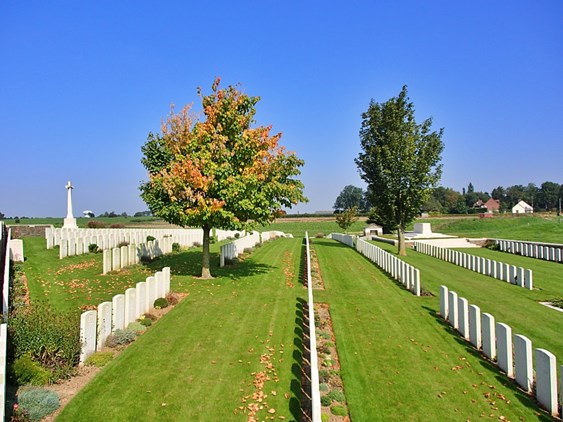
Dodd and Carter are buried next to each other at St Souplet, which is 6 kilometres south of Le Cateau.
Other theatres
Kite Balloons were of course used in other theatres. One of the heaviest losses of life to the Kite Balloon section was on 31 December 1917 when the transport ship HMS Osmanieh which was taking reinforcement to the middle East was sunk. The vessel reached Alexandria on 31 December. Whilst sailing towards the harbour entrance, the ship was struck by a mine which had been left a few days earlier by the German submarine SM UC-34.
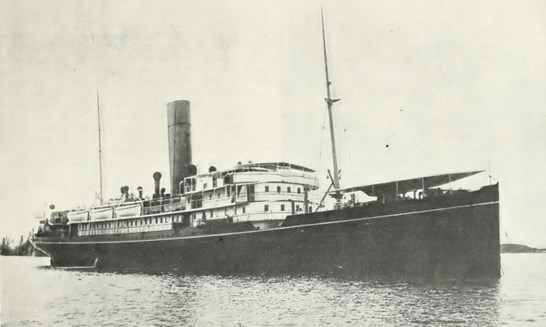
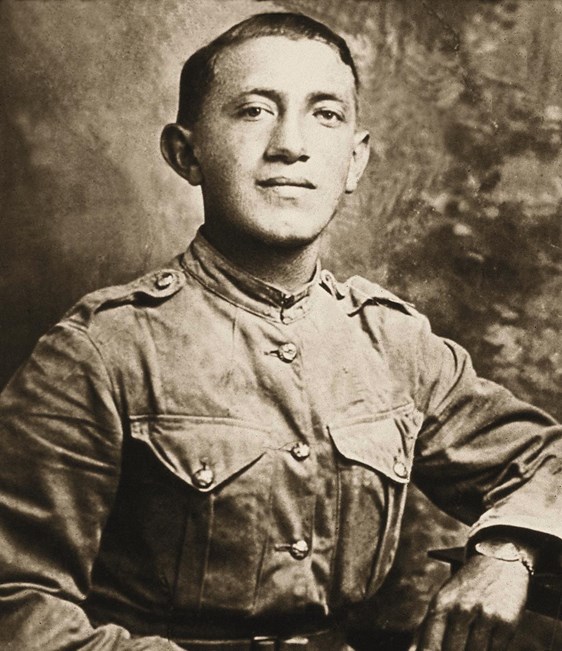
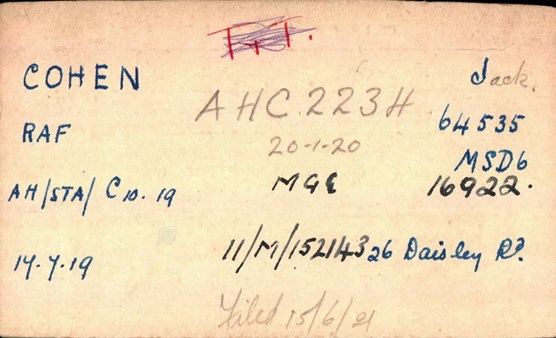
The Osmanieh sank in less than ten minutes, killing 209 people including eight nurses. Among the dead were seventeen men from the 55th and 56th Kite Balloon sections. One of the survivors of the sinking of Osmanieh was Jack Cohen, who founded the retail giant ‘Tesco’. He used his tailoring skills as a canvas maker for balloons and other aircraft. Cohen survived thanks to a nurse who helped him stay afloat in the water.
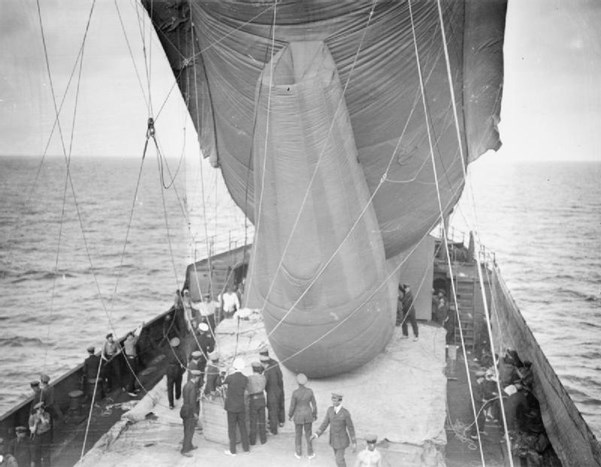
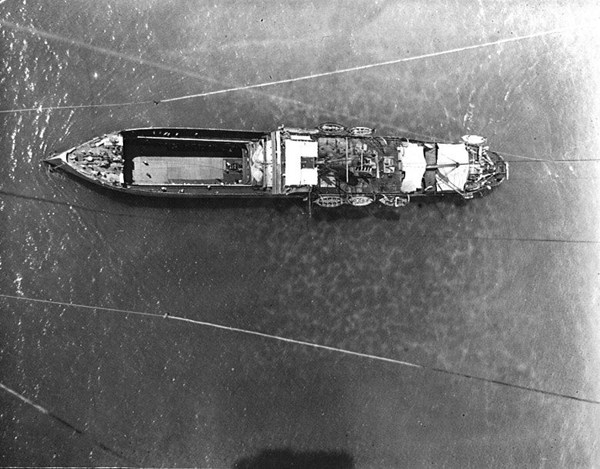
Elsewhere away from the Western Front, balloons were used in Gallipoli. HMS Manica was a British cargo steamship that became the first kite balloon ship of the Royal Naval Air Service. She saw active service in the Dardanelles Campaign of 1915 directing the fire of the supporting ships at Anzac Cove. The vessel was irreverently known as 'HMS Maniac'.
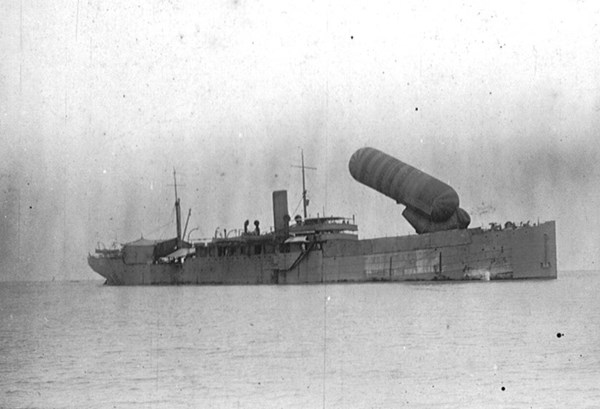
Conversion to operate the kite balloon involved fitting "a long sloping deck from forecastle to waist, fixing a dynamo to drive a hydrogen compressor", and the installation of a winch. A "wireless telegraphy house" and quarters for the naval officers and men were added.
HMS Manica’s activities are detailed here
19 April 1915: Spotters from Manica's balloon directed shelling onto a Turkish encampment
24 April 1915: Spotters directed fire on Gaba Tepe, where the Turkish barracks was destroyed.
25 April 1915: The balloon, with its two observers, was in the air from 0521 to 1405 hours on constantly reporting on the activities associated with Anzac Covefor almost nine hours, while ANZAC troops scaled the cliffs, one of the observers sighted the Turkish battleship Turgut Reis in the Narrows. HMS Triumph was contacted by wireless, and its balloon-directed fire forced the Turkish warship to withdraw
26 April 1915: The ships balloon made seven ascents in support of the ANZAC operations
27 April 1915: The observers were spotting for the battleships HMS Triumph and HMS Queen Elizabeth (which was the Royal Navy's newest and most powerful battleship). During the afternoon her bombardment blew up an armament store
In the skies at Ypres
At Ypres, Kite Balloons were much in use – before and during the Third Battle of Ypres.
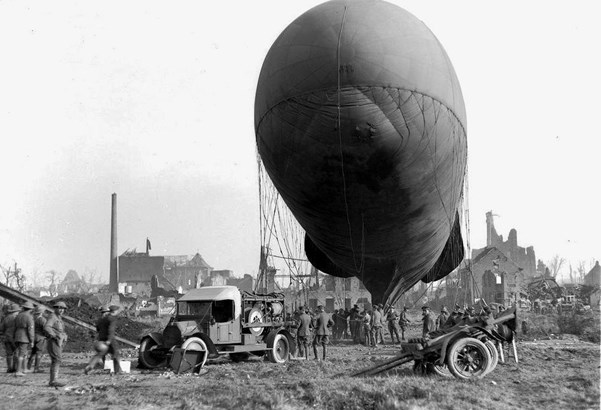
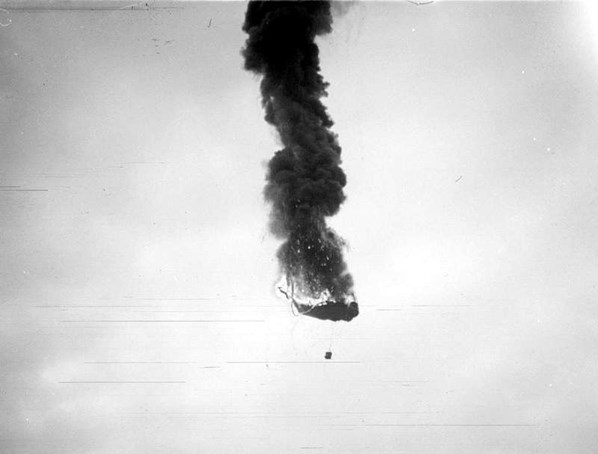
It was prior to this battle that number 2 Kite Balloon wing came under sustained attack. Thankfully there were no fatalities. Six Albatross fighters from Jasta 4 attacked the kite balloons, three being brought down in flames. With the observers of a further three taking to their parachutes the sky was full of balloons being hauled down (or in flames) with eleven observers descending by parachute to safety.
Most of the incidents related above deal with the officers who manned the balloons. However the ground crews were – unlike the ground crew at permanent RFC and RAF aerodromes – often well within range of German artillery.
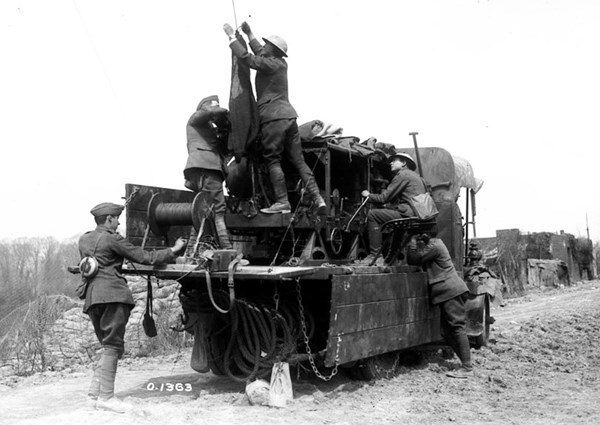
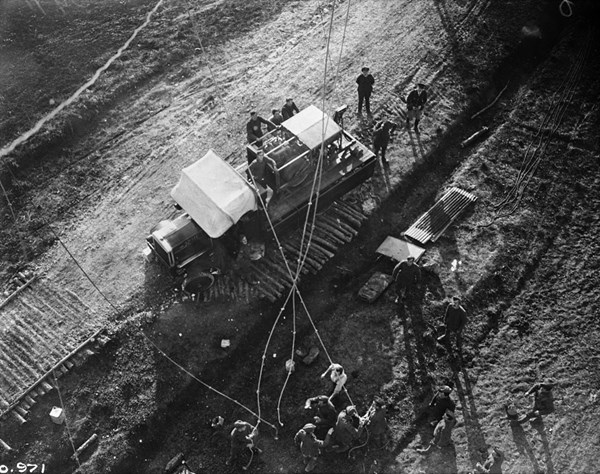
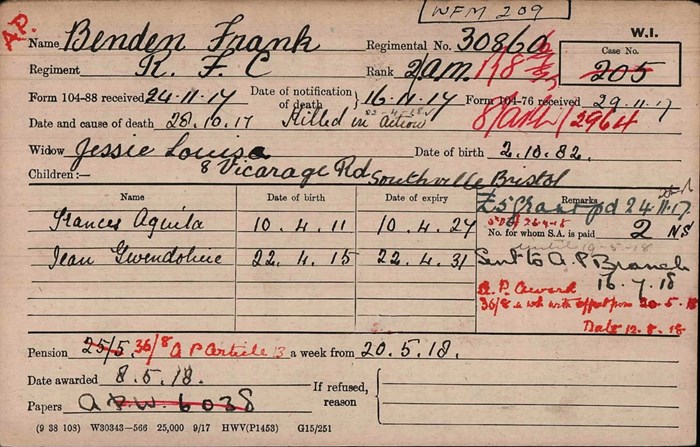
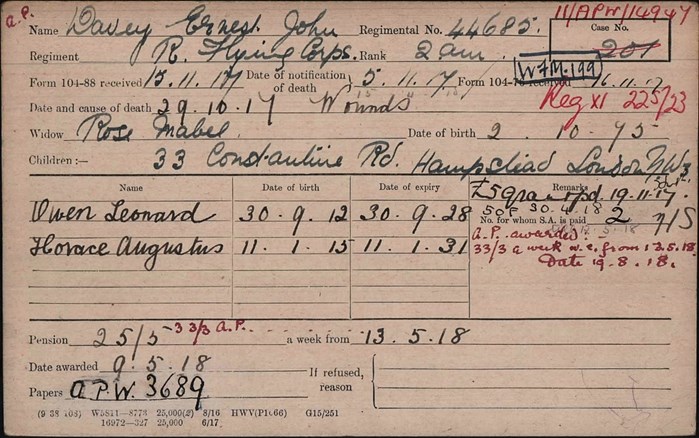
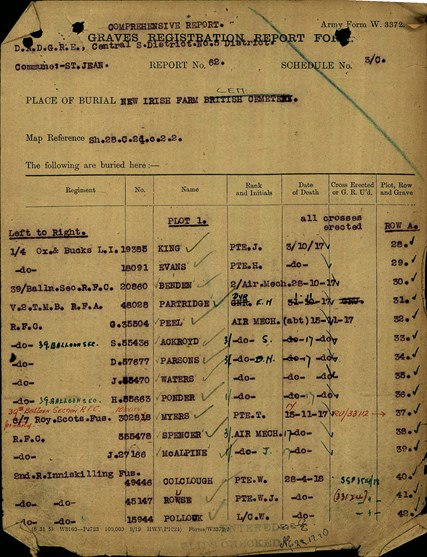
Number 39 Section (part of 8th Balloon Company in number 2 Wing) was – during the later stages of the Third Battle of Ypres hit by German shell fire on 27 and 28 October resulting in two men being killed (Frank Benden and Ernest Davey). Benden is buried at New Irish Farm Cemetery, Davey at Dozinghem Military Cemetery.
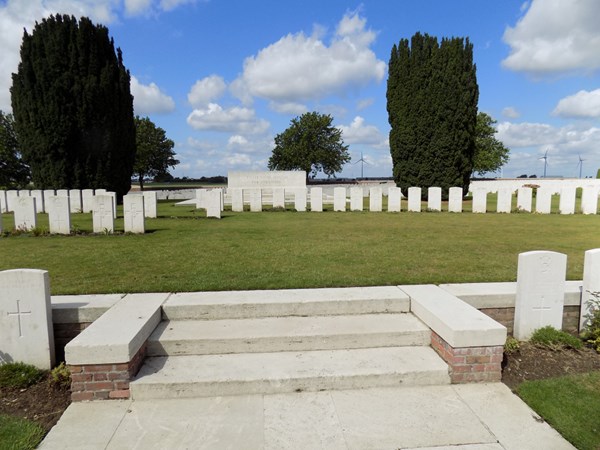
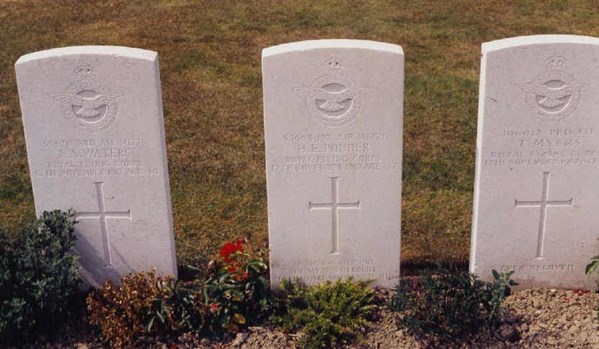
However much worse was to befall 39 section three weeks later. Another bombardment on 17 November resulted in the ground crew taking to slit trenches and dugouts. Unfortunately a shell hit one of the trenches resulting in nine fatalities. Eight were killed outright and are buried at New Irish Farm Cemetery side by side. The ninth who died the same day is buried at Dozinghem Military Cemetery.
The eight are Samuel Ackroyd (55486), John McAlpine (27166), Thomas Myers (106017), David Urban Parsons (57677), George Peel (55504), Herbert E Ponder (55663), John Thomas Spence (55478) and James Alfred Waters (55470). Whilst Harry Booth (55471) is buried at Dozinghem.
Further reading
'Roasting a sausage': Balloons, their crews, and those who shot them down
The first French observation balloon of the Great War shot down
Ballonatics Roll of Honour
Despite CWGC only sometimes detailing the 'Balloonatics' in their database, an attempt has been made to produce a 'roll of honour' of all fatalities within the RFC/RAF/RNAS balloon service.
This can be seen via this link
References
[1] A snapshot of the balloon service on the western front (Courtesy of Rob Pugh / www.crossandcockade.com/forum) as at January 1918 looks like this:
1st Balloon Wing Headquarters.
Lt.-Col. P.K. Wise, D.S.O. Royal Warwickshire Regiment. Wing Commander.
Capt. M.W. Bovill. R.F.C. (S.R.) Adjutant.
Lt. S.S. Dixon. R.F.C. (S.R.) E.O.2.
1st Balloon Company (8 & 20 Sections).
2nd Balloon Company (sections unknown).
3rd Balloon Company (30 & 37 Sections).
4th Balloon Company (40, 42 & 46 Sections).
2nd Balloon Wing Headquarters.
Lt.-Col. H.M. Meyler, M.C. Border Regiment. Wing Commander.
Capt. C.B. Baker. Oxfordshire & Buckinghamshire Light Infantry. Adjutant.
Lt. G.R. Nicholson. R.F.C. (S.R.) A/E.O.2.
5th Balloon Company (2 & 25 Sections).
6th Balloon Company (16 & 32 Sections).
7th Balloon Company (15, 18, 36, 38 & 47 Sections).
8th Balloon Company (23 & 39 Sections).
11th Balloon Company (9 Section).
13th Balloon Company (3 & 4 Sections).
17th Balloon Company (13 Section).
3rd Balloon Wing Headquarters.
Lt.-Col. F.H. Cleaver, D.S.O. General List. Wing Commander.
Capt. J.G. Howell, M.C. Royal Artillery. Adjutant.
2/Lt. R.P. Lamb. General List. Recording Officer.
Lt. G.F. Golding. R.F.C. (S.R.) E.O.2.
10th Balloon Company (5 & 28 Sections).
12th Balloon Company (35 & 45 Sections).
18th Balloon Company (1 & 31 Sections).
19th Balloon Company (11 & 44 Sections).
3rd (Corps) Wing Headquarters.
Capt. W.L. Burt. Essex Regiment. Adjutant.
Lt. H.L. Horn. R.F.C. (S.R.) E.O.2.
16th Balloon Company (12 & 43 Sections).
5th Balloon Wing Headquarters.
Lt.-Col. Hon. A.L. Byng. R.F.C. (G.L.) Wing Commander.
Capt. A.J.R. Waller. Essex Regiment. Adjutant.
Lt. R.F. Howard. R.F.C. (S.R.) E.O.2.
14th Balloon Company (14 & 29 Sections).
15th Balloon Company (19 & 41 Sections).
Becoming a member of The Western Front Association (WFA) offers a wealth of resources and opportunities for those passionate about the history of the First World War. Here's just three of the benefits we offer:

This magazine provides updates on WW1 related news, WFA activities and events.

Access online tours of significant WWI sites, providing immense learning experience.

Listen to over 300 episodes of the "Mentioned in Dispatches" podcast.


