
One of Haig’s omissions? 38th (Welsh) Division at Mametz Wood, July 1916
The 38th (Welsh) Division was always associated with David Lloyd George, the Welsh Liberal politician, Chancellor of the Exchequer (1908-15), Minister for Munitions (1915-16), Secretary of State for War (1916) and Prime Minister from December 1916. It is safe assumption that few Generals in the British Army were Liberals. It is also a safe assumption that many, perhaps most, regarded him as an untrustworthy parvenu Welsh ‘outsider’, dangerously ignorant of military matters.
Like his peers Haig would have disliked Lloyd George for increasing death duties and income tax. However, his dislike of Lloyd George grew into detestation when Lloyd George became Prime Minister, and, unlike his predecessor, Asquith, began to question the conduct of the war and, in particular, Haig’s strategy. By 1917 Lloyd George was openly opposing Haig and Haig’s proposed offensive at Ypres. After the catastrophe of Third Ypres Lloyd George limited the number of soldiers at Haig’s disposal by keeping them at home but managed to conceal this in a debate in Parliament. After the final German attack in March 1918 Lloyd George was more than happy to approve of Marshal Foch becoming Supreme Commander of the Allied forces which left Haig nominally in command of the British army but subordinate to Foch. By the end of the war Haig’s detestation of Lloyd George had magnified into hatred as some of the final entries in his War Diary reveal.
Doubtless at the request of Lieutenant Colonel J E Munby, its author, Haig wrote a brief introduction to ‘A History of the 38th (Welsh) Division’ [1] published in November 1919. Haig praised the ‘highest level of soldierly achievement’ of the Division in the Third Battle of Ypres in 1917 and in the final advance in August 1918. However, he did not mention the Division’s costly but successful attack at Mametz Wood 7-12 July 1916. This was a remarkable achievement for an untried Division, totally untrained for attacks in dense woodland. The Division was closely identified with Lloyd George at that time and it seems that Haig could not overcome his hatred of Lloyd George in order to write even a few words of justifiable praise. Haig’s ‘omission’ in this matter was not unnoticed by the survivors of the Division and by those who celebrate their achievement 110 years later. Haig’s diaries and papers reveal that he was not averse to omitting matters which were to his dislike or inconvenient to his account of events.
The creation of 38th (Welsh) Division
The 38th (Welsh) Division did not get off to an easy start.
The creation of the Division began with a speech made by David Lloyd George, Chancellor of the Exchequer, on 19 September 1914 at a meeting of London Welshmen at the Queen’s Hall in which he had appealed for the formation of ‘a Welsh army in the field’. Subsequently, in order to give this idea substance, the Welsh National Executive Committee was formed in Cardiff on 29 September to organise the recruitment of ‘a Welsh Army Corps’ of two or more divisions.
Every effort was made by the WNEC to create a totally Welsh formation. The use of the Welsh language within units was encouraged and many of its recruiting posters and leaflets were printed in both English and Welsh. It was planned to give recruits distinctive uniforms made of ‘brethyn llwyd’ (trans. ‘grey cloth’) woven in Wales. These uniforms proved immediately problematic. Thirteen Welsh mills were contracted to produce the brethyn llwyd, each coming up with their own shade of ‘grey’ ranging from blue grey to grey to khaki to brown. In fact, the uniforms produced for the 11th Battalion Welsh Regiment (Cardiff Pals) by outfitters Messrs. Jotham of Cardiff were so brown that it led to the unit becoming nicknamed ‘The Chocolate Soldiers’. Supply problems were experienced from the outset and fewer than 9,000 brethyn llwyd uniforms were actually produced for the 50,000 Welshmen who had volunteered by the end of 1915. Finally, standard khaki uniforms were supplied to the Division and brethyn llwyd uniforms never reached the battlefield.[2]
Although the initial response to the recruiting campaign was enthusiastic, in the event the ‘Welsh Army Corps’ was confined to a single division. Originally numbered 43 in Kitchener’s New Army, it was renumbered 38 in April 1915. By the Armistice 280,000 Welshmen had fought in the First World War – 28% of the male population, the largest proportion of the male population in any part of the UK.
38th (Welsh) Division
| Battalion No. | Battalion Name | Source of Recruits |
| 13th RWF | 1st North Wales | Rhyl & surroundings |
| 14th RWF | Carnarvon & Anglesey | Llandudno & surroundings |
| 15th RWF | London Welsh | Welshmen in London |
| 16th RWF | 2nd North Wales | ‘Overspill’ from 13th RWF |
| 10th Welsh | 1st Rhondda | Rhondda Valleys |
| 13th Welsh | 2nd Rhondda | Rhondda Valleys |
| 14th Welsh | Swansea | Swansea & district |
| 15th Welsh | Carmarthenshire | Carmarthen & parts of Glamorganshire |
| 16th Welsh | Cardiff City | Cardiff & district |
| 17th Welsh* | Glamorgan | Men below min. height in Glamorgan |
| *Replaced by 17th RWF at the beginning of 1915 | ||
| 10th SWB | 1st Gwent | Coalfield & ironworks of Monmouthshire |
| 11th SWB | 2nd Gwent | Monmouthshire coalfield and Brecon |
| Divisional Pioneers – 19th Welsh (originally recruited in Glamorganshire) | ||
RWF = Royal Welsh Fusiliers (The archaic spelling ‘Welch’ was used unofficially by the Regiment and officially used after 1920.)
Welsh = The Welsh Regiment (Renamed as ‘Welch’ in 1920.)
SWB = South Wales Borderers (In 1969 the Welch Regiment and the South Wales Borderers were amalgamated to form the Royal Regiment of Wales. In 2008 the Royal Welch Fusiliers joined the Royal Regiment of Wales to form the Royal Welsh Regiment.)
113th Brigade = 13th, 14th, 15th & 16th RWF; Brigadier L A E Price-Davies
114th Brigade = 10th, 13th, 14th, & 15th Welsh; Brigadier T O Marden
115th Brigade = 16th Welsh, 17th RWF, 10th & 11th SWB; Brigadier H Evans
Officer Commanding of 38th (Welsh) Division: Major General Ivor Philipps
Training
After a period of training that was to prove largely outdated and irrelevant, and after a struggle to find sufficient officers with experience, the Division began to move to the Front on 1 December 1915. Six days later the Division joined XI Corps, First Army but remained for a while behind the front line. There was further brief training – this time more relevant and more practical: bombing with the new Mills grenades, practice on ranges to increase the rate of rifle fire, instruction on building and repairing trenches and keeping them safe and dry, instruction in gas warfare, and, for the first time (!), live firing of machine guns.
Into the line
By 6 January 1916 the training programme was over and 113 and 114 Brigades moved into the line. A few days later the whole Division was ordered to take over part of the line to the south-west of Neuve Chapelle, then moved to Festubert, then Givenchy, and then, Fauquissart in mid-April.
Preparing for the Battle of the Somme
In mid-June the Division left XI Corps, First Army, moved south to prepare for the forthcoming Battle of the Somme, and joined XV Corps, Fourth Army at St Pol (20 miles to the west of Arras). A period of intensive training followed in which much emphasis was placed on attacking in ‘waves’. However, none of the training involved woodland fighting despite the wooded nature of the Somme countryside.
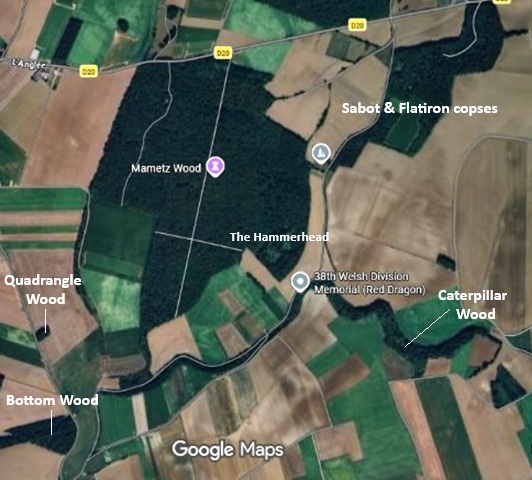
On 5 July, having joined XV Corps, Fourth Army the Division was ordered to take over the line south of Mametz Wood from Bottom Wood to Caterpillar Wood. The same day orders were issued to attack Mametz Wood on 7 July.
Into battle: the 38th (Welsh) Division at Mametz Wood
The Division was caught in a disagreement between General Haig (Commander in Chief) and General Rawlinson (Commander of the Fourth Army of which 38th Division was a part). Haig wanted Mametz Wood captured before any further advance to capture Bazentin Ridge and for the main attack to come from the captured Wood. Rawlinson wanted an attack as soon as possible from positions to the east of the Wood and, if necessary, before the Wood was captured. Haig prevailed.
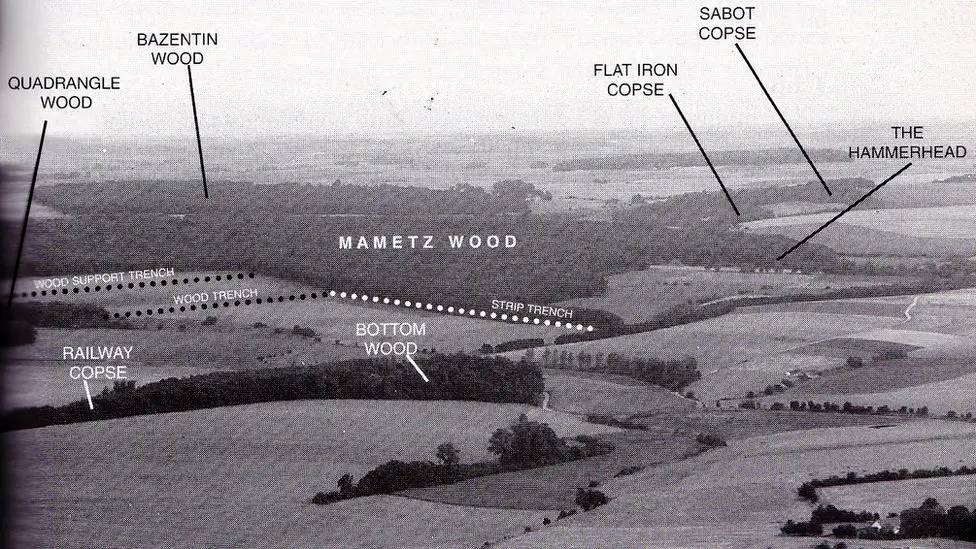
The Division had moved into its position for attack on 5 July and had barely two days to prepare its plans. The strength of the Germans in the Wood was unknown. The Division would be supported by another attack to the west of the Wood by 17th (Northern) Division. However, there was a change of plan for 38th Division made by XV Corps HQ. This led to a change of orders for 115th Brigade which was going to make the first attack. Brigadier Evans OC 115th Brigade had planned for a single battalion frontage to the attack with two battalions in Caterpillar Wood Valley, another in Caterpillar Wood itself and the fourth in reserve a little further back. The second and third battalions would quickly follow the first into the attack. The new orders, which were not received by Brigadier Evans until 11pm on 6 July, were: ‘The 115th Infantry Brigade will have two Battalions in position in CATERPILLAR WOOD by 2 a.m. A third Battalion will be in MONTAUBAN ALLEY, and the fourth Battalion near the LOOP. The last two should be in position by 6 a.m.’ (38th Division War Diary, National Archive WO95/2539/4) The fourth, near the Loop, would be a mile and a quarter SSE of the first attacking battalion. Brigadier Evans OC 115 Brigade believed that, therefore, he had to change his plan for the attack. It is still not clear why Evans decided to change the frontage of the attack from one battalion to two battalions advancing side by side simultaneously. It is possible that he thought that the new Divisional orders placing two battalions in Caterpillar Wood implied an attack on a two-battalion frontage. It is also possible that he thought the new orders from XV Corps, via 38th Division HQ, ‘strung out’ his battalions too far so that the attack would take longer and be less incisive and he may have decided that a two-battalion frontage would deliver more of a punch against the German front line. There is no evidence of communication between Evans and 38th Division HQ or between 38th Division HQ and XV Corps HQ on this matter – though telephone calls may have occurred. Evans was acutely aware of the danger of German machine gun fire from Flatiron and Sabot Copses but had been promised artillery support and was reassured that his men would be protected by a smokescreen laid between them and the Copses. His new orders could not be issued until 2am on 7 July, a few hours before the attack began.
The first attack fails
The attack began at 8.30am. 11 SWB advanced westwards immediately north of Caterpillar Wood towards the Hammerhead in Mametz Wood. 16 Welsh were on their right. Each Battalion covered about 250 metres of frontage.
Even before the attack began German shellfire cut the telephone wires between 115th Brigade HQ and the attacking Battalions. The protective smokescreen did not happen and the troops were exposed to intense German machine gun fire from Flatiron and Sabot Copses – and from Mametz Wood itself. 16 Welsh (Cardiff City) Battalion had advanced over higher ground than 11 SWB and therefore were more visible to the Germans. They had also been placed dangerously close to Flatiron Copse by Brigadier Evans’ change of plan and suffered 280 casualties (Battalion War Diary 7 July, glamarchives.gov.uk). Shortly, German artillery also opened up. About 200-300 metres from the Wood the attack petered out with the survivors taking what cover they could in shell holes. Successive waves in turn came under heavy fire and were pulled back. 10 SWB were ordered forward through the maze of trenches but hampered by mud did not go into action until 2.15pm. The renewed attack failed. An attempt at a third attack was called off by XV Corps HQ. A further attack into the south of the wood with led by 14th RWF was ordered for the night of 8/9 July, but XV Corps HQ insisted that it should be a small-scale reconnaissance raid. In the event the difficulties of getting to the starting position through heavily congested trenches led to its cancellation.
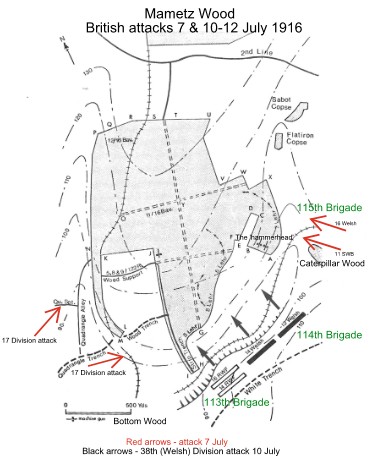
To the west of the Wood 17th (Northern) Division had fared no better.
Haig wrote in his diary 8 July (Ms – not included in Sheffield & Bourne, ‘Douglas Haig – War Diaries and Letters 1914-1918’): ‘The 38th Welsh Division … had not advanced with determination to the attack. General Horne, commanding XV Corps, is enquiring into General Philipps’s conduct as divisional GOC. The artillery preparation was … reported as ‘highly satisfactory’ … ‘
In his diary entry for 9 July, reflecting on the first assault on the 7th, Haig wrote: ‘. . . although the wood had been most adequately bombarded the division never entered the wood, and in the whole division the total casualties for the 24 hours are under 150! A few bold men entered the wood and found little opposition. Deserters also stated Enemy was greatly demoralised and had very few troops on the ground.’
Haig was misinformed: no troops entered the wood – the Germans held it in strength and it was very close to the strongly held German Second Line (only 500 yards away to the north). Deaths among the attacking battalions amounted to 182; total casualties to 511. And, in fact, the performance of the artillery had been extremely poor. 38th Division’s artillery had yet to arrive so artillery support was provided by 7th Division’s guns. Battery commanders were forbidden to be forward observers because of uncertainty as to where the front line was, and their batteries, in any case, had been placed too far back for accurate targeting of the German positions. Brigadier Evans OC 115th Brigade had no authority to order supporting artillery any closer. The promised smokescreen had not materialised and British shells had either fallen short or deep inside the wood instead near the front of it where the German defenders were. [3]
According to the Official History [4] ‘Owing to the high wind, smoke could not be used to screen the movement, which was, however, well supported by trench mortar and machine-gun fire ….’. In fact, Flat Iron and Sabot Copses were beyond the range of the Stokes mortars in Caterpillar Wood though the edge of Mametz Wood was within their range. Flat Iron and Sabot Copses and Bazentin le Grand Wood were within range of 115th Brigade’s machine guns. However, neither these mortars nor machine guns could do more than diminish the German gun fire. Wyn Griffith, then a Captain attached to 115th Brigade for Staff Duties, wrote the following in his memoir ‘Up to Mametz’ (p. 220): ‘There was no smoke screen, for some reason never explained – perhaps someone forgot about it.’ (See also supplementary notes below.) XV Corps had despatched an RE Stokes mortar battery to create the smoke screen but for a still unknown reason this did not occur. 115th Brigade War Diary (National Archive WO-95-2560-1) states that ‘The failure to place a smoke barrage as directed in Divisional Orders materially affected the operations and rendered it [sic] impracticable.’ . The Official History inaccurately claimed that three attacks were made by 115th Brigade on 7 July.
Major General Philipps was dismissed on 9 July – as was General Pilcher of 17th (Northern) Division. Philipps was replaced by Major General Watts (from 7th Division). Before Philipps went, however, he had issued orders for an attack on the southern edge of Mametz Wood by the 113 and 114 Brigades. These orders were cancelled and replaced by those of General Watts. Watts also decided to attack the southern edge of the Wood – but using all three Brigades – putting two into the initial attack with the third close behind.
The second attack – 10 July
Orders for the attack were ready by 5.30pm on 9 July. The attack was to occur less than 11 hours later at 4.15am on 10 July. Not until midnight were Brigade Staffs fully aware of the orders which gave them only 3 hours or so to alert their Battalions and move them into position.
16 RWF led the attack for the 113th Brigade and to their right 14 and 13 Welsh led the attack for the 114th Brigade. 16 RWF advanced straight into intense German machine gun fire. 14 RWF (closely following them) also ran into heavy fire about 200 metres from the edge of the Wood.
On their right a skilfully placed German machine gun on the underside of the Hammerhead caught the leading waves of the 13 Welsh but on the third attempt the survivors of the Battalion managed to enter the Wood. In the centre of the attack the first waves of the 14 Welsh entered the Wood with relatively few casualties. The later waves were not so fortunate and casualties were high. By this time the survivors of 16 RWF had also struggled into the Wood.
Conditions in the wood
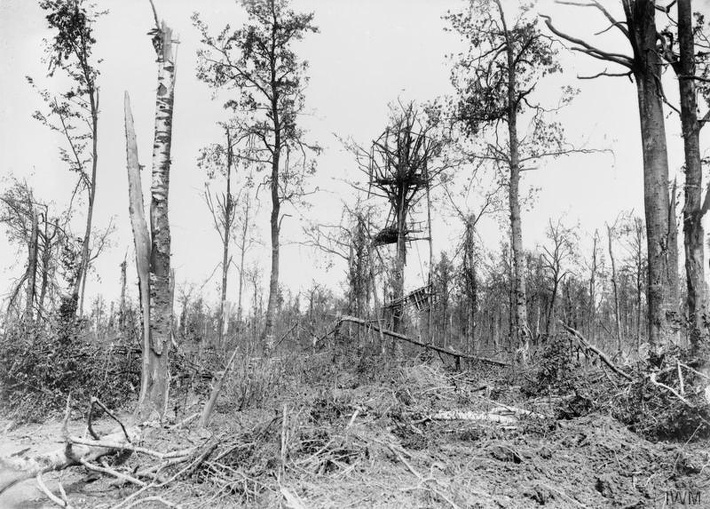
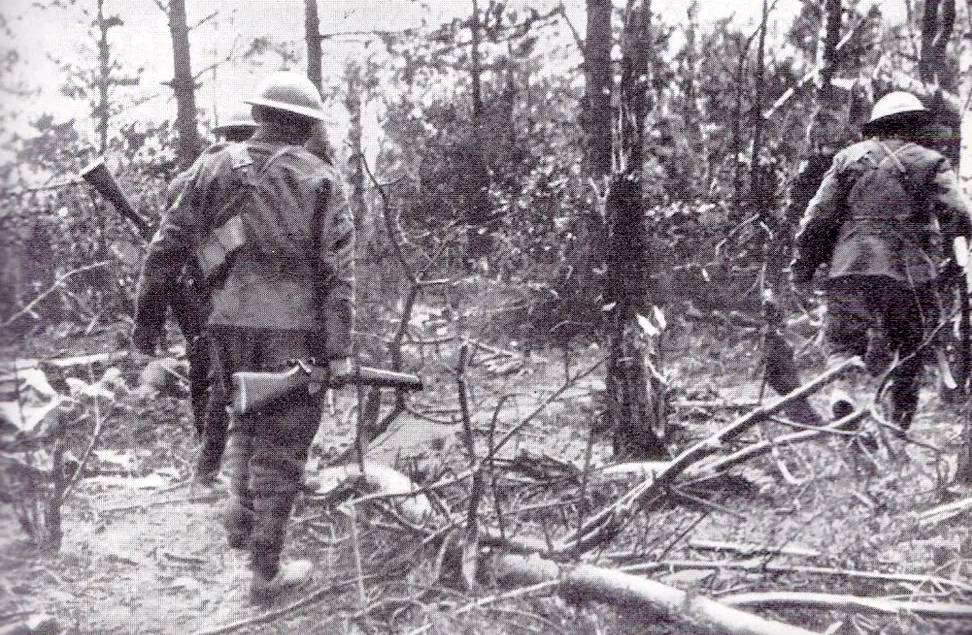
But advancing through the Wood was extremely difficult because of the density of the undergrowth and the strength of the German positions. Mametz Wood was a cultivated wood of hornbeams, limes, willows, oaks and beeches, bramble and hazel bushes, with distinct cross-rides and paths. Two years of neglect had rendered it thick with dense undergrowth in parts – except for the rides and clearings which the Germans used to reinforce their front line and to hide artillery. Artillery fire had brought down many trees, making rapid progress impossible and the terrain easy to defend. Telephone lines were cut by shellfire and communications became reliant on runners, themselves often caught in artillery barrages. In such conditions it was extremely difficult to maintain control over troops. Visibility was very restricted, many officers (the only ones with compasses) had become casualties in the initial assault, and it was no easy matter for troops to work out in which direction they should be heading or where the enemy might be hiding. Soldiers from different units became jumbled together, there were casualties from artillery and small-arms ‘friendly fire’ and a shortage of fresh water became critical during a day when the temperature reached 82 degrees Fahrenheit. [5] These difficulties were recognised in the Official History as was the exhaustion of the troops towards the end of the battle. [6]
There was some panic and confusion Captain J. Glynn Jones 14 RWF rallied troops who had turned back. Many of these men had simply lost direction, were confused, demoralised, and thoroughly disorganised. As a result he had to draw his revolver to restore order. Gathering the men together he led them back into the wood. [7]
More troops are pushed into the wood
Quite soon General Watts realised that as the remaining Battalions of the 113th and 114th Brigades had also entered the Wood all the troops in the initial attack had been swallowed up and little progress was being made. He therefore sent in the two Battalions from 115th Brigade which had suffered least on 7 July – 17 RWF and 10 SWB. Progress slowly resumed. By the end of 10 July most of the Wood was in the hands of 38 (Welsh) Division.
On 11 July, 16 Welsh and two companies of 11 SWB were brought up into the Wood and an advance was made to within 150-200 metres of the northern edge of the Wood (German estimate). As they approached the northern edge of the Wood they came under intense German machine gun and shellfire. Then, on the afternoon of 11 July the advance by the Welsh was halted for a while by a heavy bombardment from British guns. 115th Brigade War Diary: ‘…. as communication wires had been broken by the enemy’s shelling it was impossible to stop it.’ Also, some of the smaller British guns were now firing at the limits of their range and their shells fell short amongst the Welsh soldiers causing casualties. [8]
The wood is captured
German resistance continued until 8pm on 11 July when evacuation was ordered. The same day arrangements were made for the Welsh Division to be withdrawn from the battle. The last Welsh unit left the Wood at 6.30 am on 12 July to be relieved by 21st Division. 115th Brigade was last to leave the area and did so at dawn on 13 July.
Mametz Wood had been captured – and its capture can be attributed wholly to the 38 (Welsh) Division.
Casualties
The Division’s casualties for the period 7-12 July totalled nearly 4,000 (190 officers; 3,803 OR) including about 600 killed and 600 missing. The worst Battalion casualties were those of the 16th Welsh (Cardiff City) Battalion which had fought in the 7 July battle and then in the Wood itself on 11 July. According to battalion war diary entries for 7 and 12 July, it suffered more than 350 casualties – almost half its fighting strength.
‘On the Somme the Cardiff City Battalion died’ – Private W B Joshua, 16th Welsh.
William Joshua was one of a Lewis gun team in Number 4 Platoon, A Company, leading the attack.
He was wounded on 7 July.
Criticism of the 38th (Welsh) Division
Much criticism, then and subsequently, was heaped upon Major General Ivor Philipps. A Pembrokeshire landowner, he had been an Army officer but had retired 10 years before the war and was Liberal MP for Southampton. He was hardly the obvious choice for command of the newly formed Welsh Division. However, he and his family were supporters of Lloyd George who had appealed for the creation of ‘a Welsh army in the field’ (19 Sept 1914) and whose influence had largely brought the Welsh Division into existence. Ivor Philipps’ return to the Army and his promotion were therefore extremely rapid. Of all thirty officers who were first appointed to command the Kitchener divisions, Philipps stands out as being very different. He was a serving MP and the others were not. They were nearly all Major Generals before the war started; he was not. Most had fought in the Sudan and South Africa; Philipps had not. Although he had served in India, he was not there when Lord Kitchener was in command of the Indian Army. Philipps was also financially independent, as he was chairman and a board member of a number of companies. The higher echelons of senior command structure of the army contained a band of officers who had earned their promotions through years of service. There can be little doubt that someone leapfrogging over the tried and tested system of seniority to such a high position would not have been looked upon with high regard. Furthermore, Philipps’ superiors may have felt undermined by having an officer with such a well-placed political patron who might challenge their authority, whether implied or otherwise. [9]
There had been a secret report:
38th Division 1115 SECRET. Training of the 38th Division – December 1915 and September 1916.
‘On 1/12/15 the W.O. say that the 38th (Welsh) Division is a little behind other Divisions recently sent to France in the matter of efficiency …. There is a D.O. letter from General Paget (G.O.C. Salisbury Training Centre) to the same effect.’
When the Welsh Division had left XI Corps, First Army, their Corps commander, Lieut. General Haking, reported to Haig ‘that the Division were good but that he had no confidence in Major General Philipps as a Commander.’ Whatever the reason for Haking’s comment, taken together with the secret report, it suggests that Philipps’ position was already undermined before he left for the Somme. [10]
Philipps was criticised for planning piecemeal ‘one Brigade at a time’ attacks (although he had planned a two brigade attack for 9 July) and for the failure of the attack by 115th Brigade on 7 July. However, in his planning he was only carrying out the orders of Lieutenant General Horne at XV Corps headquarters. Although he lacked experience, Philipps had a very clear understanding of the effects of machine gun fire on advancing infantry and unlike many, perhaps most, generals at this stage in the campaign on the Somme was determined to minimise casualties. He made it known that he did not wish attacks to be pressed home in the face of machine gun fire. In such circumstances, battalions were instructed to return to the starting line until an artillery bombardment had been carried out on the enemy machine gun positions. Major General Watts, Philipps’ successor, had no such reservations and Welsh soldiers had to suffer the consequences. Whatever Philipps may or may not have been as a general he was certainly a humane one.
Lieut. Col. J H Boraston (co-author with George A B Dewer) of ‘Sir Douglas Haig’s Command’ 1922 blamed the Division for failing to capture Mametz Wood quickly and claimed that its failure enabled the Germans to reinforce their positions thus making subsequent British attacks more difficult and costly. Boraston had been Haig’s private secretary and it is very probable that Haig influenced the views expressed in this book. [11]
Haig’s plans for a great ‘breakthrough’ on 1 July had been frustrated but he was still looking for speedy advances in more limited engagements. General Rawlinson, OC Fourth Army, was more cautious. It is possible that he could have pushed his army to have advanced more quickly on a broader front but he was, doubtless, conscious of the catastrophic losses on that first day and conscious of the limits of his army’s strength. He was also aware of Haig’s insistence that Mametz Wood be captured before any further advance to capture Bazentin Ridge behind it be made. It was illogical to blame the performance of one Division for the difficulties experienced by an army consisting of 15 Divisions (as it was on 1 July). Nevertheless, Rawlinson thought he should find a culprit. Rawlinson wrote on 14 July to the Chief of the Imperial General Staff, General Sir William Robertson, that ‘only one Division, the 38th (Welshmen) turned out badly’, adding ‘if it had not been for their failure (?!) at Mametz Wood we would have brought off the action of today (the attack on Bazentin Ridge) at least 48 hours sooner.’ He reiterated this point to Lord Derby on 1 August, noting that ‘it makes me very sick to think of the ‘might have beens’’. [12]
However, there were criticisms from within 38th Division. On 16 July Brigadier General Price-Davies[18] OC 113th Brigade commented on his troops’ ‘demoralisation’ in the face of fire from heavy artillery and small arms which increased towards the evening on 10 July which culminated in a ‘disgraceful panic during which many left the wood’ while others seemed incapable of carrying out orders. ‘A few stout-hearted Germans would have stampeded the whole of the troops in the wood.’
Major G P L Drake-Brockman wrote a letter to Brigadier Edmonds, the author of the ‘Official History’ on 7 February 1930 in response to his request for information from former officers. [13] Volume II for 1916[19] which covered the attack on Mametz Wood was then in preparation. Drake-Brockman was a regular officer who had been transferred from 7th Division HQ to 38th Division HQ on 8 July. The letter appears to contain factual inaccuracies which (taking a charitable view) may have occurred because it was written fourteen years after the action at Mametz Wood.
In his first paragraph he makes clear that he wished ‘…. to show that the disrepute into which the Div. fell as a result of the attack on MAMETZ WOOD was not primarily due to any fault of the fighting troops, who were really good material & did very well later in the war.’ (Drake-Brockman’s emphasis) He wrote: ’The 38th Division suffered from having a number of senior officers who owed their appointments to their political positions or to being friends of Mr Lloyd George.’ Major General Philipps was: ‘…. Ignorant, lacked experience and failed to inspire confidence.’ He criticised Philipps for not wishing attacks to be pressed home in the face of machine gun fire and for carrying out piecemeal attacks, one brigade at a time. ‘By the time, therefore, that General Watts took over command of the division on 9 July …. the infantry were considerably discouraged and exhausted after three days fighting of this nature.’ However, while this was true of the troops in 115th Brigade, the troops of 113th and 114th Brigade were yet to be sent into action. Also, 115th Brigade had fought in two attacks on one day, not three days. Drake-Brockman argued that these ‘half-hearted’ attacks encouraged the Germans to reinforce their positions in the wood and thus ‘ …. rendered the final attack a very much more formidable affair than it would have been three days earlier.’ Drake-Brockman concluded: ‘I served with the 38th Division for ten months, but for the whole of the period the stigma of Mametz Wood stuck to the division and it was common talk in the British Expeditionary Force the 38th Division had ‘bolted’ and the fact remains that the Division was never employed again on the Somme.’ (Author’s emphasis.)
Flaws in the criticism
Drake-Brockman had arrived at 38th Division on 8 July. Major-General Philipps left the Division on the morning of 9 July. Drake-Brockman, therefore, seems to have formed his personal assertions about Philipps from barely one day’s experience of him in command – and there is no evidence that he actually met him. In any case, it was unlikely, as a junior officer (a Captain as he was then) that Drake-Brockman could have had the knowledge that he claimed to have had, so his views must be based on hearsay. Also, he seems to have been unaware of the fact that Major General Philipps had been carrying out the orders of Lieutenant General Horne OC XV Corps. Siegfried Sassoon with 1 RWF in 7th Division made a very brief mention in ‘Memoirs of an Infantry Officer’ (page 71) of ‘wild rumours’ of what had happened in the battle for Mametz Wood: ‘If there had been a disastrous muddle, with troops stampeding under machine-gun fire, it was twelve miles away and no business of ours ….’ Sassoon’s tone is clearly dismissive and suggests some degree of scepticism on his part. An earlier comment (see ‘The Welsh as Curiosities’ below) would suggest that the ordinary troops were not to blame for the confusion of the battle but were its hapless victims. It is difficult to determine how widespread the story of the Welsh ‘bolting’ from Mametz Wood was in XV Corps or the army at large. It is possible that Drake-Brockman himself was the originator of the ‘wild rumours’. He had been at 7th Division HQ and would still have had contacts there, and when he was at 38th Division HQ he would have known something of the crisis in the attack on Mametz Wood. His motivation for the lengthy statement he made to Edmonds may have been simply a dislike of Lloyd George – a dislike shared by many officers of his background – and in 1930 Lloyd George was still a political force, albeit much diminished from the height of his power at the end of the war.
Drake-Brockman’s assertion ‘that the Division was never employed again on the Somme’ was true (at least for 1916) – but not because it was mistrusted. It had lost so many men that it needed rebuilding and suitable re-training which was achieved by Watts’ successor, Major General Blackader. The following year it reached all its objectives on the first day of the Third Battle of Ypres, while other divisions floundered in the mud. In the Second Battle of the Somme, 1918, under the command of Major General T A Cubitt the Division advanced 15 miles from 21 August to 5 September, fighting all the way from the line of the River Ancre (Hamel-Albert) to the Canal du Nord. On the way, 113 Brigade captured Mametz Wood in one day’s action, 25-26 August.
The rumour that the Welsh troops had ‘bolted’ was, of course, absurd. There was chaos and confusion and on 10 July many troops had lost their officers and were bewildered, lost and frightened, but there was no concerted mass effort to flee the wood. Captain Wilfred Miles who compiled Volume II of the Official History for 1916 did not repeat Drake-Brockman’s assertions and only mildly reflected those of Price-Davies: ‘Some men pressed forward, others drifted to the rear, and there were wild bursts of firing as the confused struggle continued amid the undergrowth and fallen trees.’ [14] ‘The troops had required much leading to keep them in any sort of formation ….’ [15] Mametz Wood was captured – and it had been captured exclusively by the 38 (Welsh) Division. Far from having ‘bolted’ the Welsh fought tenaciously. The ferocity of the conflict was recorded by Captain Basil Liddell Hart, who moved through the wood on the 14 July. His battalion dug itself in along the northern edge of the wood, ‘which was thickly lined with British dead’, and ‘indeed, in many places in the wood the dead were ten deep though they were mostly Germans’. He described the wood as a ‘miasma of death and decay’. [16] Captain Robert Graves was sickened by what he saw in Mametz Wood and wrote that there, where there was ‘not a single tree … left unbroken’, he found among the horrific wreckage, ‘a certain cure for lust of blood’ in his poem, ‘A Dead Boche’.
The criticism of 38th Division, to put it mildly, seems entirely misplaced. The Division was, in fact, being directed from above by the orders of Lieut. General Horne OC XV Corps (of which 38 Division was a part). It was unfair to blame Major General Philipps for making piecemeal attacks, one brigade at a time, when he was simply carrying out the orders of Lieut. General Horne at XV Corps HQ. It was Horne who ordered a one brigade attack on 7 July. Philipps was not permitted to send 113th Brigade to assist this attack. As dictated by Horne, 113th Brigade was to stand ready to enter the wood from the south after other troops had penetrated from the east (115th Brigade – 11 SWB & 16 Welsh) and from the west (17th Division).
Major General Watts seems to have avoided criticism because, eventually, 38th Division captured the wood. In 1915 Sir Douglas Haig had referred to Watts, in his diary (26 Feb. 1915), as a ‘plucky little man, with no great brains’. With minimal and hasty planning, Watts’ tactic was simply to smash 38th Division straight into the wood pushing in more and more battalions in order to maintain progress. Although he quickly lost the location of his men, and could not communicate effectively with their commanders, he maintained the artillery bombardment of the wood for a set time and many soldiers were killed by ‘friendly fire’ because their officers were unaware of this. Initially, the gunners had been hampered by their inability to see the ‘fall of shot’ in the dense woodland and by their shells being prematurely detonated by tree branches. Also, the gunners knew their gun barrels were worn from continuous use from seven days before the start of the campaign on 1 July and knew, therefore, that their fire was inaccurate. Many of the Welsh were killed by shells falling short. [17]
Of all the woodlands of the Somme, Mametz Wood was the largest and one of the most easily defensible. Delville Wood, much smaller, resisted capture for six weeks and High Wood held out for over two months against sustained attacks by numerous divisions. By comparison the five-day period which the Welsh Division took to capture Mametz Wood is creditably short. ‘The capture of Mametz Wood was not a tidy affair: the fighting was confused and there were moments of near panic … but the Welsh division, inexperienced and inadequately trained, pushed the cream of Germany’s professional army back about one mile in most difficult conditions, an achievement which should rank with that of any division on the Somme ….’ Colin Hughes: ‘Mametz – Lloyd George’s’ Welsh Army’ at the Battle of the Somme’ Page 151.
Y Ddraig Goch ddyry cychwyn.
Free translation:
The Red Dragon leads the way
Supplementary notes
The Welsh as ‘curiosities’
Siegfried Sassoon, in Memoirs of an Infantry Officer (pub. Faber & Faber 1930, pages 61–3), referred to the 14th RWF as ‘…. unseasoned New Army troops …. a jostling company of exclamatory Welshmen …. mostly undersized men …. a forlorn crowd of khaki figures …. doomed …. half trained civilians …. Two days later the Welsh Division, of which they were a unit, was involved in massacre and confusion.’ His journal entry made at the time is not disrespectful – see Cambridge University, Cambridge Digital Archive, Siegfried Sassoon’s Journal, Folio 44, 6 July 1916. Sassoon came to admire the Welshmen for their bravery and stoicism as did Robert Graves, a fellow poet and brother officer in the RWF. [21]
Undeniably disparaging remarks were made by 2nd Lieut. Raymond Asquith[20], a very newly arrived Grenadier Guards officer, and the son of the Prime Minister. In December 1915, he described a platoon of the R.W.F, as ‘little black spectacled dwarfs with no knowledge, no discipline, no experience, and a surplus of nerves and vocabulary’. Later, in January 1916, he referred to them as a collection of ‘tiny little tots, utterly unfit for anything more strenuous than a children’s ball’.[22]
But they sang hymns beautifully! And their Grammar School educated Welsh officers would also have had some familiarity with French and Latin at least equal to that of their public school educated brother officers.
Asquith was killed in a failed attack on Ginchy in September.
Shells falling short
The Welshmen at Mametz were sorely tried by shells falling short. In Chapter 7 of Up to Mametz (first pub. Faber & Faber 1931), Captain Llewelyn Wyn Griffith (15 RWF, 38th Division) Acting Brigade Major, 115th Brigade [23] in the second attack, describes the scene in the Wood in some detail: the shattered trees, the bursting shells, the litter of discarded equipment, the mangled corpses of the dead – an experience that stayed with him all his life and came back to him in snatches of nightmare. Before 115th Brigade could make an attack to clear the wood (11 July) it came under fire from British artillery falling short of the German trenches. This fire not only pinned down the Brigade, but also prevented any prospect of a surprise attack. Runners were sent back to get the artillery fire shifted. One of these runners was Wyn Griffith’s younger brother, Watcyn. Watcyn got through with his message, but on the way back he was hit by a shell and killed at once. Wyn Griffith learned of Watcyn’s death within an hour – and clearly blamed himself. As Brigade Major, he had ordered the signals officer to get a message through and therefore, in his own words ‘I had sent him to his death, bearing a message from my own hand, in an endeavour to save other men’s brothers.’ Watcyn’s body was never found. By a dreadful irony, although the runners got through, the mis-aimed barrage stopped not because of their messages but as part of the OC's (Maj. Gen. Watts') ‘plan’ – which had not been communicated to 115th Brigade.
Wyn Griffith was the subject of an address delivered by Major General Jonathan Riley, formerly CO 1 Battalion Royal Welch Fusiliers, to the Honorable Society of Cymmrodorian in January 2014.
Wyn Griffith's mention of the two 'most stupid soldiers' he had ever met is on Page 132. Brigadier General Price-Davies OC 113 Brigade was the second most stupid - ‘too dull to be frightened' according Griffith. The first was was Brigadier Evans’ successor as OC 115 Brigade, Brigadier General Carlos Joseph Hickie. Griffith described him as ‘lazy, greedy, a bore in the mess' and mean with the treats he got sent from Fortnum and Mason.
What the Welsh were up against
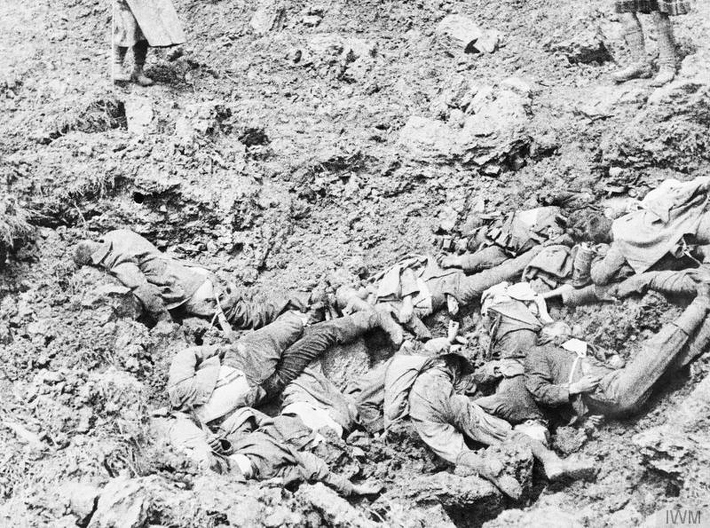
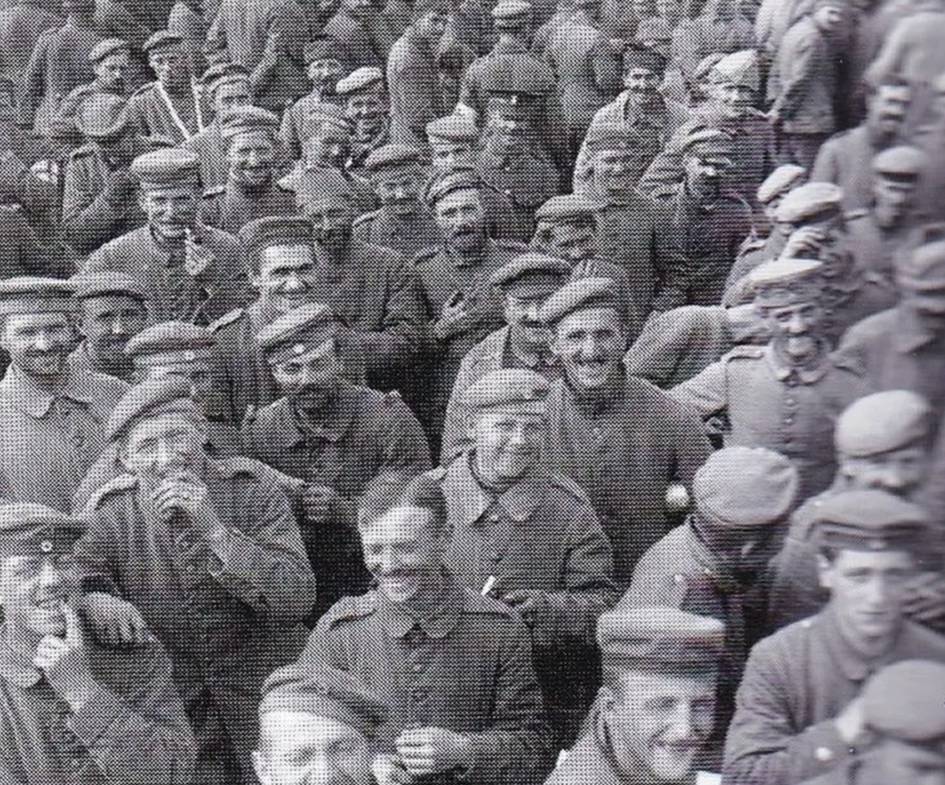
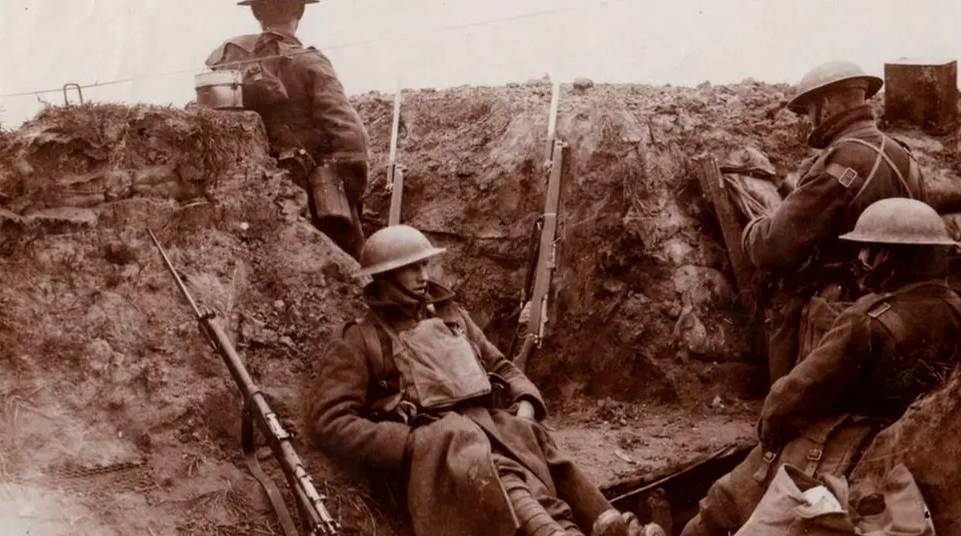
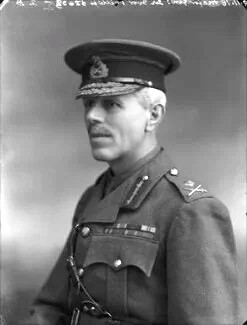
Top Brass
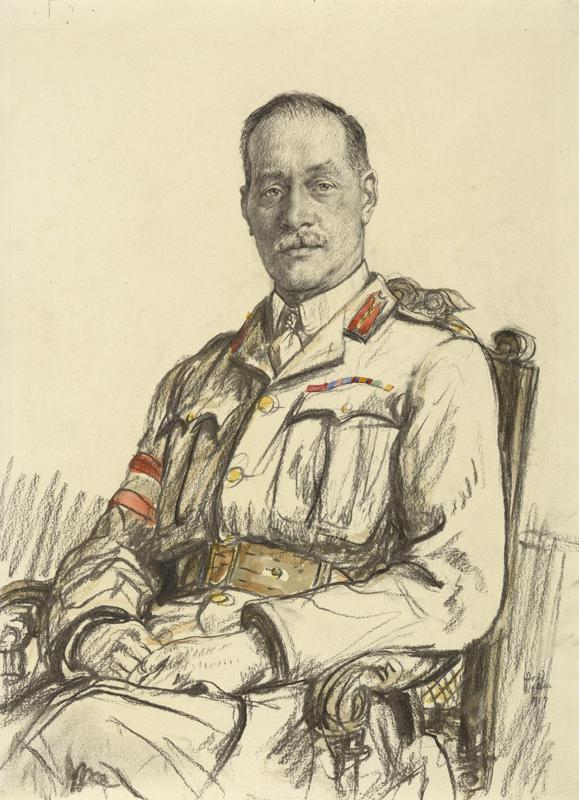
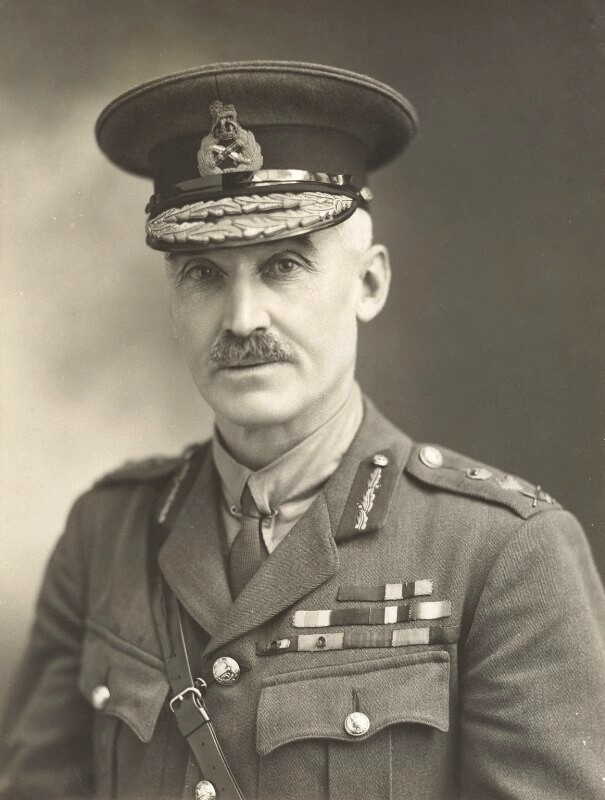
Mametz Wood today
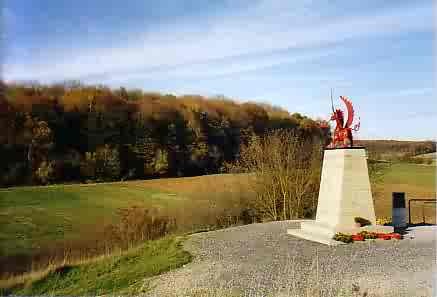
Welsh Dragon Memorial, Mametz Wood, overlooking the ‘Hammerhead’. In the distance, to the right of the photograph, are Flatiron and Sabot copses. 11th SWB and 16th Welsh attacked from the right towards the ’Hammerhead’.
The view of Mametz Wood from the Memorial is limited – it is too close to the wood. A much better view is from Dantzig Alley CWGC Cemetery on the D64 south of the wood where there is a viewing platform from which there is a complete ‘west to east’ view of the wood. It is possible to enter the ‘central ride’ of the wood from the D20 which runs along the north edge of the wood for about 300 metres. From the ‘central ride’ a German communication trench (‘Middle Alley’) ran north up to their Second Line.
In profound remembrance
In memory of three men of 16th (Cardiff City) Battalion, Welsh Regiment, from my village, who were killed in the battle for Mametz Wood:
Private John Ernest Collier K. 7 July 1916. Missing. Commem. Thiepval Memorial, Pier and Face 7A & 10A
Private David John Williams K. 7 July 1916. Missing. Commem. Thiepval Memorial, Pier and Face 7A & 10A
Captain John Lewis Williams Mortally wounded 7 July 1916; died 12 July 1916. Buried Corbie Communal Cemetery IC31.
‘…. I ddwys goffau
Y rhwyg o golli’r hogiau.’
Free translation:
‘…. in profound remembrance
Of the lads torn away.’
Quoted by Wyn Griffith in the dedication of ‘Up to Mametz’ to his brother, Watcyn. It is an extract from a poem (englyn) by Robert Williams Parry (1884-1956) used as an epitaph on War Memorials in Wales.

Even on the finest most carefully planned memorials there can be mistakes. On the outer frieze of this one the inscription reads:
I FEIBION CYMRU A RODDES EU BYWYD DROS EI GWLAD YN RHYFEL MCMXIV - MCMXVIII
(To the sons of Wales who gave their lives for their country in the War 1914 – 1918)
I am told that the ‘EI’ between ‘DROS’ and ‘GWLAD’ should be spelled ‘EU’.
References and notes
The narrative of this article is drawn substantially from Colin Hughes’ masterpiece – ‘Mametz – Lloyd George’s ‘Welsh Army’ at the Battle of the Somme’ pub. Gliddon Books 1990. Pages 85-151. A highly regarded, deeply heartfelt, highly illuminating work of research. Other, more recently published sources, are quoted. See below.
Also:
- ↑ Munby, Lieutenant Colonel J E ‘A history of the 38th (Welsh) Division’ pub. Hugh Rees Ltd. 1920. INTRODUCTION.
- ↑ National Museum of Wales.
- ↑ Hutchison, David ‘Young Gunner – The Royal Field Artillery in the Great War’ pub. Matador 2016. Reveals inadequate planning and poor communications. The gunners, it seems, were never in the right place and ‘one step behind’ throughout the battle. Pages 141-3. The subject of the book – Colin Hutchison – was present at the battle as Acting Captain in command of 105 Battery (18 Pounder field guns), 22nd Brigade, RFA.
- ↑ Edmonds, Sir J E ‘Military Operations France and Belgium 1916 Vol. II’ pub. Macmillan and Co., London 1938. Page 31.
- ↑ Williams, Chris ‘A Question of Legitimate Pride? The 38th (Welsh) Division at the Battle of Mametz Wood, July 1916’ pub. Welsh History Review, Cardiff University Press 2017. Page 732.
- ↑ Op. cit. 3. Edmonds. Pages 49 and 53.
- ↑ Robinson, Peter ‘A Welsh Response to the Great War: The 38th (Welsh) Division on the Western Front 1914–1919’ M.Phil. thesis, Cardiff University 2017. Page 101.
- ↑ Op. cit. 2. Hutchison. Pages 143-5.
- ↑ Op. cit. 6. Williams. Page 29.
- ↑ Ibid. Pages 62 and 73.
- ↑ Winter, Denis ‘Haig’s Command – A Reassessment’ pub. Penguin 1992. Pages 231-2.
- ↑ Op. cit. 4. Williams. Page 734.
- ↑ Op. cit. 6. Robinson. Pages 121-6.
- ↑ Op. cit. 3 Edmonds. Page 52.
- ↑ Op. cit. 3 Edmonds. Page 53.
- ↑ Op. cit. 6. Robinson. Page 142.
- ↑ By February 1917, Watts had been promoted to command XIX Corps. During the battle of Passchendaele his poor handling of both the 16th (Irish) Division and the 36th (Ulster) Divisions at Langemark inflicted enormous casualties on them.
- ↑ Price-Davies was described as the ‘second most stupid soldier’ he had ever met and ‘too dull to be frightened’ by Wyn Griffith, a Captain in 113th Brigade, attached to 115th Brigade for Staff Duties and from 11 July Acting Brigade Major 115th Brigade. However, by 20 July Price-Davies, having discovered the difficulties encountered by troops of other Divisions attacking Trones Wood and High Wood, had second thoughts and wrote to 38th Division HQ that he may possibly ‘not have given my brigade full credit for what they did in Mametz Wood.’ Incidentally, Griffith thought that ‘far and away the most stupid soldier’ he had ever met was Brigadier Evans’ successor as OC 115th Brigade: Brigadier General Carlos Joseph Hickie. Griffith described him as ‘lazy, greedy, a bore in the mess’ and mean with the treats he got sent from Fortnum and Mason. (See also the ‘most stupid soldiers’ reference in the Supplementary notes.)
- ↑ The volume was published in 1938.
- ↑ Asquith was a barrister and a distinguished Oxford scholar. He had been a member of a fashionable group of intellectuals known as the ‘Coterie’, which included Patrick Shaw-Stewart, Hugo Charteris, Julian Grenfell and Edward Horner – all killed in the war. His contemporaries found him clever but rather arrogant, cold, cynical and aloof. A survivor of the ‘Coterie’ was Alfred Duff Cooper DSO, later a politician and Haig’s official biographer.
- ↑ Op. cit. 4. Williams. Page 733.
- ↑ Op.cit. 6. Robinson. Page 55. See also ‘Raymond Asquith: Life and Letters’ John Jolliffe (Ed.) (London, 1987, pages 227-31).
- ↑ Griffith, Wyn ‘Up to Mametz’ repub. Gliddon Books 1988. Pages 231-7; 242-5. Griffith finished in the war as a permanent GSO III on the General Staff of II ANZAC Corps. He was Mentioned in Despatches three times (the first, in November 1916, for his actions at Mametz Wood), awarded the Croix De Guerre in 1918 and the OBE (Military) in 1919. See also, a brief memoir ‘The Pattern of One Man’s Remembering’ in Panichas, George A, ‘Promise of Greatness’ pub. John Day, New York 1966. Deeply moving. Clearly, the war did not end for Wyn Griffith in 1918.
Not used as a source but highly recommended: Jonathan Hicks ‘The Welsh at Mametz Wood’ pub. Y Lolfa, Talybont, Ceredigion 2016. Particularly informative – Chapter 9: The Survivors Accounts; Chapter 10: The German Perspective.
Becoming a member of The Western Front Association (WFA) offers a wealth of resources and opportunities for those passionate about the history of the First World War. Here's just three of the benefits we offer:

Identify key words or phrases within back issues of our magazines, including Stand To!, Bulletin, Gun Fire, Fire Step and lots of others.

The WFA's YouTube channel features hundreds of videos of lectures given by experts on particular aspects of WW1.

Read post-WW1 era magazines, such as 'Twenty Years After', 'WW1 A Pictured History' and 'I Was There!' plus others.


