
The RAF at the Battle of Amiens, 8 - 11 August 1918
In the summer of 1918, after the German Spring offensives had ground to a halt, preparations for a counter-offensive commenced. In this, the British Fourth Army and the neighbouring French First Army planned a major attack along a 28-mile sector in front of Amiens. The immediate strategic objective was to push the Germans east to remove the vital communications centre of Amiens from the range of long-range artillery.
The German Army’s fortifications in this area were weak, lacking the concrete bunkers necessary to withstand a concentrated artillery bombardment.
Allied Preparations and Deception
The Allies undertook meticulous efforts to conceal their massive build-up. The British Fourth Army was reinforced with five infantry divisions, two cavalry divisions, and nine armoured battalions comprising 462 heavy and 72 light tanks, supported by an additional 1,000 artillery pieces. Nearly 300 extra trains were routed into the area.
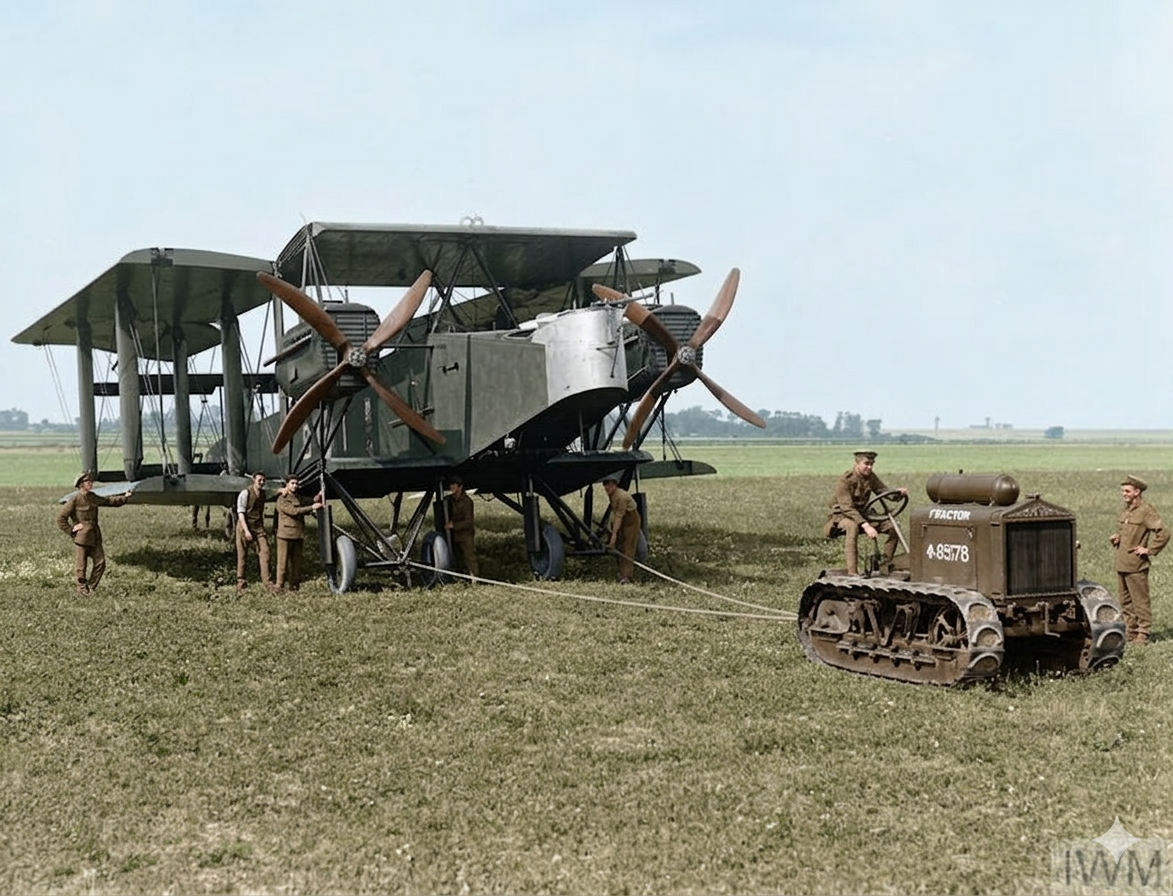
To mask these movements, the Allies capitalised on poor weather in early August. When the skies cleared on 7 August, Royal Air Force (RAF) fighters established rigorous barrier patrols to blind German aerial reconnaissance. In a notable use of acoustic deception, twin-engine Handley Page 0/400 bombers flew night patrols over the front lines; while they dropped bombs, their primary mission was to use their engine noise to drown out the mechanical clatter of British tanks moving into assault positions.
The Balance of Air Power
The offensive was supported by an unprecedented concentration of Allied air power, which vastly outnumbered the defending German Air Service.
British Numbers
| Single-seat fighters | Sopwith Camel, Sopwith Dolphin, SE 5A | 376 |
| Fighter-reconnaissance | Bristol Fighter F2B | 75 |
| Day bombers | DH 4, DH 9 | 147 |
| Night bombers | Handley Page 0/400, F.E.2b. | 92 |
| Corps (army co-operation) aircraft | RE 8, Armstrong Whitworth FK 8 | 110 |
| 800 |
German Numbers
| Single -seat fighters | Fokker D VII, Pfalz XII, Albatros DIII | 140 |
| Bombers | AEG G4 | 36 |
| Ground attack aircraft | Halberstadt CV, Junkers J.1, AEG J1 | 18 |
| Corps (army co-operation) aircraft | as 'ground attack' plus LVG C.VI, DFW CV | 171 |
| 365 |
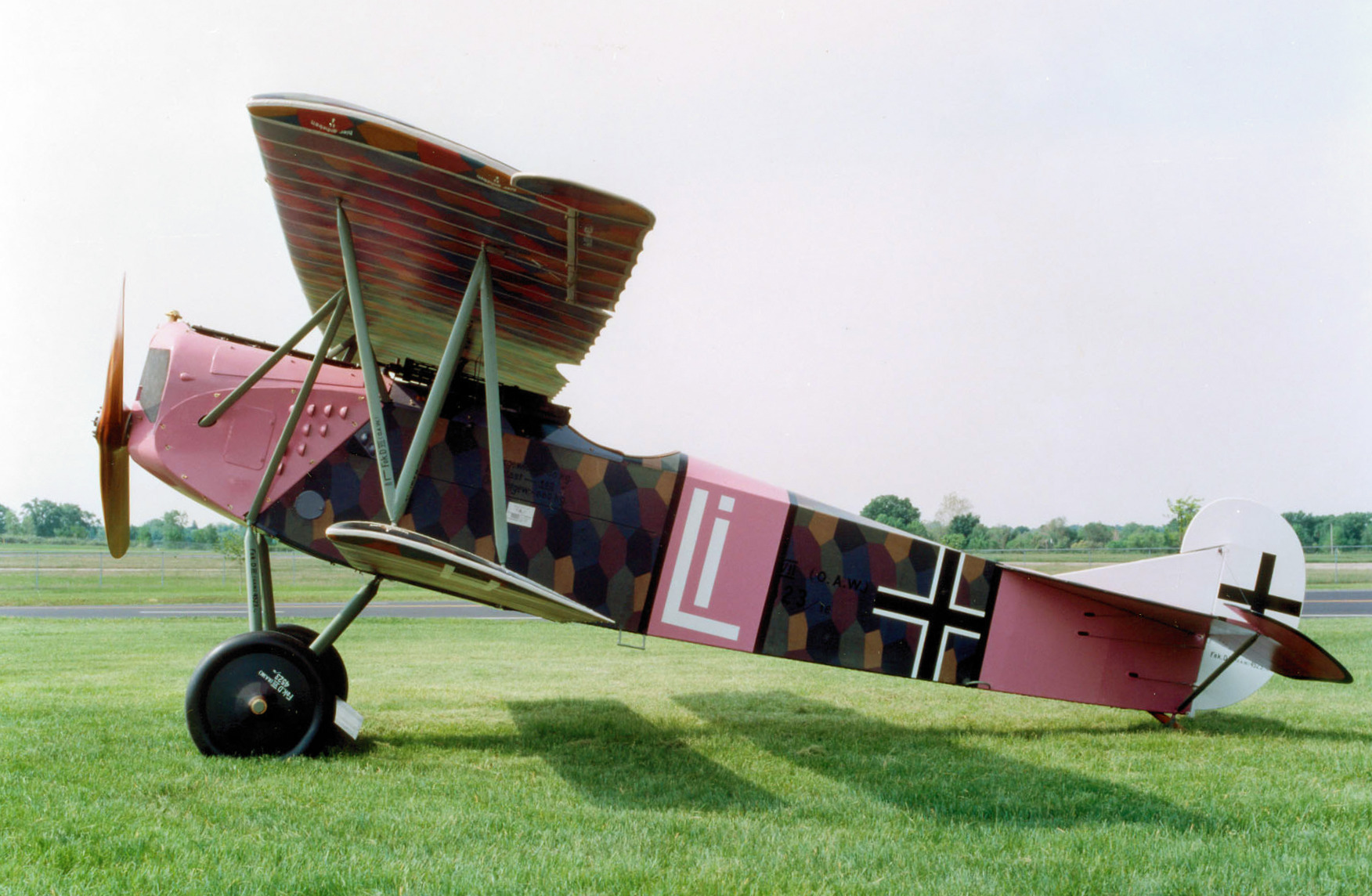
Despite the severe numerical disadvantage, the German Air Service possessed qualitative advantages in specific areas. The newly introduced BMW-engined Fokker D.VII was a formidable opponent with an unmatched climb-rate.
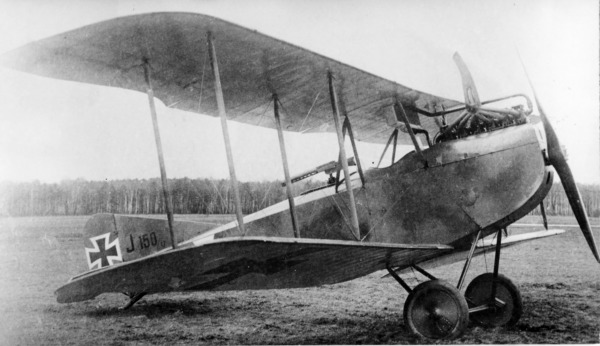
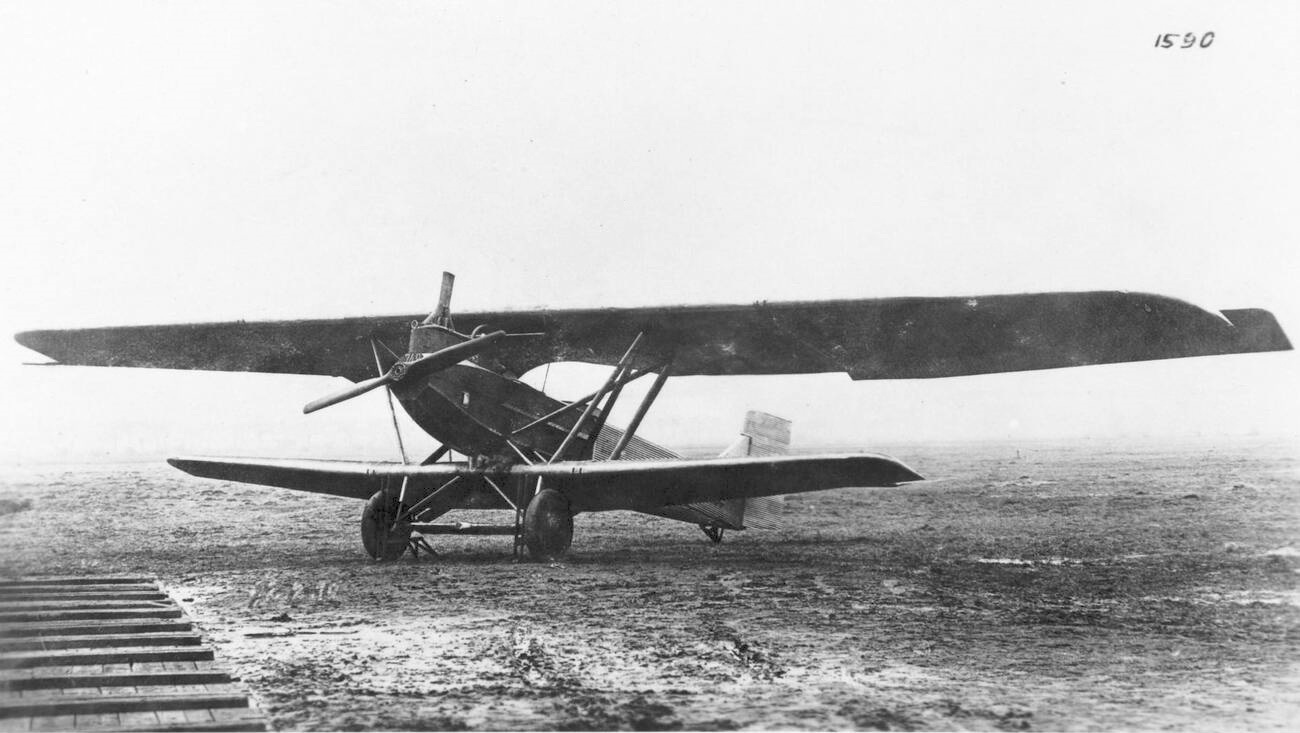
Additionally, the Germans deployed armoured aircraft (such as the AEG J-1 and Junkers J-1) which featured 5mm steel plating, allowing them to operate at low altitudes with near impunity against standard rifle-calibre fire.
Conversely, the German war effort was suffocating under a four-year Allied naval blockade. German pilots were critically short of fuel, copper, rubber, and brass, often scavenging downed Allied aircraft for essential materials simply to keep their own squadrons operational.
Ernst Udet, the second-highest scoring German ace of World War I wrote in his 1935 autobiography, Mein Fliegerleben (published in English as Ace of the Iron Cross) the following, which vividly describes the desperate situation of the German Air Force during the final months of the war in 1918.
The strain of war increased from day to day. For every one of our machines which took off, five enemies did the same.
Should one of them be brought down on our side of the lines, we pounced upon it and eagerly seized all instruments and articles of nickel and brass, metals which had long ceased to exist in Germany.
Against these abundant supplies at the disposal of the enemy, we had nothing save our sense of duty and 4 years of fighting experience.
The RAF Strategic Plan
The RAF's operational framework for the Amiens offensive was highly ambitious, extending beyond standard air superiority and artillery direction. The core directives included:
• Airfield Suppression: Day bomber squadrons were to strike main German airfields (Moislains, St Christ, Bouvincourt)[1] at dawn.
• Tactical Interdiction: Eight fighter squadrons (approx. 150 aircraft) were assigned to execute low-level bombing and strafing runs against moving enemy troops.
• Infrastructure Disruption: Evening raids were planned against railway stations at Peronne, Chaulnes, and others to delay German reinforcements.
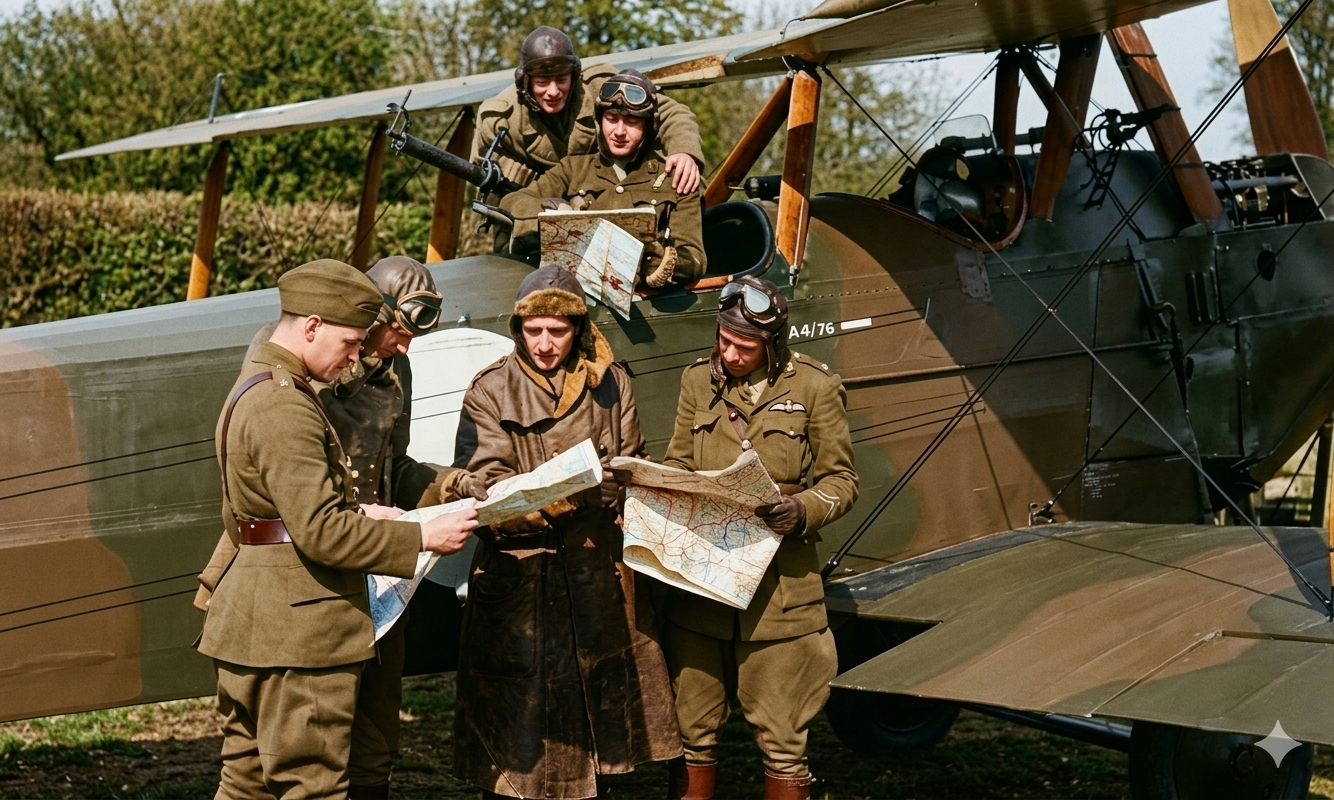
Furthermore, Armstrong Whitworth FK 8 aircraft were directly integrated with tank brigades for the first time. Having mapped the terrain via photographic reconnaissance, these planes flew ahead of advancing armour to scout for anti-tank positions, while RE 8 squadrons dropped phosphorus smoke screens and even parachuted ammunition resupplies to forward infantry.
The start of the Battle
The RAF had 800 aircraft available for the forthcoming battle, nearly half of which were fighters. This represented nearly fifty per cent of the RAF’s front-line strength in France. In addition, on 7 August, the French redeployed their air reserve, the Division Aérienne, of 627 fighters and day bombers from Champagne, which together with the French First Army’s aircraft, meant a total of 1,104 French aircraft were available for the battle.
Against the British and French, the Germans had 365 aircraft, (of which some 140 were fighters) and these were deployed on the German Second and Eighteenth Army fronts, but the bulk of the German aircraft remained in the Champagne sector.
At 4:20 am, a hurricane bombardment utilising over 2,200 artillery pieces commenced. A thick ground mist shielded the advancing British, Australian and Canadian infantry supported by tanks. They soon overran the German forward trenches in most areas, although in the British III Corps area, advances were far more difficult due to the terrain.
Despite the problems in III Corps, the ground campaign was incredibly successful. An Australian Report states:
"Within a few hours seven German Divisions had been badly battered. By noon it was precarious for the Germans. The Allies dominated the air and the bulk of Germans were retreating towards the Somme. If the escape routes could be blocked, the whole German force west of the river might be destroyed."
The blocking of the escape routes would soon dominate the RAF's plans.
The Air Battle
The first day-bombers to attack the German base at St Christ were unable to find it due to the early fog, but when No 98 and No 43 Squadrons attacked it later on 8 August, little damage was done due to the Germans having dispersed their aircraft.
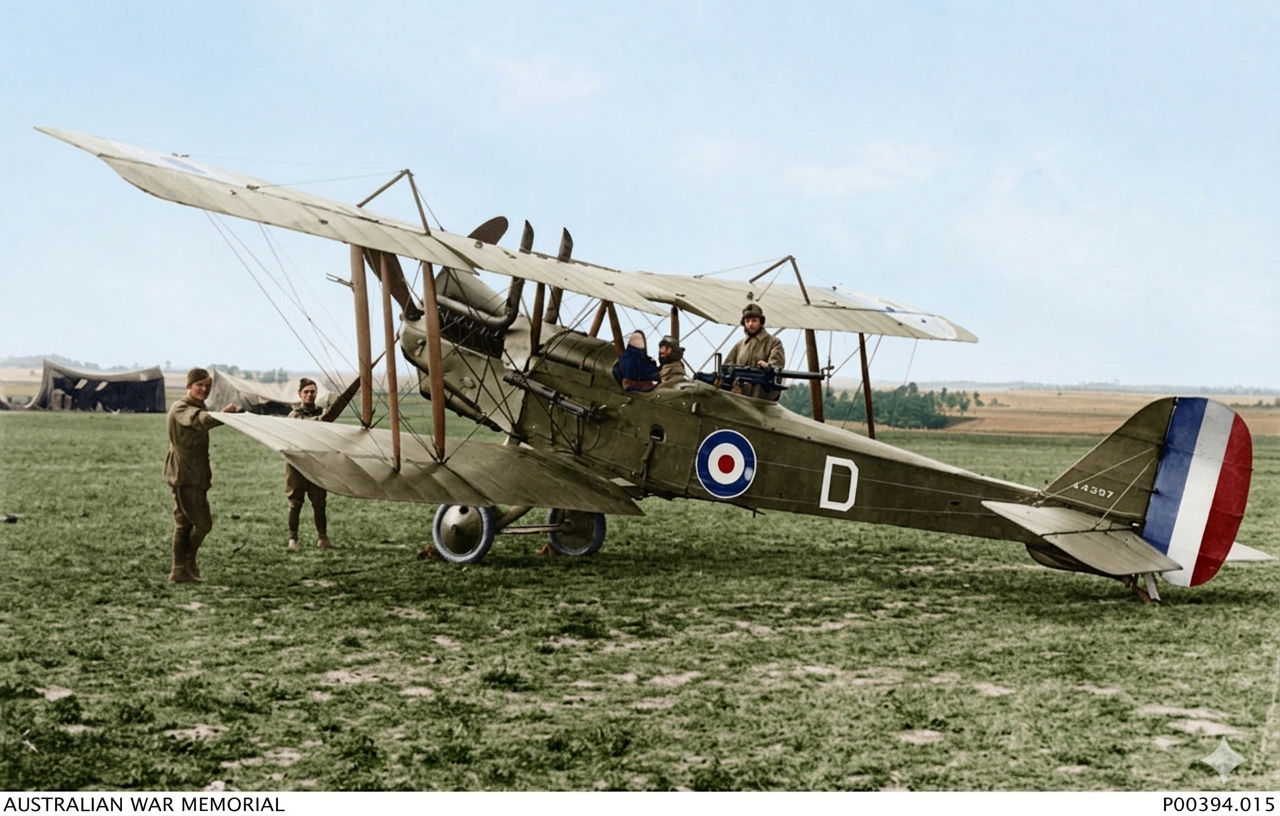
Again, because of the mist, Captain Ferdinand (“Freddie”) West, a No 8 Squadron RAF flight commander, was unable to see any tanks to co-operate with and on returning from the sortie he flew his Armstrong Whitworth F.K.8 straight into a hangar at his airfield; fortunately West and his observer survived (Freddie West was awarded the VC for an action two days later).
Army Co-operation and Communications
The dense mist initially hindered air operations, but as it lifted, the vital work of "contact patrols" began. Flying RE 8s below 1,000 feet, RAF crews utilised Klaxon horns to sound the Morse letter "A" to advancing infantry. Troops responded by lighting flares or displaying reflective discs. Observers then charted the front line on maps, dropping them in weighted bags to division and corps headquarters. This hazardous duty exposed crews to enemy ground fire, "friendly" artillery shells passing through their airspace, and hostile fighters
Ground Attack
Fighter squadrons armed with 25-pound bombs relentlessly strafed retreating German forces, hastening the collapse of local defences.
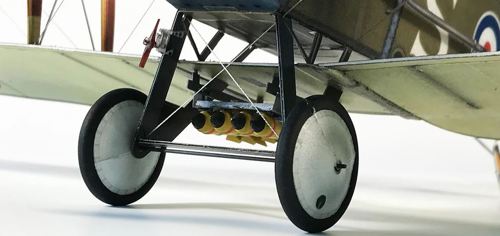
Lacking armour, these low-flying Camels and SE 5As suffered heavy casualties.
In an audio interview, Lt Eric Weakley of 65 Sqn describes the events of the day (he was flying a Sopwith Camel). He put his 'British Warm' over his pyjamas and went for breakfast. When in the mess, he was told to report immediately. He put his flying suit on over his pyjamas and reported. He was airborne at 9.30am. The squadron went off in threes and then split up when in their zone. His description of the events that took place that morning is as follows:
"It was an amazing sight when we got up to the front. The first thing there was a machine gun barrage and I got one bullet hit my right leg. It burnt just as if someone had struck you with a red-hot poker, but in the excitement, I soon forgot it.
I noticed our fellows when they were running up suddenly dropping. I scouted around and found 2 machine guns which were spraying our boys, well I was able to shoot both crews with the machine guns, of course, that was our job to support the infantry.
The next thing I saw was a quarry and the Jerries were running into it for shelter. I flew over the top, came around again and dropped a couple of bombs and my little machine was thrown around in the explosion. Well it's an awful thing to think of you know. I don't know how many poor fellows went west there!
Jerry was retreating up this road with his field artillery which was drawn by horses. So up I went and shot the horses in the front team, these poor things overturned the gun and so did the next one and the next one.
I was flying very low and this officer shot at me with his pistol. He put 2 holes into the machine right close by me. I thought you've got to go so I dived on him and on the fourth time I shot him, and, as I pulled away I was so low that my wheels hooked the field telegraph wires and nearly put paid to me!"
Balloon Busting
Simultaneously, fighters targeted German observation balloons. Destroying these was notoriously difficult; pilots had to close to within 50 yards to puncture the envelope and ignite the hydrogen-air mixture, all while evading anti-aircraft fire and ground crew attempts to rapidly winch the balloons down.
Number 84 Sqn, flying SE5a's in support of the Australian advance, planned to attack hostile Observation Balloons. Lieutenant N W R Mawle was one of the pilots, he was awarded a DFC, the citation for which reads.
"At 09:45 he observed a balloon which was being dragged down, he dived down and got the balloon in flames at 25 feet. He then went to strafing some machine gun emplacements. He knocked out two and started on the third ... He was wounded in the arm and stomach but was able to reach his airfield"
German Response
The German Second Army requested reinforcements as soon as the barrage opened, and from noon in excess of 300 additional aircraft arrived at a speed that took the British by surprise. Although German fighter opposition over the battlefield increased on the afternoon of 8 August, the German Air Service’s main effort would be to protect the Somme bridges, which became a major target for the RAF
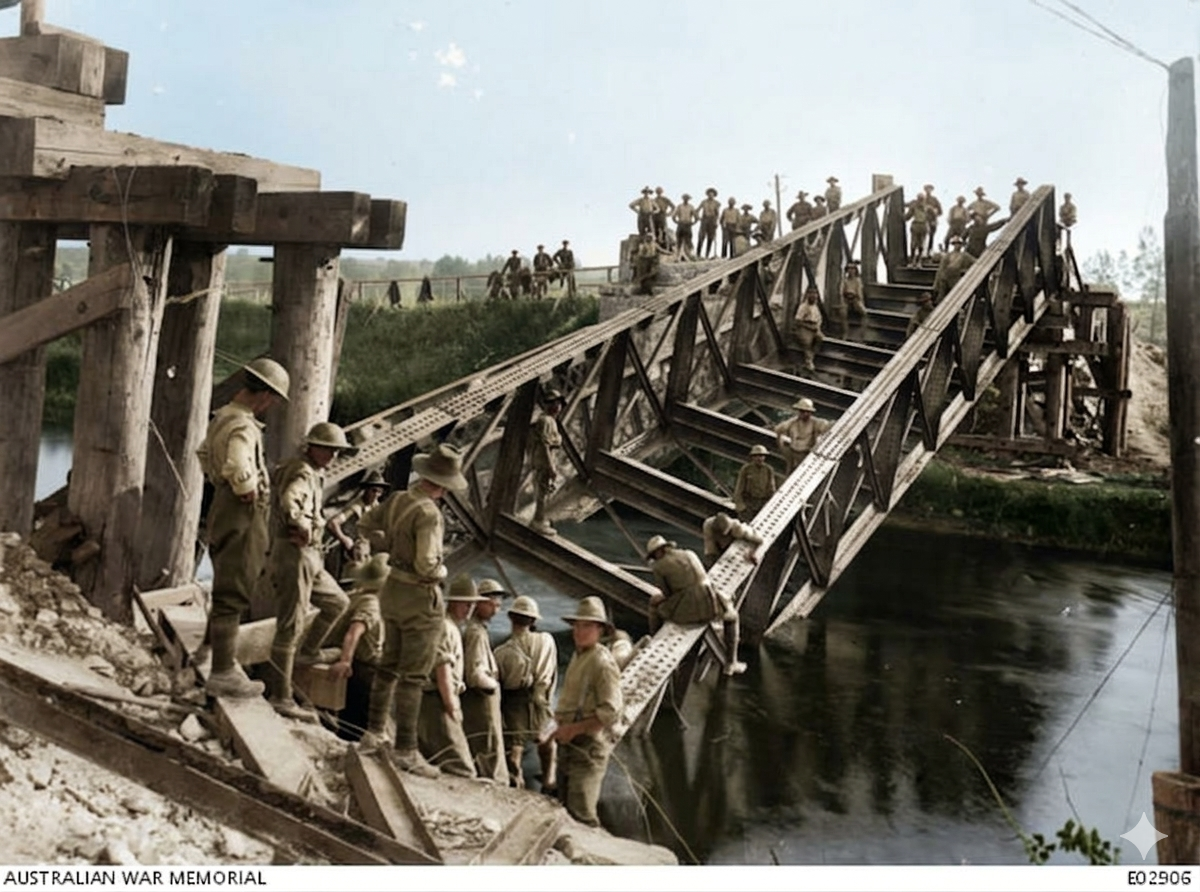
The Somme Bridges
Reconnaissance reports from noon on 8 August stated the Somme bridges were full of retreating German troops plus their transport. As a result, an order was issued to the RAF’s fighter squadrons and day bomber squadrons to cancel their planned missions and instead attack the bridges over the Somme.
From the afternoon, the British attacked the bridges at Brie, Bethencourt, and Peronne with dozens of 112-pound bombs, however the bridges remained intact.
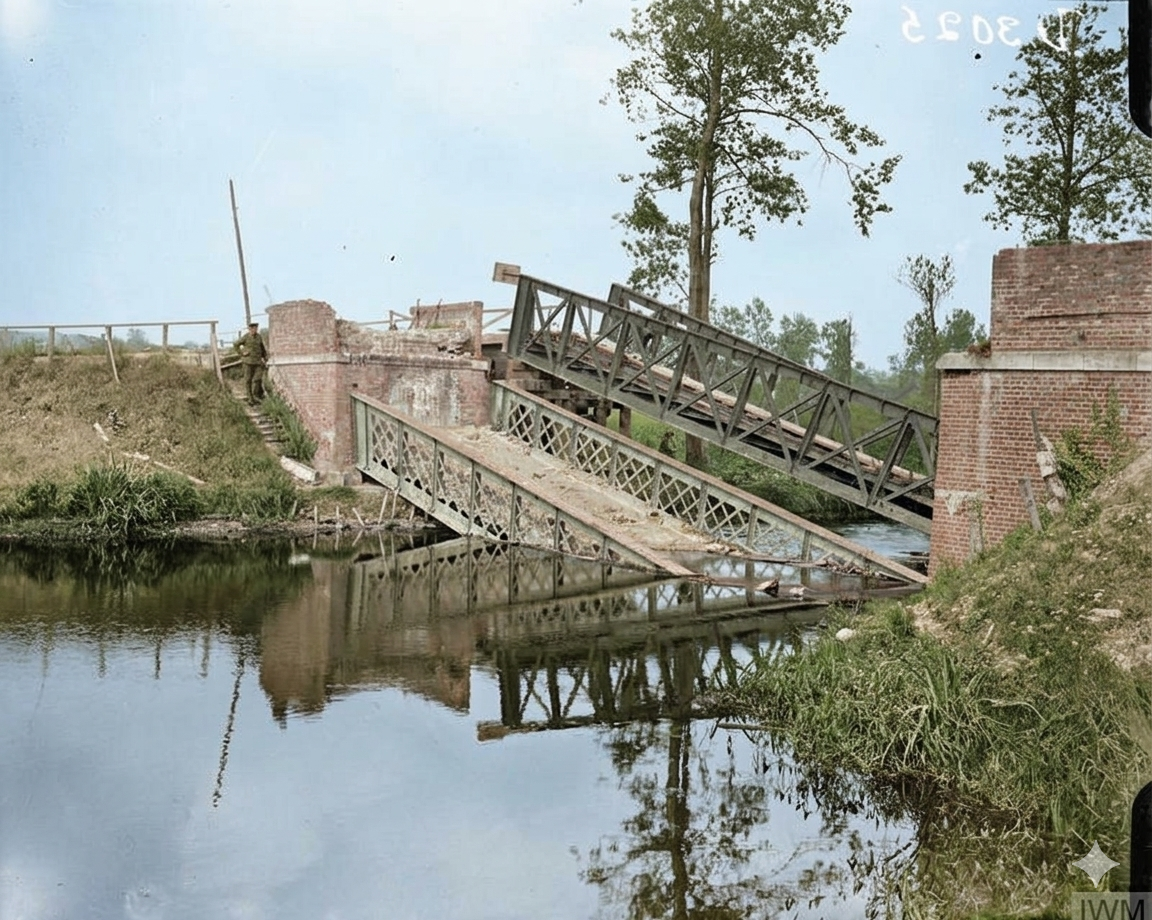
The problem was that Camel fighters had no bomb sight, and their four small bombs were simply ineffective against the bridges. In addition, the use of the Sopwith Camels in dropping bombs prevented them from protecting the bombers.
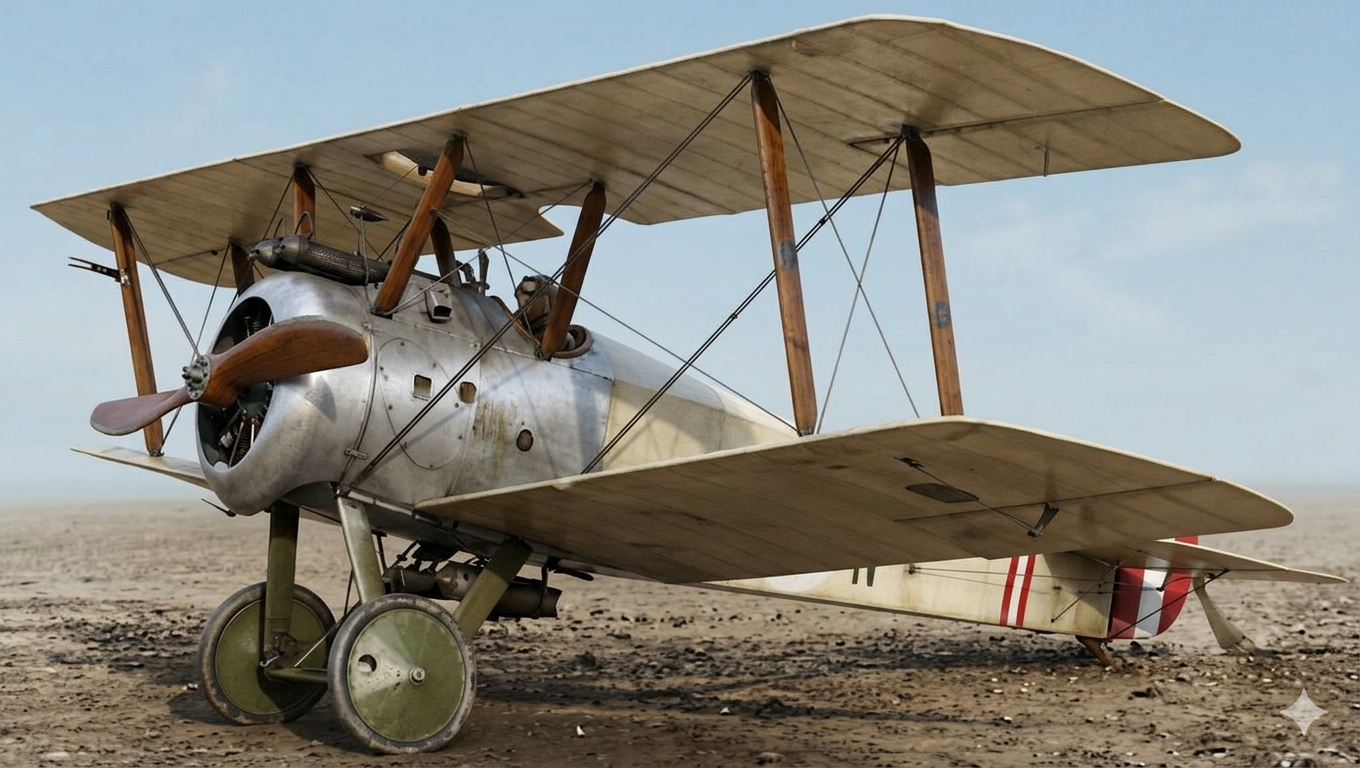
The German airfields were often adjacent to these bridges and the German Air Service fought hard to protect these structures.
In the fierce fighting, Hermann Göring’s elite Richthofen Jagdgeschwader was reduced from fifty to eleven aircraft. Although Göring had taken command of the Red Baron's old unit in July after Hauptmann Wilhelm Reinhard was killed earlier, Göring was not present at this time, being on leave; instead, Lothar von Richthofen (Manfred's younger brother) commanded the unit in early August.
RAF losses on 8 August
Two thirds of the 97 RAF aircraft lost or damaged beyond repair on 8 August 1918 were hit at the Somme crossings.
The fatality rate for these lost or damaged aircraft was nearly 25%. It is perhaps surprising that fatalities were not higher. In this article, we look at those who were killed during the air-battle on 8-11 August, but it should be remembered that many more pilots and observers were wounded and/or taken prisoner. Other aircraft were lost, with thankfully only minor injuries to those who were flying them.
A brief account of that day is provided in the diary of 2/Lt George Coles, who was one of those flying with 107 Sqaudron:
We set off at 1.30pm and crossed at 4,000 feet only. We immediately ran into a terrific barrage of anti-aircraft shells and, on landing I found 10 shrapnel holes in my wings. We dropped our bombs amongst thousands of retreating Germans camped around the bridgehead awaiting their turn to cross. We then went down to about 100 feet and machine-gunned the troops. I have never before seen such a Charnel House of dead and dying. We must have killed hundreds. One machine containing Gaukrodger and Doncaster was hit and went down in flames.
Fatalities on 8 August
Of the RAF's losses on 8 August a number proved to be fatal for the pilots and observers. Below is a 'roll of honour' of those who served in the RAF and Australian Flying Corps (AFC) and were killed.[2]
1 Sqn
Capt Kenneth Mills, aged 19. He was an 'Ace' with five victories to his name. Flying an SE5a he took off at 4:45pm British time (British time is used here and in all instances in this article; German time was an hour ahead). After leading a low-level bombing mission against a bridge, Mills was last seen dogfighting five Fokker D.VIIs. Evidence suggests he was shot down by Lothar von Richthofen of Jasta 11. He has no known grave, and is commemorated on the Arras Flying Services Memorial.
3 Sqn
Lt Amyas Terrell Sampson, aged 19. Flying a Sopwith Camel, he took off at 6.25pm and was last seen west of Villers-Bretonneux at 1,500 feet flying east on Counter Offensive Patrol ("COP"). He has no known grave, and is commemorated on the Arras Flying Services Memorial.
Lt Alexander Hamilton, aged 23. Flying a Sopwith Camel, he was last seen over Proyart at 6pm at 3,500 feet just before an encounter with seven Enemy Aircraft on COP. He has no known grave, and is commemorated on the Arras Flying Services Memorial.
5 Sqn
Lt Lewis Oertling, aged 27. Flying an RE8 with Lt F C Russell (who became a POW), their aircraft was reported missing after taking off at 7.10 am to fly a Contact Patrol. Lt Oertling is buried in Vaignacourt British Cemetery.
Lt Arthur Sotheron-Estcourt, MC, aged 24 and Lt Arnold Robinson were flying a RE8, which took off at 10:30am, and were killed in action on contact patrol. Arthur's father received the following information: "Your son with Lieutenant Robinson were in the second machine off the ground on the early morning of August 8th. They went up from the Amiens Drill Ground which had temporarily been made into an aerodrome. The weather was exceptionally bad which necessitated their flying very low and they were undoubtedly hit by machine-gun fire from the ground. The machine crashed near either Belfort or Beaucourt Wood, which is near Caix." Lt Arthur Sotheron-Estcourt and Lt Arnold Robinson are buried in adjoining graves in Caix British Cemetery.
8 Sqn
2/Lt H Faulks, aged 20. Flying an Armstrong Whitworth FK8 with Lt J MacCallum (who survived), they took off at 10:50am, but came down in a forced landing near Fouilly after the observer (Faulks) was wounded during tank a reconnaissance. They were seemingly hit by ground fire. Lt Faulks is buried in Fouilloy Communal Cemetery, Somme.
23 Sqn
Lt Elton Helmer, aged 20. Flying a Sopwith Dolphin, took off at 1:35 pm and was last seen flying south near Cayeux on patrol/bombing mission. Lt Helmer is buried in Caix British Cemetery.
43 Sqn
Lt Philip Arundel, aged 20. Flying a Sopwith Camel, he took off 4:00 pm but was shot down in combat. He has no known grave, and is commemorated on the Arras Flying Services Memorial.
48 Sqn
Lt Victor Gray, aged 21 and 2/Lt Bernard McCutcheon, aged 20. Flying a Bristol F.2B, they took off at 09:05 am and were last seen diving on the enemy side of lines near Foucaucourt whilst on patrol. They have no known graves, and are commemorated on the Arras Flying Services Memorial.
49 Sqn
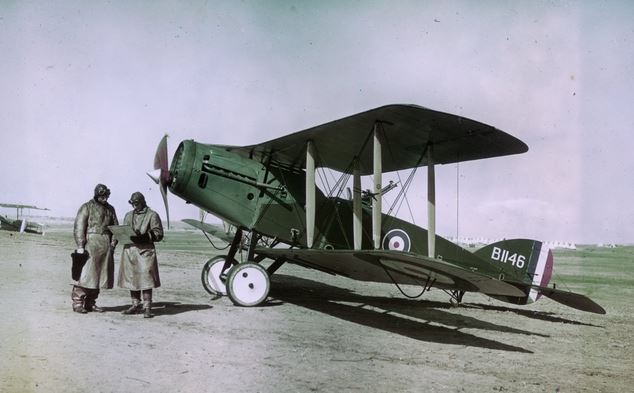
Lt J Ross, aged 19 with Lt M D Allen (who survived). Flying a DH9, they force landed near Amiens at 4:45pm after being hit by anti-aircraft fire during a bombing attack on Bethincourt Bridge. Lt Ross is buried in Roye New British Cemetery.
Lt George Ramsay, aged 27 and 2/Lt Walter Hartley, aged 18. Flying a DH9, they took off at 5:55 pm and were last seen going down in flames and crash near Bethincourt Bridge during a bombing attack. They have no known graves, and are commemorated on the Arras Flying Services Memorial.
54 Sqn
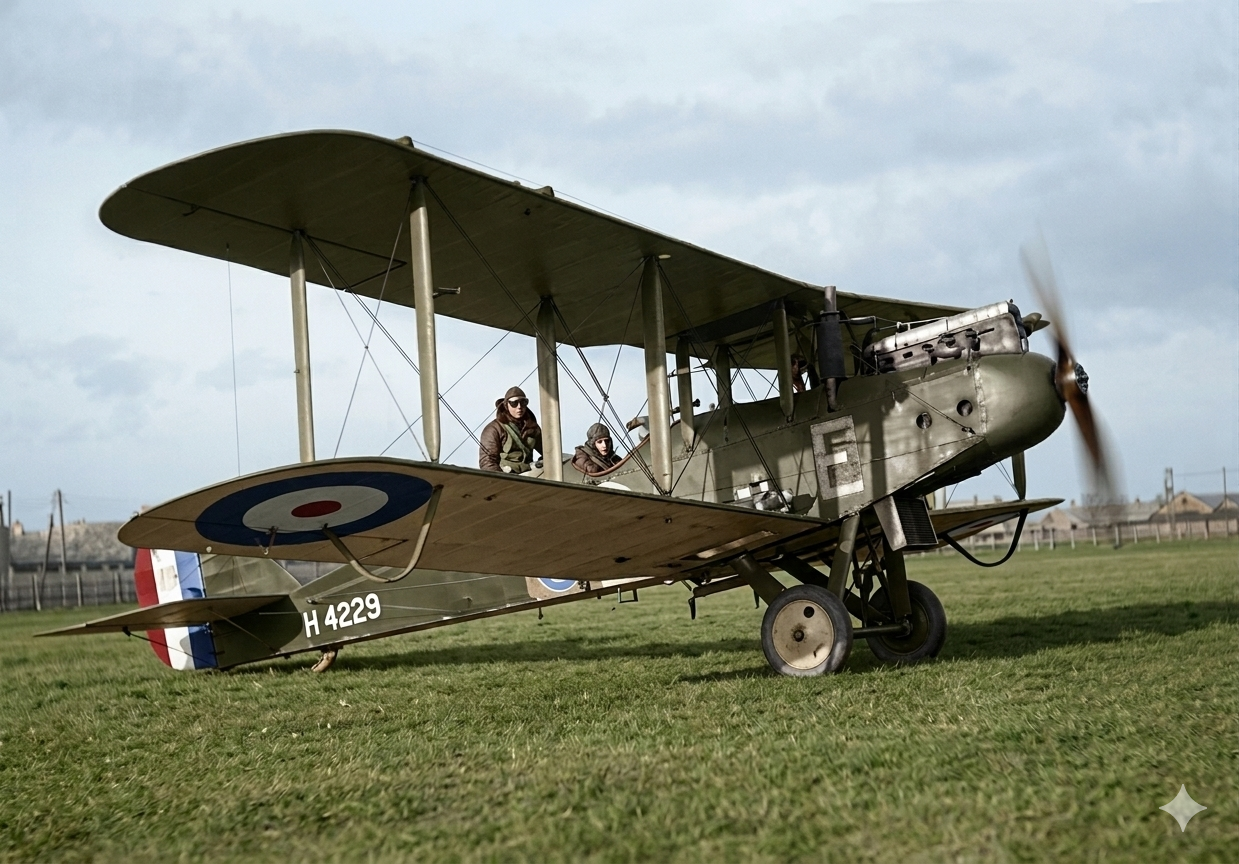
Captain Michael Gonne, MC, aged 19. Flying a Sopwith Camel, he was last seen at 2,000 feet over Brie at 1:45 pm under control on a special mission with bombs. In The Times of 12 December 1918, it was reported that he had died in a German field hospital at Villers-Carbonnel. He is buried in Heath Cemetery, Harbonnières.
60 Sqn
Lt James Hall, aged 22. Flying a SE5a was last seen south of Foucacourt 4:40pm at 1,500 feet heading west on an offensive patrol. It is believed that he was the 46th victim of German ace Ltn Ernst Udet. Lt Hall, being an American citizen, is buried in the Somme American Cemetery, Bony.
65 Sqn
Captain Eric Brookes, DFC, aged 24. Was an 'ace', credited with six aerial victories. Just after midday on 8 August, Brookes, along with others forced down two German Fokker D.VII fighters behind the Allied lines at Proyart. Later that day, Flying a Sopwith Camel he was last seen north of Harbonnières at 2:30pm on an offensive patrol. He is buried in Heath Cemetery, Harbonnières.
80 Sqn
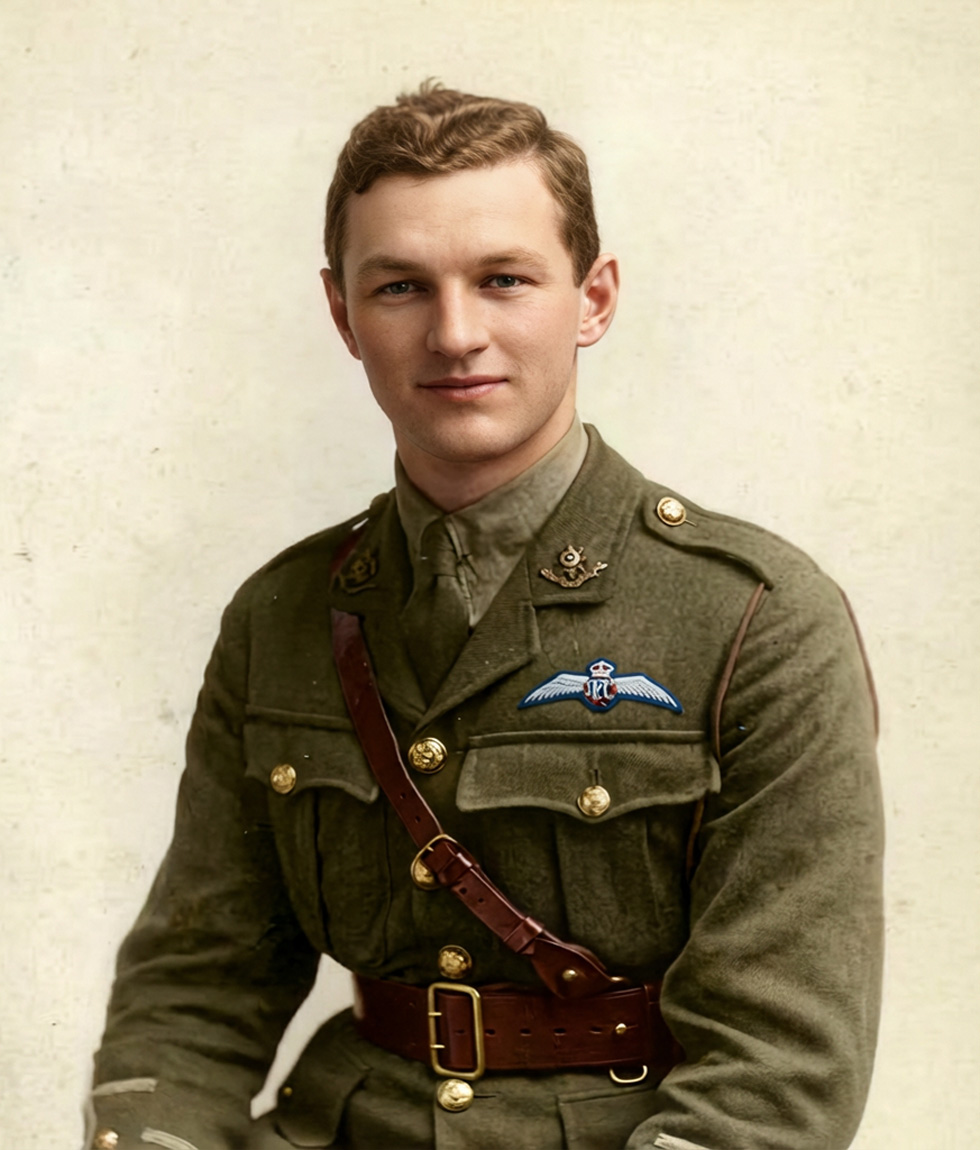
2/Lt Harold Hudson, aged 20. Flying a Sopwith Camel, he took off at 9:45am but was reported missing on an offensive patrol over Bray. He is buried in Heath Cemetery, Harbonnières.
Lt Thomas Nash, aged 29. Flying a Sopwith Camel, he crashed on an offensive patrol near Bray at 10:15am; Thomas died of wounds the following day, 9 August. Lt Nash is buried in Vignacourt British Cemetery.
98 Sqn
Sgt Joseph Leonard May with Lt W Goffe (who survived). Flying in a DH9 they took off at 5:00 am and were last seen rising above clouds over Amiens during bombing. They were probably the 42nd victim of German ace Ltn Meyer. Goffe was made a Prisoner of War. Sgt May is buried in Cambrai East Military Cemetery.
107 Sqn
2/Lt Ellis Doncaster, with Lt James Gaukroger, aged 21. Flying in a DH9, took off at 12:40pm and were later reported missing from a bombing mission. They have no known graves, and are commemorated on the Arras Flying Services Memorial.
201 Sqn
Lt Robert Orr, aged 21. Flying a Sopwith Camel took off at 06:00am and was shot down in flames east of Villers-Bretonneux on a low flying patrol. Lt Orr is buried in Heath Cemetery, Harbonnières.
209 Sqn
Lt William Brookes, aged 19. Flying a Sopwith Camel took off at 09:55 am and was last seen over Guillaucourt at 200 feet, dropping two bombs on enemy infantry. Lt Brookes is buried in Caix British Cemetery.
2/Lt Leonard Thompson, aged 19. Flying a Sopwith Camel took off at 9:30 am and was last seen north of the railway between Warfusee and Marcelcave whilst on patrol. 2/Lt Thompson is buried in Heath Cemetery, Harbonnières.
3 Sqn Australian Flying Corps
Lt Edward Bice, MC, aged 26 with Lt John Chapman, aged 23. Flying an RE8, took off at 11:05 am but were shot down in combat with nine Fokker DVIIs near Mericourt at 12 noon whilst on a contact patrol. Lt Bice and Lt Chapman are buried in Heath Cemetery, Harbonnières.
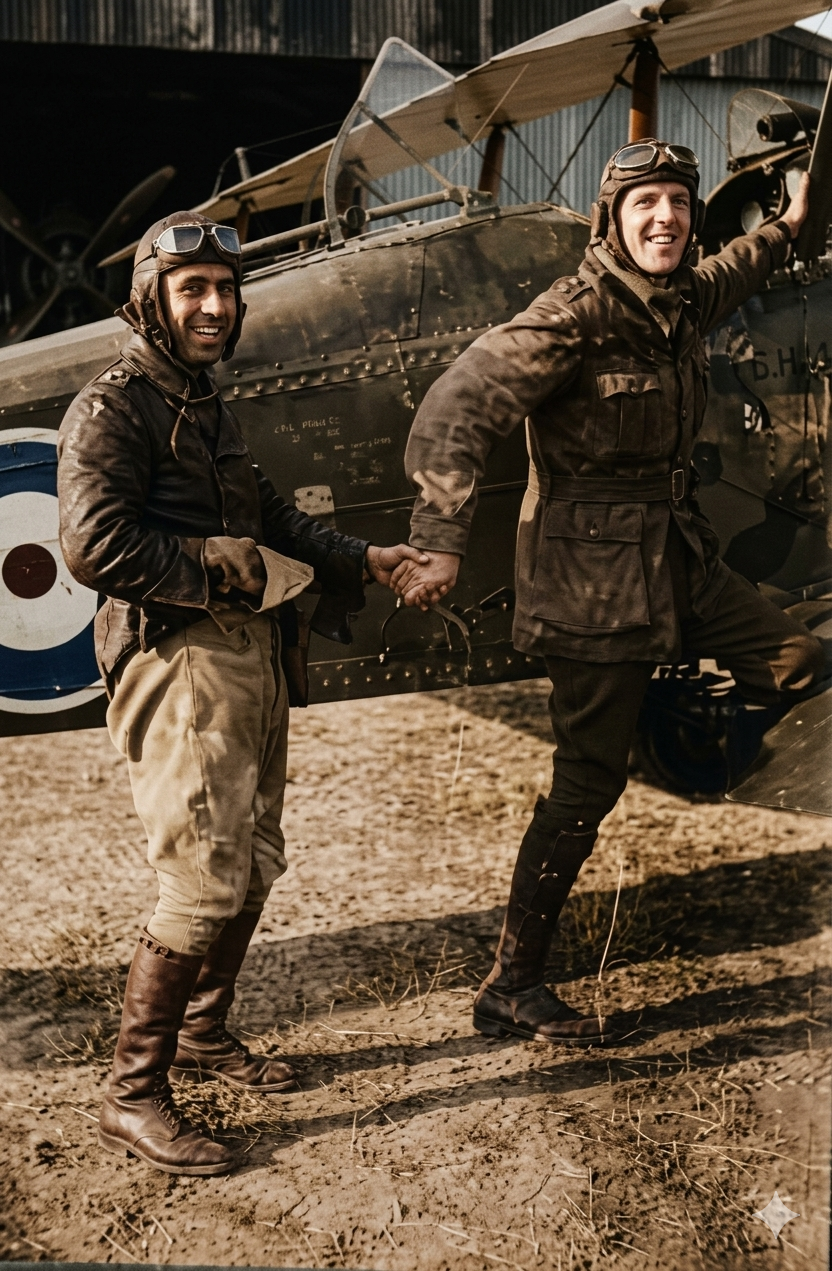
The view from opposing commanders of fighter squadrons on that day
From Sholto Douglas, Officer Commanding No. 84 Squadron RAF, equipped with the SE5a :
Zero hour was twenty minutes past four in the morning, an hour before sunrise. Our bombardment of the enemy positions east of Amiens was followed immediately by the tanks and the infantry moving forward. As had happened on the 21st of March--when the Germans had started their advance against us--there was a thick ground mist, and although this was of great value as a screen for the troops on the ground, we who were to support them in the air between the River Somme and Villers-Bretonneux were of no use until about nine o'clock. But as soon as we were able to get into the air we found that the Germans had been caught completely by surprise, and that they were in a fine state of confusion. We also had overwhelming superiority over the German air force. The Fifth Brigade of the R.A.F. on our short stretch of the front had in it eight fighter squadrons in addition to nine squadrons doing other work: a total of three hundred and thirty-two aeroplanes.
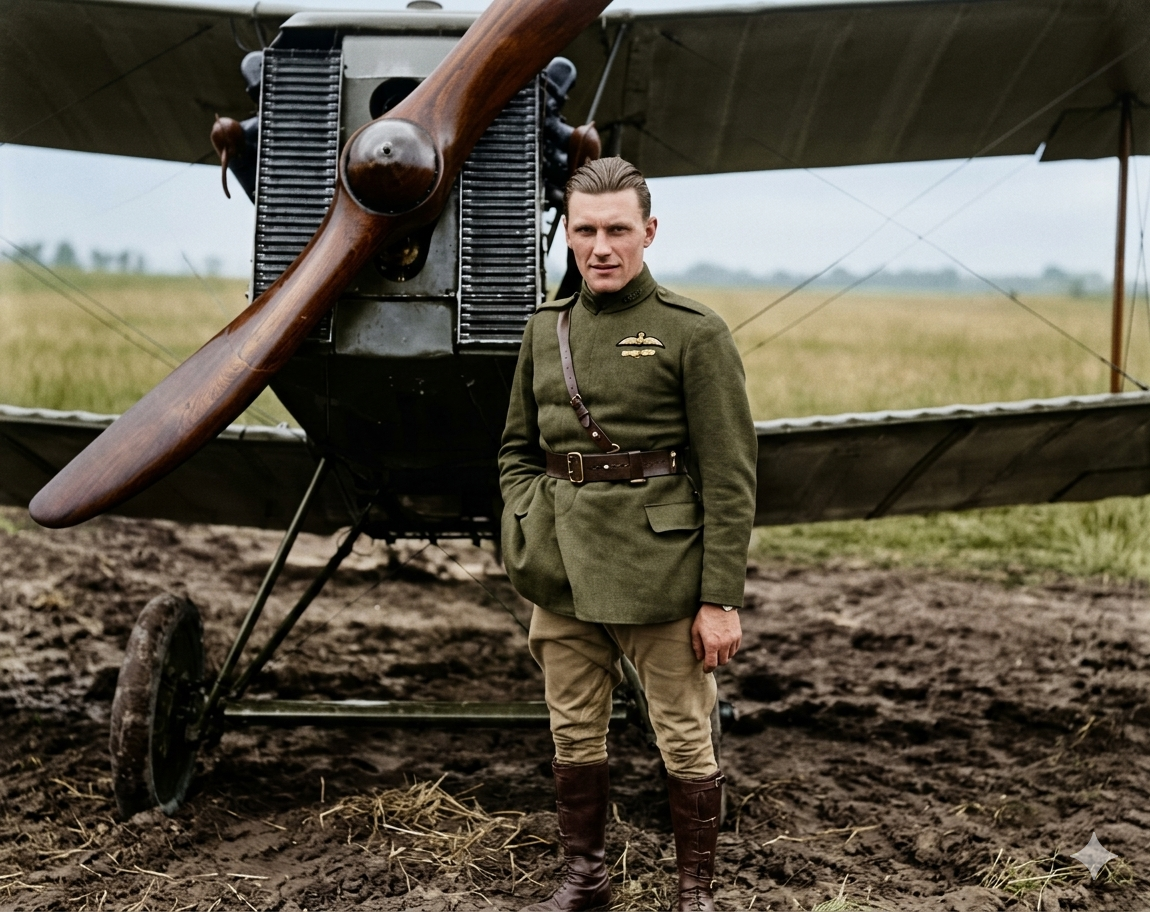
The main targets for the R.A.F. were the bridges across the River Somme, and as soon as the enemy realised what we were up to they rushed in reinforcements in the air; and at last the German pilots were forced to give battle by going on to the attack. It is only fair to record that they fought very hard.
The Richthofen Circus itself was brought into the thick of things; but just before the opening of our offensive Hermann Goering, who was in command, had gone on leave, handing over to Lothar von Richthofen, the younger brother of the founder of the squadron. A few days later young Richthofen was wounded, and his place was taken by Ernst Udet, who was to remain in command until Goering returned from leave a couple of weeks later. We were up against many tough, seasoned fighters.
The vigorous attacks made by our aircraft on the bridges crossing the River Somme were not as successful as we had hoped for, and the Royal Air Force suffered heavy losses. For one thing, the German fighter aerodromes were close by these bridges, and in some cases within sight of them, and our bombing aircraft were pounded upon as soon as they appeared. The bridges themselves were the bottlenecks of the enemy lines of retreat, and the Germans had to keep them intact or perish. The pilots of the German air force, I must admit, showed no reluctance to sacrifice their lives in the efforts to keep them open.
From Ernst Udet, Commander of Jasta 4:
On the afternoon of the eighth, the order comes for the group to move up to the Somme with all available machines. There, the English have been battling for a breakthrough for several days. Things are supposed to be critical for us. Four swarms of large birds of prey, we roar northward. The farther north we get, the more the landscape below us shows the marks of battle. The Fontaine les Cappy, I discover an enemy aircraft on contact patrol, skimming over the trenches. I separate myself from the staffel and stab at him, firing as I go. After twenty rounds he bursts in the air and disintegrates alongside the trenches. It is 5:30 P.M.
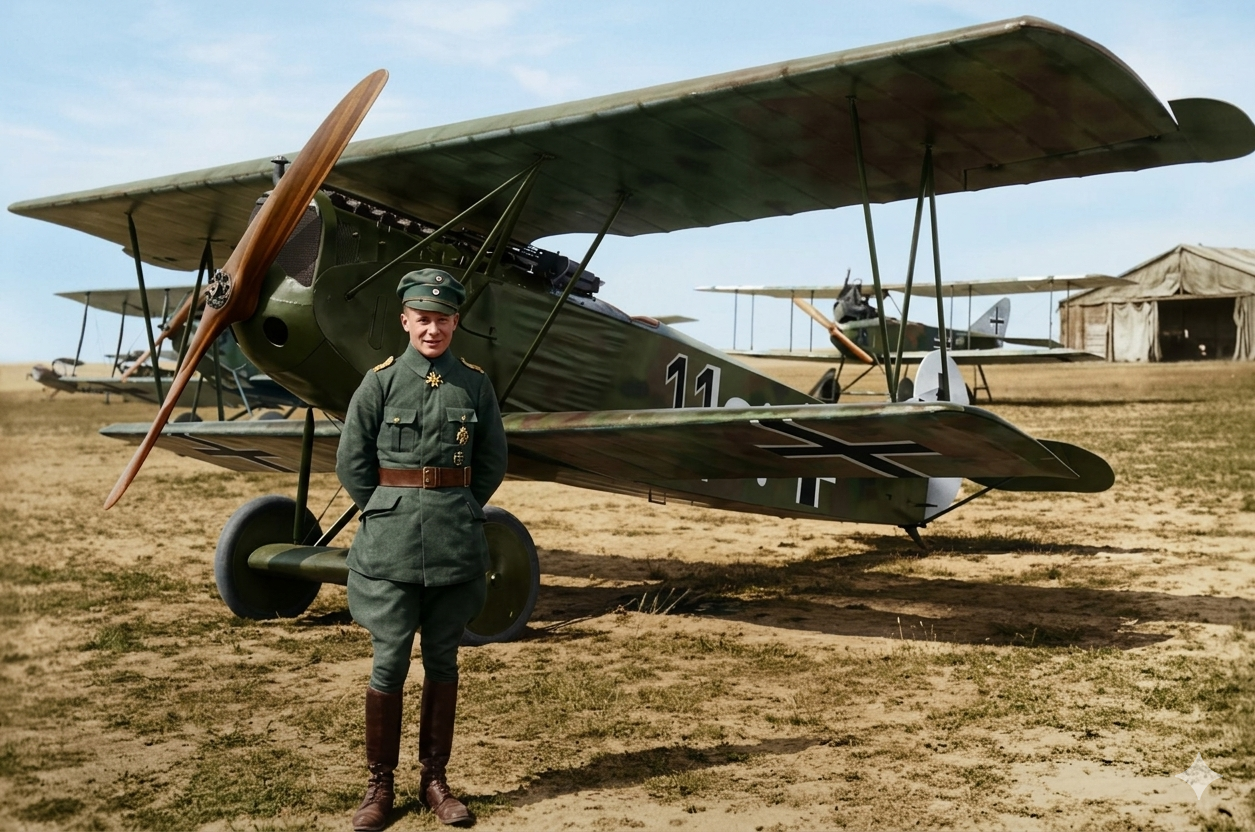
At about six we begin to run low on fuel. We did not have much when we took off. Supplies were short during the last few days, and no one expected such a long fight. We have to land to gas up. Below us is a small airfield. We drop down like starlings into a wheat field. One machine lines up next to the other. The field is packed.
The staffel commanders have themselves announced to the commandant of the field, an amiable fellow. He would like to help us, but, after all, he needs gasoline for his own aircraft. We suggest he share his supply with us. He hesitates.
While we negotiate, the air is filled with the rumble of British motors. During their approach, we can already smell the odour of castor oil wafting our way. Here and there a swarm appears briefly in the openings between the clouds. It is a cool summer evening. The heavy clouds have moved off to the east, pulling the remaining fragments after them. The blue of the sky shows through only in spots. "Good weather for balloon attacks," I say to myself.
Suddenly, a British machine darts out of the grey haze above us, firing at our machines from both barrels. It is a sorry sight. The Richthofen group, herded together like a gaggle of hens, helpless without gas, and above it a hawk, the Englishman. I am seized with raging anger. I race to my machine and take off without being strapped in.
He makes another pass at us, and I go at him from below. He is so surprised, he neglects to defend himself. Only ten rounds and he staggers and crashed close by the airfield. Dead.
It was a British S.E. 5, with streamers of a leader. I land without a drop of gas and a dead stick. Time 6:30. [3]
An American award for gallantry
Béthancourt bridge (referred to as Bethincourt Bridge in some reports) over the River Somme in France was a significant target for Royal Air Force bombing raids.
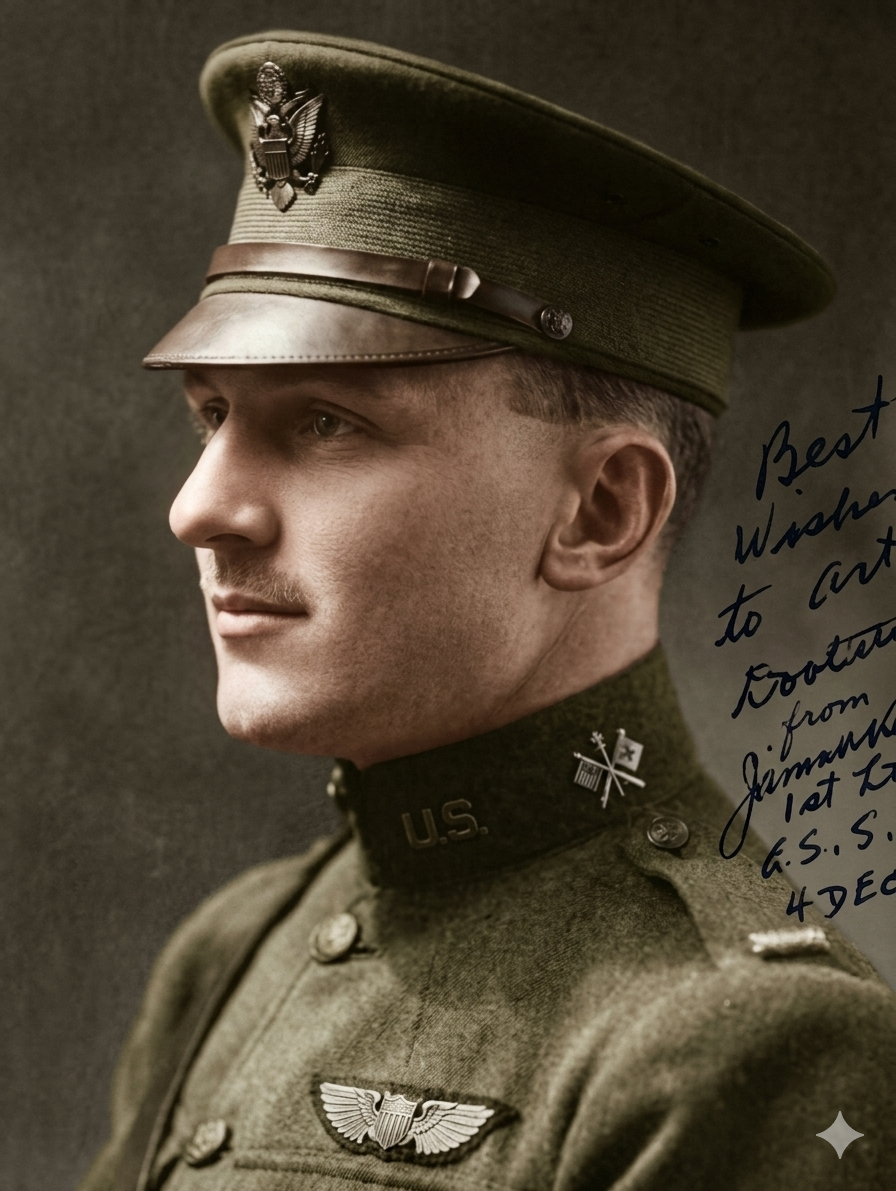
James Alfred Keating, United States Army Air Service, was awarded the (American) Distinguished Service Cross “for extraordinary heroism in action while serving with 49th Squadron”.
The citation read:
On 8 August 1918, after bombing Bethincourt Bridge over 800 feet, obtaining a direct hit, he found 7 enemy planes attacking his formation from the rear. By manoeuvring for position he enabled his observer to shoot one down in flames over Bethincourt...
On 9 August 1918, Lieutenant Keating bombed Falvy Bridge over 1,000 feet, obtaining a direct hit. On returning, his formation was attacked by enemy planes and a running fight ensued. By skillfully flying with exceptional coolness he enabled his observer to shoot two planes down in flames.
He was awarded the (British) DFC also for this action: a comparison of the citations is interesting,[4] the DFC citation reads as follows:
For gallantry and skill. On 8 August 1918, after bombing Bethencourt Bridge from 800 feet, obtaining a direct hit, he found seven Pfalz scouts attacking his formation from the rear. He manoeuvred for position, enabling his observer to shoot down one in flames over Bethencourt. On 17 July 1918 he bombed Passy Bridge from 500 feet, destroying it just as a column of transport was passing. He then opened machine gun fire on the troops in the vicinity, causing many casualties and great disorder. He has taken part in many successful bomb raids and his excellent example of coolness and courage in action is of the greatest service to his squadron.
On 9 August 1918, he bombed Falvy Bridge from 1,000 feet obtaining a direct hit. The formation was attacked on its way home by 25-30 EA and a running fight ensued to our lines. Lt. Keating showed exceptional coolness and judgement, and by skilful flying, enabled his observer to shoot down two EA in flames over Marchélepot and Ablaincourt. Two more EA were shot down by the formation and seen to crash in the vicinity of Soyecourt. His machine was so badly shot about that he was forced to land in the shell crater area.
Communiqué issued
An official communique was issued which read as follows:
"On August 8th our aeroplane squadrons cooperated with the other arms on the battle front throughout the day. The line reached by our attacking infantry was reported by our contact aeroplanes. The positions of the hostile artillery in action and columns of German infantry and transport on the march were signalled to our guns by our artillery machines. Other machines supplied our advanced troops with ammunition from the air. Co-operation with Tanks was carried out systematically.
Our machines assisted the Tank crews with information, attacked strong points and other opposition with bombs and machine-gun fire, and, by dropping smoke bombs along the line of their advance, assisted to conceal the approach of the Tanks from the enemy. Our contact machines working with the cavalry rendered valuable service.
Flying low in front of our advancing line, our fighting squadrons shot at and bombed the enemy in his retreat, causing havoc among masses of hostile troops and transport on roads congested with traffic. Our bombing squadrons, flying a few hundred feet from the ground, attacked trains, railway junctions, and bridges.
Forty-eight hostile machines are recorded as destroyed by our aeroplanes, and 17 others were driven down out of control. Five hostile balloons were shot down in flames. Fifty of our own machines are missing, most of these casualties being due to fire on the ground. One of our night-flying machines also failed to return."
The German Defence
By the afternoon of 8 August, German air reinforcements arrived, most notably Jagdgeschwader 1, temporarily commanded by Leutnant Lothar von Richthofen and featuring aces like Ernst Udet.
Three German aces each claimed a ‘hat trick’ of victories on 8 August.
Lothar von Richthofen claimed his 33rd, 34th and 35th victims on the opening day of the Battle of Amiens; he shot down a DH9 (George Strachan Ramsay and Walter Noel Hartley) followed by two SE5a scouts (James Hall and Kenneth Mills)
Ernst Udet shot down his 45th, 46th and 47th aircraft: two SE5a scouts and a Sopwith Camel (pilots not determined).
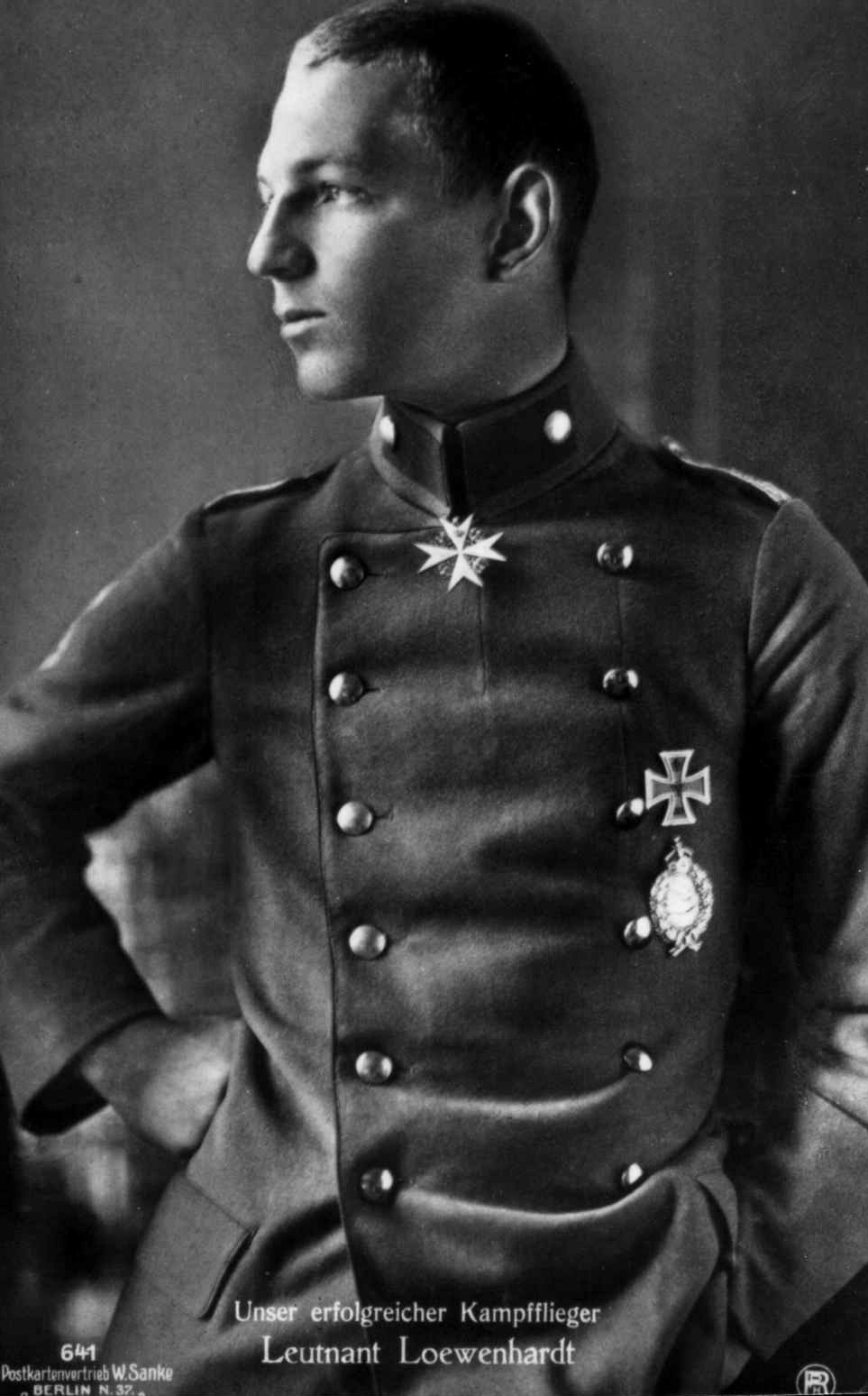
Erich Lowenhardt shot down his 49th, 50th and 51st victims, all three were Sopwith Camels (pilots not determined)
Following days
9 August
Attacks on the Somme bridges continued on 9 August, when British fighters were ordered to escort the bombers rather than undertake the bombing missions themselves.
The bridges over the River Somme remained the primary target for the day bombers, with 173 sorties flown. One bomb hit the bridge at Brie, but the damage did not prevent it's continued use by the Germans. In addition, a further 33 sorties were flown against railway targets.
An order was issued for all available aircraft to attack the bridges at 5pm when thirty bombers were escorted by fifty fighters.
RAF losses were fewer on 9 August at forty-five aircraft overall. However the fighters, which were not familiar with the method needed for escorting bombers, flew too high to be effective.
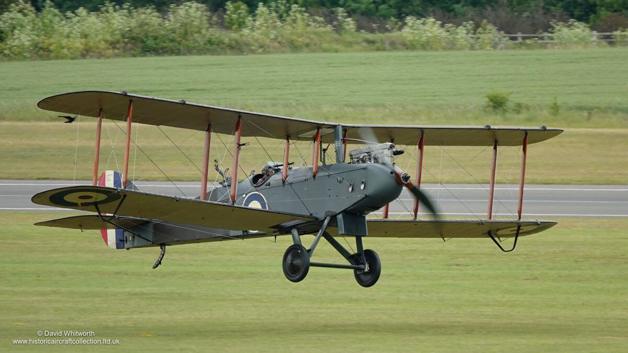
The Airco DH9’s (being underpowered) were vulnerable with losses (as can be seen below) in 107 Squadron particularly severe (five of twelve aircraft in one attack). In 205 Squadron, their DH4s attacked the bridges on nine occasions over three days without loss, claiming to have shot down three German aircraft. But not one bridge had been destroyed - although the bombing raids did add to the German Army’s confusion.
DH4 comparison to DH9
The Official History of the War in the Air makes particular reference to the performance of the DH4 and DH9 bombers during the Battle of Amiens, illustrating the poor performance of the newer aircraft.
"The DH4 fitted with the 275 horse power Rolls Royce (Eagle VI) engine was splendidly reliable. In the four days of intensive fighting from 8-11 August inclusive, the DH4's of 205 Squadron were in the air for a total of 324 hours 13 minutes, and dropped sixteen tons of bombs. Every aeroplane returned from its mission and no more than one had to be struck off the strength of the squadron."
"By way of comparison, a typical DH9 squadron flew a total of 115 hours in the same period and dropped four and a half tons of bombs. During the operations seven of the DH9's were lost and two others were wrecked, and ten pilots had to leave formation without dropping their bombs, through engine trouble."
"A further sidelight on the engine [Puma] question is .. that in the same four days pilots of 205 Squadron required no more than a total of 3 1/2 hours in all on test flights while those of the DH9 squadron spent 21 hours in the air on similar duties."
RAF fatalities on 9 August
6 Sqn
2/Lt Gerald Barre, aged 20 and 2/Lt Royston Wickett, aged 20. Flying an RE8 took off at 12:10pm were reported missing on contact reconnaissance near Rosieres; they were brought down by enemy aircraft. They have no known graves, and are commemorated on the Arras Flying Services Memorial.
8 Sqn
2/Lt Percy Lawrence, aged 27 was with 2/Lt G A Nudds (who survived) flying an Armsrong Whitworth FK8 took off at 3:30pm but were forced to land near Bayonvillers whilst on tank contact patrol. Nudds (the pilot) was wounded and the observer (Lawrence) killed. 2/Lt Lawrence is buried in Heath Cemetery, Harbonnières.
41 Sqn
Lt Frederick Martin, aged 23. Flying an SE5a was last seen in combat with several enemy aircraft east of Estrees at 4:30pm while on an offensive patrol. Lt Martin has no known grave, and is commemorated on the Arras Flying Services Memorial.
54 Sqn
Lt Arthur Hawley, aged 19. Flying a Sopwith Camel was last seen at 6,000 feet over Estrées-Deniécourt at 6:40am on an offensive patrol. Lt Hawley has no known grave, and is commemorated on the Arras Flying Services Memorial.
2/Lt RRC Winter, like Hawley, and also in a Camel this officer was also last seen at 6,000 feet over Estrées-Deniécourt. 2/Lt Winter is buried in Heath Cemetery, Harbonnières.
57 Sqn
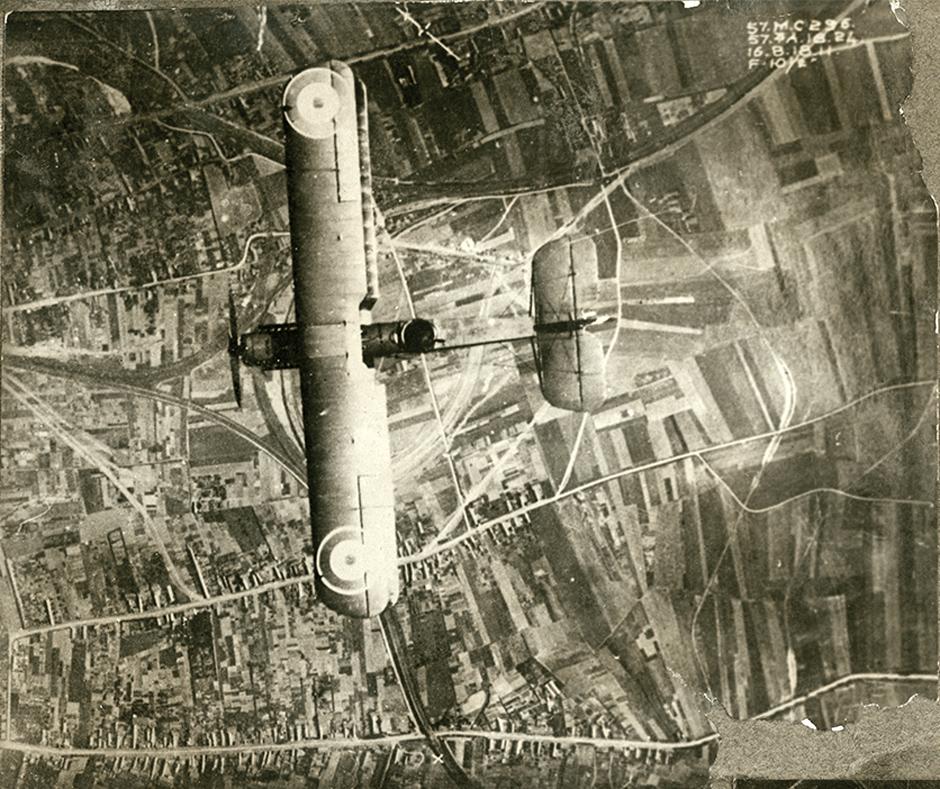
Lt Walter Pitt Pitts, aged 19 with 2/Lt Harold Musgrove, aged 20. Flying a DH4 took off at 8:15 am, and were reported missing from a photography mission over Peronne. It is thought that they fell victim to German 'ace' Ltn Paul Billik. Lt Walter Pitt Pitts is buried in Bancourt British Cemetery. 2/Lt Musgrove has no known grave, and is commemorated on the Arras Flying Services Memorial.
107 Sqn
2/Lt Robert Baird, aged 19 and 2/Lt Howard Butterworth, aged 22. Flying a DH9, they took off at 5:40 am but were reported missing from a bombing raid on Brie Bridge. Both 2/Lt Baird and 2/Lt Butterworth are buried in Assevillers New British Cemetery.
2/Lt John Emtage, aged 19 and 2/Lt Philip Willis, aged 34. Flying a DH9 took off at 5:40 am but were reported missing from a bombing raid on Brie Bridge. They have no known graves, and are commemorated on the Arras Flying Services Memorial.
Captain William Dore, aged 26 and 2/Lt John Wallace, aged 18. Flying a DH9 took off at 5:40 am and were last seen going down in flames over the lines during a bombing mission. They have no known graves, and are commemorated on the Arras Flying Services Memorial.
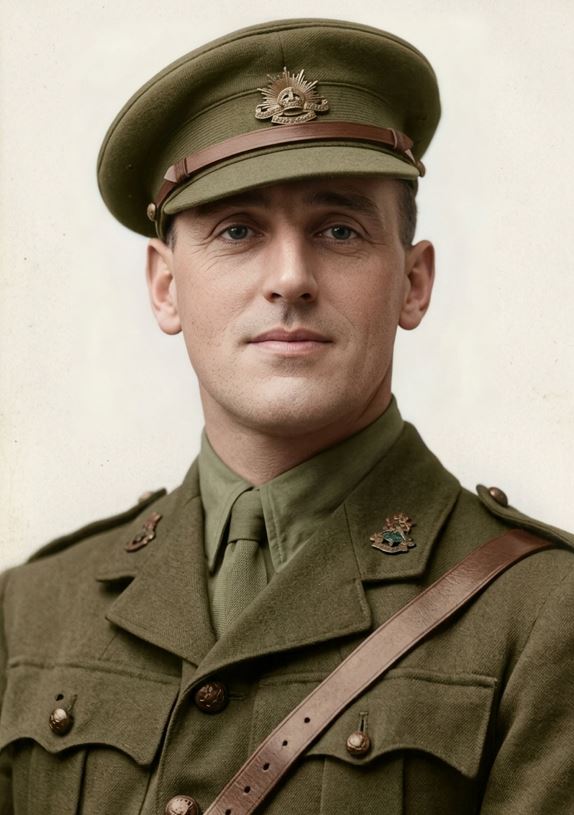
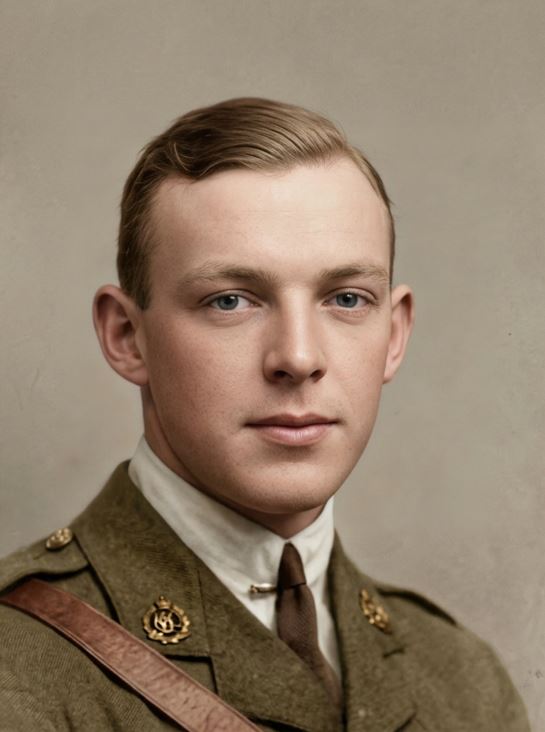
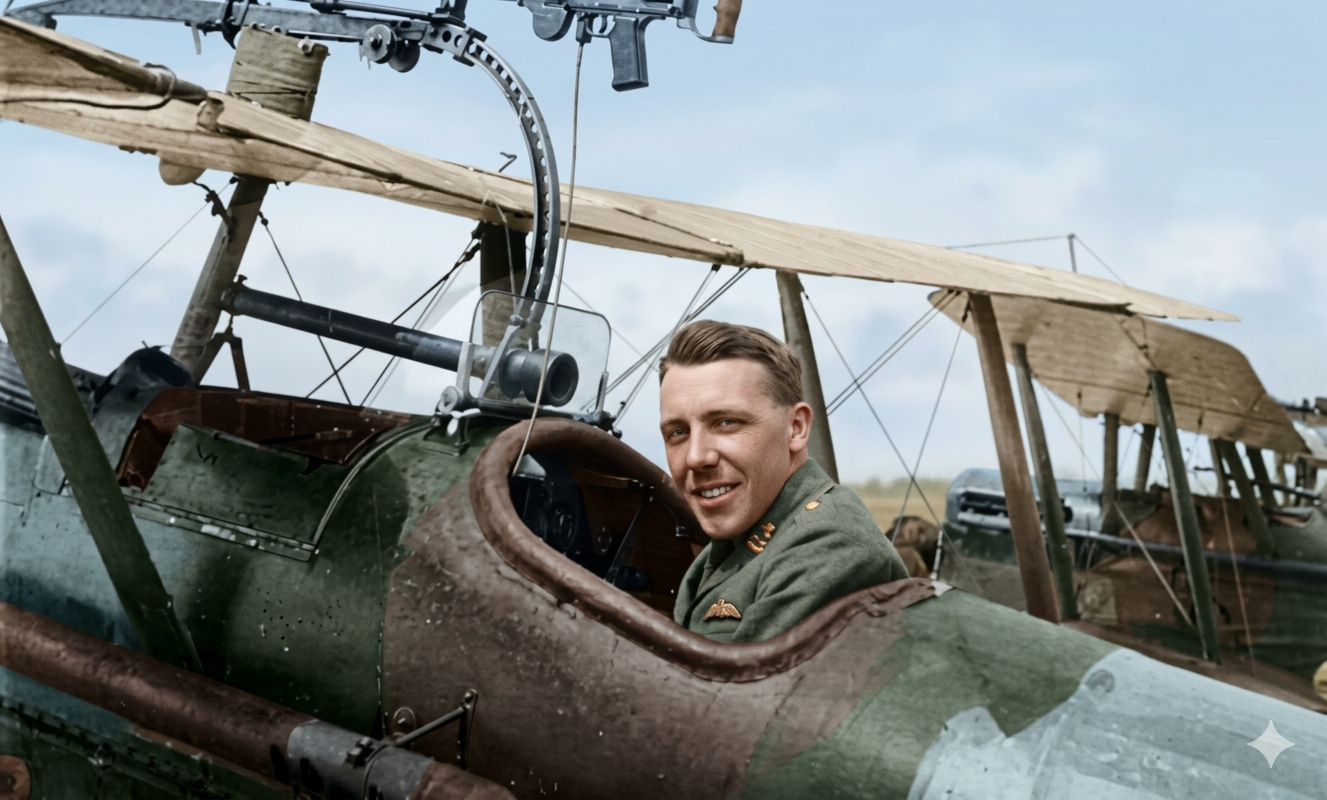
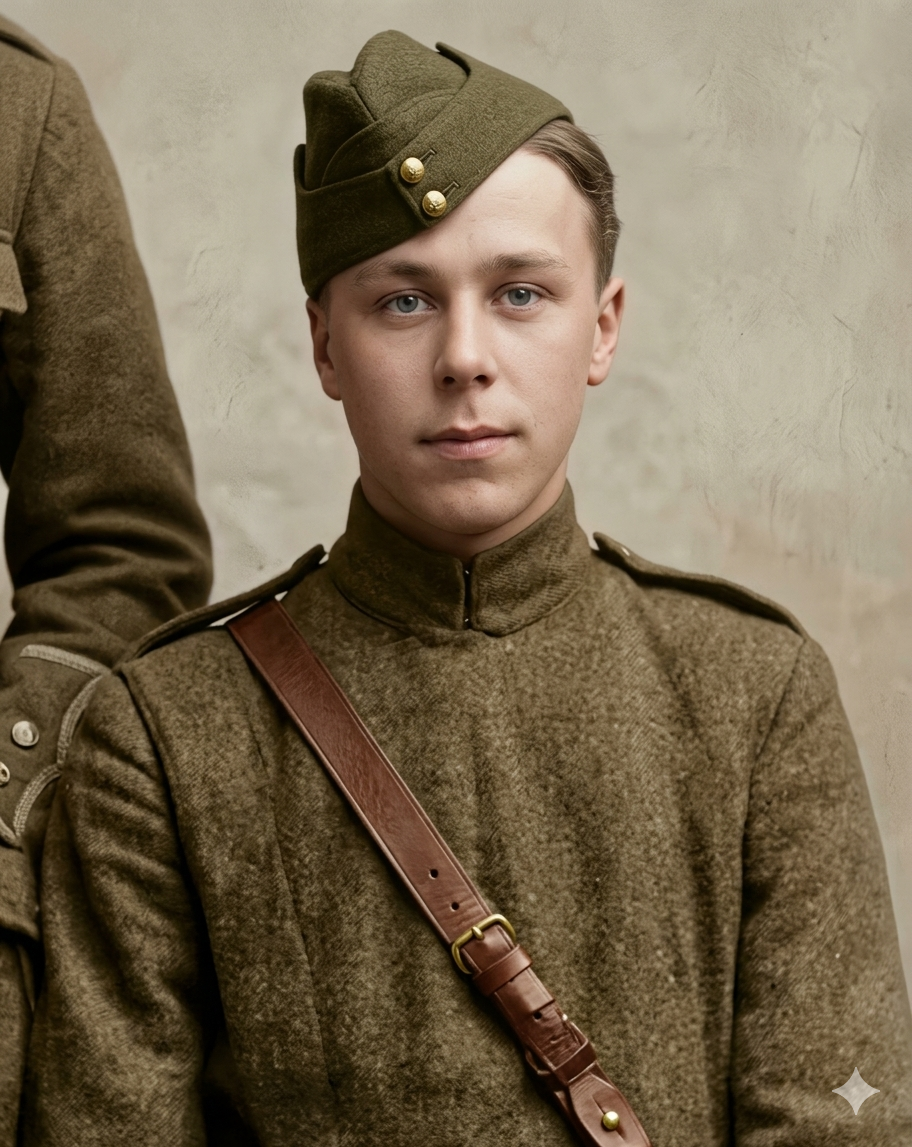
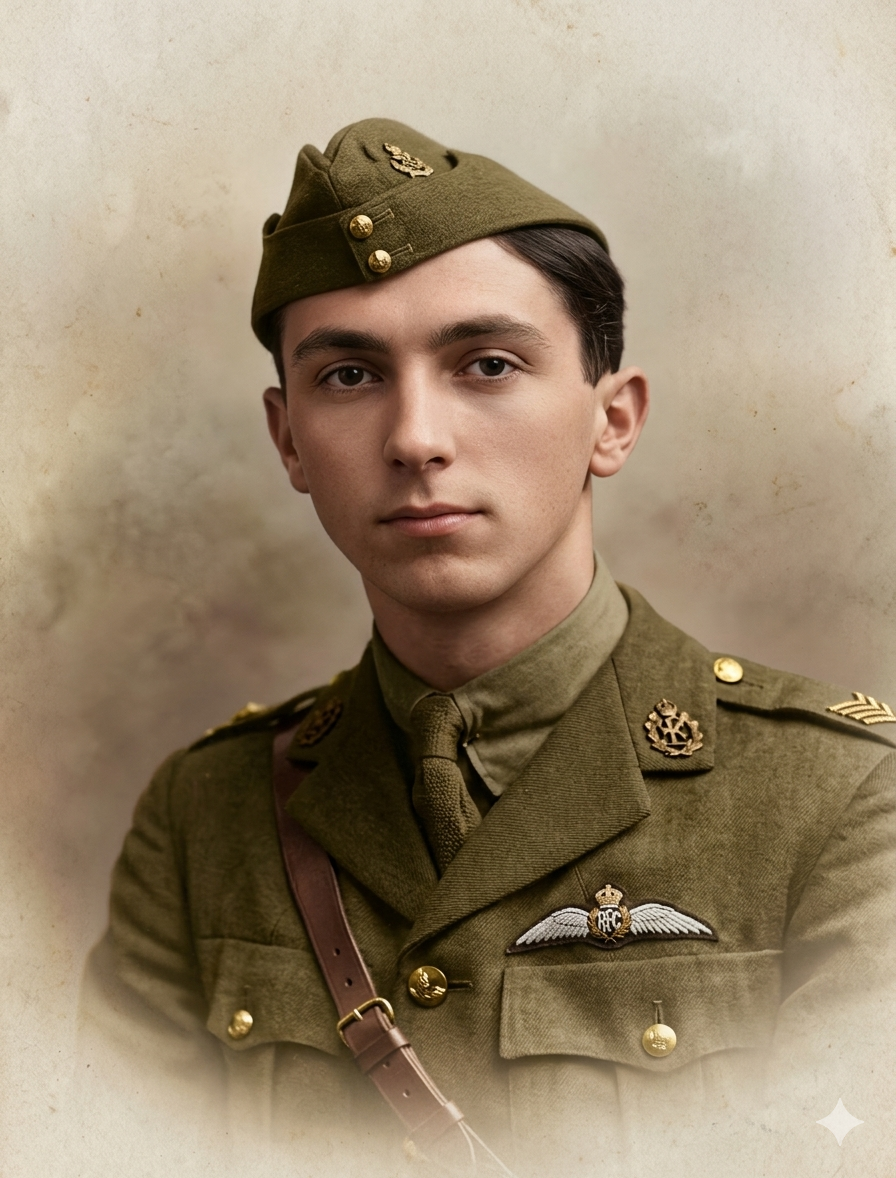
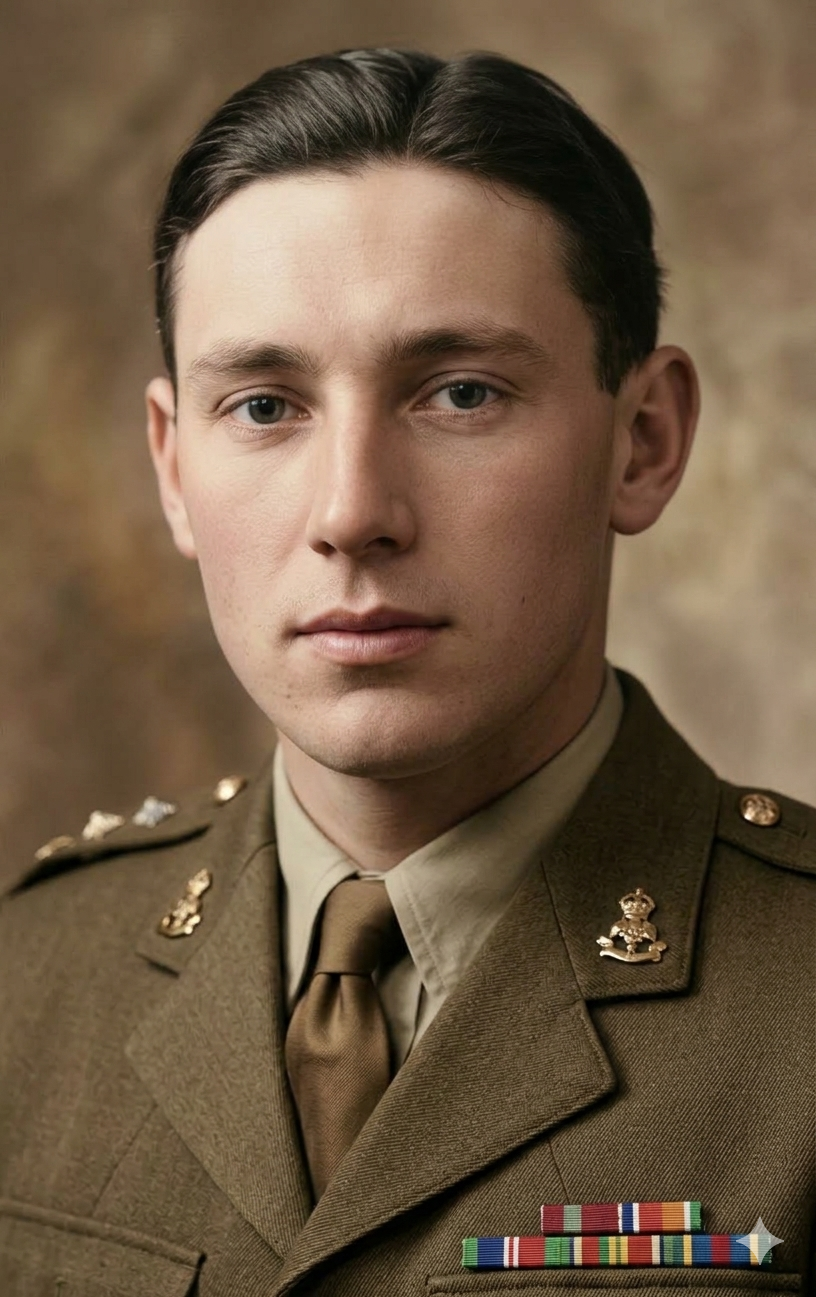
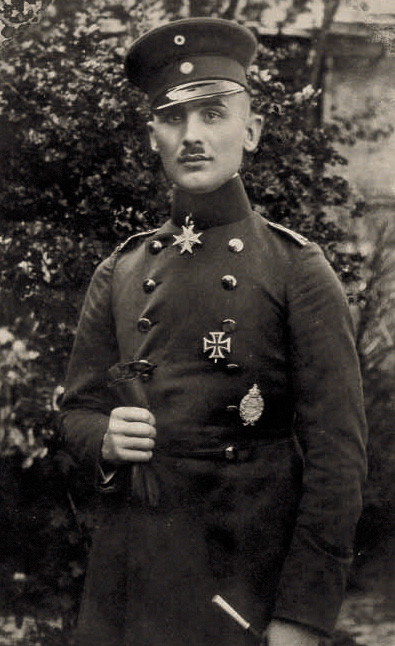
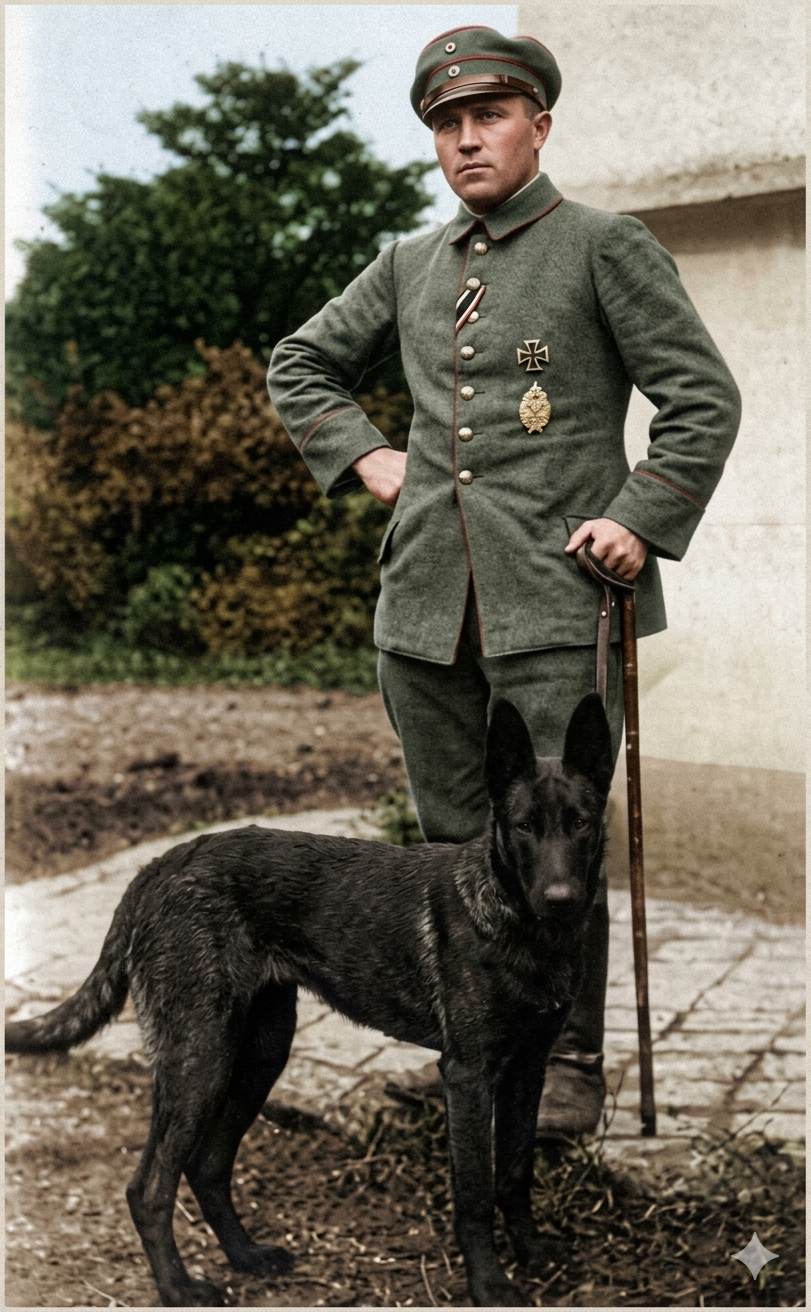
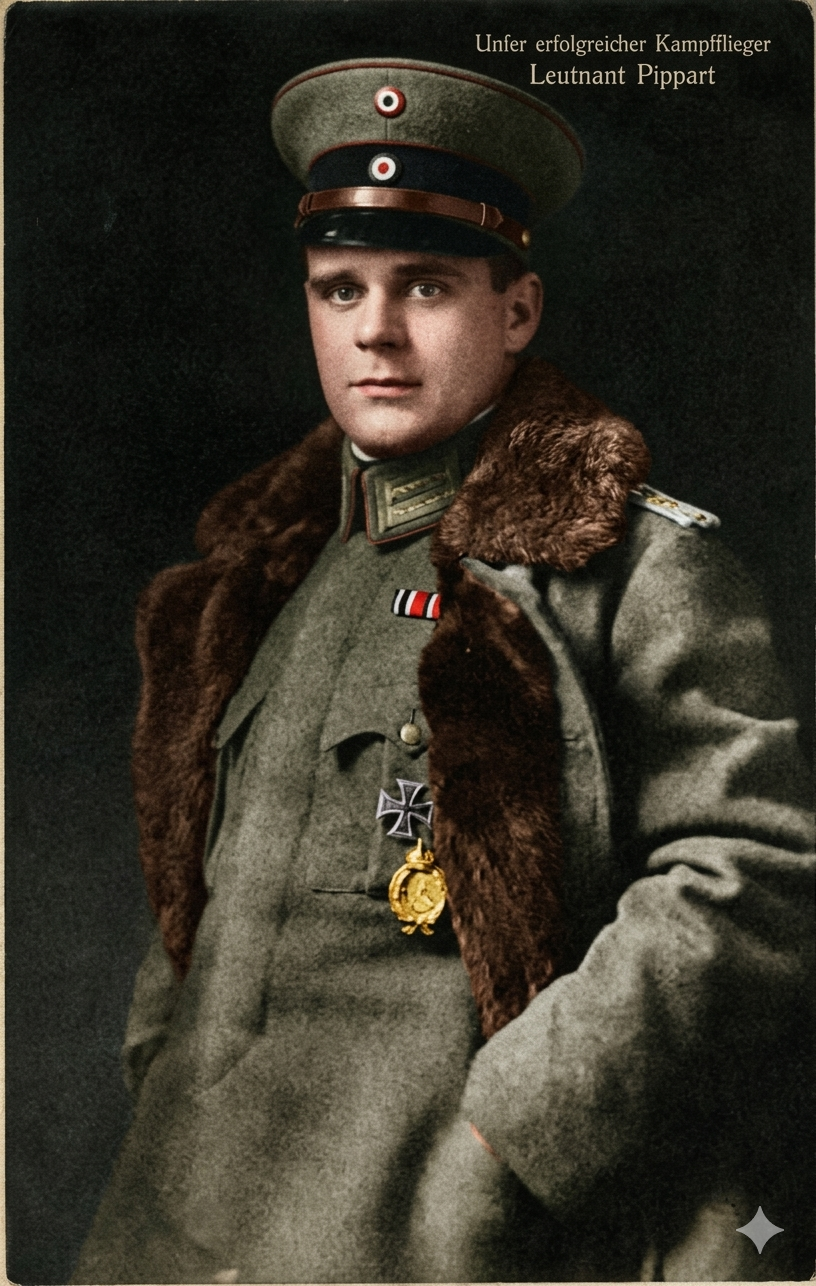
Warning: some details, such as the specific military badge, may have been hallucinated rather than strictly colorized.
2/Lt Lawrence Cooper, was with Lieut S R Coward (who survived as a Prisoner of War). Flying a D9 took off at 5:40am and were believed to have landed at Villers-Bretonneux. One of them was stretchered out of the aircraft, apparently wounded. 2/Lt Cooper has no known grave, and is commemorated on the Arras Flying Services Memorial.
Captain Alexander Mayo, and 2/Lt Joseph Jones. Flying a DH9 took off at 4:15 pm and were reported missing from a bombing raid. It is believed they were the 37th victims of German 'ace' Ltn Lothar von Richthofen. Captain Mayo is buried in Heath Cemetery, Harbonnières.2/Lt Jones has no known grave, and is commemorated on the Arras Flying Services Memorial.
201 Sqn
Lt Milburn Misener, aged 21. Flying a Sopwith Camel, took off 5:00 pm and was last seen during engagement with Fokker biplanes east of Foucaucourt on a low offensive patrol. Lt Misener has no known grave, and is commemorated on the Arras Flying Services Memorial.
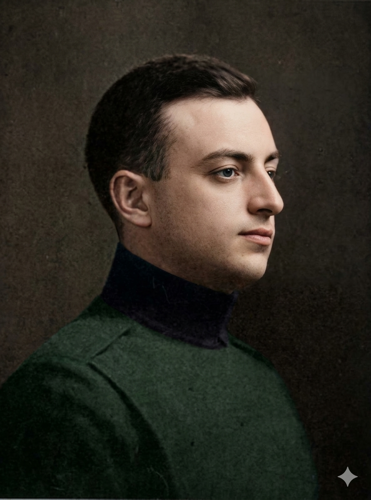
Lt Richard Stone, aged 19. Flying a Sopwith Camel, took off 2:45 pm and was seen to go down in spin, turned over at 200 feet and crashed on a road, bursting into flames north of Rosieres on low flying patrol. Lt Stone is buried in Heath Cemetery, Harbonnières.
10 August
On day three of the offensive, the RAF received a reinforcement of five squadrons but some German aircraft, which had been fitted with protective armour, were now operating at low levels over the area. On the evening of 10 August these German low-flying ground attack planes, assisted by artillery, stopped an Australian advance along the Amiens to Brie road.
To protect allied troops from these low-flying German aircraft, RAF fighters (mainly Camels) were switched from ground attack to low altitude counter-air patrols.
Whilst on this day the Somme bridges were still the primary targets for the day bombers, there was a change in emphasis: only 105 sorties were flown against the Somme bridges, and around 93 sorties were flown against all other targets - mainly rail hubs - but this was too late to disrupt the arrival of German reinforcement divisions.
Because of the losses incurred on 8 and 9 August the RAF bombers delivered their attacks from higher altitudes in order to fly above ground fire. Naturally, this reduced even further the chances of scoring hits on the Somme bridges.
RAF fatalities on 10 August
3 Sqn
Lt Victor McIntosh, aged 18. Flying a Sopwith Camel took off at 09:50 am and was last seen going into a fight with 20 Enemy Aircraft near Soyecourt; he was possibly the 50th victim of German 'ace' Ltn Ernst Udet. Lt McIntosh has no known grave, and is commemorated on the Arras Flying Services Memorial.
5 Sqn
2/Lt Charles Grant, aged 27 and 2/Lt William Webber. Flying an RE8 took off at 3:50 pm, then were reported missing on an artillery patrol. 2/Lt Grant and 2/Lt Webber have no known graves, and are commemorated on the Arras Flying Services Memorial.
6 Sqn
Lt A R Thompson with 2/Lt WT Saville (wounded). Flying an RE8, they came to earth in a spinning nose-dive from 500 feet during line reconnaissance. Lt Thompson is buried in Villers-Bretonneux Military Cemetery.
9 Sqn
2/Lt Sidney West, aged 19, with 2/Lt STH Roberts (unwounded). Flying an RE8 took off 12:00pm but were shot down west of Ruckebusch on offensive patrol. 2/Lt West died of his wounds the next day and is buried in Daours Communal Cemetery Extension.
32 Sqn
Lt Peter MacFarlane, aged 23. Flying an SE5a, was last seen over Péronne at 11:30 am at 14,000 feet on an offensive patrol. Lt MacFarlane has no known grave, and is commemorated on the Arras Flying Services Memorial.
56 Sqn
2/Lt Herbert Allen, aged 19. Flying an SE5a he took off at 09:00 am and was last seen over Chaulnes at 10:30 am during fight on patrol. 2/Lt Allen has no known grave, and is commemorated on the Arras Flying Services Memorial.
57 Sqn
2/Lt James Mitchell, aged 19 with 2/Lt D U Thomas (unwounded). Flying a DH4, they took off at 5:00 pm but were forced to land at Frohen-le-Grand at 8:00 pm after their aircraft was damaged in combat during bombing Péronne. 2/Lt Mitchell is buried at Wavans British Cemetery.
73 Sqn
Lt Stephen Dawson, aged 22. Flying a Sopwith Camel, he was last seen combat with enemy aircraft west of Chuignolles at 12:10 pm. Lt Dawson has no known grave, and is commemorated on the Arras Flying Services Memorial.
Losses of German aces
Although the 8th of August has been described as "The Black Day of the German Army," (this being attributed to General Ludendorff), the 10th of August could be given the epithet of "The Black Day of the German Pilots."
On 10 August, Erich Loewenhardt was killed (he collided with another German pilot and his parachute failed to open). Hauptmann Oskar Gustav Rudolf Berthold of JG II was shot down for the last time after downing two DH4's and badly injured. Also Paul Billik of Jasta 52 was taken prisoner. On 11 August Hans Pippart of Jasta 19, after shooting down a balloon, was hit by anti-aircraft fire and killed.
11 August
On the last day of the offensive, the RAF fighter force was employed on counter-air patrols, and these squadrons made no sorties on ground targets.
Whilst the bombers continued to attack the Somme bridges, this was vastly reduced to just 25 sorties; they concentrated largely on other targets, mainly rail facilities, with nearly 100 sorties on these objectives.
On the afternoon of the 11th, the Allied ground offensive came to a halt. The Australian, British and Canadian divisions had advanced up to 12 miles in some places.
With the arrival of German troop reinforcements, the Allied commanders decided to stop the operation.
RAF fatalities on 11 August
9 Sqn
2/Lt E Brandon with Captain R Hilton (unwounded). Flying an RE8 were hit by ground fire on low patrol. 2/Lt Brandon is buried in Villers-Bretonneux Military Cemetery.
19 Sqn
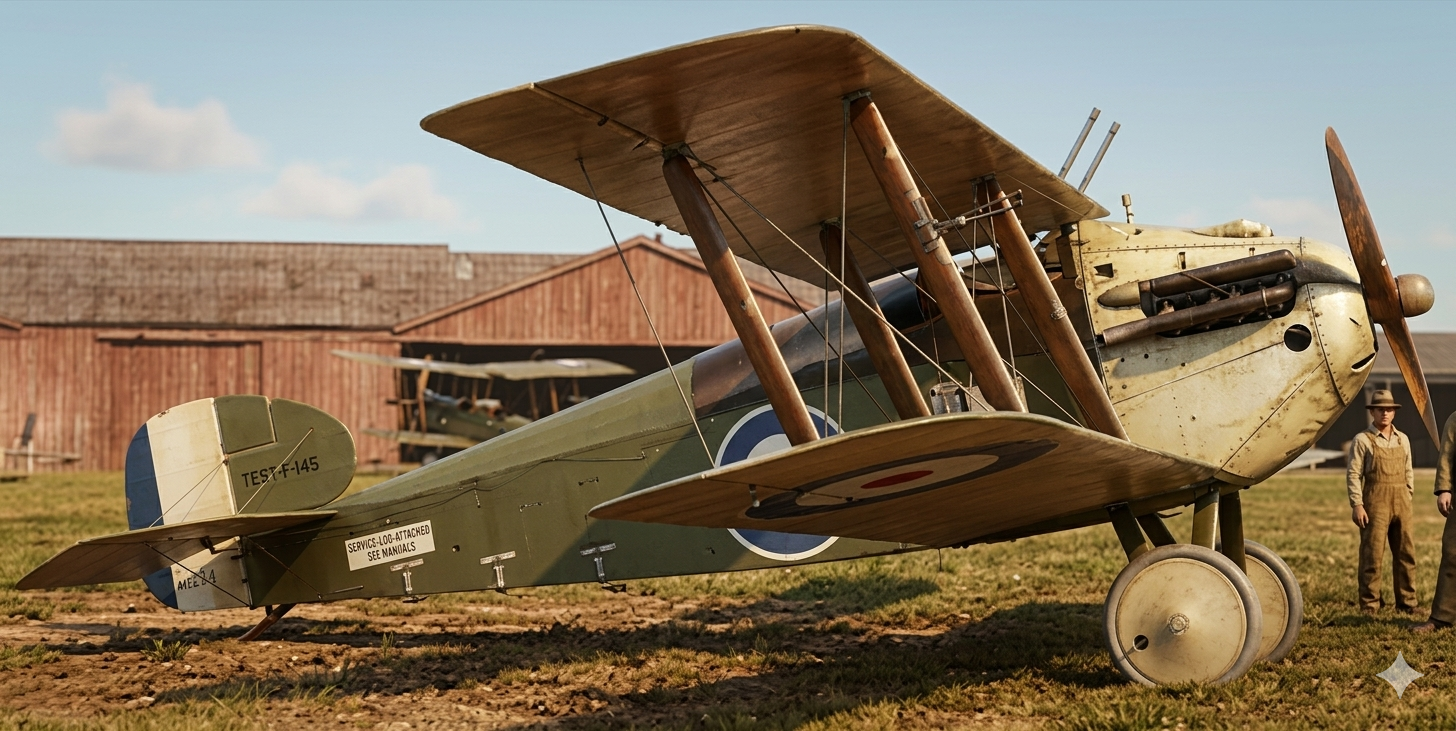
Lt Miles Gregory aged 22. Flying a Sopwith Dolphin took off at 4:14 pm and was last seen in combat with enemy aircraft east of Albert at 5:50pm on patrol. Lt Gregory has no known grave, and is commemorated on the Arras Flying Services Memorial.
Captain Gordon Irving DFC, aged 21. Flying a Sopwith Dolphin took off at 4:15 pm and was last seen in combat with enemy aircraft east of Albert on patrol, believed to have been shot down in flames. Captain Irving has no known grave, and is commemorated on the Arras Flying Services Memorial.
41 Sqn
Lt Alistair Fraser, aged 24. Flying an SE5a was on Scouting Patrol duties when his plane crashed. He died of shock and burns 6 hours later. Lt Fraser is buried at Wavans British Cemetery.
48 Sqn
2/Lt Harry Knowles, aged 19 with another (unknown) airman was flying a Bristol F.2B. 2/Lt Knowles died of his wounds and is buried in Vignacourt British Cemetery.
98 Sqn
2/Lt Edward Edgell and 2/Lt Brian Geary aged 19. Flying a DH9 took off at 6:30 am then went missing on bombing raid over Clery.
Conclusion
The first day of the Battle of Amiens was undoubtedly a great tactical success for the Allies on the ground, with troops advancing an impressive seven miles. British and Commonwealth casualties were relatively light at 9,000, while German forces suffered 28,000 casualties, including 15,000 taken prisoner.
However, the cost in the air was steep for the British. The RAF lost 42 aircraft destroyed and 52 damaged beyond repair, these numbers representing about 13 percent of the day's sorties, with low-altitude attack squadrons suffering a 23 percent casualty rate. Yet, in the grim calculus of 1918, the Allies possessed the industrial capacity to replace their losses overnight, a luxury the exhausted German Empire no longer enjoyed.
Acknowledgements
I am very grateful to Colin Buxton for providing the quotes from Ernst Udet and Lt Weakley and the reference to the DH4 and DH9 comparison. and the account of Lt Mawle and 2/Lt Coles
Further Reading
Air Power taken to its limits and beyond: The Battle of Amiens 8-11 August 1918 by Dr Alfred Price FRHistS
References
All fatalities listed here are those believed to have been involved in operations relating to the Battle of Amiens. If there are believed to be corrections to this list, please get in touch.
[1] See www.anciens-aerodromes.com for locations
[2] Much of the detail has been extracted from the Aerodrome Forum:
www.theaerodrome.com/forum/showthread.php?t=70389
[3]The Aerodrome Forum:
www.theaerodrome.com/forum/showthread.php?t=70313
[4] 49 Squadron Association:
https://www.49squadron.co.uk/personnel_index/detail/Keating_JA
Becoming a member of The Western Front Association (WFA) offers a wealth of resources and opportunities for those passionate about the history of the First World War. Here's just three of the benefits we offer:

Identify key words or phrases within back issues of our magazines, including Stand To!, Bulletin, Gun Fire, Fire Step and lots of others.

The WFA's YouTube channel features hundreds of videos of lectures given by experts on particular aspects of WW1.

Read post-WW1 era magazines, such as 'Twenty Years After', 'WW1 A Pictured History' and 'I Was There!' plus others.
Other Articles


