
‘He did his duty: Now at rest’
It’s likely to be one of those sad and unheralded love stories from the First World War… a young soldier volunteers to fight, is wounded or falls seriously sick, is repatriated and meets a young woman back home in Blighty.
They marry – but he dies within a week.
All we have left today is this headstone, standing alone in a country churchyard at St Nicholas in the village of Kelston, by the Avon near Bath.
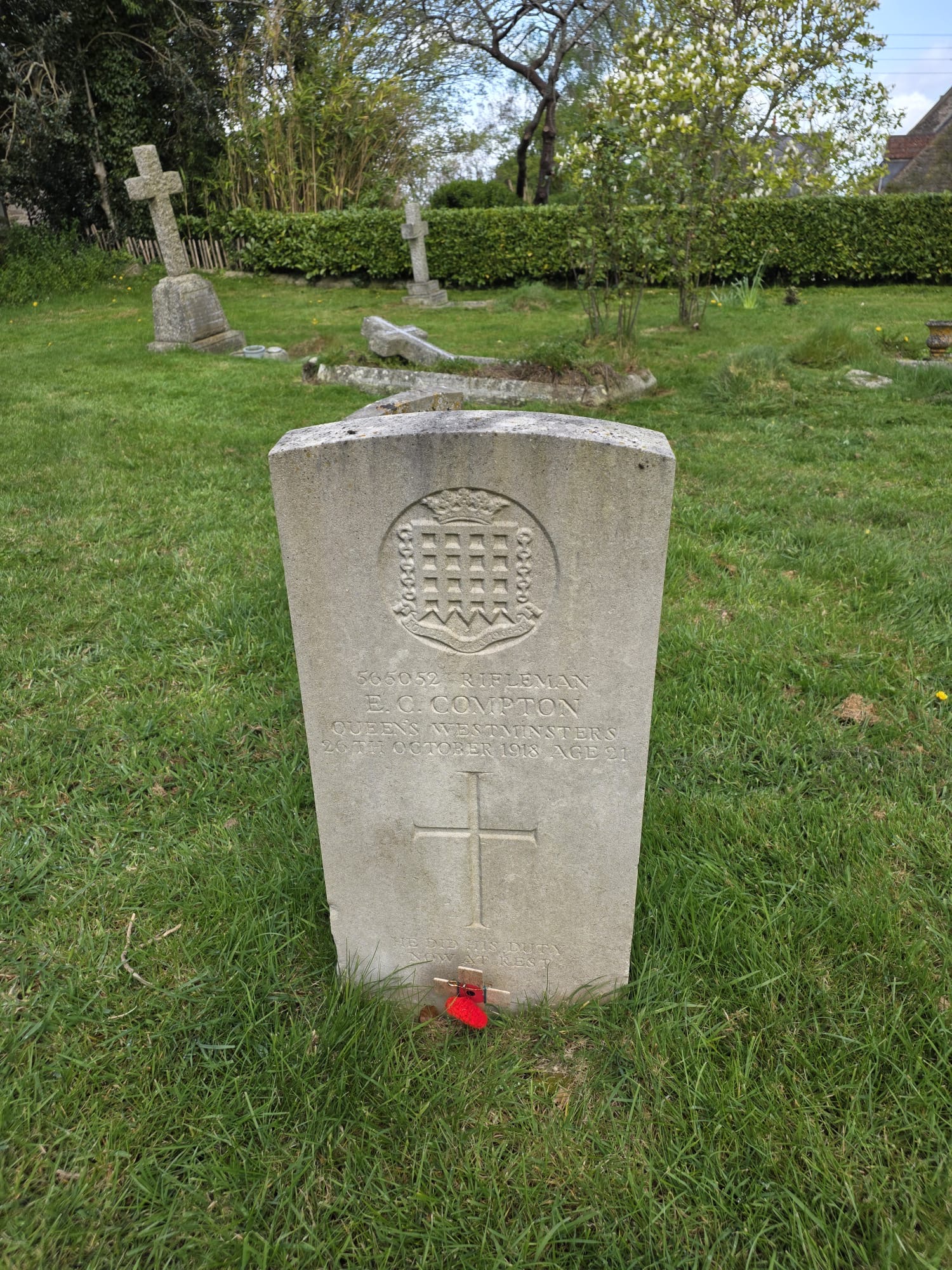
It belongs to Rifleman Edward Charles Compton, of the 16th Battalion, London Regiment (Queen’s Westminster Rifles).
He was discharged with wounds in September, 1917, and died on October 26th, 1918. His epitaph reads: ‘He did his duty. Now at rest’. He was 21 years old.
How do we get from the bare facts on the headstone and the details recorded in the Commonwealth War Graves Commission Roll of Honour to what is almost certainly a brief – and tragic – romance?
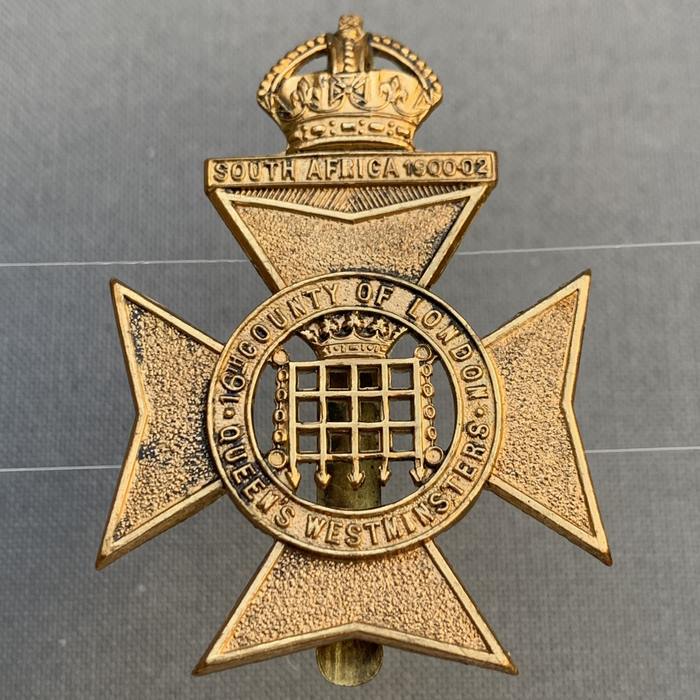
From the records, we know Edward’s Army number (565052), and we know he was born in Islington in London, and enlisted in September 1914. We know his parents’ names – Charles and Ada Compton – who lived at a village called Little Staughton near St Neots in Huntingdonshire. Edward was awarded the Victory and British Star medals.
Some of Edward’s life is recorded on a village website (kelstonvillage.co.uk), which says:
Nothing is known of why he was buried in our churchyard but he quite probably died of his wounds while convalescing at a local hospital or home. It would be interesting to know more about him and to understand why his family felt it best for him to be buried in Kelston.
This was a challenge, and with considerable help from many friends, we now have a more complete picture of this young man’s tragic life. There are still gaps in our knowledge, but we now know a little more about Edward’s final days. The story contains an unexpected surprise, and it’s possible Edward might have had a few moments of happiness at the end of his life.
So what do we know?
We know, thanks to deathandservice.co.uk, that Edward was born on July 4th, 1897, the only child of Charles and Ada Compton. Charles was an agent for the Prudential Insurance Company, and the family lived at that time on Devonshire Road in Islington in London, with Charles’ aunt, Mary. Edward finished schooling in 1911, and worked as a clerk for the North African Mission. His service records indicate that he was 5ft 8ins tall, with good vision and physique.
He enlisted with the London Regiment (Queen’s Westminster Rifles) in September, 1914, and served at home with the 8th Battalion until December, 1916, when he was transferred overseas. He moved into the 16th Battalion in April, 1917, and served on the Western Front.
Edward would have been involved with the German retreat to the Hindenburg Line in early 1917, and the First and Third Battles of the Scarpe in April and May. At some stage, he was injured, when the Battalion was largely involved with trench repairs and patrols; there was occasional shelling, and every day, men fell sick.
We don’t know Edward’s injuries or illness.
But whatever happened was serious enough for him to be repatriated on July 27th.
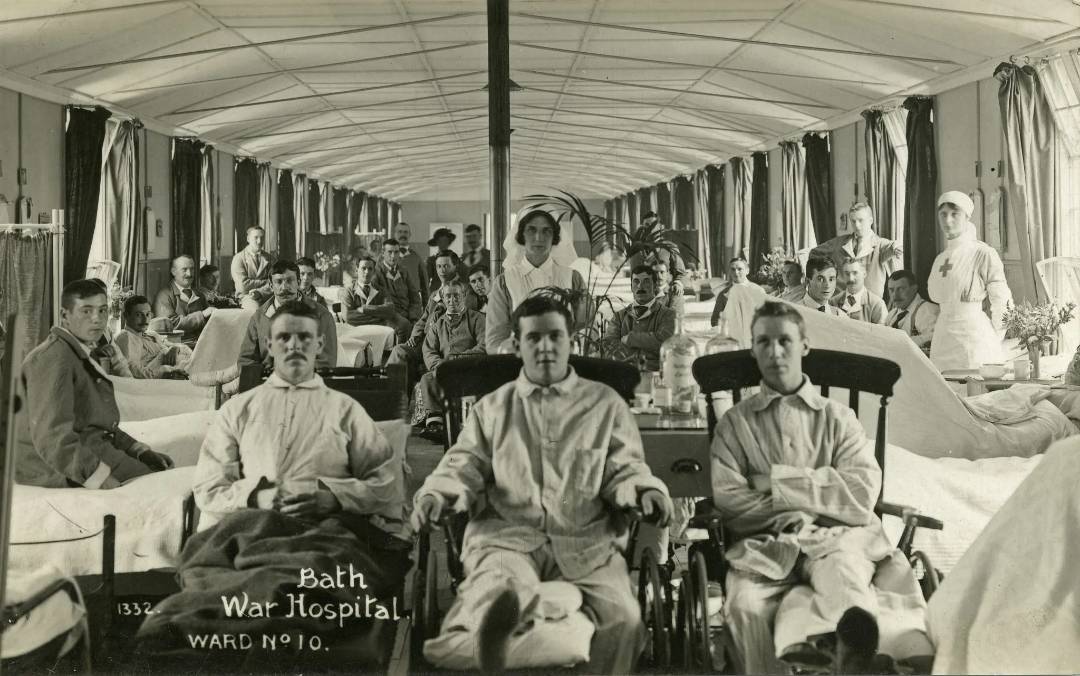
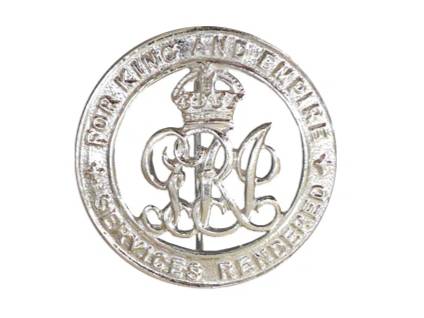
It’s likely he was taken to the Bath War Hospital, two miles from Kelston, where he is buried. He’d been awarded a Silver War Badge, given to disabled veterans, to avoid getting the ‘White Feather’ treatment.
Edward had been ‘permanently excluded from the liability to medical re-examination and /or military service’ under the Review of Exception Act, 1906 (Pension Records, Ancestry). He was discharged under Para 392 xvi King’s Regulations as ‘no longer fit for military service’, and awarded a disability pension of 13/9 a week.
Tantalisingly, the burial register (on Ancestry) indicates that he ‘died on honeymoon from Spanish Influenza’. This suggests that despite his failing health, Edward was able to achieve a little happiness before he died. But it was the briefest of marriages.
We now know that the Banns for the marriage between Edward and Emily Backholer, a farmer’s daughter from Paignton in Devon, were read at the church of St Mark’s in Islington on October 6th, 13th and 20th, 1918. The marriage itself was registered in the Totnes district, which includes Paignton.
Emily, who was also 21, had been a tram conductress in Torquay, but we have no information on how or where she and Edward met, or how Edward – who was described on his death certificate as a ‘cinema operator’ – came to be buried in Kelston.
The most likely scenario was that Edward was being treated at the Bath War Hospital, which had been established in 1916 in nearby Combe Park. Somehow, he met Emily, travelled to Devon to be married, but returned unwell before he died, on October 26th, 1918, six days after the wedding. The death certificate records that his widow, Emily, was ‘present at the death in Kelston’.
There is, theoretically, another possibility. Perhaps Edward was working in a cinema elsewhere, maybe in the west country, where he met Emily. They married, and went on honeymoon to Bath or north Somerset, where he fell ill and died. This begs the question: why would Emily (and presumably Edward’s parents) agree to him being buried in Kelston, and not take him ‘home’?
Without further details, we’ll never know.
Emily appears as a widow in the 1921 census, and Dr Alan Hawkins was able to establish that she remarried in 1926 at Newton Abbott in Devon to Thomas Shobbrock. Thomas was a war veteran himself, having served with the RAMC in Serbia, France, Italy, Greece and India. Back in Torquay, he became a bus driver. The couple had no children. Thomas died in 1970 and Emily in 1987.
And a local history website (www.bittonhistory.org.uk) produced a sad footnote. It tells us more about Dr Thomas Aubrey, the physician who certified Edward’s death. Dr Aubrey was a significant figure in nearby Bitton, and well-liked. In 1918, when Edward died of influence and pneumonia, Dr Aubrey was himself ill with pneumonia, and his only daughter died in the great Spanish Flu pandemic. Dr Aubrey, who lost his son in North Africa in the Second World War, died in 1945.
This article couldn’t have been written without the expert and selfless help of members of the excellent Great War Forum, many of whose members (but not all) contribute with a nom de plume. I have particular reason to thank (in no particular order) ‘Jrmh’, ‘Matlock1418’, Michelle Young, ‘Helpjpl’ and ‘Allan1892’. In addition, my friend and research colleague, Dr Alan Hawkins, provided significant information, as he always does. Thanks, too, to the websites of Kelston Village, the Bitton History Group, and Deathandservice.
Becoming a member of The Western Front Association (WFA) offers a wealth of resources and opportunities for those passionate about the history of the First World War. Here's just three of the benefits we offer:

The WFA regularly makes available webinars which can be viewed 'live' from home. These feature expert speakers talking about a particular aspect of the Great War.

Featured on The WFA's YouTube channel are modern day re-interpretations of the inter-war magazine 'I Was There!' which recount the memories of soldiers who 'were there'.

Explore over 8 million digitized pension records, Medal Index Cards and Ministry of Pension Documents, preserved by the WFA.


